
REVIEW · ROME
Rome Food Tour in the Historic Centre with 8+ Food Tastings
Rome is easiest to understand with something tasty in your hand. This three-hour walk links five courses of Roman food with Piazza Navona, the old Jewish Ghetto, Campo de’ Fiori, and the ruins at Largo di Torre Argentina. You get more than a meal, but you also get enough food to make lunch unnecessary.
I like the small maximum group of 12, which gives the guides room to answer questions and keep the walk friendly. I also like the range of food: crisp pizza, supplì, Roman pasta, cured meats, cheese, cannoli, and artisanal gelato. The main caution is simple: at $118.51, this is not a cheap snack crawl, and the generous portions may be too much if you have already eaten.
Key points at a glance
- Eight or more tastings: Two pizzas, supplì, cold cuts, cheeses, two Roman pastas, cannoli, gelato, and a secret dish make this a full meal.
- Six central Rome sights: The route connects Piazza Navona, a French embassy palace, the Jewish Ghetto, Campo de’ Fiori, and Largo di Torre Argentina.
- Small group format: The maximum is 12 people, a useful size for crowded lanes and personal questions.
- Guide quality matters: Massimiliano, Rocio, Luda, Federico, Eduardo, Robbie, and other guides are specifically praised for humor, local stories, and food knowledge.
- Good family flexibility: Children as young as four have enjoyed the outing, and guides have adjusted drinks and tastings for younger participants.
- Come hungry: Several courses arrive in substantial portions, and the walk ends with dessert rather than a light nibble.
Why this food walk works so well in Rome
Rome can feel like a museum with restaurants placed between the exhibits. This tour reverses that order. You move through famous squares and old neighborhoods while learning why Roman cooking favors simple ingredients, strong flavors, and dishes built for everyday life.
The route is compact enough to manage in about three hours, yet it covers several distinct parts of the historic centre. You begin at Sant’Agnese in Agone on Piazza Navona and finish at Largo di Torre Argentina. That means the tour is also useful on your first day, when you want to get your bearings fast, or early in your stay, when advice about later meals still has value.
The food is the main event. Two kinds of homemade pizza give you a chance to compare styles rather than treating pizza as one generic dish. Supplì brings the classic Roman street-food experience, while cold cuts and cheeses slow the pace and make the meal feel social.
Then come two Roman pastas, followed by cannoli and gelato. The official menu also includes a secret dish, so the exact surprise depends on the day and on what is available. The itinerary and menu can change because of weather, opening hours, and local availability, so you should see the experience as a guided food route rather than a fixed restaurant tasting menu.
More Food Walking Tours in Italy
- Rome: Guided Food Walking Tour with Wine in Trastevere
★ 4.9 · 3,105 reviews - Rome: Trastevere & Campo de Fiori Street Food Walking Tour
★ 4.9 · 2,768 reviews - Rome: Trastevere Street Food Walking Tour with Local Expert
★ 4.8 · 1,784 reviews
Starting with fountains and food at Piazza Navona
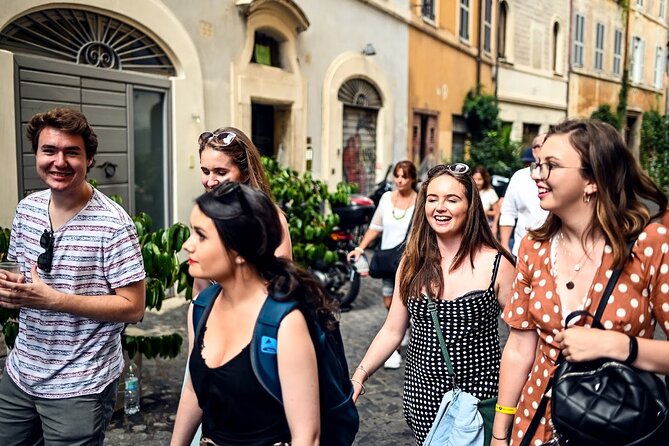
Piazza Navona is a smart starting point. It was built on the site of an ancient stadium and remains one of Rome’s most impressive public spaces, with long views, baroque architecture, fountains, cafés, and street life.
You meet near Sant’Agnese in Agone, at Piazza Navona 14. The opening section lasts about 20 minutes, giving you time to take in the square before the food stops begin in earnest.
The famous Four Rivers Fountain is here, a 17th-century work with a Roman obelisk and a dove above it. The fountain honors four major rivers, and it gives the guide an easy way to show how Roman art, politics, religion, and public space overlap.
Food-wise, Piazza Navona is a useful introduction to the Roman habits you will see throughout the walk. You might encounter pizza bianca, gelato, espresso, or supplì nearby. The tour’s exact tasting locations can change, but the point is clear: Roman food culture is not confined to formal restaurants. It lives in bakeries, cafés, counters, and small neighborhood food shops.
The French embassy palace and Rome’s grand addresses
One stop takes you past one of Rome’s important High Renaissance palaces, now used as the French embassy in Italy. The building gives the route a change of scale after the lively square.
This is the kind of short historical pause that makes a food walk worthwhile. You are not spending hours inside a palace, and no admission is listed, but you get a sense of how Rome’s central streets are layered with political and artistic power.
The guide is part storyteller, part food host. Massimiliano is repeatedly singled out for explaining both Roman history and the origins of the dishes. Rocio, Luda, Federico, Eduardo, Robbie, and other guides have also been praised for clear explanations, humor, and useful advice about places to eat later in your stay.
That variation matters. The menu may be shared across the experience, but the personality of the guide shapes the day. Some guides are especially good with children, while others lean into food origins, neighborhood history, or practical restaurant suggestions.
Walking through the former Jewish Ghetto
The route continues into Rome’s ancient Jewish Ghetto in the Rione Sant’Angelo. Established in 1555, the neighborhood has a distinct identity and a long, complicated past.
Here, food and history fit together naturally. Roman-Jewish cooking is part of the city’s culinary story, and the narrow streets offer a contrast to Piazza Navona’s grand open space. You are likely to hear more about the neighborhood, its culture, and the food traditions connected with it.
This is also where the walking part becomes important. You are not being driven from one restaurant to another. You move through central streets, pause for food, and continue on foot. The route is manageable for most people, but it is still a walking tour, not a seated tasting.
A family with children aged four and six completed the walk and found it manageable, though the parent described it as a lot of walking. Another group completed it during weather above 90 degrees Fahrenheit and still enjoyed the outing. I would still choose comfortable shoes and avoid arriving already tired from a full day of sightseeing.
Same streets, a different route:
- Rome: Paranormal Night Walking Tour & Secret Backstreets
★ 4.9 · 1,921 reviews - Rome: Colosseum Arena, Roman Forum & Palatine Hill Tour
★ 4.5 · 1,874 reviews - Rome: Small-Group Guided Day or Night Walking Tour
★ 4.8 · 1,009 reviews - Rome by Night Walking Tour – Legends & Criminal Stories
★ 4.5 · 1,003 reviews
Pizza, supplì, and the first taste of Roman street food
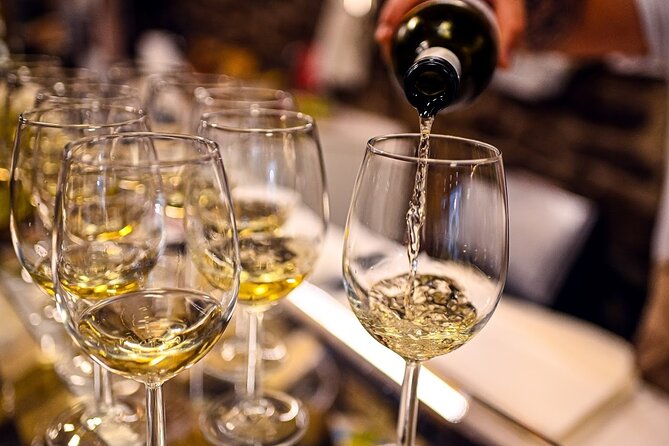
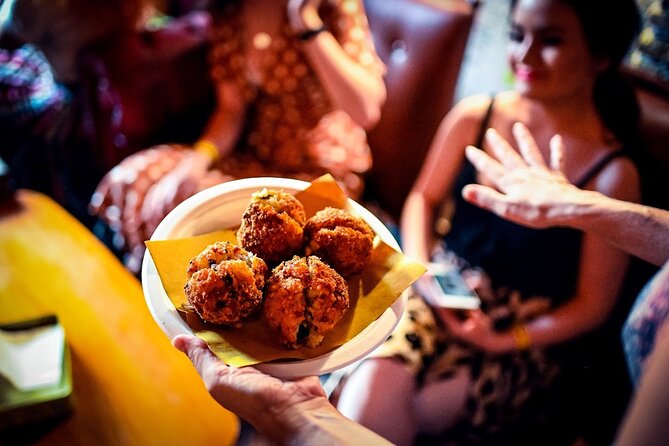
The included food begins with two different types of homemade pizza and supplì. This is a strong start because it gives you both a familiar favorite and a Roman specialty.
Supplì is a fried rice croquette, usually associated with a crisp outside and a soft center. It is the sort of food that makes sense in a standing snack shop or casual counter. You get a taste of Rome as locals eat it, not just the polished version presented on a restaurant plate.
The two pizzas should help you notice differences in crust, toppings, and texture. The available information does not specify the exact varieties, so do not book expecting a particular topping or bakery. The value is in the comparison and in the guide’s explanation of what makes each bite Roman.
Portions are not token samples. Several accounts describe the overall food quantity as surprisingly large, and one parent noted that even a nine-year-old was kept interested while adults had coffee and wine. If you are sensitive to heavy meals, pace yourself early. It is easy to fill up before the pasta arrives.
Cold cuts, cheeses, and the social side of lunch
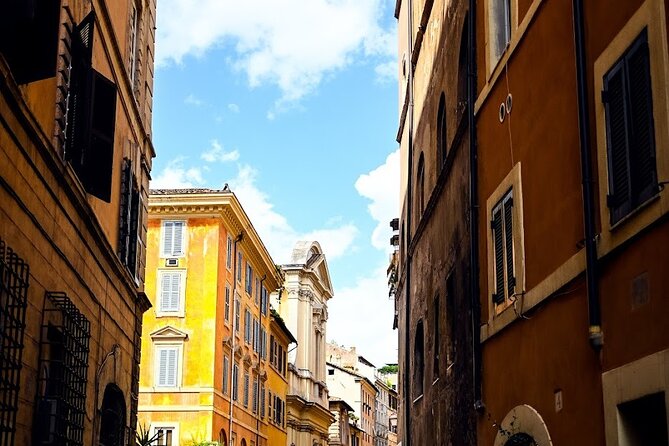
Italian cold cuts and cheeses form another part of the tasting. This section breaks up the fried and baked food with savory bites that are easy to share around a table.
I like this inclusion because it shows how an Italian meal can move between simple products rather than relying on one grand dish. You can compare textures, salt, and seasoning while the guide explains what you are eating.
The group format works particularly well here. Food is placed in front of several people, and conversation comes naturally. One of the strongest themes in the feedback is how enjoyable it was to eat with a small group and meet other people during the walk.
Some sessions have included wine, espresso, and other drinks, but drinks are not clearly listed as a guaranteed part of the package. The minimum drinking age is 18. If wine is important to you, confirm the current inclusions when booking rather than assuming every departure serves it.
Two Roman pastas, the heart of the meal
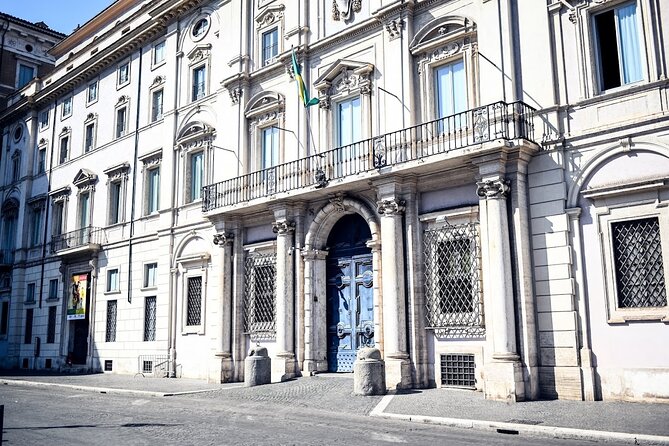
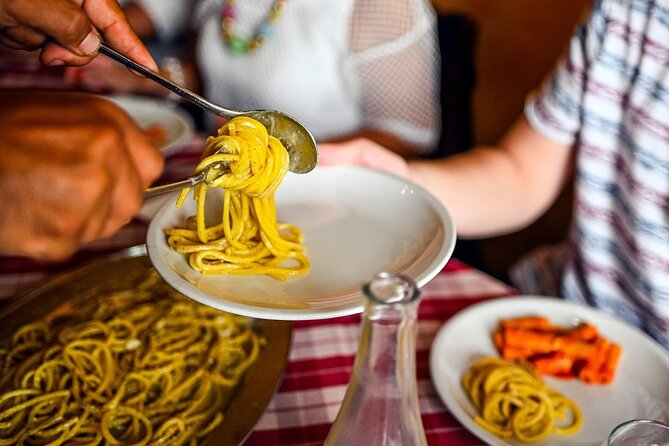
The two Roman pastas are likely to be the most substantial part of the experience. They also give the guide room to explain the difference between Roman pasta traditions, ingredients, and preparation.
The exact dishes are not fixed in the supplied details, so I would not promise carbonara, amatriciana, cacio e pepe, or gricia on a particular date. You are promised two Roman pastas, with the menu subject to change. One vegetarian participant received vegetarian pasta and suitable alternatives at other stops, which is a useful sign that dietary needs can sometimes be handled.
Still, you should communicate dietary requirements before booking. The fact that one vegetarian diner was accommodated does not guarantee every allergy, intolerance, or preference can be met at every stop.
The pasta course also explains why this tour costs more than buying a few street snacks. You are not only sampling. You are receiving enough food to function as a meal, with a guide connecting the ingredients to Roman life.
Campo de’ Fiori and the working side of the centre
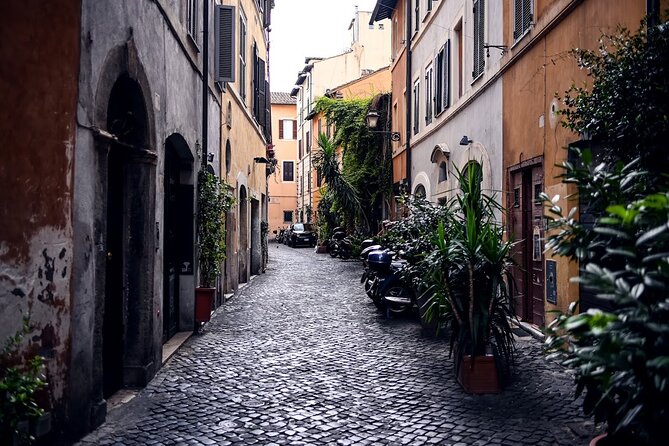
The walk reaches Campo de’ Fiori, a rectangular square south of Piazza Navona. Its name means field of flowers, a reminder that Rome’s public spaces have not always served the same purpose they do today.
The square adds another visual break to the route. Piazza Navona is grand and theatrical. Campo de’ Fiori feels more tied to daily commerce and food. That makes it a fitting place for a tour built around markets, shops, bakeries, and informal eating.
The route does not promise a market shopping session or free time to browse. Instead, you should expect a guided passage through the square as part of the larger food and history walk. That distinction matters if you want a dedicated market tour. This experience is about tasting several foods while moving through central Rome.
Finishing near Largo di Torre Argentina
The final stop is Largo di Torre Argentina, where the tour ends. The square contains four Roman Republican temples and the remains of Pompey’s Theatre, in the area once known as the ancient Campus Martius.
The route also passes the remains of an ancient walkway built in the second century BC to connect two Roman temples. These ruins make a strong closing backdrop because they show how ordinary Roman streets can sit directly over very old layers of the city.
The tour ends at Largo di Torre Argentina rather than returning to Piazza Navona. That is convenient if you plan to continue toward other central sights, but you should account for it when planning your day. There is no hotel pickup or drop-off, so you make your own way to the start and continue independently after the finish.
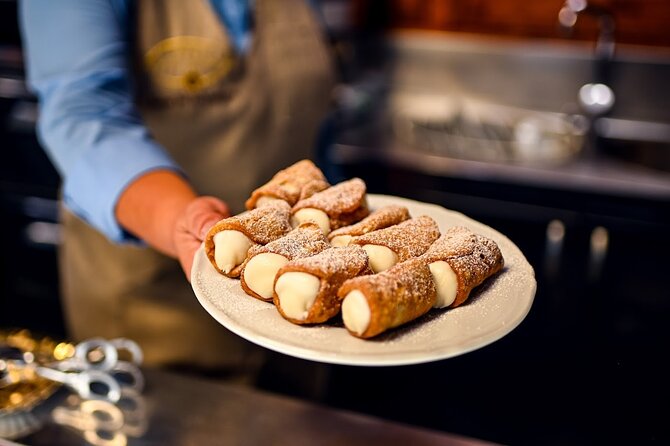
Gelato and cannoli provide the sweet finish. Gelato is artisanal, and the cannoli has received unusually strong praise from people who normally do not care for it. One person described the cannoli as the best thing they ate in Rome, while others especially liked the gelato at the end.
Guide style, group size, and family fit
The maximum group size is 12. That is small enough for a guide to keep the group together in busy streets and large enough to create a social meal.
Guide names connected with especially strong experiences include Massimiliano, Rocio, Luda, Federico, Eduardo, Robbie, and Rosi or Rosie. Massimiliano receives repeated praise for humor, historical detail, food explanations, and patient attention. Rocio is described as funny and engaging, while Luda is noted for being friendly and informative. Federico handled vegetarian substitutions well.
You should not expect every guide to deliver the same style. The common thread is an energetic, personal approach rather than a dry lecture. The guides also provide practical food advice for the rest of your stay, which can add value beyond the three-hour schedule.
Families can make this work, especially if children enjoy pizza, pasta, gelato, and small tastings. The food volume, walking, and historic commentary may be less appealing to very young children who need frequent breaks. Pets are not allowed.
Is $118.51 a fair price?
At $118.51 per person, the price is high for a casual lunch but reasonable for a three-hour guided food experience with eight or more tastings and a group capped at 12.
The right comparison is not the price of a slice of pizza or a scoop of gelato. Compare it with buying a full meal, paying for a history walk, and spending time finding reliable food stops yourself. The tour combines all three, though you are also paying for convenience and the guide’s local knowledge.
The value is strongest if you are new to Rome, want a full introduction to Roman food, or prefer to have the route and restaurants organized. It is weaker if you already know the city’s food scene, dislike group activities, or want a slow, formal lunch at one restaurant.
The tour is often booked well ahead, with an average booking time of about 73 days. That does not mean you must reserve that far in advance, but it does suggest that popular dates can fill. Free cancellation is available up to 24 hours before the start time. After that point, refunds are not provided.
Who should book this Rome food tour?
You should book it if you want a hearty introduction to Roman food with history between the bites. It is especially useful early in a Rome stay, when you can use the guide’s restaurant tips and learn which dishes deserve another meal.
It suits couples, families with children, solo visitors who enjoy meeting a small group, and anyone who prefers tasting several foods instead of committing to one restaurant. Vegetarians may be accommodated, but you should ask in advance.
I would skip it if you want a quiet, seated meal, a fixed menu, or a tour focused on one neighborhood only. The walk covers several areas, the food is plentiful, and the menu can change.
For most people, I think the combination of substantial food, central sights, and lively guides makes this a good use of one Rome afternoon. Come hungry, wear comfortable shoes, and leave room for the cannoli and gelato.
FAQ
Where does the Rome food tour start?
The tour starts at Sant’Agnese in Agone, Piazza Navona 14, 00186 Rome.
Where does the tour end?
The tour ends at Largo di Torre Argentina in central Rome.
How long does the experience last?
The tour lasts approximately three hours.
How much does the tour cost?
The listed price is $118.51 per person.
What food is included?
The experience includes two types of homemade pizza, supplì, Italian cold cuts and cheeses, two Roman pastas, cannoli, artisanal gelato, and a secret dish.
Is the menu always the same?
No. The itinerary and menu can change based on location availability, weather, and other circumstances.
How large is the group?
The group can include a maximum of 12 people.
Is the tour offered in English?
Yes. The experience is offered in English.
Can I cancel for a full refund?
Yes, if you cancel at least 24 hours before the experience start time. Cancellations made less than 24 hours in advance are not refunded.
More Food Walking Tours in Rome
- Reykjavik Food Walk – Local Foodie Adventure in Iceland
★ 5.0 · 18,952 reviews - Ho Chi Minh City Street Food Tour & Sightseeing By Motorbike
★ 5.0 · 9,413 reviews - New Orleans Food Walking Tour of the French Quarter with Small-Group Option
★ 5.0 · 6,118 reviews - Naples: Street Food Walking Tour with Local Guide
★ 4.9 · 4,976 reviews
More History Walking Tours in Rome
- Rome: Forbidden History Walking Tour & Pub Crawl with Drinks
★ 4.9 · 688 reviews - Rome: Colosseum, Palatine Hill, & Roman Forum Walking Tour
★ 4.7 · 423 reviews
Just added around Rome
- Dark Heart of Rome – Facts, Legend & Mystery Walking Tour★ 4.5 · 329 reviews
- Alternative Walking Tour of Rome’s City Center & Hidden Gems★ 4.8 · 244 reviews
- Rome: Colosseum, Palatine Hill, & Roman Forum Walking Tour★ 4.7 · 423 reviews
- Rome: Haunted City Night Walking Tour★ 4.9 · 616 reviews
- Rome Walking Tour with Piazza Navona, Trevi Fountain and Pantheon★ 4.5 · 676 reviews
- Rome: Guided Small Group Walking Tour of City Highlights★ 5.0 · 682 reviews
- Rome: Forbidden History Walking Tour & Pub Crawl with Drinks★ 4.9 · 688 reviews
- Best of Rome Walking Tour including Trevi Fountain★ 4.5 · 923 reviews
Food Walking Tours, compared.
Reykjavik Food Walk – Local Foodie Adventure in Iceland
Read our review →
Ho Chi Minh City Street Food Tour & Sightseeing By Motorbike
Read our review →
New Orleans Food Walking Tour of the French Quarter with Small-Group Option
Read our review →
Authentic Parisian Gourmet Food Tour with 10 Local Dishes & Wines
Read our review →
Savannah First Squares Culinary & Cultural Walking Food Tour
Read our review →Browse the lists this tour appears in