
REVIEW · BUDAPEST
Budapest Food Walking Tour: Eat, Sip & Explore Like a Local
Budapest’s best food lesson may come one plate at a time. This three-hour walk links four local eateries with the story of Hungarian cooking, from Jewish-Hungarian traditions near the Kazinczy Street Synagogue to street food, hearty mains, and sweets. I like the generous portions and the way the guide handles the ordering, so you can focus on eating and exploring. I also like the mix of wine, beer, and pálinka rather than a single drink tasting.
The main drawback is dietary choice. Vegetarians can be accommodated, but vegan and gluten-free diets cannot currently be supported. Come hungry, wear sensible shoes, and remember that the food may be enough to replace both lunch and dinner.
Key points to know before you book

- Four food stops: You visit local eateries for soup, lángos, Hungarian main dishes, and dessert.
- District 7 on foot: The route covers the former Jewish Quarter and continues toward Andrassy Avenue.
- Three drinks included: Expect wine, beer, and a shot such as pálinka, with alcohol-free alternatives available.
- Big portions: Several guides advise arriving very hungry, since this is a full meal rather than a few token samples.
- Strong local hosting: Guides including Eszti, Laura, Kitti, Nica, Peter, and Kelly have been praised for city tips and personal stories.
- Plan dietary needs carefully: Vegetarian options are available, but vegan and gluten-free menus are not supported.
Why this Budapest food walk works
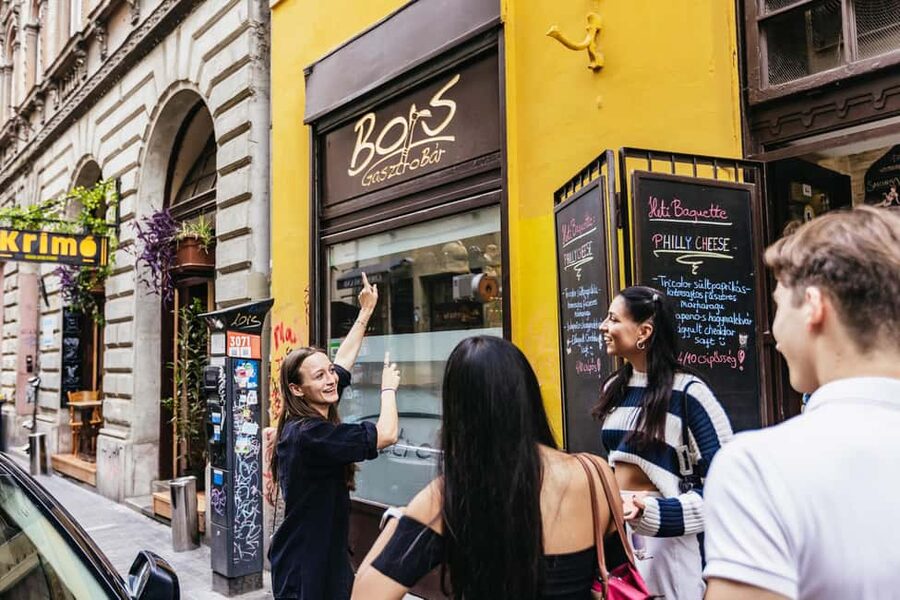
I like food tours that use eating as a way into a city, rather than treating the meal as the whole event. This one begins beside an old synagogue, where your guide introduces the Jewish influence on Hungarian cooking before leading you through District 7.
That setting matters. District 7 was once Budapest’s Jewish neighbourhood and is now known for bars, restaurants, nightlife, and ruin bars. The walk gives you a look at both sides of the area: older streets and local food traditions, followed by the polished and social side of modern Budapest.
You are not left to choose from a long menu or guess which dish is worth ordering. The food is arranged in advance, and entry to each stop is organised. That is useful in a busy part of the city, especially if you are visiting Budapest for the first time and want a clear introduction without spending hours planning meals.
The group also has a social feel. You share a route, several tables, and a few drinks with other people, which can be especially helpful for solo visitors. Oliver, travelling alone, found the tour a good way to meet people, while several other participants enjoyed continuing for a beer after the walk.
More Food Walking Tours in Budapest:
- Budapest Guided Food Walking Tour with Drinks Included
★ 4.8 · 472 reviews - Reykjavik Food Walk – Local Foodie Adventure in Iceland
★ 5.0 · 18,952 reviews - Ho Chi Minh City Street Food Tour & Sightseeing By Motorbike
★ 5.0 · 9,413 reviews
Starting beside the Kazinczy Street Synagogue
The meeting point is at the Kazinczy Street Synagogue, although the exact starting point can depend on the option you book. Check the confirmation carefully before setting out.
The synagogue makes a useful first stop because it gives the food a cultural frame. Hungarian cuisine did not develop in isolation. Jewish traditions helped shape dishes, pastries, cooking methods, and the food culture of Budapest. Your guide uses the neighbourhood to explain those links before the tasting begins.
This is also a practical place to start a walking tour. You are in District 7, close to restaurants, bars, and many of the city’s nightlife streets. After the tour ends at the synagogue, you can easily continue exploring the area or return to a place recommended by your guide.
The guides are a major part of the experience. Eszti has been praised for her warmth and clear explanations, while Laura is often noted for connecting dishes with her own experience of Budapest. Kitti, Nica, Peter, Kelly, and other local guides have also provided restaurant suggestions and advice for the rest of a visitor’s stay.
That personal advice is more useful than a standard list of sights. You can ask where to eat later, which neighbourhoods to visit, or which ruin bar fits your mood. Several guides have followed up with recommendations, and one group even received a message with the names of the dishes and places visited.
The Jewish Quarter and Budapest’s food story
The first part of the walking route focuses on the Jewish Quarter for about 30 minutes. You will hear about the district’s past, its food traditions, and the way its character has changed.
Do not expect a full architectural tour. The focus is food, so the history is there to explain what you are about to eat. That balance suits me. You get enough context to make the dishes meaningful, but you do not spend the whole three hours standing in front of buildings while your appetite disappears.
The area is busy with restaurants and bars, yet the organised route can take you beyond the most obvious choices. You meet the people serving the food and visit places selected for the tour rather than simply stopping at the first restaurant you see.
The atmosphere can be noisy, particularly around nightlife streets. That is part of District 7’s appeal, but it may not suit someone seeking a quiet, formal meal. The tour is social and casual, with a little grit alongside the more polished dining stops.
Soup and the casual side of Hungarian cooking

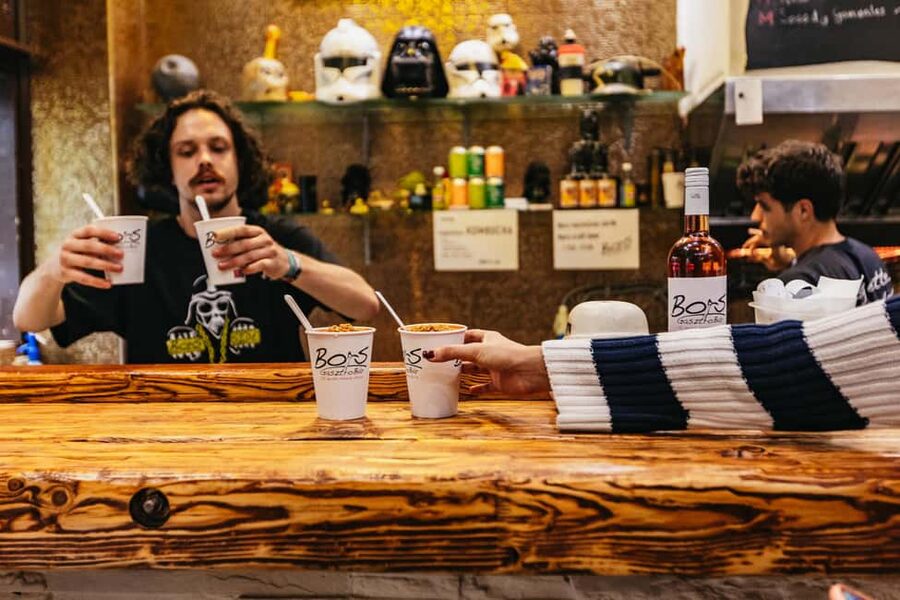
The food begins with the more relaxed side of Budapest. Soup is one of the dishes that appears repeatedly in the experience, and it can be a surprisingly strong opening course.
One menu description includes Hortobágyi malacragu leves, a hearty pork stew soup. Other participants particularly enjoyed a mushroom cream soup with chorizo and paprika. The exact selection may vary, but the pattern is clear: you get a proper bowl with real flavour, not a tiny spoonful meant only for a photograph.
This first stop also shows why you should not eat before the tour. The portions are described as generous from the start, and the meal continues for several more stops. If you arrive after a large lunch, you may spend the rest of the walk trying to keep up.
Soup is also a useful introduction to Hungarian cooking because paprika, meat, cream, and slow-cooked flavours often appear in different forms across the cuisine. Your guide explains the dish as you eat, so you begin to understand how everyday Hungarian food differs from the simplified versions sometimes served outside Hungary.
More Hidden Gems Walks in Budapest:
- Dublin Highlights and Hidden Gems Guided Walking Tour
★ 5.0 · 6,020 reviews - Explore Berlin: See All The Iconic Sights & Some Hidden Gems
★ 5.0 · 4,429 reviews - Venice: San Marco to Rialto Walk & Spritz Like a Local
★ 4.2 · 3,651 reviews - Kyoto Geisha Walking Tour: Gion District & Hidden Gems
★ 4.7 · 3,273 reviews
Lángos, beer, and the pleasure of eating with your hands
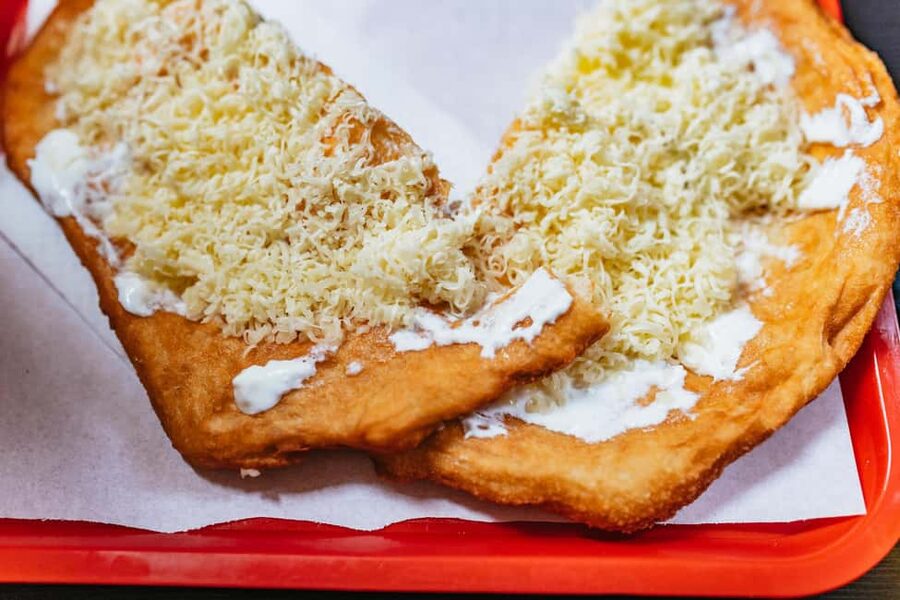
Next comes lángos, one of Budapest’s most familiar street foods. This deep-fried flatbread is commonly served with toppings such as sour cream, garlic, and cheese. Here, it is paired with beer, including Dreher in one described tasting.
Lángos is deliberately informal. You may skip the utensils and eat it by hand. That is not a flaw in the arrangement; it is part of the point. You get a sense of the casual food culture that locals enjoy, along with the slightly messy pleasure of eating something hot and filling while walking through the neighbourhood.
The beer pairing works well because lángos is rich and savoury. You also get a break from the historical explanation and a chance to talk with the group. Several people have found the combination of food, drink, and conversation one of the strongest parts of the tour.
The caution is simple: lángos is filling. It comes early, and you still have a sit-down meal and dessert ahead. If you are not used to fried food, pace yourself. You do not need to finish every bite just to prove your dedication to Hungarian cuisine.
From street food to pörkölt and nokedli
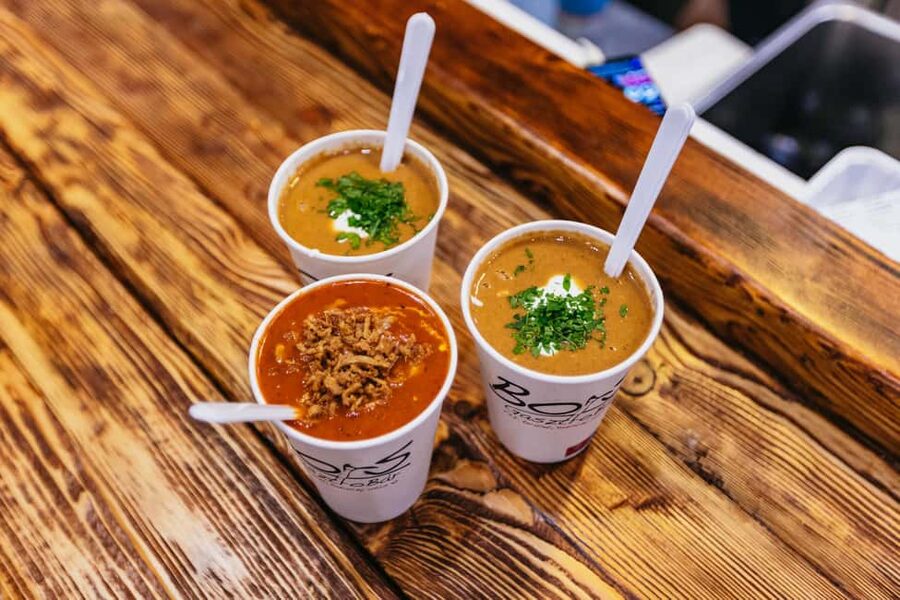
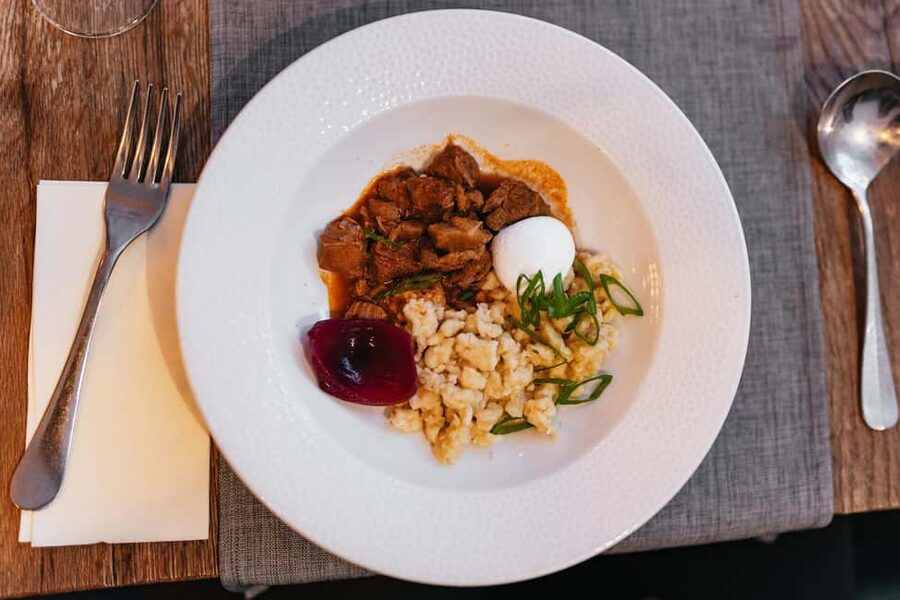
The route then shifts from casual snacks to more traditional sit-down dishes. Pörkölt, a paprika-seasoned stew, is one of the Hungarian classics associated with the meal. It may be served with nokedli, small dumplings similar in appearance to rustic egg noodles.
This stop gives you a better sense of the difference between Hungarian comfort food and Budapest street food. Lángos is quick, portable, and social. Pörkölt is slower and more substantial, the kind of dish that explains why Hungarian meals can be so satisfying.
You may receive your own full portion rather than a few shared bites. That is good value, but it also explains the repeated advice to arrive hungry. One person described the portions as individual servings, and several people said they did not need another meal that day.
The fixed menu has an advantage here. You do not have to decide between unfamiliar dishes or worry about ordering too much. The tradeoff is flexibility. If there is a particular Hungarian dish you hoped to try, it may not be included on your date, and the exact food can change.
Dessert with a Jewish-Hungarian connection

The final food stop turns to pastry and sweets. Flódni, a Jewish-Hungarian layered pastry, is included in the planned selection, while another described menu finished with Somlói galuska, a soft Hungarian dessert served with sweet flavours and cream.
Dessert is not always the strongest part of a food tour, and your taste may depend on how full you are by then. Some people preferred the savoury dishes, while others enjoyed the lighter finish. I would treat this course as a useful piece of the food story rather than the sole reason to book.
The pastry also brings the route back to its opening theme. Jewish and Hungarian cooking traditions overlap in ways that are easier to understand when you taste the result. That connection gives the final stop more purpose than simply adding sugar at the end.
Small touches can make this part memorable. One guide brought dessert with a candle for a birthday celebration. That sort of care depends on the guide and the group, but it shows how the experience can feel personal rather than mechanically timed.
Three drinks, with a clear alcohol warning

Three alcoholic drinks are included, with wine, beer, and shots or other alcohol-free choices. The tastings can include pálinka, Hungary’s strong fruit brandy, and sweet Tokaji wine from one of the country’s best-known wine regions.
Pálinka is not a gentle drink. Your guide can explain the tradition, but you should still pace yourself. A shot after a full meal may be enjoyable, yet three drinks over three hours can affect you more than expected, especially when combined with walking and strong food.
Tokaji offers a very different finish. Its sweetness works with dessert and gives you a chance to compare Hungarian drinking culture beyond beer and spirits. If you do not drink alcohol, you are not excluded. Alcohol-free drinks are available, but tell the provider your needs when booking.
This is not a dedicated wine tour. The drinks support the food and conversation rather than taking over the afternoon or evening. If you want several vintages, detailed vineyard discussion, or a formal tasting lesson, choose a specialist wine experience instead.
Walking time, group atmosphere, and pace

The tour lasts three hours and includes a guided walk through District 7 and toward Andrassy Avenue. The stated itinerary allows about 30 minutes for the Jewish Quarter and about an hour for the Andrassy Avenue section, with food stops fitting between the walking and dining.
You should wear comfortable shoes. The route is not a long-distance hike, but you are moving between four eateries, standing at some stops, and eating several substantial courses. The food gives you regular breaks, so the pace should feel manageable for most people who are comfortable walking around a central city district.
The group atmosphere can be one of the tour’s best features. Small groups have been described as more personal, giving you time to ask questions and speak with the guide. A private group option is also available if you want the walk arranged for your own party.
There is no promise of a ruin bar stop in the supplied plan. The walk takes place in District 7, an area associated with ruin bars, and one guide took a group to one, but you should not book this specifically for that stop. Ask your guide for a recommendation afterward if it is not part of your route.
Is $73 good value?
At $73 per person, the price is not simply paying for four snacks. You are covering four food stops, a three-hour guided walk, three drinks, local restaurant arrangements, cultural explanation, and the convenience of not having to plan or queue for each place.
The value improves if you arrive hungry and treat the food as a full meal. Several portions are substantial, and you may not need dinner afterward. If you would normally spend money on lunch, drinks, and an evening meal, the tour can compare well with paying separately, particularly because it includes a guide and organised entry.
The fixed menu also reduces risk. Budapest has plenty of restaurants, but choosing well can take time. Here, you receive a planned introduction to Hungarian dishes and can return later to any stop you especially like. Some people went back for the soup or lángos after the tour.
The price may feel high if you eat very little, avoid alcohol, or already know Budapest’s food scene well. Vegetarians may also receive fewer choices than those eating the standard menu. Ask about your diet before booking so you know what the menu can support.
Who should book this food tour?
I would recommend it most strongly for a first visit to Budapest, especially if you want food, neighbourhood history, and company in one outing. It also suits solo visitors, couples, and small groups who prefer a guide to handle the details.
Book it early in your stay if you can. That gives you restaurant suggestions for later and lets you use the tour as a guide to Hungarian dishes. You may discover a soup, pastry, or bar that you want to revisit.
It is less suitable for strict vegans, anyone requiring gluten-free food, or visitors seeking a quiet private meal. It also may not satisfy a serious food specialist who wants technical cooking instruction or a long wine tasting.
For everyone else, the combination is sensible: four eateries, generous portions, a District 7 walk, and enough local background to make the food stick in your memory.
Should you book the Budapest Food Walking Tour?
Yes, if you want a filling and social introduction to Budapest cuisine rather than a formal restaurant crawl. The strongest points are the generous servings, the range from soup and lángos to pörkölt and dessert, and guides such as Eszti, Laura, Kitti, Nica, and Peter who add personal city advice.
Book with three rules in mind: arrive hungry, wear comfortable shoes, and state dietary restrictions in advance. Vegetarians have options, but gluten-free and vegan diets cannot currently be accommodated. At $73, the tour earns its price best when you use it as both a meal and a practical introduction to District 7.
FAQ
How long does the Budapest food walking tour last?
The tour lasts three hours, including the guided walk, four food stops, and drink pairings.
Where does the tour start and finish?
The tour starts at one of the listed meeting points, with the Kazinczy Street Synagogue used as the main location. It finishes at the Kazinczy Street Synagogue. The exact starting point may vary with the option booked.
What food is included?
Food is provided at four local eateries. The planned experience includes traditional Hungarian street food, soup, lángos, Hungarian main dishes such as pörkölt and nokedli, and dessert options such as flódni. The exact menu may vary.
Are drinks included?
Yes. Three alcoholic beverages are included, including wine, beer, and shots. Alcohol-free options are available.
Can vegetarians join the tour?
Yes. Vegetarian options are available, although there may be fewer choices than on the standard menu. Tell the activity provider about your dietary needs when booking.
Can the tour accommodate vegan or gluten-free diets?
No. The tour currently cannot accommodate vegan or gluten-free diets.
What language is the tour offered in?
The live tour is offered in English. A private group option is available.
Just added around Budapest
- Budapest 3-Hour Walking Tour in Italian★ 4.6 · 217 reviews
- Budapest: Castle District Walking Tour★ 4.8 · 223 reviews
- Budapest: Jewish History Guided Walking Tour with Historian★ 4.8 · 205 reviews
- Budapest Guided Food Walking Tour with Drinks Included★ 4.8 · 472 reviews
- Budapest: Walking Tour to the Shoes Memorial and Parliament★ 4.7 · 151 reviews
- Budapest: Walking Tour in the Buda Castle District★ 4.9 · 113 reviews
- Budapest: Walking Tour and Photoshoot with Digital Photos★ 4.7 · 82 reviews
- Budapest: 3-Hour Walking Tour of Pest with a Historian★ 4.9 · 81 reviews
Food Walking Tours, compared.
Reykjavik Food Walk – Local Foodie Adventure in Iceland
Read our review →
Ho Chi Minh City Street Food Tour & Sightseeing By Motorbike
Read our review →
New Orleans Food Walking Tour of the French Quarter with Small-Group Option
Read our review →

Authentic Parisian Gourmet Food Tour with 10 Local Dishes & Wines
Read our review →

Savannah First Squares Culinary & Cultural Walking Food Tour
Read our review →Browse the lists this tour appears in