
REVIEW · MUNICH
Munich in the 3rd Reich and WW2 private walking tour
Munich’s elegant streets conceal a difficult truth: this was the city the Nazis called the Capital of the Movement. This private walking tour follows that story from postwar political chaos to Hitler’s rise, the Beer Hall Putsch, Kristallnacht, the Munich Pact, Allied bombing, and the arrival of US forces in 1945.
I like the private format, which gives you room to ask questions and adjust the pace. I also like the use of old photographs and historical objects, which help connect today’s streets with the events that took place there. The main drawback is the amount of walking, often in changing weather, with no refreshments included.
Key points at a glance
- Munich’s Nazi origins: Follow the city’s role in the birth and growth of the Nazi Party.
- Private attention: Your group of up to six has the guide to itself, making questions and route changes easy.
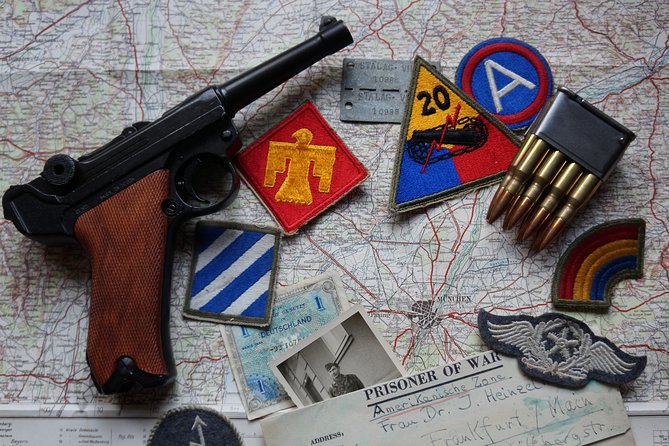
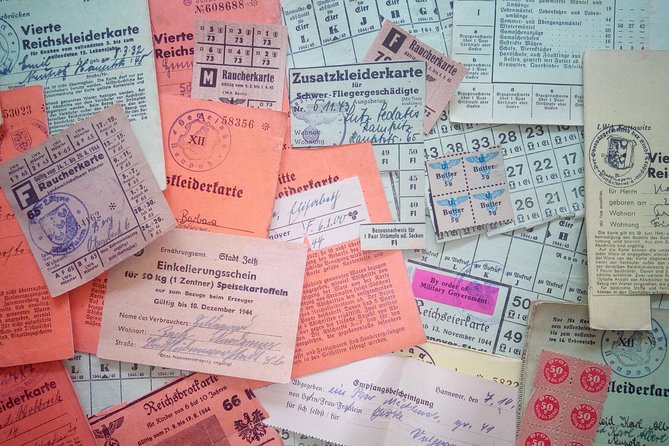
- Visual history: Taff and other guides use photographs, props, and memorabilia to make locations easier to understand.
- Major wartime themes: Cover the Beer Hall Putsch, SS origins, Kristallnacht, the Munich Pact, bombing, and the 1945 surrender.
- Flexible pacing: Guides have shortened or reshaped the walk for cold weather, limited schedules, family groups, and special interests.
- Beerhall option: The tour generally includes a break in a beerhall linked to the subject, though you can request a café instead.
Why Munich is the right place for this history
Munich is often introduced through churches, palaces, beer halls, lederhosen, and Oktoberfest. That cheerful image is real, but it tells only part of the city’s story.
After the First World War, Germany faced political violence, economic hardship, and public anger over the Treaty of Versailles. Munich became a center of radical politics. For a short period, the city even had a Soviet Republic. Out of this unsettled time came the Nazi Party, led by Adolf Hitler, an Austrian who built his political career in Germany.
The tour helps you see how a beautiful, ordinary city became the spiritual center of a movement that brought war and mass murder across Europe. That setting is important. You are not studying events in a distant museum room. You are walking through streets, squares, and public places where speeches were made, power was organized, and resistance later took shape.
I find this approach useful because it places the rise of Nazism in a wider setting. The story is not reduced to Hitler alone. You learn about the conditions that allowed extremism to gain support, the institutions that helped it grow, and the human decisions that made persecution and war possible.
More Private Walking Tours in Germany
- Private Walking Tour Berlin Third Reich Hitler and World War II
★ 5.0 · 360 reviews - Private Walking Tour: World War 2 and Cold War Sites in Berlin
★ 5.0 · 230 reviews - The History of Berlin: WWII PRIVATE Walking Tour With Locals
★ 5.0 · 209 reviews
Starting at Isar Gate and entering the story
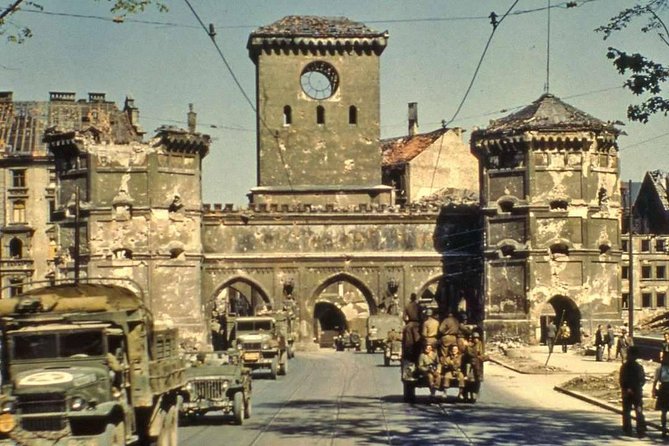
The listed starting point is Isar Gate, at Tal 50, in central Munich. The tour can also arrange pickup at Munich’s main train station or Marienplatz, which is useful if you are arriving by train or already sightseeing in the city center.
Starting near Isar Gate places you close to Munich’s old town, but the subject quickly moves beyond postcard scenery. Your guide sets out the background of the First World War and the Treaty of Versailles, then explains how political frustration and social unrest shaped Munich after 1918.
This opening matters. Without it, the Nazi rise can seem like a sudden event caused by one charismatic leader. The tour instead shows the sequence of instability, radical movements, propaganda, and political opportunism that made the period so dangerous.
Guides such as Taff, Kevin, and Joanne bring different strengths to the walk. Taff is known for using photographs, props, and historical pieces. Kevin has been praised for working well with families and younger children. Joanne has led the tour when another guide was unavailable and has used photographs and storytelling to explain the period.
Because this is a private tour, you can ask for more attention to the subjects that matter most to you. You might want more about military history, the rise of the Nazi Party, Jewish persecution, local resistance, or the city’s physical destruction. The guide can spend more time on those questions than a large group tour usually allows.
The Nazi Party’s Munich beginnings
One of the tour’s central subjects is the origin of the Nazi Party in Munich. The city was not simply a backdrop. It became a political base, a place where Hitler developed his public role, and a center for the movement’s organization.
The guide explains how the party grew from a small political group into a force capable of taking control of Germany. You will also hear about the birthplace of the SS, an important part of the Nazi system of terror. This gives the walk a wider focus than a simple Hitler biography.
The value here is the connection between people, institutions, and places. Political movements need meeting halls, offices, supporters, symbols, and public stages. Seeing those locations helps you understand how an extremist group moved from the margins toward power.
The guides also bring a dramatic touch to the storytelling. One guide has been praised for acting out parts of the story, while still keeping the subject serious. That style will appeal to you if you learn best through vivid narration rather than a long list of dates.
Families can also find this part manageable. A guide has been singled out for keeping an 11-year-old engaged, and another adapted the presentation successfully for teenagers. Still, the subject is difficult. Parents should decide in advance how much detail is suitable for their children.
The Beer Hall Putsch and the path to power
The Beer Hall Putsch is one of the major events covered on the route. In 1923, Hitler and his supporters attempted to seize power in Bavaria. The attempt failed, but it became a key moment in the development of Nazi strategy and Hitler’s public image.
A good guide can show why a failed coup still mattered. The event gave Hitler publicity, a trial platform, and a lesson in how power might be gained through legal and political means rather than an immediate armed takeover. The walk connects this episode to the broader story of how the Nazi movement changed tactics.
The tour generally stops for a break in a beerhall connected with this history. The stop is a pleasant practical feature, especially during a long afternoon of serious subject matter. Food and drinks are not included, so budget separately. If you prefer not to pause in a beerhall, you can ask for a café instead.
This break also gives you a chance to ask questions in a less formal setting. Several guides add local tips or other points of interest during the pause, so you may get useful advice for the rest of your Munich visit.
Same streets, a different route:
- Discover Berlin Half-Day Walking Tour
★ 5.0 · 9,624 reviews - Berlin City walk Government District and Places of Democracy
★ 4.7 · 8,467 reviews - Berlin: Third Reich & Cold War Guided Walking Tour
★ 4.9 · 8,378 reviews - Munich: Third Reich & WWII Walking Tour
★ 4.6 · 6,181 reviews
Kristallnacht and the beginnings of the Holocaust
The tour does not stop with political history. It also addresses Kristallnacht and the origins of the Holocaust. This is essential, because the story of the Third Reich is not only about elections, speeches, military campaigns, and government buildings. It is also about the systematic exclusion, persecution, deportation, and murder of Jewish people and other targeted groups.
Your guide places Kristallnacht within the wider growth of Nazi persecution. The subject is handled as part of the city’s story, not as an isolated tragedy. That helps you see how public violence, discriminatory laws, propaganda, and state power worked together.
This section may be the most emotionally difficult part of the walk. You are outside, moving through central Munich, while discussing events that affected real communities in the same city. The contrast between today’s cafés, shops, and restored buildings and the violence of the past can be hard to process.
The tour also gives room for lesser-known subjects. One guide has included information about the White Rose, the student resistance group associated with Munich. If resistance movements interest you, ask about them early so the guide can give them suitable attention within the available time.
Party headquarters and the Munich Pact
Another important section focuses on the former Nazi Party headquarters and the signing of the Munich Pact. These subjects show how the movement operated both inside Germany and on the international stage.
The headquarters represent administration, propaganda, and political control. The Munich Pact points to the foreign policy failures that helped Hitler pursue expansion without immediate military opposition from Britain and France. Together, these topics broaden the tour beyond street-level events.
A private guide can help you connect the physical setting with the political decisions made there. You can ask how local power related to national leadership, or how Munich’s symbolic role affected the Nazi movement’s public image.
Do not expect every site to look exactly as it did in the 1930s and 1940s. Munich suffered extensive wartime damage, and postwar rebuilding changed the city. That is where the visual aids matter. Old photographs can show you the missing buildings, altered streets, and former public spaces that are difficult to read from the modern city alone.
Bombing, liberation, and Munich in 1945
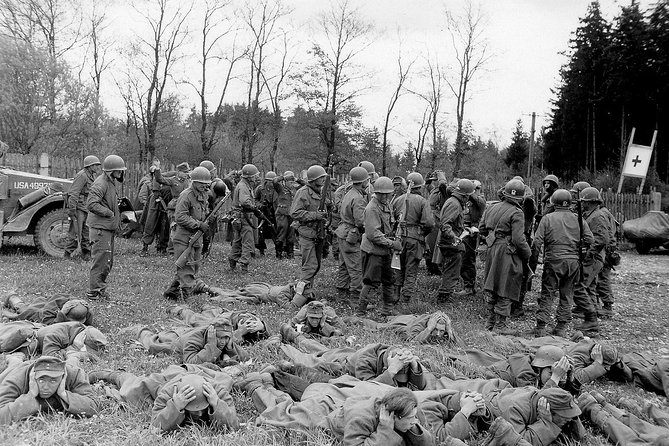
The final part of the story covers the Allied bombing campaign and the fall of Munich to US forces in 1945. These subjects show the war’s effect on the city itself.
The bombing campaign is best understood alongside the earlier history. Munich had been a major Nazi center, and by the end of the war it had become a damaged city facing military defeat. The guide explains how the city changed during the war and how US forces took control in 1945.
This section gives the tour a clear endpoint. You follow the story from political unrest after the First World War to the Nazi seizure of power, racial persecution, total war, destruction, and defeat. The route does not treat 1945 as a simple ending. It leaves you with the question of how a society rebuilds after such crimes and how the memory of that period should be handled.
The walk may also include broader Munich details, such as local landmarks and modern points of interest. That mix can be helpful. It reminds you that the city is more than its Nazi past, while also showing why that past cannot be ignored.
What the private format is worth
The price is $423.44 per group of up to six people. That is a serious amount for a walking tour, but the calculation changes if you fill the group. Six people would pay about $71 per person. Two people would pay about $212 each, making it much harder to call this a budget activity.
I see the strongest value in the private attention. You are not sharing a guide with a large crowd, waiting for everyone to catch up, or limiting questions because the next group is waiting. A private format works especially well for families, serious history students, and small groups with different interests.
The guides also appear to tailor the experience when needed. One tour was shortened in freezing weather without losing the main story. Another was adjusted for a limited schedule, while a family received extra attention to questions and requests outside the standard route.
The tour lasts roughly three and a half to four and a half hours. That is enough time for a serious look at the subject, but it also means you should not book it immediately before a fixed evening reservation unless you have plenty of spare time.
Walking conditions and useful planning advice
This is a genuine walking tour. You do not use a car or bus between the sites, and a moderate amount of walking is involved. Wear comfortable shoes, especially if you plan to continue sightseeing afterward.
The tour operates in all weather conditions. Munich can be cold, wet, or snowy, and the experience is largely outdoors. Bring suitable layers, rain protection, and water. If the weather is severe, tell the guide early if you need a shorter route or more indoor time.
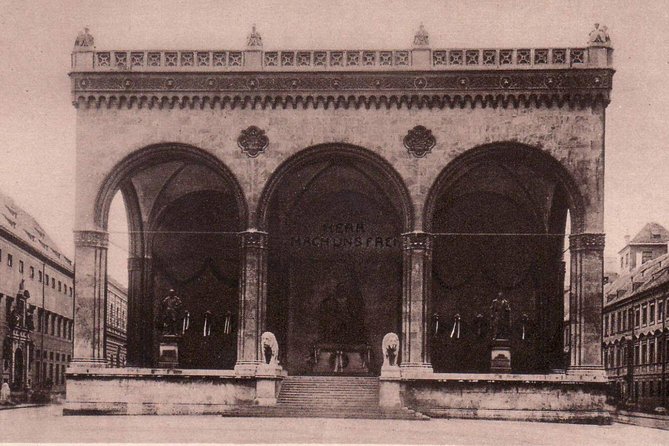
The meeting points are close to public transportation. The standard route begins at Isar Gate and ends at Odeonsplatz, at Odeonsplatz 3. The ending point is near the Residenz palace and only a few minutes from Marienplatz, so it puts you in a useful spot for further sightseeing.
Service animals are allowed, and most people can participate. Refreshments are not included. A beerhall or café break is usually part of the day, but you pay for anything you order.
Free cancellation is available if you cancel at least 24 hours before the scheduled start time. Changes or cancellations made inside that window are not accepted for a refund.
Who should book this Munich history tour?
I would choose this tour if you want to understand how Munich became the Nazi movement’s political home rather than simply see a few famous sites. It suits adults with a strong interest in European history, couples who want a serious private experience, and families with older children or teenagers who can handle the subject.
It is also a good option if you have limited time but still want more than a standard city walk. The guide can focus on the Nazi period while adding local orientation and practical Munich advice.
I would hesitate if you dislike long walks, need a fully indoor activity, or prefer a light introduction to Munich. The subject is grim, and the length can feel demanding in poor weather. The cost is also high for one or two people.
Should you book it?
Book this private Munich Third Reich and WW2 walking tour if you want a focused, human explanation of the city’s role in the Nazi era. The strongest reasons are the private group size, the use of photographs and props, and the guides’ ability to adjust the route for families, weather, and specific questions.
If you are traveling alone or as a couple on a tight budget, compare the price with a group tour. If you are splitting the cost among five or six people, the value improves sharply. For history fans, this is one of the more serious and useful ways to understand Munich beyond beer halls and palaces.
FAQ
Where does the tour start?
The standard meeting point is Isar Gate at Tal 50, 80331 Munich. Pickup can also be arranged at Munich’s main train station or Marienplatz.
Where does the tour end?
The tour ends at Odeonsplatz, at Odeonsplatz 3, 80539 Munich. The square is beside the Residenz palace and a few minutes from Marienplatz.
How long does the walking tour last?
The tour lasts approximately three and a half to four and a half hours.
How many people can join the private tour?
The price covers one private group of up to six people. Only your group participates.
Is the tour offered in English?
Yes. The experience is offered in English.
Does the tour include a break?
The tour generally stops for a break in a beerhall associated with the history being discussed. You can request a café instead. Drinks and food are not included.
Is the tour suitable in bad weather?
Yes, it operates in all weather conditions. You should dress appropriately and wear suitable footwear because the tour involves outdoor walking.
Can I cancel for a refund?
You can cancel for a full refund up to 24 hours before the experience starts. Cancellations or changes made less than 24 hours before the start time are not accepted for a refund.
Just added around Germany
- Hamburg: Guided Port Walk for Families★ 4.6 · 191 reviews
- East Berlin and the Wall: Walking Tour★ 4.9 · 407 reviews
- Dresden: Shared Small Group Walking Tour in English★ 4.8 · 172 reviews
- Dresden: Taste of Dresden Food Walk★ 4.6 · 397 reviews
- Dresden: Private Guided Walking Tour★ 4.5 · 81 reviews
- Dresden: Guided City Walk and Panometer Entrance Ticket★ 4.5 · 176 reviews
- Dresden Old Town – Guided Walking Tour in English★ 4.8 · 135 reviews
- Dresden: Neustadt District Street Art Guided Walking Tour★ 4.3 · 333 reviews
Private Walking Tours, compared.
Barcelona Helicopter, Sailboat & Old Town Private Walking Tour
Read our review →
Lyon: Private Walking Tour of “Traboules” in the Old Town
Read our review →
Browse the lists this tour appears in