
REVIEW · MUMBAI
Group Guided Walking Tour in Fort and Colaba
Mumbai’s story is written into the streets between the Asiatic Society and Gateway of India. In two and a half hours, you move from the city’s colonial beginnings through grand public buildings, cricket history, art districts, and a nearly vanished Jewish community.
I like the small maximum of 12, which gives the guide room to answer questions, and I like the route itself: it links major sights with details you could easily miss while walking alone. The one drawback is that this is a walking tour with several outdoor stops, so hot weather or rain can make the pace less comfortable.
Key points at a glance

- A 2.5-hour route across South Mumbai: Walk from Town Hall through Fort and Kala Ghoda to Colaba.
- A compact group of no more than 12: You get a more personal setting than on a large city tour.
- Nine carefully chosen stops: The route covers architecture, religion, sport, politics, and Mumbai’s colonial past.
- A strong finish at the Gateway of India: End beside the monument and the Taj Mahal Palace Hotel.
- Useful local advice: Your guide can suggest places to eat, visit, or explore after the walk.
- Good value at $16.73: The price is modest for a guided introduction to central Mumbai, with no separate admission fees listed.
Why this walk gives you a useful first look at Mumbai
This tour works because it tells Mumbai’s story through a walkable part of the city. You are not simply driven past monuments. You see how Fort developed around British rule, how public gardens and institutions shaped the city, and how different religious communities left their mark on the streets.
The route also gives you a clear sense of change. The city began as a fishing and farming settlement, then grew under Portuguese and British control into a major port and commercial center. Your guide connects those chapters as you move from one building to the next.
I especially like the route’s range. You get grand colonial architecture, but you also hear about cricket, Jewish life, university education, political memory, and the daily use of public spaces. That mix keeps the walk from becoming a parade of façades.
The group limit matters here. With no more than 12 people, you should be able to hear the guide more easily and ask about details that catch your eye. Guides such as Palak have also included a complimentary coffee stop during the walk, though you should treat that as a possible extra rather than a guaranteed part of every departure.
More Guided Tours in India:
- Private Guided Walking Tour in Fort & Colaba
★ 5.0 · 895 reviews - Private Guided Walking Tour in Bandra Queen of Suburbs
★ 5.0 · 383 reviews - Jodhpur Blue City Heritage Walking Guided Tour
★ 5.0 · 240 reviews
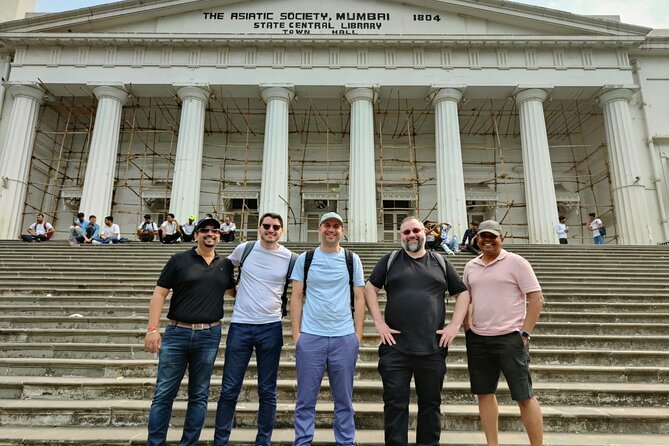
Starting at Town Hall and the Asiatic Society
The walk begins at the Asiatic Society in Town Hall, an impressive neoclassical building with broad steps and a commanding view of the surrounding streets. This is a fitting place to begin because the tour starts with the formation of Mumbai itself.
Here, you hear how Portuguese and British colonization changed a group of islands and settlements into a growing colonial city. The first 20 minutes provide the basic frame for everything that follows: who controlled the city, why its location mattered, and how its institutions developed.
Town Hall is also a good photography stop. The building has the formal columns and scale you expect from a major civic institution, but the real value is the explanation of what happened around it. Without context, you might take a picture and move on. With a guide, the building becomes an entry point into Mumbai’s political and commercial past.
Horniman Circle and the public life of Fort
From Town Hall, the route continues to Horniman Circle Garden, where you spend about 15 minutes. The garden is surrounded by Victorian buildings and helps show how Fort was planned as a formal business and civic district.
Your guide explains the garden’s earlier activities and its place in the life of old Mumbai. This is one of the stops where the guide’s local knowledge matters more than the monument itself. You are looking at a public square, but you are also learning how people used it and how the surrounding buildings supported the city’s growth.
The stop is short, which suits the site. You get the story and time for photographs without lingering too long in one small area. Keep your attention on the buildings around the garden, not only the open space in the center.
St. Thomas Cathedral and Mumbai’s oldest Anglican church
The next stop takes you inside St. Thomas Cathedral for around 15 minutes. The church is identified as Mumbai’s oldest Anglican church, and its memorials and grand altar offer a quieter change from the outdoor streets.
This part of the tour adds a human side to the colonial story. Memorials can reveal who held power, who served in the city, and how British communities marked important lives and deaths. The interior also gives you a short break from the heat and traffic.
The visit is brief, so you should not expect a long religious or architectural lecture. Instead, think of it as one chapter in the larger walk. The cathedral helps explain the institutions that grew in Fort, while the later stops show how the city developed beyond its colonial core.
A few more walking tours around India worth a look
- Fontainhas Heritage Walk by Make It Happen
★ 5.0 · 2,834 reviews - The Great Indian Food Tour: Old Delhi Food and Heritage Walk
★ 5.0 · 1,698 reviews - Spiritual City Walking Tour-THE Pushkar Route
★ 5.0 · 907 reviews - Old Goa Heritage Walk by Make It Happen
★ 5.0 · 797 reviews
Flora Fountain and the memory of modern Mumbai
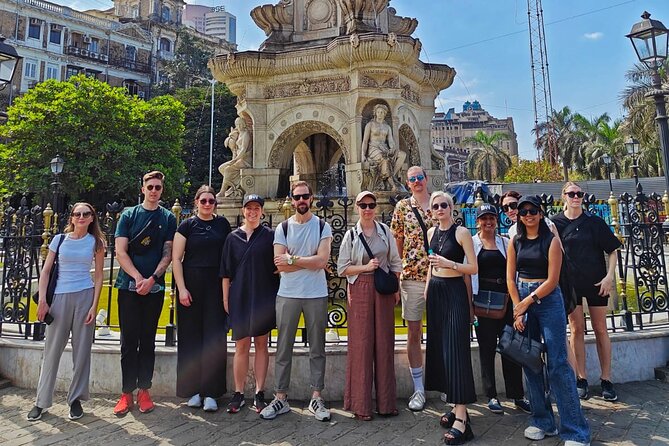
At Flora Fountain, the tour pauses for about 15 minutes. The fountain is described as Mumbai’s answer to Piccadilly Circus, and it sits in a central area associated with the city’s public life.
This stop also introduces the Martyrs’ Memorial. That detail gives the square a political layer. You are not only seeing an ornate landmark; you are hearing how public memory and national identity became part of the city’s streets.
Flora Fountain can be visually busy, so a guide helps you sort out what deserves your attention. Look beyond the fountain itself to the surrounding buildings, traffic patterns, and the way old and newer Mumbai meet here. It is a good place to understand that the city’s history is not kept behind museum doors. It remains part of the working center.
Oval Maidan and the birthplace of Indian cricket
The 20-minute stop at Oval Maidan is one of the route’s strongest moments. From the open ground, you can see the grand buildings around what is described as the birthplace of Indian cricket.
This stop changes the subject from government and religion to sport. Cricket is not a side note in Mumbai. It is tied to public space, community identity, and the city’s social life. The maidan helps you see how a large open area can shape a city just as much as a courthouse or library.
The surrounding architecture also matters. The contrast between the open playing field and the formal buildings around it makes this one of the better photo opportunities on the walk. You will want to allow time to look across the maidan, not only at the nearest building.
Because the tour is on foot, you experience the scale of the area directly. You can also ask the guide about the buildings and the sporting traditions connected to the ground. This is a good example of why a guided route can add value to a simple city walk.
Rajabai Clock Tower and the University of Mumbai
The tour then reaches Rajabai Clock Tower for about 15 minutes. It is presented as Mumbai’s answer to Big Ben, but the important point is not just the comparison. Your guide explains the evolution of the University of Mumbai and the role of education in the city’s growth.
The tower and university buildings add another style of grand institutional architecture to the route. By this point, you have seen religious, civic, and public buildings. Here, you see how higher education became part of the city’s colonial development.
This stop is especially useful if you like architecture with a story behind it. A clock tower can be easy to treat as a decorative landmark. The university connection gives it a broader purpose and helps explain why this part of Mumbai became such an important center of learning.
The tour does not suggest a long interior visit here, so expect to view the tower and hear the story from outside. That keeps the walk moving toward Kala Ghoda.
Kala Ghoda, Mumbai’s art district
Kala Ghoda receives another 15 minutes and brings you into Mumbai’s premier art district. The area is known for varied architecture, and your guide points out the secrets held by the buildings.
This is a good place to slow down and look upward. The architecture is not one-note. Different periods and functions sit close together, and a guide can help you notice features that would otherwise pass without comment.
Kala Ghoda also gives the walk a more cultural feel. After the civic buildings and open cricket ground, you get a sense of Mumbai as a city of galleries, public art, and historic streets. The stop is not presented as a full art tour, so do not expect extended gallery visits. Its value is in seeing the district and understanding how it fits into the city.
If you have extra time after the walk, this is one of the areas worth revisiting at your own pace. The tour gives you an orientation, then you can decide which buildings or cultural sites deserve a closer look.
Keneseth Eliyahoo Synagogue and a fading community
The stop at Keneseth Eliyahoo Synagogue lasts about 15 minutes and adds one of the route’s most distinctive subjects. Here, you learn about Mumbai’s Jewish enclave and the signs of Jewish life that are now almost extinct in the city.
This is the kind of detail that makes the walk more than a standard colonial sightseeing circuit. Mumbai’s story includes many communities, and the synagogue shows how a smaller group shaped part of the city’s religious and commercial life.
The tour description does not promise an extended interior visit or a full service experience, so you should think of this as an exterior and neighborhood-focused stop unless your guide advises otherwise. The important thing is the context. You are being asked to notice a community that may be easy to overlook in the larger story of British Mumbai and modern India.
Finishing at the Gateway of India
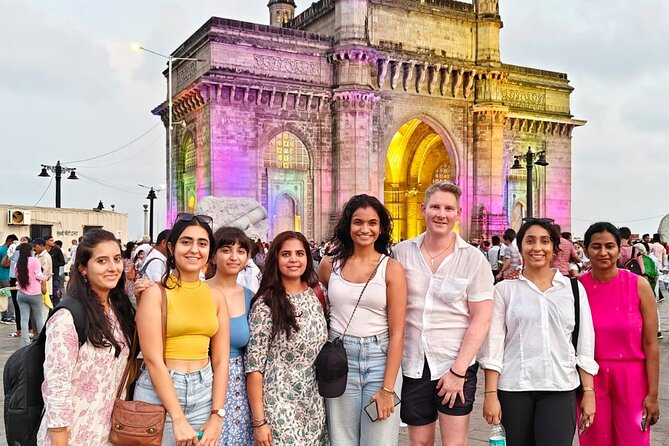
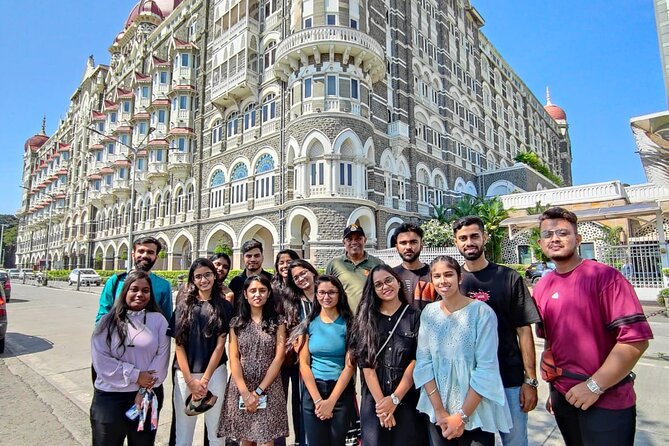
The walk ends at the Gateway of India and the Taj Mahal Palace Hotel, with about 20 minutes at the final stop. This is the most instantly recognizable part of the route and the natural place for your major photographs.
The Gateway of India gives the tour a strong visual finish. After beginning with Town Hall and the origins of colonial Mumbai, you end at a monument associated with the city’s waterfront and its role as a gateway to the wider world.
The Taj Mahal Palace Hotel adds another layer of history and architecture beside the monument. Your guide can explain the importance of both landmarks, while you take in the open space around them.
This ending is also practical. You finish in Colaba, one of South Mumbai’s best-known visitor areas, with a guide who can offer suggestions for what to do next. The tour does not include a return transfer, so plan your onward route from the Gateway of India.
What $16.73 gets you
At $16.73 per person, this is a low-cost way to get a guided introduction to some of central Mumbai’s major sights. The value comes from the connections between stops. You could walk past many of these buildings on your own, but the guide explains why they matter and how they fit together.
There are no separate admission charges listed for the stops, which keeps the price easy to understand. The tour is also mobile-ticketed, so you do not need to manage a paper voucher.
The modest price does not mean the walk is effortless. You are paying for interpretation, not transport, meals, or a private tour. The group can include up to 12 people, so it is personal but not one-on-one.
For a first visit to South Mumbai, I think the cost is fair. It gives you a strong orientation in a short time and leaves you with useful ideas for exploring Fort, Kala Ghoda, and Colaba later.
Who should book this Mumbai walk
I would choose this tour if you want an introduction to Mumbai’s history without spending half a day in a vehicle. It suits first-time visitors, architecture fans, people interested in colonial history, and anyone who wants a local guide’s suggestions after the formal sightseeing ends.
It also works well for independent visitors who prefer to explore alone but want help getting their bearings at the start. The route gives you enough context to make later walks more rewarding.
You should think twice if you dislike walking outdoors, need a very slow pace, or want long visits inside each building. The stops are timed in short blocks, and the tour covers nine locations in about two and a half hours.
Good weather is required. If poor weather causes cancellation, you are offered another date or a full refund. For a full refund after booking, cancel at least 24 hours before the start time. Cancellations or changes made inside that window are not refunded or accepted.
Should you book the Fort and Colaba walking tour?
Book it if you want to understand Mumbai through its buildings, public spaces, and communities rather than simply collect photographs. The route is well chosen, the group stays small, and the finish at the Gateway of India gives you an easy next step into Colaba.
The best reason to go is the range of subjects packed into one walk: Portuguese and British rule, civic architecture, Anglican worship, Indian cricket, higher education, the art district, and Jewish Mumbai. At $16.73, that is a useful amount of local context for a modest price.
Skip it only if the weather is poor, outdoor walking is difficult for you, or you want a private and slower experience. For most visitors who have a free morning or afternoon in South Mumbai, this is a practical way to get oriented fast.
FAQ
How long does the walking tour last?
The tour lasts approximately 2 hours and 30 minutes.
Where does the tour begin?
It begins at the Asiatic Society in Mumbai Town Hall, on Shahid Bhagat Singh Road in Fort.
Where does the tour finish?
The tour ends at the Gateway of India in Apollo Bandar, Colaba.
What main sights are included?
The route includes Town Hall, Horniman Circle Garden, St. Thomas Cathedral, Flora Fountain, Oval Maidan, Rajabai Clock Tower, Kala Ghoda, Keneseth Eliyahoo Synagogue, and the Gateway of India.
How large is the group?
The tour has a maximum group size of 12 people.
What does the tour cost?
The listed price is $16.73 per person.
Is the ticket available on a phone?
Yes. The experience includes a mobile ticket.
Can most people participate?
Yes. Most visitors can participate, and the meeting area is near public transportation.
What happens if the weather is poor?
The experience requires good weather. If it is canceled because of poor weather, you can choose another date or receive a full refund.
Just added around India
- Evening Walking Tour with Fire Rituals-The Pushkar Route★ 4.9 · 108 reviews
- Chennai Walking Tour ( 2 hours guided tour)★ 3.8 · 85 reviews
- Bangalore: Palace, Temples, Fort & Markets Walking Tour★ 4.9 · 97 reviews
- Agra: Street Food Walking Tour, Spice Market, & Tuk-tuk Ride★ 4.9 · 102 reviews
- Private Guided Walking Tour in Bandra Queen of Suburbs★ 5.0 · 383 reviews
- Breakfast Walk in Old Delhi★ 5.0 · 449 reviews
- Old Delhi Heritage Walking Tour★ 5.0 · 247 reviews
- The Cultural And Historical Walking Tour in Margao★ 5.0 · 280 reviews
Walking Tours, compared.

Magical London: Harry Potter Guided Walking Tour
Read our review →
Reykjavik Food Walk – Local Foodie Adventure in Iceland
Read our review →
History and Hauntings of Salem Guided Walking Tour
Read our review →
New Orleans Premier Ghost, Voodoo and Vampire Walking Tour
Read our review →
Amsterdam Anne Frank: Small-Group Walking Tour & Local Guide
Read our review →

Edinburgh Castle: Guided Walking Tour with Entry Ticket
Read our review →
Anne Frank’s Story – Guided Walking Tour through Amsterdam
Read our review →Browse the lists this tour appears in