
REVIEW · DUBLIN
Private (Nearly!) All of Dublin in 5 hours (Walking Tour)
Dublin’s story comes alive when you walk it in sequence: Trinity College, the old political quarter, the Easter Rising sites, the river, and the lively streets between them. This private five-hour route gives you a fast but thoughtful introduction, with an Irish guide who can explain not only what you are seeing, but why it matters.
I like the way the tour can be shaped around your group, and I like the guides’ habit of adding useful local advice. John, Eamon, Carl, Brendan, Austin, Mark, Garvan, and Breda have all led versions of this experience, with strong praise for their storytelling, patience, and humor.
The catch is simple: five hours is a lot of walking. You may cover around five miles, and the advertised sights cannot all receive equal attention. You must also choose between the Book of Kells and the National Museum unless your guide arranges a different plan.
Key points at a glance
- Private route for your group: The guide can adjust the pace, interests, and stops rather than follow a fixed public-tour script.
- A strong first-day overview: Trinity College, Dublin Castle, Christ Church, the GPO, St Stephen’s Green, and other central sights fit into one busy outing.
- History carries the tour: Expect stories about Viking Dublin, British rule, the Easter Rising, Catholic emancipation, and the Irish Republic.
- Book of Kells is optional: Entry costs extra and should be arranged ahead of time. It replaces the National Museum in the standard five-hour plan.
- Local details improve the walk: Guides may point out pub snugs, street art, smaller shops, good places to eat, and music venues.
- Best for active sightseers: You need comfortable shoes and enough energy for a long urban walk, often with limited time inside major attractions.
Why this works as a first look at Dublin
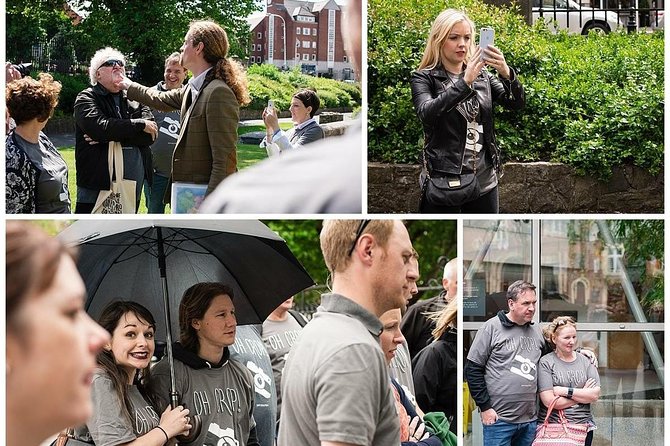
Many city walks give you one district or one historical period. This one tries to connect the pieces. You move from the old university quarter to medieval Dublin, then across the Liffey and into the city’s Georgian streets and republican story.
That broad sweep is the tour’s main strength. You do not simply collect photographs of Dublin Castle and the Ha’penny Bridge. You learn how the city’s institutions, streets, churches, and public monuments fit together.
The private format matters here. If your family is focused on Irish independence, your guide can give more time to the General Post Office, O’Connell, and the old Parliament. If your group cares more about architecture, art, or literature, the route can lean toward Trinity College, Georgian Dublin, the National Gallery, and the city’s grand public buildings.
The guide contacts you before the tour, so use that opportunity well. Tell the company what you have already seen, who is in your group, and what interests you most. One family had the route adjusted for two children, while another group received help researching the Irish birthplace of a grandmother. That kind of preparation is where a private tour earns its higher cost.
A few more walking tours around Dublin worth a look
- Dublin Highlights and Hidden Gems Guided Walking Tour
★ 5.0 · 6,020 reviews - Dublin: Highlights and Hidden Gems Walking Tour
★ 4.9 · 2,140 reviews - 1916 Rebellion Walking Tour
★ 5.0 · 1,605 reviews
Trinity College and the Book of Kells choice
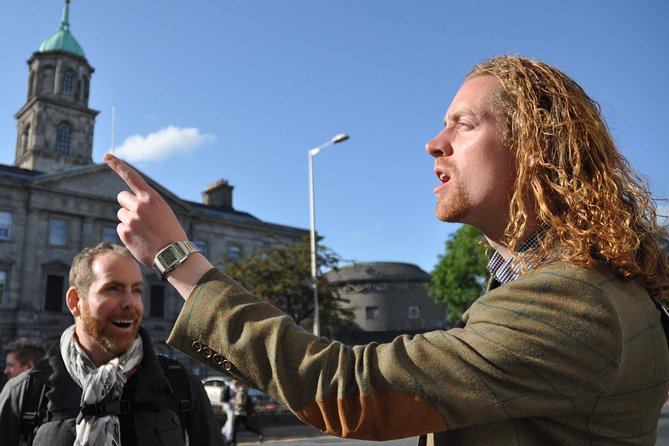
The usual meeting point is the National Museum of Ireland on Kildare Street, though central hotel pickup is available. From there, the tour can begin with Trinity College, founded in 1592 as a university for Protestants.
Your guide can explain Trinity’s uneasy place in Irish history. For centuries, the university was tied to the ruling Protestant establishment and viewed with suspicion by much of the Catholic majority. It later educated figures such as Oscar Wilde, Jonathan Swift, Bram Stoker, and Samuel Beckett. Even a short campus walk becomes more interesting when those names are placed in the setting.
Campus access has an important restriction. Groups of eight or fewer can enter the grounds under Trinity’s rules, while larger groups need Old Library tickets purchased in advance. Ask about this before booking if your party is large.
The Book of Kells is the tour’s main paid option. The illuminated manuscript is housed in the Old Library, and the visit usually takes about 40 minutes. Tickets are not included, so your guide must coordinate the timing and purchase in advance.
You should also understand the tradeoff. In the standard five-hour plan, you have time for either the Book of Kells or the free National Museum of Ireland, not both. Choose the manuscript if this is your first Dublin visit and Trinity is a priority. Choose the museum if you want archaeology, ancient Ireland, and free indoor time.
The Book of Kells adds a memorable interior visit, but it also uses a large part of the available schedule. If you want a relaxed look at Trinity, the Old Library, and other sights, consider a separate museum or Trinity visit.
Temple Bar without stopping at the obvious pub
Temple Bar takes only about 15 minutes on the planned route, which is enough for a quick walk through the cobbled streets but not enough for a full evening there.
The district is famous, photogenic, and heavily aimed at visitors. A good guide helps you get past the loudest version of Temple Bar. Expect street art, bohemian shops, small lanes, and pointers toward places that feel more local.
I like this stop because it teaches you how to read the district. You see why the area attracts so many people, but you also learn not to treat every pub sign as an authentic Dublin experience. Guides may also explain the layout of traditional Irish pubs, including the old snugs, small private seating areas built into many older pubs.
Food and drinks are not included. Still, your guide can help you fit in a Guinness, lunch, coffee, or a snack if your group requests it. Several tours have included pub advice, and one guide even arranged a seat in a private pub room after the walk. Treat those additions as possible custom touches, not guaranteed inclusions.
Dublin Castle and Christ Church in the medieval quarter
At Dublin Castle, the walk covers the upper and lower courtyards, Chapel Royal, and Dubh Linn Gardens. This is an exterior visit. You do not enter the castle interiors unless you book an official Dublin Castle tour separately.
That limitation is worth noting because the castle can look like a quick courtyard stop from the outside. A guide gives it more meaning by explaining its role in British administration and Irish government. The Dubh Linn Gardens also connect to the city’s name, since Dublin comes from the Irish words associated with a dark pool.
The planned castle visit lasts about 15 minutes. That is enough for orientation and photographs, but not for a full examination of the complex.
Christ Church Cathedral is another short stop, usually outside only. The site goes back to a wooden church from around 1030, with the stone cathedral beginning in the 1180s. Rebuilding and repairs over the centuries produced the striking structure you see today.
The crypt is the part I would not want to miss, but it requires admission and is not part of the ordinary exterior visit. It is large, unusual, and connected to some surprising past uses, including a pub, distillery, and brothel in the 18th century.
The tour may also include St Patrick’s Cathedral from the outside. If you want interiors, ask in advance. Entry fees are separate, and five hours will not allow every church and castle visit to become a full guided tour.
Same streets, a different route:
- Dublin Historical Centre Food Tour with 8 Food Tastings & Drinks
★ 5.0 · 1,718 reviews - 90 Minute Dublin Walking tour and Sightseeing tips
★ 5.0 · 916 reviews - 2-Hour Historical Walking Tour from Dublin
★ 5.0 · 875 reviews - Historical 2-Hour Guided Walking Tour of Dublin
★ 4.7 · 865 reviews
Crossing the Liffey at the Ha’penny Bridge
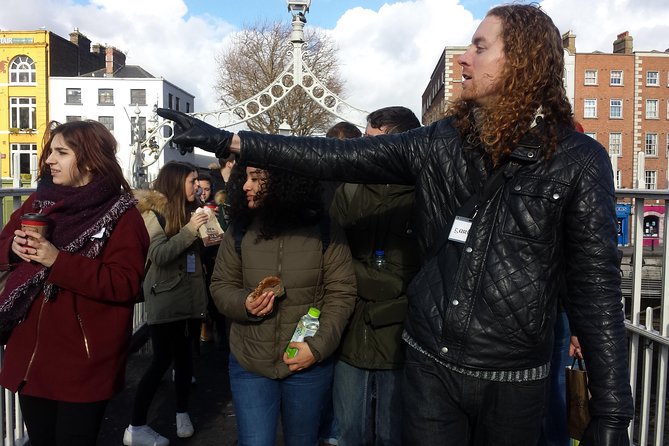
The Ha’penny Bridge takes only about five minutes, but it gives you one of Dublin’s best quick views. Look upstream toward the Guinness brewery or downstream toward the Custom House and the Docklands.
The bridge is also a useful transition point. You have moved through the older south side of the city and now begin connecting with O’Connell Street and the north side. Take a moment for photographs, but do not expect a long bridge stop.
The tour’s pace can feel brisk here. Your guide may have a lot of ground left to cover, especially if the group has spent extra time at Trinity or in the museum.
The National Museum, Leinster House, and Georgian Dublin
The National Museum of Ireland on Kildare Street is free and closed on Mondays. If you choose it instead of the Book of Kells, you can get a short introduction to Ireland’s archaeological past without paying an additional admission fee.
Thirty minutes is not enough for the whole museum. It is enough for selected displays and a sense of the country’s early cultures, artifacts, and archaeology. If you enjoy museums, return later for a longer visit.
The route then moves toward Leinster House, home of Ireland’s parliament. The exterior helps explain why Dublin has so many impressive 18th-century buildings. The city was the second city of the British Empire in the 18th century, and its Georgian architecture still gives central Dublin a formal, older appearance.
The old Parliament Building adds another layer. Your guide can connect its architecture to the political life of 18th-century Dublin and to the Irish-born politicians whose actions helped shape the city’s later story. This is one reason a walking guide is useful: a handsome building can otherwise pass as scenery.
O’Connell, St Stephen’s Green, and Grafton Street
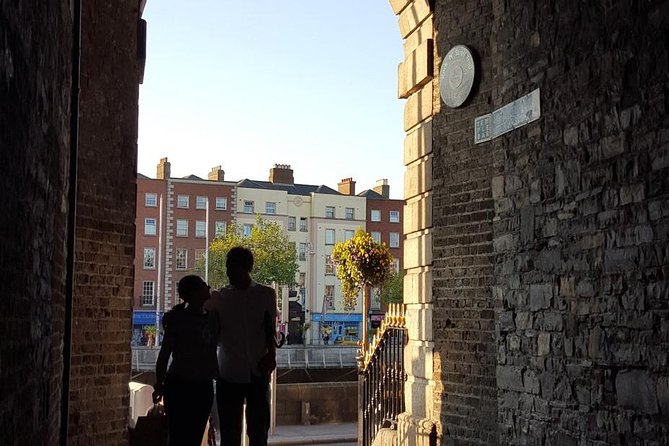
The O’Connell Monument honors Daniel O’Connell, known as the Liberator. He helped secure Catholic Emancipation and showed how mass politics and peaceful resistance could challenge authority.
That story is important because it provides a bridge between older religious divisions and the later struggle for Irish independence. The monument sits on O’Connell Street, one of the city’s main avenues.
St Stephen’s Green offers a welcome change of pace. The park was given to Dublin in 1880 by a member of the Guinness family and remains a favorite city retreat. Ten minutes takes you through the curved Victorian paths and planted grounds, but you may want longer if the weather is kind.
This is also where the private format helps. One family spent extra time in the park because it suited their interests, while another group preferred to keep moving. You can ask for that flexibility, but remember that every extra stop means less time somewhere else.
Grafton Street follows with shops, flower sellers, and buskers. The chain stores are obvious, but the street still has an older Dublin character. The short walk toward Bewley’s Café gives you a feel for the city’s central commercial life.
The GPO and the story of 1916
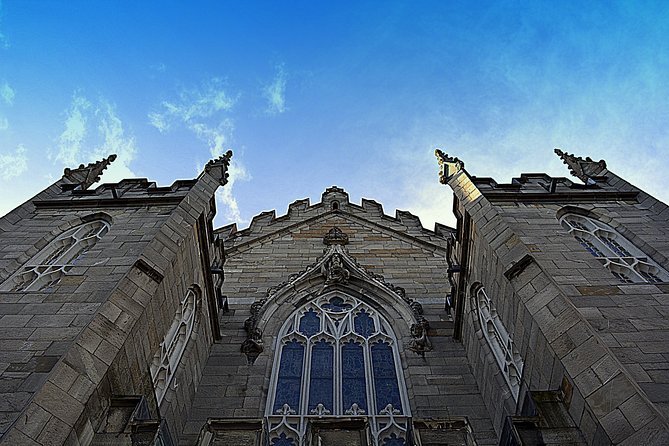
The General Post Office on O’Connell Street is one of the most important stops, even though many people walk past it without knowing why.
On Easter Monday in 1916, Patrick Pearse read the Declaration of Irish Independence outside the building. The rising failed militarily, but the executions and political reaction that followed helped change public support for independence.
A 15-minute stop cannot cover every detail. It can give you the essential sequence and explain why the building still matters so much to Irish people. This is exactly the kind of place where a guide adds value. The stone facade is impressive, but the event attached to it is the real reason to stop.
City Hall is another 18th-century building tied to the Easter Rising. If no private event is taking place, you may enter. The visit lasts about 10 minutes and gives you another look at Dublin’s formal civic architecture.
How much does the private price make sense?
The listed price is $296.60 per person. That is a serious expense, especially for one or two people, and it does not include food, drinks, or admission tickets.
The value improves as your group grows because you are paying for a private guide rather than a seat on a standard group walk. It also improves if you want a tailored route, have limited time in Dublin, or need a pace adjusted for children or mixed ages.
You are paying for interpretation and planning, not transport or included attractions. If all you want is a list of landmarks, a free map and self-guided walk cost far less. If you want to understand what happened at the GPO, why Trinity was controversial, and how Dublin’s neighborhoods fit together, the fee can be justified.
The strongest value comes from using the customization. Send your priorities before arrival. Ask for a focus on independence, literature, architecture, family history, food, or pubs. A private walk should not feel like a public tour with only your group present.
Pace, weather, and practical details
Wear comfortable walking shoes. The route uses city streets, cobbles, bridges, courtyards, and park paths, and five hours can feel long even when the guide keeps a good pace.
Dublin weather can change quickly. A rainy day does not ruin the experience, but it may encourage more indoor stops. One tour included the National Gallery of Ireland as a rain break, with the guide pointing out selected works. That kind of adjustment is possible, but it depends on time, your interests, and the guide.
Central hotel pickup is offered. If your hotel is not central, the default meeting point is the Olympia Theatre. The listed start is the National Museum on Kildare Street, and the finish can be Dublin Castle or the General Post Office area, depending on the route you agree on.
The activity is offered in English. Service animals are allowed, public transportation is nearby, and most people can take part. Free cancellation is available up to 24 hours before the start time. Changes or cancellations inside that window are not accepted.
Who should book this Dublin walking tour?
I would choose it for a first visit, especially if you have only one full day in the city. It gives you a useful mental map and leaves you with ideas for later visits, including museums, restaurants, libraries, music venues, and nearby outings such as Howth.
It suits families particularly well. Guides have adjusted explanations for children, kept different ages involved, taught Gaelic phrases, and made room for breaks. It also works for multigenerational groups because the route can be shortened or reshaped.
History fans will get the most from it. The tour links prehistoric Ireland, Viking Dublin, British rule, Catholic emancipation, the Easter Rising, and the modern republic. Guides such as John Caffrey, Eamon, Carl, and Brendan are especially praised for animated storytelling and strong command of Irish history.
I would hesitate if you dislike long walks or prefer to spend a full hour inside each attraction. I would also avoid booking it without a plan if the Book of Kells is essential, since advance arrangements and an itinerary choice matter.
Should you book it?
Book this tour if you want a personal introduction to Dublin, not simply a checklist of famous buildings. The private format, Irish guides, flexible route, and historical storytelling make it a strong choice for families, first-time visitors, and anyone who likes to ask questions.
Before paying, decide what matters most: the Book of Kells or the National Museum, exterior sightseeing or paid interiors, and a broad route or more time in fewer places. Tell your guide those priorities early. With that small bit of planning, five busy hours can give you a useful, memorable start to Dublin.
FAQ
How long does the private Dublin walking tour last?
The tour lasts approximately five hours.
What sights are included?
The route can include Trinity College, Temple Bar, Dublin Castle, Christ Church Cathedral, the Ha’penny Bridge, the National Museum of Ireland, Leinster House, the old Parliament Building, the O’Connell Monument, St Stephen’s Green, Grafton Street, the General Post Office, and City Hall.
Is admission to the Book of Kells included?
No. Book of Kells admission costs extra and should be arranged in advance with your guide.
Can I visit both the Book of Kells and the National Museum?
The standard five-hour plan allows time for either the Book of Kells or the National Museum. Coordinate your choice with your guide after booking.
Does the tour include hotel pickup?
Pickup is available from centrally located hotels. If your hotel is not central, the Olympia Theatre is the default meeting point.
Is this a private tour?
Yes. Only your group participates, and the itinerary can be adjusted to your interests and preferred pace.
What is the cancellation policy?
You can cancel for a full refund up to 24 hours before the experience starts. Cancellations or changes made less than 24 hours before the start time are not accepted.
Just added around Dublin
- Dublin (Dun Laoghaire) Top-Rated Coastal Walking Tour★ 5.0 · 80 reviews
- Food on Foot: Dublin Street Food Tour with Local Guide★ 5.0 · 490 reviews
- Dublin to Wicklow, Glendalough Small Group Tour with Guided Walk★ 4.5 · 282 reviews
- Private Fantastic Tour of Dublin (Walking Tour)★ 5.0 · 141 reviews
- Walking Tour of Dublin’s Viking/Medieval Quarter with a Viking★ 5.0 · 171 reviews
- DayTripper Dublin: A Guided City Walking Tour★ 5.0 · 90 reviews
- Trinity Trails: Guided Walking Tour of Trinity College★ 4.5 · 203 reviews
- A Silent Disco Walking Tour★ 5.0 · 118 reviews
Walking Tours, compared.

Magical London: Harry Potter Guided Walking Tour
Read our review →
Reykjavik Food Walk – Local Foodie Adventure in Iceland
Read our review →
History and Hauntings of Salem Guided Walking Tour
Read our review →
New Orleans Premier Ghost, Voodoo and Vampire Walking Tour
Read our review →
Amsterdam Anne Frank: Small-Group Walking Tour & Local Guide
Read our review →

Edinburgh Castle: Guided Walking Tour with Entry Ticket
Read our review →
Anne Frank’s Story – Guided Walking Tour through Amsterdam
Read our review →Browse the lists this tour appears in