
REVIEW · FLORENCE
Florence: Private Walking Tour of Florence’s Hidden Gems
Florence reveals itself best on foot, and this private tour gives you a quick map of the city’s grandest streets, squares, palaces, and bridges. You move from Santa Croce and the Bargello to Ponte Vecchio, Pitti Palace, Via Tornabuoni, and the Duomo, with a guide explaining how art, politics, religion, and the Medici family shaped the city.
I like the private format, since you can ask questions and set the pace. I also like the route’s variety: one moment you are looking at Renaissance architecture, and the next you are crossing a medieval bridge lined with gold shops. The guides, including Giacomo, Claudia, Marco, Manuela, and others praised in past bookings, have been especially good at making Florence’s complicated past clear.
The main limitation is simple: this is an exterior-only tour. You see the major buildings but do not enter the Uffizi, Santa Croce, Palazzo Vecchio, Pitti Palace, or the cathedral as part of the walk. Two hours also makes this an introduction, not a detailed art tour.
Key points to know before booking
- A private overview of central Florence: You see many of the city’s essential landmarks in one compact walk.
- Exterior visits only: The guide explains the buildings from outside, but admission to their interiors is not included.
- A strong first-day choice: The route helps you decide which museums, churches, and palaces deserve a longer visit.
- English or Italian guiding: The live guide can lead the tour in either language.
- Mostly historic center walking: Comfortable shoes matter, and the route may be tiring for anyone with mobility limits.
- Personal attention: A private group gives you room to ask about art, Medici history, food, shopping, and practical Florence tips.
Why this two-hour walk works well in Florence
Florence is compact, but it is not simple. A short walk can take you past a medieval civic building, a Renaissance palace, a famous church, and a fashion house without making clear how they fit together. That is where a guide earns the fee.
This tour links the historic center into one story. You begin among churches and civic buildings, pass through the political heart of Florence, cross the Arno, and return through streets tied to aristocratic families and modern luxury shopping. The route gives you a useful sense of direction as well as historical background.
I would consider booking it early in your stay. Several past bookings used the tour as a first look at Florence, then returned later to museums or sites that caught their interest. That is a smart way to use two hours in a city where it is easy to spend half a day admiring a single building and still miss the wider picture.
The guides have also received strong praise for their teaching style. Giacomo was noted for making Florence’s complicated past accessible, while Claudia was praised for keeping children aged seven and ten involved. Manuela and Marco were appreciated for answering questions and adding local context. Those details matter because a city tour can become a list of dates and names if the guide does not connect the pieces.
More Private Walking Tours in Italy
- Venice: Private Walking Tour with a Local
★ 4.6 · 761 reviews - Palermo: Private Custom Walking Tour with Local Guide
★ 4.7 · 661 reviews - Palermo: Private Walking Tour with a Local
★ 4.6 · 393 reviews
Starting near the Bargello and Santa Croce
The published meeting information gives two possible starting arrangements, including Door 8 at Accord Tours and Piazza di Madonna degli Aldobrandini. The route description also refers to Piazza San Firenze, near the Bargello and the Florentine courthouse. Since the itinerary can change with the meeting point, confirm the exact location before you set out.
The first section takes you toward the Basilica of Santa Croce. This is one of Florence’s most important churches, both for its art and for the people associated with it. It is known as a burial place for major Italian figures, and the surrounding area gives your guide plenty to explain about Florentine art, religion, and public life.
You should expect to view the basilica from outside rather than tour its interior. If Santa Croce interests you, make a note to return separately with an admission ticket and enough time to look at its works of art without being rushed.
The route may also bring you near the National Museum of the Bargello. The building itself is worth seeing from the street, and its former civic role fits neatly into the story of Florence as a city shaped by powerful public institutions. The museum is particularly important for sculpture, but entrance is not part of this walk.
Piazza della Signoria and the city’s political center
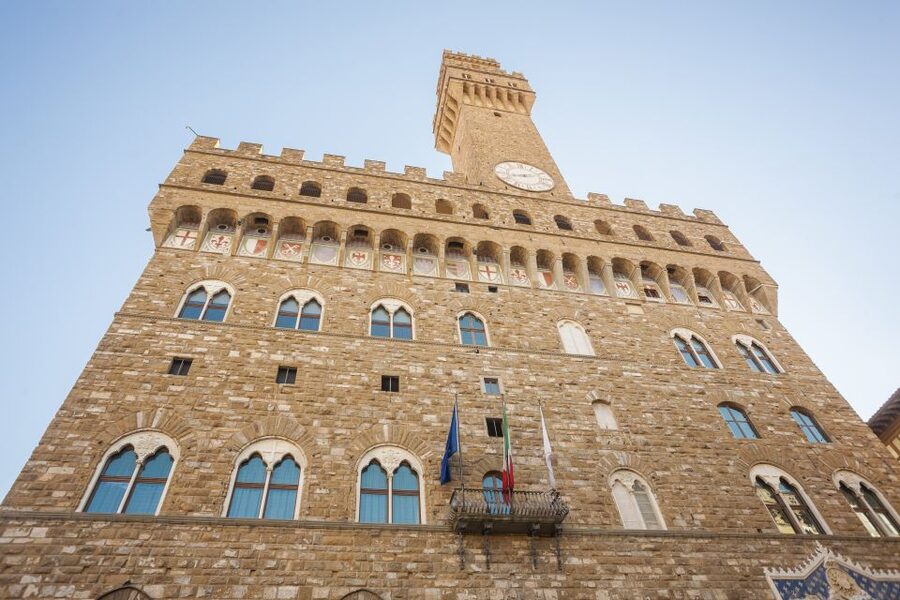
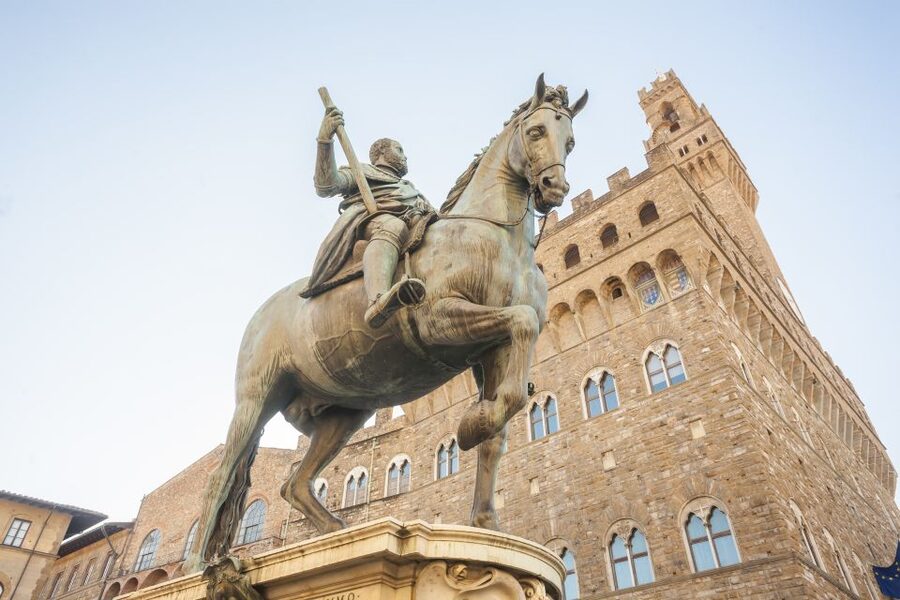
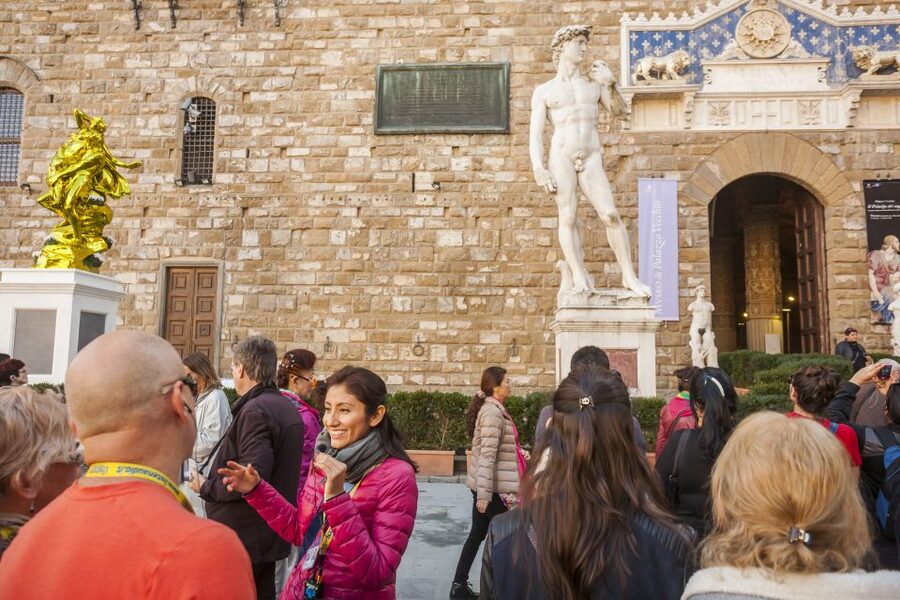
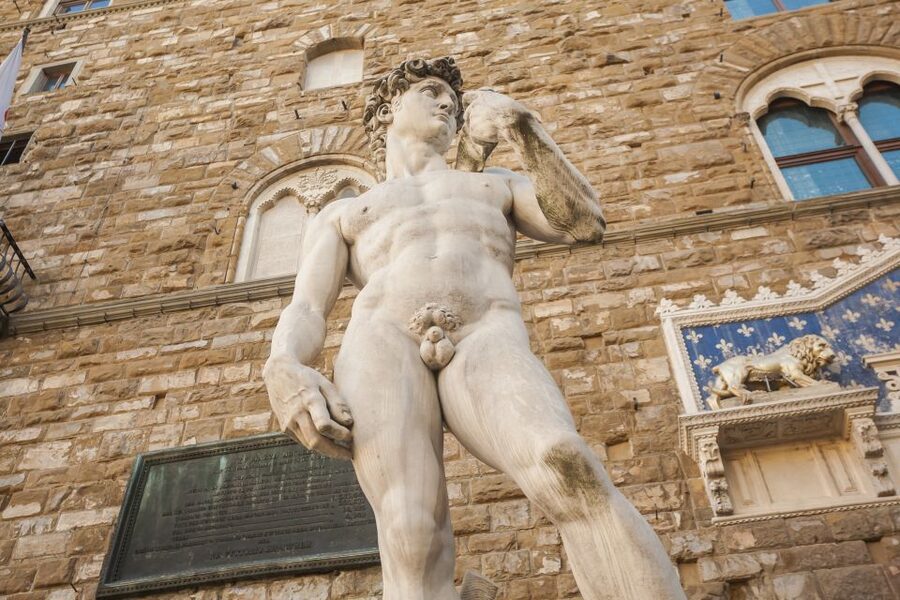
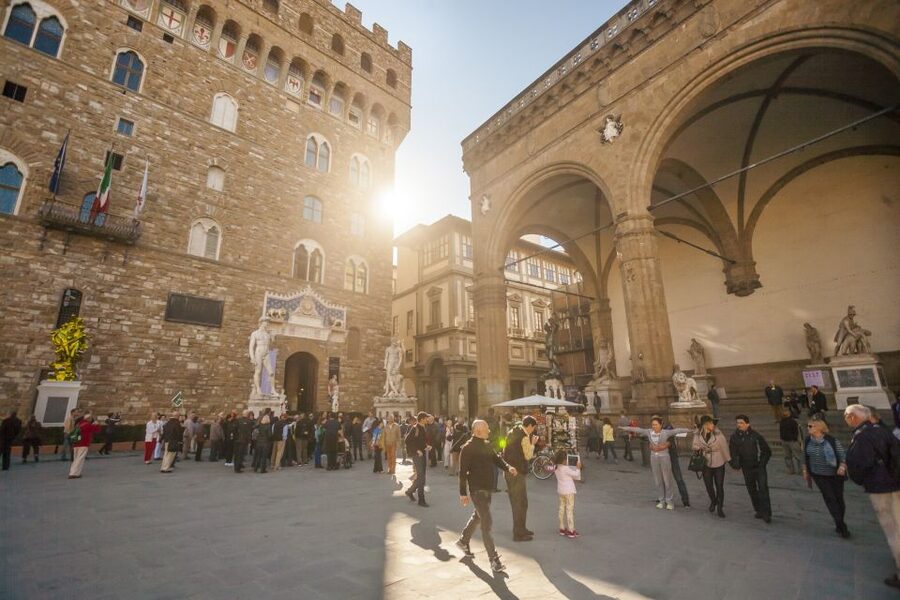
Piazza della Signoria is one of the most rewarding stops because the square works as an open-air lesson in Florence’s public life. Here you see Palazzo Vecchio, the Neptune Fountain, and the approach to the Uffizi.
The square is not just a pretty place for photographs. It was designed for public business, ceremonies, power plays, and political display. Your guide can explain why the buildings and statues were placed here and how the Medici family used art and architecture to express authority.
Palazzo Vecchio remains one of the city’s most recognizable buildings. From outside, you can appreciate its fortress-like appearance and the way it dominates the square. The tour does not include entry, so you will not see the grand rooms inside or the famous decorative program associated with the palace.
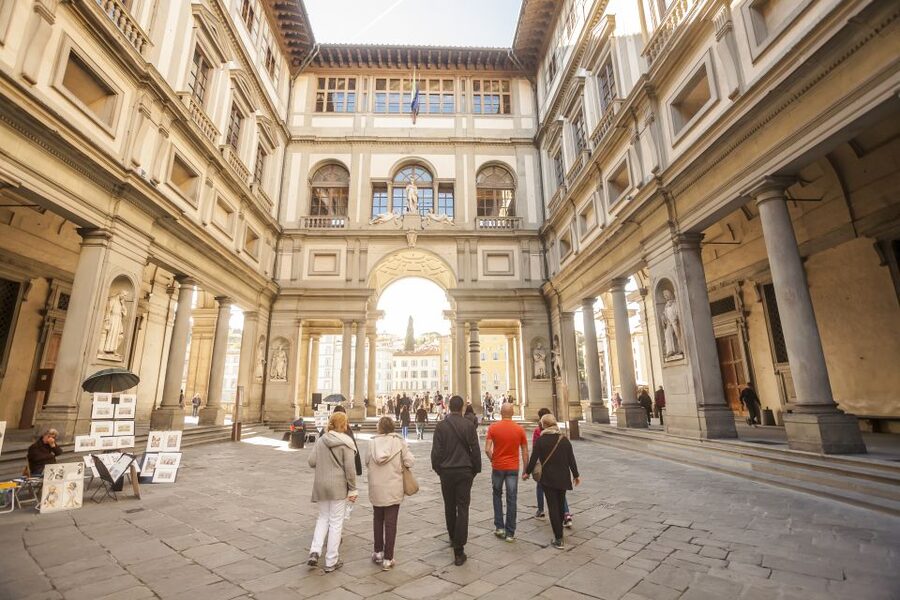
The Uffizi is another important sight along this part of the route. You see its exterior and location beside the square, which is useful if you plan to visit the gallery later. Do not confuse passing the Uffizi with touring it. This experience does not provide gallery admission or time inside the museum.
The Neptune Fountain provides a short photo stop. It is a good pause in the walk, especially because the square brings several major sights together in one view. Your guide can help you read the scene rather than simply point at the statue and move on.
Crossing Ponte Vecchio to Pitti Palace
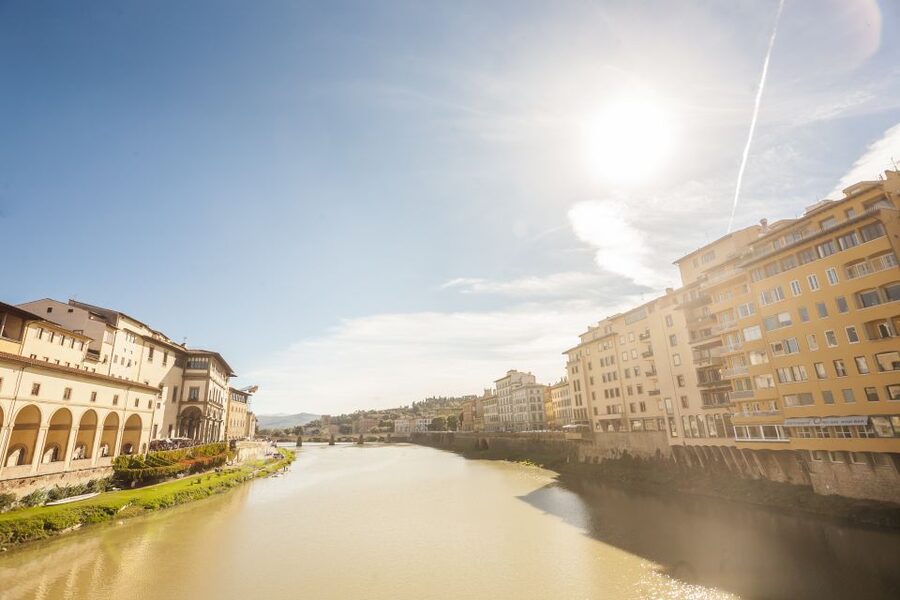
Ponte Vecchio is the tour’s most memorable change of setting. The medieval stone bridge crosses the Arno and is lined with gold jewelry shops. It is narrow, photogenic, and often crowded, so stay close to your guide and expect a slower crossing.
The bridge is more than a shopping street over water. Its unusual design and long connection with Florence’s ruling families make it an important part of the city’s story. From the bridge, you also get a different sense of Florence. Instead of looking down a formal street toward a palace, you are moving through a tightly packed historic passage with the river opening on either side.
After crossing, the walk continues toward Pitti Palace, the former residence of the Medici family. The palace is a powerful reminder of the scale of Medici wealth and influence. You see the exterior and Piazza Pitti, but the palace museums and rooms are not included.
This is a useful place to decide how to spend the rest of your time in Florence. If the Medici story catches your interest, you can later return for the palace museums. If you are more interested in views, art, or churches, your guide may help you choose another stop based on your questions.
More Hidden Gems Walks in Florence:
- Dublin Highlights and Hidden Gems Guided Walking Tour
★ 5.0 · 6,020 reviews - Explore Berlin: See All The Iconic Sights & Some Hidden Gems
★ 5.0 · 4,429 reviews - Venice: San Marco to Rialto Walk & Spritz Like a Local
★ 4.2 · 3,651 reviews - Kyoto Geisha Walking Tour: Gion District & Hidden Gems
★ 4.7 · 3,273 reviews
Via Maggio, Ponte Santa Trinita, and Via Tornabuoni
The return route follows Via Maggio and crosses Ponte Santa Trinita. This stretch gives you a look at a less purely monumental side of Florence, with historic streets linking the Oltrarno and central districts.
Ponte Santa Trinita also offers a good view toward Ponte Vecchio. I like this part of the route because it lets you look back at the bridge you have just crossed and understand how the river crossings fit together. It is a small shift in perspective, but it helps the city feel connected rather than like a series of separate postcard views.
The walk then reaches Via Tornabuoni, Florence’s top fashion street. Here, grand historic façades share space with luxury boutiques. The contrast is useful: Florence is not only a museum city. It is also a living commercial center where old palaces, modern retail, and local daily life occupy the same blocks.
If you care about shopping, ask your guide about the streets and products worth your time. One past guide, Claudia, also gave advice about restaurants and quality leather goods. That kind of local guidance can be more useful than a long list of famous sights, especially if you have limited time.
Strozzi Palace and Piazza della Repubblica
Strozzi Palace is one of the route’s best architectural stops. Its balanced Renaissance design makes it easier to understand the proportions and style that define so much of central Florence. The palace is viewed from outside, but its façade alone gives your guide a clear example to work with.
The tour finishes around Piazza della Repubblica and the Florence Duomo. Piazza della Repubblica is broad and open compared with the older streets you have walked through. Its present appearance reflects later changes to the city, making it a useful place to discuss how Florence developed beyond its medieval and Renaissance core.
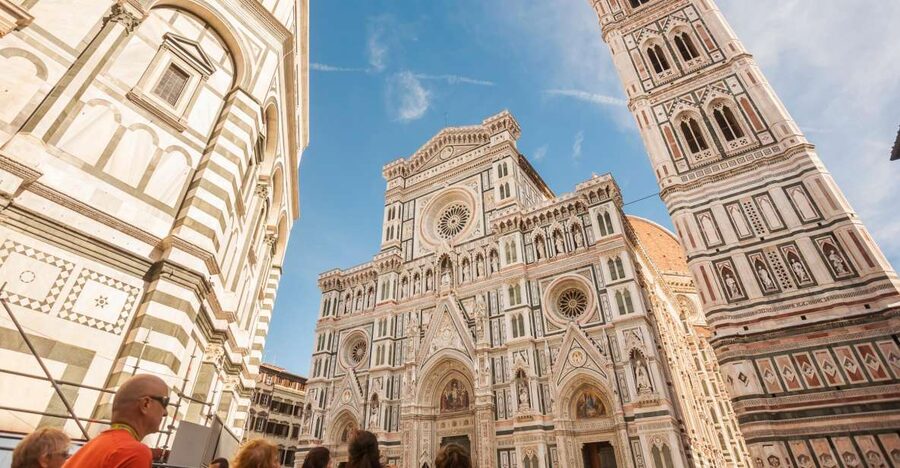
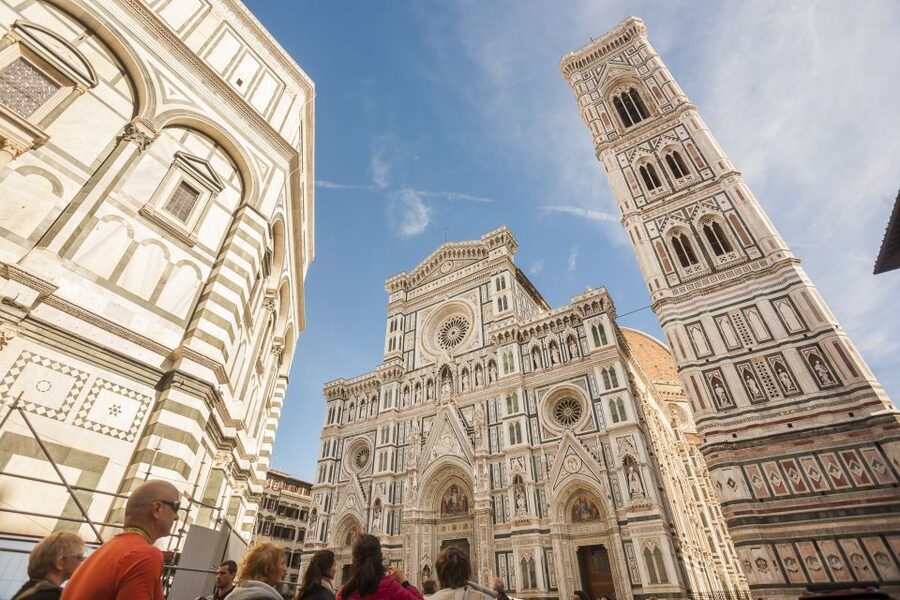
The Florence Cathedral complex provides the grand final view. The cathedral’s scale and marble exterior can be hard to take in when you first see it alone. After a guided walk through Florence’s smaller squares and narrower streets, the Duomo feels even more dramatic.
The guide can explain the cathedral’s place in Florence and point out the relationship between the cathedral, bell tower, and baptistery complex. You see the complex from outside. Entry to the cathedral, Giotto’s Bell Tower, or other paid sections is not part of this activity.
If you plan to enter the cathedral later, dress properly. Shorts and sleeveless tops are not allowed inside. That rule applies to the interior visit, not simply to viewing the building outdoors.
What the private format adds
A private group changes the feel of a two-hour walk. You can ask why a building matters, stop for clarification, or focus more on art, architecture, food, shopping, or the Medici family. You are not limited to the questions that suit a large group.
The guides have also adapted well to different ages. Claudia was praised for directing explanations toward children, while another past booking included a six-year-old and found the route manageable. That does not mean every child will enjoy two hours of city history, but the format gives the guide more chance to adjust.
Some past groups were only two or three people, while others included families. The exact size of your private group depends on your booking, but the activity is sold as a private experience rather than a shared group walk.
The strongest value comes if you use the guide as a city counselor as well as a history teacher. Ask where to return, which museums need more time, and how to organize the rest of your stay. A past guide even ended with cappuccinos, pastries, and gelato for a family, though that should not be treated as a guaranteed part of every booking.
Gelato has appeared as a pleasant extra in several past experiences, but check the details carefully. One recent booking received gelato vouchers that were no longer accepted at the named shop. I would enjoy any included treat, but I would not book this tour mainly for the gelato.
Pace, walking conditions, and accessibility
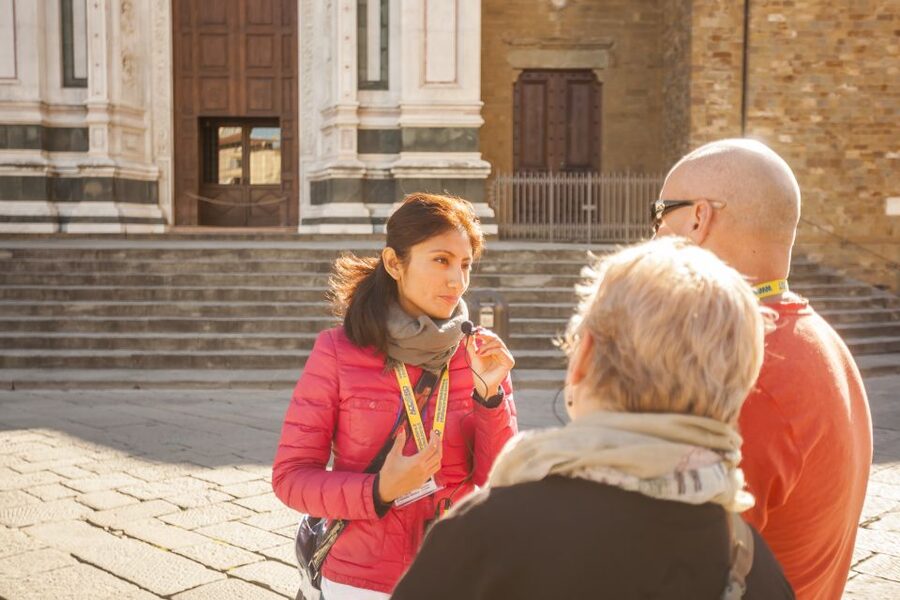
The walk lasts two hours and covers a large portion of central Florence. You will cross streets, move through squares, walk over historic bridges, and deal with uneven or crowded areas. Comfortable shoes are essential.
The route can feel slow at times if the guide stops for extended explanations. One past booking found the audio equipment difficult to follow because it picked up street noise. On the other hand, a slower pace can help if you want to ask questions or are traveling with children.
The activity information lists wheelchair accessibility, but it also says the tour is not suitable for people with mobility impairments. Those details do not fully match, so you should discuss your needs with the provider before booking. The route includes historic streets and bridges, and the exact itinerary may change according to the meeting point.
Is the tour good value?
No price is provided here, so I cannot judge the exact cost. The right comparison is not simply this tour against a free walk. Compare it with the time you would spend finding each sight, reading up on the history, and working out which museums deserve a later visit.
The value is strongest for first-time visitors, families, and anyone who wants a personal introduction without committing to a full-day program. You see the city’s main framework in two hours, then choose where to spend your museum time.
The value is weaker if you want long interior visits or detailed art instruction. You will not tour the Uffizi, climb the cathedral, explore Pitti Palace, or study Santa Croce’s interior. In that case, a focused museum or cathedral tour may suit you better.
Free cancellation up to 24 hours before the start and the option to reserve now and pay later add useful flexibility. Starting times depend on availability, and the guide works in English or Italian.
Who should book this Florence walk?
I would recommend it to first-time visitors who want to get their bearings quickly. It is also a good fit for families, couples, and small private groups who prefer questions and conversation over a fixed lecture.
Book it early if you want advice for the rest of your visit. Use the walk to mark the museums and neighborhoods you want to revisit, then return on your own for longer visits.
I would choose another experience if your main goal is to see art inside the Uffizi, explore the Duomo interior, or spend serious time in Medici palaces. This tour shows you the outside and explains the setting. It does not replace admission to Florence’s major museums.
For most first visits, though, it offers a sensible two-hour introduction. You get the major squares, both sides of the Arno, a look at Florence’s historic power centers, and a guide who can help turn a beautiful but confusing city into a manageable plan.
FAQ
How long does the Florence walking tour last?
The tour lasts two hours. Starting times depend on availability.
Which languages are available?
The live guide can lead the tour in English or Italian.
Is this a private tour?
Yes. The activity is offered for a private group rather than as a shared public walk.
Does the tour enter the Uffizi, Duomo, or other monuments?
No. The monuments and museums are visited from the outside only. The tour does not include interior admission.
Where does the tour meet?
The meeting information gives Door 8 at Accord Tours, with coordinates provided, and also lists Piazza di Madonna degli Aldobrandini as a possible starting location. The exact itinerary can vary with the meeting point, so confirm it before arrival.
What should I wear for a cathedral visit?
If you plan to enter the cathedral later, do not wear shorts or a sleeveless top. Comfortable shoes are recommended for the walking tour.
Can I cancel or pay later?
You can cancel up to 24 hours in advance for a full refund. You can also reserve now and pay later, keeping your plans flexible.
More Private Walking Tours in Florence
- Private Walking Grand Tour of Copenhagen
★ 5.0 · 3,953 reviews - Vienna: Private Walking Tour with a Local
★ 4.6 · 1,446 reviews - Barcelona Helicopter, Sailboat & Old Town Private Walking Tour
★ 5.0 · 1,395 reviews - Private Walking Tour of Hanoi City
★ 5.0 · 1,251 reviews
Just added around Florence
- Private Flavors of Florence Walking Tour (Food and Wine Included)★ 5.0 · 373 reviews
- Florence: Food Walking Tour with Local Steak and Tuscan Wine★ 4.9 · 529 reviews
- Walking Food Tour of Florence with Tastings and Wine★ 5.0 · 518 reviews
- Florence: Duomo Complex with Tickets & City Walk Guided Tour★ 4.5 · 183 reviews
- Florence Walking Tour★ 5.0 · 621 reviews
- Florence: Street Food Walking Tour with Wine★ 4.9 · 719 reviews
- Florence: Mysteries of the Medici Guided Walking Tour★ 4.4 · 940 reviews
- Florence Walking Tour with Accademia, Uffizi & Lunch★ 4.0 · 1,033 reviews
Hidden Gems Walking Tours, compared.
Dublin Highlights and Hidden Gems Guided Walking Tour
Read our review →
Explore Berlin: See All The Iconic Sights & Some Hidden Gems
Read our review →
San Marco to Rialto Walk & Spritz Like a Local
Read our review →
Kyoto Geisha Walking Tour: Gion District & Hidden Gems
Read our review →
Eat Like a Local: Venice 3-Hour Small-Group Food Tasting Tour
Read our review →
Montmartre Hidden Gems and Scenic Highlights Walking Tour
Read our review →
Guided Walking Tour of City Highlights & Hidden Gems
Read our review →
Browse the lists this tour appears in