
REVIEW · CHARLESTON
Private Charleston Walking Food Tour at the French Quarter
Charleston’s food story makes the most sense on foot, with local dishes tied to the city’s port, markets, theaters, and African culinary traditions. This private tour pairs familiar Southern plates with a walk through the French Quarter and historic center, so you get context with every bite.
I like the small private format, since your own group can set the pace and ask direct questions. I also like the menu’s range, from savory chicken bog and shrimp and grits to benne wafers and a secret dish. Guides such as Hannah have made the city itself a major part of the experience, while Kelli once stepped in when a scheduled guide failed to arrive.
The main caution is value. At $370 per person, this is a costly three-and-a-half-hour outing, and one dish may appeal far more than the others. The company also warns that some dietary restrictions cannot be accommodated, so ask before booking.
Key points to know before you book
- Seven tasting stops or dishes: Expect chicken bog, a cheese and chive biscuit, she-crab soup, a pecan cluster, benne wafers, shrimp and grits, plus a secret dish.
- A private walk through Charleston’s French Quarter: Only your group participates, with the route linking food, architecture, slavery, trade, and theater.
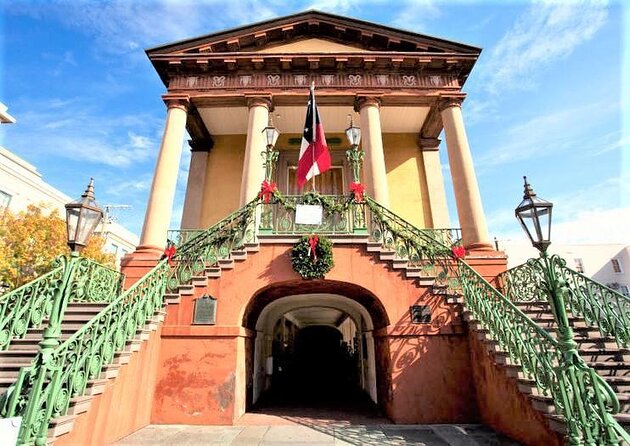
- A strong city-history component: The United States Custom House, City Market, and Dock Street Theatre give the food a clear local setting.
- About three and a half hours on foot: Wear comfortable shoes, since the experience is a walking tour rather than a series of seated restaurant visits.
- Dietary restrictions need advance planning: Contact the operator before booking, because the set menu may not suit every diet.
- A high price for a focused experience: The cost makes the private guide and cultural explanation central to the value.
Charleston on a plate, from chicken bog to shrimp and grits
This tour is built around the idea that food can explain a city. You are not simply handed a biscuit or bowl of soup. You hear why particular ingredients entered Charleston’s cooking and how the city’s port connected local tables to the wider world.
The menu covers several Southern staples. Chicken bog is a savory rice-and-chicken dish associated with the Lowcountry and nearby South Carolina cooking. A fluffy cheese and chive biscuit gives you a simpler taste of the region’s comfort food tradition.
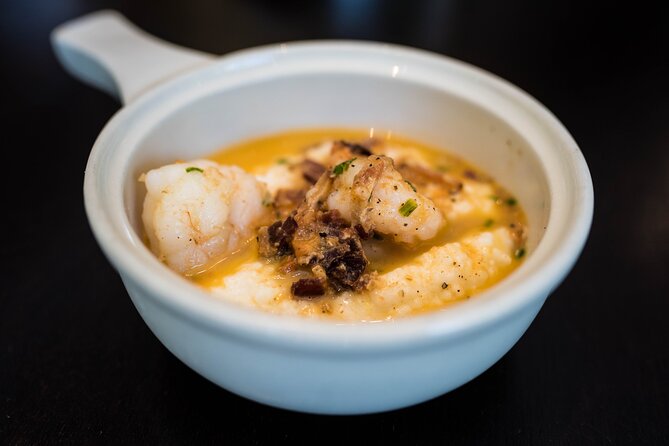
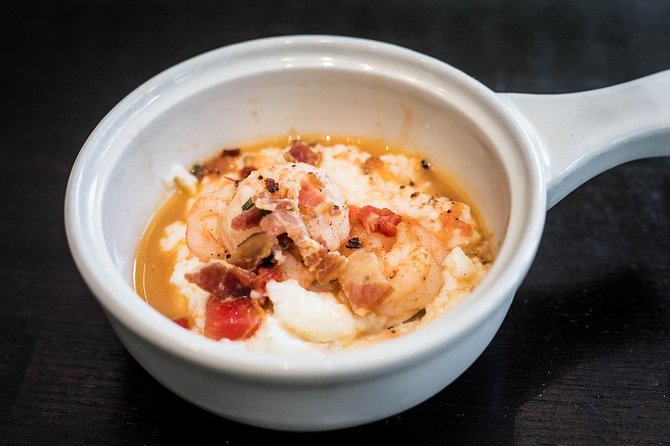
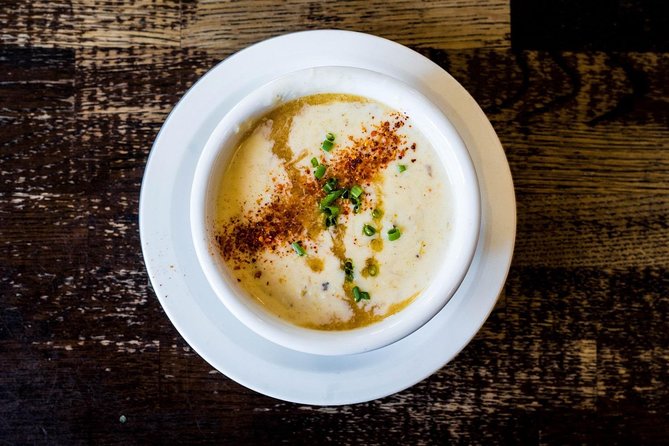
She-crab soup brings a creamy seafood course, while shrimp and grits gives the tour one of its best-known Charleston combinations. The sweet and crisp items, a handmade pecan cluster and benne wafers, keep the menu from becoming one long parade of heavy dishes.
A final secret dish is included, but it is not identified in advance. The menu can change with location availability, weather, or other conditions, so you should treat the published list as a guide rather than a fixed promise.
The food is meant to be part of a larger lesson. That is useful if you want to understand Charleston cuisine, but less useful if your only goal is to find the city’s most ambitious restaurant cooking. One person who found the city information especially strong considered the food merely acceptable overall, with only one dish making a clear impression.
More Food Walking Tours in the USA
- Charleston French Quarter or Brunch Food Tour with 7+ Tastings
★ 5.0 · 1,853 reviews - Savor the Flavors of Charleston Walking Food Tour
★ 4.5 · 881 reviews - Charleston Brunch Food Tour: Biscuits, Shrimps, Grits and More
★ 5.0 · 239 reviews
Beginning at the United States Custom House
The listed starting point is 99 S Market Street, suite 5, in Charleston. The route is described as departing from the United States Custom House, the grand public building overlooking East Bay Street and the harbor, so check the exact meeting instructions before setting out.
The Custom House is a fitting place to begin. Its location points directly to Charleston’s role as a port city, where imported goods, exported crops, and human trafficking shaped the local economy. The building itself was designed to project authority and commerce, which gives your guide a useful way to frame the city before the food begins.
This opening should appeal to you if architecture and context matter as much as eating. It also means the experience does not start in a restaurant with a long explanation after the fact. You begin with the city’s waterfront setting, then move into the streets where its commercial and social life developed.
The start is convenient for exploring central Charleston before or after the tour. It is near public transportation, but hotel pickup and drop-off are not included. Plan your own way to the meeting point and allow time to find the correct entrance.
City Market and the ingredients shaped by slavery
The walk through the Historic Charleston City Market is one of the most meaningful parts of the route. Here, your guide connects Charleston’s food to the African slave trade and explains how ingredients such as benne seeds and collard greens became part of the local diet.
That connection matters. Benne seeds, related to sesame, appear in the crisp benne wafers included on the menu. The dish is not just a sweet or savory snack. It gives you something to taste while thinking about the people and foodways that helped shape Charleston cooking.
The City Market also gives the tour a public setting rather than keeping the discussion inside a restaurant. You see the city’s commercial traditions while hearing how ingredients, techniques, and forced migration changed the region’s food.
I would pay close attention here, even if you have visited the market before. The value lies less in simply walking through it and more in the link between the place, the ingredient, and the city’s difficult past.
The market can be a lively public space, and exact stops may change. The operator notes that the route and menu can shift with circumstances, so do not expect every departure to unfold in precisely the same order.
Dock Street Theatre and Charleston’s performing arts past
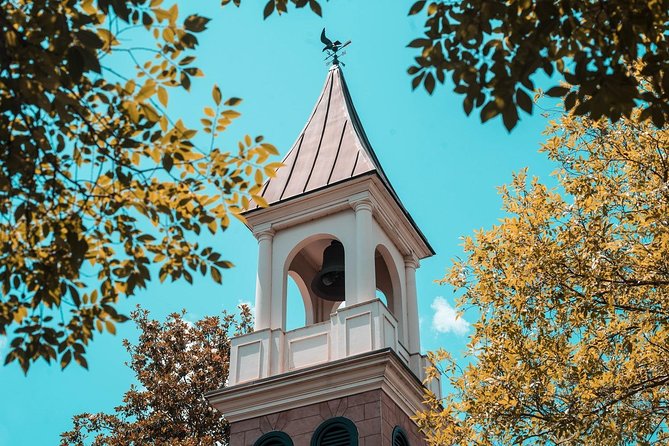
The route also reaches Dock Street Theatre, described as the first American theater building designed solely for theatrical performances. The building gives the walk a change of subject after the market and food-history discussion.
Dock Street’s role helps explain Charleston as a cultural center, not only a port. Its story reaches from the 1700s through the millennium, connecting the city’s theatrical tradition with broader American cultural history.
You may not spend a long time inside the theater, since this is a walking food tour rather than a dedicated theater visit. Still, the stop adds variety and helps keep the route from feeling like a checklist of dishes.
This is also where a good guide can make a real difference. Hannah was praised for making Charleston information the highlight of the experience, and that points to an important choice: book this if you want a guide-led introduction to the city, not just a meal served outdoors or at a series of counters.
More Food Walking Tours in Charleston:
- Charleston’s Savor the Flavors of Upper King Street Walking Food Tour
★ 4.5 · 130 reviews - Reykjavik Food Walk – Local Foodie Adventure in Iceland
★ 5.0 · 18,952 reviews - Ho Chi Minh City Street Food Tour & Sightseeing By Motorbike
★ 5.0 · 9,413 reviews - New Orleans Food Walking Tour of the French Quarter with Small-Group Option
★ 5.0 · 6,118 reviews
What the private format changes
Only your group takes part, which gives the tour a more personal shape than a large public departure. You can ask about the Custom House, the market, food traditions, or Dock Street Theatre without waiting for a crowd to catch up.
A private guide can also adjust the pace within reason. You still have a planned route and a set duration, but your group has more room for questions and conversation. That is especially helpful when the subject includes slavery, trade, architecture, and culinary traditions.
The private format may be a good fit for families, couples, or friends who want the same guide and food schedule without strangers in the group. It also helps if your party has different interests, since one person can ask about historic buildings while another focuses on the dishes.
There is a practical limit. Private touring does not guarantee a fully customized menu or route. The food is prepared as a balanced experience, and the operator says some restrictions cannot be handled, so do not assume that a private booking means every ingredient can be removed.
Is $370 per person a fair price?
At $370 per person, this is a premium food walk. The price is easier to justify if you place high value on a private guide, a city-centered route, and several tastings in one booking.
You are paying for more than the food. The experience links seven listed dishes with Charleston’s port, market, African culinary influence, architecture, and theater. For a first visit, that combination can help you understand the city quickly and point you toward neighborhoods and dishes worth exploring later.
The price is harder to defend if you measure value only by portion size or restaurant quality. You are not booking a full day of meals, and the food may not satisfy someone seeking standout fine dining. A person who rated the food less favorably still considered the guide and Charleston information the strongest part of the outing.
Group discounts are available, which may soften the cost for a larger private party. Gratuity is not included, so allow for that extra expense when you set your budget.
Timing, walking, and practical comfort
The experience lasts about three hours and 30 minutes. That is long enough for a real introduction to the area, but short enough to fit into a day of sightseeing if you plan around it.
Wear comfortable walking shoes. The route moves through the historic district, and the operator specifically advises shoes suited to more than three hours on foot. You should also consider Charleston weather, since the experience requires good conditions and may be canceled or moved if weather makes the walk unsuitable.
Hotel pickup and drop-off are not included. The starting point is in the central city, near public transportation, and the end point is near Queen Street and Meeting Street or on East Bay Street, one block from the beginning. That makes it easy to continue exploring on foot after the tour, but you will need to arrange your own return.
The exact menu and route can change. Ingredient availability, weather, and other local conditions may affect the day’s plan. If one particular dish is the reason you are booking, ask about its availability rather than assuming it is guaranteed.
Dietary needs require a direct question
This is not the best choice for a booking made with last-minute dietary expectations. The operator asks you to make contact in advance and warns that some dietary restrictions cannot be accommodated because the food experience is planned as a balanced sequence.
That warning is especially important for people avoiding dairy, seafood, meat, gluten, or multiple ingredients. The menu includes cheese, cream, pecans, benne wafers, chicken, shrimp, grits, and a secret dish, so you should provide clear details before booking.
Do not rely on a note added at the last moment. Contact Secret Food Tours before you commit, ask what can be changed, and confirm that the answer applies to your specific needs.
Guide quality matters more than the food alone
The guide is the heart of this experience. Hannah received strong praise for the information she provided about Charleston, which tells you where the tour’s best value may lie: the explanations that connect each place and plate.
Kelli also deserves mention for stepping in when the scheduled guide did not arrive and delivering a strong tour. That story points to a service-minded operator, but it also highlights a basic practical issue: guide assignments can change, and the person leading your walk may not be the name you expect.
A good guide can turn a biscuit into a discussion of local cooking, or a benne wafer into a lesson about African influence and forced migration. If your interest is Charleston’s story as much as its food, that human explanation is worth weighing heavily.
If you want only exceptional dishes, this may not be the right purchase. Charleston has many places to eat, and the food on a guided route cannot please every palate. Here, the tour’s strongest case is the combination of tasting and interpretation.
Cancellation and booking details worth noting
Confirmation is sent within 48 hours of booking, subject to availability. You can cancel for a full refund up to 24 hours before the local start time.
Changes made within 24 hours are not accepted, and cancellations inside that period are not refunded. If poor weather or a failure to meet the minimum number of participants causes the operator to cancel, you are offered another date or experience, or a full refund.
Because the tour is private, it is smart to settle your group size, meeting point, and dietary needs before the day. The tour is offered in English and comes with a mobile ticket.
Should you book this Charleston food tour?
Book it if you want a private introduction to Charleston that treats food as a doorway into port commerce, slavery, African influence, architecture, and theater. It is especially suited to a first visit, a small group that values direct access to a guide, and anyone who prefers a planned route with several local tastes.
Think twice if your priority is the best food in town for the lowest possible cost. The $370 price is high, the food may be uneven from one person’s point of view, and some diets cannot be accommodated.
My practical call: choose this experience for the guide and the city story first, then consider the dishes a bonus. Confirm the meeting point and dietary options in advance, wear good shoes, and leave room in your schedule for the walk to run a little over three hours.
FAQ
How long does the Charleston food tour last?
The tour lasts approximately three hours and 30 minutes.
Where does the tour begin?
The listed starting point is 99 S Market Street, suite 5, Charleston, South Carolina 29401. The route is also described as departing from the United States Custom House, so confirm the exact meeting instructions before arrival.
Where does the tour end?
The tour ends at either Queen Street and Meeting Street or on East Bay Street, one block from the starting area.
What food is included?
The listed tastings are chicken bog, a cheese and chive biscuit, she-crab soup, a pecan cluster, benne wafers, shrimp and grits, and a secret dish.
Can dietary restrictions be accommodated?
Some can be accommodated, but not all. Contact the operator before booking with your specific dietary requirements.
Can I cancel for a full refund?
Yes. You must cancel at least 24 hours before the experience’s start time for a full refund. Cancellations within 24 hours are not refunded.
Just added around Charleston
- Charleston Ghosts of Liberty Guided Walking Tour★ 4.5 · 473 reviews
- Charleston Chicora 2 Hours Walking Tour★ 5.0 · 264 reviews
- Small-Group Tour: Charleston Old Walled City Historical Walking Tour★ 4.5 · 283 reviews
- Behind the Scenes of Shem Creek Shrimp Walking Tour★ 5.0 · 171 reviews
- Charleston’s Savor the Flavors of Upper King Street Walking Food Tour★ 4.5 · 130 reviews
- Lost Stories of Black Charleston Walking Tour★ 5.0 · 412 reviews
- Charleston Haunted Jail Night-Time Walking Tour with Admission to Old City Jail★ 4.5 · 570 reviews
- Charleston History, Homes, and Architecture Guided Walking Tour★ 5.0 · 267 reviews
Food Walking Tours, compared.

Reykjavik Food Walk – Local Foodie Adventure in Iceland
Read our review →
Ho Chi Minh City Street Food Tour & Sightseeing By Motorbike
Read our review →
New Orleans Food Walking Tour of the French Quarter with Small-Group Option
Read our review →
Authentic Parisian Gourmet Food Tour with 10 Local Dishes & Wines
Read our review →
Savannah First Squares Culinary & Cultural Walking Food Tour
Read our review →Browse the lists this tour appears in