
REVIEW · BUDAPEST
Budapest All in One Small Group Walking Tour with Strudel Stop
Budapest is spread across two very different city halves, and this tour gives you a smart way to see both without wasting half the morning finding your way around. You begin near the Opera House, ride the metro beneath Andrássy Avenue, walk through City Park, then work back toward the Danube and finish high above the river at Fisherman’s Bastion.
I like the mix of public transport and walking, which lets you cover far more ground than a standard old-town stroll. I also like the small group limit of 10, especially because guides such as Greg, Esther, Anna, Petra, and Louisa have been praised for making room for questions and local detail. The drawback is simple: this is a brisk outing with about 6 kilometers of walking, stairs, and short stops, and it does not include inside visits to the churches or major buildings.
Quick take: what makes this Budapest tour useful
- You see both Pest and Buda in one morning, from Heroes’ Square and Parliament to Buda Castle and Fisherman’s Bastion.
- The metro is part of the lesson, not just a way to save time. Your guide handles the public transport tickets and helps you understand how to get around Budapest.
- The Strudel House stop breaks up the walking, with a Hungarian dessert and coffee, tea, or mineral water included.
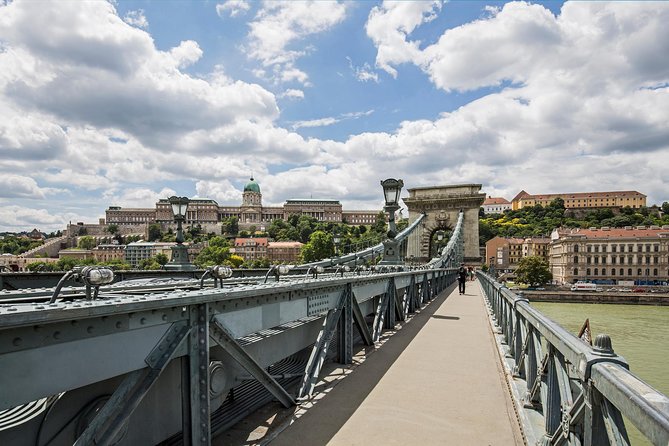
- The route covers major photo spots, including the Chain Bridge, Danube riverbank, Matthias Church, and the lookout at Fisherman’s Bastion.
- The group has a maximum of 10 people, so it is easier to hear the guide and ask questions.
- The tour is best early in your stay, when a broad introduction can help you plan the rest of your Budapest visit.
From the Opera House to Heroes’ Square by metro
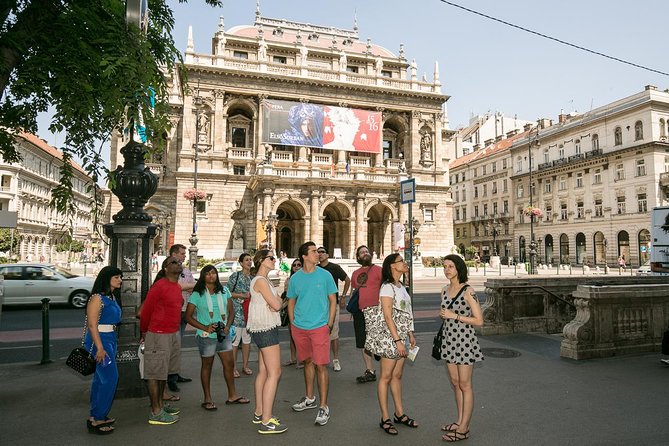
The tour starts at 9:00 a.m. outside the Hungarian State Opera House at Andrássy út 22. The building itself is part of the opening story, so you get a quick introduction before heading underground.
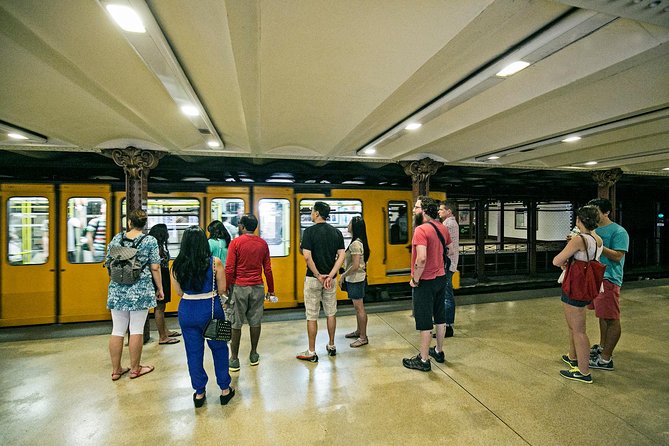
The metro ride beneath Andrássy Avenue is a useful part of the morning. You are not simply being moved from one stop to another. You are shown how Budapest’s public transport fits together, and the included tickets remove the usual worry about buying the right fare. A single return ticket is also provided for getting back downtown after the tour.
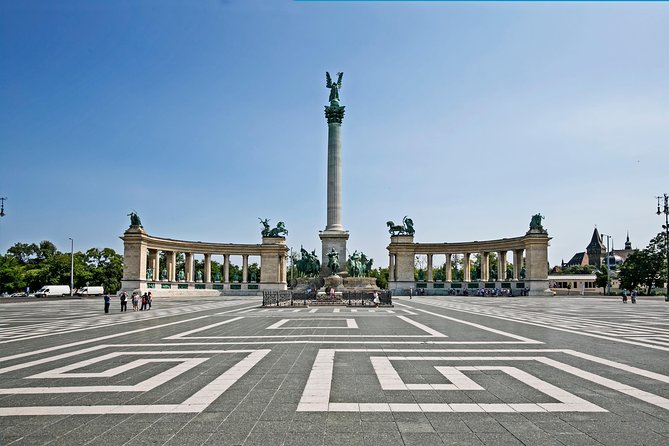
You travel toward City Park, or Városliget, one of Budapest’s largest public parks. The first major stop is Heroes’ Square, where a broad monument presents important Hungarian kings and leaders in a formal colonnade.
This is the place to get your first rough map of Hungarian history. The statues and layout can feel like a lot to take in on your own, but a guide can explain the key figures and the way Hungary presents its national story. You have about 30 minutes here, enough for photos and a clear talk without turning the stop into a long lecture.
More Small-Group Walking Tours in Budapest:
- Amsterdam Anne Frank: Small-Group Walking Tour & Local Guide
★ 4.8 · 12,789 reviews - Boston: Freedom Trail History Small Group Walking Tour
★ 5.0 · 6,450 reviews - Barcelona Tapas and Wine Experience Small-Group Walking Tour
★ 5.0 · 5,804 reviews
Vajdahunyad Castle and Budapest’s spa tradition
From Heroes’ Square, you walk through City Park. The park stop itself is short, around 10 minutes, but it connects several sights that are easy to miss if you visit only the square.
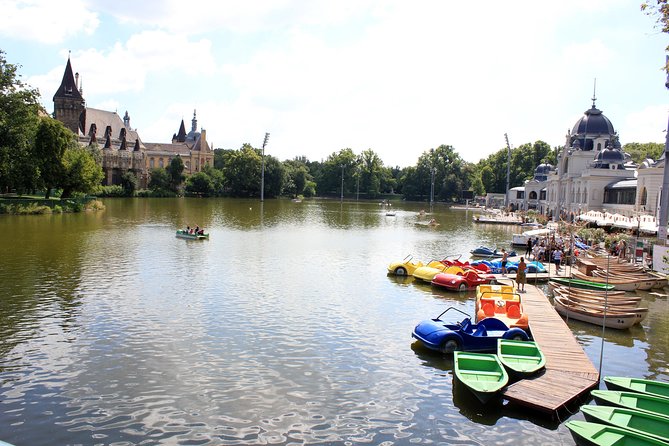
Vajdahunyad Castle is an unusual stop because it is not a single-period medieval fortress. It was built in 1896 for the Millennial Exhibition, marking 1,000 years since the Hungarian Conquest of the Carpathian Basin. Your guide explains the architecture as you walk into the courtyard, where different styles are brought together.
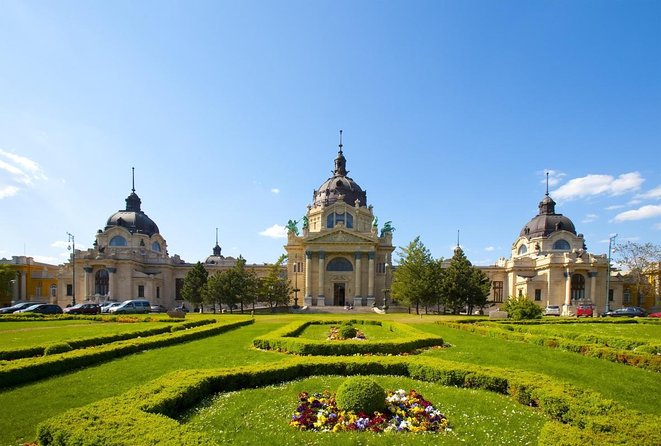
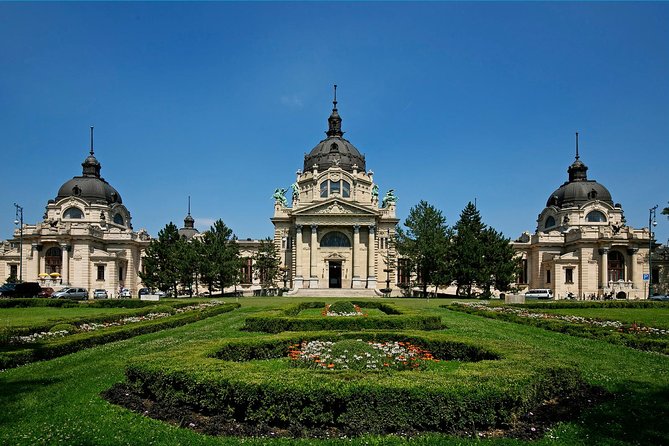
The next stop is Széchenyi Spa, one of Budapest’s best-known thermal baths and one of the largest in Europe. The tour gives you a look at the bathhouse and an explanation of local spa culture, but you do not get a bathing session. That distinction matters. If you want to use the pools, book a separate visit and allow several hours.
Still, this short stop adds useful context. Budapest’s bath tradition is not just a decorative feature for tourists. It is part of daily city life, and seeing the ornate building helps explain why thermal baths are such a major part of the Budapest scene.
Back downtown: St. Stephen’s Basilica and a proper strudel break
After the City Park section, you use the metro to return toward the center. The route then moves through central Pest, including St. Stephen’s Basilica, one of the city’s two tallest buildings.
The stop focuses on the church’s story and exterior. Since interior visits are not included, you should not expect a full church tour. That is one of the tradeoffs of a route designed to cover a lot of ground in one morning.
The break at the Strudel House is one of the tour’s most appealing details. You sit down for a Hungarian dessert with coffee, tea, or mineral water, and the stop gives your feet a needed rest after the park and city-center walking. Some groups share plates of sweet and savory strudels, and you may be able to watch the pastry being made.
I like this pause because it is more useful than a rushed snack eaten while walking. You get a taste of a familiar Hungarian food, time to ask the guide questions, and a chance to warm up on a cold day or reset in hot weather. If you are not especially interested in dessert, one past participant found the stop less essential, but the break itself remains practical.
The stop is included in the $100.37 price, along with the drinks and public transport used during the tour. That helps the cost feel more reasonable than a simple walking tour with no extras.
Soviet memory at Szabadság tér
After the cafe, the route returns to sightseeing in central Pest. At Szabadság tér, you see the Soviet Memorial and hear about Hungary during the communist period.
This is a worthwhile addition because it moves the tour beyond grand buildings and royal stories. Budapest’s recent political past is visible in public spaces, and the memorial offers a starting point for discussing how the city remembers the Soviet era.
The scheduled stop is about 10 minutes, so expect a focused explanation rather than a long political seminar. The guide also discusses the Parliament building and current politics in Hungary. Because the subject can be sensitive and complex, the value here depends partly on your guide’s ability to explain the basics clearly and answer questions.
The guides most praised for this kind of context include Greg, often identified by his Hungarian name, Gergely, along with Esther, Anna, Petra, and Louisa. Guide assignments can vary, so you cannot count on a specific person, but the format gives the guide time to connect the sights with everyday life.
A few more walking tours around Budapest worth a look
- Budapest: Buda Castle Walk with Saint Stephen’s Hall
★ 4.5 · 3,012 reviews - Big Bus Budapest Hop-On Hop-Off Bus and Walking Tour
★ 3.5 · 2,206 reviews - Budapest: Buda Castle District Walking Tour
★ 4.6 · 2,108 reviews - Budapest City Landmarks Walking Tour in 2 Hours
★ 5.0 · 2,048 reviews
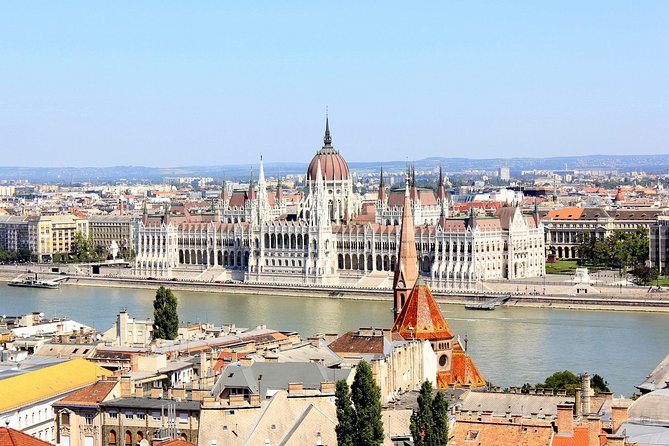
Parliament, the Danube, and the Chain Bridge
The walk continues toward the Danube, where you stop along the riverbank for views across the water. From here, you can take in Gellért Hill and the Citadel, with the city opening out around you.
The river section is short, around 10 minutes, so this is a photo and orientation stop rather than a long promenade. You will want your camera ready. The view helps you understand Budapest’s geography: Pest spreads flatter along one bank, while Buda rises on the other.
From the river, you walk toward Széchenyi Chain Bridge. The stop at the bridge is brief, about five minutes, but the guide explains its role in joining Buda and Pest. The bridge is also one of the tour’s most reliable photo opportunities.
One point to note: the route does not include the Shoes on the Danube Bank memorial, even though it is close to the Parliament area. If that memorial is important to you, plan to visit it separately.
Crossing into Buda and climbing toward the castle
The final part of the tour moves across to the Buda side. You visit Matthias Church, hear about royal coronations, and learn how the Ottomans converted the church into Buda’s main mosque.
Again, the church interior is not included. The stop is listed at about five minutes, so think of it as a guided introduction rather than a full architectural visit. If you want to see the inside, return later on your own and allow extra time.
The route then continues through the Buda Castle District. The castle walk lasts around 15 minutes and gives you a quick sense of the area’s layout and importance. It is not designed as a full castle museum visit, and no interior attraction tickets are part of the tour.
The final stop is Fisherman’s Bastion, where you look back over the city. The arcades offer free views, while the upper terrace requires an admission fee. The tour finishes here, near Matthias Church, rather than returning you to the starting point in Pest.
That ending is practical if you plan to keep exploring Buda Castle, but less convenient if your hotel is back on the Pest side. The included single public transport ticket helps you return downtown after the tour.
How much walking and how difficult is it?
The tour lasts about 3.5 to 4 hours and includes roughly three hours of walking, with short stops adding up to around 6 kilometers, or 4 miles. Public transport reduces the distance, but this is still an active morning.
You should expect city pavement, standing during explanations, short walks between stops, and stairs or uphill movement in the Buda Castle District. A moderate level of fitness is recommended. Wear shoes you can walk in for several hours and dress for the weather, since the tour operates in all conditions.
There is no audio equipment or headset system. That is good for a small group because the guide can speak directly with you, but you need to stay close enough to hear. In a noisy street or busy square, the lack of headphones may be less convenient.
Small group value and guide quality
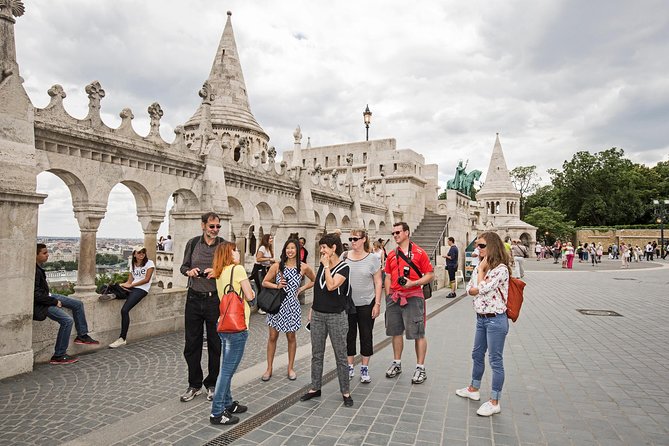
The maximum of 10 people is one of the strongest features here. With a larger group, a route this busy could feel like a march between landmarks. With 10 or fewer, you have a better chance of hearing the guide and getting useful answers.
The strongest guide feedback centers on clear explanations, warmth, humor, and practical advice. Greg is repeatedly praised for his energy, local knowledge, and ability to make history easy to follow. Esther is described as organized, caring, and good at keeping the group moving. Anna is praised for patience and clear knowledge, while Petra is noted for making the transport and sightseeing feel manageable.
Louisa is also praised for giving enough detail without forcing everyone into a long lecture. That balance matters because the tour covers many subjects, from medieval coronations to communism and current politics.
The experience is offered in English. You will not have an audio recording to replay later, so bring questions and listen actively. The small group makes this a better fit for someone who wants a live explanation rather than a self-guided route.
Is $100.37 a fair price?
At $100.37 per person, this is not the cheapest way to see Budapest. You can walk around Heroes’ Square, the Danube, Chain Bridge, and the castle area on your own for very little, and public transport in Budapest is affordable.
The value comes from what is bundled together: an English-speaking guide, transport tickets during the tour, a strudel and drink, a small group, and a route that links places on both sides of the city. You are paying for planning, interpretation, and the time saved figuring out metro connections.
I think the price works best for a first visit, especially if you want one morning to set the city in place. It is less attractive if you already know Budapest, plan to visit every building inside, or prefer to spend a full hour at one sight rather than sample many.
The current score is 4.8 from 1,277 ratings, with 98 percent recommending it. Those numbers suggest a reliable format, but the guide still shapes the day. The route is fixed, while the depth and humor can vary with the person leading your group.
Who should book this tour?
Book it if you want a broad introduction to Budapest and like the idea of learning the public transport system while seeing major sights. It suits couples, solo travelers, and families with older children who can handle several hours on foot.
It is also a good first or second-day activity. You will learn where Buda and Pest fit, see the main river views, and collect ideas for places to revisit at a slower pace.
Think twice if you need step-free sightseeing, dislike moving between many stops, or want interior tours of St. Stephen’s Basilica, Matthias Church, or Buda Castle. The tour gives you strong outside views and historical context, but it is not a substitute for dedicated visits inside those buildings.
Book at least 24 hours ahead if your plans may change, since cancellation is free only when made at least 24 hours before the 9:00 a.m. start. The tour is often reserved well ahead, with an average booking time of about 48 days in advance.
Should you book it?
I would book this tour if Budapest is new to you and you want an efficient, human introduction rather than a long bus circuit. The combination of metro rides, city walking, a sit-down strudel break, and views from Fisherman’s Bastion gives you a good first look at both halves of the city.
Skip it if you want a slow museum-style tour or already have a detailed Budapest plan. For most first-time visitors who can manage 6 kilometers and several short stops, this is a well-planned way to get your bearings, learn the city’s story, and decide where to spend the rest of your stay.
FAQ
Where does the Budapest walking tour start?
It starts at the Hungarian State Opera House, at Andrássy út 22 in Budapest, at 9:00 a.m.
Where does the tour finish?
The tour ends on the Buda side at Matthias Church and Fisherman’s Bastion.
How long does the experience last?
The tour lasts approximately 3 hours 30 minutes to 4 hours.
How much walking is involved?
Expect about three hours of walking with short stops, covering roughly 6 kilometers, or 4 miles.
Are public transport tickets included?
Yes. Public transport tickets used during the tour are included, along with one free single ticket for returning downtown afterward.
Is the strudel and drink included?
Yes. The price includes strudel at the Strudel House and a choice of coffee, tea, or mineral water.
Does the tour enter the churches or other buildings?
No. Interior visits to churches and buildings are not included. The tour provides outside visits, explanations, and brief looks at selected sites.
Just added around Budapest
- Budapest 3-Hour Walking Tour in Italian★ 4.6 · 217 reviews
- Budapest: Castle District Walking Tour★ 4.8 · 223 reviews
- Budapest: Walking Tour to the Shoes Memorial and Parliament★ 4.7 · 151 reviews
- Budapest: Jewish History Guided Walking Tour with Historian★ 4.8 · 205 reviews
- Budapest Guided Food Walking Tour with Drinks Included★ 4.8 · 472 reviews
- Budapest: Walking Tour in the Buda Castle District★ 4.9 · 113 reviews
- Budapest: Walking Tour and Photoshoot with Digital Photos★ 4.7 · 82 reviews
- Budapest: 3-Hour Walking Tour of Pest with a Historian★ 4.9 · 81 reviews
Small-Group Walking Tours, compared.
Amsterdam Anne Frank: Small-Group Walking Tour & Local Guide
Read our review →
Freedom Trail History Small Group Walking Tour
Read our review →
Barcelona Tapas and Wine Experience Small-Group Walking Tour
Read our review →
Reykjavík Small group Walking Tour – by CityWalk
Read our review →

Hidden Alleyways and Historic Sites Small-Group Walking Tour
Read our review →
Old Montreal Small-Group Walking Tour | Max 10 | by MTL Detours
Read our review →Browse the lists this tour appears in