
REVIEW · BERLIN
Explore Berlin History and Highlights Sightseeing Walking Tour
Berlin’s past is unusually visible on its streets. In a single morning, you move from the Prussian royal capital to Hitler’s final bunker, then on to the Cold War border and the grand museums of Museum Island. This 3.5-hour walking tour gives you a useful timeline for understanding the city instead of leaving you with a pile of disconnected sights.
I like the small group limit of 15, which gives you a better chance to hear the guide and ask questions. I also like the route’s range: Brandenburg Gate, the Holocaust Memorial, Checkpoint Charlie, Gendarmenmarkt, and Museum Island all appear in one carefully arranged walk. The main drawback is plain but important: this is a long walking tour, not a sightseeing bus trip, so it may not suit anyone who finds several hours on foot difficult.
Key points to know before booking
- A full historical arc: The route links Prussian Berlin, the Nazi period, the Second World War, the Cold War, and reunification.
- Eleven central Berlin stops: You see major landmarks without paying separate entrance fees during the walk.
- A 15-person maximum: The smaller group makes it easier to hear explanations and speak with your guide.
- Strong guide-led storytelling: Aurel, Cairan, Rhys, Steve, Eugen, Aaron, Paul, and others have been praised for clear explanations, humor, patience, and personal stories.
- A demanding route: The tour begins at 10:00 a.m. near Brandenburg Gate and ends at Museum Island after about 3.5 hours on foot.
- Good first-day orientation: You finish near Berlin’s major museum district with a better sense of what deserves a return visit.
Why this Berlin walk works so well

The best feature here is the order of the route. Berlin can feel confusing at first because different periods of its history overlap in the same few streets. A palace site may sit near a Cold War marker, while an ordinary-looking office building may have played a major role under the Nazis.
Your guide provides the thread connecting those places. At the Brandenburg Gate, the story begins with one of Berlin’s most famous symbols. By the time you reach Museum Island, you have followed the city through monarchy, dictatorship, war, division, and reunification.
This is not an entrance-ticket tour. You spend your time outside, looking at buildings, memorials, streets, and sites while the guide explains what happened there. That keeps the price at $32.58 per person and lets you cover a great deal of central Berlin without stopping for long museum visits.
The trade-off is depth at each individual site. Fifteen or 20 minutes is enough for a focused explanation and photographs, but not enough to explore the Reichstag interior, the Holocaust Memorial exhibition, or the museums of Museum Island. Think of this as a well-organized introduction, followed by places you can revisit on your own.
More City Highlights Walking Tours in Germany
- Berlin City walk Government District and Places of Democracy
★ 4.7 · 8,467 reviews - Berlin Historical Highlights Walking Tour
★ 4.9 · 657 reviews - Berlin: Sightseeing Walking Tour of the Top 20 Attractions
★ 4.5 · 196 reviews
Brandenburg Gate and the Reichstag: Berlin’s great symbols
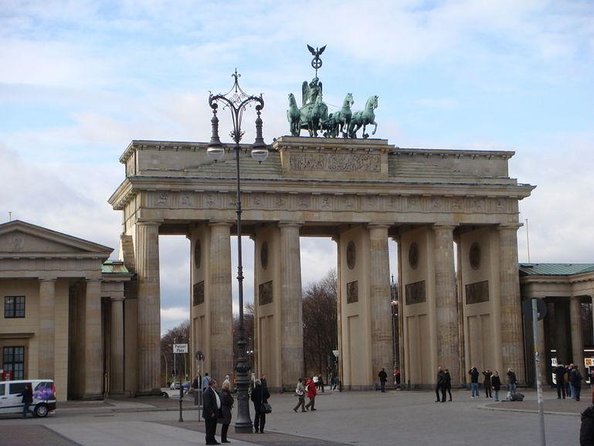
The tour begins near Wurst am Brandenburger Tor, at the corner of Ebertstraße and Scheidemannstraße. That puts you close to the Brandenburg Gate, where the first 20 minutes set the tone for the morning.
The gate has witnessed major changes in Berlin’s story. Your guide explains its role in the Prussian capital, its place in the 20th century, and its symbolic importance in the divided city and reunited Germany. It is also one of the busiest photo stops, so arriving before 10:00 a.m. or later in the day can help if you want clearer pictures.
From there, you walk to the Reichstag Building. The exterior is free to view, and the guide focuses on why this building matters. It served as the parliament during Germany’s imperial period, was linked to the infamous fire soon after Hitler became Chancellor, and became a key target during the Soviet capture of Berlin at the end of the Second World War.
I find this pairing especially useful. The Brandenburg Gate is a symbol, while the Reichstag gives you a building tied to the workings and collapse of German democracy. Together, they move the story beyond postcard views.
The Holocaust Memorial and Hitler’s bunker site
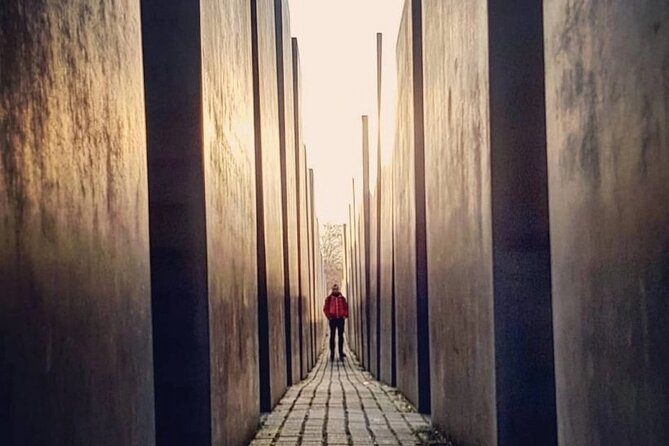
The next stop is the Memorial to the Murdered Jews of Europe, usually called the Holocaust Memorial. The 15-minute visit gives you time to walk among the concrete blocks and hear why the memorial was built in central Berlin.
Your guide also explains the crimes it commemorates and the questions raised by its design. The memorial is deliberately open to interpretation, but it is not a casual photo stop. Give yourself a moment to move quietly through the blocks and consider how the space changes as you walk.
The route then reaches the former Führerbunker site, now covered by an ordinary car park. That contrast is one of the most striking details on the tour. Hitler ended his life in the bunker beneath what had been the garden of the New Reich Chancellery, yet the site is not marked by a grand monument or preserved underground chamber.
The guide explains what stood there and why the place looks so unremarkable today. For me, this is one of Berlin’s most useful lessons in memorial culture. Some sites are carefully designed memorials. Others are deliberately left without a dramatic structure, forcing you to rely on context and imagination.
The Luftwaffe headquarters and the Topography of Terror
At the Bundesministerium der Finanzen, today’s Finance Ministry, you see a building with a very different past. It was formerly the headquarters of the Luftwaffe, Germany’s air force under the Nazi regime.
The guide discusses its construction, its wartime use, and its later role in Cold War Berlin. The building’s survival gives you a chance to consider how Berlin has reused structures associated with dictatorship rather than erasing every trace of them.
The next stop, the Topography of Terror, takes you to the former headquarters of the SS, Gestapo, and SD. This is a serious part of the walk, focused on the machinery of Nazi persecution and the way Germany later chose to document those crimes.
You should expect more than a list of dates here. The value comes from linking the physical site to the institutions that operated from it. The stop also explains postwar memorial efforts, helping you understand why Berlin’s commemorative spaces take such different forms.
The 20-minute visit is long enough for an effective outdoor explanation, but you may want to return later for a fuller museum visit if this period is central to your interests.
More City Highlights Walks in Berlin:
- Berlin : Must-see attractions Walking Tour
★ 4.8 · 83 reviews - Historic Charleston Guided Sightseeing Walking Tour
★ 5.0 · 6,216 reviews - Quebec City Walking Tour
★ 5.0 · 4,716 reviews - Florence: Highlights Walking Tour with Expert Guide
★ 4.6 · 4,662 reviews
Checkpoint Charlie and the human scale of the Cold War
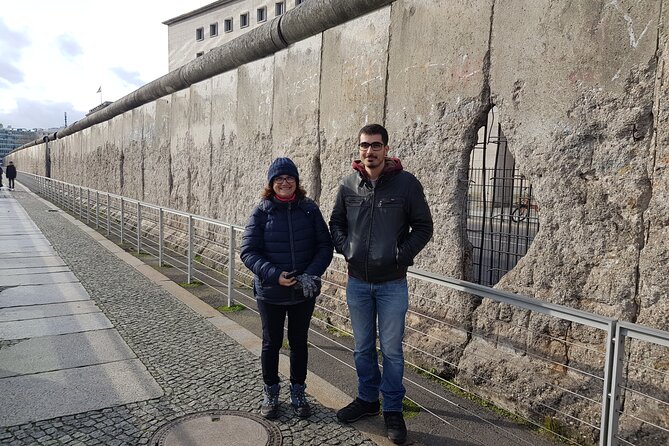
Checkpoint Charlie is one of the most famous Cold War sites in Berlin. It once marked a crossing between the American and Soviet sectors, and it has become one of the city’s most recognizable symbols of division.
The tour spends about 20 minutes here, placing the checkpoint in the larger story of postwar Berlin. You learn how the city was divided, why this crossing mattered, and how the Cold War shaped everyday life.
The site itself can feel busy and commercial, so the guide’s explanation is especially helpful. Without context, the guardhouse and surrounding signs can seem like a quick photo opportunity. With context, you can place it within the much bigger story of a city split by competing political systems.
This stop is also a reminder that Berlin’s major landmarks do not all feel solemn or untouched. Some are polished, crowded, and surrounded by modern businesses. The tour helps you separate the historic meaning from the present-day setting.
Gendarmenmarkt and Bebelplatz: Prussian Berlin in stone
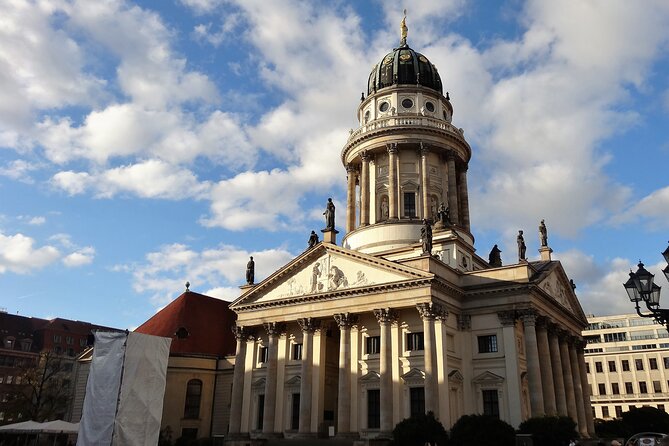
After the heavier 20th-century stops, Gendarmenmarkt changes the mood. The square is surrounded by impressive 18th- and 19th-century architecture, and the guide explains its creation and development.
This is a good place to see how Frederick the Great’s Prussian capital was planned and presented. The grand buildings are not just attractive backdrops. They reflect ideas about monarchy, civic order, religion, and national power.
The stop at Bebelplatz continues that architectural story but adds a painful chapter. You look across the square at buildings shaped by Frederick the Great’s capital and learn about the Nazi book burning of 1933.
The memorial to that event is easy to miss if you do not know where to look. Your guide points it out and explains why this square became associated with the destruction of books and ideas. The combination of grand architecture and a memorial to censorship makes Bebelplatz a particularly effective stop.
The walking route handles these sites well because it does not isolate Nazi history from the earlier city. You see how the same public spaces can carry several layers of meaning.
Unter den Linden and the eastern end of Berlin’s center
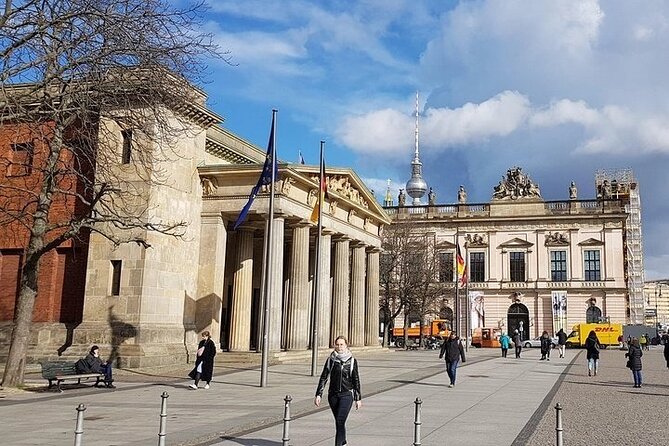
The walk continues along the eastern end of Unter den Linden, Berlin’s famous boulevard. Here, the focus shifts to buildings and memorials that explain the city’s intellectual, royal, and wartime identity.
You hear about Humboldt University and its place in Berlin’s cultural life. The route also includes the Memorial to the Victims of War and Tyranny, a quiet space that asks you to think about suffering beyond one particular regime or conflict.
The German History Museum is part of this section as well. You do not go inside as part of the walking tour, but its location helps tie together the earlier subjects. If you plan to visit later, the morning’s explanations will give you a useful framework for the exhibits.
This stretch is less about one dramatic landmark and more about how Berlin’s center fits together. You see grand façades, public institutions, memorials, and the boulevard linking them. Guides such as Steve have been praised for arranging the material in a clear chronological order, which matters here because the architecture spans several eras.
Museum Island and the view toward Alexanderplatz
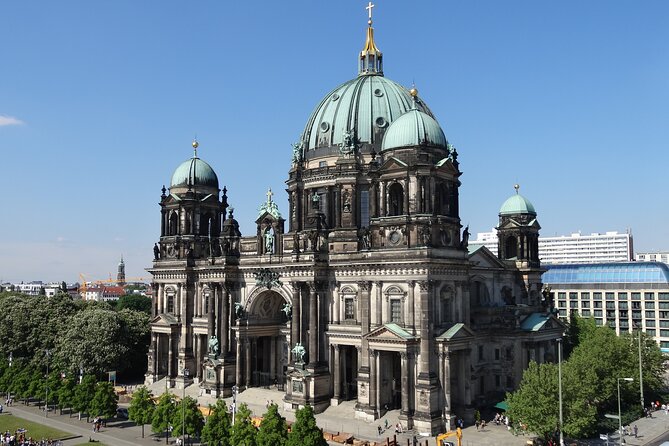
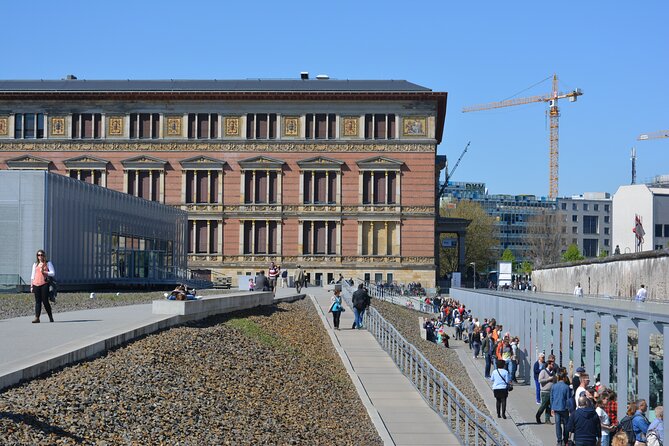
The final stop takes you onto Museum Island, the area that formed part of medieval Berlin and later housed the City Palace, or Stadt Schloss. Today it is home to five major museums and the Berlin Cathedral.
From the eastern side of the island, the guide looks toward Alexanderplatz and explains its role as the center of postwar East Berlin. This gives the walk a strong ending. You begin with a symbol of the old Prussian and modern German capital, then finish looking toward a district shaped by East German planning and Cold War politics.
You finish on Museum Island rather than returning to the starting point. That is useful if you plan to visit a museum, continue toward Alexanderplatz, or stop for lunch nearby. It also means you should not expect hotel drop-off or transportation back to your starting point.
The museum buildings deserve more time than the tour can provide. Still, ending here gives you a practical next step. You can choose to enter one of the museums after the walk, return to the Holocaust Memorial, or use public transportation to explore another part of Berlin.
The guides make the difference
The experience depends heavily on the person leading it. The strongest guide comments describe a mix of clear historical explanation, humor, patience, and an easy connection with the group.
Aurel is praised for presenting Berlin’s history from the early city through the present, including architectural details and the reasons buildings were rebuilt or reused. Cairan is described as especially good at connecting local events to wider German and world history. Rhys is noted for keeping the tone light and understandable, including for a family member with only basic English.
Steve is praised for arranging the story in an efficient chronological order, while Eugen is described as relaxed, courteous, and flexible. Aaron and Paul also receive strong praise for their warmth, patience, and ability to answer many questions.
One guide used photographs on an iPad, and another brought personal family images connected with East Berlin. Those details can make a difference because Berlin’s destroyed and rebuilt streets are not always easy to picture from the present-day view.
The precise guide is not guaranteed, so you should book this for the route and format rather than for one named person. Still, the repeated strength of the guide-led experience is an important part of the value.
Price, pace, and practical comfort
At $32.58, the tour offers a good return if you want a guided introduction to central Berlin. You visit 11 major sites, receive historical interpretation throughout, and avoid the cost of separate attraction tickets during the walk.
The value is strongest for a first visit or a short stay. You get the city’s basic framework in one morning, then can decide what deserves more time. It is less useful if you already know central Berlin well or prefer to spend an hour inside each landmark.
The 10:00 a.m. start is sensible. It gives you a full afternoon afterward and places the Brandenburg Gate before the day becomes even busier. Wear comfortable shoes, bring water, and consider a snack. The route covers a lot of ground, and the explanations are detailed enough that a small break would be welcome even though no meal stop is included.
The group can include up to 15 people, though some departures may be smaller. A group of seven, or even a private departure when few people book, allows for more questions and a more personal pace. The tour is offered in English and uses a mobile ticket.
Most people can take part, and service animals are allowed. Still, the long walk is the key physical issue. If you or someone in your party cannot comfortably walk for several hours, ask the provider before booking rather than treating this as a casual stroll.
Free cancellation is available up to 24 hours before the 10:00 a.m. start time. Changes or cancellations inside that window are not accepted for a refund.
Who should book this tour?
I would choose this tour if you want Berlin’s major historical sights explained in a logical order. It suits first-time visitors, families with older children, history fans, and anyone who wants a clear starting point before exploring alone.
It is also a smart option for people who prefer buildings and public spaces to formal museum visits. You get the outside view of many key places and a guide to explain what you are seeing, without spending the morning indoors.
I would think twice if you have limited mobility, dislike walking in a group, or want extended time at individual museums and memorials. The route is efficient, but efficiency means moving on after 15 or 20 minutes at many stops.
For most visitors with a free morning and comfortable shoes, the combination of price, route, and strong guide presentation makes this a worthwhile introduction to Berlin. Book it early if your schedule is fixed, since it is often reserved well ahead of the tour date.
FAQ
How long does the Berlin history walking tour last?
The tour lasts approximately 3 hours and 30 minutes.
Where does the tour begin?
It begins at Wurst am Brandenburger Tor, at Ebertstraße, corner of Scheidemannstraße, 10117 Berlin.
Where does the tour end?
The tour ends at Museum Island in Berlin.
What time does the tour start?
The scheduled start time is 10:00 a.m.
Is this a walking tour?
Yes. The experience is entirely a walking tour, and transportation is not included.
How large can the group be?
The tour has a maximum of 15 participants and is offered in English.
Just added around Berlin
- Berlin Walking Tour★ 4.5 · 378 reviews
- East Meets West: Berlin Food Culture & Street Art★ 5.0 · 157 reviews
- Small Group Walking Tour of East Berlin with a French Guide★ 5.0 · 176 reviews
- Berlin Street Art Walking Tour – Off The Grid★ 5.0 · 270 reviews
- Berlin Highlights Private Guided Walking Tour★ 4.5 · 89 reviews
- Gruseltour Berlin Haunted Ghost Walk 90-minute at Berlin Mitte city center★ 5.0 · 75 reviews
- Berlin Private Complete History All Day Walking Tour★ 5.0 · 474 reviews
- Private Berlin: Iconic Sights and Hidden Gems Walking Tour★ 5.0 · 292 reviews
City Highlights Walking Tours, compared.
Berlin City walk Government District and Places of Democracy
Read our review →
Historic Charleston Guided Sightseeing Walking Tour
Read our review →

Oxford: University and City Walking Tour with Alumni Guide
Read our review →
City Highlights Temple and Market Walking Tour
Read our review →
A History of Terror – Belfast City Centre Walking Tour
Read our review →Browse the lists this tour appears in