
REVIEW · BARCELONA
Barcelona in 2 Hours: Guided Walk Through History and Sights
Barcelona’s old center is best understood on foot, where a café linked to Picasso and Gaudí, a medieval Jewish quarter, Roman walls, Civil War scars, and Catalan political squares sit close together. This two-hour walk gives you that compact story, ending at the Gothic Basilica of Santa Maria del Mar.
I like the route’s range: you get art, architecture, religion, politics, and everyday city life rather than a parade of famous façades. I also like the local guide approach. Guides such as Darren, Petra, Jorge, Sonia, Vanessa, and Lydia have been praised for clear storytelling and useful suggestions for the rest of your stay.
The main thing to consider is pace. Eleven stops in about two hours means roughly ten minutes at each place, and the old streets can be noisy. One guest found it hard to hear without a speaker, so stay close to the guide and ask questions when needed.
Key points to know before you book
- Picasso and Gaudí’s Barcelona: Els 4 Gats introduces the artists and thinkers who gathered at this famous Art Nouveau café.
- A serious look at Catalan identity: Several stops explain the 1714 defeat, La Diada, independence politics, and the scars left by conflict.
- Two historic districts in one walk: The route links the Gothic Quarter with El Born, finishing at Santa Maria del Mar.
- A small group format: The tour accepts a maximum of 20 people, with a private upgrade available.
- Good first-day orientation: Guides share local suggestions, which can help you plan meals and sightseeing after the walk.
- Low entry cost: At $22.99 per person, the tour offers a broad introduction, though cathedral admission is extra.
Why this two-hour route works
This is not a tour built around one grand monument. Its strength is the way the stops fit together. Barcelona’s old center can feel like a maze of narrow lanes, and it is easy to walk past important places without knowing what you are seeing. A guide gives those streets a clear sequence.
You begin at Plaça del Vuit de Març in Ciutat Vella, then move through the Gothic Quarter before crossing toward El Born. The route ends at the Basilica de Santa Maria del Mar, giving you a useful sense of how the old city connects.
I would treat the walk as an introduction, not a full museum visit. Most stops receive about ten minutes. That is enough for a story, a look at the building, and a few questions, but not enough for long interior visits or detailed architectural study.
That short format is useful on a first day. You get a mental map and a list of places to revisit. It also means you should not book this expecting a slow photography walk or an in-depth cathedral tour.
More Two-Hour Tours in Barcelona:
- Barcelona: Jewish Quarter 2-Hour Walking Tour
★ 4.8 · 333 reviews - Barcelona 2-Hour Gothic Walking Tour
★ 4.7 · 317 reviews - Jewish Walking Tour Barcelona by Expert Jewish Guide 2h
★ 5.0 · 297 reviews
Els 4 Gats: where modern Barcelona begins
The first stop, Els 4 Gats, sets the tone. This café and restaurant became a meeting place for artists and intellectuals, including Pablo Picasso and Antoni Gaudí. Its unusual exterior and Art Nouveau design offer an early look at the creative spirit associated with Barcelona.
The value here is not simply seeing a pretty restaurant. The place helps explain Barcelona as a city where cafés, architecture, art, and political ideas have long crossed paths. A guide can add meaning to details you might otherwise pass without noticing.
You will have about ten minutes, and admission is free. That makes this a quick exterior and context stop rather than a meal or extended café visit.
El Món Neix en Cada Besada and the story behind the picture
The next stop shifts from historic architecture to modern public art. El Món Neix en Cada Besada, often treated as one of the city’s most photographed street-art works, is connected to the Catalan defeat of September 11, 1714.
That date is central to the celebration of La Diada, or Catalonia Day. The stop matters because it links a popular photo location with a political and cultural story. You are not simply being shown where to take a picture. You are being given a reason to understand why the image matters locally.
Again, admission is free and the stop lasts about ten minutes. The tour’s approach works well here because the artwork becomes a doorway into Catalan identity, not an isolated attraction.
Barcelona Cathedral and the story of Saint Eulalia
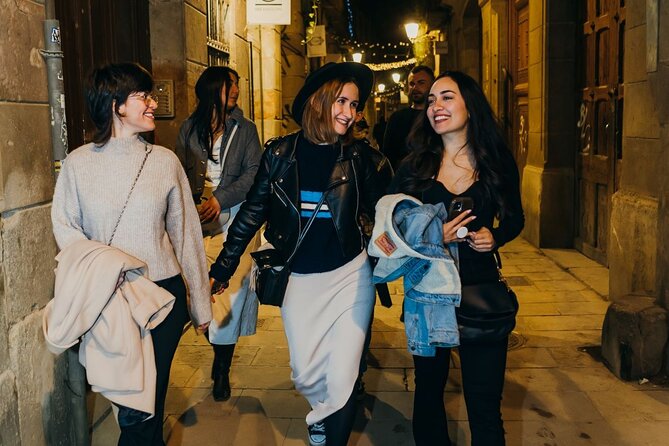
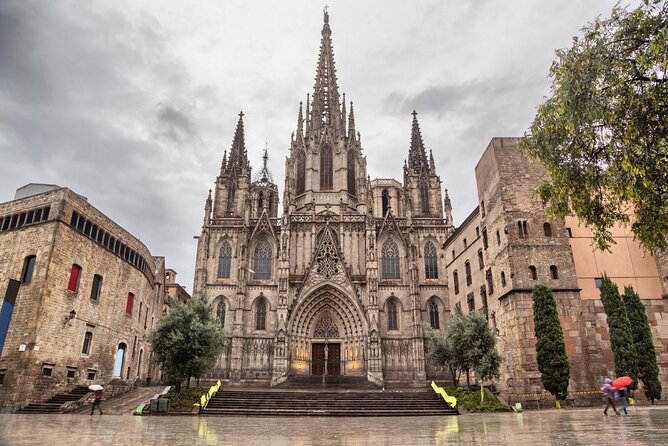
The Cathedral of Barcelona brings you into the Gothic Quarter’s religious center. Built over many centuries, the church is tied to Saint Eulalia, Barcelona’s patron saint, whose martyrdom is remembered through the cathedral’s art and traditions.
The exterior alone gives you plenty to discuss, but this is one of the two stops where admission is not included. If you want to enter, plan for an additional ticket cost. The tour’s short visit does not replace a full cathedral visit, so decide ahead of time if you want to return later.
I like the way Saint Eulalia’s story adds a human focus to the stonework. Instead of hearing only dates and architectural labels, you get a local figure whose life and death shaped the identity of the church.
More Guided Tours in Barcelona:
- Barcelona: City Walking Tour with a Local Guide
★ 4.9 · 1,384 reviews - Barcelona: Guided Food Walking Tour with Tapas and Wine
★ 5.0 · 848 reviews - Barcelona: Picasso Museum Entry, Digital Guide & Born Walk
★ 3.6 · 148 reviews - Magical London: Harry Potter Guided Walking Tour
★ 4.7 · 22,044 reviews
Casa de l’Ardiaca and traces of Roman Barcino
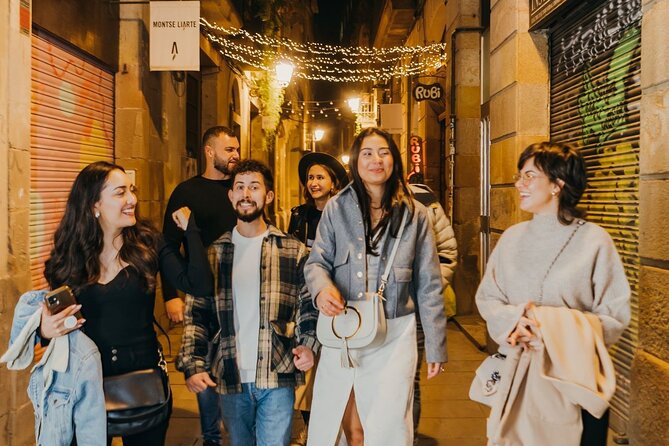
Casa de l’Ardiaca is a smaller stop, but it brings together several layers of Barcelona. The building includes Gothic and Renaissance elements, while remnants of the Roman wall and aqueduct show how the ancient settlement of Barcino supplied itself with water.
This is the sort of place that rewards a guide. The remains are easy to overlook when you are walking through the Gothic Quarter on your own. A short explanation helps you see that the district is not only medieval. Roman Barcelona is still present beneath and beside the later city.
Admission is free. Since the stop lasts about ten minutes, expect an explanation of the surviving features rather than a long visit inside.
Pont del Bisbe and a legend over the street
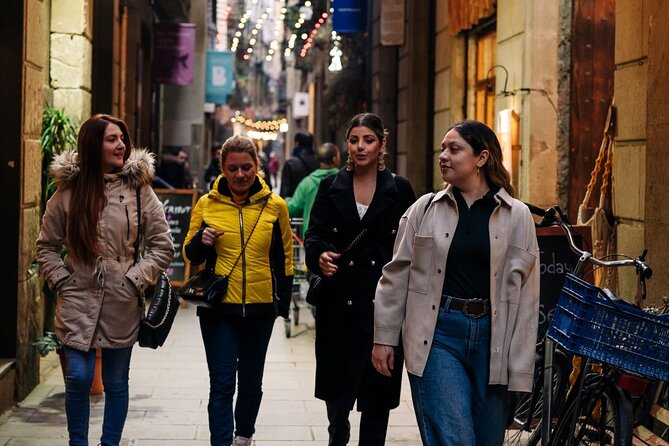
Pont del Bisbe, or Bishop’s Bridge, is one of the route’s most recognizable photo spots. The narrow bridge connects buildings above the lane and carries a legend that adds a touch of superstition to the architecture.
The story is designed to make you look twice before walking underneath. It works as a lighter moment in a tour that also covers war, persecution, and political conflict. You get the photograph, the architecture, and a local tale that may appeal to both believers and sceptics.
Because the bridge is popular, this can be a busy stop. Keep your group in sight and expect to share the space with people taking pictures.
Plaça Sant Felip Neri and Barcelona’s painful memories
Plaça Sant Felip Neri changes the mood. This quiet square carries a sombre story tied to the violence of Barcelona’s past and the wider struggle surrounding Catalan independence. Its walls still bear marks from that tragic history.
The square is valuable because it asks you to slow down and consider what the old city has endured. Barcelona is not only Gaudí, beaches, tapas, and grand churches. Places such as this show the cost of conflict in a direct, physical way.
You receive about ten minutes here, which is enough for the guide to explain the setting and its scars. It is also a good point to listen closely. Street noise or a spread-out group could make the details harder to catch.
MUHBA El Call and the former Jewish quarter
The route continues through El Call, the old Jewish district. Its narrow lanes and medieval buildings preserve the outline of a community that once formed part of Barcelona’s city life.
This stop adds an important perspective that many quick city walks leave out. You are not only following kings, churches, and famous artists. You are also seeing how religious and cultural communities shaped the old center.
The district is free to walk through, and the visit lasts roughly ten minutes. The name MUHBA refers to the Barcelona History Museum, but the supplied tour details do not promise a museum entry. Think of this part as a guided street-level introduction.
Plaça de Sant Jaume, politics in the middle of town
Plaça de Sant Jaume is Barcelona’s main civic square. It is home to the seat of the Catalan government and City Hall, and it has served as a place for celebrations, demonstrations, and public debate.
This is where the tour’s discussion of Catalan identity becomes especially clear. The square is not an abstract history lesson. It remains a working political center, and its present use connects directly with the stories of La Diada and independence.
A guide can help you read the buildings and explain why the square matters. The stop is free, and its central location makes it a natural point for understanding how civic life fits into the old city.
Plaça del Rei and the shadow of the Inquisition
Plaça del Rei has a more formal, imposing character. The Royal Palace gives the square a strong medieval presence, while the site also recalls the darker period of the Spanish Inquisition.
This is a good example of the tour’s balance. You see royal power, grand architecture, and the less comfortable side of religious and political authority. The square looks dignified, but the story attached to it is not simple or cheerful.
You should expect an outdoor explanation rather than a full royal-palace visit. Admission to the square itself is free, and the short stop gives you a useful frame before you explore the area further on your own.
Plaça de l’Àngel and Saint Eulalia’s miracle
The former Wheat Square was once linked to grain trading. It later became Plaça de l’Àngel after a heavenly apparition was said to appear during a procession carrying Saint Eulalia’s body.
This stop returns to the saint introduced at the cathedral, giving the route a small but useful thread. It also shows how names preserve old stories. A modern square can still carry a memory of trade, religion, and procession.
The stop is free and lasts around ten minutes. It is not a major monument, but that is part of its appeal. You get a short lesson in how Barcelona’s street names and public spaces keep older events alive.
Santa Maria del Mar: finishing in El Born
The final stop is the Basilica of Santa Maria del Mar in El Born. This Gothic church is one of the neighborhood’s defining buildings and reflects Barcelona’s connection with the sea and maritime trade.
Ending here gives the route a strong finish. You have moved from artists and cafés through Roman remains, Gothic lanes, Jewish history, royal power, Catalan politics, and religious stories. Santa Maria del Mar brings those themes together in one large Gothic space linked to the working life of the old port district.
Admission is not included, so entering the basilica may cost extra. The tour ends at Plaça de Santa Maria, 1, which is convenient if you want to continue exploring El Born after the guide leaves.
Guides, group size, and the way the tour feels
The experience is offered in English, and the maximum group size is 20 people. That is small enough for a personal feel in most cases, but not so small that every question can receive a long answer.
The strongest guide comments focus on storytelling, clear explanations, and local advice. Darren was praised for his clarity and enthusiasm. Petra brought Catalan culture to life, while Jorge was singled out for showing less obvious places and giving practical suggestions for the rest of a trip.
Sonia’s archaeological angle appealed to people interested in how the city developed, and Vanessa was especially good at moving between art, religion, archaeology, and politics while answering questions. Lydia was described as conversational and energetic.
There is one practical caution. One German-language assessment reported that background noise made some explanations difficult to follow because the guide did not use a speaker or audio guide. I would stay near the guide, avoid drifting to the rear, and ask for repetition if a busy street swallows part of the explanation.
A private upgrade is available if you want more personal attention. That could make sense for a family, a couple with many questions, or anyone who prefers a slower pace. The shared tour is the better value if you mainly want orientation and a lively overview.
Is $22.99 a fair price?
At $22.99 per person, the tour is priced as an affordable introduction rather than a full-day cultural program. You are paying for a guide who links 11 stops into one story, not for entry to every building.
The value is strongest if you are new to Barcelona and want help finding your way through the Gothic Quarter and El Born. The route covers several subjects that would be hard to connect on your own, especially the Roman remains, Jewish quarter, Catalan politics, Saint Eulalia, and the scars of conflict.
Remember that entry to Barcelona Cathedral and Santa Maria del Mar is not included. If you want to visit both interiors, add those costs to your budget. The tour itself remains reasonably priced even with that limitation, but it is important to know what the fee covers.
The average booking lead time is 42 days, so popular dates may fill well before arrival. The tour accepts group discounts, uses a mobile ticket, and offers free cancellation up to 24 hours before the start time. Changes or cancellations inside that window are not refundable.
Who should book this Barcelona walk?
I would recommend it to first-time visitors, especially those arriving early in a trip. It gives you a useful map of the old city and can help you decide which places deserve a longer return visit.
It also suits anyone who prefers cultural context to a simple photo checklist. The route includes art, religion, architecture, archaeology, politics, and local legends, with enough variety to keep the two hours moving.
You may want a different experience if you need step-free access, a slow photography pace, or extended time inside the cathedral and basilica. The provided information says most people can participate, but it does not promise a fully accessible route or detailed interior visits.
FAQ
How long does the Barcelona walking tour last?
The tour lasts approximately two hours.
Where does the tour start?
It starts at Plaça del Vuit de Març in Ciutat Vella, Barcelona.
Where does the tour finish?
It ends at the Basilica of Santa Maria del Mar, at Plaça de Santa Maria, 1, in Ciutat Vella.
Is the tour offered in English?
Yes. The experience is offered in English.
How many people can join the group?
The maximum group size is 20 people.
Are admission tickets included?
Admission is free at most stops. Tickets for Barcelona Cathedral and the Basilica of Santa Maria del Mar are not included.
Can I cancel for a full refund?
Yes. You can cancel at least 24 hours before the start time for a full refund. Cancellations or changes made less than 24 hours before the start time are not accepted for a refund.
Should you book it?
Book this walk if you want a compact, well-priced introduction to Barcelona’s oldest neighborhoods and would rather hear the stories than simply collect photos. The mix of Els 4 Gats, Roman remains, Catalan politics, El Call, royal history, and Santa Maria del Mar gives you more range than the two-hour length suggests.
I would book it near the start of your visit, wear comfortable shoes, use sun protection, and stay close enough to hear the guide. For $22.99, it is a sensible way to get your bearings, learn what you are looking at, and leave with a clear list of places to explore more slowly.
Just added around Barcelona
- Private Barcelona Old Town and Gothic Quarter Walking Tour★ 5.0 · 134 reviews
- Barcelona Gothic Quarter Walking Tour with Tapas★ 5.0 · 248 reviews
- Barcelona Private Food Tour: Tapas, Paella & 8+ Food Tastings★ 5.0 · 164 reviews
- Picasso Museum and Walking Tour Plus Optional Wine & Food Tasting★ 5.0 · 596 reviews
- Montjuïc Walking Tour With Optional Flamenco Show★ 5.0 · 196 reviews
- Semi-Private Montserrat Monastery, Funicular & Scenic Nature Walk★ 5.0 · 172 reviews
- Barcelona Architecture Walking Tour With Casa Batlló Upgrade★ 5.0 · 137 reviews
- Private Tour Spanish Civil War & Franco’s Dictatorship★ 5.0 · 116 reviews
Walking Tours, compared.

Magical London: Harry Potter Guided Walking Tour
Read our review →
Reykjavik Food Walk – Local Foodie Adventure in Iceland
Read our review →
History and Hauntings of Salem Guided Walking Tour
Read our review →
New Orleans Premier Ghost, Voodoo and Vampire Walking Tour
Read our review →
Amsterdam Anne Frank: Small-Group Walking Tour & Local Guide
Read our review →

Edinburgh Castle: Guided Walking Tour with Entry Ticket
Read our review →
Anne Frank’s Story – Guided Walking Tour through Amsterdam
Read our review →Browse the lists this tour appears in