
REVIEW · INDIA
Amritsar Heritage Walking Tour
Amritsar’s most revealing sights are close together, but they are not all obvious. This walking tour links the Partition Museum, Jallianwala Bagh, Sikh memorials, old market lanes, and the area outside the Golden Temple into one compact introduction to the city. The back streets are the real draw, especially if you want more than a quick look at the temple.
I like the mix of major landmarks and ordinary city life. You get clear stops for the 1947 Partition and the 1919 Jallianwala Bagh massacre, then move into narrow lanes, local businesses, old religious sites, and Baba Bohar, a large banyan tree in the middle of the city. I also like the friendly, conversational guiding style associated with guides such as Hardik and Prerit. The main drawback is that the historical detail can vary by guide, and one past experience found the discussion too focused on business communities and not deep enough on the wider culture.
Key points before you book
- Begins at the Partition Museum: The tour opens with the 1947 division of India and Pakistan, including the human cost to more than 18 million people.
- Includes Jallianwala Bagh: You spend about 30 minutes at the memorial connected with the massacre of 13 April 1919.
- Uses old lanes, not just main roads: Guru Bazar and nearby alleys offer a look at local trade, homes, religious places, and daily routines.
- Ends outside the Golden Temple: The route gives you useful orientation around Sri Harmandir Sahib without making the temple itself the full focus.
- Guides speak three languages: English, Hindi, and Punjabi are offered, with Hardik and Prerit among the guides praised for clear explanations and warm conversation.
- Good value at $16.66: For nearly three hours and a maximum group of 20, the price is modest, though entrance fees are extra.
Why this walk helps you understand Amritsar

Amritsar is often reduced to three images: the Golden Temple, Jallianwala Bagh, and the Wagah border ceremony. Those places matter, but they do not explain the whole city. This route adds the streets between the famous sights, where Sikh institutions, old markets, memorials, and neighborhood life sit close together.
I like the order of the route. Starting at the Partition Museum gives you a serious historical frame before you enter the old city. The walk then shifts between national events, Sikh history, local architecture, and everyday commerce. By the time you reach the Golden Temple area, you have a better sense of why this part of Amritsar feels important beyond its postcard views.
The tour lasts about 2 hours and 45 minutes, though some accounts describe it taking a little over two hours. That difference may depend on the group, the pace, and how long questions take. Plan for a walking experience rather than a tightly timed museum visit.
The maximum group size is 20. That is not a private walk, and one person specifically noted the group format. Still, the size is small enough for a guide to answer questions if the group stays together. If you want long one-to-one conversations or complete control over the pace, a private tour would suit you better.
More History Walking Tours in India
- Private Heritage Walking Tour in Jaisalmer Fort and Old Bazaar
★ 5.0 · 306 reviews - The Cultural And Historical Walking Tour in Margao
★ 5.0 · 280 reviews - Old Delhi Heritage Walking Tour
★ 5.0 · 247 reviews
Starting at the Partition Museum
The meeting point is outside the Partition Museum in the Town Hall building on Hall Road, in the Katra Ahluwalia area. This is a practical place to begin because it puts you in Amritsar’s old center from the first minute.
The museum focuses on the Partition of India and Pakistan in 1947. The tour introduction refers to more than 18 million people affected by the division, so this is not a minor background stop. It gives you a sense of the mass movement, loss, and upheaval that shaped Punjab and Amritsar.
You spend about 10 minutes here, and admission is not included. That short time is best understood as an orientation rather than a full museum visit. If you want to read every display and spend time with the exhibits, you will need to return on your own and pay the entrance fee separately.
This opening also sets a useful tone. Amritsar’s story is not only about religious devotion or grand buildings. It is also about borders, displaced families, political violence, and the way those events continue to shape local memory.
Saragarhi Memorial Gurudwara and Sikh courage
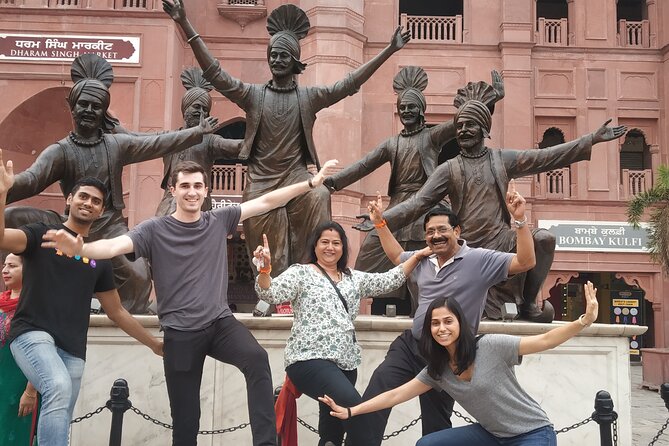
From the museum, the route heads toward Saragarhi Memorial Gurudwara. The site honors 21 Sikh soldiers who died while serving in the British army.
The stop adds a military chapter to the city’s story. It also helps you see how Sikh memory is expressed through places of worship and memorials, not only through formal museums. The details are presented as part of the walking conversation, so the value depends on how much the guide explains and how willing you are to ask questions.
This is one point where a good guide matters. Hardik and Prerit are described as warm, organized, and comfortable answering extra questions. If the story catches your interest, ask about the memorial’s meaning, the soldiers being honored, and how the site fits into Amritsar’s Sikh identity.
Maharaja Ranjit Singh and the Punjab Empire
The statue of Maharaja Ranjit Singh is another short stop, with about 10 minutes set aside for stories about the ruler and the Punjab Empire. Admission is free.
For you, this is a useful bridge between religious history and political history. Ranjit Singh is an important figure in Punjab’s past, and the statue gives the guide a fixed place to explain his role. Do not expect a long historical lecture here. It is a compact stop within a broader walk.
I would treat this part as a prompt for questions rather than a complete lesson. The tour promises stories and facts, but the supplied details do not specify exactly which episodes are covered. The guide’s style will shape whether the stop feels like a memorable portrait or a quick pause beside a monument.
Same streets, a different route:
- Fontainhas Heritage Walk by Make It Happen
★ 5.0 · 2,834 reviews - The Great Indian Food Tour: Old Delhi Food and Heritage Walk
★ 5.0 · 1,698 reviews - Group Guided Walking Tour in Fort and Colaba
★ 5.0 · 1,073 reviews - Spiritual City Walking Tour-THE Pushkar Route
★ 5.0 · 907 reviews
Jallianwala Bagh: the tour’s heaviest stop
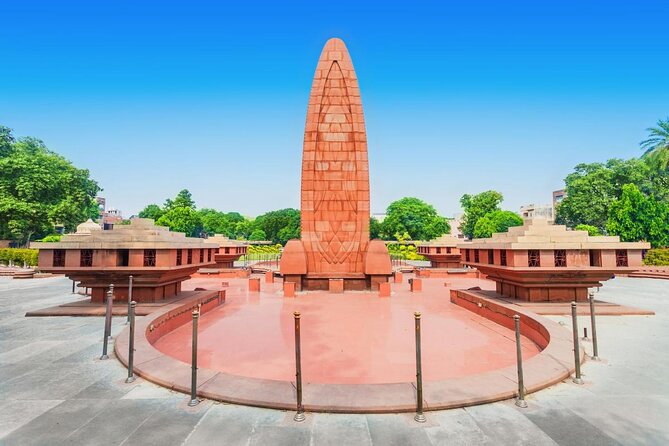
Jallianwala Bagh receives about 30 minutes, making it one of the clearest anchors of the route. The memorial commemorates the massacre that took place on 13 April 1919, during the festive period of Baisakhi.
This is a difficult place, and the tour’s value comes from giving the event a local setting. You are not only hearing a date and a casualty story. You are standing in a memorial space tied to British rule, public gathering, protest, and the long struggle for Indian independence.
The time allowed is enough for a guided explanation and a look around, but not necessarily enough for a slow, private visit. Admission is not included, so budget for that separately. If Jallianwala Bagh is a major reason for your visit, you may want to return later when you can take your time without the group moving on.
A guide can also help connect this event to the rest of Amritsar. The tour does not treat the memorial as an isolated attraction. It places it among the city’s religious institutions, market lanes, and political memories.
Udasin Akhara and the city’s religious mix

The stop at Udasin Akhara Sangal Wala Road lasts about 20 minutes. The tour introduces the role of akharas in Amritsar.
This is the kind of stop that makes the walk different from a standard list of famous sights. An akhara is connected with religious practice and ascetic traditions, and the visit gives you a look at an institution you might easily miss while moving between the Golden Temple and Jallianwala Bagh.
Admission is free. The experience depends on the explanation, since the provided details do not specify what rooms, buildings, or activities you will see inside. Ask the guide to explain the akhara’s place in Amritsar and how it relates to the city’s wider religious culture.
One description of the tour called an ashram visit especially interesting. That may refer to this part of the route, though the exact stop should be confirmed with the guide on the day. Either way, this section offers a change of pace after the solemn memorial at Jallianwala Bagh.
Guru Bazar and the old lanes
The longest part of the tour is the walk through Guru Bazar and the old streets of Amritsar. About 1 hour and 30 minutes is assigned to this section, which is where the tour’s promise of local life becomes most visible.
You move through narrow lanes and older parts of the city, learning about trade, architecture, and the routines of people who live and work there. The route also heads toward Baba Bohar, the large old banyan tree in the middle of the city. It is an unusual urban landmark and the sort of place you could pass without understanding its local importance.
This portion is less polished than a monument visit, and that is the point. You may see shopfronts, crowded lanes, religious buildings, and ordinary working streets rather than a neat collection of preserved facades. Wear comfortable shoes and expect the walk to feel more like city exploration than a museum tour.
The guide also offers advice on bargaining and saving money. That can be useful in the old market area, especially if you plan to shop after the tour. Treat the advice as practical guidance rather than a promise of specific discounts.
One important qualification: the route’s cultural emphasis may not feel evenly balanced to everyone. One account found the discussion too centered on Marwari business culture and said the tour offered fragments rather than a full account of Amritsar’s history. I would ask early if you want more Sikh history, architecture, Partition context, or local commerce, so the guide knows what interests you.
Finishing outside the Golden Temple
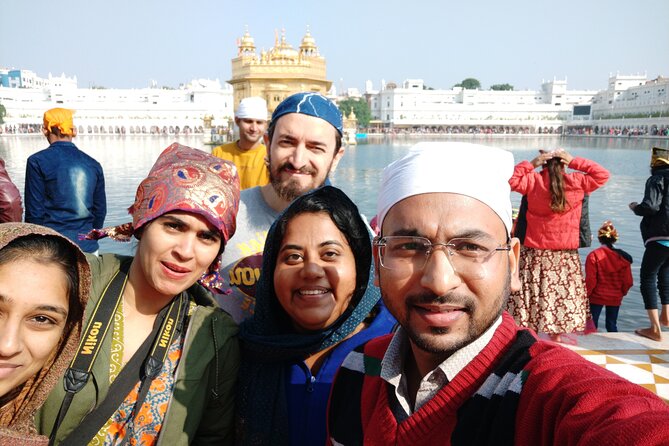
The tour ends outside Sri Harmandir Sahib, commonly called the Golden Temple, at Atta Mandi in Katra Ahluwalia. This is a strong finish because you receive orientation near Amritsar’s best-known religious site without spending the whole walk inside the temple complex.
The end point is useful if you plan to visit the Golden Temple immediately afterward. The tour itself does not include admission fees, and the description says the ending point is outside the Golden Temple. It does not promise a guided temple visit, so you should treat the temple as your next activity rather than part of the paid walk.
I like this arrangement. You get context first, then can enter the complex at your own pace. The guide’s explanations about Sikh history and culture may also help you approach the site with more understanding, though you should not expect the walking tour to cover every part of the temple grounds.
Guide quality and the group experience
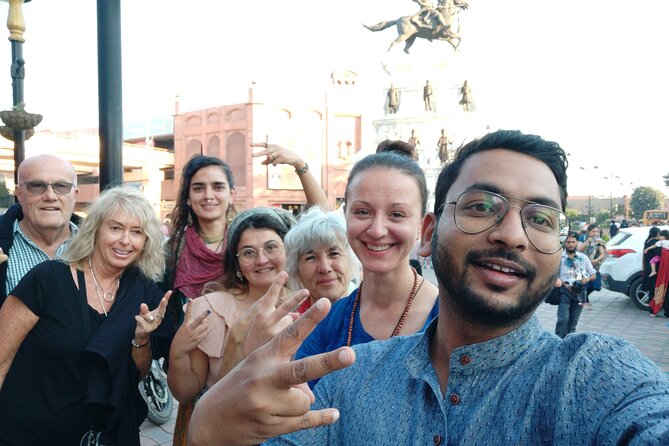
The strongest part of this experience is the guiding style. Hardik is described as friendly, clear in English, and happy to answer extra questions. Prerit is described as punctual, organized, and a strong storyteller who helped people understand the city’s architecture and history.
The guides speak English, Hindi, and Punjabi. That makes the walk practical for mixed groups and gives local Punjabi speakers a chance to engage in their own language.
You should also know that the quality of a history walk depends on accuracy and balance. Most of the supplied comments praise the guides for their clear explanations, warm manner, and ability to show places that are easy to miss. One sharply negative account raised concerns about unsupported stories and a narrow cultural focus. That is a real consideration, not something to brush aside.
If you care about historical detail, ask direct questions and listen for clear distinctions between documented events, local traditions, and popular stories. A guide who welcomes questions can make the experience much better.
Is $16.66 a fair price?
At $16.66 per person, this is a strong-value introduction to Amritsar. You receive nearly three hours of guiding, access to old lanes, and stops at several important places. The group is capped at 20, and the guide is included.
The price does not cover entrance tickets or personal expenses. The Partition Museum and Jallianwala Bagh are listed with admission not included, so set aside extra money if you want to enter them. The tour also does not include adventure activities or shopping costs.
The best value comes if you use the walk as your first Amritsar activity. It helps you get oriented, shows you how the old center connects, and gives you ideas for places to revisit. If you already know the city well, the route may feel too introductory.
A mobile ticket makes the booking simple, and the starting point is near public transportation. Most people can take part, but this remains a nearly three-hour walk through old streets and narrow lanes. If walking for that long is difficult, contact the provider before booking.
Who should book this walk?
I would recommend it to first-time visitors who want the Golden Temple area explained rather than simply photographed. It also suits solo visitors who want a structured introduction, since one account specifically described feeling safe while exploring the city with the guide.
It works well for people who enjoy history, local architecture, religious culture, and street-level observation. Families and mixed-age groups may also like the variety, though the serious sections at Partition Museum and Jallianwala Bagh require a thoughtful mood.
You may want something else if you want a private tour, a long museum visit, or a detailed academic account of Punjab’s past. This is a broad city walk, not a specialist seminar. Its strength is the combination of major events, lesser-known sites, and everyday lanes.
Free cancellation is available if you cancel at least 24 hours before the local start time. Cancellations within 24 hours are not refunded, and late changes are not accepted.
Should you book the Amritsar Heritage Walking Tour?
Book it if you are new to Amritsar and want a useful first look at the old city for a modest price. The mix of Jallianwala Bagh, Sikh memorials, Guru Bazar, and back lanes gives you more context than a Golden Temple visit alone.
Go in expecting a group walk with changing levels of historical detail. Ask questions, keep an open mind about local stories, and plan separate time for the Partition Museum and Golden Temple. If those limits suit you, this is a practical way to get your bearings and see a more ordinary side of Amritsar.
FAQ
How long is the Amritsar Heritage Walking Tour?
The advertised duration is approximately 2 hours and 45 minutes. Some descriptions of the walk place it at a little over two hours, so allow close to three hours.
Where does the tour begin?
It begins at the Partition Museum in the Town Hall building on Hall Road, Katra Ahluwalia, Amritsar.
Where does the tour end?
The walk ends outside Sri Harmandir Sahib, also known as the Golden Temple, at Atta Mandi in Katra Ahluwalia.
Is the Golden Temple entry included?
The tour ends outside the Golden Temple and does not state that entry or a guided temple visit is included.
Are entrance tickets included?
No. Entry fees are not included. The Partition Museum and Jallianwala Bagh are specifically listed with admission not included.
What languages can the guide speak?
The guide can speak English, Hindi, and Punjabi.
How many people can join the tour?
The maximum group size is 20 people. This is a group tour, not a private tour.
What is the cancellation policy?
You can cancel at least 24 hours before the start time for a full refund. Cancellations or changes made within 24 hours are not accepted for a refund.
Just added around India
- Wine Tasting Experience At 150 Years Old Indo-Portuguese House★ 5.0 · 269 reviews
- Fontainhas Heritage Walk At Latin Quarters of Goa★ 5.0 · 531 reviews
- The Goan Hinterland Experience in South Goa★ 5.0 · 112 reviews
- Food And Drink Walking Tour In Panjim★ 5.0 · 286 reviews
- Private Aguada Jail Heritage Walk Tour★ 5.0 · 102 reviews
- Georgetown heritage walking tour in Chennai about the founding of Chennai★ 5.0 · 144 reviews
- Sowcarpet Street Food Walking Tour in Chennai with guide★ 5.0 · 83 reviews
- Gods of Mylapore walking tour- tourism ministry approved company★ 5.0 · 267 reviews
History Walking Tours, compared.



Berlin’s Best: 2 Hour Walking Tour Third Reich and the Cold War
Read our review →
Third Reich Berlin: Hitler and WWII Walking Tour
Read our review →
New Orleans Garden District History Walking Tour
Read our review →
Cartagena: Historic Center and Getsemaní Shared Walking Tour
Read our review →
Imperial Palace and Shogun Historical Walking Tour
Read our review →Browse the lists this tour appears in