
REVIEW · SINGAPORE
Singapore: Chinatown Historic Walking Tour with Lunch
Singapore’s Chinatown is at its best when you move beyond the souvenir stalls and grand temples. This walking tour links early immigrant shrines, old shophouses, a century-old tea merchant, family-run shops, and a local noodle lunch into one clear story. Thian Hock Keng Temple, built in 1821, is the visual centerpiece, but the smaller lanes often tell you just as much.
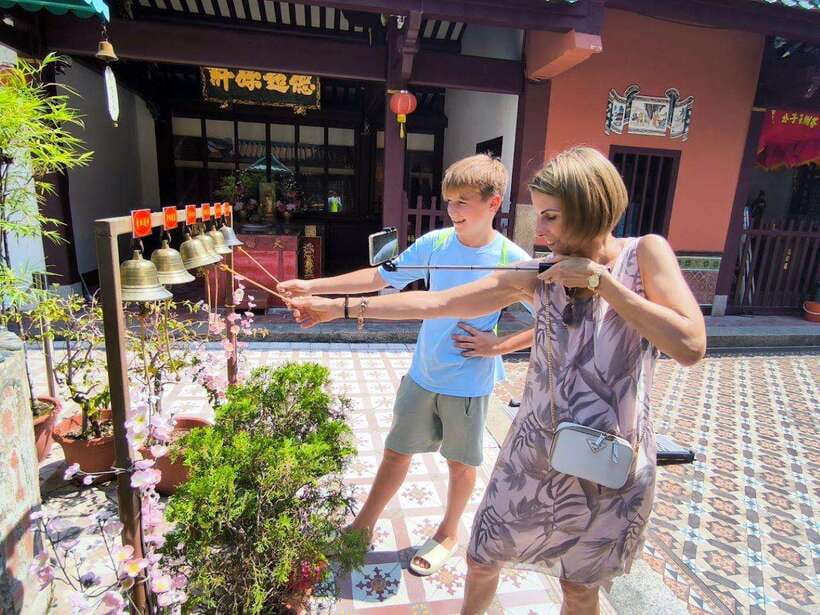
I like the way this tour connects food with history, rather than treating lunch as a pause between sights. I also like the personal touch associated with guide Ping, who is praised for clear explanations, photos taken during the walk, and a pace that works for different ages. The main drawback is simple: 210 minutes on foot can feel full, especially in Singapore’s heat or rain.
Key points to know before you book
- A history walk with real variety: Temples, a former shrine, old clubs, tea, pastries, food, street art, and traditional medicine all appear in one morning.
- Lunch is included: Chiew Kee Noodle House serves the famous soy sauce chicken in a long-running local setting.
- Ping is a major part of the experience: She is known for lively storytelling, practical care, and sharing photos after the tour when she leads the group.
- The route begins outside Chinatown: You meet at The Whisky Distillery beside Raffles Place MRT before walking toward the historic district.
- Expect rain or shine: Comfortable shoes, water, and an umbrella are sensible, even though a disposable poncho is supplied if needed.
- The price is fair for the coverage: At $54 per person, the included meal and 3.5 hours of guiding make this more than a basic orientation walk.
Starting at Raffles Place and meeting old Singapore
Meet your guide at 9:55 AM in front of The Whisky Distillery at One Raffles Place. It is across from Raffles Place MRT Station Exit A at street level, and the walk begins at 10:00 AM.
This starting point is practical if you are staying near the central business district or arriving by MRT. It also sets up the tour well. You begin among modern towers, then move toward places that preserve the story of Singapore’s early Chinese communities. That contrast is part of the lesson: the city has changed quickly, but old religious, commercial, and family traditions remain woven into the center.
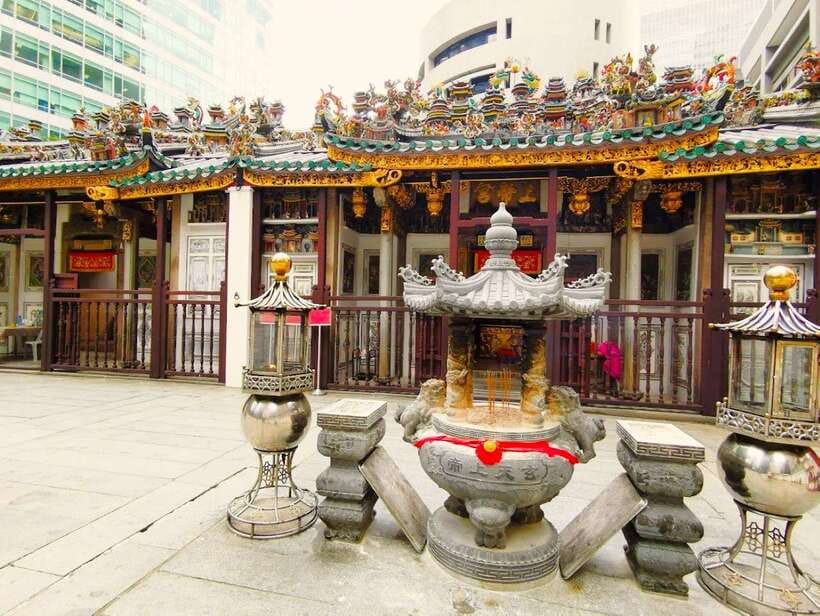
Your first stop is Yueh Hai Ching Temple, where you spend about 20 minutes. It is a national monument and is linked to the hopes of Chinese immigrants arriving by sea. Your guide can give the religious and social setting behind the building, so you are not simply looking at carved details without knowing why the temple mattered.
From there, the route moves toward Pekin Street, a pedestrian-only lane. This is a short, easy stretch, but it helps you notice the change in scale from the office district to older streets and shopfronts.
More History Walking Tours in the world:
- Berlin: Third Reich & Cold War Guided Walking Tour
★ 4.9 · 8,378 reviews - Munich: Third Reich & WWII Walking Tour
★ 4.6 · 6,181 reviews - Berlin’s Best: 2 Hour Walking Tour Third Reich and the Cold War
★ 5.0 · 5,486 reviews
Fuk Tak Chi, Nagore Dargah, and a shared city
The Fuk Tak Chi Museum receives about 20 minutes of guided attention. It began as a Taoist shrine and has been restored inside a boutique hotel. That setting makes it especially useful for understanding how old religious spaces can survive within a modern commercial neighborhood.
The tour then pauses at Nagore Dargah for around five minutes. This short stop widens the story beyond Chinese Singapore. The route is not only about one community living in isolation. It shows how different religious and trading groups occupied the same central streets and helped shape the city.
I appreciate this part of the walk because the guide is not rushing you from one famous building to the next. These smaller stops give context to Singapore’s mixture of faiths, languages, and communities. The trade-off is that five minutes at Nagore Dargah is enough for an introduction, not a full visit.
Thian Hock Keng Temple and the sea route into Singapore
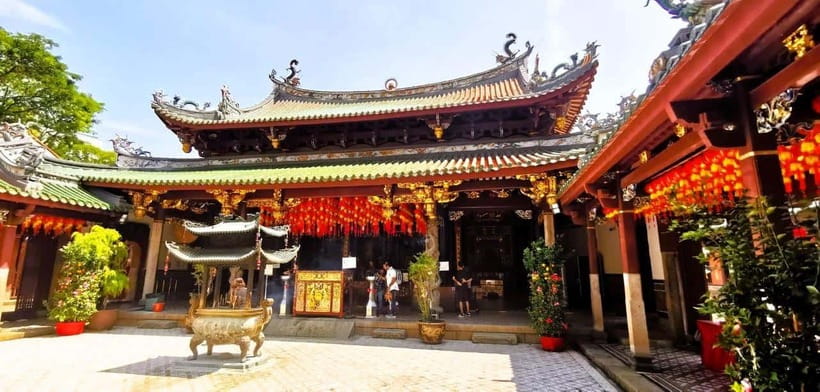
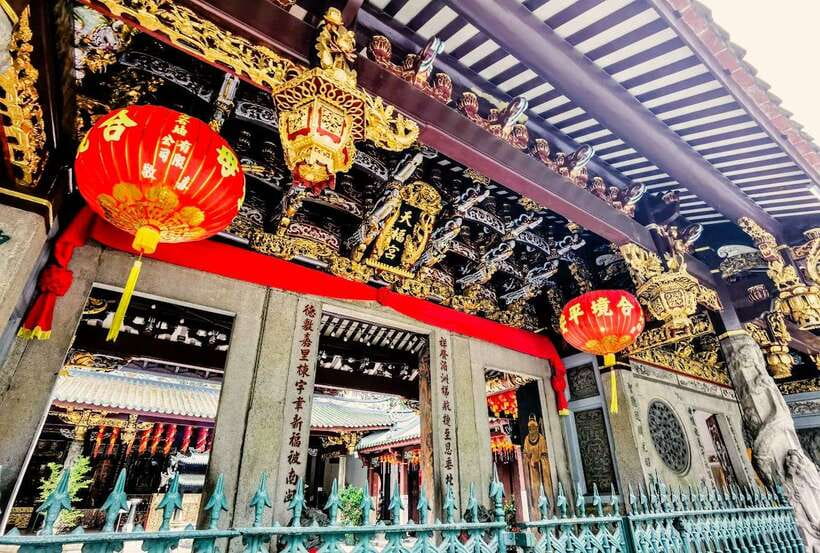
At Thian Hock Keng Temple, the tour slows down for about 25 minutes. Built in 1821, the temple honors Mazu, the sea goddess, and reflects the importance of sea travel to early Chinese arrivals. Its intricate architecture rewards a careful look, especially after your guide explains what you are seeing.
This is likely the strongest architectural stop of the morning. It is also one of the places where a guide adds real value. Without explanation, you may admire the roofline and ornament but miss the connection between the temple, maritime travel, and the fears and hopes of people arriving in a new place.
The tour format works well here. You have enough time to look around, listen, and take photographs, but not so much time that the morning becomes a formal religious-site tour. Dress and behave respectfully inside the temples, and follow your guide’s instructions about where to stand.
Ann Siang Hill, old clubs, and narrow lanes
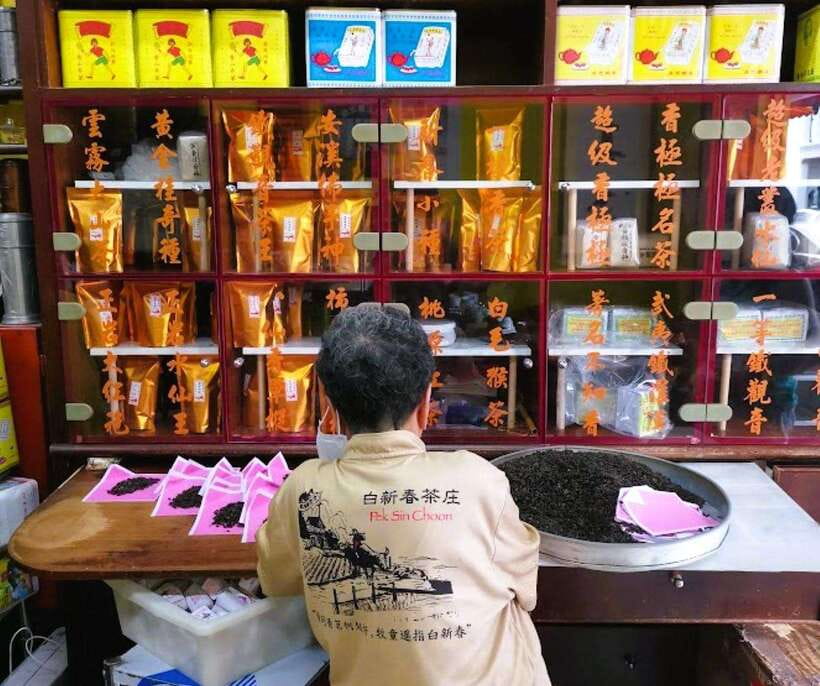
The route continues up Ann Siang Hill for about 10 minutes. You stop at the Chinese Weekly Entertainment Club and the Goh Loo Club shophouse, with roughly 5 and 20 minutes of guiding time respectively.
These locations offer a different side of Chinatown. Instead of focusing only on temples, the tour looks at social life, clubs, shophouses, and the ways people met and spent time together. The Goh Loo Club is especially useful for seeing how a building can carry a community story even when its original role has changed.
At Mohamed Ali Lane, your guide shares more about Chinatown’s past. The stop is brief, but the lanes are part of the appeal. You are not just crossing between major attractions on wide roads. You are using smaller routes where the old district feels more intimate.
The walk includes frequent pauses, but you should still expect a fair amount of standing and walking. The pace has been praised as manageable, and Ping in particular is known for adjusting to the group. Still, this is not a sightseeing tour for someone who wants to remain seated or cover the district by vehicle.
More Tours with Lunch in the world:
- Prague Guided Walking Tour and Cruise with Authentic Czech Lunch
★ 5.0 · 3,627 reviews - From Sydney: Blue Mountains Tour with Waterfall Walk & Lunch
★ 4.8 · 2,400 reviews - Florence Walking Tour with Accademia, Uffizi & Lunch
★ 4.0 · 1,033 reviews - Soweto: Walking Tour with a Local Guide and Lunch
★ 4.9 · 648 reviews
Chiew Kee Noodle House and the value of an included lunch
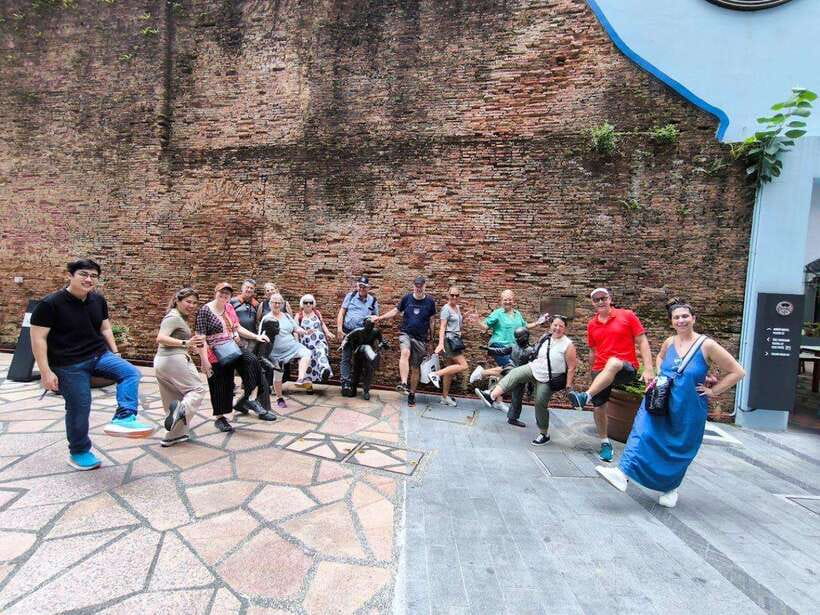
After the morning’s first series of sights, you sit down for about 35 minutes at Chiew Kee Noodle House. Lunch is included in the $54 price, and the restaurant is known for soy sauce chicken.
This is one of the tour’s smartest choices. A meal at a long-running noodle house gives you a taste of daily Chinatown rather than a polished restaurant created mainly for visitors. The food also fits the theme of the tour. You have been hearing about migration, family businesses, and local traditions, and now you experience one of those traditions at the table.
The lunch is described as simple and delicious, not elaborate. That is worth keeping in mind. If you want a long, multi-course meal, this is not that kind of stop. If you want something authentic, filling, and connected to the neighborhood, it adds good value.
A 35-minute lunch also keeps the morning moving. You will have time to eat, but not time for a leisurely coffee or extended browsing. If you have dietary restrictions, check the arrangements before booking, since the supplied details do not specify menu alternatives.
Yue Hwa, The Majestic, and Pagoda Street
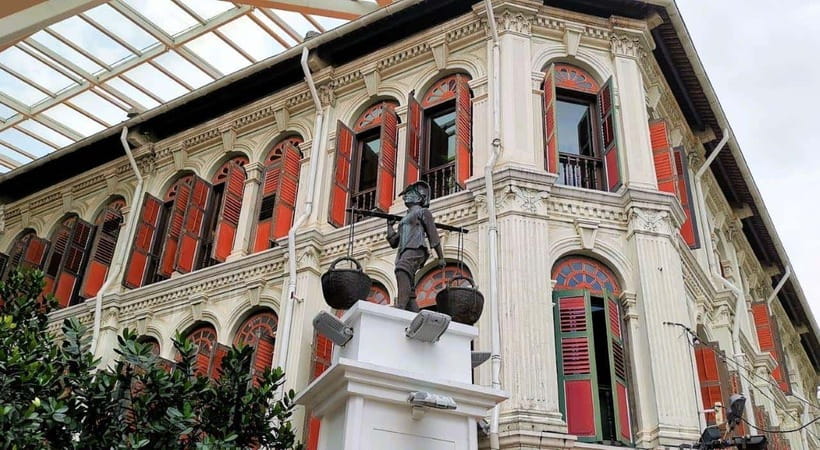
After lunch, the walk returns to Chinatown’s commercial side. At Yue Hwa Building, you get a short guided introduction. The Majestic receives a photo stop and brief explanation, while Pagoda Street gets about 10 minutes.
These stops help you read the district as a living neighborhood, not only as a preserved historical quarter. Yue Hwa is associated with Chinese products, The Majestic adds a landmark building to the route, and Pagoda Street brings you into one of the best-known parts of Chinatown.
The short timing at The Majestic is useful if you want a photograph, but do not expect a full interior visit. This is a recurring feature of the tour: you see many places, but some receive only a quick explanation. That broad coverage is a strength for a first visit, though repeat visitors may prefer a smaller tour focused on fewer buildings.
Sri Mariamman Temple and the religious mix of Chinatown
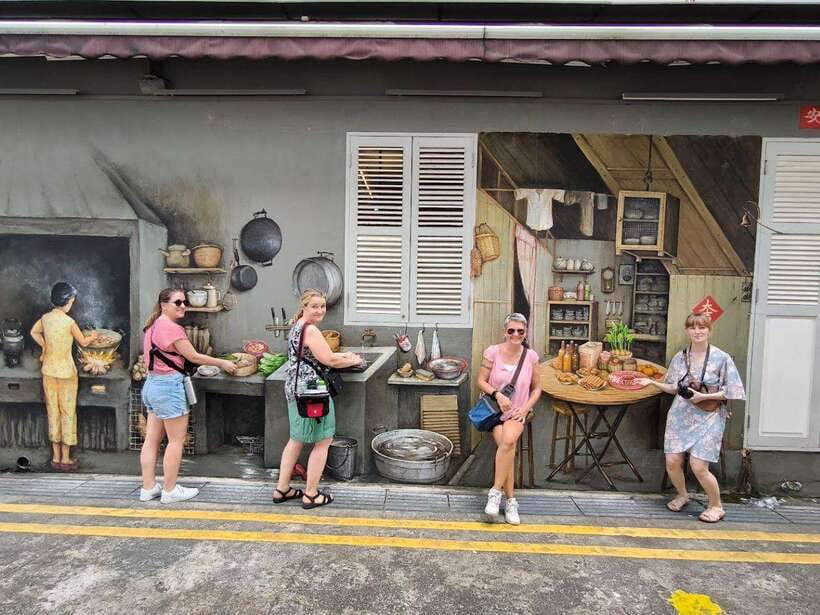
The tour next visits Sri Mariamman Temple for about 10 minutes. It is a Hindu temple in the heart of Chinatown, and its inclusion matters. Singapore’s neighborhoods were never neatly divided into one faith or one ethnic group.
Your guide can help you understand how this temple fits the wider district. It also prevents the tour from presenting Chinatown as only a Chinese cultural display. You see a more accurate picture of Singapore, where different traditions developed side by side.
As with the other religious sites, be respectful about clothing, photography, and movement. Ten minutes is enough for an introduction and exterior details, but not a full ceremony or extended visit.
Smith Street, the Buddha Tooth Relic Temple, and Maxwell Food Centre
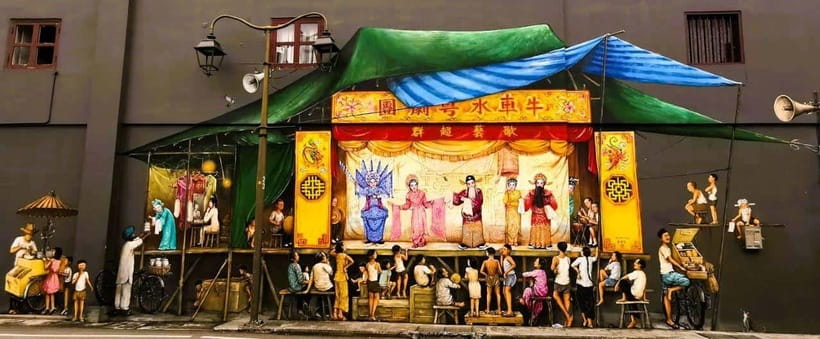
Smith Street receives about 10 minutes, followed by short guided stops at the Buddha Tooth Relic Temple and Maxwell Food Centre. These are familiar names in Chinatown, but the tour uses them as part of a larger route rather than making them the whole experience.
The Buddha Tooth Relic Temple gives you another major religious landmark after the older temples. Maxwell Food Centre brings the focus back to everyday eating. Since lunch has already taken place, this is a look at the food-center culture rather than another included meal.
The short time at both places is important to understand. You will receive orientation and background, but you may want to return later if you wish to explore the temple or food center at length. That is not a flaw so much as a result of trying to cover a wide area in one morning.
Singapore City Gallery and the story of change
The route includes roughly 20 minutes at Singapore City Gallery. This is a useful final chapter because it shifts the focus from individual temples and businesses to the city as a whole.
The gallery helps connect the older streets you have walked with Singapore’s modern planning and development. You can better understand why historic buildings survive in a city known for rapid change, and why certain districts feel carefully preserved beside newer construction.
The tour description also places a visit to Fong Moon Kee at the end, a family-run traditional medicine shop dating to the early 1900s. It is an appealing finish because it returns the tour to family trade and practical traditions. The detailed stop list ends with Singapore City Gallery, so the exact final sequence may vary. If the medicine shop is important to you, confirm the day’s route with your guide.
What makes Ping such an important part of the walk
The guide can make or break a walking tour, and Ping receives unusually strong praise for her storytelling, warmth, and ability to answer questions. She explains Singapore’s past in plain English and connects older customs with modern life.
You may also benefit from small personal touches. Ping has been known to take photos during the walk and share them afterward, which is particularly helpful if you are traveling alone. She is also praised for checking the weather and reminding people to bring umbrellas when heavy rain is expected.
Her approach appears to suit mixed groups. She can adjust the pace, answer questions beyond the basic route, and make the experience comfortable without stripping away the historical detail. If Ping is your assigned guide, expect a lively, personal morning. Guides can vary, so her presence should be treated as a welcome possibility rather than a guaranteed feature unless confirmed at booking.
Is $54 a fair price?
At $54 per person, this is a solid value if you want a guided introduction rather than a self-guided stroll. You receive 210 minutes of English guiding, an included lunch at Chiew Kee Noodle House, and a route that covers temples, lanes, shops, clubs, food culture, and city planning.
The value is strongest for first-time visitors. You could visit many of these places on your own, but you would need to research the background, work out the order, and choose where to eat. The guide turns separate stops into a connected story.
The price is less attractive if you already know Chinatown well or prefer spending an hour at each temple. This tour favors range over long independent visits. It also does not include hotel pickup or drop-off, so you make your own way to Raffles Place and away from the final stop.
Practical advice for a hot, wet morning
Wear comfortable shoes. The route covers several streets and lanes, and even a gentle pace adds up over 3.5 hours.
Bring water, and prepare for rain. The tour operates rain or shine, and Singapore’s weather can change quickly. A disposable poncho is supplied if it rains, but an umbrella is still useful, especially for getting to the meeting point and continuing afterward.
The walk starts at 9:55 AM, so give yourself enough time to find One Raffles Place and Exit A at Raffles Place MRT. Since the meeting point is beside a central station, public transport is the sensible way to arrive.
You should also plan for a full morning rather than a quick photo outing. There are many stops, several temples, and plenty of explanations. The pace is generally comfortable, but you will be on your feet and exposed to outdoor conditions.
Who should book this Chinatown tour?
I would recommend it to first-time visitors who want cultural context, local food, and a guide who can explain what they are seeing. It also suits solo visitors and couples who want company without committing to a full-day excursion.
Families with older children may enjoy the variety. A temple, a noodle shop, old clubs, a tea merchant, and a medicine shop give the morning more texture than a simple monument tour.
You may want a different option if you dislike walking, need a highly flexible schedule, or prefer to explore just one or two buildings in depth. This is a packed route with many short stops. Its strength is the complete picture it creates, not lengthy time at every attraction.
FAQ
Where does the Singapore Chinatown walking tour meet?
Meet your guide at The Whisky Distillery at One Raffles Place, across from Raffles Place MRT Station Exit A at street level. The meeting time is 9:55 AM, and the tour starts at 10:00 AM.
How long does the tour last?
The tour lasts 210 minutes, or 3.5 hours.
Is lunch included?
Yes. The tour includes lunch at Chiew Kee Noodle House, known for soy sauce chicken.
What language is the tour conducted in?
The live tour guide speaks English.
Does the tour operate in bad weather?
Yes. The tour runs rain or shine, and a disposable poncho is included if it rains. You should bring water and wear comfortable shoes.
Is hotel pickup and drop-off included?
No. Hotel pickup and drop-off are not included. You are responsible for reaching the meeting point and making your own way back after the tour.
Should you book it?
Book this tour if you want Chinatown explained through temples, family businesses, food, and ordinary streets, rather than reduced to a few famous photo stops. The included lunch and broad route make $54 reasonable, and Ping’s warm, personal guiding style can add real value if she leads your group.
Skip it if you want a slow temple visit or dislike walking in heat and rain. For most first-time visitors, though, this is a practical and well-balanced way to understand how old Chinatown fits inside modern Singapore.
Just added around the world
- Vatnajökull Glacier Walk from Hali★ 5.0 · 479 reviews
- Old Hobart Pub Walking Tour★ 4.5 · 91 reviews
- Ice Cave and Glacier Walk into Blue Glacier Canyon★ 5.0 · 224 reviews
- Southwest Tasmania Wilderness Experience: Fly Cruise and Walk Including Lunch★ 5.0 · 233 reviews
- Saigon’s Hidden Flavors – Private Street Food Walk with Local Students★ 5.0 · 301 reviews
- Hobart History, People & Places – 2 hour city walk★ 5.0 · 224 reviews
- Vegan Walk Not Just Vegan Food★ 5.0 · 266 reviews
- Ho Chi Minh City: Highlights & Hidden Gems – Free Walking Tour★ 5.0 · 194 reviews
History Walking Tours, compared.

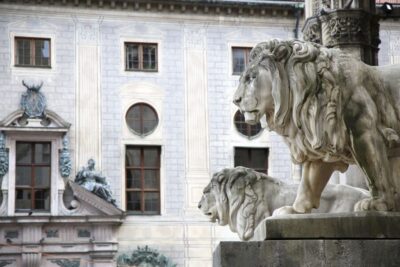
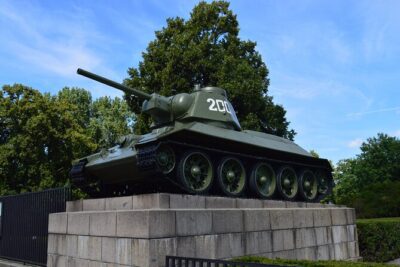
Berlin’s Best: 2 Hour Walking Tour Third Reich and the Cold War
Read our review →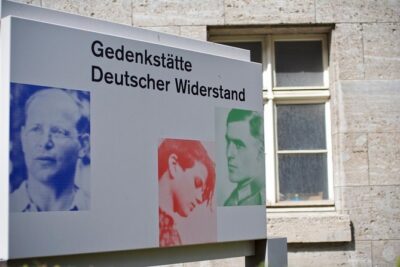
Third Reich Berlin: Hitler and WWII Walking Tour
Read our review →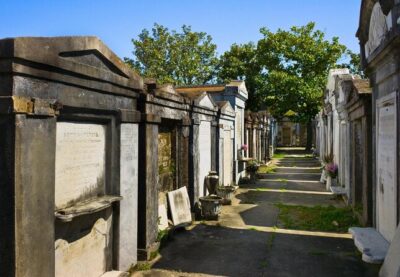
New Orleans Garden District History Walking Tour
Read our review →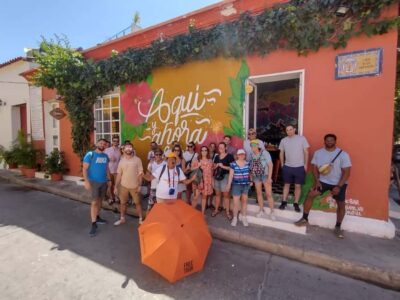
Cartagena: Historic Center and Getsemaní Shared Walking Tour
Read our review →
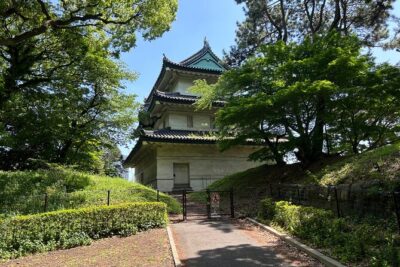
Imperial Palace and Shogun Historical Walking Tour
Read our review →Browse the lists this tour appears in