
REVIEW · ITALY
Siena Walking Tour with Cathedral and Crypt & Museum Option
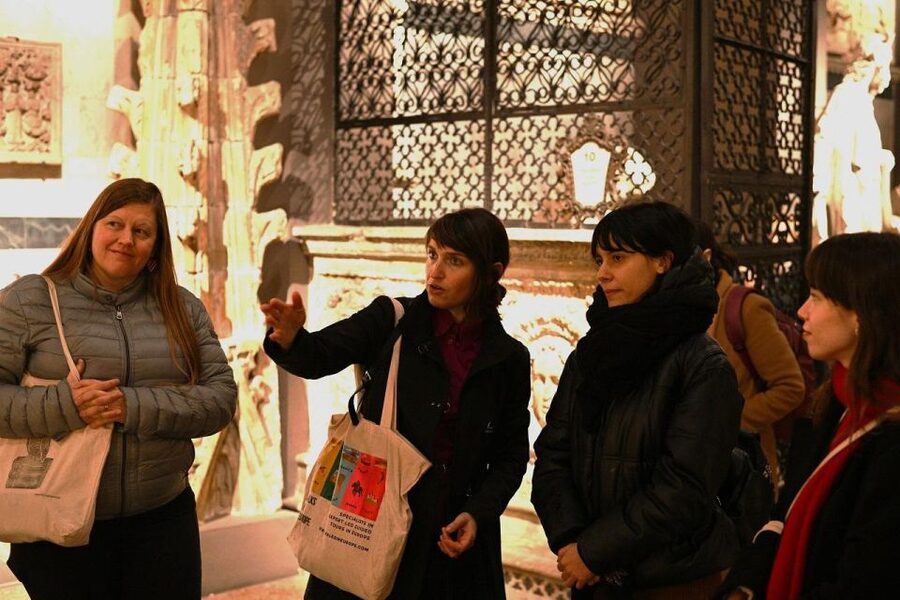
Siena’s great strength is not just the Cathedral. It is the way the tour connects the city’s steep lanes, neighborhood rivalries, Palio traditions, and art into one clear story. You begin beneath the big tree by San Domenico and work your way toward Piazza del Campo, with views of the Duomo and Torre del Mangia along the way.
I like the small-group format, which gives your guide room to answer questions and adjust the pace. I also like the choice between a shorter Cathedral visit and a longer three-hour version that adds the Crypt, Opera Museum, Baptistery, and Facciatone. The main drawback is the walking: Siena’s hills and uneven streets can be tiring, and the dress rules for the church are strict.
Key points to know before booking
- Follow Siena’s Contrade: Your guide explains how the city’s 17 neighborhood districts still shape local identity and the famous Palio horse race.
- Choose your Cathedral time wisely: The two-hour option includes priority Cathedral entry, while the three-hour tour covers far more of the complex.
- See the Piccolomini Library: This short stop brings you close to some of the Cathedral’s finest Renaissance decoration.
- Save room for the Facciatone: The unfinished New Cathedral façade offers wide views over Siena and the Tuscan countryside.
- Plan for church dress rules: Bring a scarf, and avoid shorts, short skirts, sleeveless tops, and flip flops.
- Expect hills: The route is taken at a relaxed pace, but Siena is not flat, and the tour is not suitable for people with mobility impairments according to the activity information.
Why this Siena walk works so well
Siena is easier to understand when you walk it with its local customs in mind. The city can look like a lovely collection of brick buildings and narrow lanes, but the tour explains why certain streets belong to particular Contrade, how those districts compete during the Palio, and why the Piazza del Campo remains the city’s social heart.
That local angle is the best reason to book this rather than simply buying a Cathedral ticket. You are not only looking at façades. You are learning how Siena’s neighborhoods work, why the horse race matters, and how the city’s medieval form still affects daily life.
The guides named in the experience include Flo, Dace, Daca, Anna, Idania, Elia, Elio, Mare, Sabrina, and Susanna. Their styles naturally vary, but the strongest pattern is clear: expect a guide who talks about Siena with personal feeling, answers questions, and adds practical suggestions about restaurants, gelato, and places worth seeing after the tour.
At $95.16 per person, this is not a bargain-priced city orientation. The value depends on which version you choose. The two-hour tour gives you a guided walk plus priority access to Siena Cathedral. The three-hour version costs more in time and presumably reflects the added pass, but it includes the Cathedral complex, Crypt, Opera Museum, Baptistery, and Facciatone viewpoint. If you already plan to see these places, the longer option makes better sense.
More Museum Visits in Italy:
- Florence: Walking Tour with David, Duomo & Uffizi Gallery
★ 4.7 · 414 reviews - Florence: Accademia Gallery & Statue of David with Uffizi Gallery
★ 4.5 · 156 reviews - Small Group Uffizi & Accademia Museum with Walking Tour
★ 5.0 · 130 reviews
Starting beneath San Domenico
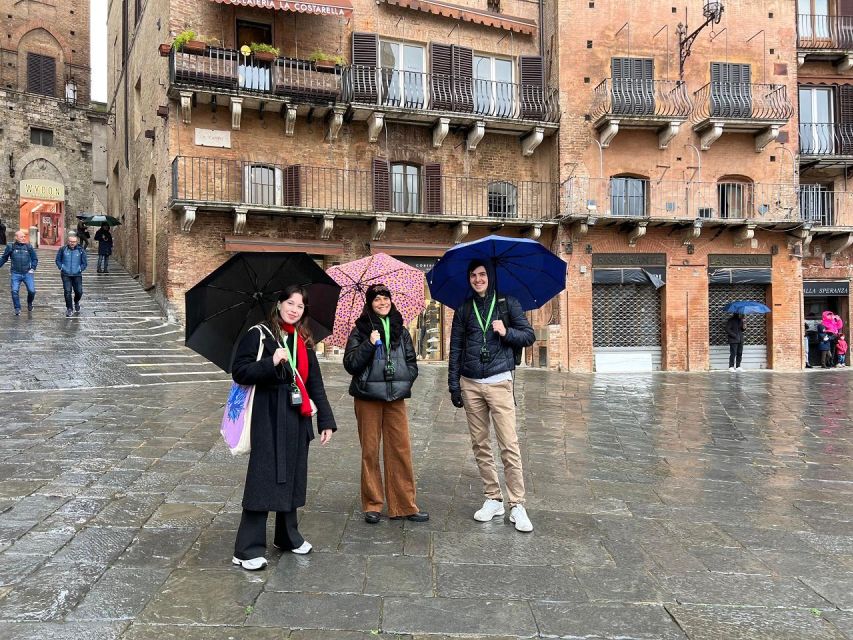
Meet under the large tree by the Basilica of San Domenico in Piazza San Domenico. Your guide will carry a sign with the activity provider’s logo, and you should arrive five to ten minutes early. You cannot join after the tour has begun, so this is not the time to cut your arrival close.
San Domenico is a useful starting point because it puts you near Siena’s upper streets and gives the guide room to explain the city before the route tightens into the old center. The first walking section lasts about 30 minutes, though the actual pace depends on the group and the amount of discussion.
Siena’s streets rise and fall sharply. Wear proper walking shoes, not sandals or flip flops. The activity information says the tour is wheelchair accessible in one place but also says it is not suitable for wheelchair users or people with mobility impairments. That conflict needs clarification before you book. The hills and uneven surfaces alone make this a serious consideration.
Through medieval streets and the Contrade
The walk leads through tucked-away lanes and squares before reaching the main sights. This is where the tour earns its keep. A guide can point out details you would likely pass without noticing, then explain how they fit into Siena’s political and social story.
The Old Ghetto and Tower District receive special attention. You also stop at viewpoints where you can see the Duomo and Torre del Mangia from above or across the rooftops. These pauses matter because Siena’s narrow streets often hide the city’s scale. A quick change in elevation can open a broad view over the brick roofs and surrounding countryside.
The Contrade are one of the most useful subjects on the walk. Siena has 17 historic neighborhood districts, each with its own traditions and identity. The Palio is not simply a tourist horse race held in a pretty square. It is a competition between these districts, and the rivalries carry real emotional weight.
Your guide explains how the Contrade relate to one another and how the Palio fits into local life. The discussion helps you read the symbols, flags, and neighborhood details you may see elsewhere in Siena. If you are new to Italy, this is also a good way to understand how local tradition can remain part of modern city life.
The route may include a taste of Ricciarelli and Panforte, two Siena specialties. These sweets are small but useful introductions to local food culture. Ricciarelli are soft almond biscuits, while Panforte is a dense, spiced confection. Do not expect a full food tour, but this little pause adds flavor to the walk.
Piazza del Campo and Fonte Gaia
Piazza del Campo is the natural center of the tour. The shell-shaped square is where Siena’s public life gathers and where the Palio takes place. Your guide gives you time to take in the broad brick paving, the surrounding palaces, and the steep curve of the square.
This is also where the scale of Torre del Mangia becomes clear. The tower rises above the square and helps define Siena’s skyline. The tour does not list a climb of the tower, so you should treat it as a landmark and a subject for explanation, not as an included ascent.
At Fonte Gaia, the guide points out the ornate fountain and its reliefs depicting biblical scenes. It is an easy stop to overlook when the square is busy, but the carved details reward a closer look. The fountain also gives the guide a natural place to explain Siena’s public art and the care the city gave to its central spaces.
The walking portion around Piazza del Campo and the Tower of Mangia takes roughly 30 minutes. You will be standing outdoors, so weather matters. The route is manageable at a relaxed pace, but the stones and slopes can feel demanding in hot weather or after a full day of sightseeing.
A few more walking tours around Italy worth a look
- Venice: Doge’s Palace and St Mark’s Basilica Walking Tour
★ 4.4 · 6,291 reviews - Milan: Guided Walking Tour & Last Supper Visit with Ticket
★ 4.7 · 5,409 reviews - Naples: Street Food Walking Tour with Local Guide
★ 4.9 · 4,976 reviews - Florence: Highlights Walking Tour with Expert Guide
★ 4.6 · 4,662 reviews
Entering Siena Cathedral with priority access
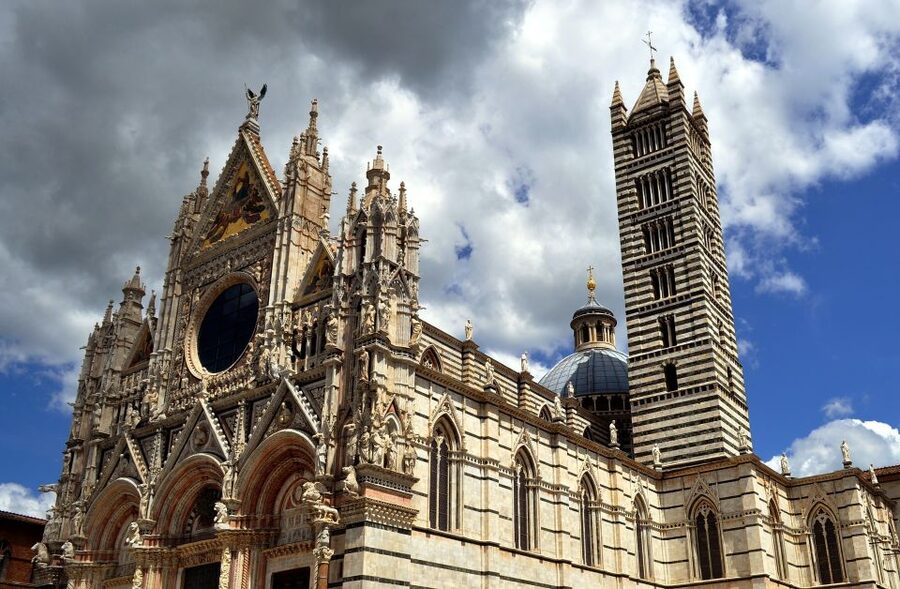
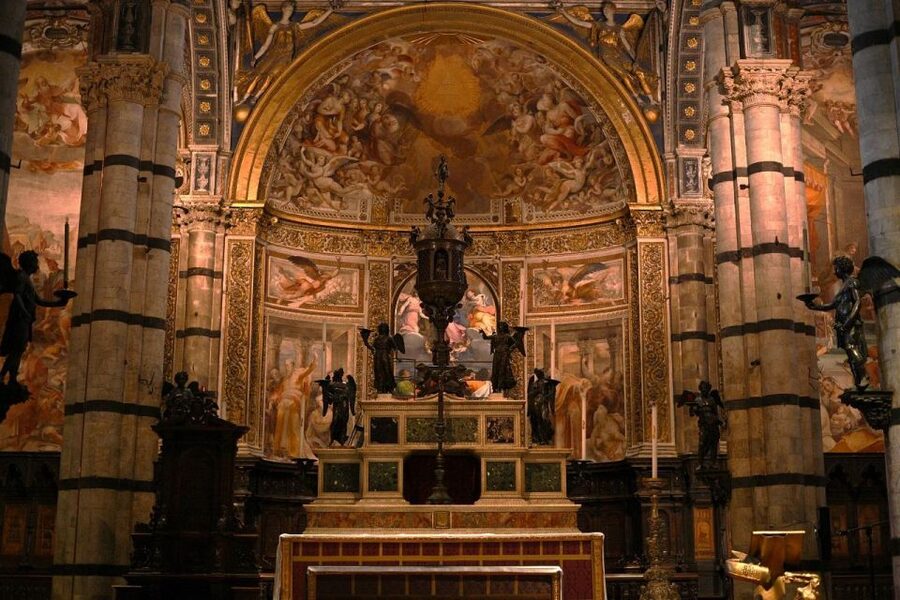
The Cathedral is the tour’s main indoor stop. Pre-arranged tickets let your group use a separate entrance and avoid the regular queue. That saves time, especially during busy periods, but priority access does not mean you can ignore church rules or possible closures.
Siena Cathedral is an operating church. It can close without warning for a liturgical reason, including a funeral, so keep your schedule flexible if seeing the interior is essential. The activity also notes that the famous floor mosaics are fully uncovered from June 27 through July 31 and from August 18 through October 16. During the rest of the year, parts of the floor may be covered.
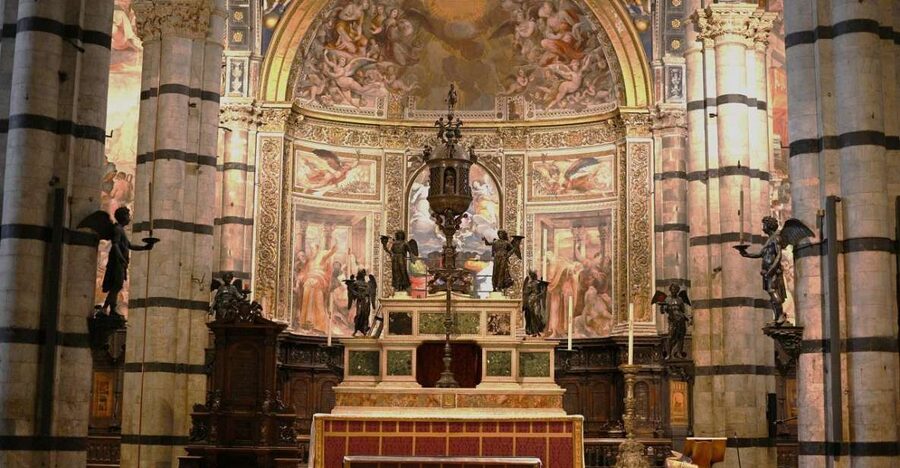
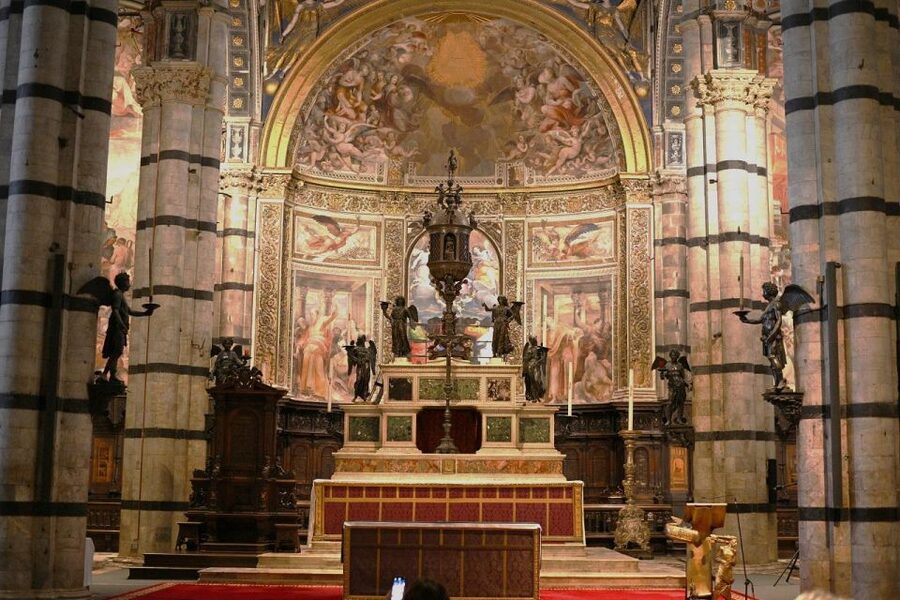
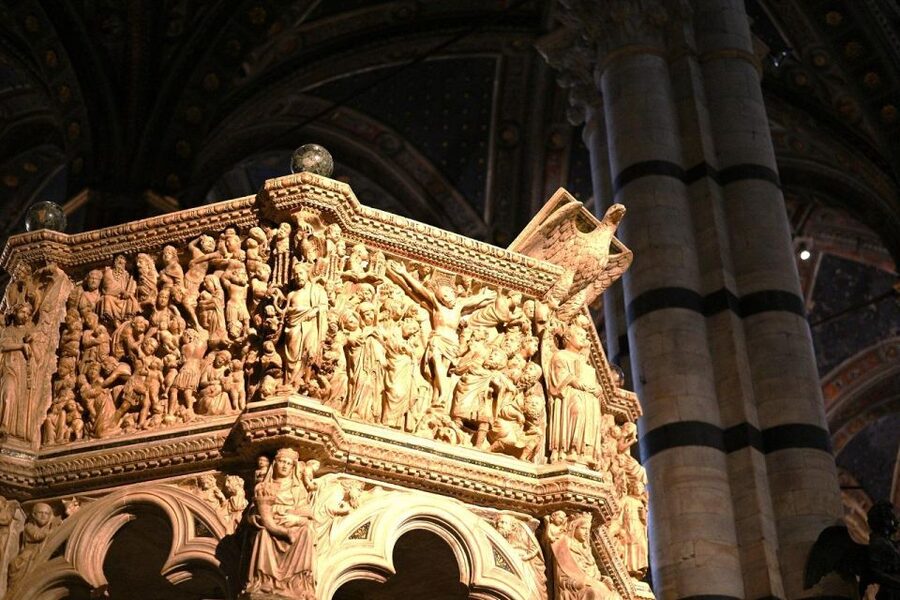
Inside, your guide introduces works linked to major Tuscan artists including Duccio, Pisano, and Pinturicchio. The interior is not the sort of place you can absorb in five minutes. There is a great deal of pattern, sculpture, painting, and architectural detail competing for your attention. A guide helps you focus on the most important pieces instead of wandering from one dazzling surface to another.
The Cathedral’s black-and-white marble treatment is especially striking, but this tour is not limited to color and decoration. Your guide explains the artistic and religious meaning of the spaces and points out Renaissance highlights that can be easy to miss.
The Piccolomini Library in a short but important visit
The Piccolomini Library receives about ten minutes of guided attention. That may sound brief, but it is enough to introduce the room’s major features and show why it belongs on your must-see list inside the Cathedral.
The library is known for its painted decoration and Renaissance setting. It is one of those places where a guide’s explanation helps you notice the connection between the room, its patron, and the wider artistic program of the Cathedral.
If you choose the two-hour tour, this is close to the end of the formal experience. You finish at the Duomo, giving you a central location from which to continue sightseeing. The supplied information also says the activity ends back at the meeting point, while the itinerary places the finish at the Duomo. Confirm the exact ending point when you book, especially if you have a restaurant reservation or train connection.
Why the three-hour OPA SI Pass is worth considering
The extended option adds the OPA SI Pass, which covers much more of the Cathedral complex. This includes the Cathedral and Piccolomini Library, the Crypt, Opera Museum, Panorama from the New Cathedral façade, and Baptistery.
I would choose the three-hour version if you want Siena’s major religious and artistic sights handled in one organized visit. The extra hour gives you more context and prevents the Cathedral from feeling like a quick stop squeezed between outdoor viewpoints.
The Crypt is a particular reason to upgrade. It contains centuries-old frescoes and offers a different atmosphere from the grand Cathedral above. Your guide explains how it fits into the complex and what happened to the ambitious plans for the New Cathedral.
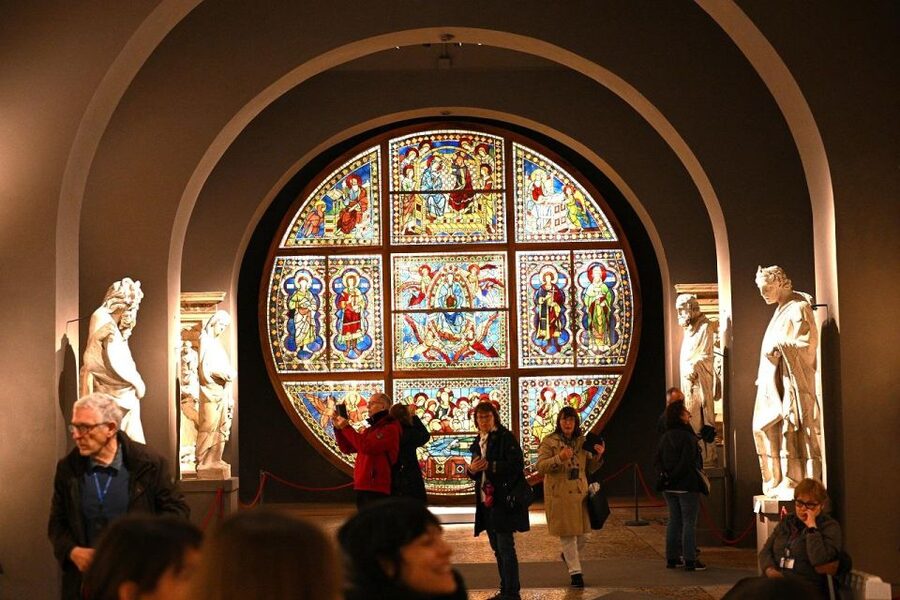
The Opera Museum adds sculpture and stained glass to the visit. This helps round out the art story, since you are no longer seeing only the building itself. You also get a better sense of the work created for Siena’s religious spaces and the pieces preserved after architectural plans changed.
The Baptistery is included in the extended pass as well. The pass gives you access, but the exact time spent at each site depends on the guide, the group, and the conditions that day. If you are an art specialist, you may want more time than the tour allows. If you prefer a clear introduction, the guided sequence should be satisfying.
The Facciatone viewpoint
The Facciatone is the unfinished façade of the planned New Cathedral. After the guided portion ends, you can ascend it at your own pace if conditions and access allow. From the top, you get panoramic views over Siena and the Tuscan countryside.
This is a strong finish because it lets you see the city as a whole. After walking through tight lanes and ornate interiors, you can look back over the rooftops and understand how the hills, towers, and Cathedral fit together.
The climb is not described in detail, so do not assume it will be easy. Anyone uncomfortable with heights, stairs, or uneven walking should ask for current conditions before choosing the extended tour. The view is a major benefit, but it comes after several hours on foot.
What to wear and bring
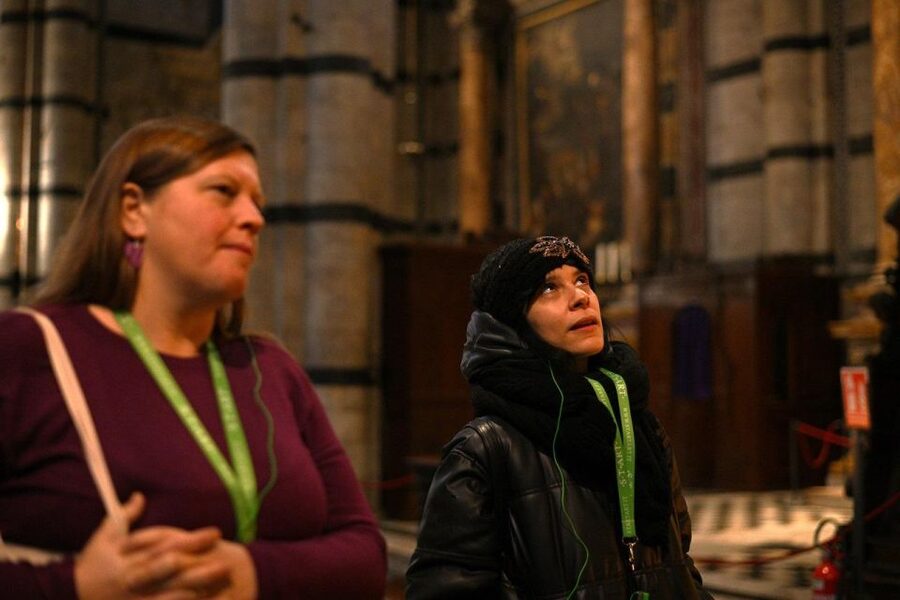
The Cathedral has a strict dress code. Bring a scarf to cover your shoulders if needed, and avoid shorts, short skirts, sleeveless shirts, and flip flops. Large bags, luggage, and baby strollers are not allowed.
Comfortable closed shoes are the sensible choice for the entire tour. Siena’s hills are not a minor detail, and the outdoor route includes walking between Piazza San Domenico, Piazza del Campo, the Tower of Mangia, and the Cathedral.
The tour is offered in English, French, and German. Private groups are available, which may suit families or groups that want more control over pace and questions. Small groups are the better value for most people because they keep the guide close without the cost of a fully private outing.
Who should book this tour
I would book it for a first visit to Siena, especially if you want the city’s culture explained rather than simply photographed. It suits people who enjoy walking, church art, local traditions, and a guide who can connect the Palio with the Contrade.
The three-hour option fits you best if the Crypt, Museum, Baptistery, and Facciatone are on your list. The two-hour option works if you want a shorter orientation and a guided Cathedral visit without spending most of the morning or afternoon indoors.
I would hesitate if you have limited mobility, dislike hills, or need a guaranteed visit to the Cathedral at a fixed time. The church can close for liturgical reasons, and the activity information gives conflicting accessibility details. Check both points before paying.
Free cancellation is available up to 24 hours before the start, and you can reserve now and pay later. Tips for the guide are appreciated, particularly if the guide helps you understand Siena’s traditions and gives useful advice for the rest of your visit.
Final verdict: a strong first look at Siena
Book this tour if you want Siena explained through its neighborhoods, Palio traditions, art, and streets, not just its headline monuments. The guides named in the experience, including Dace, Anna, Sabrina, Elia, and others, are described as warm, engaging, and deeply connected to the city.
The best value comes from choosing the three-hour version when you already intend to visit the full Cathedral complex. Choose the shorter tour if your main goals are Piazza del Campo, the Contrade, and the Cathedral interior.
Bring a scarf, wear sturdy shoes, arrive early, and leave room in your schedule for the tour to end at either the Duomo or the starting point, since both descriptions appear. With those details sorted, this is a practical way to get your bearings and understand why Siena feels like a living medieval city rather than an open-air museum.
FAQ
Where does the Siena walking tour begin?
Meet under the big tree by the Basilica of San Domenico at Piazza San Domenico. Your guide will hold a sign with the activity provider’s logo.
How long does the tour last?
The shorter option lasts about two hours. The extended option lasts about three hours.
What does the two-hour option include?
It includes the guided Siena walking tour and pre-booked priority access tickets for Siena Cathedral, including the Piccolomini Library.
What does the three-hour option include?
The three-hour option includes the OPA SI Pass, with access to the Cathedral and Piccolomini Library, Opera Museum, Panorama from the New Cathedral façade, Crypt, and Baptistery.
Is the Cathedral always open during the tour?
No. Siena Cathedral is an operating church and can close without warning for liturgical reasons.
When are the Cathedral floor mosaics fully uncovered?
The mosaics are fully uncovered from June 27 through July 31 and from August 18 through October 16. At other times, parts of the floor may be covered.
What should I wear to Siena Cathedral?
Wear clothing that covers your shoulders and knees. Do not wear shorts, short skirts, sleeveless shirts, sandals, or flip flops. Bring a scarf.
Is the tour offered in English?
Yes. The listed tour languages are English, French, and German. Private groups are also available.
Just added around Italy
- Genoa Walking Tour: Explore Top Sights & Hidden Gems★ 4.0 · 138 reviews
- Genoa Food, Wine Tasting & History Walking Tour★ 5.0 · 212 reviews
- Taste Genoa: A Full Meal Walking Food Tour by Do Eat Better★ 5.0 · 509 reviews
- Genoa Walking Tour: Discover Hidden Treasures and Street Food★ 5.0 · 80 reviews
- Tasty Florence Street Food with Guided Walking of the City★ 5.0 · 174 reviews
- Medici Legends & Renaissance Wonders: Florence Small Group Tour★ 5.0 · 205 reviews
- Florence Food Tour of 10+ Authentic Tastings with Cheeses & Wines★ 5.0 · 155 reviews
- Florence Private Walking tour with Skip-the-line to Accademia★ 4.5 · 236 reviews
Museums, compared.
Acropolis monuments & Parthenon Walking Tour with Optional Acropolis Museum
Read our review →
Frida Kahlo VIP [Museum Tickets Included] Walk, Markets & Churros
Read our review →
French Quarter Walking Tour With Comp 1850 House Museum Admission
Read our review →
Sydney Cricket Ground (SCG) and Museum Walking Tour
Read our review →
Picasso Museum and Walking Tour Plus Optional Wine & Food Tasting
Read our review →
Bogotá City Tour with Monserrate, Gold and Botero Museums
Read our review →
Picasso Small Group Walking Tour with Museum Skip the Line Ticket
Read our review →
Dresden: Guided Walking Tour and Chocolate Museum Ticket
Read our review →Browse the lists this tour appears in