
REVIEW · FLORENCE
Florence: Accademia Gallery & Statue of David with Uffizi Gallery
Michelangelo’s David is the main event here, but this tour gives you much more than a quick statue stop. In about three and a half hours, you move from the Accademia to Florence’s cathedral, Palazzo Vecchio, Ponte Vecchio, and the Uffizi Galleries. I especially like the small group limit of 15 and the skip-the-line museum entry, two features that matter when Florence is crowded.
The strongest guides, including Marco, Guido, and Claudia, bring art and Medici politics together in a way that helps the city make sense. The main caution is pace: the museum visits focus on selected works, and some guides spend a long time explaining a few pieces. If you want to wander every room, a self-guided visit may suit you better.
Key points to know before booking
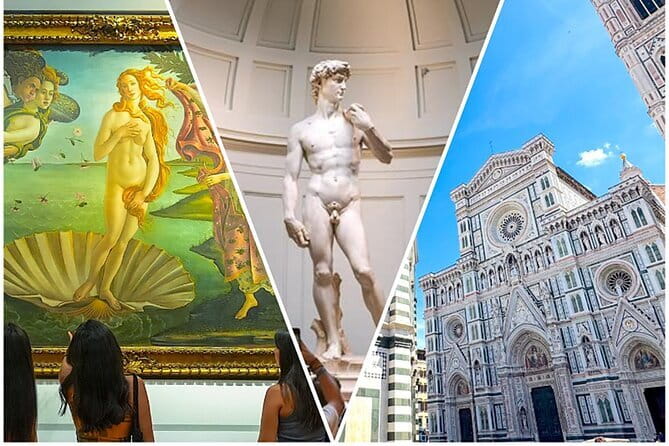
- David gets a focused introduction: Expect time with Michelangelo’s famous sculpture and the unfinished Prisoners series at the Accademia.
- The Uffizi visit centers on major works: Botticelli, Leonardo, Raphael, and Caravaggio receive the main attention.
- The walking route links the museums: You pass the Duomo exterior, Palazzo Vecchio, Ponte Vecchio, and Porcellino Market.
- The group is capped at 15 people: That is small enough for questions and easier movement through crowded galleries.
- You finish inside the Uffizi: After the guided portion, you can continue looking around at your own pace.
- The tour is best for art-first visitors: Expect explanation and context, not simply fast entry and photo stops.
Why this Florence tour works
Florence can feel like an open-air museum with too many masterpieces packed into too small a space. The Accademia and Uffizi are both essential, but they are not easy places to approach without a plan. This tour gives you a clear route through two major museums and connects the art to the streets between them.
The published price is $46.45 per person. That is a reasonable figure if you value reserved museum admission and an English-speaking guide, especially since the Uffizi alone carries a listed admission cost of €29. The value drops if you mainly want to enter, take a few photographs, and explore alone.
You meet at Piazza della Santissima Annunziata, near the Accademia, and finish at the Uffizi Galleries. There is no hotel pickup, so plan your route to the meeting point in advance. Bring the same passport or identification document used at booking, and make sure every person’s full name appears on the reservation. The Uffizi requires this for entry.
The tour is offered in English. It is a walking experience with museum stairs and standing, so a moderate level of fitness helps. The group maximum is 15, a useful limit in galleries where a large crowd can make it hard to hear.
More Museum Visits in Florence:
- Florence: Walking Tour with David, Duomo & Uffizi Gallery
★ 4.7 · 414 reviews - Small Group Uffizi & Accademia Museum with Walking Tour
★ 5.0 · 130 reviews - Florence: City Walking Tour and Uffizi Gallery Visit
★ 4.8 · 110 reviews
Michelangelo’s David at the Accademia
The Accademia is a compact museum, and the tour gives you about 30 minutes there. That may sound short, but the focus is clear: Michelangelo’s David, the Prisoners, and a few selected works that help explain the sculptor’s method.
David is more powerful in person than photographs suggest. The scale, the polished surface, and the calm expression are easy to recognize, but a guide can point out details you might otherwise miss. The sculpture was created as a symbol of Florence’s strength and independence, and its original placement carried political meaning as well as artistic value.
The unfinished Prisoners offer a useful contrast. Instead of a fully formed body, you see figures that appear to struggle out of the marble. Your guide explains how these works reveal Michelangelo’s approach to carving, where the form seems to emerge from the stone.
This part of the tour can become a miniature art lecture. Marco is praised for explaining David’s symbolism with warmth and humor, while other guides have been described as especially strong on architecture, sculpture, and period context. That level of attention is excellent if you want to understand what you are seeing.
It can feel restrictive if you expected free time in every room. The tour is not designed as an open-ended Accademia visit. You follow the guide through selected areas, and the main attention stays on Michelangelo. One account also described not having time to return to other galleries or the gift shop after the guided visit, so do not assume that you can browse the entire museum afterward.
Florence’s Duomo from the street
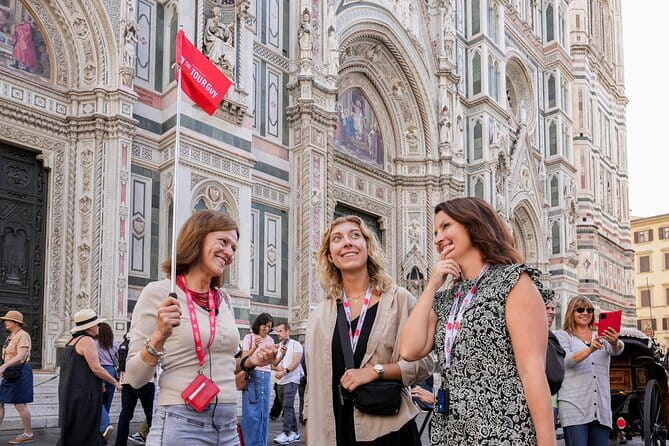
After the Accademia, you walk past Florence Cathedral. The tour discusses Brunelleschi’s huge terracotta dome, one of the defining sights of the city, but this experience does not include entry inside the Duomo.
That distinction matters. The cathedral exterior is a worthwhile stop, and the guide uses it to explain Florence’s wealth, ambition, and engineering skill during the Renaissance. Still, if you want to climb the dome, enter the cathedral, or see the interior, you need a separate ticket and a separate visit.
The walk from the Accademia toward the historic center helps break up the museum time. It also gives the guide a chance to connect the paintings and sculptures with the city that produced them. The Duomo is not just a photo stop here, but the time outside is brief rather than a full architectural tour.
Palazzo Vecchio, Ponte Vecchio, and the city walk
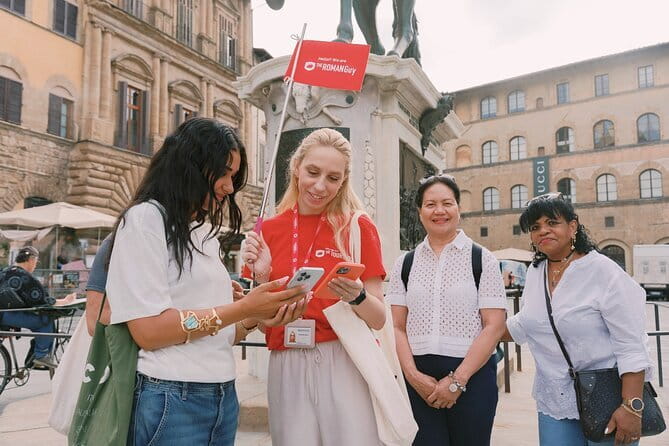
The route continues through Florence’s main public square, Piazza della Signoria, where Palazzo Vecchio overlooks outdoor sculptures and cafes. This is where the Medici story becomes more political. Your guide explains how the family shaped Florence and how power, art, and public space were closely tied together.
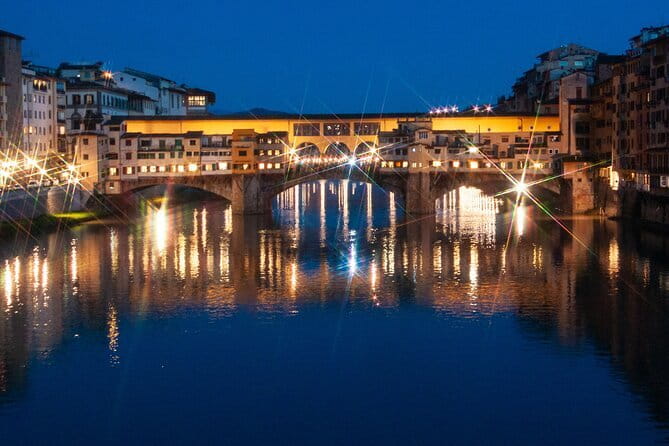
You also pass Ponte Vecchio and Porcellino Market. These landmarks help turn the tour into more than two disconnected museum visits. You walk through the city center while hearing about the people and events behind the buildings.
The walking is generally mild, though the total day can feel long when combined with museum standing. One detailed account described the route as easy, with the main effort coming from stairs at the Uffizi. Wear comfortable shoes and keep the pace in mind if you have another demanding activity scheduled afterward.
The exact amount of walking commentary can depend on the guide. Claudia is praised for her command of Florence’s art and architecture, while Guido is noted for an easygoing style and strong explanations of the Medici, Leonardo, and Michelangelo. Marco is frequently singled out for his humor, patience, clear English, and ability to make the art feel connected to the city.
Same streets, a different route:
- Florence: Highlights Walking Tour with Expert Guide
★ 4.6 · 4,662 reviews - Uffizi & Accademia Timed Entry: Small Group Duomo Walking Tour
★ 4.5 · 3,630 reviews - Florence: Duomo Complex with Tickets & City Walk Guided Tour
★ 4.7 · 2,057 reviews - Michelangelo’s David, Accademia & Uffizi Small Group Tour
★ 4.5 · 1,986 reviews
Botticelli and the Uffizi Gallery
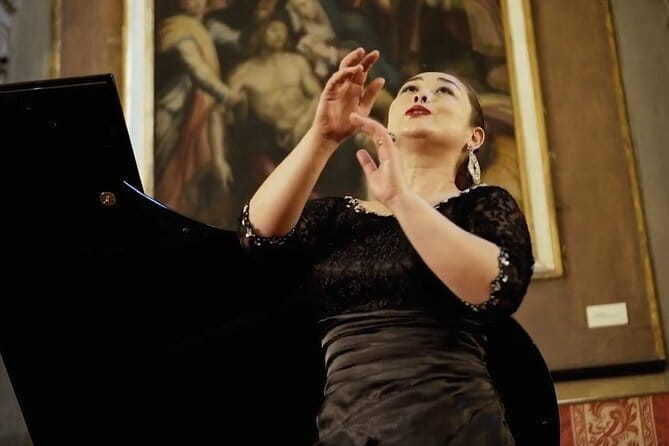
The Uffizi is the longer museum visit, with about 90 minutes of guided time. You see selected rooms and major works rather than every gallery, which is the only practical way to cover the museum in a short visit.
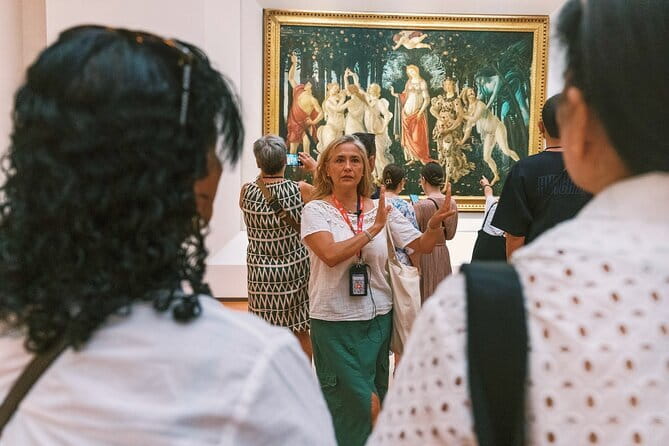
Botticelli’s Birth of Venus and Primavera are central stops. These paintings reward explanation because their mythological figures, gestures, flowers, and symbols can be easy to skim past. A good guide helps you look at the composition rather than simply recognize the title.
The route also includes works by Leonardo da Vinci, Raphael, and Caravaggio. The point is not just to name famous artists. You trace changes in style, subject, light, and technique while seeing how Florence helped shape the Renaissance.
The strongest part of the Uffizi visit is the connection between art and place. You hear why Florence became such a powerful center for artists, how wealthy patrons supported major commissions, and how the Medici family influenced the collection. If your guide is Marco, Guido, Claudia, or another strong art historian, expect plenty of interpretation rather than a list of dates.
That depth is also the main weakness for some people. One hour and 30 minutes of focused commentary can be a lot, especially after the Accademia and walking tour. A few guides have been described as spending too much time on certain pieces, leaving less time for other rooms. If you prefer to move quickly and choose your own paintings, you may find the guided section too controlled.
What skip-the-line entry really adds
Skip-the-line access is valuable in Florence because both museums can draw heavy crowds. It does not mean the galleries will be quiet or that you can enter without the required documents. It means the tour handles priority admission for the scheduled visit, saving you from joining the standard ticket queue.
The benefit is greatest when your Florence schedule is tight. Instead of spending part of the morning waiting, you get a planned entry and a guide who takes you directly toward the important works.
There can still be delays. An hour-long wait for the Uffizi has occurred even after an easy entry at the Accademia, so priority access is not a promise that every part of the visit will run exactly on time. Museum crowding and ticket office procedures can affect the day.
You should also arrive at the correct meeting point with the full booking details ready. The company asks for the complete names of all participants, and each person must show valid identification matching the reservation. A mismatch could prevent entry.
The guide makes or breaks the day
This is a guide-led tour, not simply a ticket bundle. The difference between a lively explanation and an overlong lecture will shape your experience.
Marco receives especially strong praise for his historical knowledge, friendly manner, humor, and clear English. He is described as bringing the art to life and giving David’s symbolism extra meaning. Guido is presented as relaxed but well prepared, with a strong grasp of Florence’s art and political past. Claudia is praised for her command of local art, architecture, and history.
The less successful moments come from pacing and communication. One experience began without the assigned guide, sending the group into the Accademia before a replacement arrived. That led to a rushed Uffizi visit. This appears to be an operational failure rather than the normal plan, but it shows why timing matters in a short museum tour.
Another issue is the level of detail. Some people love a long explanation of Michelangelo’s technique or the symbolism in a painting. Others may feel that too much time in one room leaves too little room for independent looking. Ask questions when you need clarification, and expect the guide to lead the group rather than turn you loose.
How long is the tour?

The listed duration is approximately three and a half hours. The half-day schedule specifies about 30 minutes at the Accademia and 90 minutes at the Uffizi, with the walking route connecting the two.
There is some variation in how the schedule is described. A separate full-day version may include longer breaks or additional time, and some accounts describe a substantial lunch interval. Check the exact option and start time you are booking, rather than assuming every departure follows the same length.
The stated end point is inside the Uffizi Gallery. That is useful because you can keep exploring after the guided portion. It also means you should not plan to return to the meeting point or expect transportation back to your hotel.
Who should book this tour?
I would choose this for a first Florence visit, especially if you want the city’s major Renaissance sights explained in one connected outing. It suits you if you like art, want historical context, and would rather follow a clear route than plan two museum visits on your own.
It is also a good fit when your schedule is tight. The reserved entry, small group, and direct focus on famous works help you use your time well.
I would hesitate if your priority is complete museum coverage. The Accademia and Uffizi visits concentrate on selected rooms and works, and the guide may spend a great deal of time explaining a few masterpieces. A self-guided visit would give you more control over pace, galleries, and breaks.
Do not book it expecting an interior Duomo visit. You see and discuss the cathedral from outside. For the dome, cathedral interior, or bell tower, arrange a separate tour.
Is $46.45 good value?
For $46.45, you are paying for two museum admissions, a walking route, an English-speaking guide, and priority access. That is fair value if you would otherwise buy the Uffizi ticket and want help making sense of what you see.
The price is less compelling if you only want David and a quick look at Botticelli. The guide’s interpretation is the main extra value, so your enjoyment will depend on how much you like art history presented in detail.
The small group helps. Fifteen people is not private, but it is far easier to hear questions and follow a guide than in a large coach group. You also finish with time to continue inside the Uffizi, which gives the visit a useful second phase.
Should you book Florence’s Accademia and Uffizi tour?
Book it if you want David, Botticelli, and Florence’s major Renaissance story in one organized visit. The best guides add real value, especially Marco, Guido, and Claudia, and skip-the-line entry can save precious time.
Skip it if you want to explore every gallery, dislike long explanations, or specifically want to enter the Duomo. This is a focused art and history tour, not a full museum pass or a complete Florence walking tour.
For most first-time visitors who enjoy guided sightseeing, the balance is good. Just arrive prepared with matching identification, comfortable shoes, and realistic expectations about selected highlights rather than total museum coverage.
FAQ
How much does the tour cost?
The listed price is $46.45 per person.
How long does the tour last?
The listed duration is approximately three hours and 30 minutes. The half-day schedule includes about 30 minutes at the Accademia and 90 minutes at the Uffizi, plus the walking route.
Is the Duomo included?
The tour passes the Duomo and explains its exterior, including Brunelleschi’s dome. Entry inside the cathedral is not included.
Where does the tour start?
The meeting point is Piazza della Santissima Annunziata in Florence.
Where does the tour end?
The tour ends inside the Uffizi Galleries at Piazzale degli Uffizi, 6.
Is museum admission included?
Skip-the-line entry and guided admission to both the Accademia Gallery and Uffizi Gallery are included.
Is the tour offered in English?
Yes. The tour is offered in English with an English-speaking guide.
Do I need identification?
Yes. Each person must present a valid passport or identification document matching the name provided at booking for entry to the Uffizi Gallery.
Can I cancel for a refund?
You can cancel at least 24 hours before the experience start time for a full refund. Cancellations or changes made less than 24 hours before the start time are not refunded or accepted.
Just added around Florence
- Tasty Florence Street Food with Guided Walking of the City★ 5.0 · 174 reviews
- Medici Legends & Renaissance Wonders: Florence Small Group Tour★ 5.0 · 205 reviews
- Florence Food Tour of 10+ Authentic Tastings with Cheeses & Wines★ 5.0 · 155 reviews
- Florence Private Walking tour with Skip-the-line to Accademia★ 4.5 · 236 reviews
- Florence: Whispers of the Renaissance walking tour★ 4.5 · 78 reviews
- Private Florence Tour: 3-Hour Walking Tour with a Licenced Guide★ 5.0 · 233 reviews
- The Best of Florence Walking Tour in a Small Group★ 5.0 · 503 reviews
- Private Skip-the-Line Florence Highlights and David Walking Tour★ 4.5 · 78 reviews
Museums, compared.
Acropolis monuments & Parthenon Walking Tour with Optional Acropolis Museum
Read our review →
Frida Kahlo VIP [Museum Tickets Included] Walk, Markets & Churros
Read our review →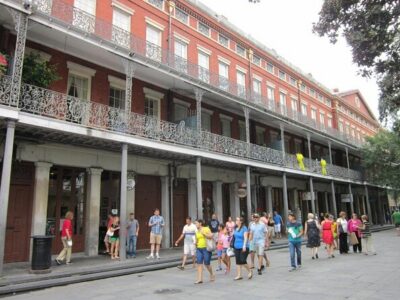
French Quarter Walking Tour With Comp 1850 House Museum Admission
Read our review →
Sydney Cricket Ground (SCG) and Museum Walking Tour
Read our review →
Picasso Museum and Walking Tour Plus Optional Wine & Food Tasting
Read our review →
Bogotá City Tour with Monserrate, Gold and Botero Museums
Read our review →
Picasso Small Group Walking Tour with Museum Skip the Line Ticket
Read our review →
Dresden: Guided Walking Tour and Chocolate Museum Ticket
Read our review →Browse the lists this tour appears in