REVIEW · BARCELONA
Barcelona: Old Town Private Walking Tour of Past and Present
Barcelona’s oldest districts make the most sense on foot, where Roman walls, medieval lanes, grand churches, modern cafés, and seaside promenades all sit within a few blocks. This private walk connects El Born, La Ribera, the Gothic Quarter, and Las Ramblas before giving you a choice of La Barceloneta or Gaudí’s Passeig de Gracia.
I like the personal pace and the way Fabio adjusts the route to your interests. I also like the small tasting at La Boqueria, where cheese, Iberian ham, and fruit juice turn a history walk into a practical introduction to Barcelona’s food culture.
The main drawback is simple: two to three hours is not enough for every stop in full detail. The route covers a lot, so expect exterior visits and quick explanations rather than museum time or long interior tours.
Key points at a glance
- Roman Barcelona in the Gothic Quarter: See the Temple of Augustus, ancient ruins, Plaça del Rei, and other reminders of the city’s earliest days.
- A private route with Fabio: The guide adjusts the pace, answers questions, takes photos, and offers practical food and sightseeing advice.
- El Born and La Ribera: Walk through districts that once formed the city’s commercial center, including the Cultural Center and Santa Maria del Mar.
- La Boqueria tasting stop: Try local cheese, Iberian ham, and fruit juice as part of the tour.
- Two possible endings: Continue toward Port Vell and La Barceloneta, or head toward Plaça Catalunya and the outside façades of Casa Batlló and Casa Mila.
- Useful for first-time visitors: You get a city orientation, safety tips, restaurant ideas, and a clear sense of where to return later.
Why this private Barcelona walk works well
This is best understood as a city orientation with historical depth, not a museum tour. You move through several neighborhoods in one outing, and Fabio links the sights together rather than treating them as isolated photo stops.
The private format matters. With a group of up to eight people, you can ask questions, slow down for photos, or spend more time in a district that catches your interest. Families, couples, solo visitors, and small groups can all make the experience their own.
Fabio is repeatedly described as friendly, patient, flexible, and easy to talk with. He speaks English, Spanish, Portuguese, and French. His role goes beyond dates and names. He can also suggest places to eat, areas for nightlife, and things to avoid for a safer visit.
That makes this a strong choice for your first day in Barcelona. You can get your bearings, learn how the old quarters fit together, and use the rest of your trip more confidently.
More Old Town Walking Tours in Barcelona
- Barcelona Helicopter, Sailboat & Old Town Private Walking Tour
★ 5.0 · 1,395 reviews - Barcelona: Old Town and Gothic Quarter Walking Tour
★ 4.8 · 1,393 reviews - Barcelona Old Town & Gothic Quarter Small Group Tour
★ 5.0 · 1,308 reviews
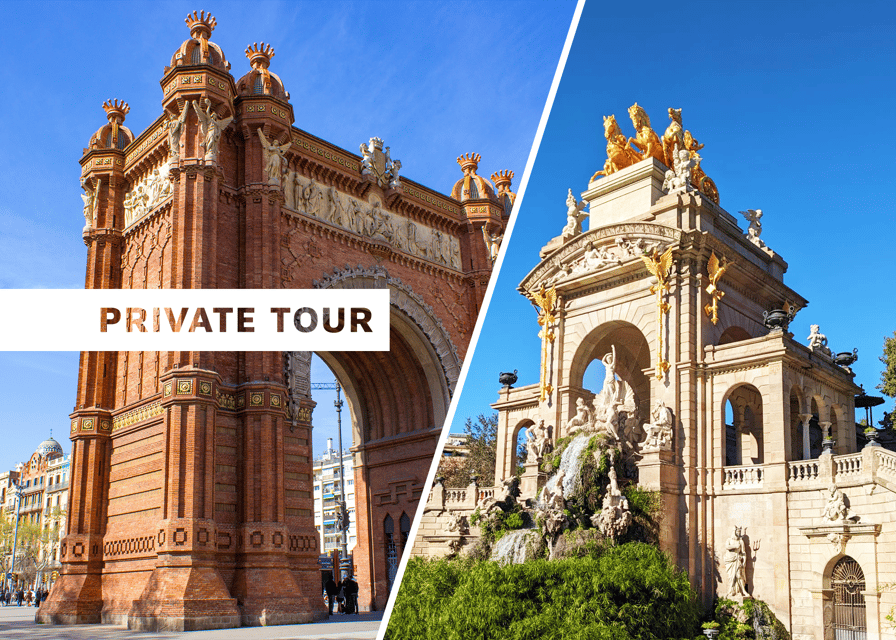
Starting at Arc de Triomf and Ciutadella Park
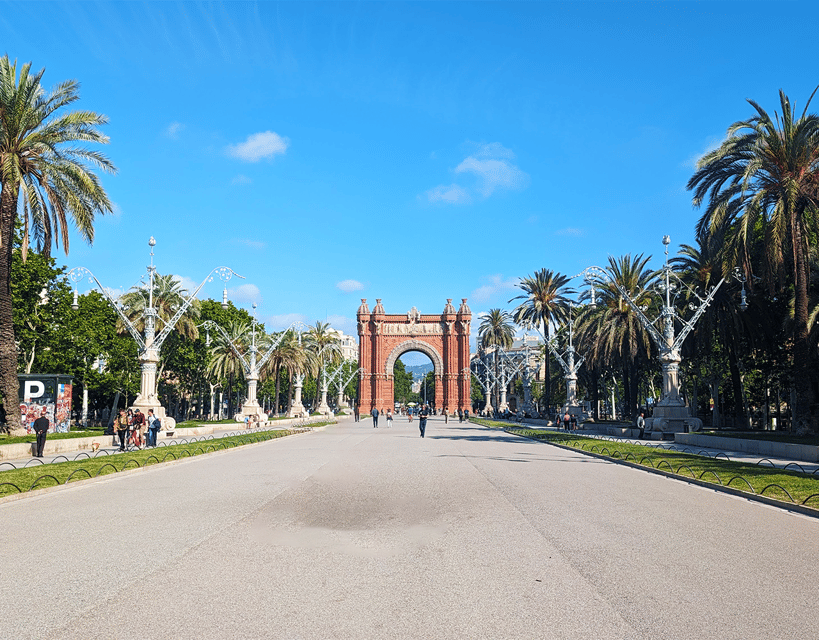
One meeting option is Arc de Triomf, a broad avenue near the park and the old districts. From here, the walk begins with Parc de la Ciutadella, Barcelona’s central urban park.
The park offers a useful pause before the narrow lanes of the old city. You get open paths, greenery, and a little breathing room before the tour turns toward El Born. Fabio explains the park’s place in the city and uses it to set up the shift from modern Barcelona to its older neighborhoods.
This opening also helps you judge the pace. The tour is a walking experience, and the route includes cobbled streets, plazas, and busy pedestrian areas. Wear comfortable shoes, and bring sunscreen. A small eco-friendly bottle of water is provided for each person, but you should still plan to stay hydrated, especially in warm weather.
El Born and La Ribera, Barcelona’s former commercial heart
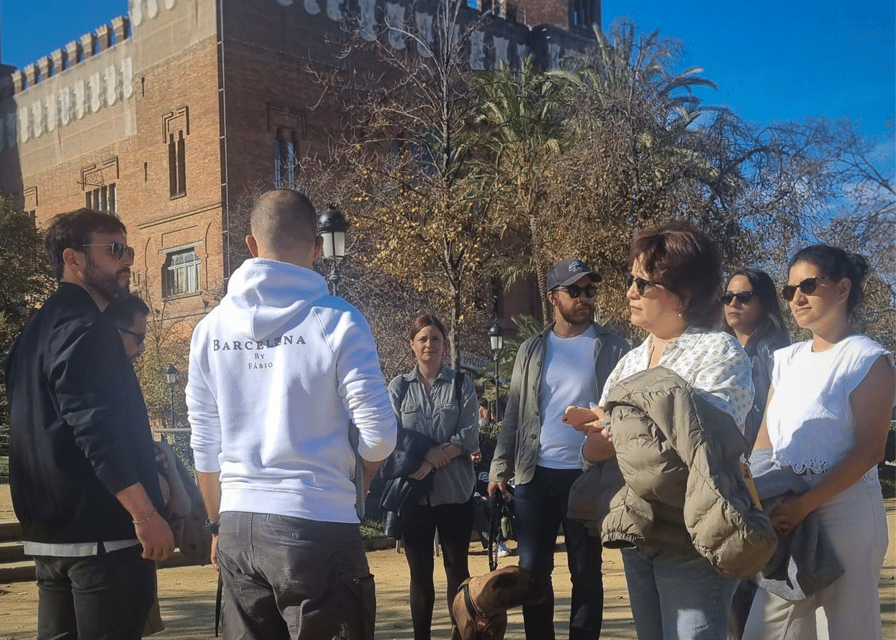
El Born and La Ribera are among the most rewarding parts of the walk. Their narrow streets and handsome façades reveal a district that once played a major role in Barcelona’s trade and daily life.
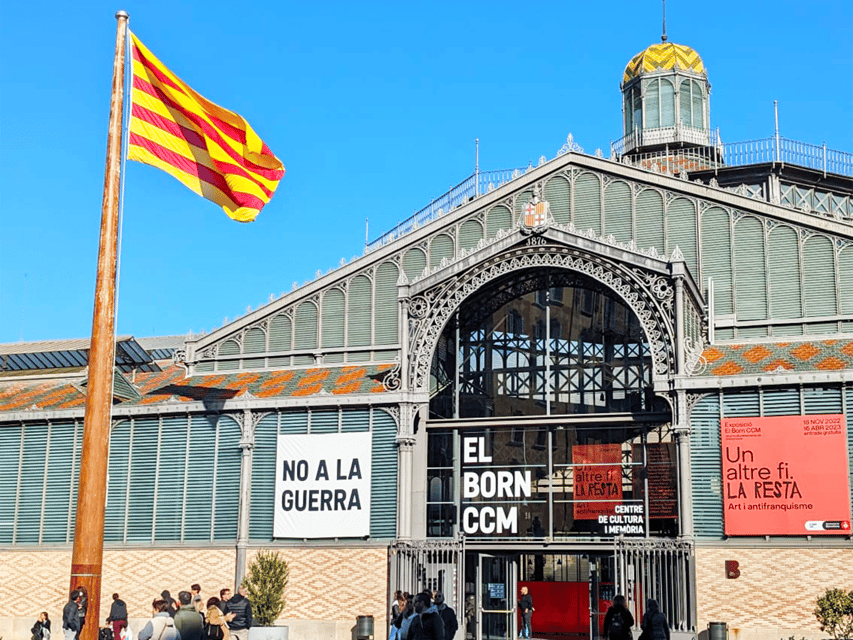
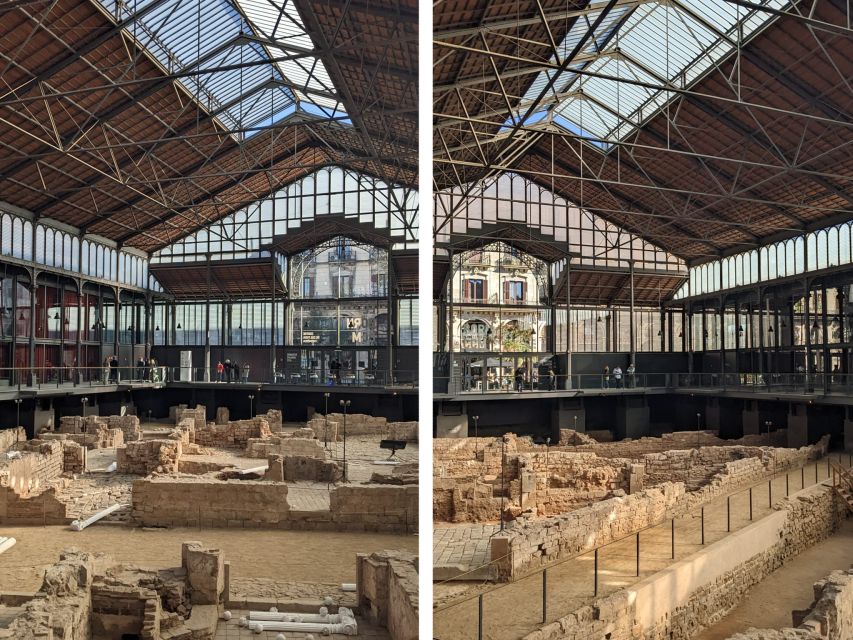
You may pass the Born Cultural Center, where preserved city remains give a direct look at an earlier Barcelona. The experience is not just about admiring old buildings. Fabio explains how the neighborhood changed over time and how present-day shops, restaurants, and local life now occupy these old streets.
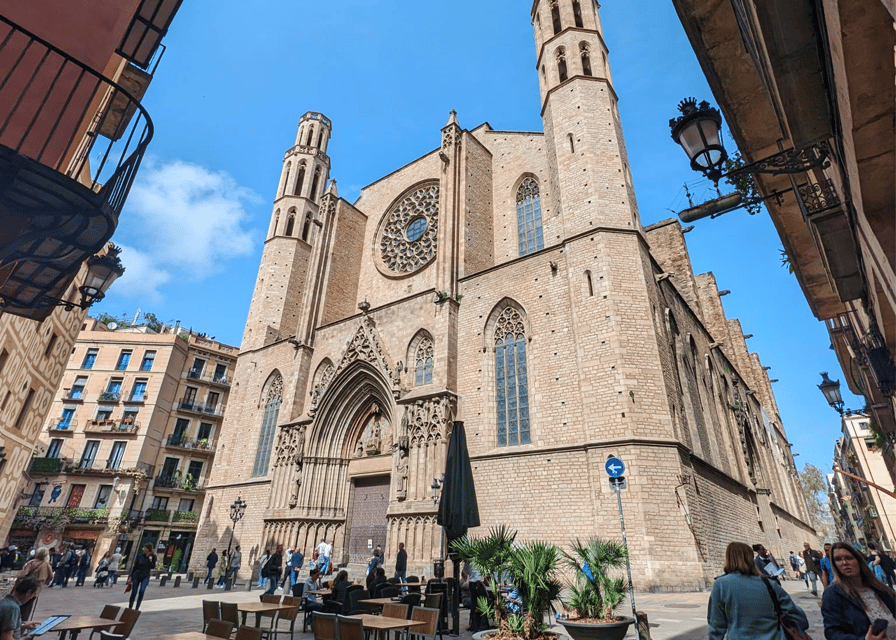
Santa Maria del Mar is another major stop. This imposing church is closely tied to La Ribera and is one of the area’s essential landmarks. If timing allows, you may step inside without an extra ticket. The visit is subject to the pace and conditions of the day, so do not treat it as a guaranteed extended interior tour.
I like this section because it gives the walk a human scale. You are not simply moving from landmark to landmark. You see where commerce, worship, housing, and public life once overlapped, then watch the same streets function as a modern neighborhood.
The route can also include a less obvious Roman site. Exact details may vary, which is part of the appeal of a private walk. Fabio has taken visitors to places they would likely pass without noticing, including Roman remains tucked into the old city.
Roman Barcelona in the Gothic Quarter
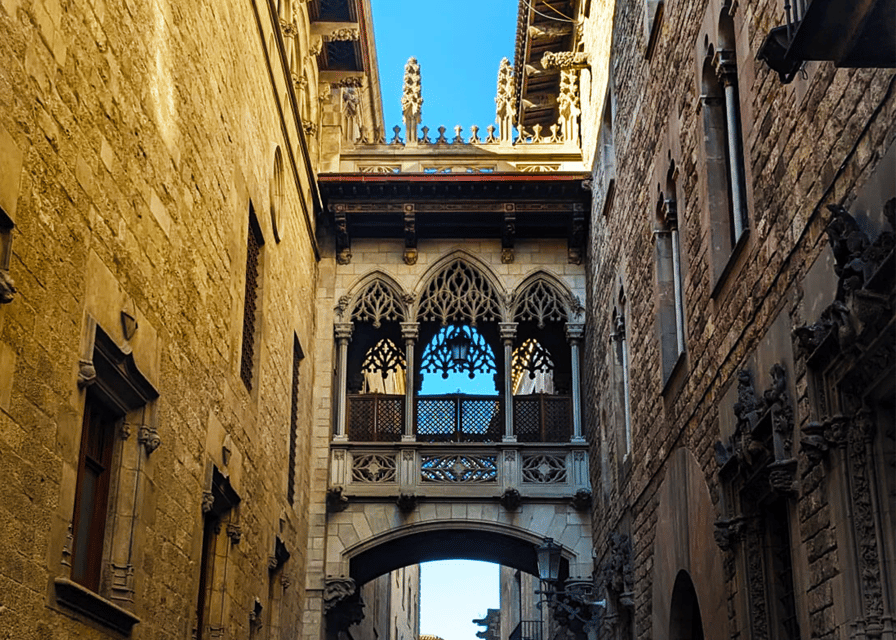
The Gothic Quarter supplies the strongest historical contrast. One moment you are in a medieval-looking lane, and the next you are looking at evidence of the Roman city beneath or beside later buildings.
The tour can include Plaça del Rei, once connected with royal power, along with Plaça Sant Jaume, one of the Gothic Quarter’s key public squares. You will also see Barcelona Cathedral and the Temple of Augustus, an especially striking reminder that the city is far older than its medieval streets suggest.
The Temple of Augustus is easy to miss if you do not know where to look. A guide adds real value here because the remains are not presented like a large, obvious monument. Fabio points out the old stones and explains their place in Barcelona’s Roman past.
Plaça de Sant Felip Neri adds another layer. This quieter square has a very different feel from the grand civic spaces nearby. The tour uses stops like this to show you that Barcelona’s character is not limited to famous buildings. Small plazas and side streets often explain the city better than a quick checklist of major sights.
The Gothic Quarter is also where a guide earns the fee. The lanes can feel confusing, and it is easy to walk past a doorway, wall fragment, or small square without knowing its importance. Fabio’s storytelling brings together Roman foundations, medieval power, Catalan traditions, and modern city life.
You should expect plenty of standing and walking, though the pace can be adjusted. The tour is wheelchair accessible, but the old quarter’s streets and crowds can still affect how easily the group moves from one point to the next.
More Old Town Walking Tours in Spain
- Ramblas, Old Town, Gothic and Gaudi Architecture Walking Tour
★ 5.0 · 723 reviews - Barcelona: Ramblas, Old Town & Gaudí Houses Walking Tour
★ 4.9 · 239 reviews - Madrid Old Town & Royal Palace Walking Tour Skip the Line Ticket
★ 4.5 · 1,829 reviews - Bilbao old town walking tour
★ 4.6 · 151 reviews
From La Rambla to a taste at La Boqueria
The narrow lanes eventually open onto La Rambla, Barcelona’s famous central promenade. This is a major change of scene. The street is broad, busy, and filled with shops, cafés, performers, and people moving between the old quarter and the waterfront.
La Rambla can feel more tourist-oriented than El Born or the quieter Gothic lanes. That is precisely why it helps to walk it with a local guide who can explain how it fits into the city rather than treating it as the whole Barcelona experience.
The food stop at La Boqueria is one of the most practical parts of the tour. You share a taste of local products, including cheese, Iberian ham, and fresh fruit juice. It is a modest tasting rather than a full meal, so plan lunch separately if you are hungry.
I like this stop because it gives you something useful to take into the rest of your trip. You can see how the market works, learn about familiar Spanish foods, and return later with a better idea of what to buy. The market can be crowded, so keep your belongings secure and stay close to your group.
The tasting is included, while other food or shopping purchases are not. If you want a longer market visit, tell Fabio early so you can see how much time the route allows.
Choosing your ending: beach or Gaudí
The final section depends on your interests and the option selected. One direction leads downhill toward the Liceu Theatre, Plaça Reial, the Columbus Monument, Port Vell, and La Barceloneta.
Plaça Reial is a lively square with arcades and lamps associated with Gaudí’s early work. From there, the route continues toward the waterfront, where Barcelona’s port and marina connect the old city with the beach district.
La Barceloneta gives the tour a modern, seaside finish. The area reflects Barcelona’s transformation around the 1992 Olympic Games, when the waterfront changed in major ways. You finish with a different view of the city than the one offered by Roman ruins and medieval churches.
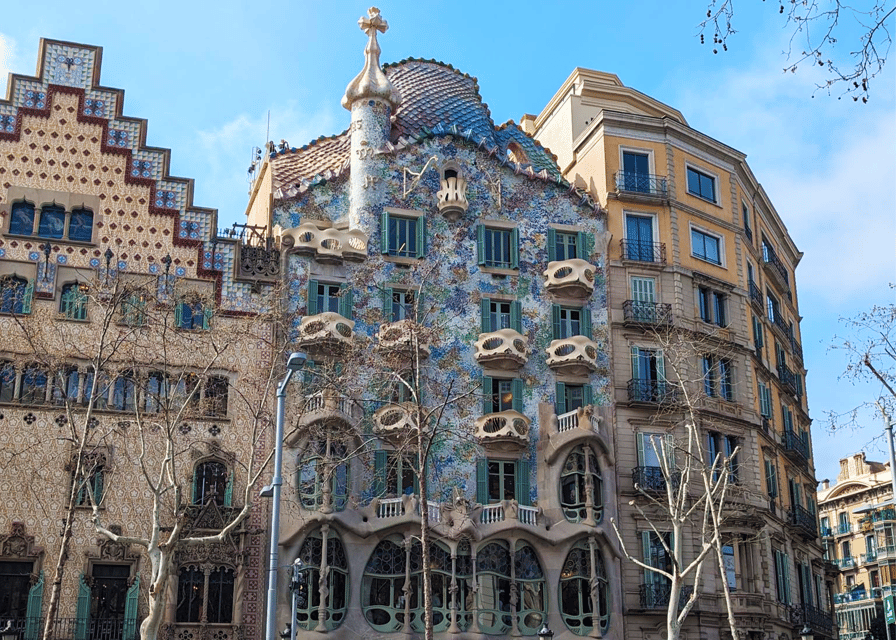
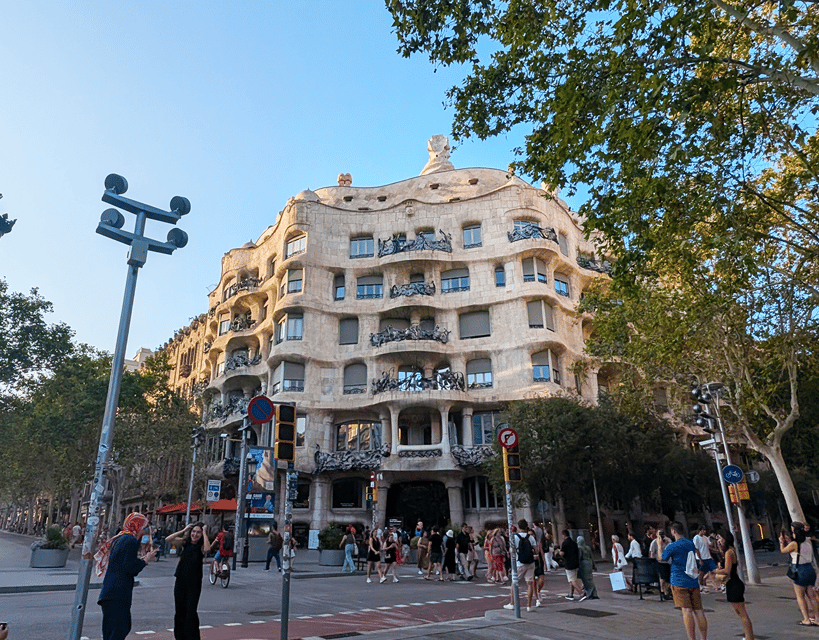
The other choice heads toward Plaça Catalunya and Passeig de Gracia. Along the way, you can admire Casa Batlló and Casa Mila from the outside. This is not a Gaudí interiors tour, and admission tickets are not included, but the façades still make a strong final impression.
This option suits you if architecture is a priority. The beach route is better if you want open space, the port, and a relaxed end to the walk. Ask about the route before starting, since meeting points and final stops can vary with the option booked and the group’s interests.
What the $50 price buys you
At $50 per person, the value comes mainly from having a private guide for a broad introduction to central Barcelona. You are not paying for admission to major attractions, since museum, monument, and attraction tickets are extra. You are paying for local context, route planning, translation help, and the ability to shape the walk around your group.
That is a fair price if you are new to Barcelona and want to cover several historic areas without spending time figuring out the streets yourself. It is also useful for families and small groups who would rather ask questions freely than follow a large tour.
The value is less clear if you prefer to explore slowly on your own or want long interior visits. This tour moves across a wide part of the city, so it favors orientation and variety over detailed time inside one church, museum, or monument.
Fabio also adds practical value through recommendations. His advice has included restaurants, sightseeing ideas, nightlife suggestions, and safety guidance. He has been especially helpful to solo visitors and small groups who want a local point of contact during their first hours in town.
Who should book this walking tour?
I would choose this experience if you have one to three days in Barcelona and want a strong introduction to the old city. It suits first-time visitors who want history without a formal lecture and families whose interests may shift during the walk.
It also works well for a private group with mixed ages. Fabio has adjusted the pace for adults, teenagers, and younger children, and children under six join free without counting toward the eight-person group limit.
Food lovers will appreciate the La Boqueria stop, while architecture fans will enjoy the route toward Casa Batlló and Casa Mila. History-minded visitors get Roman remains, medieval churches, royal sites, and civic squares in one compact outing.
Bring comfortable shoes, sunscreen, and questions. Pets are allowed, and hotel pickup or drop-off can be requested, though it is not part of the standard inclusion.
The main thing to remember is that this is a walking overview. You will see many places, but you will not have time to fully tour every interior or museum. Use the guide to decide where you want to return on your own.
Should you book it?
Book this tour if you want a personal introduction to Barcelona’s old quarters, practical advice from a local guide, and a route that can change with your interests. Fabio’s relaxed manner, language skills, photo help, and restaurant suggestions add useful value beyond basic sightseeing.
Skip it if you want a slow, specialized tour of Gaudí interiors, a food crawl, or a museum-heavy experience. For most first-time visitors, though, the mix of Roman remains, medieval streets, market tasting, waterfront views, and modernist façades makes this a well-balanced first walk through Barcelona.
FAQ
How long does the Barcelona private walking tour last?
The tour lasts between 2 and 3 hours, depending on the option booked, the group’s walking pace, and the route selected.
How much does the tour cost?
The listed price is $50 per person.
Is the tour private?
Yes. It is offered for a private group of up to eight participants. Children under six are free and do not count toward the eight-person limit.
Who is the guide?
The experience is provided by Barcelona by Fábio. Fabio leads the tour and speaks English, Spanish, Portuguese, and French.
Where does the tour start?
Starting options include Arc de Triomf and Plaça de Sant Jaume. The exact meeting point can vary according to the option booked.
What neighborhoods does the tour visit?
The route includes El Born, La Ribera, the Gothic Quarter, and Las Ramblas. Depending on the ending, it can also include La Barceloneta, Port Vell, Plaça Catalunya, and Passeig de Gracia.
Is food included?
A shared tasting of local products at La Boqueria is included. This can include cheese, Iberian ham, and fruit juice. Additional food and shopping purchases are not included.
Are attraction tickets included?
No. Tickets for museums, monuments, and other attractions are not included, though tickets can be requested separately.
Is the tour wheelchair accessible?
Yes, the activity is described as wheelchair accessible. Because parts of the route pass through old streets and busy areas, you should discuss your needs when booking.
Can I cancel the booking?
You can cancel up to 24 hours in advance for a full refund. A reserve-now, pay-later option is also available.
More Private Walking Tours in Barcelona
- Private Walking Grand Tour of Copenhagen
★ 5.0 · 3,953 reviews - Vienna: Private Walking Tour with a Local
★ 4.6 · 1,446 reviews - Private Walking Tour of Hanoi City
★ 5.0 · 1,251 reviews - Vienna: Private Walking Tour with a Guide
★ 4.7 · 962 reviews
More Private Walking Tours in Spain
- Barcelona: Private Walking Tour with a Local
★ 4.5 · 202 reviews - Bilbao: Private Walking Tour with a Local
★ 4.7 · 332 reviews - Seville Private Walking Tour with Alcazar & Cathedral Tickets
★ 5.0 · 332 reviews - Valencia: Private Walking Tour with a Local
★ 4.8 · 298 reviews
Just added around Barcelona
- Barcelona Walk Like a Local: El Born & Gothic 15+ Sights★ 4.9 · 88 reviews
- Barcelona: Gothic Quarter Walking Tour w/ Montjuïc Cable Car★ 4.4 · 90 reviews
- Barcelona: Ramblas, Old Town & Gaudí Houses Walking Tour★ 4.9 · 239 reviews
- Barcelona: Private Walking Tour with a Local★ 4.5 · 202 reviews
- Barcelona: Jewish Quarter 2-Hour Walking Tour★ 4.8 · 333 reviews
- Barcelona: Picasso Walking Tour with Picasso Museum Tickets★ 3.5 · 93 reviews
- Barcelona: Gothic Quarter Walking Tour with 10+ Attractions★ 5.0 · 369 reviews
- Barcelona: Hidden Gems Walking Tour Including 10+ Sights★ 4.9 · 121 reviews
Old Town Walking Tours, compared.
Underground Vaults Walking Tour in Edinburgh Old Town
Read our review →
3-Hour Walking Tour of Old Town & Prague Castle
Read our review →

Old Town and Jewish Quarter Guided Walking Tour
Read our review →