
REVIEW · BARCELONA
Barcelona Old Town & Gothic Quarter Small Group Tour
Barcelona’s old center is easiest to understand on foot, where Roman stones, medieval lanes, grand churches, market stalls, and modern cafés crowd together. This two-and-a-half-hour walk links the Gothic Quarter with La Rambla and El Born, giving you a useful first look without asking you to plan every turn.
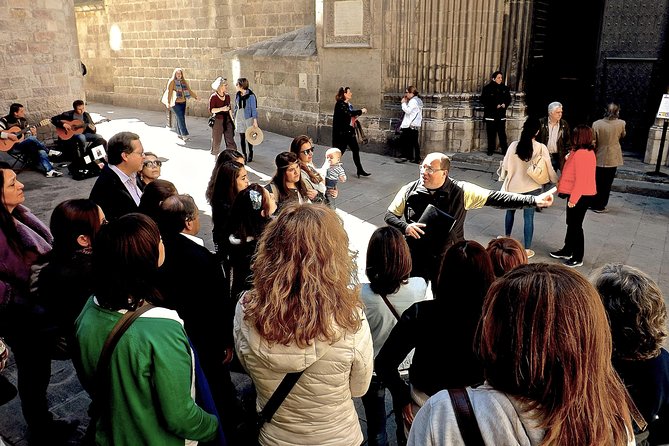
I like the small-group format, which gives you a better chance to ask questions than a large city tour. I also like the range of guides, including Alba, Joris, Isabel, Steven, and Miguel, who bring local history, politics, food tips, and amusing details into the walk. The main consideration is pace: you will cover a lot of ground, and most church interiors are viewed from outside unless you pay admission separately.
Key points to know before you book
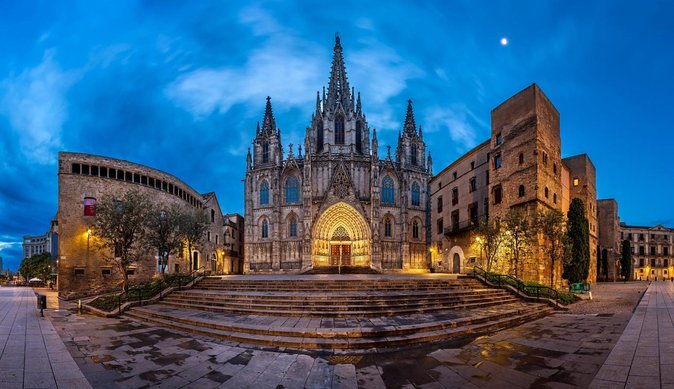
- Roman walls and medieval lanes: The Gothic Quarter reveals traces of Barcelona’s Roman beginnings and later medieval growth.
- A practical first-day orientation: The route connects major sights with streets and squares that are easy to miss on your own.
- Market time at La Boqueria: You can look around, buy a fresh juice, or return later for more food browsing.
- A maximum group size advertised at 12: Additional booking information lists a maximum of 15, so confirm the final group size if this matters to you.
- A central finish: The walk ends near Palau de la Música Catalana in the Born area, not back at the starting point.
- Good value at $22.15: The price covers a professional local guide, but not food, drinks, hotel transport, or church admission.
Why this walk makes sense early in your Barcelona stay
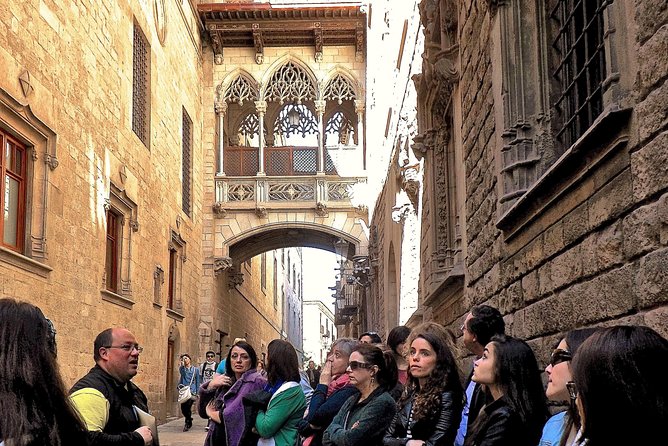
The Gothic Quarter is a maze, and that is part of its charm. Narrow lanes turn suddenly into small squares, old buildings crowd your view, and several important sights are easy to pass without knowing what you are seeing. A guide gives those streets a clear order and helps you connect the Roman, medieval, and modern parts of the city.
The tour also works as a useful orientation walk. It begins near Carrer de Fontanella, visits the Gothic Quarter, La Rambla, Boqueria Market, Plaça Reial, Barcelona Cathedral, El Born, and Santa Maria del Mar, then finishes by Palau de la Música Catalana. You will not explore every building in depth, but you will know which areas deserve a longer return visit.
At $22.15 per person, the value is strong if you want context as well as directions. A private guide would cost more, but the small group keeps the price modest while still allowing questions. I would treat this as a city introduction, not as a replacement for paid entry to the cathedral, Santa Maria del Mar, or Palau de la Música Catalana.
More Old Town Walking Tours in Barcelona
- Barcelona Helicopter, Sailboat & Old Town Private Walking Tour
★ 5.0 · 1,395 reviews - Barcelona: Old Town and Gothic Quarter Walking Tour
★ 4.8 · 1,393 reviews - Ramblas, Old Town, Gothic and Gaudi Architecture Walking Tour
★ 5.0 · 723 reviews
Beginning among Roman remains in the Gothic Quarter
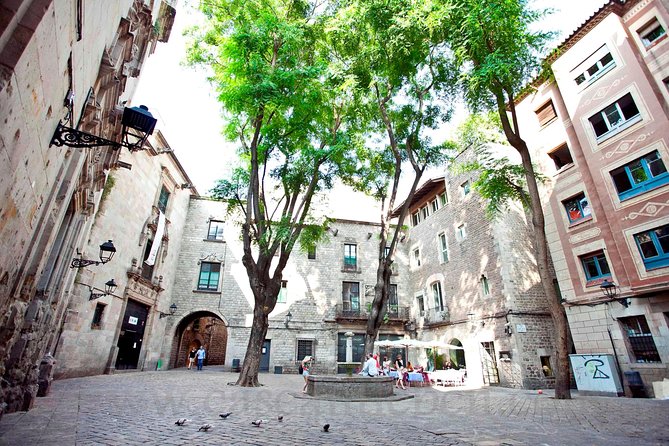
The first major portion takes you into the Gothic Quarter, where Barcelona’s oldest streets preserve traces of a Roman settlement. The route focuses on the remains still visible around the district and on how the small Roman village grew into a medieval center.
This is where a local guide can add the most value. Without help, the quarter can look like a collection of attractive stone lanes. With explanation, the streets begin to show layers of change: Roman foundations, medieval buildings, religious landmarks, and modern shops fitted into old spaces.
The scheduled time here is about 45 minutes, longer than at any individual stop later in the walk. That makes sense. You need time to adjust to the winding route, stop in small squares, and hear the stories and legends tied to the area.
Wear comfortable shoes and expect uneven pavement in places. The route is family-friendly, and one family specifically found it manageable with a stroller, but a maze of narrow streets can still require patience if you are pushing one.
Understanding Ciutat Vella beyond the Gothic Quarter
Ciutat Vella means Old City in Catalan. The name covers the oldest part of Barcelona and gives the tour a broader frame than the Gothic Quarter alone.
The guide uses this section to explain the city itself, rather than simply pointing out buildings. That is useful if you want to understand how Barcelona’s historic center fits together before visiting museums or returning for a meal.
Only about 15 minutes are scheduled here, so expect an introduction rather than a full neighborhood visit. The benefit is efficiency: the walk keeps moving instead of spending the whole morning in one small pocket of the city.
Walking La Rambla from old defense line to city stage
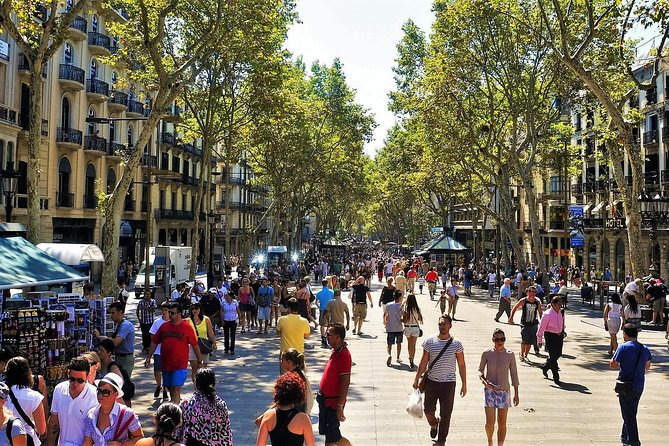
La Rambla is Barcelona’s best-known avenue, lined with bars, restaurants, street artists, and constant foot traffic. The route presents its earlier role as a sandy stream beside the old city walls, then brings you into the avenue’s modern public life.
This is a good place to pay attention to your belongings and stay close to the group. Crowds can make a walking tour harder to follow, especially when people stop for photos or street performances. The small group helps, and one guide, Miguel, was particularly effective at gathering everyone and helping people rejoin after they became separated.
The scheduled time is 15 minutes, enough to introduce the avenue but not enough for a leisurely stroll from end to end. You will get a sense of its position and character, then move to the more focused stop at Boqueria Market.
More Old Town Walking Tours in Spain
- Barcelona: Ramblas, Old Town & Gaudí Houses Walking Tour
★ 4.9 · 239 reviews - Barcelona: Old Town Private Walking Tour of Past and Present
★ 5.0 · 160 reviews - Madrid Old Town & Royal Palace Walking Tour Skip the Line Ticket
★ 4.5 · 1,829 reviews - Bilbao old town walking tour
★ 4.6 · 151 reviews
Taking a useful food break at Boqueria Market
Mercat de la Boqueria is one of the most practical stops on the route. Its colorful stalls, elegant structure, fruit juices, and Catalan food traditions give you a quick taste of everyday food culture in the old center.
You have the option to buy a fresh juice or something small to eat, though food and drinks are not included in the tour price. I like this arrangement because you can choose what suits your appetite and budget instead of paying for a fixed tasting.
The market visit lasts about 15 minutes, so think of it as an introduction. You may want to return later, especially if you prefer to browse without keeping pace with a group. One person specifically found the market useful enough to revisit after the tour.
The short stop also means you should not expect a detailed food tour. Your guide may explain Iberian cured ham and local eating habits, but this is primarily a walking tour with a market visit, not a meal.
Pausing at Plaça Reial and its Gaudí lamps
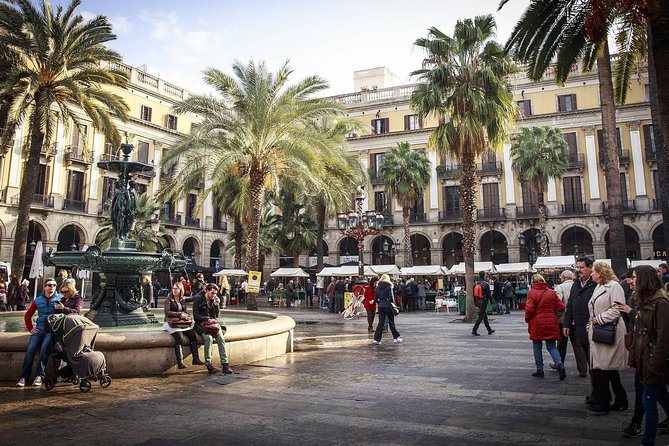
Plaça Reial opens up suddenly after the Gothic Quarter’s tight lanes. Its broad space, royal palms, terraces, fountain, and lanterns give you a welcome change of scale.
The square is linked with artists, bohemians, and visitors taking a break. Its Napoleonic design adds another layer to the district, while the lamps are associated with a young Antoni Gaudí and one of his first public assignments.
This is a good photo stop and a pleasant place to note how Barcelona mixes formal architecture with casual street life. The tour allows about 15 minutes, enough for the guide to explain the square and give you time to look around. You will not have much time to settle at a terrace during the tour, but the area is easy to revisit afterward.
Seeing Barcelona Cathedral from the outside
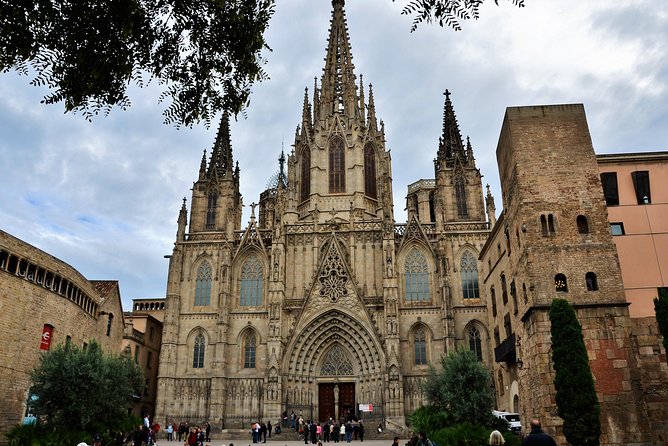
The route passes Barcelona Cathedral, a major Gothic landmark devoted to Saint Eulalia. Its towers and gargoyle sculptures give the exterior a dramatic profile, while the interior includes a bright patio and tall columns.
Admission is not included, and the stop is listed as a pass-by visit. That distinction matters. You will receive context and a good exterior view, but you should budget separately if you want to enter.
The 15-minute stop is well suited to a first visit. You can decide later if the interior deserves more of your time. I appreciate this approach for a short city walk because it keeps the tour moving while still showing you one of the old center’s major religious buildings.
Crossing into El Born
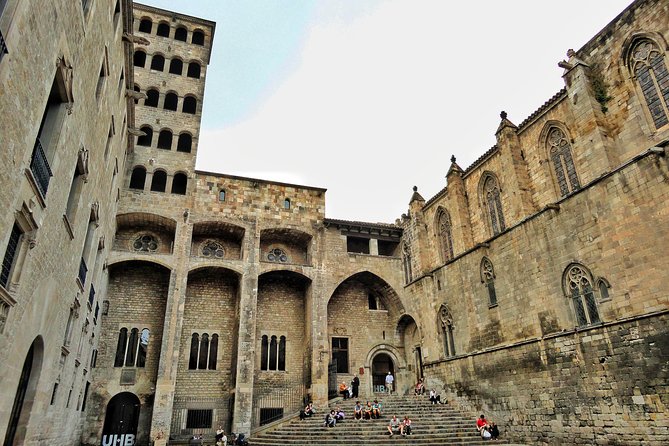
El Born changes the mood of the route. Its streets combine older buildings with newer shops, restaurants, and social spaces, and its squares feel more open and current than some parts of the Gothic Quarter.
The area is also tied to important cultural sights, including Santa Maria del Mar and Palau de la Música Catalana. The tour uses El Born as a bridge between historical explanation and present-day Barcelona. You get a chance to see where old architecture remains part of daily city life rather than being sealed off as a museum district.
The scheduled time is about 15 minutes, so you will receive an overview rather than a detailed neighborhood tour. If you enjoy food, design, or independent shops, this is one section worth revisiting after the walk.
Entering the story of Santa Maria del Mar
Santa Maria del Mar is presented as the people’s cathedral of the Old Town, built in medieval times by the neighborhood community. It is one of the key examples of Catalan Gothic design on the route.
Admission is not included, and the listed stop is not a full interior visit. You will see the basilica and learn why it matters, then decide if you want to pay for entry separately.
This stop gives the tour a useful contrast with Barcelona Cathedral. Seeing both from the outside lets you compare their roles and architectural character, while the guide explains Santa Maria del Mar’s connection to the local community. If churches are a priority for you, set aside extra time after the tour for a closer look.
Finishing near Palau de la Música Catalana
The walk ends near Palau de la Música Catalana, a major work of Catalan modernism designed by Lluís Domènech i Montaner, who taught Gaudí. Its decoration combines sculpture, mosaic, stained glass, and wrought iron, and the concert hall is recognized as a UNESCO World Heritage Site.
The finish is well chosen. You end in the city center, close to the Born district, with restaurants, squares, and more sights nearby. You can continue exploring instead of retracing your steps to the starting point.
The tour does not include a visit inside the concert hall. If you want to see the interior, arrange a separate visit. Even from outside, the building gives the walk a strong architectural finish after the Roman and Gothic material earlier in the morning or afternoon.
What the guides add to the experience
The guide can make or break a walking tour, and this experience has several names worth requesting if the booking system allows it. Alba is repeatedly described as energetic, clear, patient, and good at making history work for children and teenagers. Joris is praised for answering questions and offering a friendly, well-informed introduction to the city.
Isabel is especially effective for travelers who enjoy a story with their architecture. Her approach connects Roman, Visigoth, Moorish, medieval, and later Spanish history, while also pointing out small shops, buildings, and odd details along the way.
Steven brings humor and local customs into the walk, while Miguel is a strong choice if you want practical help as well as history. He has helped with restaurant suggestions and lunch reservations, according to the experience details.
Guides vary, so you cannot assume you will receive a particular person. Still, the repeated strength of the guiding team is one of the best reasons to choose a guided walk instead of following a map.
Group size, timing, and practical value
The tour is advertised as a small group of up to 12 people, though the additional information gives a maximum of 15. That difference is worth checking when you book. Even at 15, it remains more personal than a large coach-style group, but the route will feel more crowded if everyone stops in a narrow lane.
You can choose a morning or afternoon departure. Morning is useful if you want the rest of the day for museums, lunch, or a return to Boqueria. Afternoon works well if you arrive late or prefer to spend your first hours settling into Barcelona.
The meeting point is Carrer de Fontanella, 2, in Ciutat Vella. One booking note warns that the stated meeting location and the actual point may be more than 100 meters apart, so allow extra time and check the map carefully before setting out.
The walk ends on Carrer del Palau de la Música near the Born district. There is no hotel pickup or drop-off. Mobile tickets are accepted, service animals are allowed, and most people can take part.
Children under two can join free. Children aged three to eight receive a 30 percent discount and must be accompanied by an adult. The route is suitable for families, though young children may need breaks during the two-and-a-half-hour walk.
Free cancellation is available if you cancel at least 24 hours before the start time. Within 24 hours, the fare is not refunded, and changes are not accepted.
Who should book this Barcelona walk
I would choose this tour if you are visiting Barcelona for the first time, have limited time, or want to understand the old center before exploring it alone. It is also useful for families who would rather have a guide handle the map while the adults focus on the children and the surroundings.
It suits people who like architecture, local stories, Roman remains, churches, and neighborhood food culture. The price is low enough to make sense even if you later return to the market or book separate entries to the cathedral and basilica.
I would choose something else if you want long interior visits, a food-focused experience, or a slow photographic walk. The tour covers many areas in 150 minutes, so each stop is an introduction. You will need to return on your own for a deeper look.
Should you book the Barcelona Old Town and Gothic Quarter tour?
Book it if you want a well-priced orientation to Barcelona’s oldest districts, especially at the start of your stay. The mix of Roman remains, Gothic lanes, La Rambla, Boqueria, El Born, and Catalan modernism gives you a useful map of the city’s core.
The best value comes from the guide’s explanations and the chance to ask questions in a small group. Just remember that food, drinks, hotel transport, and paid church or concert-hall entry are separate. Confirm the meeting point and expected group size, then wear comfortable shoes and leave room in your schedule to revisit the places that catch your eye.
FAQ
How long does the Barcelona Old Town and Gothic Quarter tour last?
The tour lasts approximately 2 hours and 30 minutes.
What language is the tour offered in?
The tour is offered in English.
Where does the tour start?
It starts at Carrer de Fontanella, 2, Ciutat Vella, 08002 Barcelona, Spain.
Where does the tour end?
It ends on Carrer del Palau de la Música, near Palau de la Música Catalana in the Born district and Barcelona city center.
Is food included?
No. Food and drinks are not included, but you can buy a fresh juice or food at Boqueria Market during the visit.
Is admission to Barcelona Cathedral included?
No. The tour passes Barcelona Cathedral, but admission is not included.
Is admission to Santa Maria del Mar included?
No. Admission to the Basilica of Santa Maria del Mar is not included.
What is the cancellation policy?
You can receive a full refund if you cancel at least 24 hours before the experience start time. Cancellations or changes made within 24 hours are not refunded.
Just added around Barcelona
- Barcelona Walk Like a Local: El Born & Gothic 15+ Sights★ 4.9 · 88 reviews
- Barcelona: Gothic Quarter Walking Tour w/ Montjuïc Cable Car★ 4.4 · 90 reviews
- Barcelona: Ramblas, Old Town & Gaudí Houses Walking Tour★ 4.9 · 239 reviews
- Barcelona: Old Town Private Walking Tour of Past and Present★ 5.0 · 160 reviews
- Barcelona: Private Walking Tour with a Local★ 4.5 · 202 reviews
- Barcelona: Jewish Quarter 2-Hour Walking Tour★ 4.8 · 333 reviews
- Barcelona: Picasso Walking Tour with Picasso Museum Tickets★ 3.5 · 93 reviews
- Barcelona: Picasso Museum Entry, Digital Guide & Born Walk★ 3.6 · 148 reviews
Old Town Walking Tours, compared.
Underground Vaults Walking Tour in Edinburgh Old Town
Read our review →
3-Hour Walking Tour of Old Town & Prague Castle
Read our review →
Old Town and Jewish Quarter Guided Walking Tour
Read our review →
Marrakech: Ben Youssef, Secret Garden, & Souks Walking Tour
Read our review →Browse the lists this tour appears in