
REVIEW · NETHERLANDS
Rotterdam: Highlights, Gems, Architecture & History Walk
Rotterdam makes more sense when you see its past and future side by side. This walk links the medieval trading town, the wartime destruction, the rebuilt harbor, and the city’s daring modern buildings, with local guide Yoreh often bringing the story to life through photos, maps, and personal memories. I like the way it explains not only what you are seeing, but why Rotterdam looks this way.
I especially like the small groups and the practical finish inside Markthal, where you can choose lunch after the walk. The photo advice, stroopwafel break, and suggestions for museums and restaurants also make this useful on your first day. The main caution is simple: five kilometers and about 11,000 steps require good shoes, and you may stand for long stretches.
- WWII and rebuilding: Understand why Rotterdam’s center looks so different from older Dutch cities.
- Old, current, and future architecture: Compare historic harbor areas with Cube Houses, Markthal, and planned developments.
- Local guidance: Yoreh and Elmer explain the city with personal stories, visual boards, and practical tips.
- A strong first-day orientation: Finish near Markthal with a clear list of places to revisit.
- Active but manageable: Expect a brisk walk with short sitting and restroom breaks.
- Small-group value: The guide can answer questions and adjust explanations to your interests.
Why Rotterdam Needs a Walking Tour
Rotterdam is not a city you understand by checking off a few famous buildings. Its character comes from contrast. A quiet harbor basin may sit a few minutes from a daring apartment block. A traditional street plan may give way to broad postwar avenues. One view shows medieval origins, wartime loss, modern rebuilding, and future plans all at once.
This tour is built around that contrast. You begin with Rotterdam’s origins beside the Rotte River in the 13th century, then follow its growth into one of Europe’s major ports. The hardest part of the story is World War II, when bombing destroyed much of the center and forced Rotterdam to make choices that older Dutch cities never had to make.
I find that context especially useful here. Without it, Rotterdam’s modern architecture can feel like a collection of unrelated experiments. With it, the city becomes a record of survival and reinvention.
The walk covers about five kilometers in two to three hours. That is a fair amount of ground, but the route is designed as an orientation walk rather than a museum visit. You will see a lot from outside, hear the stories behind it, and receive ideas for what to visit later.
Choosing Between the Two-Hour and Three-Hour Route
The two-hour option gives you the city’s main idea. You get the major landmarks, a basic timeline, and a look at the central districts without spending most of your morning or afternoon on foot.
The three-hour version gives the guide more room to explain the details. You go farther into the story of the harbor, WWII, rebuilding, architecture, and future plans. The longer option is the better choice if Rotterdam is new to you and you want the city to guide the rest of your stay.
I would choose two hours if you have limited time, young children who tire easily, or another fixed booking soon afterward. Choose three hours if you enjoy architecture, urban planning, or local history. The longer walk also gives you more time for questions and lesser-known corners.
The pace is steady. There are short opportunities to sit when conditions allow, plus a restroom stop halfway. Still, this is not a slow stroll with a long café stop. Wear shoes suitable for pavement, and dress for changing weather. In city events or extreme weather, the route can change slightly.
More History Walking Tours in the Netherlands
- Amsterdam History Walking Tour
★ 5.0 · 281 reviews - Amsterdam: Highlights & History Walking Tour
★ 4.8 · 266 reviews - Anne Frank and Amsterdam Jewish History Walking Tour
★ 5.0 · 259 reviews
Starting Near the Museum Quarter
The meeting point depends on the option you book, with one listed starting location at the Vaimoo shared-bike station on Melkkoppad. Check your exact confirmation carefully, because the start is not always the same.
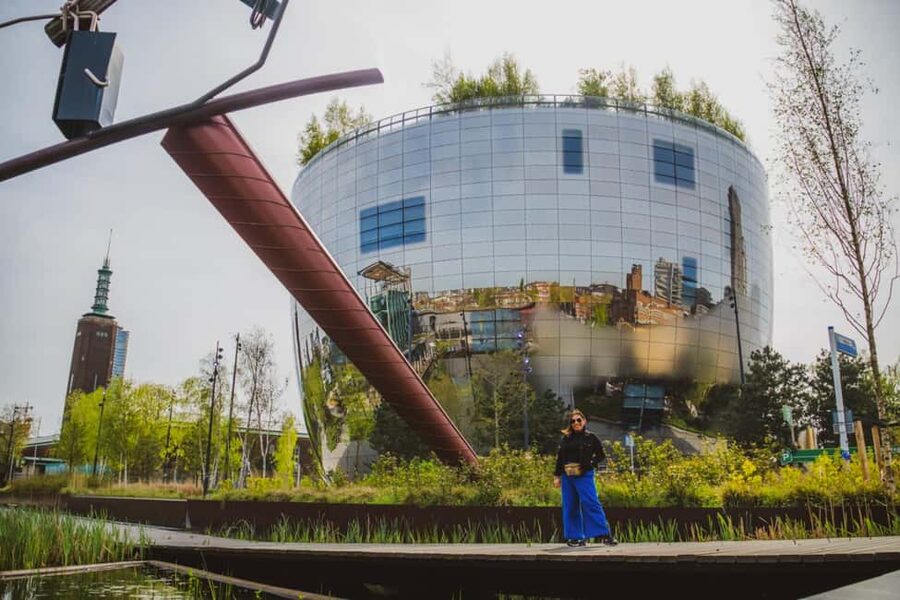
The route passes Depot Boijmans Van Beuningen, the eye-catching art storage building in the Museum Quarter. You do not go inside as part of this walk, but the exterior helps introduce Rotterdam’s habit of turning practical buildings into major pieces of architecture.
The Museum Quarter also gives the guide a chance to explain how art, public space, and new construction fit into the city. Bring questions if you are interested in museums, since the guide can suggest what to visit after the tour.
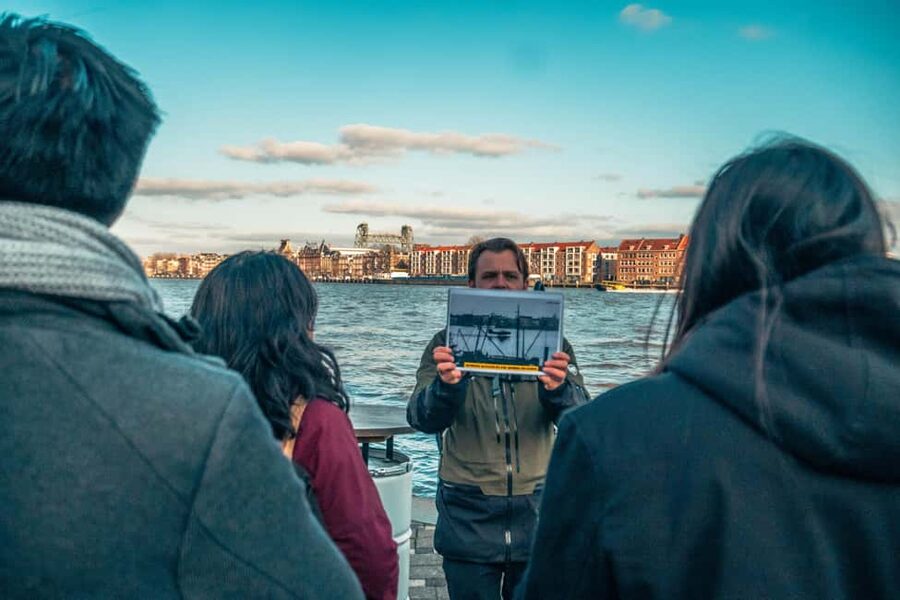
One useful feature is the set of A3 image sheets and other visual material. These help you compare Rotterdam before the war with the city you see today. They also allow the guide to show future developments and explain plans that are not obvious from street level.
Veerhaven and the Maritime Story
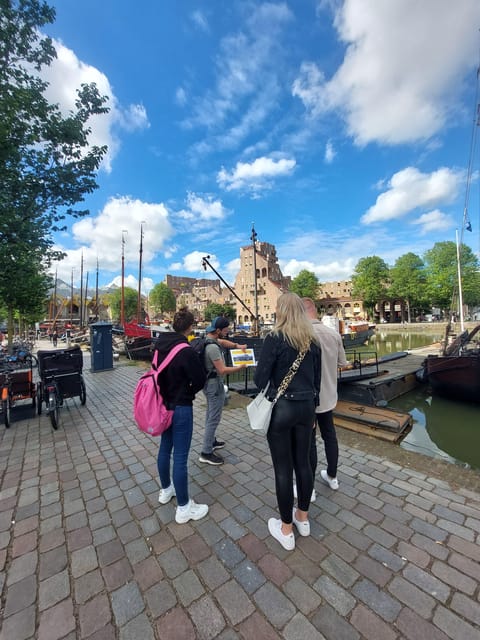
From the Museum Quarter, the walk passes Veerhaven, a more graceful waterfront setting than many people expect from Rotterdam. It is part of the city’s old maritime character and provides a useful contrast with the bold buildings seen later.
The route then moves toward the Erasmus Bridge and Leuvehaven. Leuvehaven is a particularly helpful stop because it connects Rotterdam’s identity to water, ships, trade, and industry. The tour passes here for about ten minutes, giving you time to take in the setting and hear how the port shaped the city.
This section is not just scenery. Rotterdam grew from a modest settlement into a major port because of its position, waterways, and commercial links. The guide connects those early advantages to the city’s present-day role and to the way waterfront land continues to be redeveloped.
Erasmus Bridge and the City’s New Image
The Erasmus Bridge is one of Rotterdam’s clearest symbols. Its elegant profile crosses the Maas and links the older central areas with newer development on the south side. From here, you get strong skyline views and a practical sense of how the city is arranged.
The bridge also fits the tour’s main theme: Rotterdam is willing to make large, visible changes. The guide uses the building to discuss design, engineering, and the city’s efforts to project a modern identity after wartime destruction.
You should have time for photographs, but the route keeps moving. The guide offers advice on good photo locations and may help take pictures, yet you should not expect unlimited time at every viewpoint. If photography is your main goal, the three-hour option gives you a little more breathing room.
Same streets, a different route:
- Amsterdam Anne Frank: Small-Group Walking Tour & Local Guide
★ 4.8 · 12,789 reviews - Anne Frank’s Story – Guided Walking Tour through Amsterdam
★ 5.0 · 11,619 reviews - Absolutely Amsterdam – the Essential Introductory Walking Tour
★ 5.0 · 3,629 reviews - Amsterdam: Anne Frank Guided Walking Tour in DE/EN/IT/ES
★ 4.9 · 3,107 reviews
The Maritime District and Oude Haven
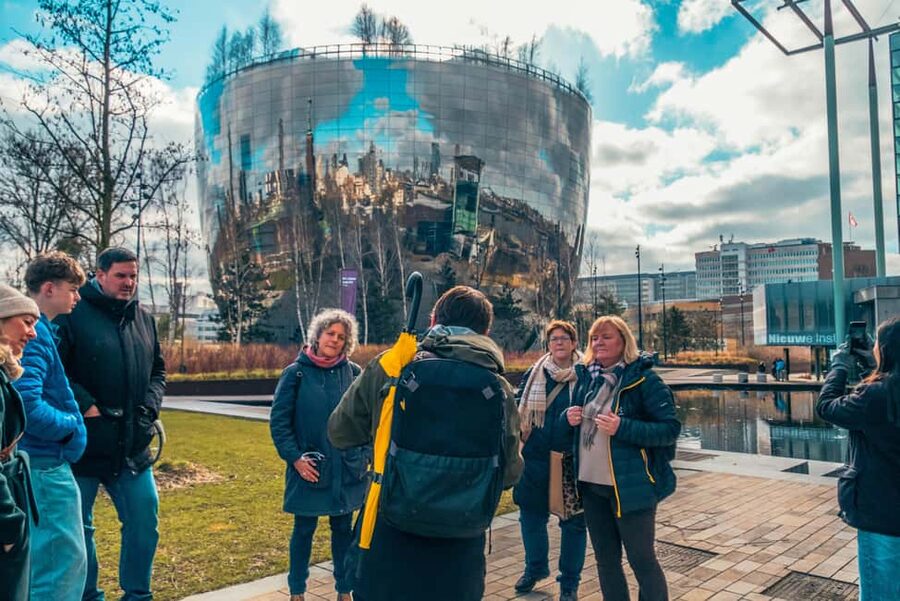
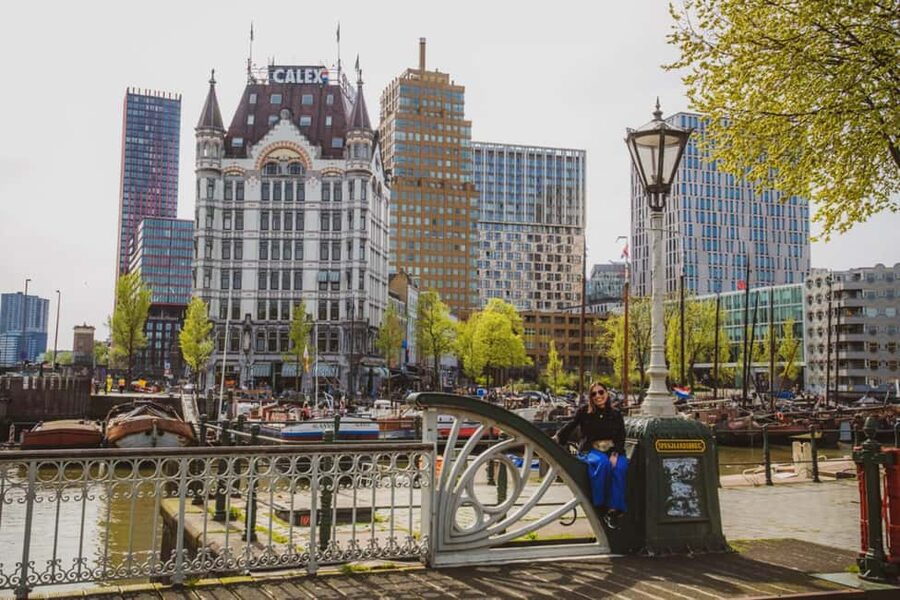
The walk continues through the Maritime District and toward Oude Haven. These areas help show the layers of Rotterdam. Water, historic harbor traces, modern apartments, and public spaces meet within a compact part of the center.
Oude Haven is especially useful for understanding how the city treats its past. Rotterdam is not an untouched old town, but it has preserved and reused selected maritime spaces. That makes the area feel different from the broad postwar center and helps you see that Rotterdam’s identity is not only futuristic.
The guide also points out less obvious places along the route. These may not be the first sights you find in a standard city guide, but they give the walk its local character. Yoreh is known for adding personal stories and small facts about places that could otherwise be passed without notice.
Cube Houses and Overblaak
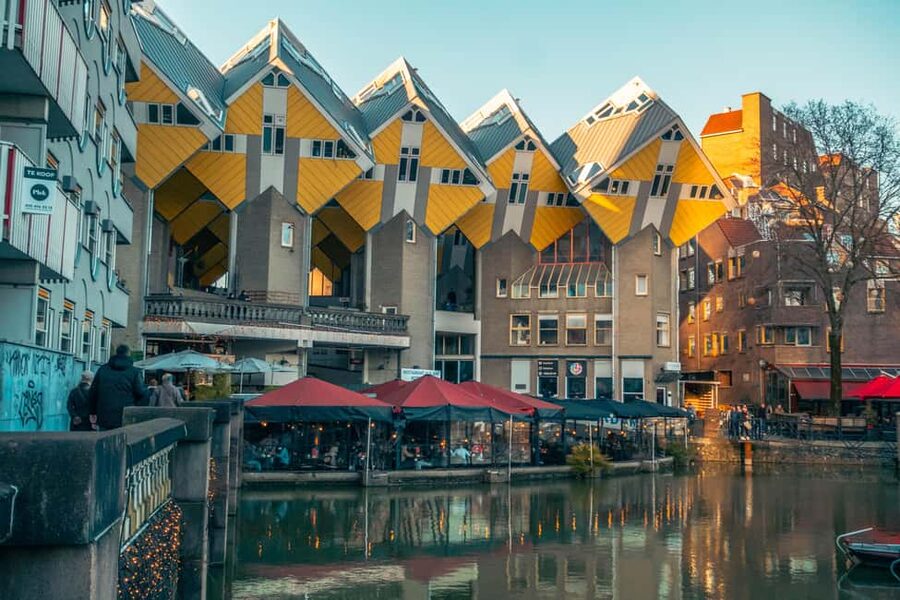
The Cube Houses are one of Rotterdam’s essential stops. Their tilted design challenges the usual idea of what a home should look like, and the Overblaak area gathers several bold buildings in a small space.
The tour walks through the Cube House area, but going inside a cube is not included. The Kijk-Kubus, or show cube, is only about a minute away, so you can visit it afterward if you want to see how the unusual angles work as living space.
This is a good example of the tour’s limits and strengths. You will not get an interior architecture visit or a long design lecture. You will get a clear explanation of the area, help understanding the design, and a good idea of whether you want to return for a closer look.
Families may find this part especially engaging because the buildings are easy to discuss and photograph. One parent noted that the guide kept children interested for the full three hours, but the walking distance remains something to consider with younger children.
Markthal as the Practical Finish
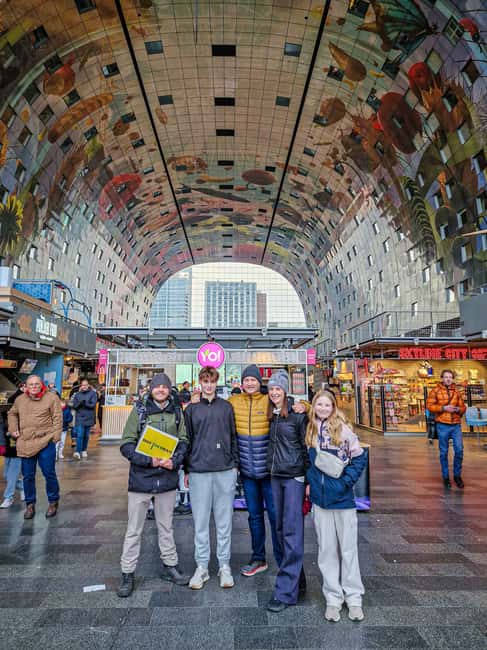
The walk ends inside Markthal, one of Rotterdam’s best-known modern buildings. Its huge interior artwork has led to comparisons with a modern Sistine Chapel, though the market works best when you also treat it as a practical food stop.
The guide offers suggestions about where to eat inside. That is helpful because the choices can feel overwhelming if you arrive hungry and have not planned ahead. You finish in a place where you can continue exploring, eat lunch, or return to nearby sights.
Ending here is one of the tour’s smart choices. After a long walk, you do not need to find your way to an isolated meeting point or backtrack across town. You can stop for food immediately, and the Cube Houses and Oude Haven are close enough to revisit on your own.
How Yoreh and Elmer Shape the Experience
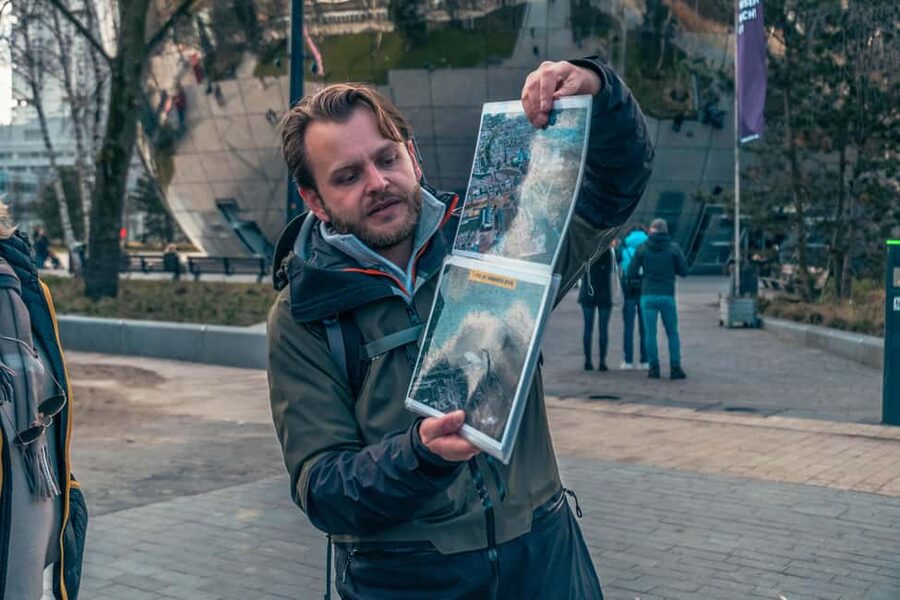
The guide is a major part of this tour. Yoreh is the name most often associated with the experience, while Elmer also leads some departures. Both speak Dutch and English, and the tour is built around local explanation rather than a fixed audio script.
Yoreh uses photographs, maps, charts, and image sheets to show Rotterdam before, during, and after WWII. He also discusses future construction plans. That visual comparison matters because many of the city’s changes are hard to imagine from the current streets alone.
His local connection adds another layer. Personal memories, childhood details, and opinions about the city make the tour feel less like a list of dates. At the same time, he is comfortable discussing both the good and less polished sides of Rotterdam, which makes the presentation feel more useful than a sales pitch.
Elmer has also been praised for answering questions and helping solo visitors feel welcome. The experience may run with only one or two people at quieter times, while other departures remain small-group walks. That can make the conversation more personal, though group size may vary.
What Is Included for $48

At $48 per person, this is not the cheapest way to see Rotterdam from the outside. The value depends on how much you want from a guide.
You are paying for a two to three-hour walk, a local guide, small-group attention, visual material, photo advice, a restroom break, seating at selected points, and a Dutch stroopwafel halfway through. You also receive practical suggestions for museums, restaurants, shopping, and places to return after the walk.
The strongest value comes from the amount of interpretation. If you only want photographs of the Cube Houses and Markthal, you can visit those without a tour. If you want to understand why Rotterdam was rebuilt as it was, how the harbor shaped the city, and what future plans mean, the price is easier to justify.
The food is a small extra, not a meal. The stroopwafel offers a pleasant energy boost, while the final Markthal stop gives you the chance to buy your own food.
Accessibility and Physical Effort
The route is wheelchair accessible, and stairs or steps can be avoided. An accessible restroom is available, and there are sitting opportunities during selected explanations.
That does not make the walk effortless. You may stand for longer periods, keep a steady pace, and cover roughly 11,000 steps. The tour is not recommended for people with back, hip, or foot problems, or for highly pregnant participants.
If you need frequent rest, ask about the route before booking. If you use a wheelchair, the stated step-free option is useful, but city events and weather can cause minor route changes.
Who Should Book This Rotterdam Walk?
I would recommend it most strongly for a first visit. The route gives you a working map of central Rotterdam and a list of places to explore later. Several people have used it as their first-day activity, and that makes sense: you finish knowing where the main districts are and how they connect.
It also suits anyone interested in architecture, WWII, ports, urban design, or photography. Families can enjoy the unusual buildings and visual materials, provided everyone is ready for the walking distance.
Solo visitors may appreciate the small-group format and the possibility of a very personal tour during quiet periods. Food-minded visitors will like the finish at Markthal, though the walk itself is not a food tour.
I would skip it if you want a slow, seated sightseeing experience, a detailed interior tour of the Cube Houses, or a route focused only on traditional Dutch architecture. Rotterdam’s appeal here is its mix of old traces and modern rebuilding.
Should You Book It?
Book this walk if you want Rotterdam explained rather than simply photographed. The strongest reasons are the WWII context, the comparison of old and future architecture, the local storytelling, and the useful finish at Markthal.
Choose the three-hour option if you have the stamina and real curiosity about the city. Choose two hours if you need a shorter introduction. Either way, wear good shoes, arrive ready to keep moving, and use the guide’s restaurant and museum suggestions to shape the rest of your visit.
FAQ
How long does the Rotterdam walking tour last?
You can choose a two-hour or three-hour version. The two-hour route offers a broad introduction, while the three-hour route includes more detailed stories and additional explanation.
How far do you walk?
The experience covers about five kilometers, or roughly 11,000 steps. Expect a steady walking pace rather than a very slow stroll.
Which Rotterdam sights are included?
The route passes Depot Boijmans Van Beuningen, Veerhaven, Erasmus Bridge, Leuvehaven, the Maritime District, Oude Haven, and the Cube Houses. You visit Markthal at the end.
Does the tour enter the Cube Houses?
The walk goes through the Cube Houses and Overblaak area, but entering a cube is not included. A show cube is about a minute away and can be visited after the tour.
Where does the tour finish?
The tour finishes inside Markthal. The guide can suggest places to eat there.
Who leads the tour?
The guides include Yoreh and Elmer. They lead tours in Dutch and English and provide local information about Rotterdam’s past, present, and future.
Is the tour offered in English?
Yes. The live guide languages are Dutch and English.
Is the tour wheelchair accessible?
Yes. Stairs and steps can be avoided on the route, and an accessible restroom is available. The route may change slightly during city events or extreme weather.
Is food included?
A stroopwafel is provided halfway through the walk. A full meal is not included, but the guide gives suggestions for food inside Markthal.
Can I cancel or pay later?
You can cancel up to 24 hours in advance for a full refund. A reserve-now, pay-later option is also available.
Just added around the Netherlands
- Dordrecht: Highlights and Hidden Gems Walking Tour★ 4.7 · 84 reviews
- Delft: City Center Walking Tour★ 4.7 · 88 reviews
- The Hague: City Walking Tour★ 4.5 · 156 reviews
- Amsterdam: Walking Tour, Jewish Museum & Synagogue Tickets★ 4.3 · 110 reviews
- Amsterdam: Jordaan District Local Food Walking Tour★ 4.8 · 311 reviews
- Amsterdam: Sex, Drugs, and Freedom Walking Tour★ 4.6 · 74 reviews
- Amsterdam: Small-group Guided Walking Tour (French/English)★ 5.0 · 289 reviews
- Amsterdam: Private Walking Tour with a Local★ 4.7 · 102 reviews
History Walking Tours, compared.


Berlin’s Best: 2 Hour Walking Tour Third Reich and the Cold War
Read our review →
Third Reich Berlin: Hitler and WWII Walking Tour
Read our review →
New Orleans Garden District History Walking Tour
Read our review →
Cartagena: Historic Center and Getsemaní Shared Walking Tour
Read our review →
Imperial Palace and Shogun Historical Walking Tour
Read our review →Browse the lists this tour appears in