
REVIEW · AMSTERDAM
Amsterdam: Highlights & History Walking Tour
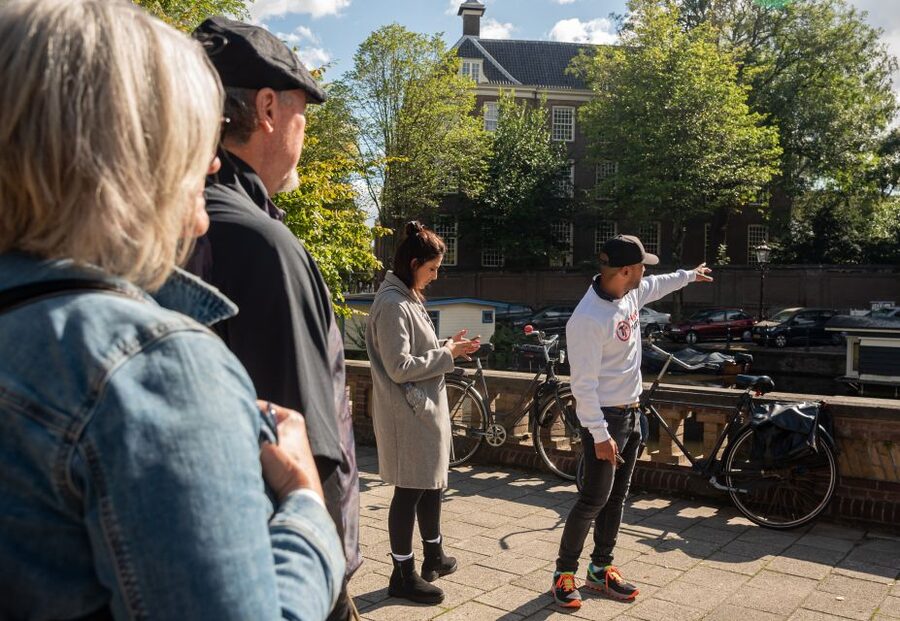
Amsterdam’s oldest streets tell the best stories. This two-hour walk takes you from the Old Church and Chinatown through crooked houses, the Red Light District, Dam Square, Begijnhof and the Flower Market, with the city’s past explained along the way. I like the small groups of up to eight and the mix of major sights with odd corners, hidden churches and Amsterdam’s narrowest street. The main drawback is pace: there is a lot to cover, and you will see famous places from outside rather than spend time inside them.
I also like that the guide brings humor and local context to subjects that can feel dry or awkward, including prostitution, trade, religion and the city’s growth from a fishing village into a commercial powerhouse. Guides including Robin, Aaron, James, Arie and Andrea have earned especially warm praise for making the walk feel like time with a well-informed local friend. Just confirm the exact hotel entrance before you go, since one participant found the meeting directions confusing.
Key points to know before you book
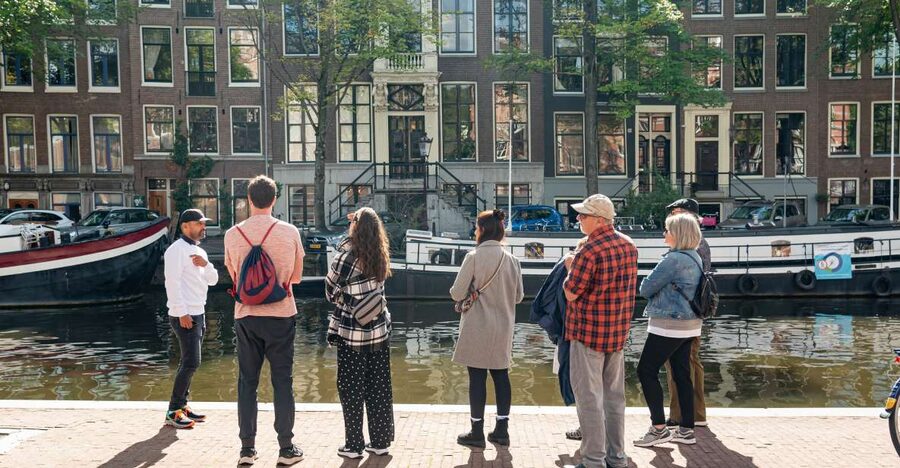
- Eight people maximum: A small group gives you a better chance to ask questions and hear the guide in narrow streets.
- Old Amsterdam in one sweep: The route links the Old Church, Chinatown, crooked houses, Dam Square, Begijnhof and the Flower Market.
- Stories beyond postcard sights: Expect discussion of prostitution laws, hidden churches, Dutch culture, trade and the city’s early development.
- Two hours, all on foot: This is a useful first look at central Amsterdam, but not a slow visit to each attraction.
- English, German or Spanish: Live guiding is offered in all three languages.
- Ends at Dam Square: The walk starts at the Park Plaza Victoria Hotel and finishes elsewhere, so plan your next stop from Dam Square.
A smart first walk through central Amsterdam
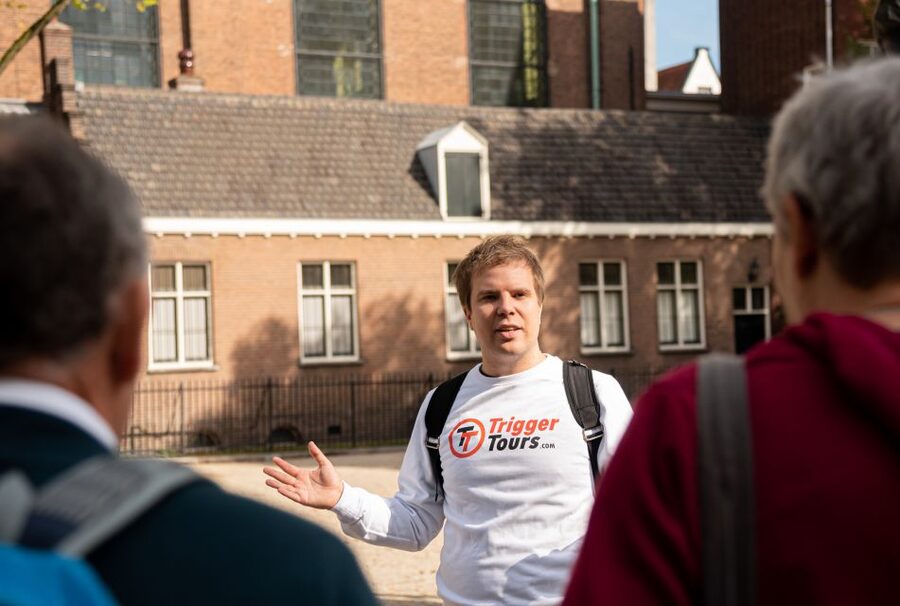
At $32 per person, this is priced as a moderately priced city orientation rather than a full sightseeing day. You are paying for two hours with a live local guide, a compact group and a route that connects many central sights without requiring public transport.
That value is strongest on a first visit. Amsterdam can feel confusing at street level, with canals, lanes, bridges, church towers and grand civic buildings often appearing close together on a map but feeling less obvious once you are walking. A guide helps connect the pieces and gives you useful context before you explore on your own.
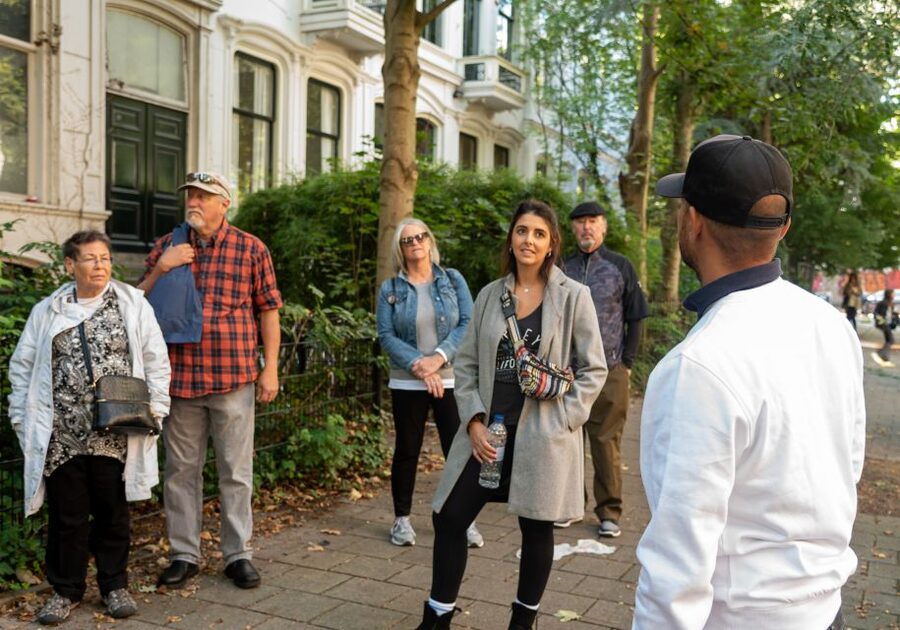
The group limit matters. With no more than eight people, the walk should feel more like a conversation than a speech delivered to a crowd. You can ask about a building, a street name or a custom as you go. Several guides, including Aaron and James, are praised for answering questions and adjusting the walk to the group.
The tradeoff is that the route covers a great deal in 120 minutes. You should expect frequent stops for explanation, but not long visits inside museums, churches or palaces. The Anne Frank House and Royal Palace are part of the city highlights you see along the way, but no admission to either site is included.
More History Walking Tours in the Netherlands
- Amsterdam History Walking Tour
★ 5.0 · 281 reviews - Anne Frank and Amsterdam Jewish History Walking Tour
★ 5.0 · 259 reviews - Amsterdam: Anna Frank and World War II History Walking Tour
★ 4.8 · 86 reviews
Starting near Amsterdam Central Station
Meet the guide in front of the main entrance of the Park Plaza Victoria Hotel. This is a practical central starting point, but you should check the entrance carefully before setting out. One participant reported that the meeting instructions pointed to the wrong hotel door, so allow a little extra time and confirm the precise spot in your booking information.
From there, the walk moves into the old center. This opening section is useful because it gets you into Amsterdam’s oldest streets quickly, rather than beginning with a long transfer or a distant neighborhood. You will want comfortable shoes. The tour is entirely a walking experience, and the route includes winding streets, alleys and canal-side paths.
The guide’s role is especially important here. Amsterdam’s center can look like a collection of attractive façades until someone explains why the buildings lean, how trade shaped the streets and how different communities made their mark on the city. The strongest guides add small details, jokes and local observations rather than reciting dates.
The Old Church, Chinatown and Amsterdam’s oldest streets
The Old Church is one of the key early stops. Its presence in the middle of the oldest district gives the guide a natural way to explain Amsterdam’s beginnings and changing religious life. You can expect historical background rather than a long interior visit.
The route also passes through Chinatown and the Red Light District. This is one of the more useful parts of the walk because the guide can explain how Amsterdam’s commercial center developed around trade, sailors, religion and nightlife. The discussion of prostitution is handled as part of the city’s legal and social history, including how legalization shaped the district over time.
That subject may not suit every family or every visitor, but it is presented as one part of Amsterdam’s past and present. The tour does not reduce the area to a spectacle. Its value is in explaining why the district exists where it does and how Dutch law and local attitudes have influenced it.
Look for the crooked houses and narrow streets as you go. These details are easy to photograph, but they are more interesting when connected to the practical limits of building on Amsterdam’s older urban plots. Guides have a lot of room here to add stories that you would not get from simply walking past the façades.
The narrowest street in Amsterdam is another quick but memorable stop. It is the sort of small feature that makes a walking tour worthwhile. You may find it on a map, but a guide saves you the trouble of locating it and gives the odd little lane a place in the broader story of the old center.
Dam Square and the Royal Palace
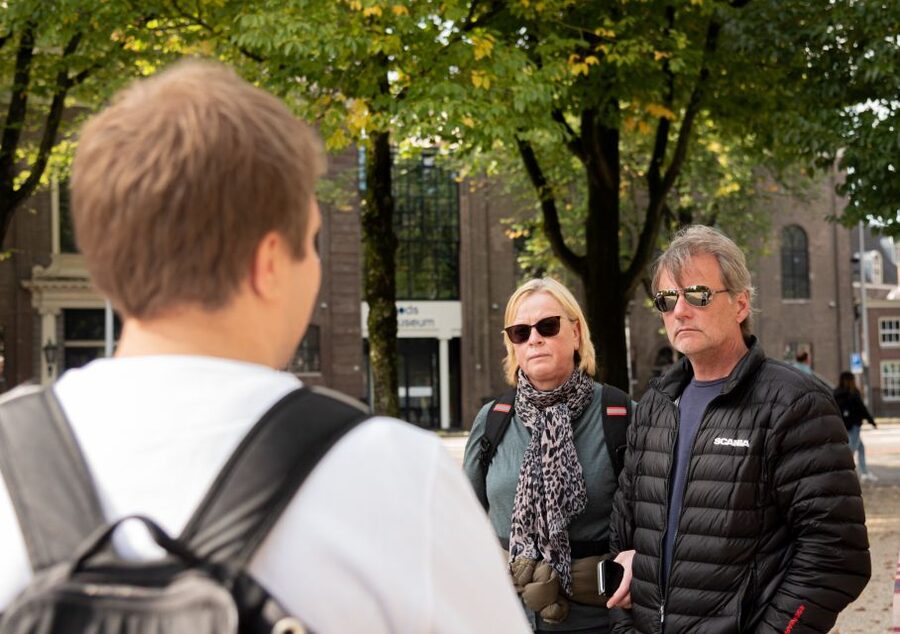
After the Old Town, the route continues toward the Royal Palace and Dam Square. Dam Square is the city’s main civic stage, and it helps explain Amsterdam’s shift from a small settlement to a major center of commerce and government.
The Royal Palace gives the guide another chance to discuss power, wealth and the public face of the Netherlands. The walk is designed for viewing and explanation, not a palace tour. If you want to see the interior, you will need a separate plan and ticket.
Dam Square is also where the tour ends. That makes it a useful finish for your day because you are left in one of the city’s most central locations, close to many other attractions and streets. It also means you should not assume you will return to the Park Plaza Victoria Hotel.
The stop is likely to feel familiar from photographs, but the guide helps place it in context. A good explanation can turn a grand square from a quick photo stop into a way of understanding Amsterdam’s civic identity. Guides such as James, Aaron and Arie have been praised for making buildings and streets feel connected rather than presenting them as isolated sights.
More History Walking Tours in Amsterdam:
- Berlin: Third Reich & Cold War Guided Walking Tour
★ 4.9 · 8,378 reviews - Munich: Third Reich & WWII Walking Tour
★ 4.6 · 6,181 reviews - Berlin’s Best: 2 Hour Walking Tour Third Reich and the Cold War
★ 5.0 · 5,486 reviews - Third Reich Berlin: Hitler and WWII Walking Tour
★ 5.0 · 3,301 reviews
Begijnhof and the quieter side of Amsterdam
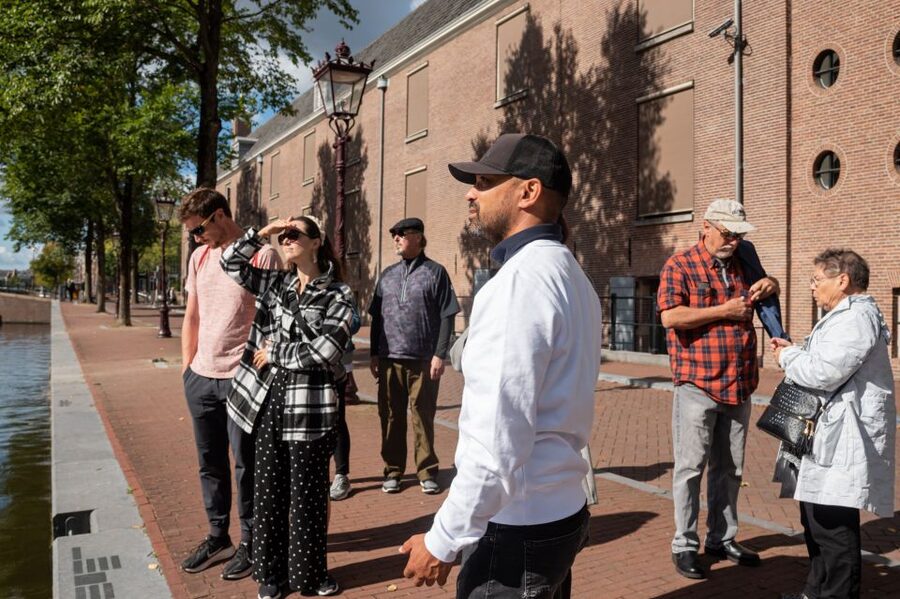
Begijnhof offers a change of mood. After the commercial energy of the old center and Dam Square, this enclosed courtyard gives the route a calmer setting and a chance to discuss religion, community life and the city’s older residents.
This is also where the tour’s balance works well. Amsterdam is not only canals, nightlife and grand façades. Places such as Begijnhof show a more private and reflective side of the city. The guide can explain why this courtyard matters without requiring a long detour from the main route.
You should keep expectations realistic. This is a short walking visit, not a dedicated architecture or religious tour. Its purpose is to add another layer to the city’s story. Some participants have especially valued the chance to find less obvious churches and quieter places they would not have noticed alone.
Canals and the Flower Market

The route includes a stroll around Amsterdam’s famous canals. This is a simple pleasure, but it is also a useful chance to understand how water shaped the city’s layout, trade and daily life. The guide can point out the relationship between canal houses, bridges and narrow streets while you continue toward the market.
The Flower Market is the final major feature before Dam Square. It is a floating street market devoted to flowers and related goods, and it gives the tour a more modern, commercial finish after the historical stops. You can browse the stalls and see the kind of flower-centered shopping for which Amsterdam is famous.
Food and drinks are not included, so treat the market as a place to look around rather than part of a provided tasting. The tour also does not promise time for shopping. If you see something you want, ask the guide how much time is available before the group moves on.
Ending near the Flower Market and Dam Square gives you a helpful central orientation. You can decide later if you want to return for more browsing, continue sightseeing or stop for a meal. The guide may also suggest places along the way. Aaron was specifically praised for making recommendations about spots passed during the walk.
Guides who make the difference
The strongest theme across this experience is the guide. Robin is praised for bringing Amsterdam to life with energy and strong local facts. Aaron appears often in the feedback and is described as friendly, interactive and good at mixing historical detail with humor. James is praised for his storytelling, depth of knowledge and ability to explain the city in an easy, personal way.
Other named guides include Arie, Aarre, Andrea, Scarlett, Lukas, David, Kiran, Michael, Agapios, Gio and Kevin. The exact guide depends on the departure, but the pattern is clear: the tour works best when the guide treats the city as a place where people live, not as a list of dates.
That personal style can make the difference between an ordinary orientation walk and a memorable one. You will hear about Dutch culture, local habits, art, politics, trade and the unusual stories attached to buildings. One guide even handled a group that included older people with mobility issues, a wheelchair user and a teenager with autism with care and patience.
Do not book this expecting one uniform scripted performance. Different guides will have different personalities and favorite stories. That is part of the appeal, but it also means the tone may vary from very factual to highly conversational.
Is two hours enough?
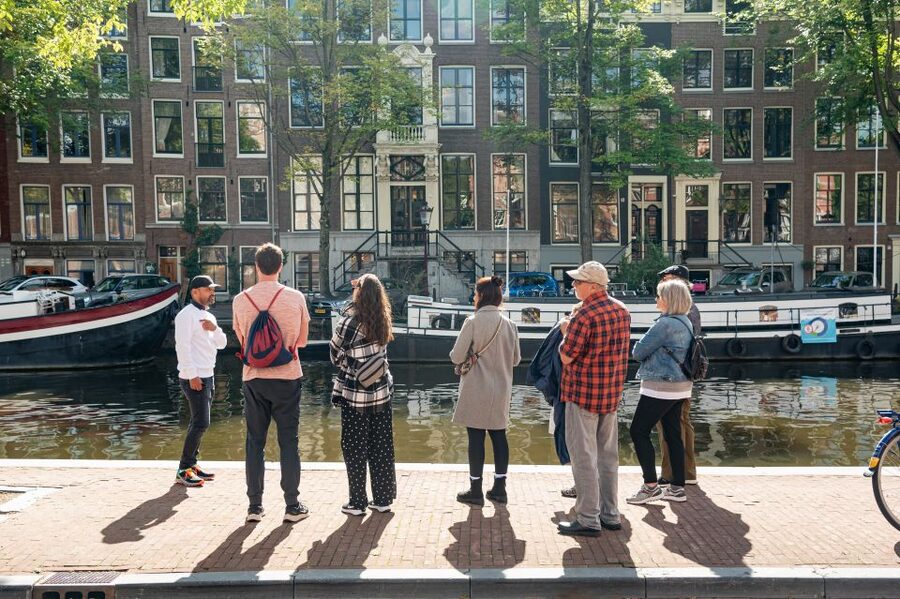
Two hours is a good length for a first introduction. It is long enough to cover a broad section of central Amsterdam without turning into an exhausting half-day walk. Several participants found that the time passed quickly, which suggests the storytelling keeps the route moving.
You will not examine every sight in detail. This is an overview with stops, not a series of museum visits. Think of it as a way to decide which places deserve a second look later.
The timing also makes the tour easy to fit into a short stay. You can take it near the start of your visit and use the guide’s suggestions to shape the rest of your time. It also works near the end of a trip if you want a final walk through the center, though first-time visitors will usually get more value from booking it early.
Because the tour is wheelchair accessible, it can suit a wider range of visitors. Still, the route includes old streets, alleys and city footways, so you should raise any mobility needs with the provider in advance.
Who should book this Amsterdam walk?
I would choose this tour if you want a clear introduction to Amsterdam’s center, enjoy learning through stories and prefer a small group. It is especially useful for first-time visitors, couples, families with older children and anyone who wants local guidance before exploring independently.
It also suits people who like social history. The route covers religion, trade, prostitution, architecture, immigration, local customs and civic life rather than focusing only on pretty canals. You will see the famous sights, but you will also hear why they matter.
I would choose something else if your main goal is to enter the Anne Frank House or Royal Palace, spend a long time inside churches or shop at the Flower Market. Those activities are not the focus here. This tour gives you orientation and context, then leaves you free to return to the places that catch your interest.
Practical details that affect your choice
The price is $32 per person, with a €1.50 city tax included. Food and drinks are not included. The tour is offered in English, German and Spanish, and a private group option is available if you want more control over the pace and conversation.
Free cancellation is available up to 24 hours before the start time, and you can reserve now and pay later. Check the available starting times when booking, since the departure schedule is not fixed in the details provided.
The overall rating is 4.8 from 266 ratings, with repeated praise for clear explanations, humor, personal attention and the small group format. I would give the greatest weight to the practical pattern behind that score: guides regularly make the walk feel friendly, answer questions and bring out places you might miss on your own.
Should you book it?
Book it if you want to understand Amsterdam before you explore it on your own. For $32, the combination of a small group, central route and lively local explanation offers good value, especially on a first visit.
Go in expecting a fast-moving overview, not entry to every major attraction. Confirm the Park Plaza Victoria meeting door, wear comfortable shoes and remember that the walk finishes at Dam Square. If those details suit your plans, this is a useful and enjoyable way to get your bearings while seeing both Amsterdam’s headline sights and its more unusual corners.
FAQ
How long does the Amsterdam Highlights and History Walking Tour last?
The tour lasts two hours.
How much does the tour cost?
The price is $32 per person. A €1.50 city tax per passenger is included.
Where does the tour meet?
Meet the guide in front of the main entrance of the Park Plaza Victoria Hotel.
Where does the tour end?
The tour ends at Dam Square, not at the starting point.
Which languages are available?
Live guiding is available in English, German and Spanish.
Is the walking tour wheelchair accessible?
Yes, the activity is listed as wheelchair accessible.
Is the tour limited to a small group?
Yes. The small-group tour is limited to eight people. A private group option is also available.
Can I cancel the booking?
Yes. You can cancel up to 24 hours in advance for a full refund. You can also reserve now and pay later.
Just added around Amsterdam
- Amsterdam: Walking Tour, Jewish Museum & Synagogue Tickets★ 4.3 · 110 reviews
- Amsterdam: Jordaan District Local Food Walking Tour★ 4.8 · 311 reviews
- Amsterdam: Sex, Drugs, and Freedom Walking Tour★ 4.6 · 74 reviews
- Amsterdam: Small-group Guided Walking Tour (French/English)★ 5.0 · 289 reviews
- Amsterdam: Private Walking Tour with a Local★ 4.7 · 102 reviews
- Amsterdam Walking Tour and Canal Cruise★ 4.6 · 117 reviews
- Amsterdam: Ghost Walking Tour and Dark History★ 4.8 · 118 reviews
- Amsterdam: Iconic Canals & Historic Sights Walking Tour★ 4.5 · 90 reviews
History Walking Tours, compared.



Berlin’s Best: 2 Hour Walking Tour Third Reich and the Cold War
Read our review →
Third Reich Berlin: Hitler and WWII Walking Tour
Read our review →
New Orleans Garden District History Walking Tour
Read our review →
Cartagena: Historic Center and Getsemaní Shared Walking Tour
Read our review →
Imperial Palace and Shogun Historical Walking Tour
Read our review →Browse the lists this tour appears in