
REVIEW · ROME
Rome: Colosseum, Palatine Hill, & Roman Forum Walking Tour
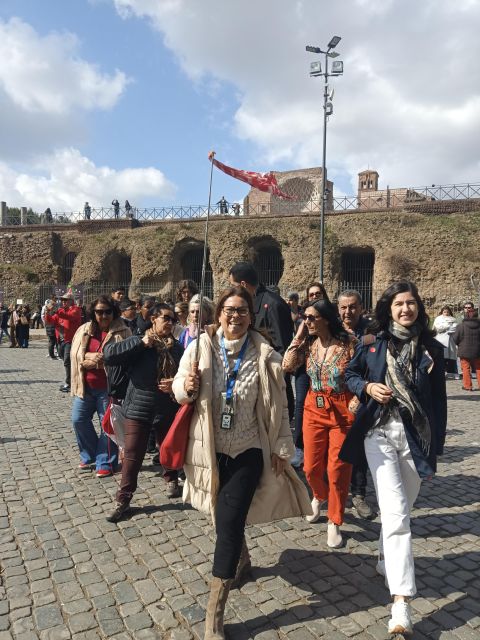
The best thing about this tour is its tight focus: in roughly two hours, you move through the three ancient sites that define Rome. You enter the first and second levels of the Colosseum, then walk among the Forum ruins before climbing Palatine Hill for broad views across the city.
I like the live storytelling, especially when your guide uses old photographs or reconstructions to explain what the ruins once looked like. I also like the practical format: access tickets are included, headsets are supplied for groups larger than five, and the maximum group size is 25.
The main drawback is the pace. The Colosseum section lasts about an hour, and the Forum and Palatine Hill involve uneven pavement, steps, and steady walking. On hot days, the exposed ruins can feel punishing, so an early start, water, and good shoes matter.
Key points to know before booking
- Three major ancient sites in one tour: The route covers the Colosseum, Roman Forum, and Palatine Hill rather than only the amphitheater.
- First and second Colosseum levels: You see more than the ground-level exterior and gain a better sense of the building’s scale.
- Strong guide-led experience: Guides including Alessandra, Ken, Radu, Andrada, and Felicity have been praised for clear explanations, humor, and easy-to-follow storytelling.
- A physically active morning or afternoon: Expect uneven paving, stairs, sun, and at least two hours on your feet.
- Useful group size limit: With no more than 25 people, the tour should be easier to follow than a very large walking group.
- Good value for a first visit: At $51 per person, the price includes entry tickets and guiding across all three sites.
Why this ancient Rome route works
Ancient Rome can be hard to read on your own. You see broken columns, slabs of marble, half-standing arches, and a few grand walls, but the original purpose of each space is not always obvious. A guide gives those fragments a human scale.
This tour follows a sensible order. The Colosseum gives you an immediate visual hit, the Forum explains how Roman public life worked, and Palatine Hill finishes with the city views and the legends tied to Rome’s beginnings. You are not simply checking off three names. You are moving from entertainment, to government and religion, to imperial power and foundation stories.
The two to two-and-a-half-hour length also suits a first day in Rome. You get a clear introduction without giving the whole day to ancient ruins. I would pair it with a quieter visit to a church, market, or neighborhood afterward, since the tour itself is concentrated and active.
More History Walking Tours in Rome
- Rome: Colosseum Arena, Roman Forum & Palatine Hill Tour
★ 4.5 · 1,874 reviews - Rome Food Tour in the Historic Centre with 8+ Food Tastings
★ 5.0 · 1,000 reviews - Rome: Forbidden History Walking Tour & Pub Crawl with Drinks
★ 4.9 · 688 reviews
Meeting near the Colosseum Metro station
You can begin at one of two listed locations: Piazza del Colosseo 21 or Largo Gaetana Agnesi 5. The more important instruction is to meet a member of the team on the upper level of the Colosseo Metro station, where staff hold a CITY WALKERS sign.
Give yourself extra time to find the correct level. The station area is busy, and the meeting point is not described as being inside the archaeological site itself. Have your booking details ready and look for the sign rather than waiting at the Colosseum entrance.
The tour runs in English, French, German, and Spanish. The guide is live, which is useful if you want to ask about a particular ruin or request a little clarification. In larger groups, headsets help you hear while walking, though one participant with a hearing aid found that the standard headset was not an ideal fit. If hearing support is important to you, contact the operator before booking.
Everyone passes through airport-style security. Do not bring alcohol, drugs, sprays, or aerosols, and carry a passport or identity card as requested. Security can affect the start, so arriving early is sensible.
Entering the Colosseum on levels one and two
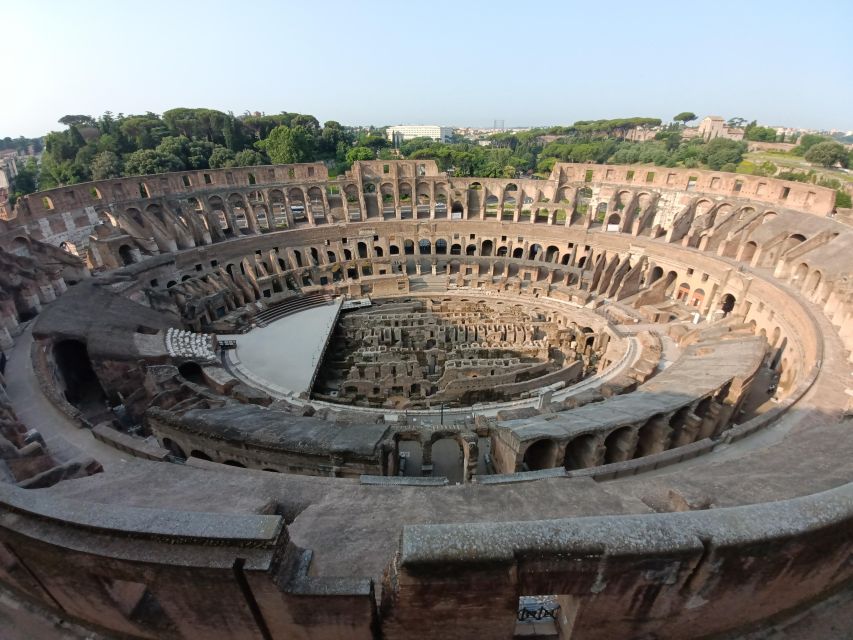
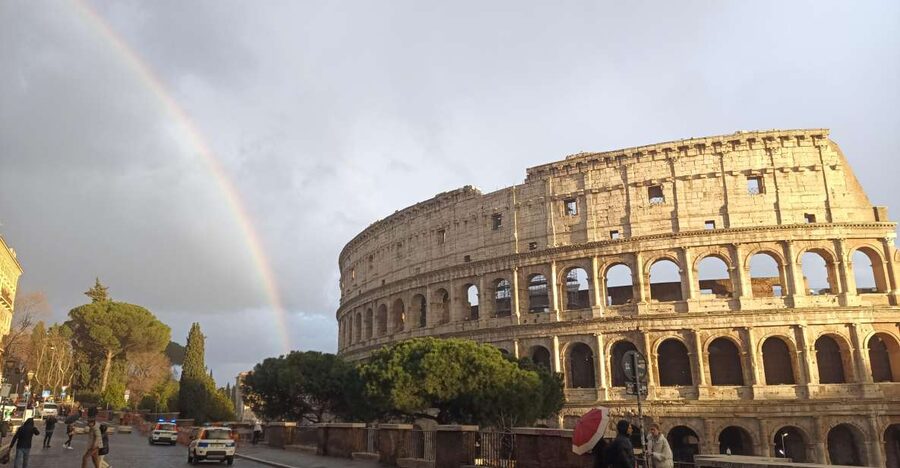
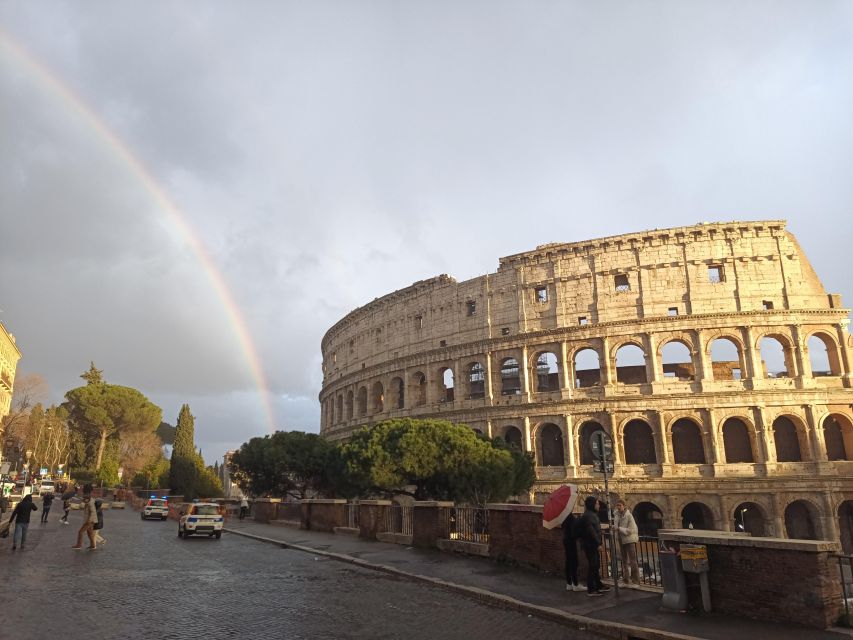
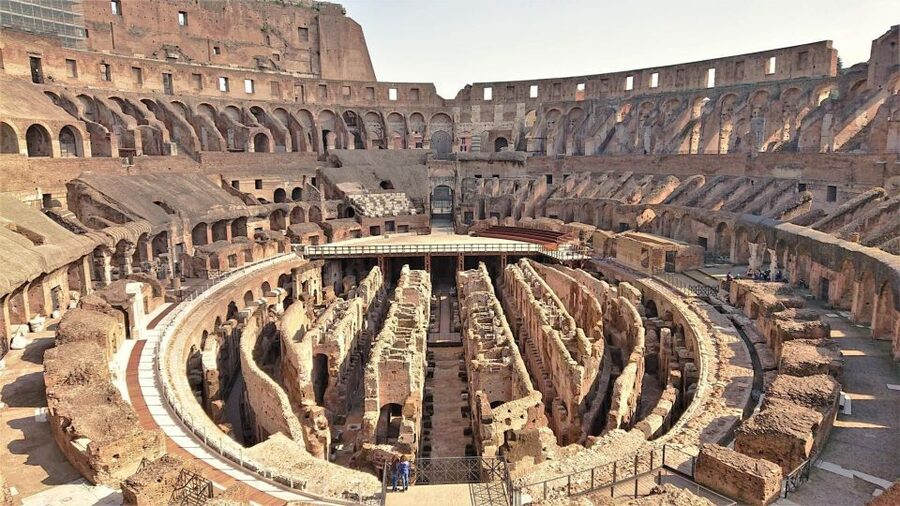
The Colosseum is the natural opening act. Even after seeing it in photographs, the first view from inside is startling because the building is much larger than its exterior suggests. The arches rise in repeated tiers, and the surviving stonework gives you a sense of the engineering behind the arena.
This tour includes the first and second levels of the Flavian Amphitheater. That is a worthwhile distinction. A quick outside stop gives you the facade, but the interior levels show how spectators were arranged and how the building functioned as a vast public venue.
Your guide’s job here is to turn architecture into a story. Strong guides have explained the design, the spectacles, the crowd, and the Roman ability to move people through a huge building. Ken has been singled out for making the subject entertaining, while Alessandra has used a folder of images to show how the Colosseum may have appeared in its complete form.
The allotted time is about one hour. That is enough for orientation and major facts, but it is not a slow architectural study. One guide-led group found the Colosseum portion faster than expected, even while enjoying the stories. If the amphitheater is your main reason for visiting Rome, you may want a separate return visit or a longer specialist tour.
Try to listen first and take photographs during the natural pauses. The guide will usually stop to explain a section, then allow a few minutes to look around. This balance matters because the Colosseum can become a blur of stone, crowds, and camera screens if you rush through it alone.
Walking through the Roman Forum
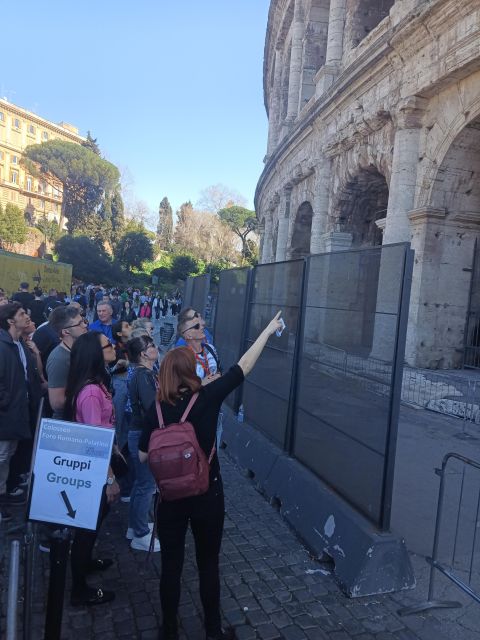
The Roman Forum is where the tour becomes less immediately obvious and more rewarding with guidance. The Colosseum tells you what a Roman arena was for. The Forum asks you to picture an entire city operating in one dense public center.
Here, your guide can point out the remains of temples, government buildings, meeting spaces, roads, and monuments. The stones are incomplete, so the spoken explanation does much of the work. Without context, you might walk past an important base or fragment without knowing why it mattered.
I especially value the Forum section because it broadens the visit beyond gladiators. This was the center of Roman public, political, religious, and commercial life. The ruins connect the famous empire to daily systems of law, worship, trade, ceremony, and power.
Allow for uneven ground. The route is a walking tour, not a paved museum circuit, and ancient streets do not provide an easy surface throughout. Wear shoes with good support, and do not expect to move quickly over every section.
The schedule gives the Forum about an hour. That is a fair amount of time for a first look, though the site is large enough that a history enthusiast could spend much longer. The guide helps you decide what deserves attention instead of leaving you to wander without a plan.
Same streets, a different route:
- Rome: Guided Food Walking Tour with Wine in Trastevere
★ 4.9 · 3,105 reviews - Rome: Trastevere & Campo de Fiori Street Food Walking Tour
★ 4.9 · 2,768 reviews - Rome: Paranormal Night Walking Tour & Secret Backstreets
★ 4.9 · 1,921 reviews - Rome: Trastevere Street Food Walking Tour with Local Expert
★ 4.8 · 1,784 reviews
Climbing Palatine Hill for the final views
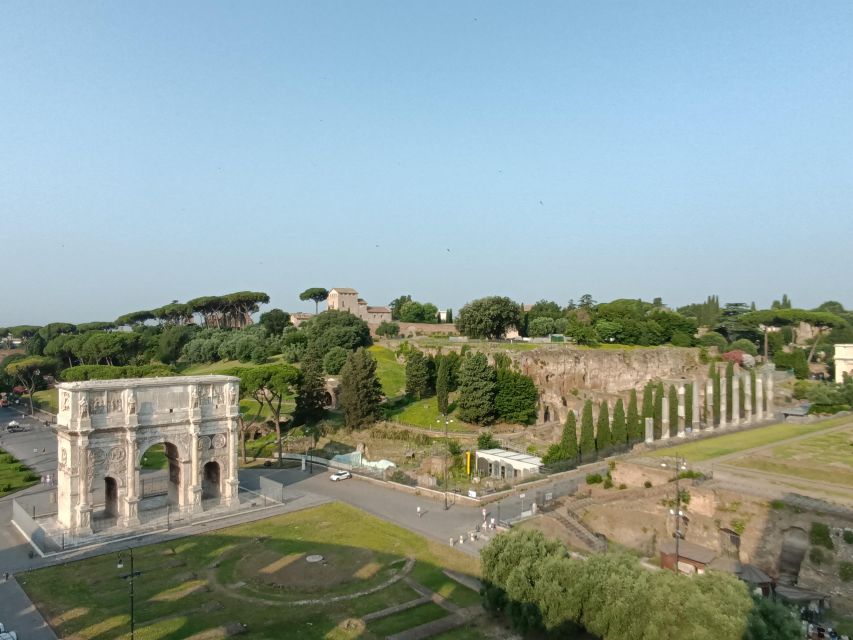
Palatine Hill takes about 30 minutes and provides a change of mood. After the enclosed scale of the Colosseum and the dense ruins of the Forum, the hill offers more open views across Rome.
The site also carries the legendary story of Rome’s foundation. That mix of myth, imperial residence, and elevated views makes Palatine Hill a fitting final stop. You begin to see how the ancient sites relate to one another rather than experiencing them as separate attractions.
The climb is not a major mountain walk, but it does involve stairs and sloping, uneven paths. If your knees, balance, or stamina are limited, this part may be uncomfortable. The tour is specifically not suitable for wheelchair users or people with mobility impairments.
Palatine Hill is also where the weather becomes especially important. Shade may be limited, and the ground can be tiring in direct sun. A guide may pause for water and rest, but you should still bring your own bottle. One useful tip from a summer visit is to use the public refill points along the route when available.
Guides who make the ruins easier to understand
The experience depends heavily on the individual guide. The strongest names attached to recent departures include Alessandra, Ken, Radu, Andrada, Felicity, Alex, Eni, and Giovanna.
Alessandra has been praised for an energetic delivery, clear explanations, and checking on the group’s water, shade, and rest needs. She has also used printed images to help bridge the gap between modern ruins and ancient buildings. Ken is known for humor and an engaging presentation, while Radu has combined passion for the Colosseum with entertaining historical stories.
Felicity, a retired teacher, has been described as especially good at answering questions and making complicated material easy to follow. Andrada has brought a strong grasp of Roman history, and Eni has been appreciated for clear English and a balanced explanation of both the Colosseum’s architecture and Roman society.
You cannot select a particular guide from the information provided, so expect some variation in style. That is normal with a rotating guiding team. The common thread is a focus on clear narration, questions, and stories rather than simply escorting you from one gate to another.
The headsets are included when the group has more than five people. They are useful in busy areas, where street noise and crowd movement can make a guide hard to hear. In a very small group, you may not receive one, but the guide should be close enough for normal conversation.
Heat, stairs, and the real walking effort
The tour is listed at two to two-and-a-half hours, but the actual length can vary with group size and pace. One summer group spent closer to three hours on the route, including at least two hours of walking on uneven paving and stairs.
That is not necessarily a problem. A slower group may get more pauses and a fuller explanation, while a faster group may finish nearer the advertised time. Still, plan your day around the longer possibility rather than booking a tight lunch reservation immediately afterward.
Rome’s heat can make this tour much harder than the distance suggests. A guide may try to keep the group in shade, but the archaeological area has open stretches. Bring water, wear a hat, and choose light clothing. An early departure is the best choice in the hottest months.
The tour runs rain or shine. Comfortable shoes are not optional here. Thin sandals, slippery soles, or shoes with little support will make the Forum and Palatine Hill less pleasant.
The experience is not suitable for wheelchair users or people with mobility impairments. If someone in your group needs frequent seating, level surfaces, or step-free access, this is not the right format.
Is $51 a fair price?
At $51 per person, the tour offers reasonable value if you want all three sites explained in one visit. The fee includes entry tickets and a guide, so you are paying for access as well as the structure and interpretation that help the ruins make sense.
The value is strongest for a first-time visitor. You avoid spending your limited Rome time figuring out which path leads to which monument, and you get a coherent explanation of how the Colosseum, Forum, and Palatine Hill fit together.
The price is less attractive if you prefer to linger for hours at one site or read every inscription at your own pace. The tour keeps moving, and the Colosseum section in particular may feel brief if you are fascinated by amphitheater design.
Food and drinks are not included. That is easy to manage, but plan a bottle of water before you begin. You may also want a meal or snack afterward rather than trying to eat during the archaeological visit.
The maximum group size of 25 is a useful middle ground. It is not a private tour, but it is more manageable than a very large crowd. Your experience will still depend on how well the group stays together and how clearly the guide handles pauses.
Cancellation and timing details
You can cancel up to three days in advance for a full refund. That gives you some flexibility if your Rome plans change, but the rule is not a last-minute cancellation policy.
Check the available starting times before booking because the duration varies between two and two-and-a-half hours. If you are visiting in summer, I would favor the earliest practical start. In cooler months, the timing matters less, though rain gear remains sensible because the tour operates in wet weather.
Bring your passport or identity card, comfortable walking shoes, and water. Security checks apply to everyone, and sprays or aerosols are not allowed.
Who should book this walking tour?
I would recommend it to a first-time Rome visitor who wants the essential ancient sights explained without giving up an entire day. It also suits families with older children, couples, and anyone who learns better from stories than from placards.
It is a particularly good choice if you want to understand the Forum and Palatine Hill rather than only photograph the Colosseum. The guides add the most value in those less obvious ruins.
I would be more cautious if you have limited mobility, dislike group tours, or want a leisurely photographic session. The uneven surfaces, stairs, heat, and fixed pace are real parts of the experience.
Should you book it?
Book this tour if you want a well-organized introduction to ancient Rome at a fair price. The combination of included tickets, three major sites, multilingual guides, and a group capped at 25 makes it a practical choice for a short visit.
Go in knowing that this is an active overview, not a leisurely archaeological seminar. Bring water, arrive early at the Colosseo Metro meeting point, wear proper shoes, and leave room in your schedule in case the group takes the full two-and-a-half hours. For most first visits, that tradeoff is worthwhile: you leave with a clearer picture of Rome than you would get by wandering among the ruins alone.
FAQ
How long does the Colosseum, Roman Forum, and Palatine Hill tour last?
The tour lasts about two to two-and-a-half hours. The exact length can change with the group’s pace and size.
Which parts of the Colosseum are included?
The tour includes access to the first and second levels of the Flavian Amphitheater, with about one hour of guided time inside.
Where is the meeting point?
A team member waits on the upper level of the Colosseo Metro station with a CITY WALKERS sign. The listed starting locations are Piazza del Colosseo 21 and Largo Gaetana Agnesi 5.
Which languages are available?
Live guides are available in English, French, German, and Spanish.
Are entry tickets and headsets included?
Access tickets are included. Headsets are provided for groups of more than five people.
Is the tour suitable for wheelchair users?
No. The tour is not suitable for wheelchair users or people with mobility impairments because the route includes uneven surfaces, stairs, and walking through the archaeological sites.
Just added around Rome
- Dark Heart of Rome – Facts, Legend & Mystery Walking Tour★ 4.5 · 329 reviews
- Alternative Walking Tour of Rome’s City Center & Hidden Gems★ 4.8 · 244 reviews
- Rome: Haunted City Night Walking Tour★ 4.9 · 616 reviews
- Rome Walking Tour with Piazza Navona, Trevi Fountain and Pantheon★ 4.5 · 676 reviews
- Rome: Guided Small Group Walking Tour of City Highlights★ 5.0 · 682 reviews
- Rome: Forbidden History Walking Tour & Pub Crawl with Drinks★ 4.9 · 688 reviews
- Best of Rome Walking Tour including Trevi Fountain★ 4.5 · 923 reviews
- Rome: Small-Group City Highlights Moonlight Walking Tour★ 4.9 · 949 reviews
History Walking Tours, compared.



Berlin’s Best: 2 Hour Walking Tour Third Reich and the Cold War
Read our review →
Third Reich Berlin: Hitler and WWII Walking Tour
Read our review →
New Orleans Garden District History Walking Tour
Read our review →
Cartagena: Historic Center and Getsemaní Shared Walking Tour
Read our review →
Imperial Palace and Shogun Historical Walking Tour
Read our review →Browse the lists this tour appears in