

REVIEW · INDIA
Bangalore: Palace, Temples, Fort & Markets Walking Tour
Bengaluru’s old center is a full-contact lesson in city life: teak palace, Hindu worship, Islamic history, a military fort, Jain carvings, and KR Market all fit into three hours. I like the small groups of up to 10 and the way guides such as Vijay, Vasuki, Raghu, and Vanaja connect the sights to the city’s long story. I also like the market stop, where flowers are strung into large decorations and daily trade happens inches from your feet.
The main consideration is the setting. You will walk through narrow, uneven, crowded streets shared by shoppers, vehicles, cows, workers, and porters. Some visitors choose not to enter the temples, which can shorten the tour, and opening hours may change with the season. Dress for temple rules, carry spare socks, and expect plenty of street noise.
Key points at a glance
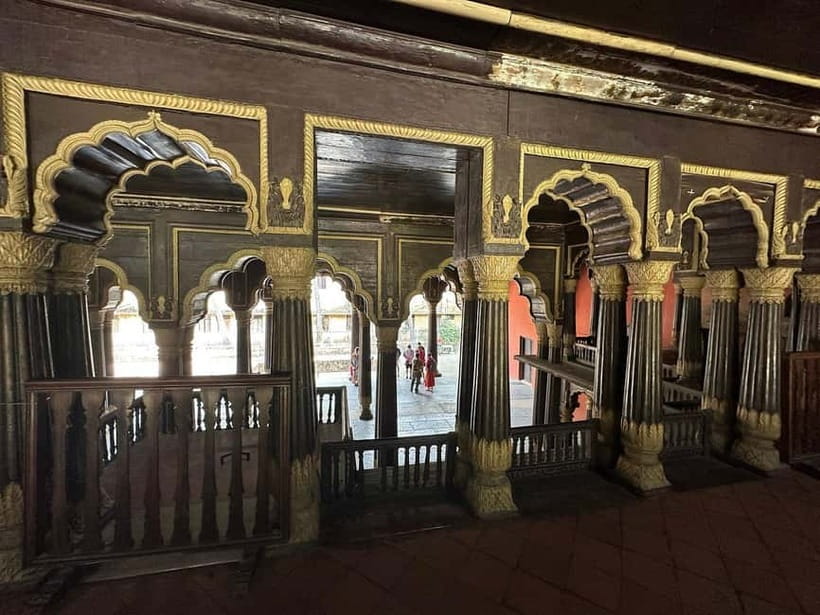
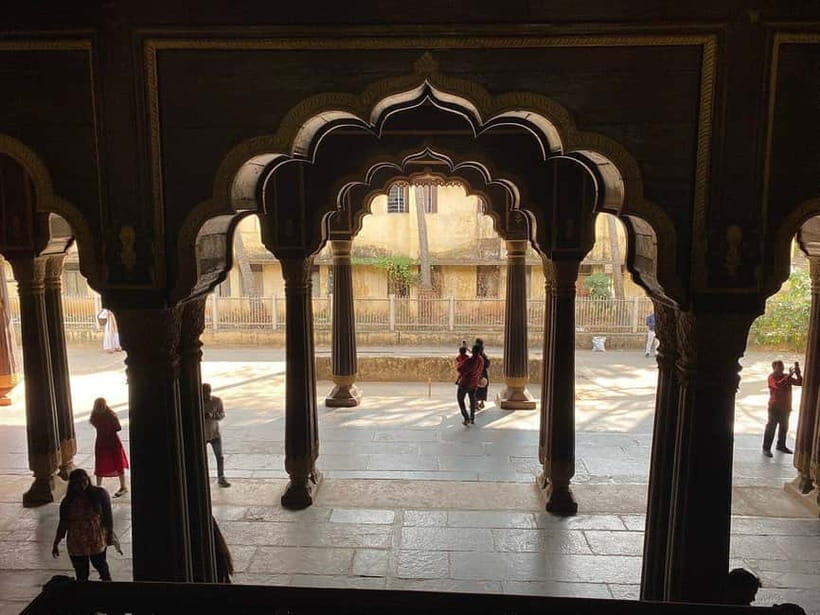
- Tipu Sultan’s Summer Palace: Begin inside a 230-year-old teak palace tied to the rule of Tipu Sultan.
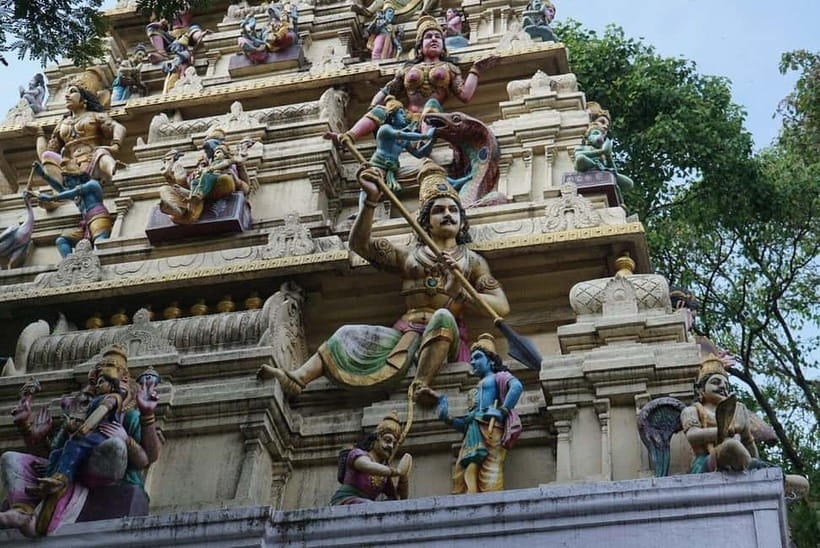
- A 320-year-old Vishnu temple: Watch Hindu worship and learn how to behave respectfully inside an active place of prayer.
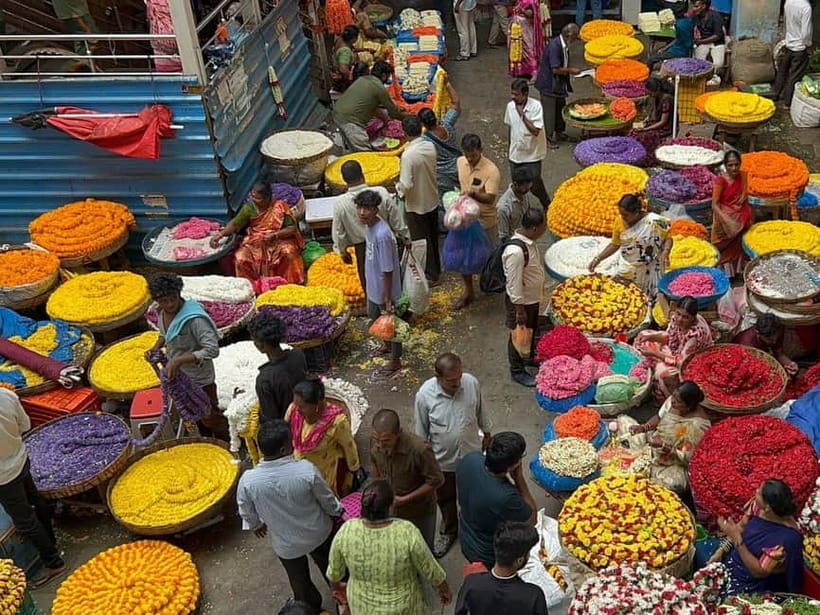
- KR Market at close range: See flowers, fruit, vegetables, porters, buyers, and sellers working in a tight urban space.
- History in layers: Follow Bengaluru from Kempegowda and Tipu Sultan through British development and the rise of the technology city.
- English-speaking local guides: Guides including Vijay, Vasuki, Raghu, Ramesh, and Vanaja are praised for storytelling, safety, photography, and help in the market.
- Three hours for $32: A good short introduction for a first visit, with hotel transport available for an extra charge.
Why this short walk works in old Bengaluru
Bengaluru can feel spread out, modern, and hard to read at first. The old center gives you a better starting point. Here, the city’s past is not locked away in one museum. It appears in a wooden palace, a temple doorway, a fort wall, a flower seller’s stall, and the traffic squeezing through the market streets.
I like the shape of this tour because it moves from royal history to ordinary work. You begin with rulers and architecture, then finish among people buying and selling the goods used every day. That change of pace helps you understand Bengaluru as a living city rather than a string of monuments.
Your guide is also important. The tour is in English, and the best guides do more than recite dates. Vijay is praised for careful explanations, photography tips, and calmly guiding people through crowded streets. Vasuki is known for warmth and humor. Raghu is especially good at combining historical detail with stories and folklore, while Vanaja has been praised for making sure each person in a group is included.
The exact guide depends on the day, but the format remains personal. A group limited to 10 people is small enough for questions and for a guide to keep an eye on everyone at the market.
More Castle and Palace Walks in India:
- Edinburgh Castle: Guided Walking Tour with Entry Ticket
★ 4.7 · 11,699 reviews - Venice: Doge’s Palace and St Mark’s Basilica Walking Tour
★ 4.4 · 6,291 reviews - Prague: 3-Hour Walking Tour of Old Town & Prague Castle
★ 4.7 · 5,696 reviews
Starting at Tipu Sultan’s 230-year-old palace
Meet your guide at the gates of Tipu Sultan’s Summer Palace. The palace is built from teak wood and is about 230 years old, making it an effective opening stop because it gives you an immediate sense of Bengaluru before the modern city took shape.
The palace is not a huge complex, so do not expect a full morning visit. Its value is in the material and the setting. Wood, age, and royal associations make a sharp contrast with the traffic outside. Your guide can place Tipu Sultan within the story of southern India and explain how Bengaluru developed under different rulers between the 16th and 18th centuries.
This is also where the walk begins to sort out the city’s names and identities. Bengaluru is often presented as India’s technology capital, but its older story reaches back to Kempegowda, Tipu Sultan, and the British period. The tour connects those chapters rather than treating the palace as an isolated photo stop.
Take a moment to look around before rushing on. The palace is an architectural visit, but it is also a useful pause before entering the more intense streets. The calm of the grounds will not last.
Bangalore Fort and the city behind the walls
The next stop is Bangalore Fort, with about 30 minutes set aside for the visit. The fort dates to the 16th century and was later renovated, so it represents several periods rather than one untouched structure.
I find forts most useful when a guide explains their purpose and changes over time. Here, the fort helps you understand the strategic and political importance of Bengaluru before it became a technology center. The palace showed royal life. The fort shifts the focus to defense, power, and the growth of the settlement around it.
Do not expect a vast fort complex or a long archaeological visit. The stop is compact, and much of its value comes through the explanation. Your guide may also point out the effect of later renovation, helping you separate older foundations from newer work.
This is a good place to ask questions about the city’s rulers and the British role in Bengaluru. The tour’s larger theme is how the city changed from a place associated with boiled beans to the Silicon Valley of India. The phrase is playful, but the point is serious: Bengaluru’s current identity rests on many earlier layers.
The Vishnu temple and the rules of respectful visiting
The Hindu temple visit brings you from history into living religion. This Vishnu temple is about 320 years old, and you may see devotees arriving for prayer. That is different from touring a silent monument. People are not there for your sightseeing, so your guide’s instructions matter.
Move slowly, keep your voice down, and watch where you step. Follow the guide’s directions about footwear, photography, and where you may stand. The supplied instructions specifically advise covering your shoulders and legs, and a headscarf is listed among the items to bring.
The temple is one of the strongest parts of the walk because it gives you a direct view of faith in daily life. You are not simply looking at carvings behind a barrier. You are seeing worship take place in an old building that remains part of the neighborhood.
Temple access and opening hours can change with the season. If you are planning around a particular prayer period, confirm the timing before booking. Also note that not everyone enters every temple. One visitor chose to stay outside, and that made the tour shorter. If you want the fullest experience, arrive prepared to follow the clothing rules and remove footwear as required.
A few more walking tours around India worth a look
- Fontainhas Heritage Walk by Make It Happen
★ 5.0 · 2,834 reviews - The Great Indian Food Tour: Old Delhi Food and Heritage Walk
★ 5.0 · 1,698 reviews - Group Guided Walking Tour in Fort and Colaba
★ 5.0 · 1,073 reviews - Spiritual City Walking Tour-THE Pushkar Route
★ 5.0 · 907 reviews
KR Market, where Bengaluru gets loud
KR Market is the sensory center of the walk. The official stop allows about 30 minutes, but the streets around it can feel much bigger than that short time suggests. You will work through sellers of flowers, fruit, and vegetables, with buyers, porters, workers, vehicles, cows, and pedestrians all sharing limited space.
This is not a polished food hall. It is a working market. The ground can be uneven, paths can narrow without warning, and the noise may rise quickly. Stay close to your guide, especially if you are taking photos or stopping to study a display.
The flower section is a particular highlight. Small flowers are arranged into long strings and large decorations, showing both the scale of the trade and the skill involved. The market helps explain local life in a way that a palace cannot. Food, worship, commerce, transport, and labor all meet here.
A good guide will do more than lead you through. Raghu has been praised for giving people time to consider purchases and for helping them speak with traders. Vijay has helped visitors ask questions and move safely through the crowds. If you want to buy spices, flowers, or another small item, bring Indian rupees and ask your guide for help with communication and prices.
Sunday can be especially crowded. That is part of the experience, but it may not suit anyone who dislikes close quarters. I would avoid carrying a large bag and would keep your phone and wallet secure. The tour is designed to help you manage the crowd, not remove you from it.
Some guides may include a coffee break after the market, and one highly praised experience included coffee as a welcome pause. Treat that as a possible extra rather than a guaranteed part of the fixed route.
A quiet finish at the Jain temple
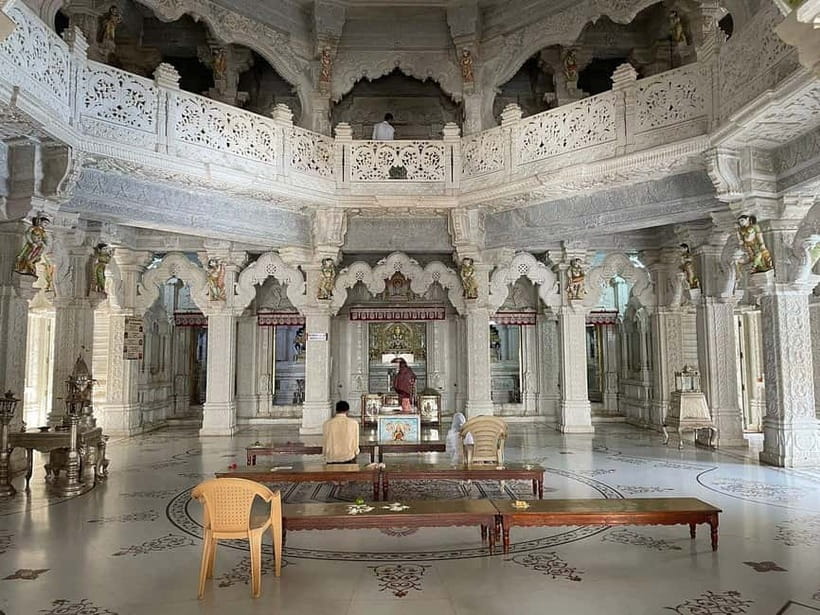
The walk ends at Shri Adinath Jain Shwetamber Mandir. After the market, the change in mood is striking. You move from noise and movement into a place valued for quiet, carvings, and inlay work.
The Jain temple is not simply a final monument on the schedule. It adds another religious tradition to the day and lets you compare different approaches to worship and design. Your guide can explain the role of the temple and point out details that are easy to miss if you walk through alone.
Dress rules are important here. Cover your shoulders and legs, and avoid short skirts, sleeveless shirts, and see-through clothing. Spare socks are a smart idea because temple visits may involve removing footwear, and the streets around the market are not the place for bare feet.
The temple is the finishing point, not the place where transport is provided automatically. If you need to return to your hotel, arrange the optional transport service in advance. Some guides have also helped solo visitors find the metro or arrange a ride after the walk, but that extra assistance should not be assumed as part of the standard price.
The practical side of a three-hour city walk
At $32 per person, this is good value if you want a guided introduction rather than a private car tour. The price includes the guide, entry to the palace, Vishnu temple, Bangalore Fort, and Jain temple, plus the market visit. Food, drinks, and transport are not included.
The value comes from the range of places covered in a short time. You receive royal, military, religious, and commercial history in one compact route. A solo visitor or couple could spend much of the day trying to identify these places and work out how to move between them. The guide saves that effort and adds context.
Three hours is long enough to see a useful slice of old Bengaluru, but short enough to fit around other plans. It is especially handy if you have only one day in the city. One solo visitor used the tour as a first look at Bengaluru and then found the metro afterward, while another had help arranging a ride back to the hotel.
Do not choose this tour expecting a slow architectural study. The market and street sections set the pace, and the route includes uneven roads and crowded lanes. It is light walking for many people, but the practical notes still say to be ready for a lot of walking. Wear walking shoes, bring water, and allow extra time if you want to browse or take photographs.
Hotel pickup and return are available for an additional fee. This could be useful if you are new to Bengaluru or staying far from the palace, but ask for the price before booking. The normal meeting point is at the palace gates, so you are responsible for getting there unless you arrange transport.
Free cancellation is available up to 24 hours before the start time, and you can reserve now and pay later. Starting times vary, so check the available time when you book.
Who will enjoy this Bangalore walking tour
I would choose this for a first visit, a short stay, or a free morning between longer trips. It gives you enough background to make later visits to Bengaluru more rewarding. The mix is also useful if your interests are broad rather than focused only on architecture.
It suits solo visitors because the guide can help with directions, street crossings, the market, and the trip afterward. It also suits couples and small groups who want to ask questions without being lost in a large crowd.
You should be comfortable with sensory overload. The market is crowded, the streets are noisy, and you may walk through tight spaces. Anyone who wants quiet galleries, air-conditioned transport, or a carefully controlled route should choose a different kind of sightseeing.
The tour is also a good fit for people curious about religion, provided you approach the temples respectfully. You will need to follow clothing and footwear rules, and you should accept that access can change with temple schedules or local conditions.
Should you book the old Bengaluru walk?
Book it if you want to see how Bengaluru’s past and present meet in a small area. The palace, fort, temples, and market offer a strong three-hour introduction, and the guides are the tour’s biggest asset. Vijay, Vasuki, Raghu, and Vanaja are all noted for clear explanations, friendly care, storytelling, photography help, or calm navigation through the market.
Skip it if crowded streets, uneven ground, religious-site rules, or market noise would make you uncomfortable. Also think twice if you want a long visit at each monument, since the route covers several stops in a short time.
For most first-time visitors, I would book this early in the stay. Wear modest clothing, bring socks, use sturdy shoes, carry some rupees, and arrive ready for the city as it is. That means no polished performance, just old buildings, active temples, hard-working markets, and a guide helping you read the scene.
FAQ
How long does the Bangalore Palace, Temples, Fort and Markets Walking Tour last?
The tour lasts three hours. Starting times vary, so check availability when booking.
Where does the walking tour begin and end?
The guide meets you at the gates of Tipu Sultan’s Summer Palace. The tour finishes at Shri Adinath Jain Shwetamber Mandir.
What places are included in the tour?
The route includes Tipu Sultan’s Summer Palace, Bangalore Fort, a 320-year-old Vishnu temple, KR Market, and Shri Adinath Jain Shwetamber Mandir.
What should I wear to visit the temples?
Cover your shoulders and legs. Short skirts, skirts, sleeveless shirts, and see-through clothing are not allowed. Bring a headscarf and spare socks.
Is transport included?
No. Transport to the meeting point and back to your hotel is available for an additional fee if arranged in advance.
How large is the tour group?
The tour is a small-group experience limited to 10 participants. It is conducted in English by a live guide.
Just added around India
- Evening Walking Tour with Fire Rituals-The Pushkar Route★ 4.9 · 108 reviews
- Chennai Walking Tour ( 2 hours guided tour)★ 3.8 · 85 reviews
- Agra: Street Food Walking Tour, Spice Market, & Tuk-tuk Ride★ 4.9 · 102 reviews
- Private Guided Walking Tour in Bandra Queen of Suburbs★ 5.0 · 383 reviews
- Breakfast Walk in Old Delhi★ 5.0 · 449 reviews
- Private Heritage Walking Tour in Jaisalmer Fort and Old Bazaar★ 5.0 · 306 reviews
- Jodhpur Blue City Heritage Walking Guided Tour★ 5.0 · 240 reviews
- Old Delhi Heritage Walking Tour★ 5.0 · 247 reviews
Castle and Palace Walking Tours, compared.

Edinburgh Castle: Guided Walking Tour with Entry Ticket
Read our review →
Doge’s Palace and St Mark’s Basilica Walking Tour
Read our review →
3-Hour Walking Tour of Old Town & Prague Castle
Read our review →Edinburgh Castle: Guided Walking Tour with Entry Ticket
Read our review →
Edinburgh Castle Guided Walking Tour in English
Read our review →


Walking Tour of Split and Diocletian’s Palace
Read our review →Browse the lists this tour appears in