
REVIEW · NEW ORLEANS
New Orleans: French Quarter Food History Walking Tour
New Orleans puts its story on a plate, and this three-hour French Quarter food walk lets you taste that story stop by stop. You move from Cajun gumbo and boudin to a catfish po-boy, muffuletta, pralines, and bananas Foster bread pudding while your guide connects each dish to the people and traditions that shaped the city.
I like the broad menu, especially the chance to try both the po-boy and muffuletta, two sandwiches that define New Orleans in very different ways. I also like the guides’ teaching style. Beth, Gary, John, Meg, Kat, and the guide known as the Professor have all been praised for making the food, architecture, and local history easy to follow.
The main drawback is that you do not choose every sample, so seafood-averse diners may have trouble with the standard menu. At $85, the tour is not a bargain snack crawl, though the food portions, guide, water, and server tips make it reasonable if you want a meal-sized introduction to New Orleans cuisine.
Key points at a glance
- Gumbo starts the story: Cajun-style gumbo with warm potato salad gives you a hearty first taste at 3rd Block Depot.
- Two classic sandwiches: You sample a fried catfish po-boy and a meaty muffuletta during the walk.
- History comes with every bite: Guides tie food to New Orleans culture, migration, neighborhoods, and local customs.
- A real range of stops: The route includes restaurants, a hot sauce bar, a candy shop, and casual food spots.
- Vegetarian menu available: Request black-eyed pea soup, veggie jambalaya, portobello po-boys, and other meat-free dishes when booking.
- Come hungry: The samples are generous enough that many people treat this as lunch rather than a light tasting.
Why this French Quarter food walk works
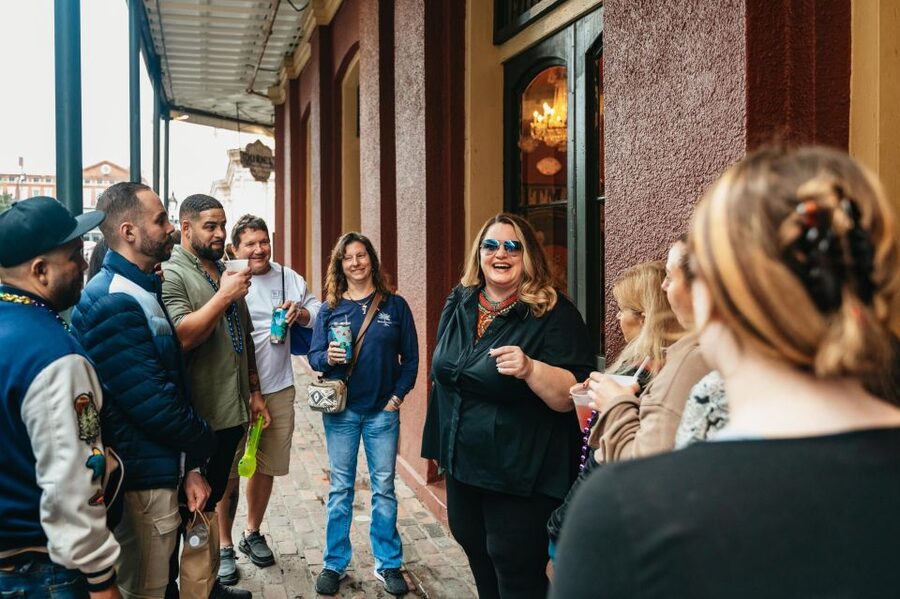
The best food tours do more than place small plates in front of you. They explain why those dishes exist, how local ingredients and communities shaped them, and where they fit into daily life.
That is the strength of this tour. You cross the Vieux Carré, the French Quarter’s Old Square, while moving between sit-down restaurants, counter-service spots, a candy shop, and a hot sauce bar. The route gives you several ways to experience the neighborhood instead of keeping you at one restaurant table.
Your guide is central to the experience. Beth is often praised for her storytelling and enthusiasm for New Orleans. Gary is noted for linking the food to the city’s past, while John and the Professor bring a calm, classroom-like approach. Meg and Kat have also been praised for keeping the mood friendly and the pace comfortable.
You should expect history, but not a formal lecture that stops the tour cold. The strongest guides use each tasting as a prompt. Gumbo leads to Cajun cooking. Red beans and rice opens a window onto a familiar local meal. The sandwiches give you a way to understand the city’s seafood and Italian American influences.
The English-language tour runs with up to nine food tastings in the full description, while the included details specify up to eight samples. The exact count can vary, so think of the number as a generous tasting route rather than a fixed restaurant menu.
More History Walking Tours in New Orleans
- New Orleans Garden District History Walking Tour
★ 5.0 · 2,879 reviews - New Orleans Food and History Walking Tour
★ 5.0 · 1,544 reviews - New Orleans Cocktail History Walking Tour in the French Quarter
★ 5.0 · 604 reviews
Starting with gumbo at 3rd Block Depot
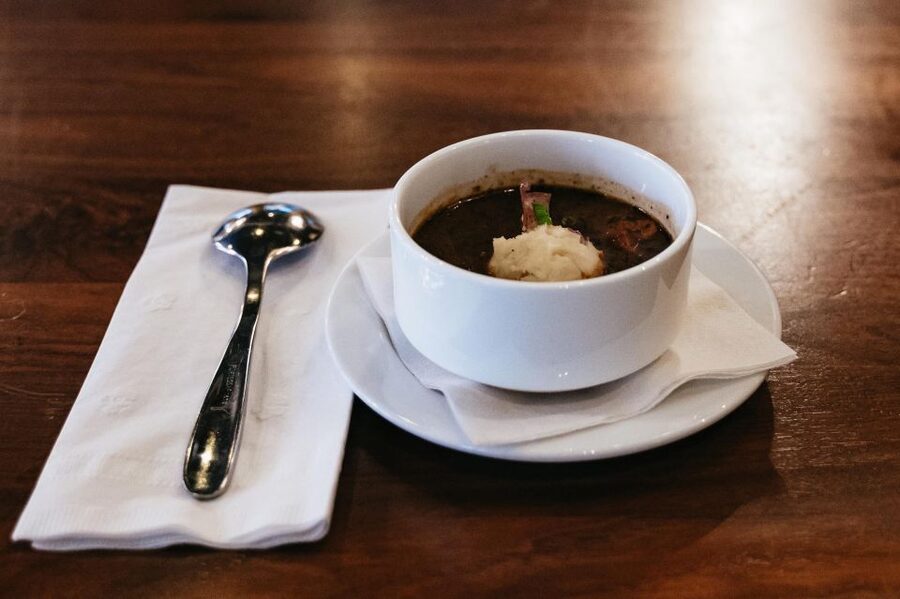
Meet your guide inside 3rd Block Depot at 316 Chartres Street. This is not just a meeting point where you wait for the real tour to begin. It is your first food stop, with rustic Cajun-style gumbo served with warm potato salad.
Gumbo is an ideal opening dish because it gives you a taste of New Orleans cooking in one bowl. It is hearty, seasoned, and suited to the city’s long tradition of making a satisfying meal from a mix of ingredients. The warm potato salad adds another texture and keeps the first stop from feeling like a token spoonful.
Give yourself time to arrive hungry. The first serving is substantial enough to set the pace for the rest of the afternoon, and you still have several savory tastings ahead.
One practical point: one person found the staff at this opening stop too loud while the guide was speaking. That may not happen on every visit, but it is worth knowing that this first restaurant can be active and noisy. Stay close to your guide so you do not miss the opening explanation.
Hot sauce, pralines, and the sweet side of the Quarter
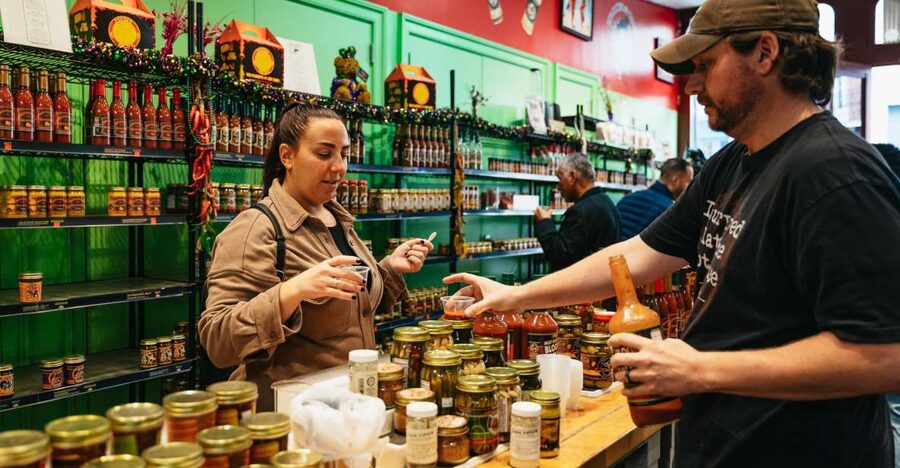
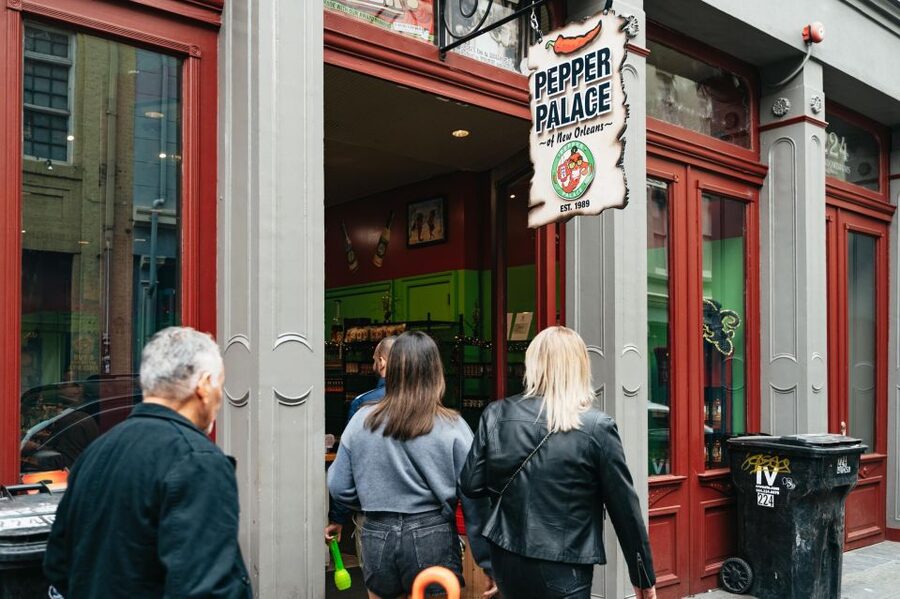
After about a five-minute walk, the group heads to a hot sauce bar. You can sample dozens of fiery varieties, so this is the stop where moderation matters. Try small amounts first. A sauce that seems manageable on a tasting spoon can linger through the next several dishes.
The hot sauce stop adds playfulness to the tour, but it also shows how seasoning is part of the New Orleans food conversation. You are not simply eating food that is hot for its own sake. You are learning how sauces can change the character of a dish and how local diners use them.
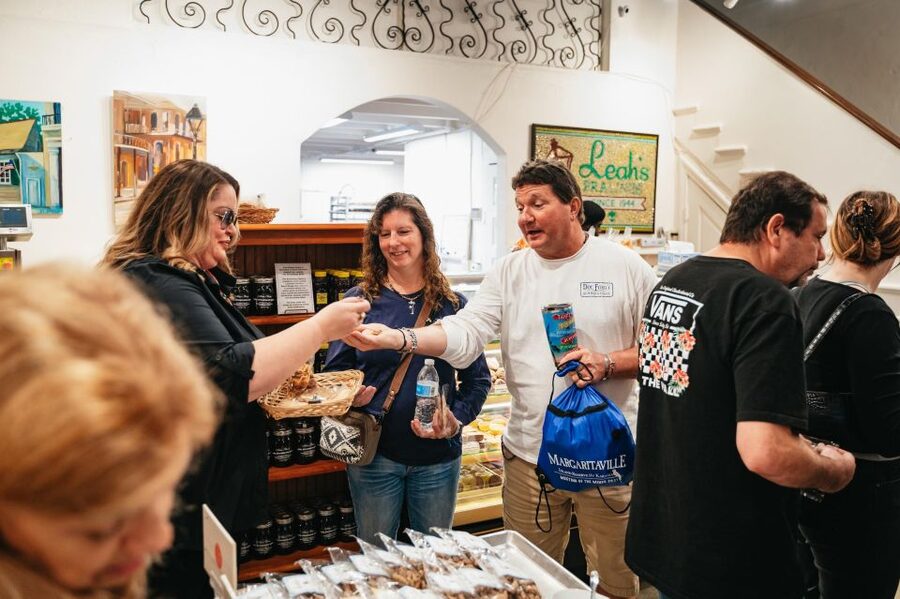
Next comes Leah’s Pralines, where you sample a traditional Creole sweet or the newer bacon pecan brittle. This is a useful contrast after gumbo and hot sauce. Pralines bring sugar, pecans, and a softer, candy-like texture to the table, while the brittle offers a saltier, crunchier variation.
These stops are also a break from restaurant seating. You move through a shop and a specialty counter, which keeps the route varied and gives you a better feel for the commercial side of the French Quarter.
The po-boy and Louisiana seafood tradition
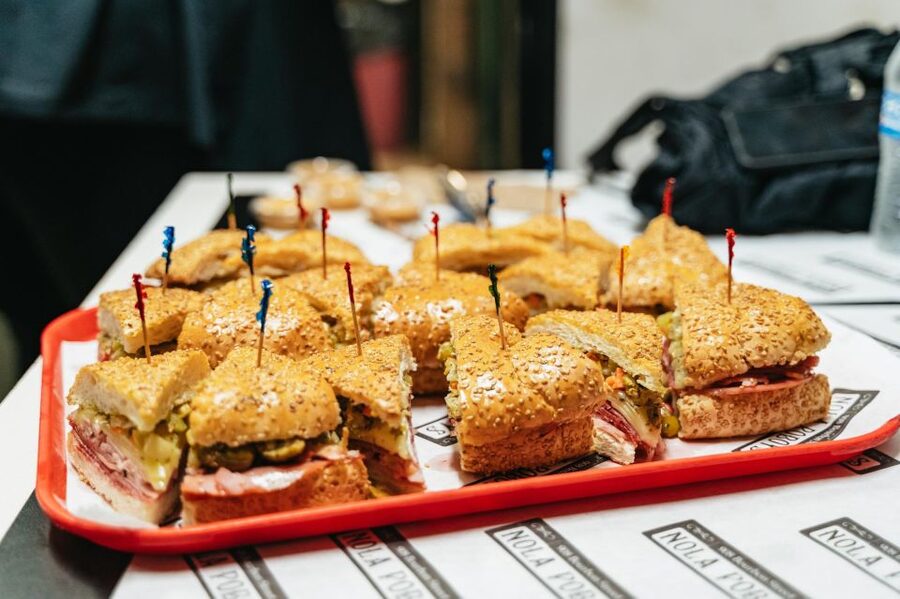
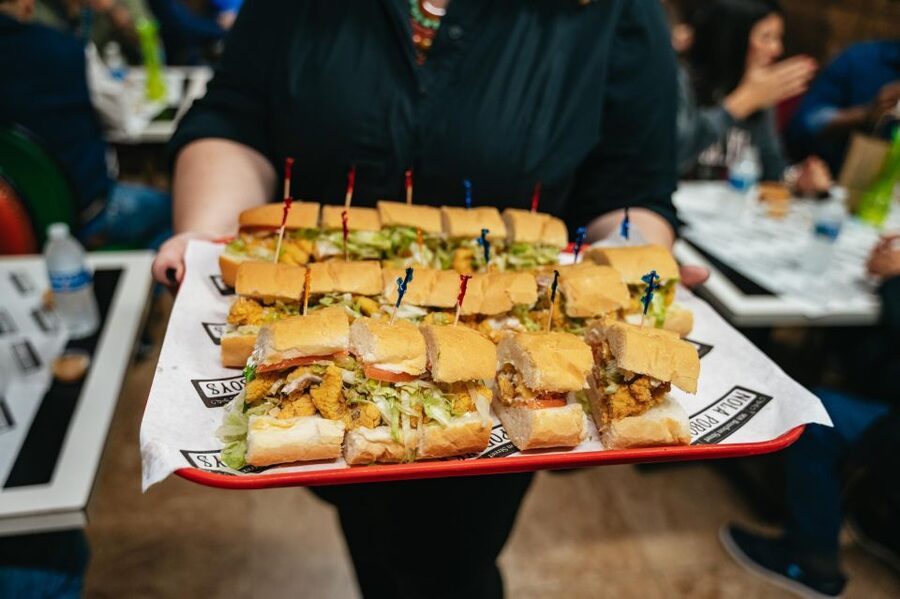
At NOLA Poboys, the tour turns to one of New Orleans’ most famous sandwiches. The standard sample is a freshly fried catfish po-boy, giving you crisp seafood, bread, and the familiar casual format that makes the po-boy such a practical local meal.
This is one of the most useful tastings for first-time visitors because a po-boy can mean many things. Here, the catfish version lets you focus on Louisiana seafood without ordering a full sandwich on your own. Your guide also explains the place of seafood in the state’s food traditions.
If you do not eat seafood, this is the point where the standard menu may become a problem. The vegetarian option includes a portobello po-boy, but you must request the vegetarian menu when booking. There is no gluten-free, dairy-free, or vegan menu.
Portions matter here. The po-boy is one of several filling samples, not the only food you receive. By the end of the route, you should expect to have eaten enough for a full lunch, depending on your appetite.
More History Walking Tours in the USA
- Philadelphia Old City Historic Walking Tour with 10+ Top Sites
★ 5.0 · 2,020 reviews - Southern Flavors Food, Pub Crawl, and History Walking Tour
★ 4.5 · 1,623 reviews - Charleston historical walking tour with a Professor of History at The Citadel
★ 5.0 · 1,284 reviews - 2 Hour LoDo Historic Walking Tour in Denver
★ 5.0 · 1,106 reviews
Muffuletta and boudin bring a different New Orleans flavor
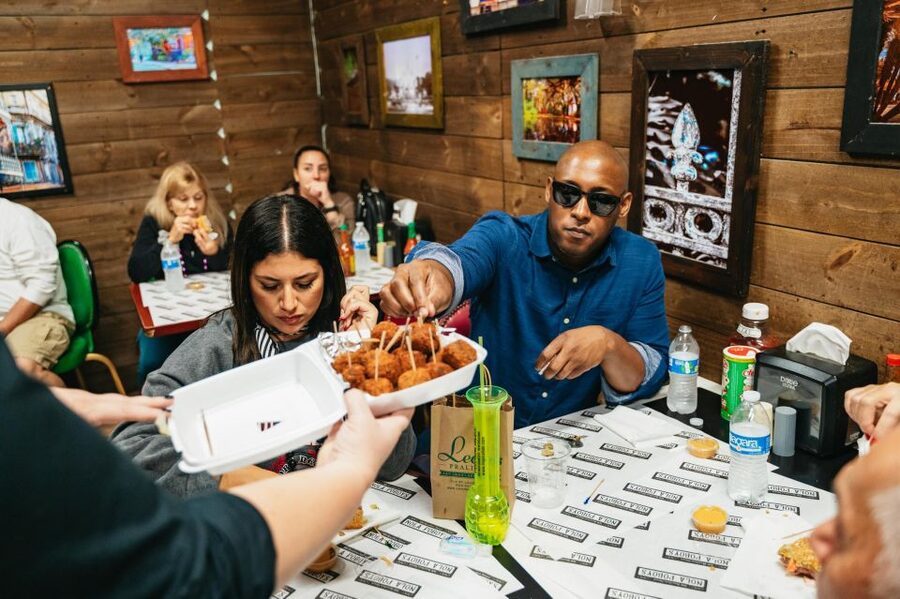
The muffuletta gives you the second famous New Orleans sandwich. Unlike the fried catfish po-boy, it is meaty and associated with the city’s Italian American food tradition. Sampling both on one walk is valuable because the contrast is immediate: one is seafood-focused and fried, the other is dense, savory, and built around cured meats and a distinctive sandwich style.
You also taste boudin balls, a Louisiana specialty with a savory rice and meat filling formed into a fried bite. This is the kind of food that can be hard to identify from a menu description alone. A guided tasting lets you try it without committing to a large order.
These samples are where the tour feels most like a guided introduction rather than a restaurant tour. You get familiar names, but in portions that let you compare them within the same afternoon.
The route includes walking stretches of about five and ten minutes. Those short breaks help, especially in warm weather, but the French Quarter’s pavement and heat still require sensible shoes and water. Water is included, though you can buy soft drinks or alcoholic beverages at many of the stops.
Red beans and rice at Creole Cookery
At Creole Cookery, you sit down to red beans and rice. This may be the least showy dish on the route, but it is one of the most revealing. It is a familiar, filling meal rather than a special-occasion plate, and it shows how New Orleans food includes everyday comfort as well as famous restaurant dishes.
The dish has also been a favorite for some visitors, which makes sense if you value food with a strong connection to local routines. Your guide can explain the cultural setting around it, rather than leaving you with only a list of ingredients.
The vegetarian option changes this part of the experience. Instead of the standard meat-based tastings, you can receive black-eyed pea soup, veggie jambalaya, portobello po-boys, and other meat-free versions of Southern classics.
The vegetarian menu is a real strength for people who eat meat-free but not vegan. It gives you a coherent food experience rather than a single substitute dish. Still, ask for the details at checkout and tell the provider about allergies when booking. The tour does not accommodate vegan, gluten-free, or dairy-free diets.
Finishing with bananas Foster bread pudding
The final stop brings dessert in the form of bananas Foster bread pudding. It is a fitting finish after the salty, spicy, and savory dishes earlier in the walk.
Dessert also gives the tour a clean ending. You have tried candy at Leah’s, but this is a restaurant-style sweet that closes the meal. Several people have singled out the dessert as a favorite, along with the gumbo, so save room even if the earlier tastings have already filled you.
The tour ends on Toulouse Street, rather than returning to the starting restaurant. That makes the finish useful for continuing your afternoon in the French Quarter, though you should plan your next stop around the end point instead of assuming you will be back at Chartres Street.
What the $85 price really covers
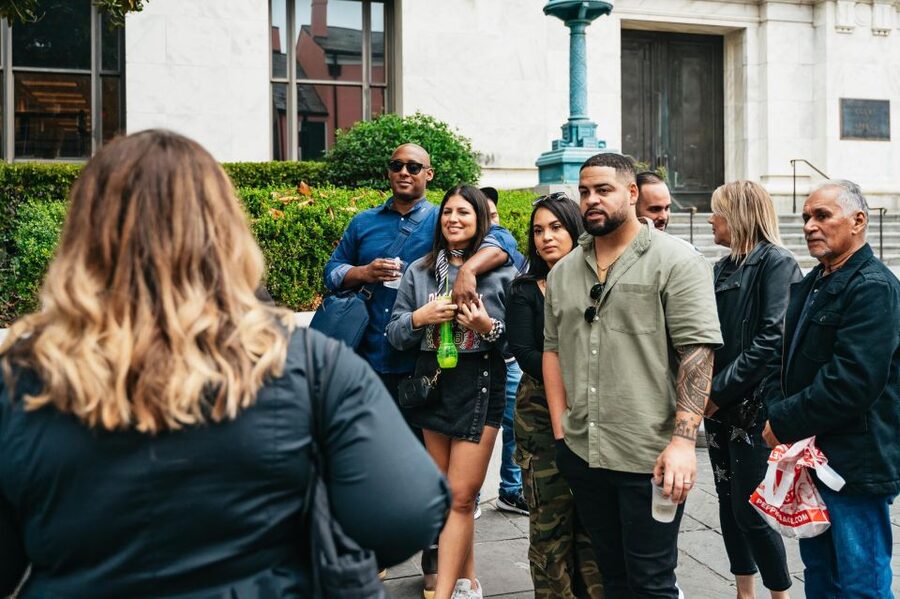
At $85 per person, this is best judged as a guided meal with a history lesson, not as a series of tiny samples. The price includes the walking tour, an English-speaking guide, up to eight included food samples, water, and tips for servers and waitstaff.
You are also paying for access to several types of food in one organized route. Ordering gumbo, a catfish po-boy, muffuletta, boudin, red beans and rice, candy, hot sauce, and dessert separately could cost more, but the bigger value is the explanation that ties them together.
The value is strongest if you are new to New Orleans and want help deciding what to eat later. A good guide can point out dishes you want to order again and explain unfamiliar names before you face a full menu.
The price is harder to justify if you only want a cheap lunch or already know the city’s food scene well. One diner also felt the cost was high, and the fixed food selection can reduce the value if you avoid seafood or certain meats.
Pace, weather, and practical comfort
The walk lasts three hours and runs rain or shine. New Orleans weather can make a big difference, especially during hot and humid months. Wear comfortable shoes, bring light rain protection, and do not schedule a demanding activity immediately afterward.
The route is broken into short walks and food stops, with walking sections of about five and ten minutes. Several people have found the pace easy, but the tour is still a walking experience through the French Quarter, not a seated meal.
The activity information describes the tour as wheelchair accessible, while also marking it as not suitable for people with mobility impairments. That is an important inconsistency. If you use a wheelchair or have mobility concerns, contact the provider before booking so you can confirm the current route and access at each stop.
Free cancellation is available up to 24 hours before the start time, and you can reserve now and pay later. Those policies help if your schedule is still changing, but the more important booking step is dietary: report genuine allergies at checkout, and request the vegetarian option then.
Who should book this tour
I would choose this tour for a first or second day in New Orleans. It gives you a quick working vocabulary for local food, shows you several parts of the French Quarter, and leaves you with ideas for later meals.
It suits curious eaters who enjoy learning while they eat. The strongest guides are not simply reciting facts. Beth, Gary, John, Meg, Kat, and the Professor have each been praised for making the city’s food and past easy to understand, with humor and room for questions.
Families and mixed groups can also benefit from the range of stops, provided everyone is comfortable with the fixed menu. The vegetarian option helps, and one pescatarian group found that meat eaters and a pescatarian could all eat well.
I would skip it if you need vegan, gluten-free, or dairy-free food. I would also think twice if you dislike seafood or alligator-style regional dishes and want complete control over every bite. The tour is designed around tasting what the guide and restaurant partners serve.
My verdict: a strong first taste of New Orleans
Book it if you want a filling introduction to the French Quarter where food and history stay connected. The range is excellent, the samples are more substantial than a quick nibble, and the guides add the local context that makes gumbo, po-boys, muffuletta, and red beans and rice more meaningful.
Skip it if the fixed menu does not fit your diet, or if $85 is more than you want to spend on a guided meal. For most first-time visitors who eat the standard menu, though, this is a practical way to get oriented fast, learn what to order next, and finish the afternoon pleasantly full.
FAQ
How long does the New Orleans French Quarter food tour last?
The tour lasts three hours and finishes on Toulouse Street in the French Quarter.
Where does the tour meet?
Meet your guide inside the 3rd Block Depot restaurant at 316 Chartres Street.
What food is included?
The tastings can include Cajun-style gumbo with warm potato salad, hot sauce, a praline or bacon pecan brittle, catfish po-boy, muffuletta, boudin balls, red beans and rice, and bananas Foster bread pudding. The included details specify up to eight samples, while the full activity description presents up to nine tastings.
Is there a vegetarian option?
Yes. Request it at checkout. The vegetarian menu includes black-eyed pea soup, veggie jambalaya, portobello po-boys, and other meat-free versions of Southern classics.
Can the tour accommodate vegan, gluten-free, or dairy-free diets?
No. The tour does not offer vegan, gluten-free, or dairy-free options. Tell the provider about food allergies when booking.
Are drinks included?
Water is included. Alcoholic beverages and soft drinks are not included, but most restaurant stops have bars where you can purchase drinks.
Just added around New Orleans
- New Orleans Cocktail History Walking Tour in the French Quarter★ 5.0 · 604 reviews
- One Hour Saint Louis Cemetery Number One Walking Tour★ 4.5 · 642 reviews
- New Orleans Vampire Walking Tour★ 4.5 · 664 reviews
- New Orleans Original Craft Cocktail Walking Tour★ 4.5 · 675 reviews
- New Orleans City and Cemetery Tour with Garden District Stroll★ 4.5 · 766 reviews
- French Quarter Walking Tour With Comp 1850 House Museum Admission★ 5.0 · 781 reviews
- New Orleans Cemetery Walking Tour★ 5.0 · 901 reviews
- New Orleans Small-Group Garden District Walking Tour★ 5.0 · 1,384 reviews
History Walking Tours, compared.



Berlin’s Best: 2 Hour Walking Tour Third Reich and the Cold War
Read our review →
Third Reich Berlin: Hitler and WWII Walking Tour
Read our review →
New Orleans Garden District History Walking Tour
Read our review →
Cartagena: Historic Center and Getsemaní Shared Walking Tour
Read our review →

Imperial Palace and Shogun Historical Walking Tour
Read our review →Browse the lists this tour appears in