
REVIEW · MALTA
Mdina and Rabat: Guided City Walking Tour
Mdina and Rabat make a fine pair: one is a quiet fortified city on a hill, the other an old Maltese suburb just beyond its walls. This two-hour guided walk gives you the setting and stories that are easy to miss when you explore alone, from noble palaces and church façades to small details such as distinctive door knockers.
I like the easy pace and the use of individual audio headsets on many departures, which lets you hear the guide while looking around or taking photos. I also like the personal touch: guides including Nadine, Angela, Marisa, Charlotte, and Angele have been praised for mixing local history with humor, restaurant ideas, and practical suggestions.
The main consideration is that the tour does not include entry to churches or museums. A bank holiday can also mean some places are closed, so check the local calendar if you want to go inside specific buildings after the walk.
Key points to know before you book
- Mdina’s Main Gate begins the story: Meet by the bridge at the city entrance for an introduction to Malta’s former capital.
- The walk includes Rabat: You leave Mdina’s walls to see the neighboring old quarter and Maltese vernacular architecture.
- Expect history with local color: Guides explain Malta’s changing rulers, buildings, customs, and daily life rather than simply naming monuments.
- Audio headsets can make a big difference: They help you follow the guide in narrow streets and on busy days.
- Two hours is a useful length: The route offers a solid introduction without taking over your whole day.
- Bring comfortable shoes: You will spend the full experience on foot, although the tour is listed as wheelchair accessible.
Entering Mdina through the Main Gate
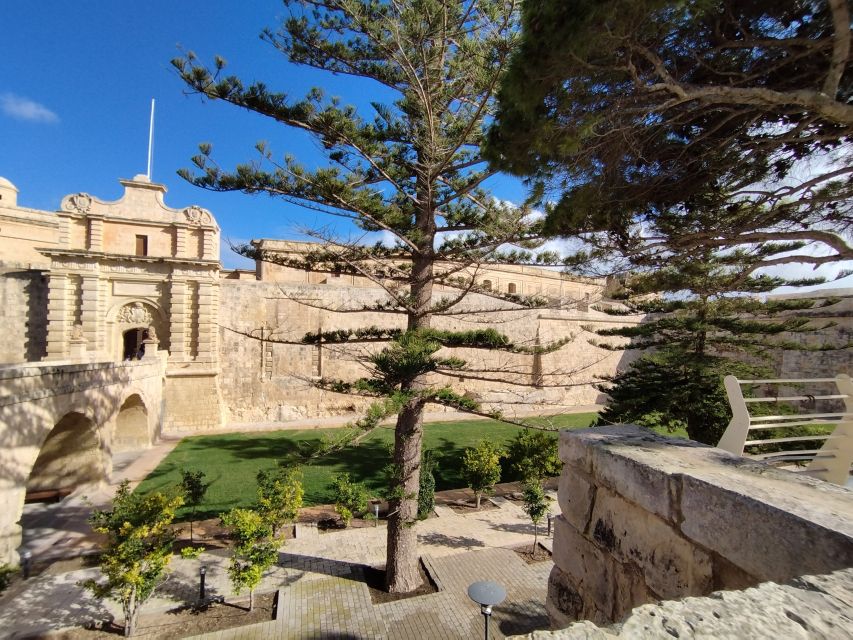
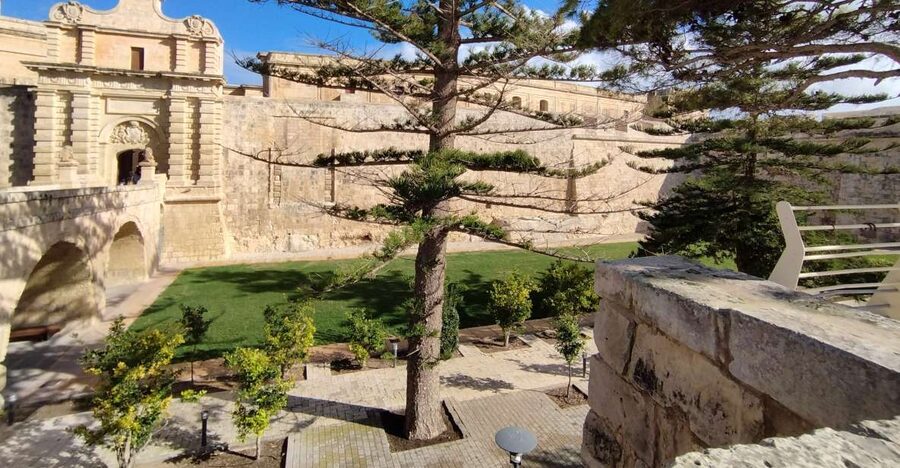
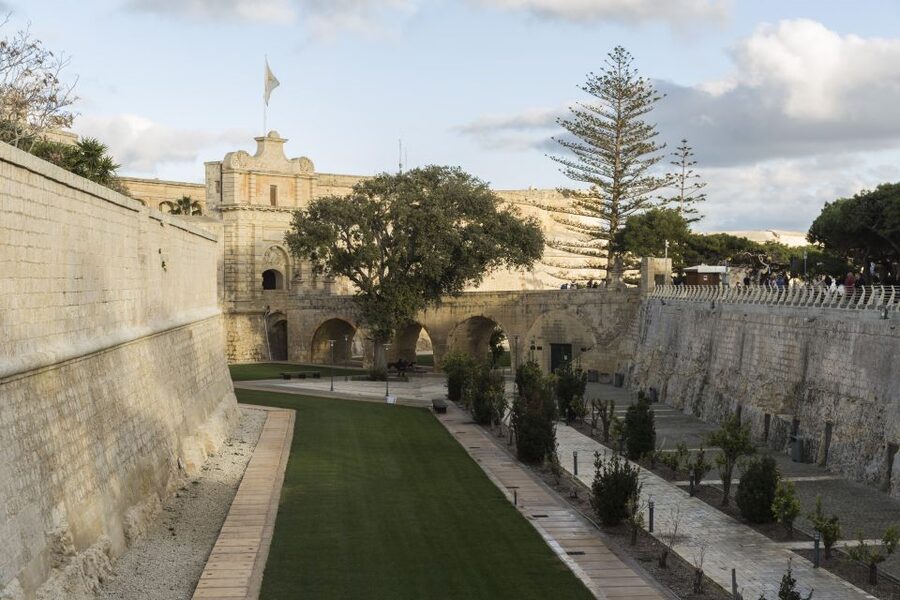
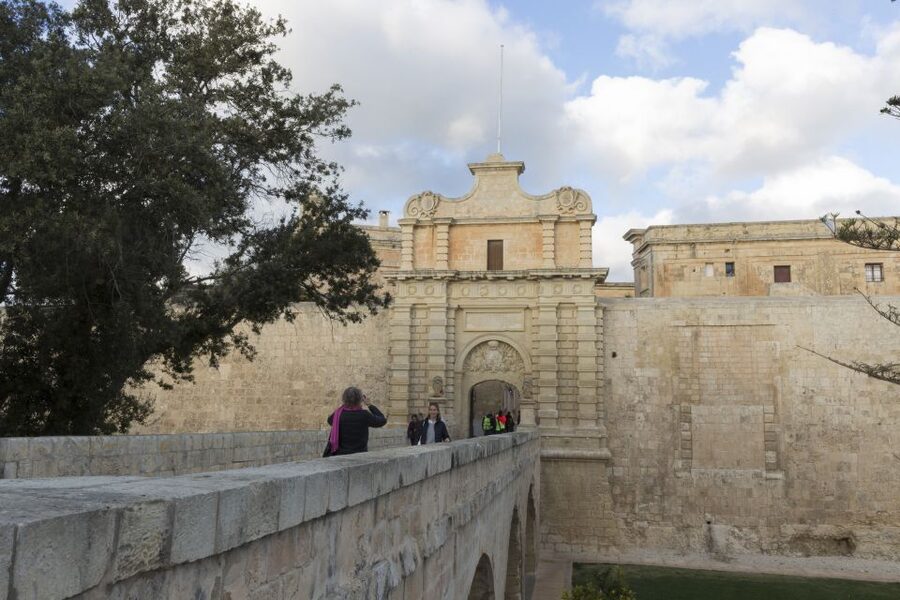
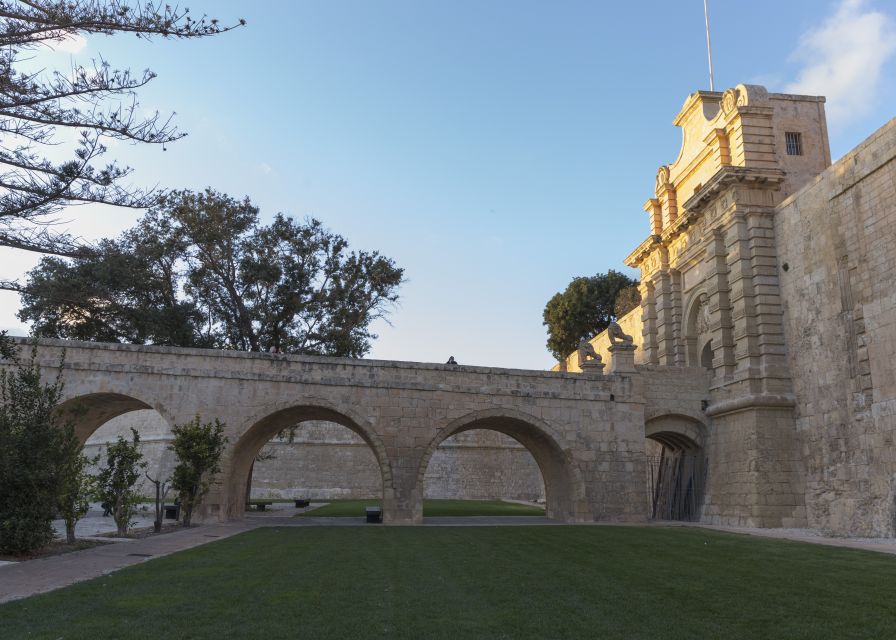
The tour begins at Mdina Main Gate, by the bridge. This is a sensible meeting place because it gives you an immediate sense of the city’s defensive position and lets the guide set the scene before you enter the old streets.
Mdina sits on a fortified hill near the center of the Maltese Islands. The settlement began under Roman rule, and for almost two centuries Mdina served as Malta’s administrative and political capital. It remains the seat of the country’s episcopacy, so this is not simply an attractive old town preserved for visitors. It still carries an important civic and religious role.
Your guide starts with this background, then introduces Mdina’s medieval name, Citta Notabile, or Noble City. The name points to the families who lived here and still helps explain the city’s character. Behind the walls, the streets feel formal and restrained, with grand façades set along narrow lanes.
I find a guided introduction especially useful here because Mdina can look almost too quiet at first glance. You see stone walls, closed doors, balconies, and churches, but the guide explains who lived behind those façades and why the city mattered. That context turns a pleasant walk into a clearer picture of Malta’s past.
More City Highlights Walks in Malta:
- Valletta: Guided City Walking Tour
★ 4.8 · 1,256 reviews - Valletta: City Walking Tour in a Small Group
★ 4.9 · 957 reviews - Berlin City walk Government District and Places of Democracy
★ 4.7 · 8,467 reviews
Walking the narrow streets of the Silent City
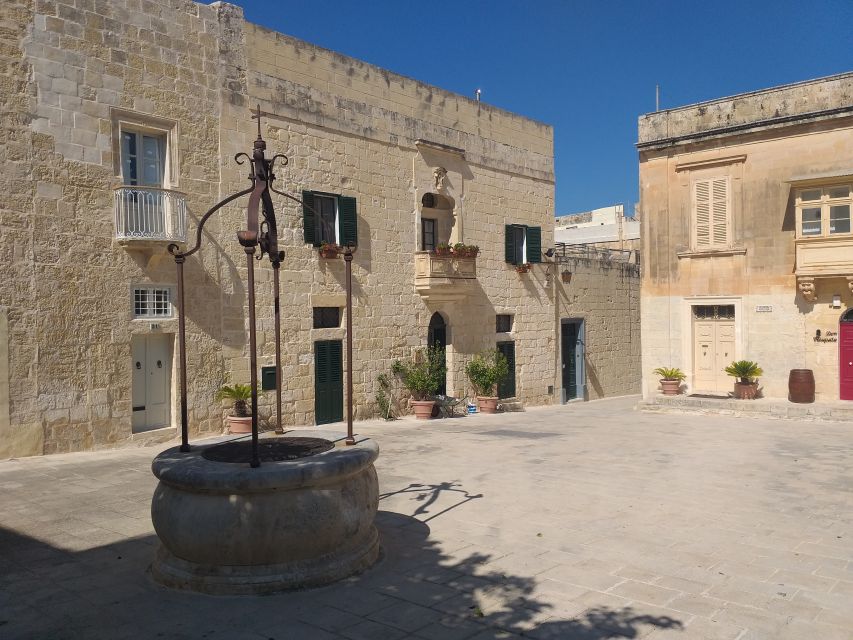
Mdina is often called the Silent City, and the nickname fits its calm atmosphere. The narrow streets limit traffic and create a slow rhythm. Your guide leads you at a gentle pace, stopping often to point out details that you might pass without noticing.
The route focuses on the streets, palaces, churches, and convents that define Mdina. The tour does not include entrance fees, so the emphasis is on the exterior architecture and the stories connected to it. You will need to pay separately if you choose to visit a church or museum.
That arrangement keeps the tour moving and makes the two-hour schedule practical. You are not spending most of the time inside one site. Instead, you get a broad introduction to the old city, with enough pauses for photographs and questions.
The guides’ style is one of the strongest parts of the experience. Nadine has been praised for combining serious history with anecdotes and a warm manner. Angela and Angele are noted for clear explanations, humor, and a relaxed delivery. Marisa has offered suggestions for lunch, while Charlotte has been praised for making the material engaging without rushing through it.
Those differences matter. A walking tour succeeds or fails on delivery. Mdina’s buildings are impressive, but a long string of dates can make even a beautiful city feel like homework. The best guides here appear to use stories, local observations, and small architectural clues to keep you involved.
Palaces, churches, convents, and small details
The large buildings get your attention first. Mdina’s palaces show the city’s connection to Malta’s old noble families, while churches and convents reveal the importance of religion in the city’s public life.
Look beyond the main façades. The guides point out smaller features, including door knockers and architectural details that carry their own local stories. One useful tip is to pay attention to the variety of knockers as you walk. They are easy to overlook, but they give the streets a human scale and make the city feel lived in rather than staged.
You will also hear about the relationship between architecture and Malta’s many periods of foreign rule. One guide was specifically praised for explaining how the buildings reflect the island’s changing occupations. That kind of connection is more useful than a list of dates because it helps you read the city as you walk.
The narrow streets also make the audio equipment valuable. On busy days, it can be hard to stand close enough to hear a guide while looking up at a building. Individual headsets allow you to spread out a little, take photos, and keep listening. The equipment has occasionally needed attention, but minor headset problems have been resolved quickly.
Crossing into Rabat for a different view of Malta
Rabat is only a short distance from Mdina, but it gives the tour a useful change of tone. Mdina presents the fortified, noble, and formal side of the area. Rabat’s old quarter offers a closer look at Maltese vernacular architecture and everyday urban life.
You make your way through the old quarter rather than treating Rabat as an afterthought. This matters because the two places are often visited together but can feel like separate stops if you explore without context. The guide shows how they connect and explains why Rabat belongs in the same outing.
The Rabat section also makes the tour more balanced. If you only see Mdina, you may leave with an image of Malta built around palaces and grand religious buildings. Rabat adds humbler streets and local architectural details. It helps you understand the wider settlement around the fortified city.
The supplied information does not promise entry to Rabat attractions, and the tour price excludes museum and church fees. If you want to visit a specific site afterward, ask the guide for the best plan. Several guides have offered useful recommendations for places to eat and other sights, so this is a good moment to gather ideas for the rest of your day.
More Guided Tours in Malta:
- Valletta: Guided Walking Tour with Optional Cathedral Tour
★ 4.3 · 758 reviews - Valletta: Maltese Food and Drink Guided Walking Tour
★ 4.7 · 601 reviews - Valletta: Self-Guided Historical Walking Tour (Audio Guide)
★ 3.7 · 251 reviews - Magical London: Harry Potter Guided Walking Tour
★ 4.7 · 22,044 reviews
What two hours really gives you
Two hours is long enough for a solid first look at Mdina and Rabat, but not long enough for every interior, museum, church, and side street. I see that as a sensible trade-off for most visitors.
The walk is described as relaxed, and the comments about pace are consistent. The guide should give you time to listen, look around, and take photographs without pushing you from one stop to the next. Several people specifically valued the balance between the amount of information and the walking speed.
That makes the tour a good fit if you are visiting Malta for a short stay, arriving with a cruise schedule, or trying to understand the area before exploring on your own. It also suits anyone who prefers a clear introduction over a long specialist tour.
You should still plan your energy sensibly. Comfortable shoes are recommended, and you will be walking for the entire two hours. The activity is listed as wheelchair accessible, but because the route passes through historic streets and a meeting point can vary by booking option, check the exact arrangements before you go if access is important to you.
The guides make the difference
The strongest praise is aimed at the guides rather than at a single fixed personality. That suggests the experience depends on who leads your departure, but the names that appear repeatedly include Nadine, Angela, Angele, Marisa, Charlotte, and Visnja.
Nadine is described as passionate, friendly, and especially good at combining facts with anecdotes. Angela and Angele are praised for their historical and architectural explanations, calm pacing, and dry humor. Marisa is noted for friendly delivery and practical restaurant ideas. Charlotte is described as both fun and well informed.
Ernest has also been praised for enthusiastic storytelling that remained easy to follow. Other guides have been described as local, punctual, warm, and happy to answer extra questions.
I would not book this expecting a theatrical performance. The appeal is more practical: a guide who can explain why a building matters, point out a detail you would miss, and answer questions in plain language. The best feedback emphasizes that balance of information, humor, and local insight.
Is $24 good value?
At $24 per person, this is a reasonable price for a two-hour guided walk, especially if you value interpretation rather than simply seeing the streets. You are paying for a licensed professional guide, a planned route, and the chance to understand Mdina and Rabat in a short window.
The value is strongest for a first visit. Without a guide, you can certainly walk through Mdina and admire the stone buildings. What you may not get is the connection between the Roman foundation, the city’s former political role, its noble families, religious buildings, and the wider community of Rabat.
The price does not cover entrance fees, so budget extra if you want to visit museums or churches. That is not a problem if you mainly want an outdoor orientation. It matters more if you expect a ticketed sightseeing tour with interiors included.
The tour also gives you useful follow-up advice. Guides have suggested places for lunch, further sights, and in one case St. Paul’s Catacombs in Rabat was recommended as a worthwhile extra visit with its own admission fee. Those suggestions can help you shape the rest of your day, though you should treat them as optional additions rather than part of the booking.
When to schedule the walk
Mdina can be hot, particularly in summer. One guide was praised for keeping the group in the shade for most of a very hot outing, but you should still bring sensible footwear and dress for walking outdoors.
A morning or later afternoon departure may feel more comfortable, depending on the available start times. The booking system shows the departure times available for your date, so check before committing to other plans.
A bank holiday can affect the experience. One person found that many places were closed because of a holiday and recognized that the date had not been checked in advance. Since the tour itself is mainly an outdoor walk, it can still be worthwhile, but do not schedule it on a holiday if your main goal is to enter several buildings.
The meeting point may vary with the option you book. Check the final instructions carefully rather than assuming every departure uses the same exact spot. Clear directions at the start are important in a historic area with several entrances and busy pedestrian routes.
Who will enjoy this most
I would choose this tour if you want a first look at Mdina and Rabat with meaning attached. It is particularly useful for:
- First-time visitors to Malta
- People who enjoy architecture but want help reading what they see
- Short-stay visitors who need a compact introduction
- Cruise passengers or day visitors with limited time
- Anyone who prefers a gentle pace and plenty of explanation
- Visitors who want local suggestions for food and further sightseeing
It may be less suitable if you want a long museum visit, private access, or a highly specialized architectural study. The walk stays focused on the historic streets and exterior sights, with entry fees left out.
Families and mixed-age groups may appreciate the pace, though each person should be comfortable spending two hours on foot. The English-language format is clear, and the activity is listed as wheelchair accessible.
Booking details worth knowing
The activity includes a two-hour guided walk with a professional licensed guide, in English. It does not include transport, food, church admission, or museum admission.
You can cancel up to 24 hours before the start for a full refund, and the reserve-now, pay-later option lets you hold a place without paying immediately. These terms are useful if your Malta plans are still shifting.
The overall rating is 4.8 from 549 bookings, and the praise is unusually consistent on the points that matter most for this type of outing: clear explanations, friendly guides, a relaxed pace, and good use of audio headsets. The only practical cautions are the lack of included entrance fees, possible holiday closures, and the need to confirm the exact meeting point.
Should you book the Mdina and Rabat walk?
I would book it if this is your first time in Mdina or if you want more than attractive streets and photographs. At $24, the tour offers a compact way to understand the city’s Roman beginnings, former capital status, noble families, churches, convents, and connection with Rabat.
Go with comfortable shoes, keep an eye on holiday dates, and allow extra time afterward if you want to visit a museum, church, or site such as St. Paul’s Catacombs. If you prefer to wander alone and read up beforehand, you can skip the guide. But for most visitors, the local stories, small architectural details, and helpful food suggestions make the two hours worthwhile.
FAQ
How long is the Mdina and Rabat walking tour?
The tour lasts two hours and includes a fully guided walk with a professional licensed guide.
Where does the tour begin?
The standard meeting point is Mdina Main Gate by the bridge, although the exact meeting point may vary depending on the option booked.
Is the tour conducted in English?
Yes. The activity includes a live English-speaking guide.
Are entrance fees included?
No. Admission to churches and museums is not included in the tour price.
Is the walking tour wheelchair accessible?
Yes. The tour is listed as wheelchair accessible.
What should I bring?
Bring comfortable shoes, since the full experience takes place on foot.
Just added around Malta
- From Cospicua: Senglea, Bormla, and Birgu Walking Tour★ 4.9 · 138 reviews
- Valletta: Half-Day City Discovery Walking Tour★ 3.9 · 157 reviews
- Valletta: Self-Guided Historical Walking Tour (Audio Guide)★ 3.7 · 251 reviews
- Valletta: Maltese Food and Drink Guided Walking Tour★ 4.7 · 601 reviews
- The Valletta Street Food and Culture Walking Tour★ 5.0 · 711 reviews
- Valletta: Guided Walking Tour with Optional Cathedral Tour★ 4.3 · 758 reviews
- Valletta: City Walking Tour in a Small Group★ 4.9 · 957 reviews
- Malta: Mdina and Rabat Walking Tour with Catacombs★ 4.8 · 1,126 reviews
City Highlights Walking Tours, compared.

Berlin City walk Government District and Places of Democracy
Read our review →
Historic Charleston Guided Sightseeing Walking Tour
Read our review →


Oxford: University and City Walking Tour with Alumni Guide
Read our review →
City Highlights Temple and Market Walking Tour
Read our review →
A History of Terror – Belfast City Centre Walking Tour
Read our review →Browse the lists this tour appears in