
REVIEW · LONDON
London: Winston Churchill and London in WWII Walking Tour
Westminster looks grand today, but this walking tour asks you to picture it under blackout curtains, air-raid warnings, and the constant pressure of war. Starting at the Battle of Britain memorial, you follow the wartime story past Parliament, Westminster Abbey, Whitehall, Downing Street, and the Cenotaph before finishing outside Churchill’s War Rooms.
I like two things right away. First, the tour connects famous buildings to real people, including pilots, politicians, civil servants, and ordinary Londoners. Second, guides such as Nathan, Richard, Francis, and Babs bring plenty of humor and personal storytelling, which helps keep the subject lively. The main drawback is time: the core walk is listed at 1.5 hours, and that can feel short if you want detailed military history.
Key points to know before booking
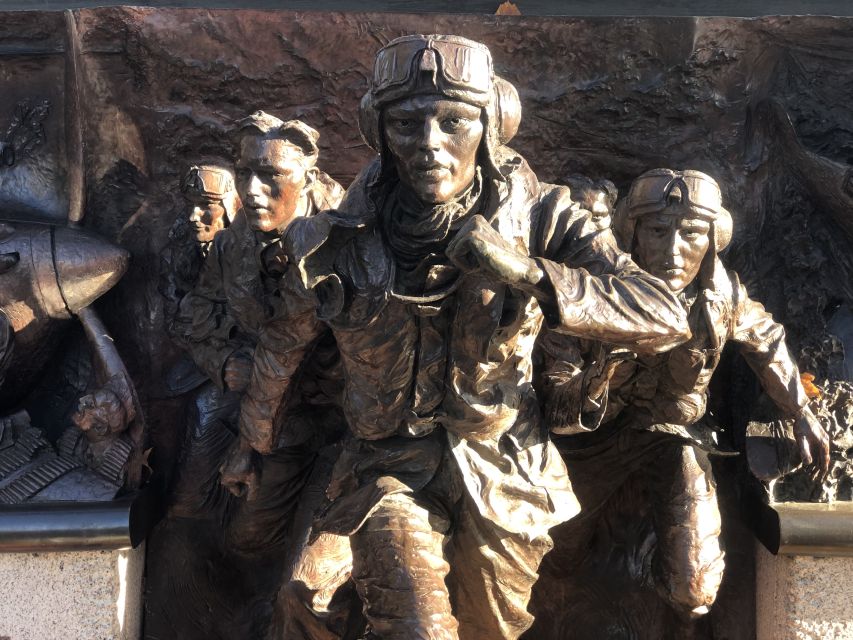
- The RAF Memorial is the starting point: You begin with the men and women who took part in the Battle of Britain, setting a human tone before the grand landmarks appear.
- This is a storytelling walk, not an interior tour: You see Parliament, Westminster Abbey, Whitehall, Downing Street, and the Cenotaph from outside.
- Churchill’s War Rooms are the natural finale: The guide finishes outside, allowing you to visit the underground wartime headquarters separately.
- Guides make the difference: Nathan is often praised for clear explanations and vivid anecdotes, while Richard, Francis, Babs, and others bring their own style.
- The walk is fairly easy but not wheelchair suitable: Wear comfortable shoes, and leave luggage or large bags behind.
- The $39 price is fair for a strong guide: It works best if you value context and storytelling, but less so if you want a long tour or included museum admission.
Beginning at the Battle of Britain memorial
The meeting point is outside Westminster Station, near the Boadicea and Her Daughters Statue on Victoria Embankment. Use Exit 2, marked Victoria Embankment, then go up the stairs to street level. Look for the guide holding an orange Urban Saunters sign.
The tour begins at the Monument to the RAF, which honors the people who fought in the Battle of Britain. This is a smart place to start. Instead of opening with a list of dates, the guide can introduce the people behind the campaign and explain how the city prepared for war.
You may hear about pilots and individual stories that rarely make it into a basic account of World War II. That personal angle is one of the best reasons to choose this walk. Guides are not simply pointing at a statue and moving on. They use the memorial to explain the pressure on Britain and the uncertainty facing London during the early war years.
The location also gives you a practical advantage. Westminster Station is easy to reach, and the route begins close to several major sights. Still, arrive with enough time to find Exit 2. Westminster has several exits, and choosing the wrong one can leave you on the wrong side of a busy junction.
More History Walking Tours in the UK
- London: Medieval History Walking Tour from The Tower
★ 4.9 · 318 reviews - Ghosts and Legends of Mayfair Walking Tour – London
★ 3.7 · 153 reviews - Private Historical Walking Tour of York
★ 5.0 · 1,324 reviews
Big Ben and Parliament under wartime pressure
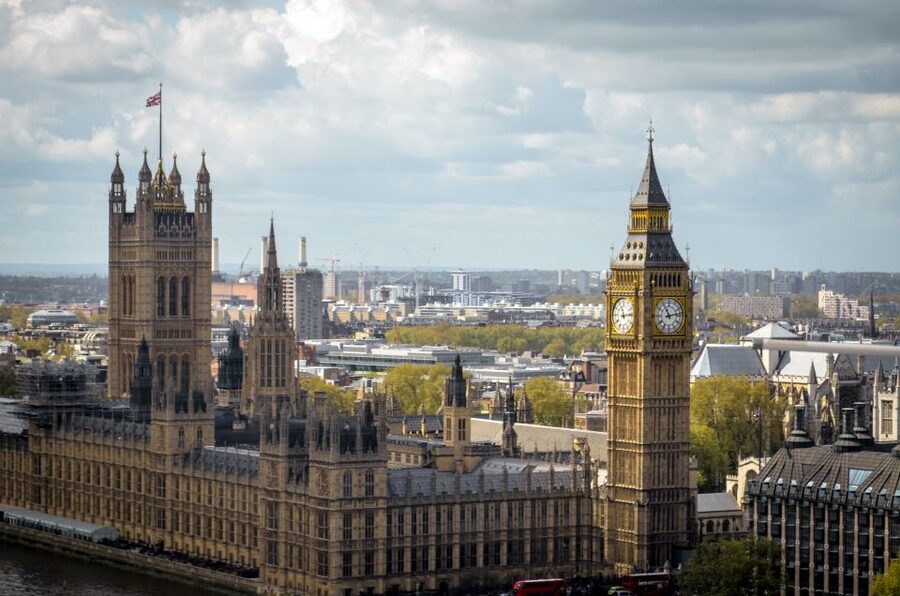
From the riverfront, the walk moves toward the Houses of Parliament and Big Ben. These are among London’s most photographed sights, but the wartime angle changes how you look at them.
Your guide explains how government continued to operate while Britain faced bombing and invasion fears. The point is not simply that these buildings survived. It is that Parliament, ministers, and civil servants had to keep the machinery of government moving while the city was under attack.
Big Ben gives the tour a familiar visual anchor. You will probably already know the clock tower from photographs, so the guide’s job is to add a layer of meaning. The building becomes part of a working capital rather than just a postcard backdrop.
The stop is also a good reminder that this is primarily an outdoor walking experience. You will not go inside Parliament as part of the tour, and the pace may slow as the guide explains the setting. If you prefer constant movement, you may find this more of a talking tour than a brisk walk.
That is not necessarily a weakness. One visitor described the route as involving less walking than expected, with plenty of facts to absorb. For many people, especially those who want a clear explanation of the area, that slower pace is useful.
Westminster Abbey and the civilian side of war
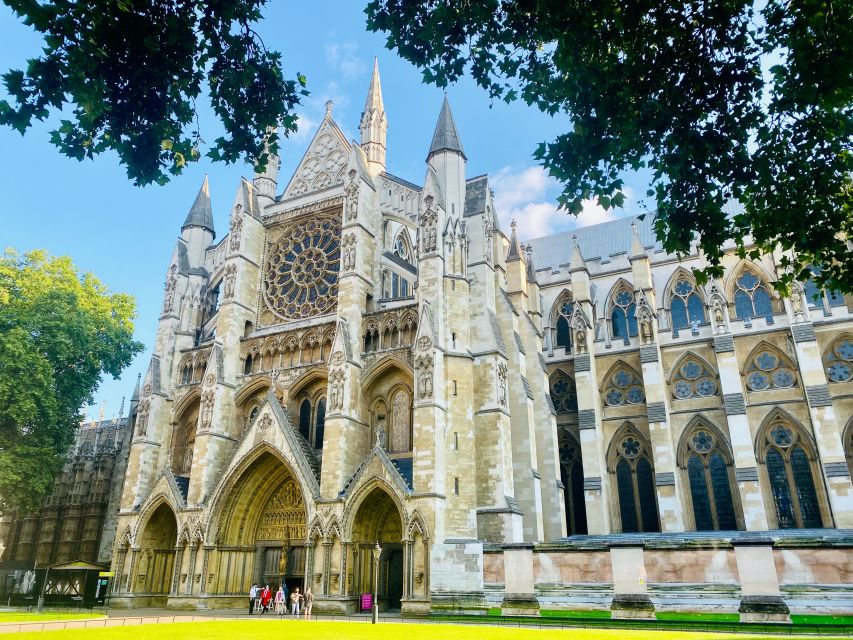
Westminster Abbey adds another layer to the story. It is one of Britain’s great ceremonial buildings, associated with coronations, national mourning, and public memory. Seeing it through the Second World War gives the building a different role.
The guide discusses the impact of the war on Westminster and on ordinary citizens. You may hear about the practical realities of life during bombing, national shortages, and the strain placed on families. The focus is not limited to Churchill and generals. That wider view matters because wartime London was not only a story of speeches and strategy.
Several guides are praised for making history feel personal. Francis, for example, is described as keeping the group moving without making anyone feel rushed. That balance is useful here. You want time to understand the setting, but you also have a route to complete.
The Abbey itself is not entered. Any visitor who wants to tour the interior must arrange that separately, and entrance tickets to named monuments are not included. Think of this walk as an introduction to Westminster’s wartime role, not a combined sightseeing ticket.
Whitehall, the Cenotaph, and the machinery of war
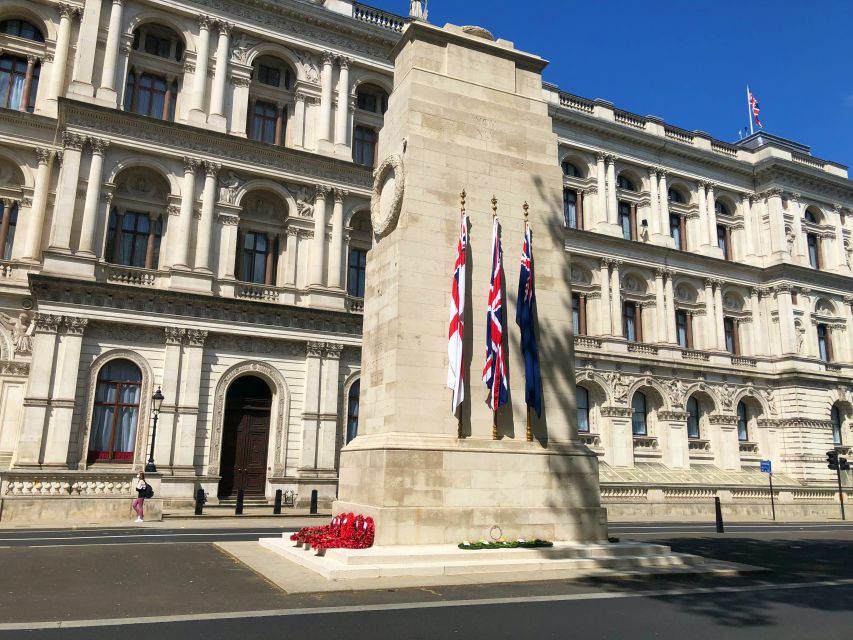
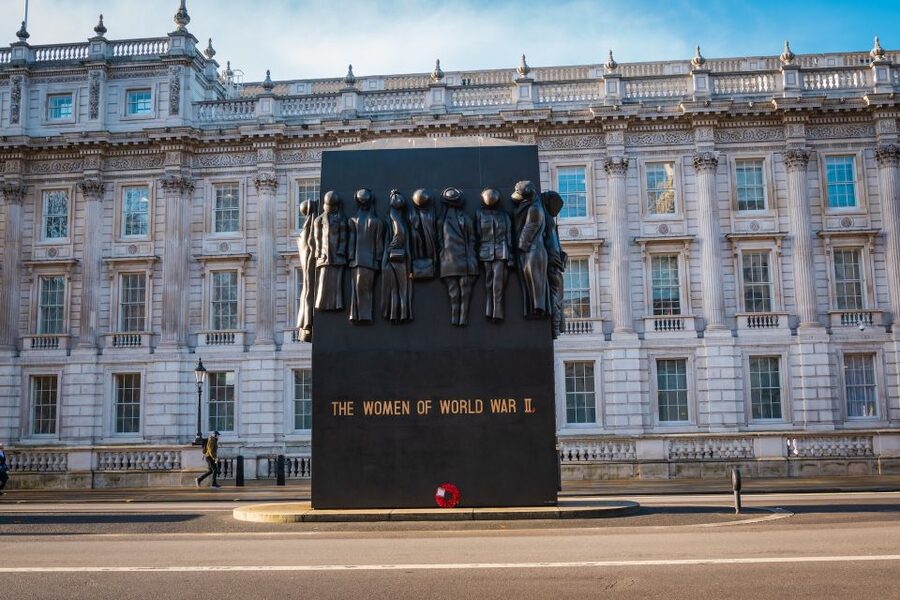
Whitehall is where the tour’s political and military story becomes most visible. The street is lined with government buildings and memorials, making it a natural place to discuss how Britain directed the war.
The Cenotaph is especially important. It is a national war memorial, and its presence gives the route a more solemn pause. Here, the guide can connect the Second World War to the broader British tradition of remembrance.
The tour also covers the Ministry of War and nearby government buildings. You will learn how these offices fitted into the wartime structure and how decisions made in Westminster affected people far beyond the district.
This part of the walk rewards close listening. The buildings are impressive, but the value comes from the explanation. Without a guide, Whitehall can look like a grand government street. With the wartime context, it becomes a place of planning, command, secrecy, and public duty.
Nathan is repeatedly praised for mixing facts with humor and stories about people who are often left out of textbooks. That approach suits Whitehall well. The subject can become heavy, but a good guide gives you enough human detail to stay engaged without treating the war as a costume drama.
More History Walking Tours in London:
- Berlin: Third Reich & Cold War Guided Walking Tour
★ 4.9 · 8,378 reviews - Munich: Third Reich & WWII Walking Tour
★ 4.6 · 6,181 reviews - Berlin’s Best: 2 Hour Walking Tour Third Reich and the Cold War
★ 5.0 · 5,486 reviews - Third Reich Berlin: Hitler and WWII Walking Tour
★ 5.0 · 3,301 reviews
Downing Street and the Churchill story
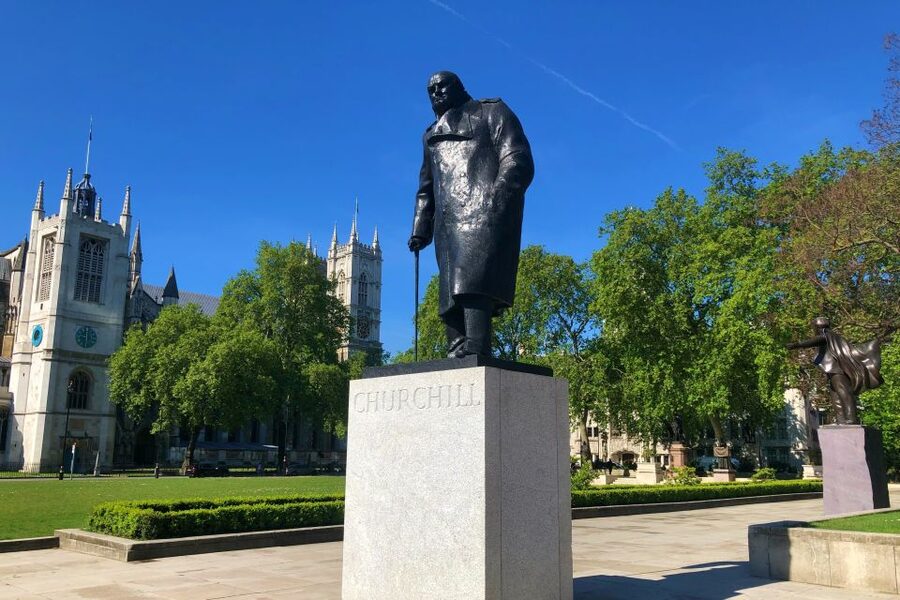
The stop at 10 Downing Street shifts attention toward Winston Churchill and the leadership of the British government. You see the famous entrance from outside, while the guide explains its importance during the war.
Churchill is central to the tour, but the experience does not treat him as a lone hero operating in isolation. The surrounding government offices, military departments, and memorials help explain the wider system around him.
Richard is praised for bringing Churchill to life with descriptive stories and anecdotes. That is important because Churchill can easily become a collection of familiar quotations. A good guide adds detail about the person, the setting, and the difficult choices behind the public image.
You should expect an interpretation rather than a full biography. In 1.5 hours, the guide cannot cover every campaign, political dispute, and personal detail. The emphasis is on Churchill in Westminster and on how his leadership connected to the city around you.
Downing Street can also be busy, and the group may stop nearby rather than directly at the entrance for a long period. The setting is more about the story than getting an uninterrupted view.
Finishing at Churchill’s War Rooms
The tour ends outside Churchill’s War Rooms, which is the most useful practical feature of the route. You finish beside one of the best places in London to continue the subject while the stories are still fresh.
The War Rooms were the underground headquarters used by Churchill and his cabinet during the Second World War. Inside, the rooms are preserved as a wartime command center, giving you a chance to see the spaces connected to the decisions discussed on the walk.
Admission is not included, so you need a separate ticket. That adds to the total cost, but it also lets you choose how to plan your time. You can book the museum for later, visit it immediately after the walk, or decide that the outdoor tour gives you enough.
I recommend combining the two if your schedule allows. The walk supplies the citywide setting and human stories. The War Rooms provide the interior spaces and strategic detail. Together, they make a stronger Churchill experience than either part alone.
Allow extra time if you plan to enter. The advertised activity can last between 1.5 and 3 hours, while the guided walking portion is listed as 1.5 hours. The exact length depends on the departure you book, so check the available time before planning another timed attraction.
What the guides do best
The strongest part of this tour is the guide. The subject is familiar, but the delivery determines whether it feels like a school lesson or a living account of wartime London.
Nathan receives especially strong praise for his storytelling, clear explanations, and ability to keep teenagers interested. That makes him a good match for families with older children or anyone who does not normally seek out military history.
Richard brings a broad understanding of London and British history, along with humor and vivid descriptions of Churchill. Francis is praised for a steady pace and details that make the period feel personal. Babs is known for enthusiasm and a strong ability to make the material more engaging than a classroom lesson.
You cannot choose a particular guide from the information provided, so book this for the subject and format rather than for one individual. The consistent strength is the guide-led approach: you get anecdotes, biographies, questions, and explanations that a self-guided walk would not provide.
Price, duration, and what you actually receive
The price is $39 per person. For a 1.5-hour guided walk in central London, that is reasonable if you want a focused historical introduction and a good local storyteller.
The value is less convincing if you expect admission to Parliament, Westminster Abbey, or Churchill’s War Rooms. None of those entrance tickets is included. Food, drinks, hotel pickup, and drop-off are also not part of the experience.
A private option costs more than a shared group in many tour arrangements, but the supplied information does not give separate prices. The advantage of private touring is usually a more personal conversation, while a shared walk can be a good way to keep the cost down. Confirm the exact option and price when booking.
The 1.5-hour length is enough for a strong overview, but not enough for a full study of World War II in London. One participant found the experience a little short, especially given the amount of material. I agree with that caution. If you want every Churchill anecdote, more time would be welcome.
Still, the compact format works well in a busy London itinerary. You can fit it between other Westminster sights, then decide if you have the energy for the War Rooms afterward.
Practical advice for a smoother walk
Wear comfortable shoes. The route is not described as strenuous, but you will be standing and walking through central Westminster, with stops for explanations.
Do not bring luggage or large bags. They are not allowed on the tour, and carrying bulky items would make the stops less comfortable.
The meeting instructions matter. Find Westminster Station Exit 2, follow the signs for Victoria Embankment, and look for the orange Urban Saunters sign beside the Boadicea and Her Daughters Statue. This is more precise than simply typing Westminster into a map.
The tour is conducted in English. If you need a different language, this experience is not designed for that.
It is not suitable for wheelchair users or people with mobility impairments. If accessibility is a concern, you should choose another way to see Westminster rather than assume the route can be adapted.
You can cancel up to 24 hours before the tour for a full refund, and the reserve-now-pay-later option lets you hold a place without paying immediately. Those terms are useful when your London plans are still changing.
Who will enjoy this Westminster tour most
I would choose this tour if you want Churchill, wartime London, and famous Westminster sights tied together by a human story. It suits history fans, families with older children, and visitors who prefer explanation over simply taking photographs.
It also works for people who are not military-history specialists. Several guides use humor and everyday stories, so you do not need to arrive with a long list of dates and battles.
You may want something else if you prefer entering landmarks, walking quickly, or exploring at your own pace. This is an outdoor route with frequent stops, and the strongest content comes from listening.
At $39, I see it as a good-value orientation to wartime Westminster, especially when the guide is as engaging as Nathan, Richard, Francis, or Babs. Just budget separately for Churchill’s War Rooms and remember that the short format gives you an overview, not a complete account.
Should you book the Winston Churchill and London in WWII Walking Tour?
Book it if you want Westminster to make more sense. The RAF Memorial, Parliament, the Abbey, Whitehall, Downing Street, and the Cenotaph are familiar sights, but the guide gives them a wartime purpose and human scale.
I would pair the walk with Churchill’s War Rooms if you have the time and budget. Skip the tour only if you need a wheelchair-accessible route, want monument interiors included, or already have a detailed plan for exploring wartime London on your own.
FAQ
How long is the Winston Churchill and London in WWII Walking Tour?
The activity is listed as lasting between 1.5 and 3 hours, depending on the departure selected. The guided Westminster walk itself is listed as 1.5 hours.
Where does the tour meet?
Meet outside Westminster Station at Exit 2, marked Victoria Embankment. The guide will be at the top of the stairs beside the Boadicea and Her Daughters Statue and will hold an orange Urban Saunters sign.
Where does the tour finish?
The walk finishes outside Churchill’s War Rooms. You can continue inside if you purchase a separate entrance ticket.
Are entrance tickets included?
No. Entrance tickets to named monuments and Churchill’s War Rooms are not included in the tour price.
Is the tour offered privately?
Yes. You can choose between a shared group walking tour and a private walking tour.
What language is the tour conducted in?
The tour is conducted in English with a live English-speaking guide.
Is the tour suitable for wheelchair users?
No. The activity is not suitable for wheelchair users or people with mobility impairments. Comfortable shoes are recommended, and luggage or large bags are not allowed.
Just added around London
- German London : The Ultimate Walking tour★ 4.8 · 400 reviews
- London: Medieval History Walking Tour from The Tower★ 4.9 · 318 reviews
- The Beatles London Walking Tour★ 4.2 · 147 reviews
- Secret Old London Walking Tour★ 4.8 · 154 reviews
- Secrets of London Walking Tour★ 4.7 · 562 reviews
- London: Notting Hill Walking Tour★ 4.5 · 254 reviews
- London: Old City Walking Tour★ 4.8 · 135 reviews
- London: Witches and History Bankside Walking Tour★ 4.8 · 223 reviews
History Walking Tours, compared.


Berlin’s Best: 2 Hour Walking Tour Third Reich and the Cold War
Read our review →
Third Reich Berlin: Hitler and WWII Walking Tour
Read our review →
New Orleans Garden District History Walking Tour
Read our review →
Cartagena: Historic Center and Getsemaní Shared Walking Tour
Read our review →

Imperial Palace and Shogun Historical Walking Tour
Read our review →Browse the lists this tour appears in