
REVIEW · LONDON
London: Secrets of the London Underground Walking Tour
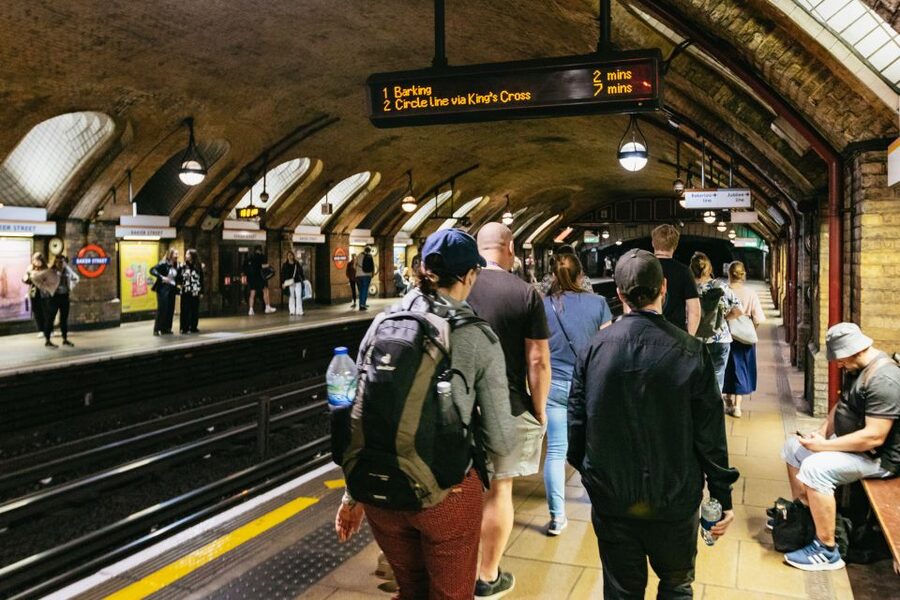
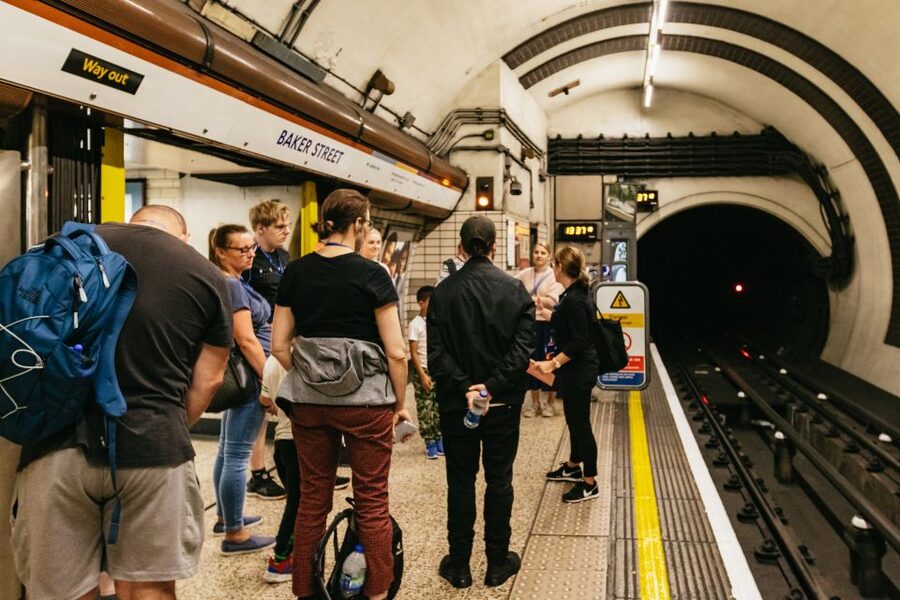
London’s Underground is not just a way to get across town. It is a working museum beneath your feet, with Victorian engineering, wartime shelters, ghost stories, and forgotten stations folded into the daily commute. This 2.5-hour walking tour starts at Baker Street, one of the original 1863 stations, then follows the Tube’s story through several stations and a short public transport ride to the London Transport Museum.
I like two things here. First, the guide points out details you could easily miss while rushing for a train, from the famous roundel symbol to remnants of older station design. Second, the audio headsets help you hear the commentary over the noise of trains and crowds. The main drawback is that the tour does not promise entry into a disused station, so anyone expecting a behind-the-scenes tunnel visit may find the experience more historical than secret.
Key points to know before you book
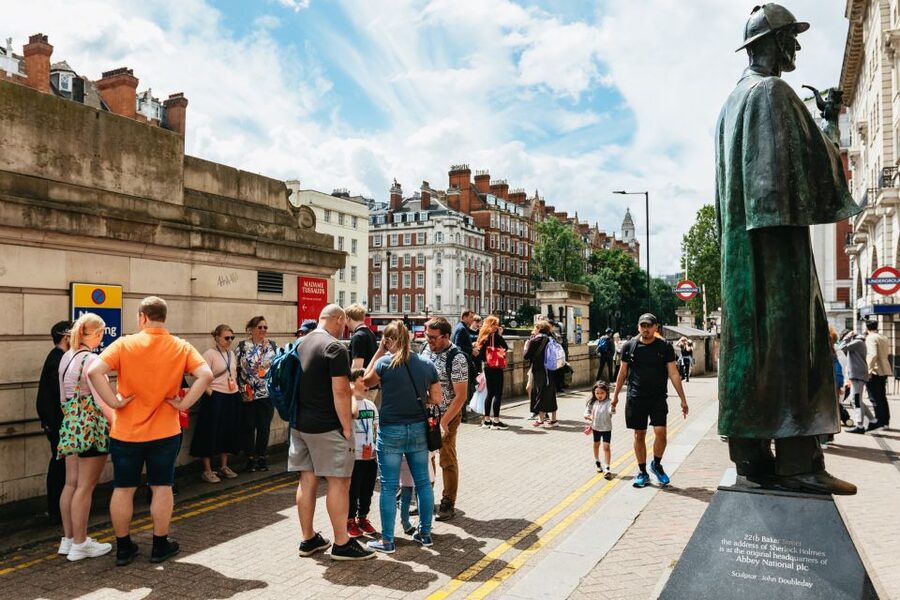
- Baker Street is the starting point: Meet by the Sherlock Holmes statue outside Baker Street Station, one of the world’s first underground railway stops.
- The Tube’s full story is the subject: You’ll hear how steam trains gave way to electric rails, how early tunnels were built, and why more than 40 stations were abandoned.
- The wartime role is fascinating: The Underground served as a refuge during the Blitz, while some stations held British Museum treasures and even supported aircraft production.
- Ghost stories add a playful edge: Tales include a Pharaoh’s daughter and a nun said to haunt different stations.
- You need your own transport ticket: Bring a Zone 1 to 2 travel card or Oyster card. The fare is not included in the $40 tour price.
- Expect steps and steady walking: This is not suitable for wheelchair users or people with reduced mobility, and large bags and strollers are not allowed.
Baker Street and the birth of the Underground
Meet your guide beside the Sherlock Holmes statue outside Baker Street Station. It is a fitting meeting point, since Baker Street links London’s literary mythology with the practical beginnings of the Underground.
The station opened in 1863 as part of the Metropolitan Railway, the world’s first underground railway. That date matters. London was already crowded and clogged with traffic, so engineers began looking below street level for a way to move people across the city.
This early railway was built using cut-and-cover methods in many places. Workers dug a trench, constructed the railway, and covered it again. It was not the deep, mysterious tunnel system many people picture today, but it was still a huge engineering project for Victorian London.
At Baker Street, your guide sets up the main story: the Tube did not appear as one finished network. It grew in pieces, with different companies, different lines, and changing technology. You’ll learn how the system moved from steam-powered trains to electric trains, a shift that made deeper tunnels and longer routes more practical.
I especially like beginning here because the station is not treated as a simple photo stop. The surrounding details become part of the lesson. The architecture, entrances, platforms, and surviving design features help show how old the railway really is.
More Hidden Gems Walks in London:
- Secrets of London Walking Tour
★ 4.7 · 562 reviews - Dublin Highlights and Hidden Gems Guided Walking Tour
★ 5.0 · 6,020 reviews - Explore Berlin: See All The Iconic Sights & Some Hidden Gems
★ 5.0 · 4,429 reviews
Seeing the Underground as a city beneath the city
Once the tour gets moving, the familiar Tube takes on a different character. You are still walking through public stations, not entering a private railway vault, but the guide draws your attention to features most passengers ignore.
The Underground carries more than 1.3 billion passenger journeys each year across 270 stations. That daily scale can make the system feel purely functional. The tour slows you down long enough to consider the people who built it, the companies that shaped it, and the many jobs the network has performed over time.
The famous roundel symbol gets its own place in the story. It is one of London’s most recognizable signs, yet many people never stop to ask why it looks the way it does or how it became linked so closely with the city.
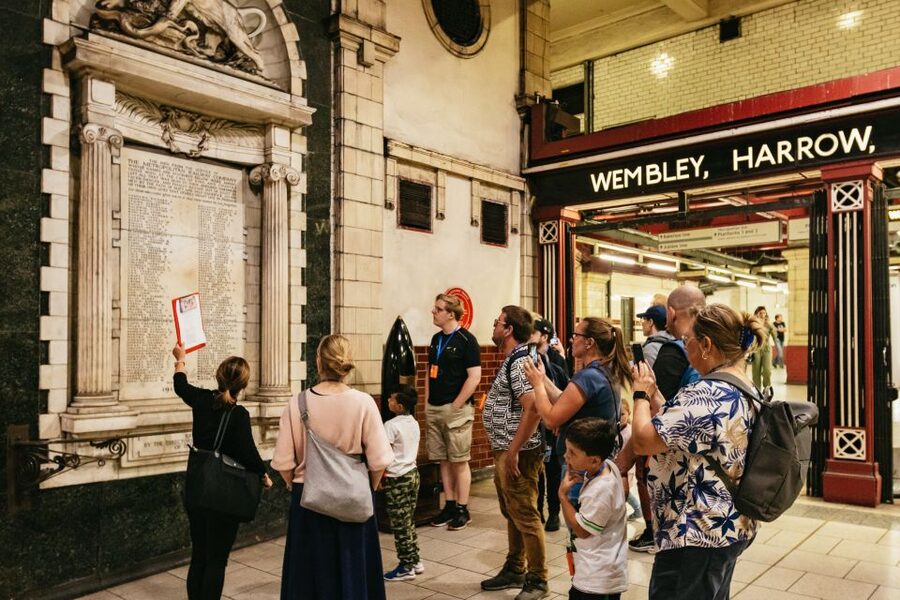
Your guide may also point out traces of earlier station layouts and architectural details. These are easy to miss when you are focused on the next train. The value of the tour is partly in having someone explain what you are seeing at the exact place where it matters.
The pace includes a moderate amount of walking and station transfers. One person praised the good pace and the amount covered in roughly two hours, while another found the tour slightly long. I would allow the full 2.5 hours and avoid scheduling a tight appointment right afterward.
Abandoned stations, hidden stories, and expectations
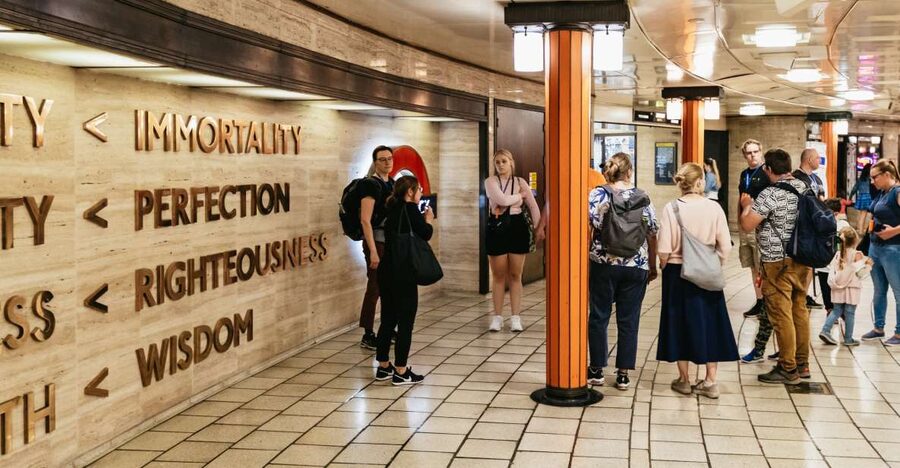
More than 40 stations have been left abandoned or closed over the years. Their stories are among the most appealing parts of the tour, especially if you like old infrastructure and places that have slipped out of everyday use.
You may hear why certain stations closed, how changing routes affected them, and what happened to spaces that no longer served the public. The guide also brings up a station above the remains of 1,000 bodies, an unsettling reminder that London’s underground story is tied to much older layers of the city.
Here is the important practical distinction: hearing about disused stations is not the same as exploring one. The standard tour does not promise entry into a closed station. Some people have enjoyed seeing a ghost station or spotting signs of one, but others expected to go inside and were disappointed.
I would book this for the stories and the visible traces, not for an underground trespass adventure. If your main goal is to walk through sealed platforms and abandoned tunnels, this may not be the right experience.
Ghosts, Pharaohs, and a nun underground
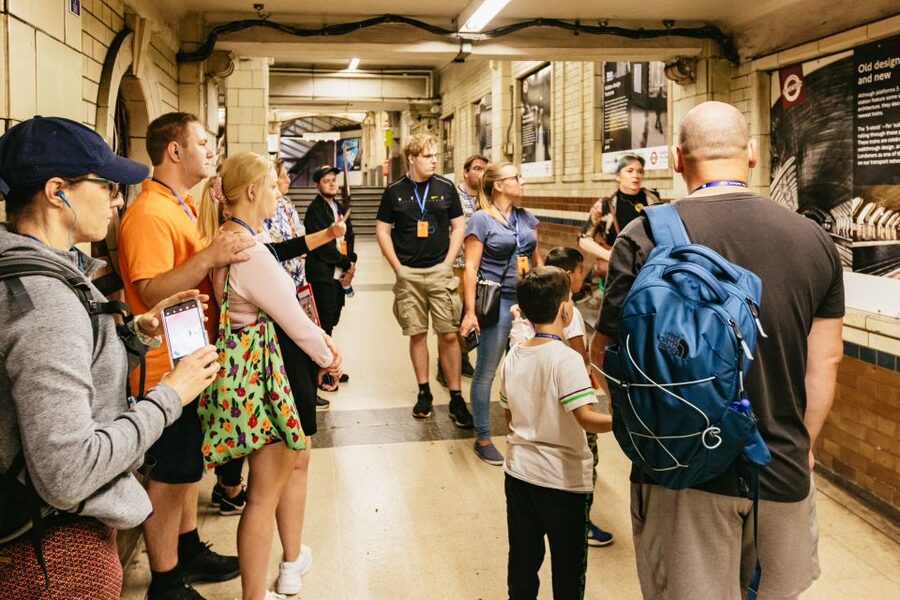
The tour has a lighter side too. Along with engineering and transport history, you’ll hear about stations reputed to be haunted by the ghost of a Pharaoh’s daughter and by a nun.
These tales work well because they reflect the strange atmosphere of the Underground. Stations are busy and brightly marked today, but older platforms, unused corridors, and deep tunnels can still feel eerie. The guide presents the stories as local legends rather than turning the whole tour into a ghost walk.
The mix keeps the experience from becoming a lecture about railway dates. You may move from construction methods to a ghost story, then back to the practical question of how passengers once used the system. That variety is one reason guides such as John, Aaron, Angela, Peter, and others have received strong praise for keeping the commentary clear, funny, and easy to follow.
The English-language format should suit many visitors who can follow spoken English. One past participant specifically found the guide easy to understand as a non-native speaker. The audio equipment also helps when trains are arriving or the group is spread along a platform.
A few more walking tours around London worth a look
- Magical London: Harry Potter Guided Walking Tour
★ 4.7 · 22,044 reviews - London: The Original Jack the Ripper Walking Tour
★ 4.7 · 7,833 reviews - Tour for Muggles The Ultimate Harry Potter Walking Tour in London
★ 5.0 · 4,684 reviews - London Jack The Ripper Guided Walking Tour
★ 5.0 · 3,131 reviews
The Tube during the Blitz and beyond
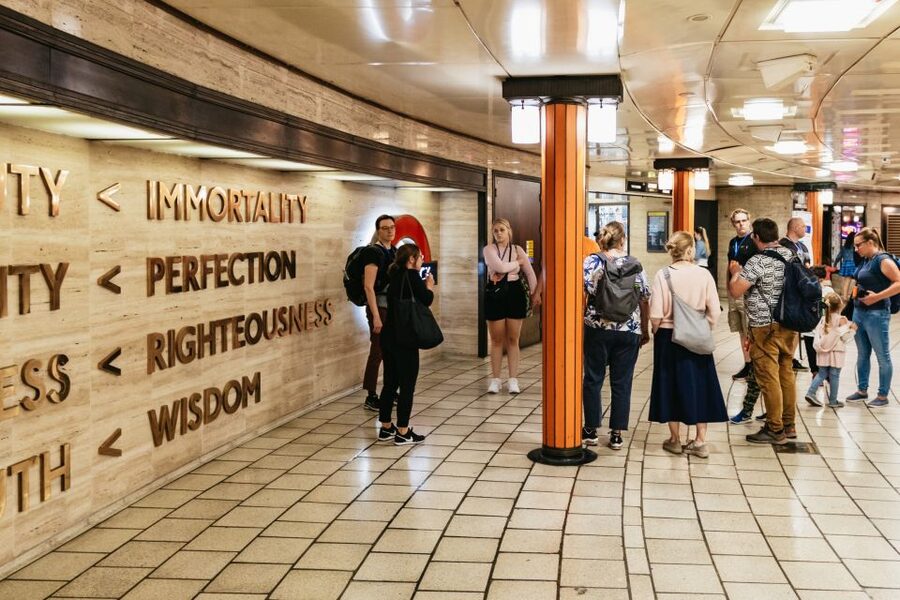
One of the most worthwhile sections covers the Underground during the Second World War. During the Blitz, stations were used as refuges from air raids. For Londoners, the Tube became more than transport. It offered shelter, though the experience was far from comfortable or simple.
The guide also explains how parts of the system were used to store treasures from the British Museum. That detail gives you a fresh view of the network. The Underground was not only moving people from one neighborhood to another. It was also protecting important objects when London was under threat.
You’ll hear that the Tube was even used as an aircraft factory. This is the kind of fact that gives the tour its title. The secret is not always an unseen room you can enter. Sometimes it is the unexpected role a familiar place played during a crisis.
I find these wartime stories more useful than a string of isolated oddities because they show how London adapted its transport system to urgent needs. The Underground became shelter, storage, workplace, and part of the city’s survival plan.
The short ride to the London Transport Museum

Partway through the tour, you take public transport for about 10 minutes before visiting the London Transport Museum. Your guide leads the group through the transfer, but you must supply your own ticket.
For this tour, buy a Zone 1 to 2 day travel card or use an Oyster card before arriving. The public transport fare is not included in the $40 price. You can also use another valid travel card, but do not assume the tour price covers the ride.
This is an easy cost to overlook. One person reported an unexpectedly high charge after using a bank card for the tour, while another found a travel pass much cheaper. The exact fare depends on your ticket and travel choices, but the lesson is simple: sort out your Tube payment before you meet the group.
The museum visit gives the tour a useful change of setting. Instead of only seeing the Underground in active stations, you get a dedicated transport setting where London’s vehicles and railway story can be viewed with more breathing room. The provided information does not specify how long you spend inside the museum, so keep your expectations focused on a guided visit rather than a full museum day.
The tour finishes at 10B Bridge Street in Westminster. That location is handy for continuing through central London, though you should still allow a little time to find your bearings after the final stop.
Guides, headsets, and the human side of the tour
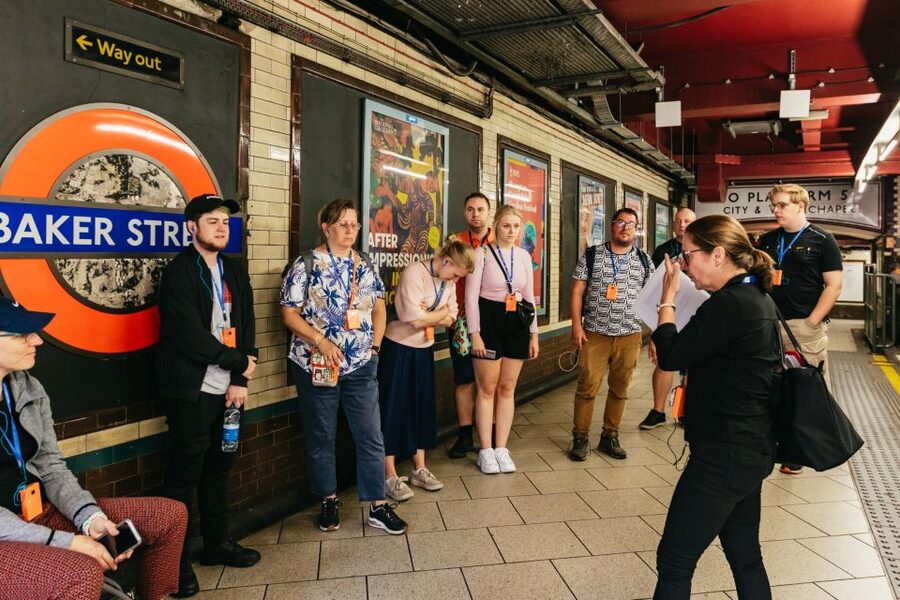
The strongest part of this experience is the guide. John appears often in the tour’s feedback, along with Aaron, Angela, Peter, and other English-speaking guides. Their strengths are clear: strong command of the subject, a friendly manner, patience with questions, and a knack for keeping historical detail from becoming dull.
One guide handled a group member’s need for a restroom stop, while another managed a route change caused by Tube strikes and closed lines. Those details matter. London’s transport system can change quickly, and a good guide needs to adjust without losing the thread of the tour.
The audio headsets are included and are genuinely useful. Underground stations are noisy places, and the group may not always fit neatly beside the guide. The equipment has received praise for making the commentary easier to hear, though one person found the headsets crackly above ground.
You should still expect some background noise and the ordinary interruptions of a working railway. This is not a quiet museum talk. Trains will arrive, commuters will pass, and the group may need to pause or change position.
Is $40 a fair price?
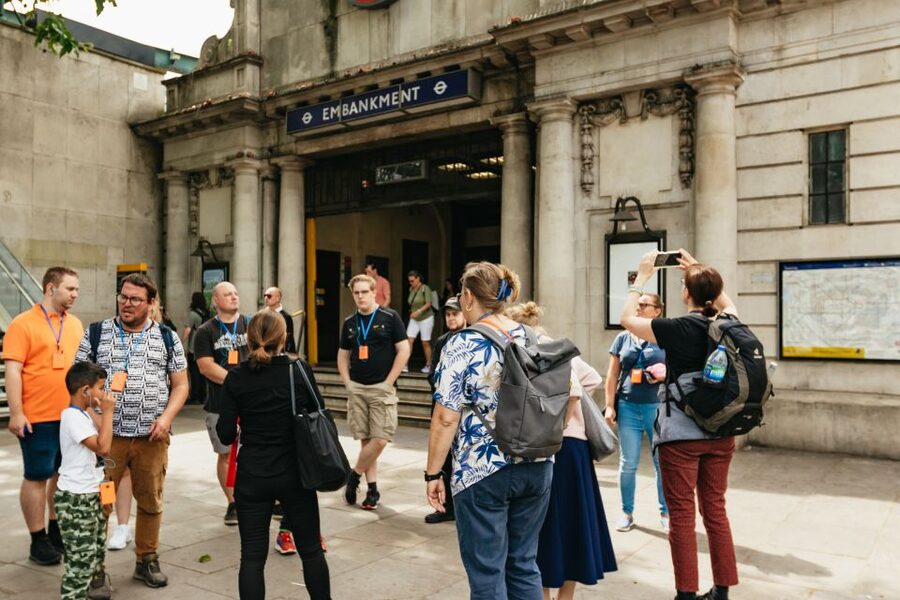
At $40 per person, the tour is not the cheapest way to ride the Tube, since the transport fare is extra. You are paying for the guide’s research, the planned route, the historical interpretation, the headset, and the convenience of having the system explained as you move through it.
For a first visit to London, I think the price can make sense if you enjoy transport history and want more than a standard sightseeing loop. The Tube is something you will probably use during your stay anyway. This tour teaches you how to notice it.
For regular London residents or repeat visitors, the value depends on how much you already know. Several people who had used the Underground for years still found unfamiliar details in stations they thought they knew. That is a good sign, but the experience remains an overview rather than a restricted-access tour.
You should budget for your Tube ticket separately and remember that food, drinks, hotel pickup, and drop-off are not included. Free cancellation is available up to 24 hours before the start time, and you can reserve now and pay later, which is useful if your London plans are still shifting.
Who should book this Tube walking tour?
I would recommend it to anyone who likes city infrastructure, engineering, wartime history, architecture, or unusual London stories. It also suits families with older children who ask lots of questions. One guide was especially appreciated for answering an inquisitive son’s questions.
It can work well for a first-time visitor because it adds meaning to the transport system you will use elsewhere in London. It also suits long-term London residents who want to notice familiar stations in a new way.
You should think twice if you dislike stairs, steady walking, or busy public transport. The Underground has many steps, and the tour is not suitable for wheelchair users or people with reduced mobility. Strollers and large bags are not allowed, so arrive with a small day bag.
My verdict: book it for the stories, not secret tunnel access
I would book this tour if you want a lively history of the London Underground, told while you are standing inside the places being discussed. The combination of Baker Street, station details, wartime uses, abandoned lines, ghost stories, and the London Transport Museum gives you a strong two-and-a-half-hour introduction to a city system most people take for granted.
I would not book it expecting to enter a disused station. That is the key decision. If you accept a walking tour through active stations with stories about closed and hidden places, the $40 fee offers solid value. Bring your Zone 1 to 2 travel card or Oyster card, wear comfortable shoes, and leave room in your schedule for the Underground to run on its own timetable.
FAQ
Where does the London Underground walking tour begin?
It begins at Baker Street Station. Meet the guide by the Sherlock Holmes statue outside the station.
Where does the tour finish?
The tour finishes at 10B Bridge Street, Westminster, London SW1A 2JR.
How long does the tour last?
The experience lasts 2.5 hours.
Is the London Underground ticket included?
No. You need to bring your own public transport ticket. A Zone 1 to 2 day travel card or Oyster card is recommended.
Is the tour conducted in English?
Yes. The tour has a live English-speaking guide.
What does the tour include?
It includes the tour guide, the guided walking experience, the public transport portion of the itinerary, a visit to the London Transport Museum, and an audio headset.
Does the tour enter a disused Underground station?
Entry into a disused station is not promised. The tour includes stories about abandoned stations and may show signs or locations connected with them.
Is the tour suitable for wheelchair users?
No. The tour is not suitable for wheelchair users or people with reduced mobility because the Underground includes many steps.
Can I bring a stroller or large luggage?
No. Baby strollers and luggage or large bags are not allowed.
Can I cancel the booking for a full refund?
Yes. You can cancel up to 24 hours in advance for a full refund. Reserve now and pay later is also available.
Just added around London
- German London : The Ultimate Walking tour★ 4.8 · 400 reviews
- London: Medieval History Walking Tour from The Tower★ 4.9 · 318 reviews
- The Beatles London Walking Tour★ 4.2 · 147 reviews
- Secret Old London Walking Tour★ 4.8 · 154 reviews
- Secrets of London Walking Tour★ 4.7 · 562 reviews
- London: Notting Hill Walking Tour★ 4.5 · 254 reviews
- London: Old City Walking Tour★ 4.8 · 135 reviews
- London: Witches and History Bankside Walking Tour★ 4.8 · 223 reviews
Hidden Gems Walking Tours, compared.
Dublin Highlights and Hidden Gems Guided Walking Tour
Read our review →
Explore Berlin: See All The Iconic Sights & Some Hidden Gems
Read our review →
San Marco to Rialto Walk & Spritz Like a Local
Read our review →
Kyoto Geisha Walking Tour: Gion District & Hidden Gems
Read our review →
Eat Like a Local: Venice 3-Hour Small-Group Food Tasting Tour
Read our review →
Montmartre Hidden Gems and Scenic Highlights Walking Tour
Read our review →
Guided Walking Tour of City Highlights & Hidden Gems
Read our review →
Browse the lists this tour appears in