
REVIEW · LIVERPOOL
Liverpool: A Walk Through Time: Full History Walking Tour
Liverpool’s story is much bigger than The Beatles. This two-hour walk connects the city’s medieval beginnings in 1207 with its rise as a world trading port, using the Royal Liver Building, Old Dock, and Castle Street as pages in one long story. I like the clear timeline, and I like that the guides point out architectural details you might otherwise miss. The main consideration is pace: you cover a lot of ground and a great deal of history in a short time.
I especially like the chance to ask questions throughout, rather than simply follow a speech from one stop to the next. Guides John and Dave have academic backgrounds, with John bringing particular expertise in imperial and maritime history. The tour is also good value at $22, though it is best for you if you want a broad city introduction rather than long visits inside individual buildings.
Key points at a glance
- Liverpool in one connected story: Follow the city from its 1207 charter through trade, shipping, industry, and modern renewal.
- A guide with serious local expertise: John is described as holding a PhD in imperial and maritime history, while Dave also brings academic training and strong storytelling.
- Architecture becomes part of the lesson: Look closely at the Three Graces, Town Hall, Old Hall Chambers, and other buildings for clues to Liverpool’s past.
- The waterfront is only part of the picture: The route links the riverfront with medieval church grounds, Castle Street, Liverpool ONE, and the Old Dock.
- Useful for first-time visitors: You finish on Castle Street, close to central sights, food, and further exploring.
- Good practical flexibility: The English-language walk lasts two hours, is wheelchair accessible, and allows cancellation up to 24 hours before departure.
Liverpool’s story begins at the Royal Liver Building
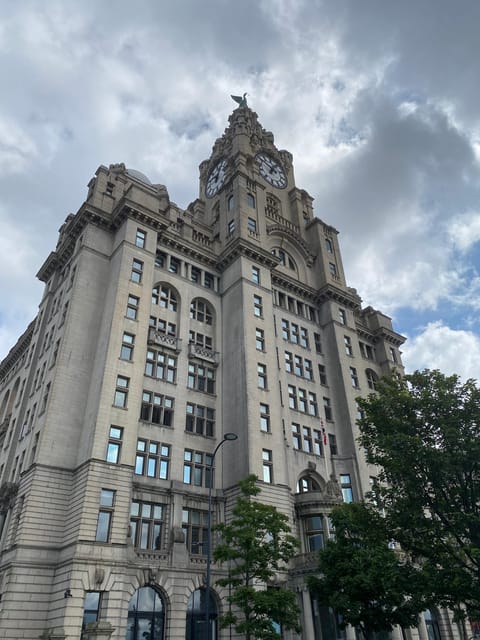
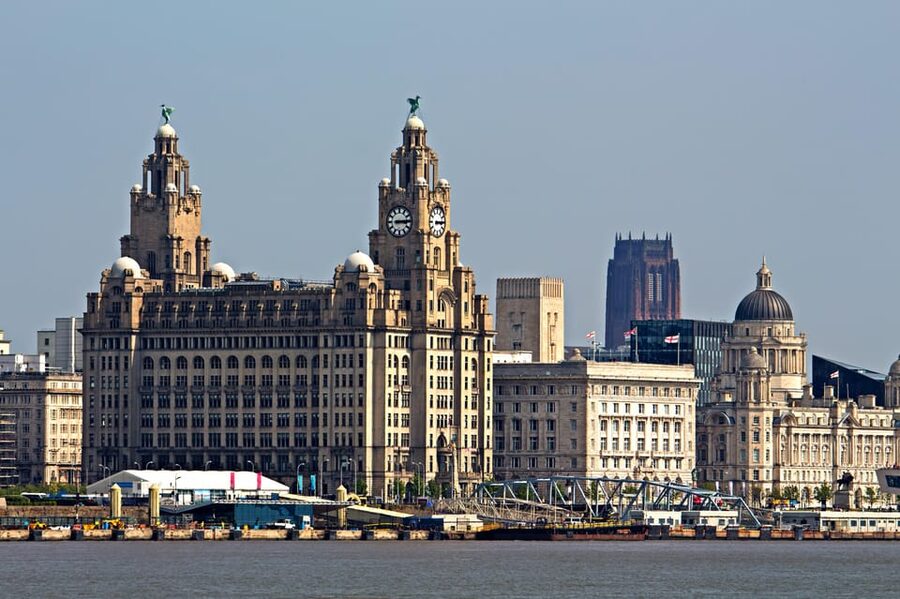
Meet outside the Royal Liver Building, at the black gate facing the river. This is a sensible starting point because the building places you right beside the Mersey, where Liverpool’s success was made possible.
The opening section sets up the main idea of the tour: Liverpool did not become an important city by accident. Its position beside the river helped it grow from a small medieval settlement into a port with links across Britain and the wider world.
The guide then gives you the larger timeline, beginning in 1207 and moving through the city’s changing fortunes. You hear how Liverpool developed as a trading town, how transport and technology helped it expand, and how its port shaped the north of England and Britain more broadly.
This is where a strong guide matters. The route itself is easy to follow, but the value comes from connecting one place to another. John is repeatedly praised for explaining dates, events, and economic changes in a way that makes them easier to remember. He also keeps the tone light, using dry humour and inviting questions instead of treating history like a classroom lecture.
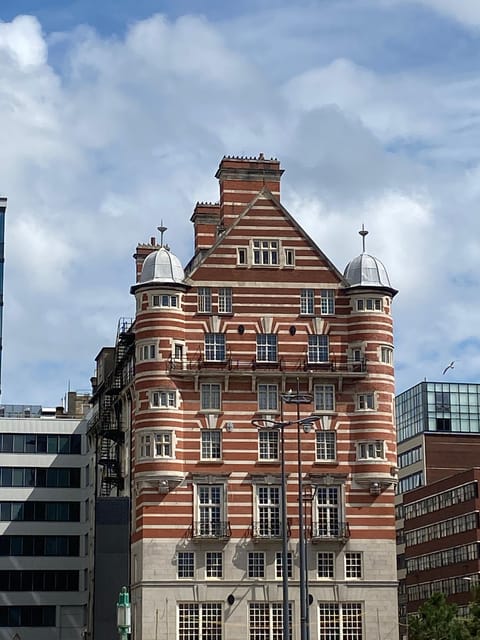
The Royal Liver Building receives a dedicated explanation later in the walk. You should look up as you listen. One of the tour’s useful habits is directing your attention to details in the architecture that are easy to pass without noticing.
More History Walking Tours in the UK
- Private Historical Walking Tour of York
★ 5.0 · 1,324 reviews - Edinburgh: Witches & Haunted History Walking Tour
★ 4.8 · 1,290 reviews - Edinburgh: 3-Hour Historical Walking Tour in Italian
★ 4.7 · 734 reviews
The waterfront and the Three Graces
From the starting point, the tour moves along Liverpool’s waterfront. This is one of the most recognisable parts of the city, but the walk gives it more meaning than a quick photo stop.
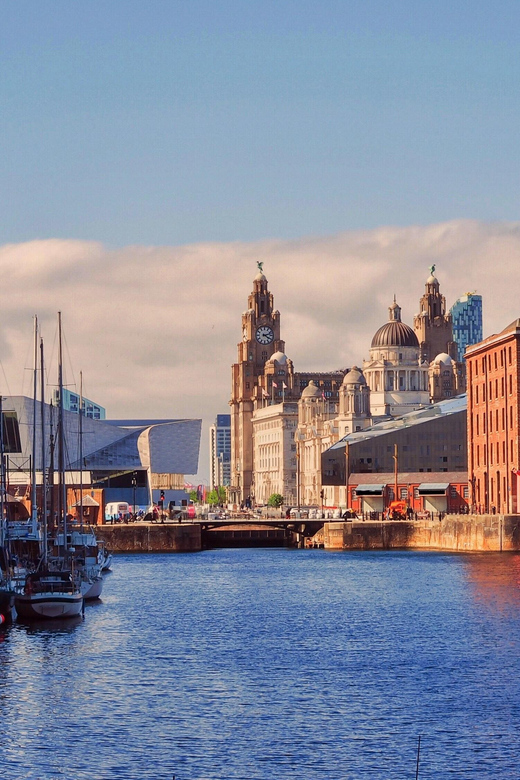
You learn about the Royal Liver Building and its place among the waterfront’s landmark buildings. The tour also puts the waterfront into its working context, explaining the role of shipping, commerce, and Liverpool’s links with the wider world.
The guide’s explanation of the Three Graces is an early highlight for anyone visiting Liverpool for the first time. Instead of viewing the buildings as a single postcard scene, you get a sense of what they represented when Liverpool was a major centre of trade and administration.
The waterfront section is also a good example of the tour’s main strength: it links buildings to people and systems. You are not only looking at grand façades. You are considering why they were built, what they communicated, and how they fitted into the city’s growth.
The limitation is that the experience is primarily an outdoor walking tour. You should not expect extended interior visits at each landmark. The guide explains the places from the street, which lets the route cover more ground but gives you less time inside any one building.
Liverpool Parish Church Gardens and Old Hall Chambers
The route continues to Liverpool Parish Church, also known as Our Lady and Saint Nicholas, and its gardens. This provides a useful change from the monumental waterfront.
The church and gardens help show Liverpool as an older settlement, before its later commercial power transformed the centre. The setting gives the guide room to explain the city’s early identity and the people who shaped its growth.
From here, the walk includes Old Hall Chambers. These stops help fill in the gap between medieval Liverpool and the later port city. The tour does not treat the city as if it appeared fully formed in the industrial era. Instead, you see how different periods overlap in the centre.
For you, this part of the route is valuable because it broadens the usual Liverpool visit. If your plans focus mainly on the waterfront, football, or music, the church gardens and older buildings show a different side of the city.
You will be standing and listening outdoors, so sensible footwear and weather-ready clothing are wise. The tour is wheelchair accessible, but the supplied information does not give details about every surface or individual building interior. If you need specific access arrangements, check before booking.
Town Hall, Castle Street, and the Queen Victoria Monument
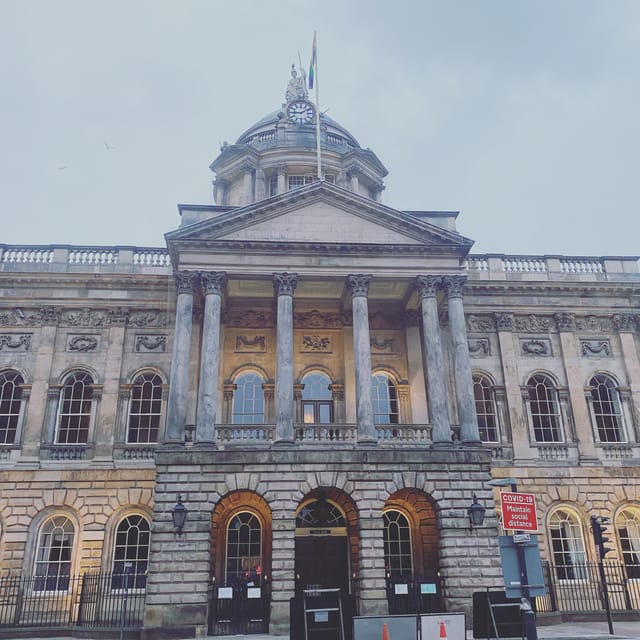
Castle Street is one of the tour’s most useful stretches because several layers of civic Liverpool come together here. You pass the Town Hall and the Queen Victoria Monument while the guide explains how the city’s wealth, power, and public identity developed.
The Town Hall gives the story a civic dimension. Liverpool’s growth was not only about ships and warehouses. A successful port needed municipal structures, public buildings, and institutions to manage a rapidly expanding city.
The Queen Victoria Monument helps place Liverpool within the wider British imperial period. This is also where John’s background in imperial and maritime history can add useful context. The tour connects local buildings with broader events rather than treating Liverpool as an isolated story.
Castle Street is also the finishing point, which is practical. You are left in a central area rather than returned to the waterfront. That makes it easy to continue sightseeing, find food, or revisit a building that caught your attention.
The route gives you a good visual introduction, but it cannot cover every historical detail. You should think of Castle Street as a place to keep exploring after the walk, not the last word on Liverpool’s civic history.
Same streets, a different route:
- Magical London: Harry Potter Guided Walking Tour
★ 4.7 · 22,044 reviews - Edinburgh: Harry Potter Magical Guided Walking Tour
★ 4.8 · 11,944 reviews - Edinburgh Castle: Guided Walking Tour with Entry Ticket
★ 4.7 · 11,699 reviews - Underground Vaults Walking Tour in Edinburgh Old Town
★ 4.5 · 8,506 reviews
Liverpool ONE and the Old Dock
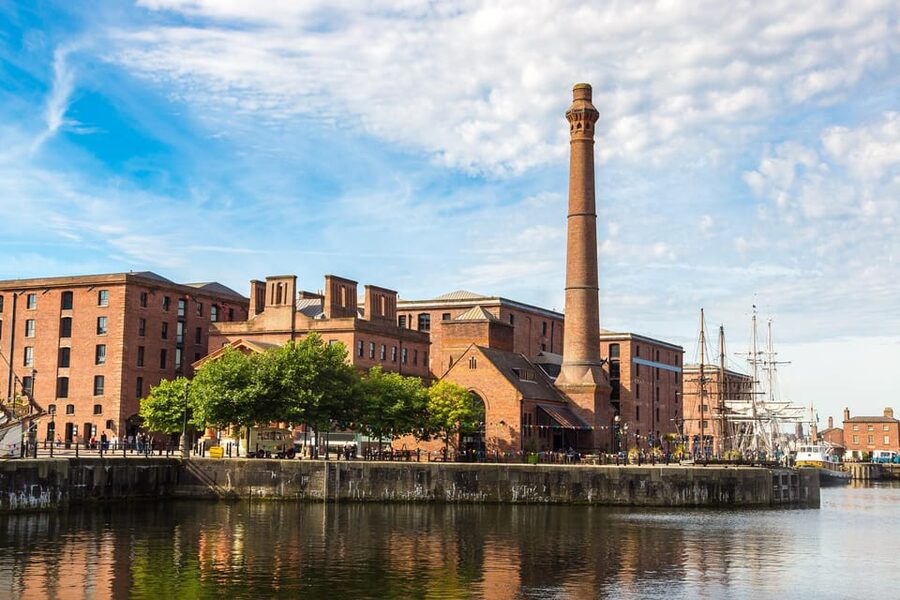
The walk then reaches Liverpool ONE, a modern shopping and leisure area built into the central city. Its inclusion is important because the tour does not stop with Liverpool’s past glories.
Here, the guide can show how parts of the city have changed use over time. Liverpool’s story includes decline, redevelopment, and attempts to bring central areas back into everyday use. Liverpool ONE gives the route a modern reference point after the older waterfront and civic buildings.
The Old Dock adds another key piece. Opened in 1715, it is associated with the development of Liverpool as a serious port, and its position helps you understand how the city managed ships and trade as activity increased.
The Old Dock section works best if you are interested in how a port actually functions. Rather than hearing only about famous buildings, you get a clearer sense of the infrastructure behind Liverpool’s growth.
This section is brief, so do not expect a museum-style presentation or a long archaeological visit. Its value is in the connection between place and story. You see how the modern centre sits above and around earlier commercial activity.
Royal Albert Dock and the return to the river
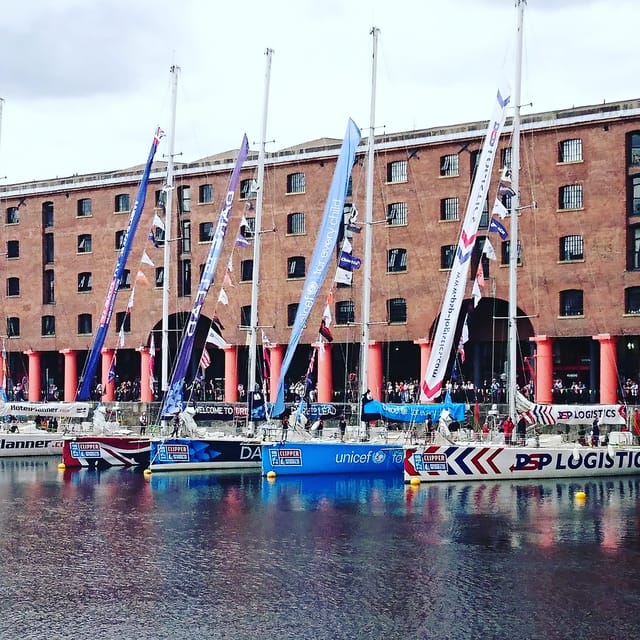
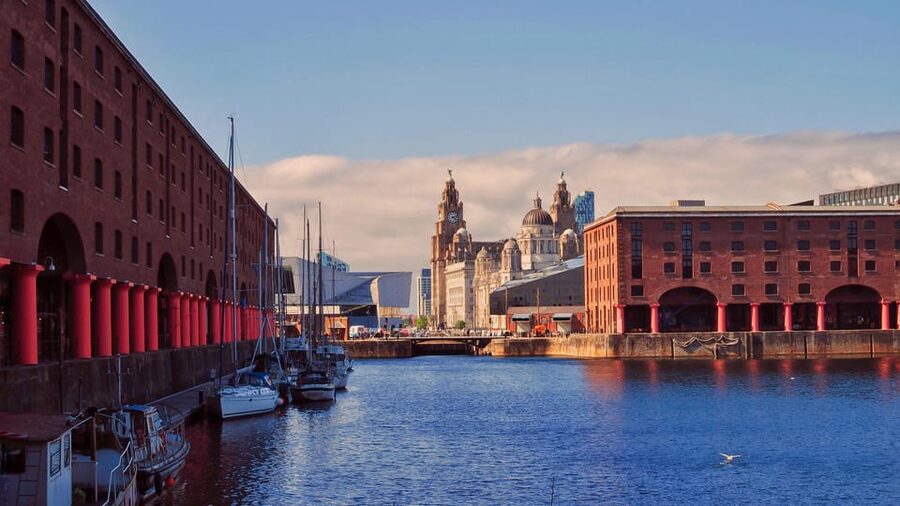
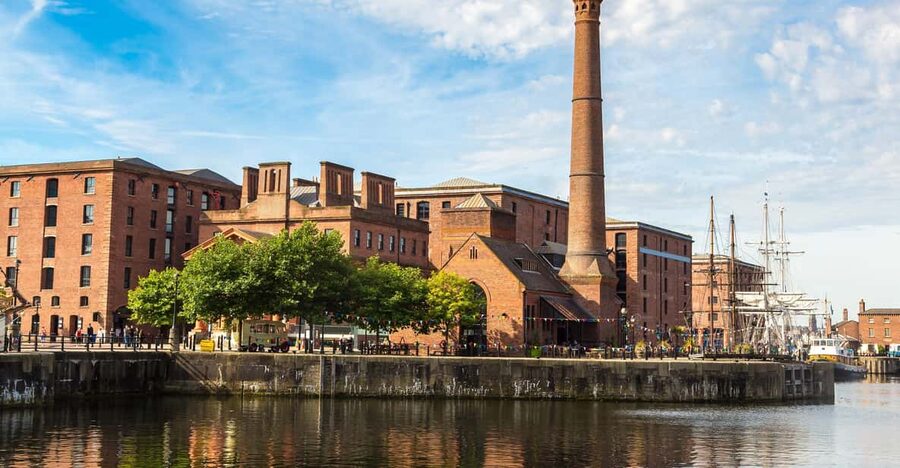
The route continues to the Royal Albert Dock, one of Liverpool’s best-known historic areas. It brings the tour back to the waterfront and reinforces the importance of maritime trade.
The dock is a strong visual stop because it makes the city’s commercial past easy to picture. You can see the scale of the waterfront spaces while the guide explains Liverpool’s place in national and international trade.
By this stage, the timeline has moved from a medieval trading town to the second city of the British Empire and then toward the modern city. The Royal Albert Dock helps tie those periods together. It is a place where the old port has become part of the visitor-friendly centre, yet the original purpose remains visible.
The tour finishes back at the Royal Liver Building area before the formal end at Castle Street, according to the route details. For practical planning, treat Castle Street as the final meeting point and ask your guide if you need precise directions at the end. The walk’s central route makes it easy to continue on foot.
How the guides shape the experience
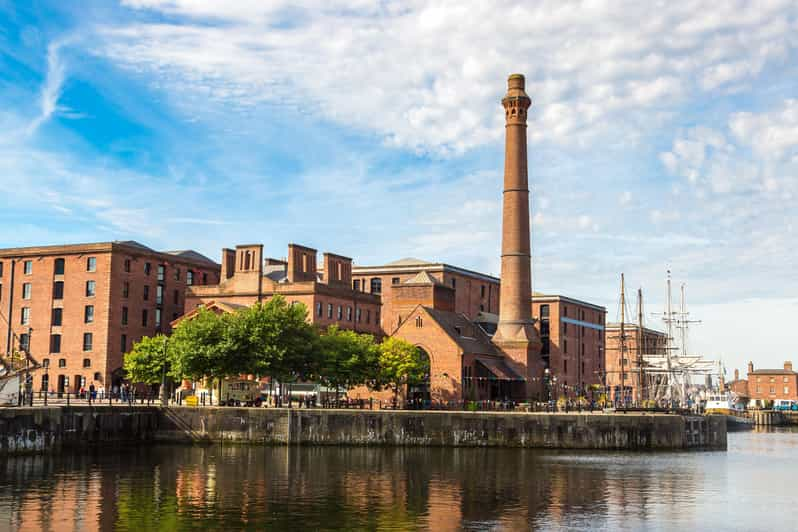
The strongest part of this tour is the delivery. The information is broad, but the guides are expected to make it clear and approachable.
John receives especially strong praise for his ability to answer detailed questions, keep the group involved, and explain complex links between local and world history. He is described as having a PhD in imperial and maritime history. That background is useful when the discussion moves from Liverpool’s streets to trade, empire, shipping, and the city’s influence across northern England.
Dave is also mentioned as an academically trained guide with strong storytelling skills. The exact guide may vary, so you should not book on the assumption that John will lead every departure.
The pace appears designed to suit a mixed group. The walk lasts about two hours, and the guide checks that people can follow along. One account describes a cold day when the guide kept the group engaged, which is a good reminder that weather can affect an outdoor history tour.
The tone is not stiff. The guide encourages questions and adds humour, but the focus remains on history. This makes the tour suitable for adults, older children, and teenagers who may not want a formal lecture. One family account noted that a sceptical teenager became engaged once the connections between events were explained.
What $22 buys you
At $22 per person, the tour offers solid value if you want orientation and context in one sitting. You receive two hours with a live English-speaking guide and a route through several of Liverpool’s most important historical areas.
The value is not in admission to attractions. The supplied details describe a walking tour rather than a package with interior tickets, transport, food, or museum entry. You are paying for the guide’s interpretation, route planning, and ability to connect the sights.
I would compare it with the cost of spending your first morning wandering without context. Liverpool’s centre is easy to walk, but its buildings make more sense when you understand how the port, railways, trade, civic government, and redevelopment fit together.
The trade-off is depth. You get a wide timeline, from 1207 to the present day, but not a long examination of every period. If you want a specialist tour of maritime architecture or a full visit inside the Royal Liver Building, you will need a separate experience.
Who should book this Liverpool history walk?
I would choose this tour near the start of a Liverpool visit. It gives you a framework for later sightseeing, and the guide may suggest other places to visit or local food to try. One useful recommendation mentioned in the tour feedback was a place to eat scouse after the walk.
The experience suits you if:
- You are visiting Liverpool for the first time.
- You want more than a Beatles-focused introduction.
- You enjoy architecture, civic history, trade, and maritime subjects.
- You like asking questions during a guided walk.
- You want a broad story in two hours.
- You are travelling with a teenager who responds better to stories and connections than to lists of dates.
You may want something else if you prefer a slow tour with long stops indoors. The route covers several areas, and the broad timeline means the guide must keep moving.
Wear comfortable shoes and check the forecast. Liverpool weather can change, and this is an outdoor experience with regular standing. The tour is wheelchair accessible, and English is the only language listed.
Final verdict: a smart first look at Liverpool
Book this walk if you want Liverpool’s main historical story explained in plain English, with enough detail to make the streets more interesting afterward. The combination of waterfront landmarks, medieval sites, civic buildings, Old Dock, Liverpool ONE, and Castle Street gives you a useful sweep of the city.
The biggest reason to choose it is the guide. John appears particularly suited to people who want serious historical detail without a dry lecture, while Dave offers a similar academic and storytelling approach. The result should leave you better prepared to explore on your own.
Skip it only if you want extensive interior access, a narrow specialist subject, or a very slow sightseeing pace. For $22, two hours, and a central route through Liverpool’s main historic zones, this is a practical introduction with real substance.
FAQ
How long does the Liverpool history walking tour last?
The tour lasts two hours. The listed route includes guided sections of varying lengths, with the main Liverpool history walk taking about 110 minutes.
Where does the tour begin?
Meet outside the entrance of the Royal Liver Building, at the black gate facing the river.
Where does the tour finish?
The stated finishing point is Castle Street. The route also returns toward the Royal Liver Building area before ending.
What language is the tour conducted in?
The live tour guide speaks English, and English is the only language listed.
How much does the tour cost?
The price is $22 per person.
Is the tour wheelchair accessible?
Yes, the activity is listed as wheelchair accessible.
Can I cancel for a full refund?
Yes. You can cancel up to 24 hours before the tour for a full refund.
Do I have to pay when I book?
No. The tour offers a reserve now and pay later option, so you can hold a place without paying immediately.
Which Liverpool sights are included?
The route includes the Royal Liver Building, Liverpool waterfront, Royal Albert Dock, Liverpool ONE, Liverpool Parish Church and gardens, Chapel Street, Castle Street, Old Hall Chambers, the Town Hall, the Old Dock, and the Queen Victoria Monument.
Will John lead the tour?
John leads some departures and receives particularly strong praise for his academic background and local history expertise. Dave is also mentioned as a guide, so the guide may vary by departure.
Just added around the UK
- Merchant City Music Walking Tour of Glasgow★ 5.0 · 94 reviews
- Stirling Castle, Loch Lomond Walk & Whisky Distillery Tour from Glasgow★ 5.0 · 79 reviews
- Walking Tour of Glasgow★ 5.0 · 96 reviews
- Gothic Glasgow Walking Tour★ 5.0 · 448 reviews
- Glasgow: Pubs & History Walking Tour with Beer Tasting★ 5.0 · 81 reviews
- Glencoe, Scenic Walk & Highlands Guided Tour starting Glasgow★ 5.0 · 121 reviews
- Gander Walking Tours in Glasgow★ 5.0 · 506 reviews
- Group Walk up Ben Nevis from Fort William★ 5.0 · 108 reviews
History Walking Tours, compared.



Berlin’s Best: 2 Hour Walking Tour Third Reich and the Cold War
Read our review →
Third Reich Berlin: Hitler and WWII Walking Tour
Read our review →
New Orleans Garden District History Walking Tour
Read our review →
Cartagena: Historic Center and Getsemaní Shared Walking Tour
Read our review →

Imperial Palace and Shogun Historical Walking Tour
Read our review →Browse the lists this tour appears in