
REVIEW · ATHENS
Athens: Guided Mythological Walking Tour
Athens can feel like a stack of eras, with grand neoclassical buildings beside ancient stones and ordinary streets hiding stories about gods, heroes, and monsters. This mythological walking tour gives those places a human voice, linking Zeus, Athena, satyrs, nymphs, lovers, jealousy, and divine punishment to the city around you.
I like the way the walk reaches beyond the Acropolis postcard. You get the Academy of Athens, Syntagma Square, Mitropoleos, Plaka, and less obvious statues and monuments, while guides such as Penelope explain what you might otherwise walk past. I also like the mix of myth, history, architecture, and daily life in ancient Athens.
The main consideration is its amount of information. This is not just a light stroll with a few familiar legends. Names, family connections, philosophy, social customs, and historical context come quickly, so you should expect to listen closely and ask questions.
What makes this Athens myth tour worth your time
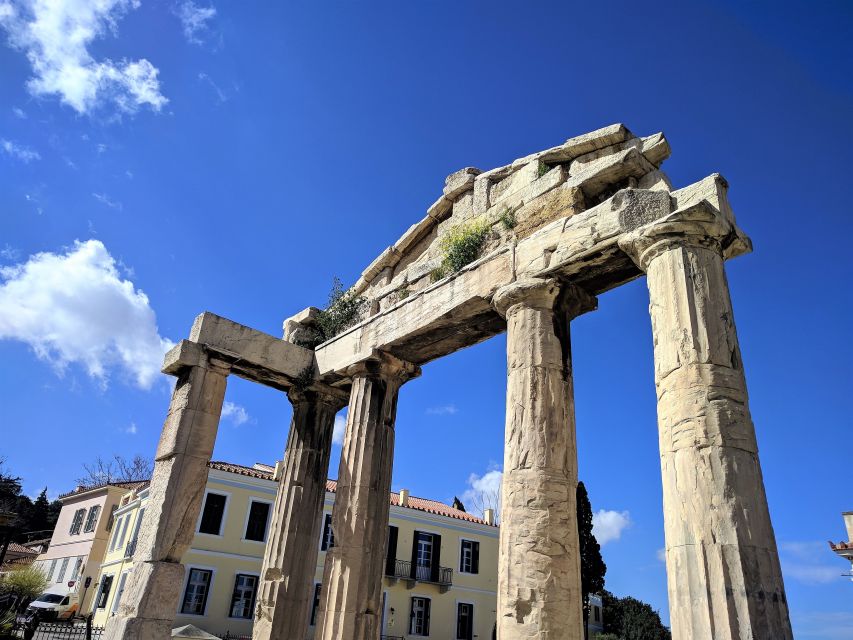
- Myths tied to real streets: Ancient stories are connected to statues, buildings, monuments, and neighborhoods rather than told in isolation.
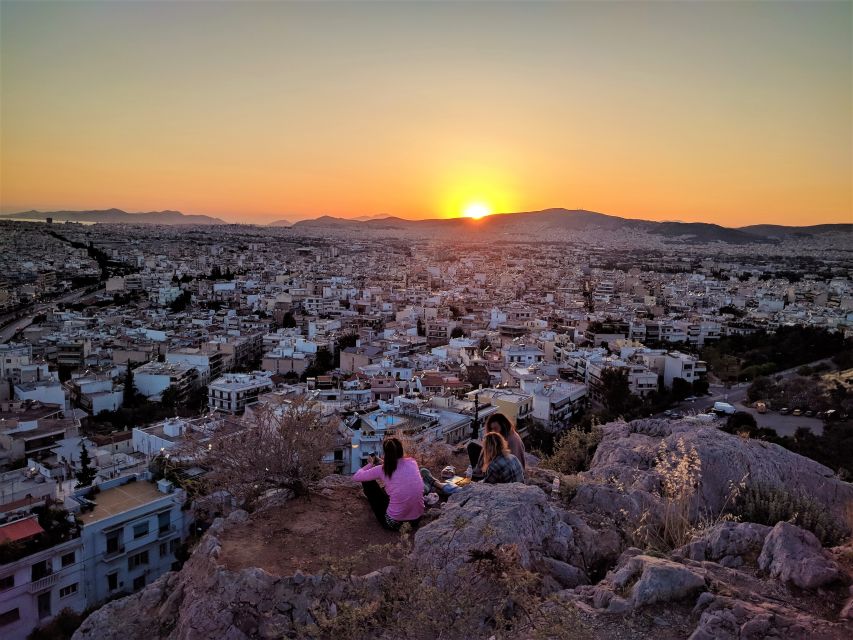
- A useful city walk: The route moves from Korai 4 through Syntagma and Plaka to Monastiraki, giving you a broad central Athens orientation.
- Strong storytelling: Penelope is repeatedly praised for making complex myths clear, lively, and engaging for both adults and children.
- More than gods and monsters: You learn about ancient customs, family life, human and divine relationships, and the way mythology shaped Greek thought.
- Good for families: Children around 10 and teenagers have enjoyed the stories, especially when the guide draws links between statues and famous myths.
- A modest group experience: Group size can be small, particularly outside the busiest season, allowing time for questions and conversation.
The real theme: myths with human weaknesses
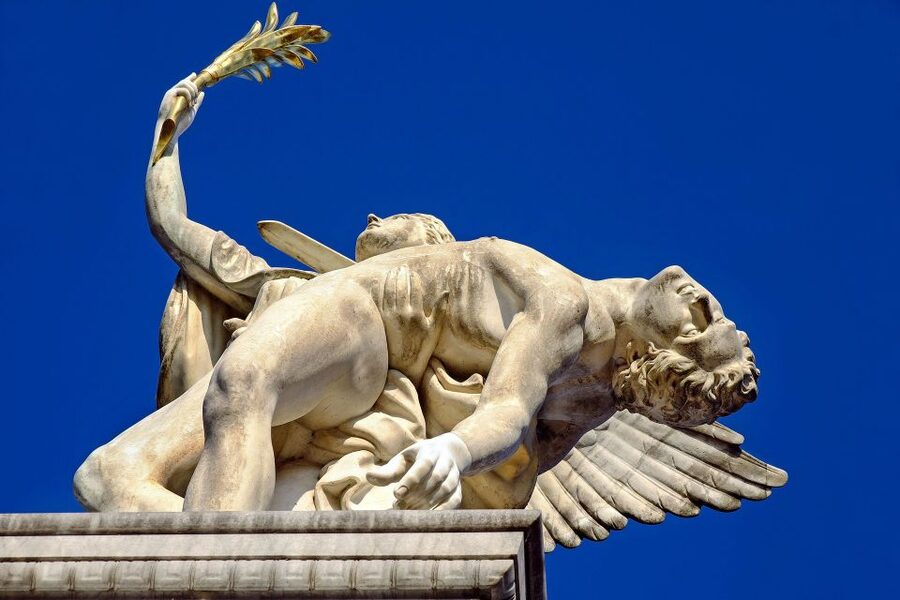
Greek mythology is often presented as a parade of heroic quests. This walk takes a less polished view. You hear about seduction, deception, pride, arguments, punishment, and complicated affairs among gods and mortals.
That makes the stories easier to connect with. Zeus is not simply a powerful sky god, Athena is not only a symbol on a temple, and the Olympians are not a tidy family. Their disputes and desires help explain why Greek myths have lasted so long.
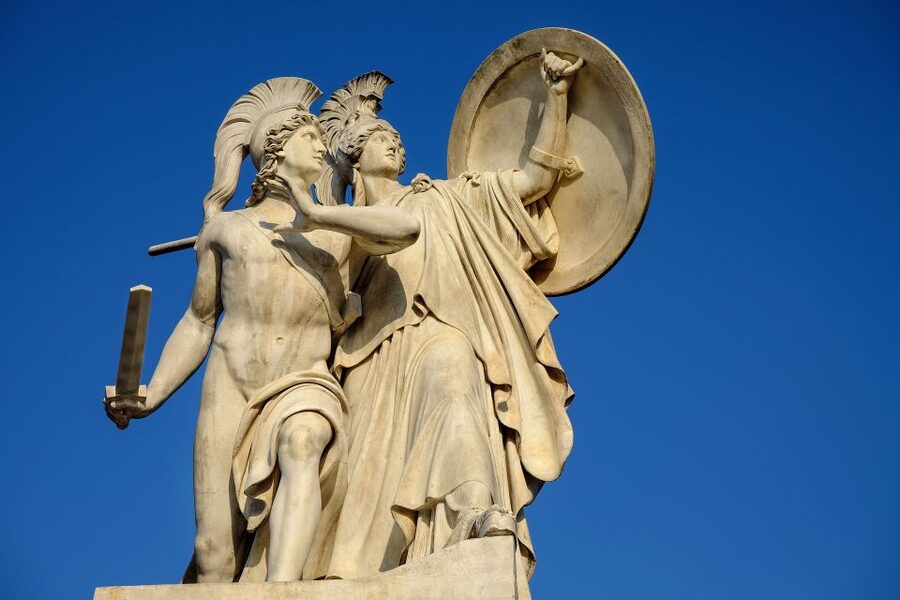
The guide also places the stories beside the city. A statue, architectural detail, or old monument becomes a prompt for a tale. You may have walked past the same feature without noticing its connection to a god or legend. That is one of the best reasons to take this tour early in your stay.
The history content matters, too. The walk brings in the social customs and daily routines of ancient Athenians, along with the ways people understood the relationship between humans and the gods. If you already know the main myths, you may still learn about their links to philosophy, literature, and cultural change.
More Guided Tours in Athens:
- Athens: Acropolis and Parthenon Guided Walking Tour
★ 4.6 · 5,882 reviews - Acropolis and Parthenon Guided Walking Tour
★ 5.0 · 4,755 reviews - Acropolis: Acropolis and Parthenon Guided Walking Tour
★ 4.7 · 3,442 reviews
Starting at Korai 4 and reaching the Academy of Athens
The meeting point is in front of the Starbucks café at Korai 4. From there, the walk heads toward the Academy of Athens, with about 20 minutes of walking listed for this part of the route.
The Academy area gives the guide an early chance to connect modern Athens with classical ideas and Greek intellectual life. This is not presented as an archaeological-site visit, so do not expect an indoor tour or formal entry into monuments. Instead, the value comes from what the guide points out and explains along the street.
Look at this opening section as a warm-up for the rest of the tour. You begin learning how the guide reads Athens, using architecture and public statues as clues. If you arrive with a few questions about Zeus, Athena, or the origins of familiar myths, this is a good time to bring them up.
The route is central and urban, not a hike through remote ruins. You will be walking on city streets, so comfortable shoes are important. The organizers specifically recommend comfortable clothing and footwear.
The Numismatic Museum and the story behind overlooked places

The next listed stop is the Numismatic Museum, reached after roughly 15 minutes of walking. The museum itself is not included as an admission stop, but its presence adds another layer to the route.
Coins are closely tied to ancient identity. They carried images of gods, rulers, animals, and symbols, and they helped spread ideas far beyond a single city. A guide with a mythological focus can use this setting to show how divine figures appeared in public life rather than existing only in poems.
This part also reflects the wider character of the walk. You are not simply moving from one famous sight to another. You are learning to notice details in Athens that can be easy to miss when you are focused on the Acropolis or a restaurant search.
The tour’s most praised quality is the guide’s ability to make such details matter. Penelope is often described as clear, funny, and able to answer questions across mythology, history, and architecture. Christina has also led the experience, offering a similar mix of myths, city orientation, and local suggestions.
Akadimias to Syntagma Square
The route continues along Akadimias, with about 20 minutes of walking before Syntagma Square. This is a useful stretch for understanding how Athens changed from an ancient city into the modern capital you see today.
Syntagma can feel very different from the quieter lanes of Plaka. It is a major central square, and the guide uses the surrounding monuments and buildings to keep the mythological thread connected to present-day Athens. The point is not that every building is ancient. The point is that Greek stories and symbols continue to appear in the capital’s public spaces.
You may also find this section helpful for orientation. After the tour, the central location makes it easier to place nearby areas in relation to one another. One past participant found the walk useful as an overview of Athens, especially when taken near the beginning of a stay.
The timing deserves a practical note. The full tour lasts two hours, but the route contains several walking sections, including a 30-minute stretch later in Plaka. The pace is intended for a city stroll, yet the heat can make the distance feel greater in July and August. Guides have adjusted for hot weather by seeking shade and taking breaks when possible, but bring water and a hat.
A few more walking tours around Athens worth a look
- Greek Food Walking Tour in Athens
★ 5.0 · 4,740 reviews - Athens: Guided Greek Food Walking Tour with Tastings
★ 4.9 · 2,859 reviews - Acropolis monuments & Parthenon Walking Tour with Optional Acropolis Museum
★ 5.0 · 2,678 reviews - Athens Acropolis and Parthenon Walking Tour
★ 4.5 · 1,355 reviews
Mitropoleos and the meeting of sacred stories
From Syntagma, the walk heads toward Mitropoleos, with about 15 minutes of walking. This area provides another chance to compare ancient religious ideas with the city’s later Christian traditions and public architecture.
The tour does not promise entry into churches or archaeological sites, and entrance fees are not included. Its strength is the outdoor interpretation. You remain on the streets, looking at the city through the guide’s chosen lens.
This is where the tour can be especially useful for people who enjoy connections rather than isolated facts. A myth is not treated as a loose bedtime story. It becomes part of a larger conversation about how Athenians understood power, family, fate, beauty, conflict, and the natural world.
Do not expect every stop to deliver a famous landmark. Some of the pleasure comes from smaller details and less noticed corners. Several guides have been praised for showing things that participants had walked past before without seeing.
Plaka: the strongest setting for myth and city life
The walk then enters Plaka, the picturesque central neighborhood most closely linked with the old heart of Athens. The route gives you about 30 minutes here, making it the longest walking section.
Plaka works well for this kind of experience because its streets feel more intimate than the large central avenues. You can listen to a story about nymphs, satyrs, gods, or human lovers while moving through lanes filled with buildings, statues, and everyday city activity.
The guide also uses Plaka to discuss ancient social customs and daily life. That helps prevent mythology from becoming a list of supernatural events. You learn about the people who told these stories, what the stories suggested about human behavior, and how divine actions reflected human hopes and fears.
Families may find this part especially effective. Parents have taken children around age 10 or 11, while other groups included teenagers. The stories have enough drama to hold younger listeners, but the cultural and philosophical links give adults something to think about too.
Still, the content can be dense. If you prefer a quick walk with only the best-known tales, you may find the two hours demanding. The guide may move from one myth to another while adding historical background, so it helps to accept that you will not remember every name.
Finishing in Monastiraki
The tour ends at Monastiraki, after the Plaka section. This is a practical finish because you are left in one of central Athens’s most useful areas for continuing your day.
You can treat the ending as a handoff from ancient stories to the rest of your visit. The tour does not include meals, hotel pickup, or drop-off, so plan your own next step. The guide may also offer local suggestions, as Christina has done in the past, including ideas for food, cafés, and bars.
Ending in Monastiraki also suits the tour’s wider purpose. You have crossed several parts of central Athens rather than spending two hours in one enclosed site. You finish with a better sense of how the neighborhoods relate to one another and with a new habit of looking for mythological clues in public art.
Guide style and group size
The guides are the heart of this experience. Penelope is the most frequently named guide in the available feedback, and her strengths are clear: strong English, humor, patience, enthusiasm, and an ability to explain a large number of names and stories without losing the group.
She has also been praised for keeping children involved and for managing hot weather with shade and pauses. That matters in Athens, where a good explanation can be lost if everyone is tired and overheated.
Christina has led the tour as well. Her approach has included weaving myths into Athenian history, helping families, answering questions, and offering practical local advice. The exact guide may vary, so you should not assume Penelope will lead every departure.
Group size can change. In quieter periods, the walk has sometimes been nearly private, with only two participants. That creates more room for questions and conversation. A larger group may feel less personal, but the live English guide remains the central feature.
Who should book this $47 walking tour?
At $47 per person, the tour is not the cheapest way to see central Athens, but it offers more than a basic orientation walk. You are paying for two hours of live storytelling, interpretation of monuments and architecture, and a guided route through several important neighborhoods.
I see the strongest value for three kinds of people:
- Mythology fans who want more than a quick list of Olympian gods.
- First-time visitors who want a city overview before visiting more major sites.
- Families with older children or teenagers who need a lively way to connect history with places they can see.
It is also a good choice if you have already seen the headline sights. The guide may show you details you missed and offer another way to understand areas you thought you knew.
The value is weaker if you want entry into ruins, museum time, or a tour focused mainly on the Acropolis. Admission to archaeological sites is not included, and this is an outdoor walking experience. You should also compare the price with your interest level. If Greek mythology leaves you cold, two hours of divine family arguments may feel long.
Free cancellation is available up to 24 hours before the tour, and you can reserve now and pay later. Starting times vary, so check availability before booking. The tour is in English only.
Practical advice before you go
Wear shoes you can walk in for two hours and choose light, comfortable clothing. Bring water, especially in the warmer months, and take a hat or other sun protection.
Arrive at the Starbucks café in front of Korai 4 for the meeting point. Since this is a street walk, keep your phone and booking details easy to access, and allow a little time to locate the exact starting spot.
I would schedule it early in an Athens stay if you want help getting oriented. You can then revisit Syntagma, Plaka, or Monastiraki with more context. If you already have a full day of museum visits planned, place this walk when you still have enough attention for stories and questions.
Should you book it?
Book this tour if you want Athens to make more sense through its myths, statues, architecture, and social customs. The strongest reason to choose it is the guide-led storytelling, especially with Penelope, who combines a serious command of the subject with humor and warmth.
Skip it if you want archaeological-site entry, a short casual stroll, or a tour limited to famous monuments. For everyone else, $47 buys a thoughtful two-hour walk through central Athens and a useful new way to read the city.
FAQ
How long is the Athens Guided Mythological Walking Tour?
The tour lasts two hours.
Where does the tour begin?
It begins at Korai 4, in front of the Starbucks café.
Where does the tour finish?
The tour finishes in Monastiraki.
Which places are included along the route?
The route includes the Academy of Athens, the Numismatic Museum area, Akadimias, Syntagma Square, Mitropoleos, Plaka, and Monastiraki.
Is the tour conducted in English?
Yes. The live tour guide speaks English, and English is the listed language.
Are archaeological-site entrance fees included?
No. Entrance to archaeological sites is not included.
Are meals included?
No. Meals are not included in the $47 price.
Does the tour include hotel pickup and drop-off?
No. Hotel pickup and drop-off are not included.
What should I wear?
Wear comfortable clothes and comfortable walking shoes. A hat and water are also sensible, especially during hot weather.
Just added around Athens
- Eat Your Way Through Athens: A Local Food Walk★ 4.9 · 97 reviews
- Athens: Women in Ancient Greece Guided Walking Tour★ 5.0 · 86 reviews
- Athens: The Acropolis Walking Group Tour with a French Guide★ 4.7 · 469 reviews
- Athens: The Acropolis Guided Walking Tour in Dutch★ 4.9 · 107 reviews
- Athens: The Acropolis Guided Walking Tour in German★ 5.0 · 362 reviews
- Athens: Private Walking Tour with a Local★ 4.5 · 93 reviews
- Athens: Evening Food Walking Tour★ 4.9 · 422 reviews
- Athens: Greek Food Discovery Small Group Walking Tour★ 4.9 · 336 reviews
Walking Tours, compared.

Magical London: Harry Potter Guided Walking Tour
Read our review →
Reykjavik Food Walk – Local Foodie Adventure in Iceland
Read our review →
History and Hauntings of Salem Guided Walking Tour
Read our review →
New Orleans Premier Ghost, Voodoo and Vampire Walking Tour
Read our review →
Amsterdam Anne Frank: Small-Group Walking Tour & Local Guide
Read our review →

Edinburgh Castle: Guided Walking Tour with Entry Ticket
Read our review →
Anne Frank’s Story – Guided Walking Tour through Amsterdam
Read our review →Browse the lists this tour appears in