
REVIEW · KYOTO
Night Walk in Gion: Kyoto’s Geisha District
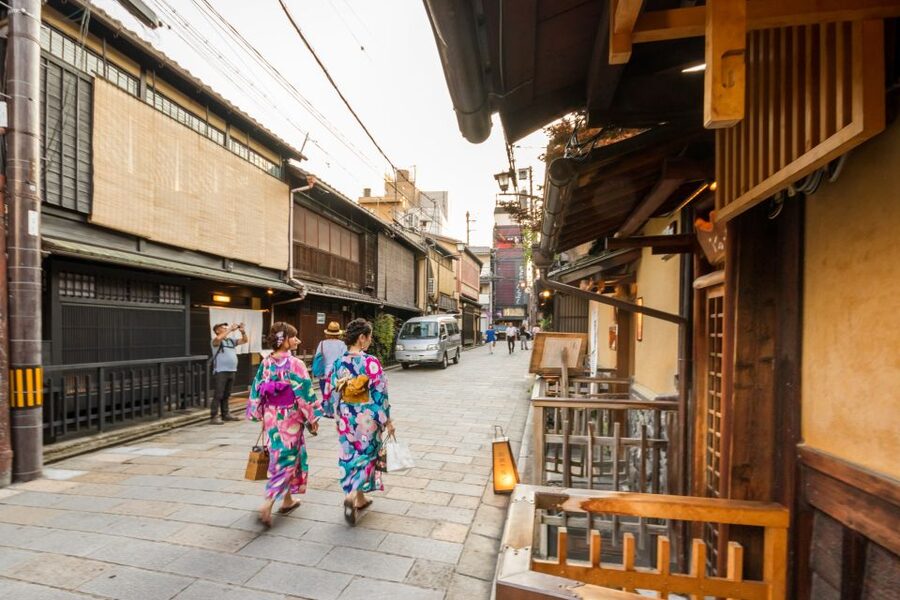
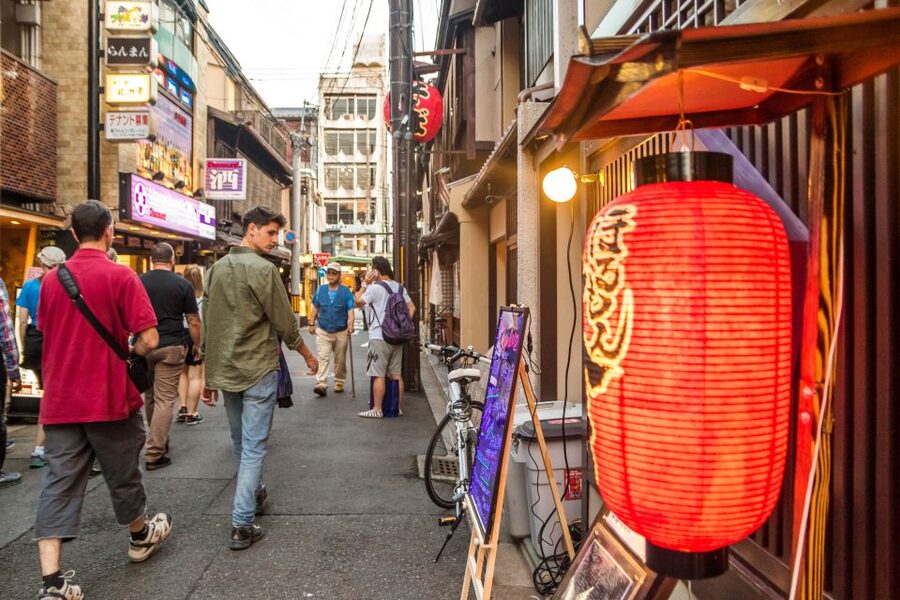
Gion is most atmospheric after dark, when lanterns glow along narrow lanes and the district’s traditional wooden facades take on a quieter mood. This 100-minute walking tour gives you the background needed to understand the geiko and maiko you may see heading to evening appointments.
I like the clear cultural explanation, especially the details about kimono, hairstyles, training, tea-house customs, and daily routines. I also like the strong emphasis on respectful behavior, plus the chance to explore quieter streets beside the stream and around Pontocho. The main drawback is that seeing a geiko or maiko is never guaranteed, and the walk is not suited to people with mobility impairments.
Key points to know before you book
- Geiko and maiko culture takes center stage: Learn the difference between the two, along with their training, clothing, hairstyles, and working lives.
- Nighttime Gion gives the walk its mood: Lantern-lit lanes and traditional streets are at their most appealing after sunset.
- Your guide makes the difference: Guides such as Mia, Mie, Chako, Toko, and Mai are praised for clear English, humor, local insight, and careful etiquette advice.
- Sightings are possible, not promised: You might see several maiko and geiko, or none at all, so book it for the cultural context first.
- Respect is part of the experience: Video recording is not allowed, and you may be asked to observe quietly and avoid intrusive photography.
- The price is easy to justify: At $21 per person, you get a local English-speaking guide and nearly two hours of context for one of Kyoto’s most misunderstood districts.
Why a night walk is the right way to see Gion
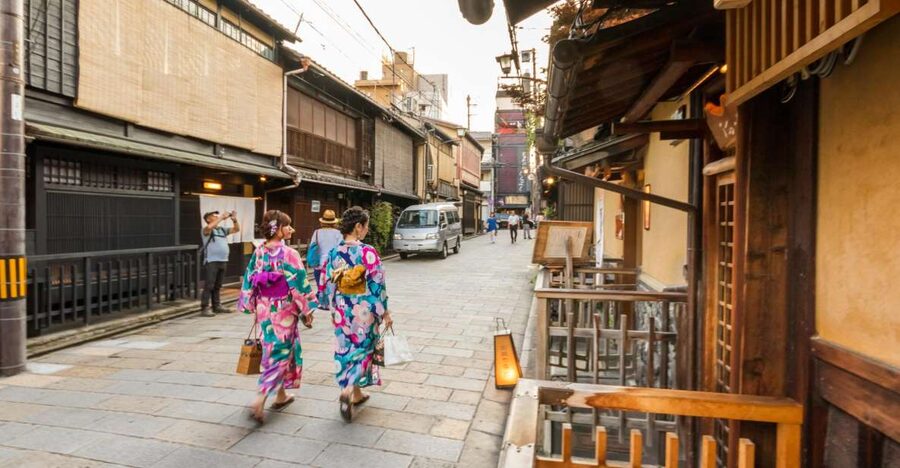
Gion is not a museum set up for visitors. It is a working neighborhood with restaurants, tea houses, boarding houses, and narrow lanes used by people going about their evening jobs. That matters because a walk here works best when you treat it as a place to observe carefully, not a stage arranged for photographs.
The timing helps. After dark, the streets are quieter and traditional facades look especially handsome under the lantern light. You may still encounter other walking groups, but the evening setting gives the tour a more fitting atmosphere than a hurried daytime visit.
The route begins in front of the Gion Omoide Museum, connected to the Izutsu Yatsuhashi pastry shop near Gion Shijo Station. This is a practical meeting point, but do not expect the tour to begin with a long museum visit or a pastry tasting. The museum and shop mainly give you a clear landmark for meeting your guide.
From there, you walk through classic Gion streets and nearby geisha districts. The route includes scenic areas beside a stream and may extend toward Pontocho or less crowded lanes, depending on the guide and the evening. The attraction is not one grand monument. It is the gradual change in mood as you move from busy Kyoto streets into quieter lanes lined with traditional buildings.
More Night Walking Tours in Japan
- Kyoto: Gion Magical Night Walking Tour with Geisha Trivia
★ 4.9 · 2,393 reviews - Kyoto Gion Night Walk & Geisha District Guided Tour
★ 5.0 · 786 reviews - Gion Walking Tour by Night
★ 4.5 · 429 reviews
What you learn about geiko and maiko
The word geisha is widely known, but it often carries a jumble of film images and assumptions. Your guide helps sort that out by explaining the local terms geiko and maiko, the stages of training, and the differences in clothing and appearance.
You can expect attention to:
- Kimono styles and accessories
- Hairstyles and hair ornaments
- The training period of a maiko
- The work and daily schedule of a geiko
- Tea-house customs and private appointments
- Rules for greeting and observing performers
- The place of geiko and maiko in Kyoto’s culture today
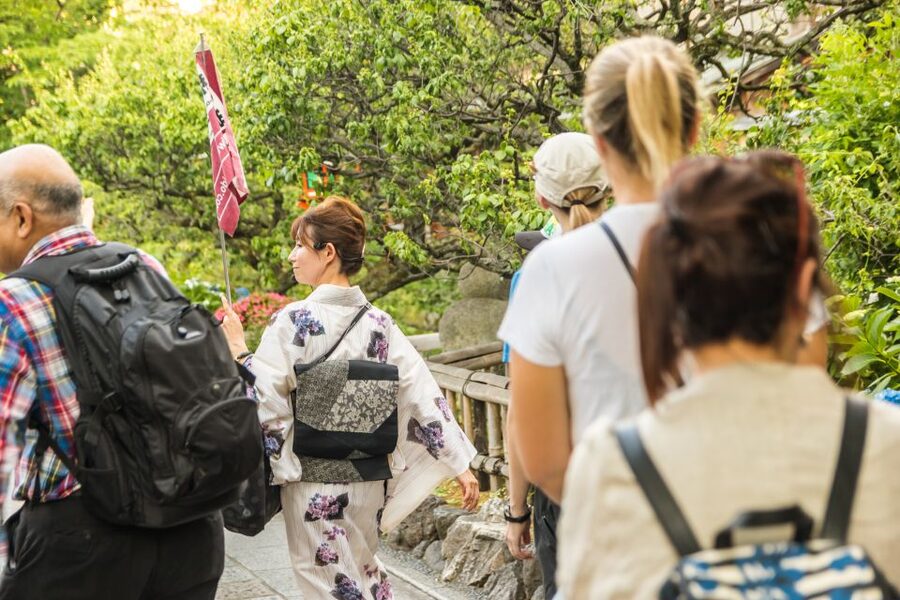
The clothing lesson is one of the most useful parts of the walk. At a glance, you may notice an elaborate kimono, white makeup, or a particular hairstyle. A guide can explain how those details fit into the person’s role and stage of training. That turns a quick street sighting into something more meaningful.
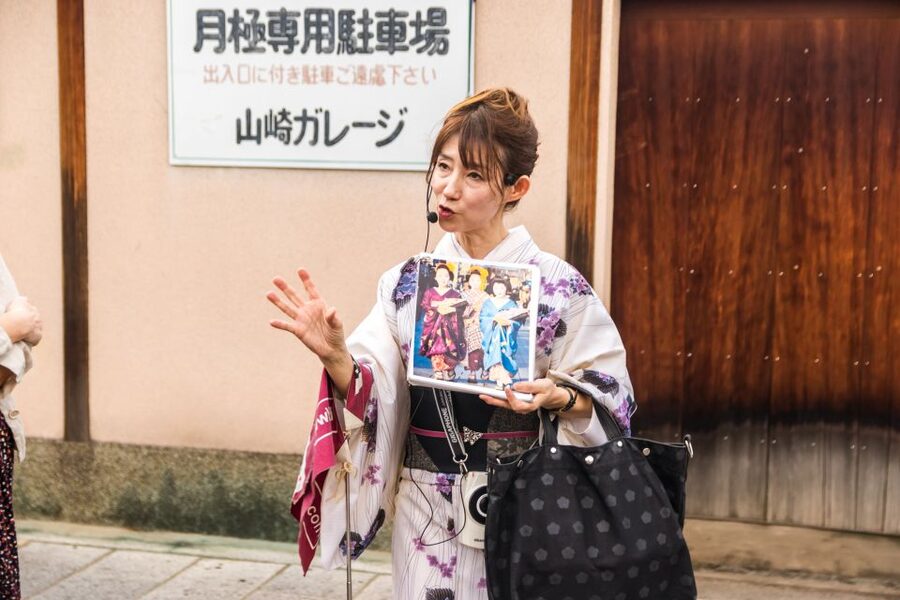
Several guides also use photographs or printed charts to explain details. Mie, for example, has been praised for bringing a thick file of images and for using it to explain points that are difficult to spot in the dim light. That kind of preparation is useful because you cannot expect to enter a tea house or boarding house during a public walking tour.
You also hear about the difference between a Tea House, where geiko and maiko entertain clients, and an ordinary tea shop. It is a small distinction, but an important one if you want to read the streets correctly.
The walking route through Gion and Pontocho
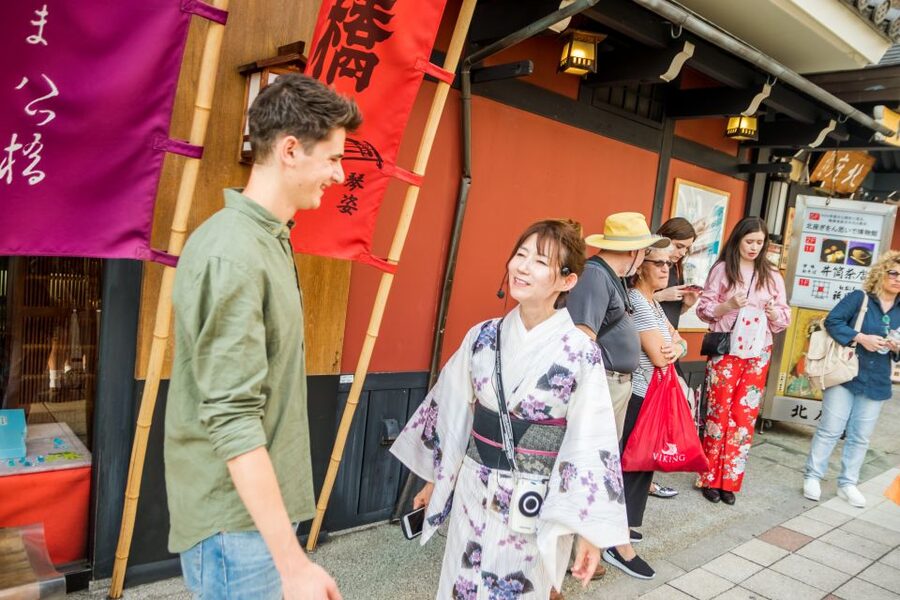
The route is designed as a neighborhood walk rather than a checklist of attractions. You pass classic streets, streams, wooden facades, and places connected with the geisha districts. Some scenery may remind you of settings associated with Memoirs of a Geisha, though the real Gion is more complicated and less theatrical than a film set.
The streamside sections are among the most attractive places for a slow explanation. Water, bridges, narrow lanes, and old-style buildings give the walk much of its visual appeal. Your guide can connect the scenery with Kyoto’s past and with how the district functions today.
Pontocho may also feature in the route. It is close to Gion and known for its narrow lane of restaurants and entertainment businesses. The exact path can vary, so you should not treat every named area as a guaranteed stop. The value is having someone explain what you are seeing rather than simply wandering past closed doors and wondering which buildings matter.
One useful feature is the effort to move away from the thickest crowds. Some groups have reported seeing less crowded streets and several geiko or maiko after starting in a quieter area. That is not a promise of special access, but it can make the walk more comfortable and less disruptive to residents.
The pace is generally suitable for stopping to listen and ask questions. Still, this is a walking tour on urban streets, not a seated cultural show. Wear comfortable shoes and expect to remain outdoors for the full visit.
Seeing a geiko or maiko without treating the district like a zoo
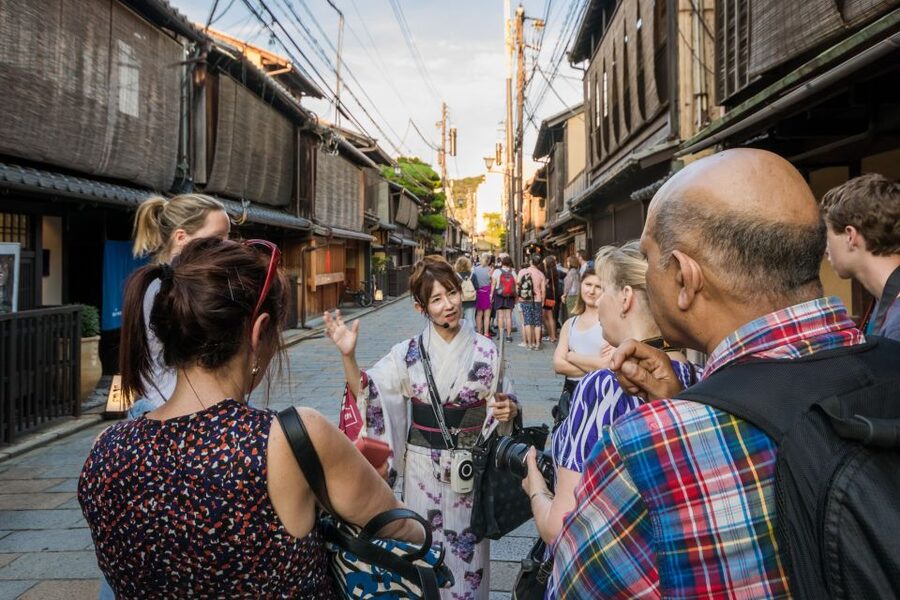
This is the part many people hope for, and it needs a realistic explanation. You may see geiko or maiko walking to evening appointments. Some people on recent tours saw one or two, while others reported four, six, or even more than eight. Others may see none.
Your guide’s local contacts and knowledge of timing can improve your chances, but no responsible guide can guarantee a sighting. The women you see are going to work, not performing for the street. A guide may recognize someone and quietly explain who she is, but that does not mean you should crowd around her.
The strongest part of this experience is the etiquette lesson. You are shown how to greet quietly, when to bow, how to keep a respectful distance, and why chasing, blocking, or touching is unacceptable. One guide even kept a group away from a geiko to protect her privacy. That may feel disappointing if you expected a close look, but it is the correct approach.
Video recording is specifically not allowed. You should also be prepared for the guide to discourage photographs in certain encounters. The goal is to observe without turning a working person’s commute into a photo stop.
If you see a maiko close up, you may notice details that are hard to appreciate from a distance, such as hair ornaments, layers of fabric, and the way the kimono is arranged. Even then, keep the moment brief. The more respectful your group is, the better the experience feels for everyone in the lane.
Same streets, a different route:
- Kyoto Geisha Walking Tour: Gion District & Hidden Gems
★ 4.7 · 3,273 reviews - Kyoto: Gion Geisha District Walking Tour – Stories of Geisha
★ 4.7 · 2,187 reviews - Best of Kyoto: Gion, Geisha, Pagodas & Cobblestones
★ 4.9 · 2,058 reviews - Kyoto Gion Geisha District Walking Tour – The Stories of Geisha
★ 5.0 · 1,441 reviews
The guides: warm, prepared, and different in style
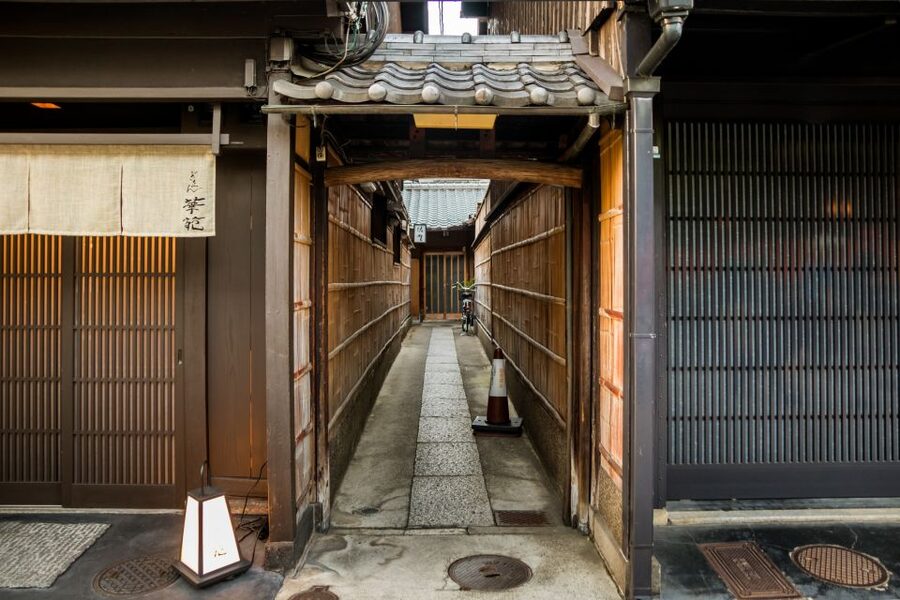
The guide changes by departure, so you cannot book a specific person unless the operator confirms it. Names repeatedly associated with this walk include Mia, Mie, Chako, Chako-san, Toko, Mai, Miya, and Haruto.
Mia is often praised for humor, strong knowledge of geiko and maiko culture, and personal familiarity with people working in the district. Mie is noted for excellent English, printed reference material, candid anecdotes, and small Japanese expressions that you are unlikely to find in a basic guidebook. Chako is described as warm, patient, and passionate about Gion.
Other guides bring their own strengths. Mai has been praised for keeping children interested, while Haruto is noted for clear English and useful explanations of training and tea-house culture. The common thread is an effort to make the subject understandable rather than mysterious.
That variation is worth keeping in mind. A tour led by Mia may feel lively and personal, while another guide may take a more measured, classroom-like approach. The exact personality is not guaranteed, but the repeated praise for clear explanations, friendliness, and humor suggests that the guide is a major part of the value.
The tour also works well for families. Children who begin unsure about the subject may enjoy the stories, visual examples, and chance to spot people in traditional dress. One family managed the walk with children and a stroller, but the official information says the activity is not suitable for people with mobility impairments. I would not use one family’s experience to assume the route is easy for every stroller or mobility need.
Is $21 good value for Kyoto?
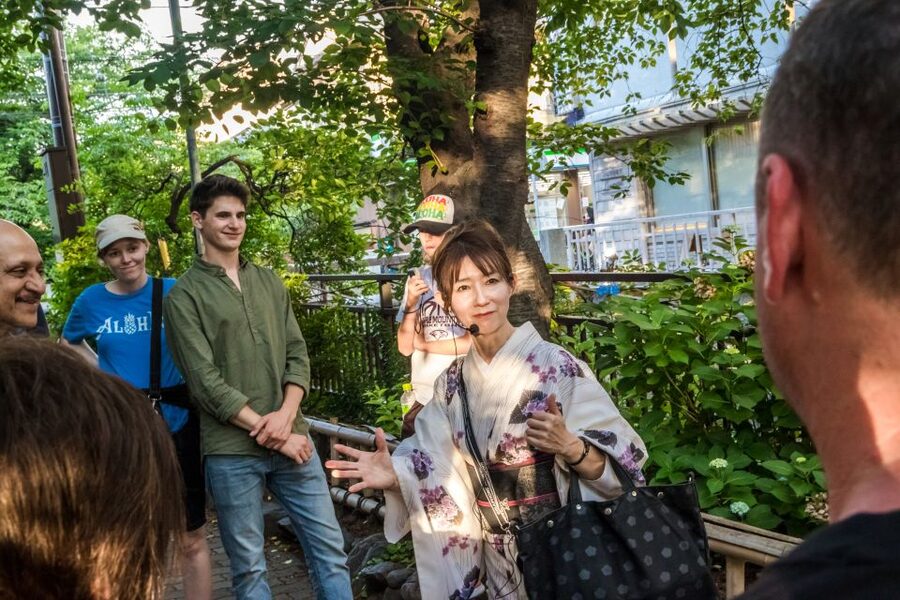
At $21 per person, this is a modestly priced guided walk. You are not paying for admission to a tea house, a meal, transportation, or a private meeting with a geiko or maiko. You are paying for a local English-speaking guide who helps you understand a district that is easy to misread on your own.
I think the price works particularly well if this is your first visit to Gion. Without context, you may see a few traditional buildings, pass a woman in formal dress, and leave with more questions than answers. The tour gives those sights a framework.
The value is less clear if your only goal is to photograph geiko or maiko. Sightings are uncertain, photos may be discouraged, and the walk is built around explanation rather than access. In that case, you could spend $21 and still miss the one thing you wanted.
For most people, the better way to judge the cost is to ask if you want to understand Kyoto’s geisha districts. If yes, the price is fair. The guide’s explanations, local etiquette, and route through Gion offer more than a self-guided stroll, while keeping the commitment short enough to fit into a busy Kyoto schedule.
Timing, meeting point, and practical details
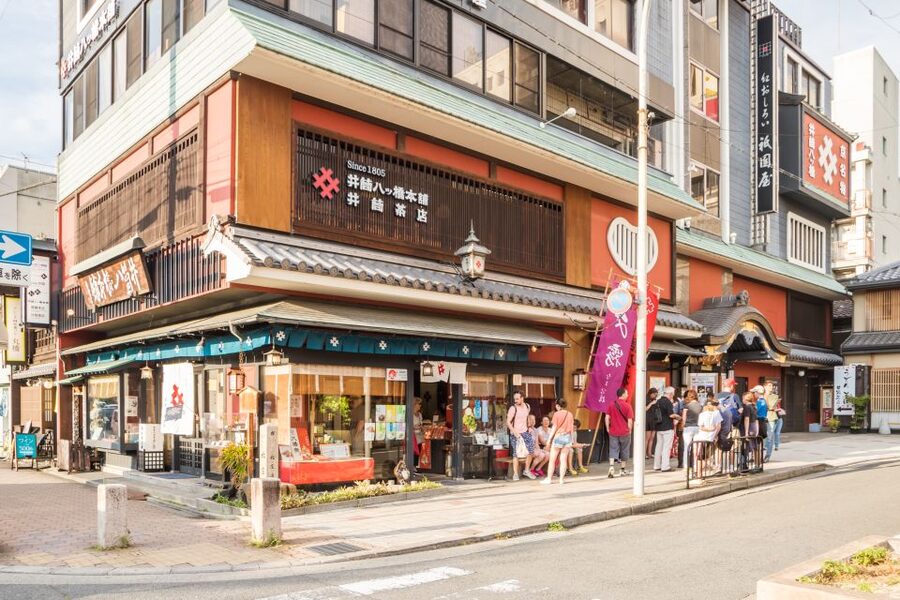
The listed duration is 100 minutes, although the description also presents it as roughly two hours. Plan for about an hour and forty minutes, with a little flexibility around the stated schedule.
Meet in front of the Gion Omoide Museum, connected to the Izutsu Yatsuhashi pastry shop. The coordinates are 35.0044519, 135.7723814. This is close to Gion Shijo Station, so allow time to find the exact storefront and gathering spot.
Transportation to and from the attractions is not included, and there is no hotel pickup or drop-off. You make your own way to the meeting point and leave from the tour’s final area.
The tour is conducted in English by a live guide. You can cancel up to 24 hours in advance for a full refund, and the reserve-now, pay-later option helps if your Kyoto plans are still shifting. A child discount is available, but you need valid identification to receive it.
Wear shoes suited to walking and dress for the evening temperature. Rain does not necessarily stop the tour. Guides have continued through wet weather, but an umbrella or rain jacket will make the experience more pleasant.
Who should book this Gion walk?
I would recommend it to first-time Kyoto visitors, people curious about geiko and maiko culture, families with older children, and anyone who wants a local explanation of Gion beyond its most photographed lanes.
It is also a good choice for visitors who feel uneasy about geisha tourism. The guide makes respectful conduct part of the lesson, and the walk treats the district as a living neighborhood rather than a spectacle.
You may want to skip it if you cannot walk comfortably for 100 minutes, if you need guaranteed indoor seating, or if you are mainly seeking a guaranteed geiko encounter. It is also not the right activity for anyone who wants to film the evening.
Should you book it?
Book this tour if you want context, etiquette, and atmosphere more than a guaranteed sighting. The chance to see a geiko or maiko can be thrilling, but the lasting value is learning what you are looking at and how to behave around it.
At $21, the risk is small. Just arrive expecting a thoughtful night walk through Gion, not a private geisha show. If your guide is Mia, Mie, Chako, or another of the well-regarded local guides, you can expect clear explanations, cultural detail, and a firm reminder that respect comes before the perfect photograph.
FAQ
How long does the Night Walk in Gion last?
The activity is listed as 100 minutes. The description also refers to it as a roughly two-hour guided walk, so allow some flexibility around the stated duration.
Where does the tour meet?
The meeting point is in front of the Gion Omoide Museum, connected to the Izutsu Yatsuhashi pastry shop. It is near Gion Shijo Station. The coordinates are 35.0044519, 135.7723814.
Is the tour conducted in English?
Yes. The walk includes a live, professional English-speaking guide.
Will I definitely see a geiko or maiko?
No. Sightings often happen, but they are not guaranteed. The tour focuses on the culture, history, streets, and etiquette of Gion.
Can I record video during the walk?
No. Video recording is not allowed.
Is transportation included?
No. You are responsible for getting to and from the meeting point. Hotel pickup and drop-off are not included.
Can I cancel the tour for a refund?
You can cancel up to 24 hours in advance for a full refund. The activity also offers a reserve-now, pay-later option.
More Night Walking Tours in Kyoto
- Private Street Food Evening Walking Tour in Ho Chi Minh City
★ 5.0 · 3,175 reviews - Granada: Albaicín and Sacromonte Guided Sunset Walking Tour
★ 4.9 · 2,962 reviews - Savannah’s Ghost City “Dead of Night” Walking Night Tour
★ 4.5 · 2,482 reviews - Madrid by Night Small Group Tour: Stories, Sights and Tapas Bites
★ 5.0 · 1,956 reviews
Just added around Kyoto
- Kyoto: Meet the Geisha Maiko with Gion Walking Tour★ 4.8 · 371 reviews
- Cool Kyoto: 5-Hour Walking Tour with the Last Samurai★ 4.8 · 73 reviews
- Gion Walking Tour by Night★ 4.5 · 429 reviews
- Kyoto Sake Brewery & Tasting Walking Tour★ 5.0 · 623 reviews
- Kyoto Gion Night Walk & Geisha District Guided Tour★ 5.0 · 786 reviews
- Kyoto: Izakaya Bars Guided Walking Tour★ 4.9 · 815 reviews
- Kyoto Gion: 2-Hour Geisha Culture & History Walking Tour★ 5.0 · 1,186 reviews
- Kyoto Arashiyama Walking Tour: Bamboo, Monkeys, Gardens & Secrets★ 5.0 · 1,216 reviews
Night Walking Tours, compared.

Private Street Food Evening Walking Tour in Ho Chi Minh City
Read our review →
Albaicín and Sacromonte Guided Sunset Walking Tour
Read our review →
Savannah’s Ghost City “Dead of Night” Walking Night Tour
Read our review →
Gion Magical Night Walking Tour with Geisha Trivia
Read our review →
Madrid by Night Small Group Tour: Stories, Sights and Tapas Bites
Read our review →
Paranormal Night Walking Tour & Secret Backstreets
Read our review →
Munich Ghosts and Spirits Evening Walking Tour
Read our review →
City Walls Early Morning or Sunset Walking Tour
Read our review →Browse the lists this tour appears in