
REVIEW · CHICAGO
Chicago: Treasures of the Golden Age Walking Tour
Chicago’s Golden Age is easiest to grasp from street level, where a former department store, hotel, concert hall, and civic building compete for your attention. This two-hour walk connects those pieces and explains how Chicago used architecture to prove it could become a serious cultural capital after the 1893 World’s Columbian Exposition.
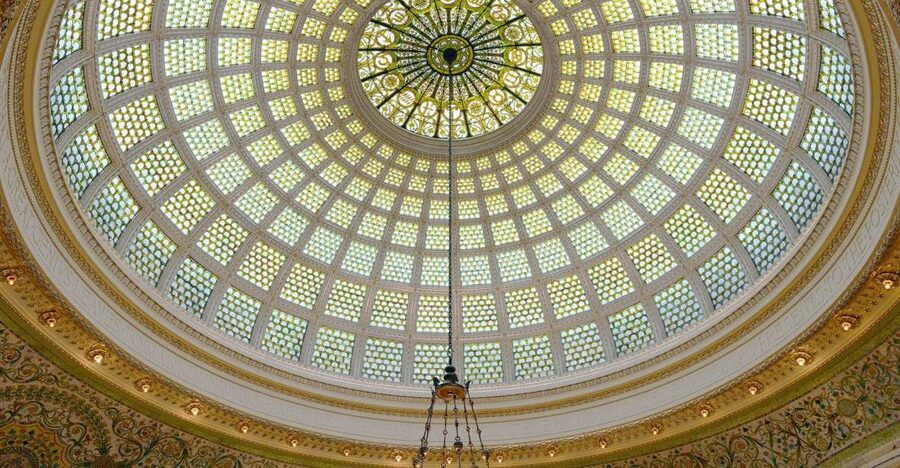
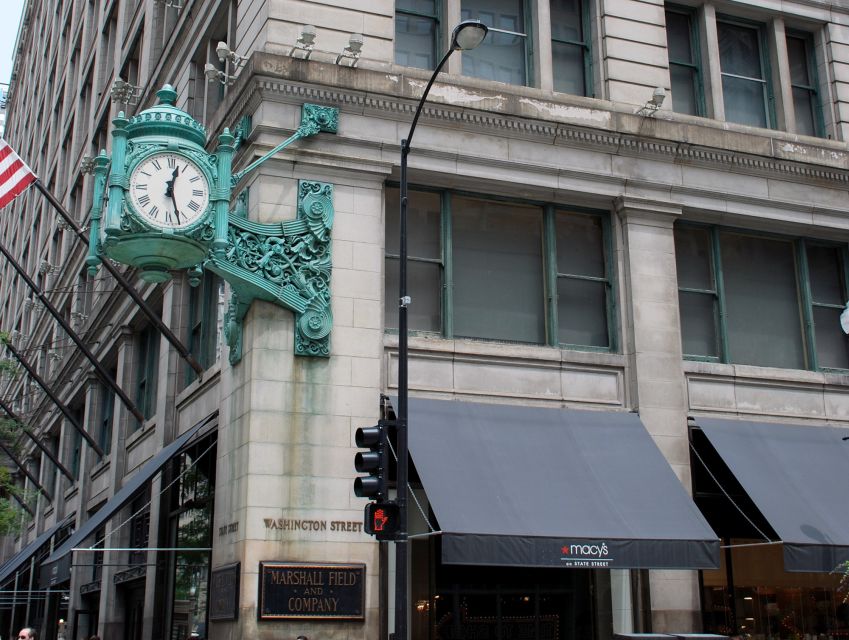
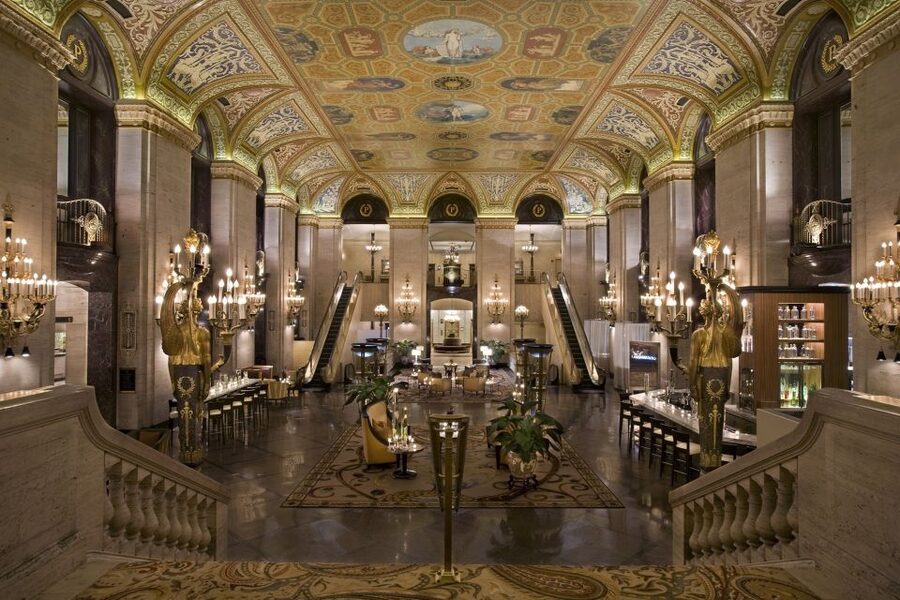
I like the Chicago Architecture Center training behind the tour, and I like that the route includes interiors rather than keeping you outside with your neck tilted skyward. The Chicago Cultural Center’s huge Tiffany glass dome is the star, while Macy’s on State and the Palmer House add welcome variety.
The main drawback is simple: you walk for two hours, often in city weather, and there is no luggage or stroller storage. The tour runs rain or shine, and although it is listed as wheelchair accessible, it is not suitable for people with mobility impairments, so check your needs before booking.
Key points to know before you go
- The Tiffany dome is the visual highlight: The Chicago Cultural Center contains the world’s largest Tiffany dome.
- The route focuses on 1890s to 1930s architecture: Expect Beaux Arts, neo-Georgian, and neo-Gothic design.
- You see both famous and easy-to-miss buildings: Macy’s on State, Palmer House, museums, concert halls, and skyscrapers all fit into the story.
- Guides bring local depth: Past guides have included Doug, Ron, Maureen, Paul S, Ingrid, John, Tony, and Jackeline.
- The pace is active but manageable for most walkers: Wear comfortable shoes and expect plenty of standing outdoors.
- Your ticket supports local programs: Admission helps fund Chicago Architecture Center education and community work.
Why Chicago’s Golden Age matters
Chicago’s great architectural push followed the 1893 World’s Columbian Exposition, a moment when the city wanted to be seen as more than a young industrial center. The fair gave Chicago a taste for grand planning, classical forms, and civic ambition.
This walk shows what came next. From the 1890s through the 1930s, Chicago filled the Loop and Michigan Avenue with buildings meant to impress, educate, entertain, and sell. Architects borrowed from European traditions, then adapted those styles to a fast-growing American city.
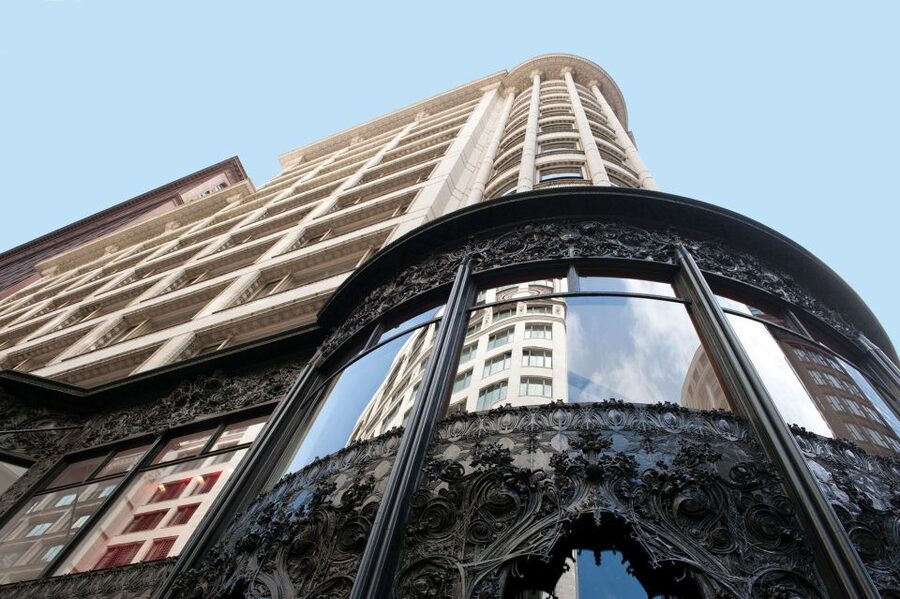
You will hear about Daniel Burnham, Louis Sullivan, and Holabird and Roche. Their work represents different sides of the period. Burnham is linked with grand civic order, Sullivan with original American design, and Holabird and Roche with the practical but handsome skyscraper tradition.
I find this context useful because it keeps the tour from becoming a parade of building names. You learn why a department store needed a palace-like interior, why a hotel was designed to signal prestige, and why Chicago cared so much about museums, music, and public culture.
A few more walking tours around Chicago worth a look
- Chicago: Gangsters and Ghosts Walking Tour
★ 5.0 · 7,155 reviews - Chicago Favorites Ultimate Food and Walking Tour
★ 5.0 · 1,962 reviews - Chicago: Gangsters and Ghosts Guided Walking Tour
★ 4.7 · 1,697 reviews
Beginning inside the Chicago Architecture Center
Check in at the Chicago Architecture Center at 111 East Wacker Drive. Admission to the Center’s exhibits is included, which gives you a useful introduction before or after the walk.
The Center is also more than a meeting point. Ticket income supports programs such as Girls Build!, Teen Fellows, the Newhouse Architecture + Design Competition, and Open House Chicago. That matters if you like your sightseeing to leave some benefit behind in the place you visit.
Your guide is trained and certified by the Chicago Architecture Center, the city’s leading architecture organization. The guides bring different personalities to the route. Doug has been praised for making the walk worthwhile even for people who had already taken several Chicago architecture tours. Ron has been described as approachable, while Maureen, Jackeline, and Paul S have been singled out for combining facts with personal stories and enthusiasm.
That variety is part of the charm. This is not an audio guide where every sentence arrives in the same flat order. Some guides use a microphone system, which Ingrid did to let people look around without losing the narration. That is handy on busy sidewalks.
The Chicago Cultural Center and its Tiffany dome
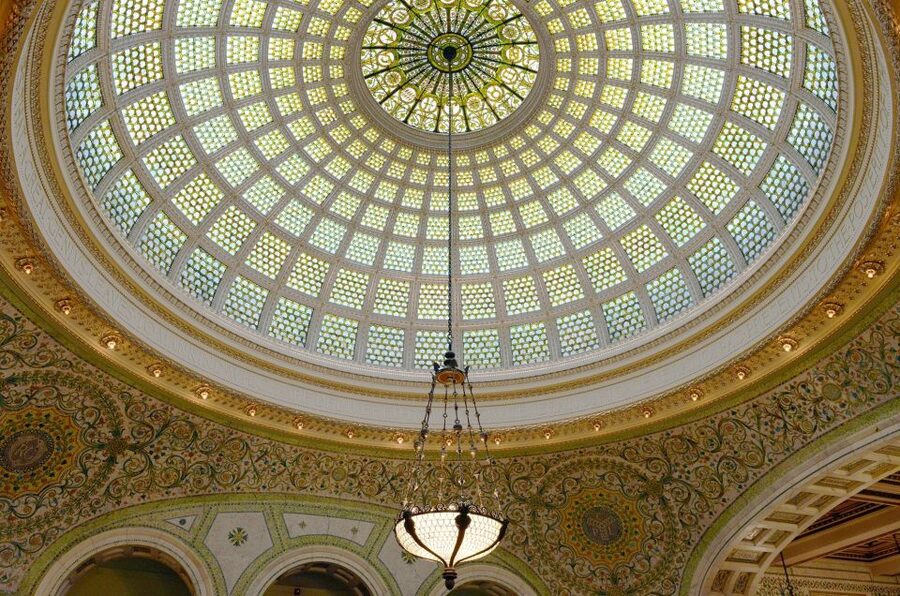
The Chicago Cultural Center is one of the essential stops. Its world’s largest Tiffany dome gives you the kind of interior view that can change your sense of the entire route.
Outside, you are looking at a city of stone, steel, and glass. Inside the Cultural Center, decorative detail becomes the subject. The dome rewards a slow look, so do not rush through the room while the guide is speaking. Let your eyes travel across the glass and the surrounding ornament.
The building also helps explain the era’s revival styles. You may see how Beaux Arts design used decoration and symmetry to create a sense of importance. Neo-Georgian and neo-Gothic approaches offered their own historical references, giving new buildings the appearance of belonging to an older cultural tradition.
That is the larger idea behind the tour. Chicago was building new, but it did not always want to look new. Its architects often reached backward for visual authority while working with modern construction and a modern commercial city.
Macy’s on State and the department-store palace
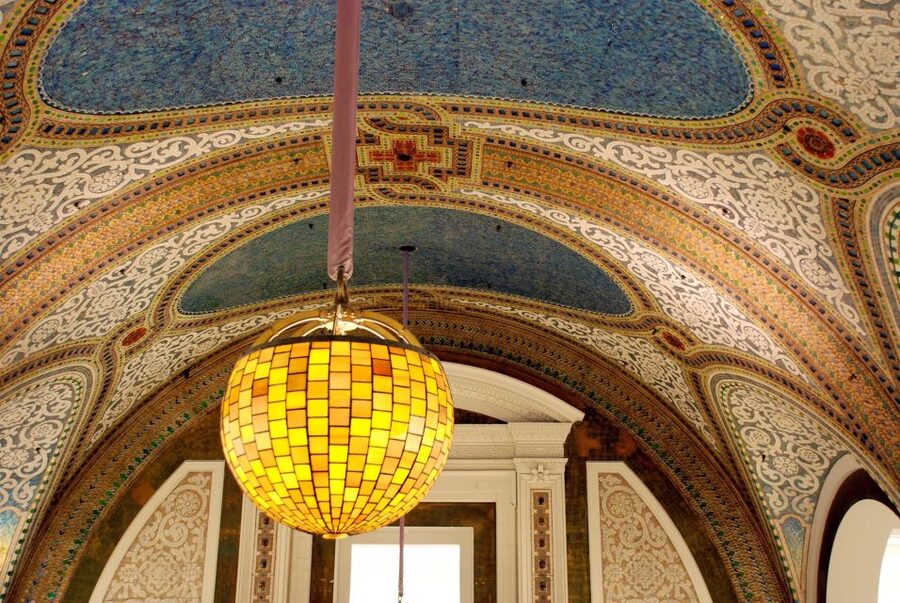
The former Marshall Field’s department store, now Macy’s on State, gives the tour a different angle. This is not just a pretty building to photograph. It shows how shopping became part of Chicago’s public life.
The store’s design had to attract people, move them through large spaces, and make buying feel like an occasion. The architecture helped create that mood. You will hear about the building’s place in Chicago’s commercial story and how grand department stores shaped the city’s identity.
I like this stop because it brings architecture down to everyday use. A museum can feel remote, but nearly everyone understands the appeal of a department store. Here, the building itself becomes part of the sales pitch.
The interior access varies by the day and the route conditions, so you should not assume every room will be open. Still, the opportunity to step inside some buildings is one of the tour’s strongest features. John’s group, for example, appreciated being able to enter several buildings rather than viewing everything from the sidewalk.
Same streets, a different route:
- Chicago Loop District Food Tour with Deep Dish & Beef Sandwich
★ 5.0 · 870 reviews - Chicago’s Secret Interiors Architectural Walking Tour
★ 5.0 · 635 reviews - Chicago’s Chinatown Food and Walking Tour
★ 5.0 · 600 reviews - Chicago: Secret Interiors Architecture Walking Tour
★ 4.9 · 498 reviews
Palmer House and the theater of hospitality
The Palmer House adds a hotel to the architectural lineup. It is a beautifully restored hotel from the 1920s, and its design shows how hospitality became a form of public theater.
A grand hotel had to do more than provide beds. It welcomed important visitors, hosted social occasions, and projected a polished image of Chicago. The architecture helped create that promise from the moment a person entered.
This stop also gives you a break from the one-building-at-a-time rhythm. Hotels connect architecture with human behavior. You can think about who used the spaces, what they wanted to project, and how a city marketed itself through its public rooms.
In cold weather, interior access becomes even more valuable. Tony’s winter tour used chances to go inside to keep the group warm, a practical touch that can make a real difference when the temperature drops. Chicago’s wind is not a minor detail, so dress for the forecast, even if the route includes some indoor stops.
Museums, concert halls, and the cultural city Chicago wanted
The tour is not limited to commercial buildings. It also covers museums and concert halls, showing how Chicago tried to build a full cultural life after the exposition.
That matters because the city’s ambition was not only economic. Chicago wanted respected institutions for art, music, education, and public gathering. Grand cultural buildings helped make that case.
The route’s focus on exteriors and interiors lets you compare two kinds of architectural persuasion. An exterior speaks to the whole street, often through scale and decoration. An interior controls your experience more closely, using ceilings, domes, materials, and ornament to create a sense of occasion.
You may not spend long inside every building, but the mix is satisfying. The walk moves between civic pride, private business, entertainment, and hospitality. Together, those stops explain how a city builds an image of itself.
Daniel Burnham, Louis Sullivan, and Holabird and Roche
The names matter, but the guide’s explanations matter more. Daniel Burnham, Louis Sullivan, and Holabird and Roche represent different approaches to Chicago’s built environment.
Burnham is associated with large-scale planning and the belief that architecture could help organize civic life. Sullivan pushed for a more original American architectural language, especially as buildings grew taller. Holabird and Roche helped shape Chicago’s commercial architecture and skyscraper development.
The guide does not simply point at a facade and recite a date. You learn to notice patterns, materials, proportions, and the way a building meets the street. That makes the walk useful for first-time architecture fans and people who already know the city.
Taylor took the tour after visiting Chicago several times and joining other architecture walks, yet still found new information. That is a good sign for repeat visitors. The route can add detail to familiar streets, especially when the guide points out features you have passed without noticing.
The walking pace, weather, and practical comfort
The tour lasts two hours, which is long enough to build a clear story without taking up your entire day. It is also short enough to fit before lunch, after a museum visit, or alongside another Loop activity.
You should wear comfortable shoes. Victoria specifically noted the amount of walking, and the route includes pavement, standing, and time spent looking upward or moving between stops. If you tire easily, ask about the route and your mobility needs before reserving.
The experience runs rain or shine, and weather does not qualify for a refund. Bring a coat in cold months and rain protection when needed. A sunny day makes the exteriors more enjoyable, but the tour’s content does not depend on perfect weather.
Do not bring luggage or large bags. Secure storage for luggage and strollers is not provided, and coat check is not included. Pets are not allowed, although service animals are welcome.
The activity is conducted in English. You are asked to bring a passport or ID card. Free cancellation is available up to 24 hours in advance, and the reserve-now, pay-later option can help if your Chicago plans are still shifting.
Is the $35 price good value?
The price is $35 per group of up to one person as listed, so check the final booking screen carefully if you are booking for more than one person. Price wording like this can be confusing, but the value is easy to judge by what is included: a two-hour guided walk, a Chicago Architecture Center certified guide, and admission to the Center exhibits.
I consider that fair value if you care about architecture, history, or understanding the Loop beyond its office towers. A self-guided walk is cheaper, but you would need to research the buildings, build the route, and know which interiors are worth entering.
The nonprofit connection adds another reason to choose this tour. Your ticket helps support local education and community projects rather than only paying for a commercial sightseeing operation.
The value is less convincing if you dislike walking, want a fully indoor activity, or prefer to explore at your own speed. A river cruise offers a different view of Chicago’s architecture, while this tour puts you on the pavement and closer to the details.
Who should book this Chicago architecture tour?
I would recommend it to first-time visitors who want a strong introduction to Chicago’s historic center. It is also a good choice for repeat visitors, since the guides often add stories and overlooked details to buildings you may already know.
Solo visitors can fit in easily. The format gives you a shared activity without requiring a full-day commitment. It also suits adults and older children who can manage two hours of walking and standing.
Architecture students, design fans, and people interested in city planning will get the most from the route. So will anyone curious about how department stores, hotels, museums, and concert halls helped Chicago present itself as a cultural capital.
I would pause before booking if you have significant mobility limits, need guaranteed indoor access, are carrying luggage, or want a weather-proof outing. The activity is listed as wheelchair accessible but also not suitable for people with mobility impairments, so clarify the specific route conditions before paying.
Should you book the Treasures of the Golden Age walk?
Book it if you want more than a list of famous Chicago buildings. The strongest part is the connection between architecture and ambition: the city’s desire to become a major cultural metropolis after 1893.
You will see the Tiffany dome, Macy’s on State, Palmer House, and other Loop landmarks while a local guide explains the people and ideas behind them. Guides such as Ingrid, John, Tony, Paul S, and Jackeline have shown how much personality can shape the experience.
Skip it if two hours of walking sounds tiring or if you need a fully flexible schedule. For most visitors who want practical context, interior glimpses, and a better eye for Chicago’s historic buildings, this is a worthwhile use of an afternoon.
FAQ
How long is the Chicago Treasures of the Golden Age Walking Tour?
The walking tour lasts two hours.
Where does the tour meet?
Check in inside the Chicago Architecture Center at 111 East Wacker Drive, Chicago, Illinois 60601.
What buildings are included?
Highlights include the Chicago Cultural Center, the former Marshall Field’s department store, now Macy’s on State, and the Palmer House. The route also covers other museums, department stores, skyscrapers, and concert halls in the Loop.
Is admission to the Chicago Architecture Center included?
Yes. Admission to the Chicago Architecture Center exhibits is included with the tour.
What language is the tour conducted in?
The live tour is conducted in English.
Does the tour operate in bad weather?
Yes. The tour departs rain or shine, and refunds are not provided because of weather.
Can I bring luggage, a stroller, or a pet?
No luggage or large bags are allowed, and the Chicago Architecture Center does not provide secure storage for luggage or strollers. Pets are not allowed, but service animals are welcome.
Just added around Chicago
- Haunted Chicago Booze and Boos Ghost Walking Tour★ 5.0 · 266 reviews
- River North Food Walking Tour★ 4.5 · 88 reviews
- Chicago Gangster and Food Walking Tour★ 5.0 · 471 reviews
- Chicago Walking Tour: Must-See Chicago★ 5.0 · 91 reviews
- Embers of the Windy City: Chilling Chicago Ghost Tours★ 4.5 · 121 reviews
- Downtown Chicago Walking Pizza Tour★ 5.0 · 106 reviews
- Chicago Walking Tour: Historic Treasures of Chicago★ 5.0 · 362 reviews
- Chicago Mobs and Haunts Walking Tour★ 4.5 · 383 reviews
Walking Tours, compared.

Magical London: Harry Potter Guided Walking Tour
Read our review →
Reykjavik Food Walk – Local Foodie Adventure in Iceland
Read our review →
History and Hauntings of Salem Guided Walking Tour
Read our review →
New Orleans Premier Ghost, Voodoo and Vampire Walking Tour
Read our review →
Amsterdam Anne Frank: Small-Group Walking Tour & Local Guide
Read our review →

Edinburgh Castle: Guided Walking Tour with Entry Ticket
Read our review →
Anne Frank’s Story – Guided Walking Tour through Amsterdam
Read our review →Browse the lists this tour appears in