
REVIEW · POLAND
Warsaw: Old Town Highlights Walking Tour in English
Warsaw’s Old Town looks polished today, but the story beneath its colourful façades is anything but simple. This 150-minute walk connects the Copernicus Monument, Krakowskie Przedmieście, the Royal Route, and the reconstructed Old Town while explaining how the city was almost wiped out and then rebuilt.
I like the way the tour links famous names, such as Chopin and Marie Curie, with the streets around them. I also like the guides’ mix of serious history and humor. Michael, Andrzej, Anna, Michal, and several other guides receive especially warm praise for clear storytelling, energy, and good pacing. The main consideration is simple: you will be outside for most of two and a half hours, so comfortable shoes and weather-ready clothing matter.
Key points to know before you book
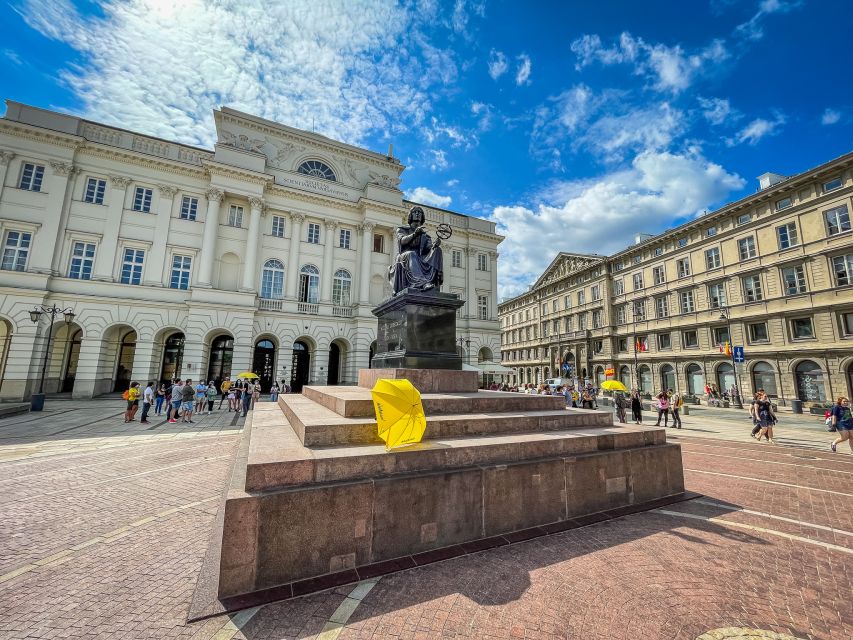
- The meeting point is easy to spot: Find the Nicolaus Copernicus Monument at Krakowskie Przedmieście Street 2 and look for a guide carrying a yellow umbrella.
- The route covers Warsaw’s essential sights: Expect the Royal Route, Chopin’s heart memorial, the Presidential Palace, Warsaw University buildings, Old Town walls, and the Royal Castle.
- The history is the main event: The guide explains both major wartime uprisings and how Warsaw rose after near-total destruction.
- The tone is lively, not dry: Humor, personal stories, and strong presentation are frequent features of the guiding style.
- The tour costs $26 per person: That is a reasonable price for a two-and-a-half-hour city orientation, especially if Warsaw is new to you.
- It runs in all weather: The group finds cover when rain or cold arrives, but you should still dress for the forecast.
Starting beneath Copernicus on Krakowskie Przedmieście
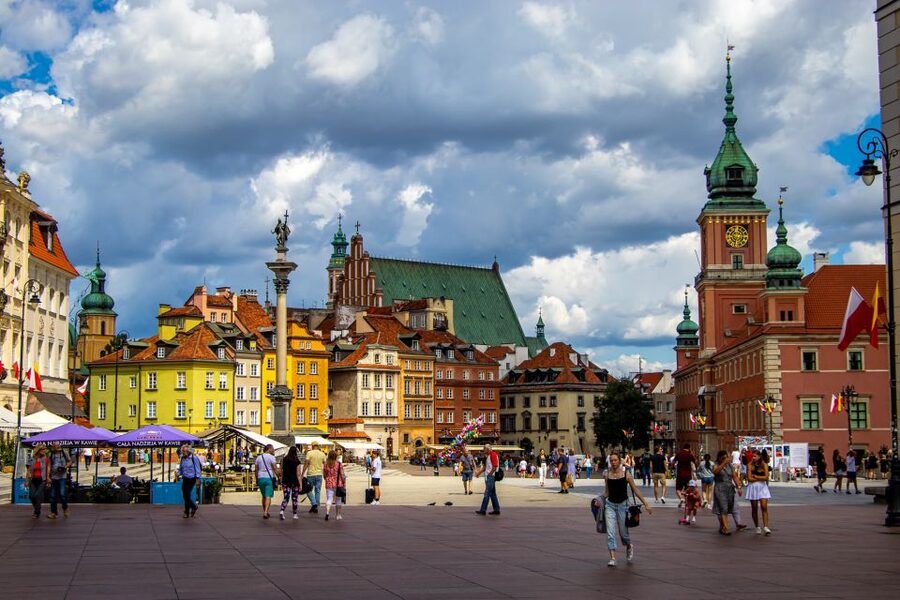
The tour begins beside the Nicolaus Copernicus Monument on Krakowskie Przedmieście Street 2. This is a useful starting point because you are already on Warsaw’s historic Royal Route, the grand north-south avenue connecting major civic, religious, and royal sites.
Look for the yellow umbrella. That small detail matters in a busy city center, particularly if several walking groups gather nearby. There is no hotel pickup, so plan your route to the monument before the start time.
Your guide sets the tone early. The strongest guides on this walk, including Michael, Andrzej, Michal, Anna, and Jacek, are praised for speaking clearly, keeping a good pace, and making difficult history easier to follow. You should expect an English tour aimed at a general audience, not a specialist lecture.
The guide may introduce Warsaw through people as much as buildings. Copernicus represents Polish science and curiosity. Chopin connects the city to music and national identity. Marie Curie brings another famous Warsaw-born figure into the story. These names give you useful anchors before the walk turns toward the city’s harder chapters.
More Old Town Walking Tours in Poland
- Old Town Krakow & Wawel Castle Walking Tour
★ 5.0 · 1,508 reviews - Krakow: The Old Town Walking Tour
★ 4.8 · 794 reviews - Warsaw: Old Town Guided Walking Tour
★ 4.9 · 599 reviews
Walking the Royal Route along Krakowskie Przedmieście
Krakowskie Przedmieście is one of the most attractive parts of the route. Its colourful buildings, churches, monuments, and formal institutions give you the classic Warsaw view, but the guide adds the political and historical meaning behind the façades.
You will pass the Presidential Palace and Warsaw University buildings. These stops help explain Warsaw as more than an attractive old center. The city remains Poland’s political, educational, and commercial heart, and this avenue brings those roles together in a compact stretch.
I like this part of the walk because it gives you orientation quickly. If you have only a short stay in Warsaw, you see major sights without spending the first day trying to work out how the center fits together. The route also gives you useful ideas for places to revisit later.
The pace is generally brisk but manageable. One particularly useful detail from the tour feedback is that guides adjust where they stop when conditions are hot, using shade when possible. In rain, they keep going and look for cover. Still, do not mistake a walking tour for a gentle sightseeing bus ride. You will be on your feet for most of the 150 minutes.
Chopin, music, and the city’s famous sons and daughters
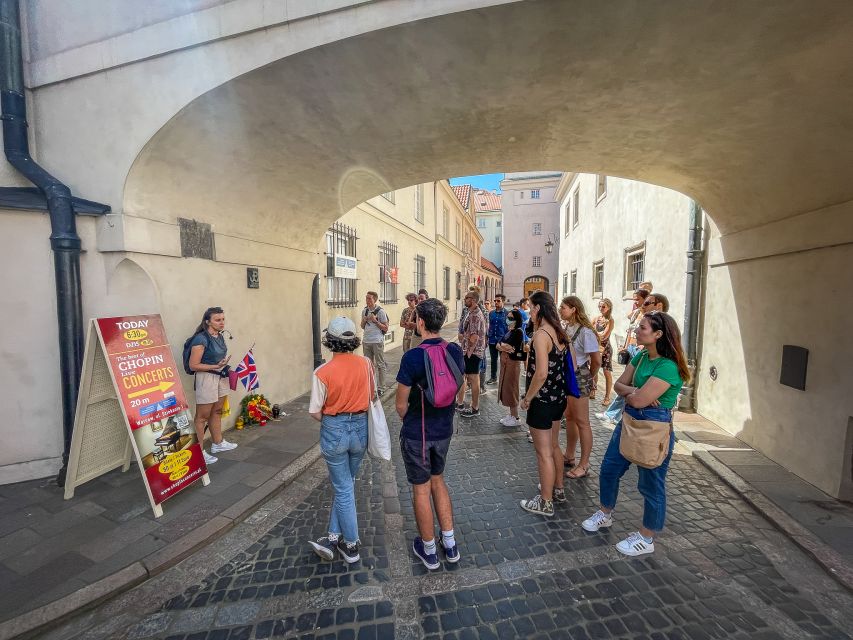
One of the highlights is the place associated with Chopin’s heart. The guide uses this point to talk about the composer’s connection to Warsaw and the way Polish identity is carried through music.
The stop is not just a quick name check. It helps you see how Warsaw remembers people who spent part of their lives away from the city. Chopin became an international figure, but Warsaw keeps his memory close to its streets and churches. That local connection gives the Royal Route more meaning than a procession of pretty buildings.
Marie Curie also enters the story. The tour does not present Warsaw as a city defined by one famous person. Instead, you get several paths through Polish history, including science, music, politics, education, and resistance.
The guides’ sense of humor is especially useful here. Several highly praised guides are described as funny, animated, and easy to listen to. That matters because a walk covering Polish history can become heavy very quickly. A well-timed joke does not weaken the subject. It gives you a moment to breathe before the next difficult chapter.
The Presidential Palace and Warsaw’s public life
The Presidential Palace is one of the route’s major landmarks. Here, the guide can place modern Poland beside earlier periods of royal rule, foreign control, war, and communist government.
You should not expect an inside visit to the palace. This is an outdoor walking tour, so the value comes from the explanation and the surrounding view. The stop helps you understand how the Royal Route functions as a public stage for national power.
Warsaw’s history is layered in a way that can confuse first-time visitors. Different powers ruled or shaped Poland at different times, and the city’s meaning changed repeatedly. The guide’s job is to connect those periods without turning the walk into a list of dates.
This is one reason the tour suits people who want context rather than only photographs. You will still get the photographs, but you also learn why certain buildings matter and how the city’s past affects its present.
More Old Town Walking Tours in the world:
- Underground Vaults Walking Tour in Edinburgh Old Town
★ 4.5 · 8,506 reviews - Prague: 3-Hour Walking Tour of Old Town & Prague Castle
★ 4.7 · 5,696 reviews - Dubrovnik: Old Town Walking Tour
★ 4.8 · 5,174 reviews - Split: Old Town and Diocletian Palace Walking Tour
★ 4.9 · 4,727 reviews
Entering the Old Town through the city walls
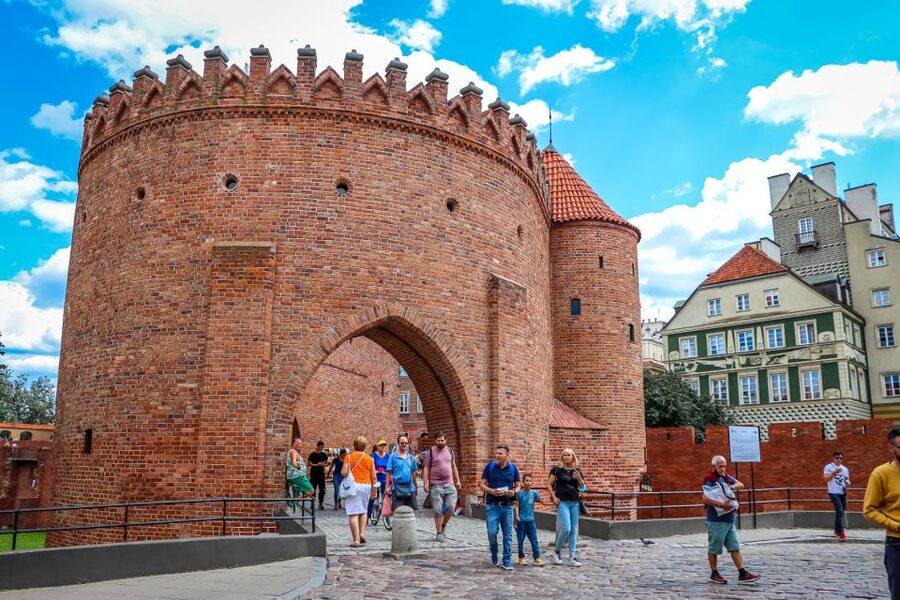
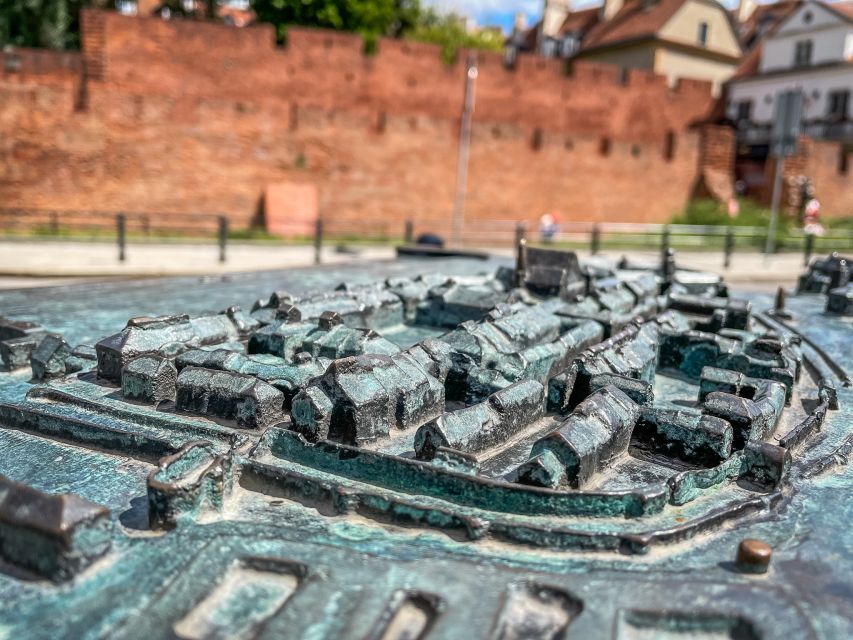
The walk continues into Warsaw’s Old Town, enclosed by its historic walls and filled with colourful façades and public squares. At first glance, the area looks like a classic European old center, with a neat, almost storybook appearance.
The striking fact is that much of what you see was rebuilt after World War II. Warsaw’s Old Town was devastated, and the city faced the enormous task of recreating streets, buildings, and monuments from ruins, photographs, paintings, and memory.
The guide explains this reconstruction as part of the city’s character. The rebuilt center is not simply an old quarter preserved by luck. It is also a record of determination and national effort.
That gives the Old Town a different feel from many European historic centers. You are looking at historic forms, but also at a modern act of recovery. The tour is strongest when it lets you hold both ideas at once.
The old walls make a useful visual boundary. They help you understand the shape of the historic city and give the guide a natural point to discuss how Warsaw grew, suffered, and changed.
The reconstructed Royal Castle and the cost of war
The Royal Castle is one of the tour’s biggest visual stops. Its reconstruction gives the Old Town a formal centerpiece, and the guide explains its place in Warsaw’s royal and national story.
Again, this is generally an exterior-focused experience. You should not book the walk expecting time inside every attraction. The benefit is seeing the castle as part of the wider city story, alongside the route, walls, monuments, and rebuilt streets.
The wartime section is the emotional core of the walk. Your guide discusses the two major uprisings against Nazi rule and the destruction that followed. The subject is complex, and a good guide must explain not only what happened but also why the events remain so important to Polish memory.
The tour’s strongest historical feature is its willingness to treat Warsaw’s past as complicated. You will hear about suffering, resistance, political pressure, and the long work of rebuilding. The goal is not to reduce the city to a simple tale of tragedy followed by triumph.
This is where guide quality matters most. Visitors repeatedly praise the guides’ historical depth, clear explanations, and ability to keep the group engaged. Michal is praised for strong historical insight. Michael is praised for thorough background and a lively style. Andrzej is described as both passionate and entertaining. Different guides lead on different dates, but the overall approach appears consistent: serious material delivered with energy.
What the two and a half hours feel like
The tour lasts 150 minutes, which is long enough to cover the key central sights without becoming a full-day commitment. You get a useful first look at Warsaw and still have time afterward for a museum, meal, or independent walk.
The format is a general pay-as-you-wish tour, but your $26 booking price covers the reservation and the guide’s payment. That makes the cost easier to judge. You are not simply paying a small booking charge and then facing an uncertain additional payment at the end. At $26, the walk offers solid value if you want a human explanation of the city rather than a self-guided route.
The group size is not specified, and it can vary. One participant described a group that was not too large, but you should not assume a private or tiny outing. If you want a smaller private walk, the provider says one can be arranged separately.
The route is wheelchair accessible, though an outdoor historic center may still involve ordinary street conditions and crowds. The supplied information does not give a detailed surface description, so you should contact the provider directly if you need precise access details.
Bring comfortable shoes. This is the most practical advice in the whole description. You will walk from the Royal Route into the Old Town and remain outdoors for most of the experience.
Weather, clothing, and the right expectations
The tour operates rain or shine. If the weather turns cold or wet, the guide looks for cover, and the walk continues where possible. That is helpful, but it does not turn the experience into an indoor tour.
Wear layers in cooler months and bring rain protection when the forecast looks unsettled. In summer, water and sun protection are sensible choices, though only comfortable shoes are specifically required.
Weather can affect the pleasure of the walk. In good conditions, the colourful streets and public spaces are easy to enjoy. In heavy rain, you may spend more time listening under cover and less time lingering over views. The historical content remains useful, but photography and comfort may suffer.
I would choose a morning or early afternoon start when possible, especially if you want to continue exploring afterward. Check the available start times when booking, since they vary by date.
Who will get the most from this walk
This is a strong first-day choice if Warsaw is new to you. You get the main central sights, a clear city map in your head, and enough historical context to make later visits more meaningful.
It also suits repeat visitors. One participant who had visited Warsaw several times still learned new things, which suggests the guides add more than basic directions and standard facts.
History-minded visitors will get the most from the wartime sections. The tour does not avoid difficult subjects, but the frequent use of humor keeps the presentation from becoming relentlessly bleak.
Families and mixed-age groups may appreciate the storytelling style, though the 150-minute duration and outdoor format require some stamina. People who dislike group tours may prefer a private option, especially if they want to stop often or ask extended questions.
This is less suitable if your main goal is entering museums or monuments. You will see the exteriors and hear their stories, but the tour is designed as a city walk, not an interior sightseeing program.
What the strongest guide style adds
The most repeated praise is not for one particular building. It is for the guides’ presentation. You will likely get the most from this walk when your guide combines historical detail with a relaxed, humorous style.
Names praised across different dates include Michael, Michal, Andrzej, Anna, Jacek, Jack, Lucas, Olivia, and Agnieszka. The exact guide depends on your departure, so you should not book expecting one named person unless the provider confirms it.
The best reports describe guides who explain clearly, answer questions, keep a steady pace, and bring history to life without sounding formal or stiff. Several guides are also praised for offering practical suggestions about what to see next in Warsaw.
That last point adds value. A good introductory walk should not end with the final stop. It should help you decide where to spend the rest of your time, and the guides appear willing to point people toward further sights.
Final verdict: should you book it?
Book this tour if you want a well-paced introduction to Warsaw’s central sights with serious historical context and an English-speaking guide who can make the subject lively. The $26 price is fair for 150 minutes, especially because it includes the guide’s payment rather than leaving you to guess at an extra tip.
You should also book it if you have limited time, want help getting oriented, or care more about understanding Warsaw than simply collecting photographs. The strongest appeal is the combination of the Royal Route, Chopin, the Presidential Palace, the Old Town, and the story of reconstruction.
Skip it if you want a private experience, indoor museum visits, or a slow walk with long breaks. For most first visits, though, this is a practical and worthwhile way to begin. Dress for the weather, wear good shoes, find the yellow umbrella, and let the guide give Warsaw’s streets their proper meaning.
FAQ
Where does the Warsaw Old Town walking tour meet?
The meeting point is next to the Nicolaus Copernicus Monument at Krakowskie Przedmieście Street 2. Look for the guide with a yellow umbrella.
How long does the walking tour last?
The tour lasts 150 minutes, or two and a half hours.
What language is the tour conducted in?
The tour is conducted in English with a live guide.
What sights are included on the route?
The walk includes the Copernicus Monument, the Royal Route, Chopin’s heart memorial, the Presidential Palace, Warsaw University buildings, the Old Town, its city walls, and the reconstructed Royal Castle.
Does the tour enter the Royal Castle or other buildings?
The provided information describes an outdoor walking tour and does not include admission to interiors. You should expect to see the main sights from the route while the guide explains their history.
What should I bring?
Bring comfortable shoes. The tour runs outside for most of its duration, so weather-appropriate clothing is also wise.
Can I cancel or pay later?
You can cancel up to 24 hours in advance for a full refund. The reserve-now, pay-later option lets you book without paying immediately.
More City Highlights Walks in the world
- Berlin City walk Government District and Places of Democracy
★ 4.7 · 8,467 reviews - Historic Charleston Guided Sightseeing Walking Tour
★ 5.0 · 6,216 reviews - Quebec City Walking Tour
★ 5.0 · 4,716 reviews - Florence: Highlights Walking Tour with Expert Guide
★ 4.6 · 4,662 reviews
Just added around the world
- Fira: Guided Foodie Walking Tour with Tastings★ 4.9 · 474 reviews
- Fez: Guided Walking Tour of the Historic Medina★ 5.0 · 359 reviews
- Fez: Walking Tour in the Ancient City of Fez★ 4.8 · 73 reviews
- Faro: Old Town Guided Walking Food Tour★ 4.9 · 94 reviews
- Feel like a local – Walking Tour in Mykonos Town 2hours★ 4.4 · 77 reviews
- Fes: A Guided Walking Tour Through the Historic Medina★ 4.4 · 97 reviews
- Fez: Half-Day City Private Walking Tour with a Guide★ 4.6 · 114 reviews
- Fanal / Assobiadores – Levada Walk★ 4.6 · 93 reviews
Old Town Walking Tours, compared.

Underground Vaults Walking Tour in Edinburgh Old Town
Read our review →
3-Hour Walking Tour of Old Town & Prague Castle
Read our review →


Old Town and Jewish Quarter Guided Walking Tour
Read our review →
Marrakech: Ben Youssef, Secret Garden, & Souks Walking Tour
Read our review →Browse the lists this tour appears in