
REVIEW · KRAKOW
Old Town Krakow & Wawel Castle Walking Tour
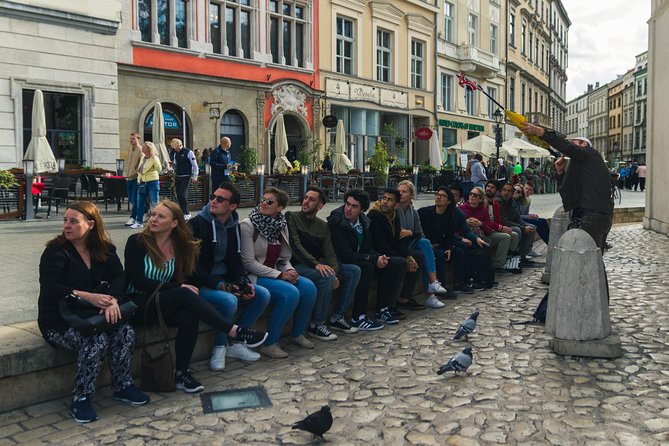
Krakow’s story unfolds naturally on this walk from the Barbican to Wawel Castle. You pass through the old Royal Road, cross the Main Square, pause at Collegium Maius, and finish on Wawel Hill, where Poland’s royal and religious past meet. The route gives you a useful first look at the city without asking you to spend half a day indoors.
I like the way the tour links major sights into one clear route, and I like the guides’ mix of Polish history, local stories, humor, and practical orientation. Guides such as Ania, Chris, Max, Maciek, Joanna, and Pawel have been praised for keeping the walk lively and answering questions. The main drawback is the group size, which can reach 35 people, so this is not a quiet private stroll.
Key points at a glance
- A one-way route through Krakow’s historic core: Start at the Barbican and finish at Wawel Castle, with no need to retrace your steps.
- Strong history focus: Expect stories about medieval Krakow, Polish culture, the Jagiellonian University, John Paul II, and the country’s royal past.
- A useful first-day activity: The route helps you get your bearings before exploring museums, churches, restaurants, and side streets on your own.
- Mostly an outdoor experience: The walk operates in all weather, so good shoes and suitable clothing matter.
- English-speaking professional guides: Past guides named Ania, Chris, Max, Maciek, Joanna, Pawel, and others have been praised for clear storytelling and humor.
- Reasonable value at $26.59: The price covers the booking and guide arrangement, with no food, drinks, hotel pickup, or major interior admissions included.
Starting at the Barbican and Krakow’s old defenses
Meet at the Krakow Barbican on Basztowa Street. This round brick fortress once formed part of the city’s defensive system, and it gives the tour a fitting opening: before Krakow became a center of royal power and university life, it had to protect its gates and walls.
The guide spends about 15 minutes introducing the medieval fortifications from outside. That short stop works well because you get the historical setting without using the best part of the morning on one monument. You should have time to look at the Barbican’s unusual shape, hear how Krakow was defended, and settle into the group before the walk moves on.
The meeting point is near public transportation, which helps if you are staying outside the old center. Check the exact departure time carefully, since the tour offers several start times and the route begins at the Barbican rather than at your hotel.
More Old Town Walking Tours in Poland
- Warsaw: Old Town Highlights Walking Tour in English
★ 4.7 · 1,516 reviews - Krakow: The Old Town Walking Tour
★ 4.8 · 794 reviews - Warsaw: Old Town Guided Walking Tour
★ 4.9 · 599 reviews
Through St. Florian’s Gate and onto the Royal Road
From the Barbican, you walk toward St. Florian’s Gate. This is the entrance to the old Royal Road, the historic route leading toward the Main Square and Wawel Hill. The walk here is not just a transfer between sights. It shows you how Krakow’s old center was arranged, with the ceremonial route connecting the city gate, the market, churches, university buildings, and royal residence.
The stop at St. Florian’s Gate lasts about 15 minutes. Admission to the gate is not included, and the tour does not promise an interior visit. That is worth noting if you want to study the fortifications in detail. Still, for a first orientation, seeing the gate from the route is enough to understand its place in Krakow’s old defenses.
This is also where the tour’s Copernicus connection becomes useful. The walk follows streets associated with the old university world, allowing you to picture Nicolaus Copernicus moving through the same part of town during his studies. The point is less about a single famous-person stop and more about showing how Krakow’s academic and royal districts overlapped.
The Main Square: Krakow’s big public stage
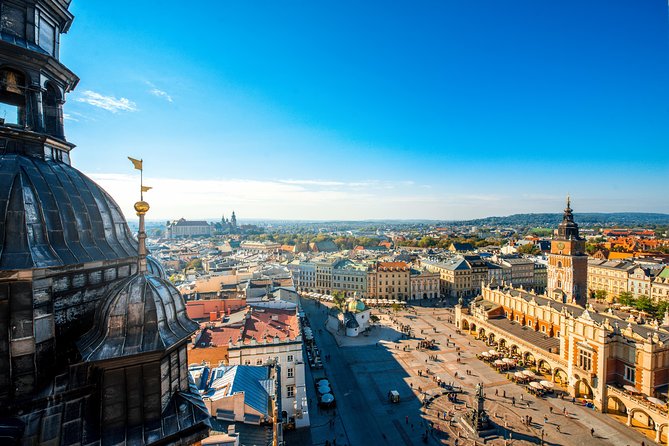
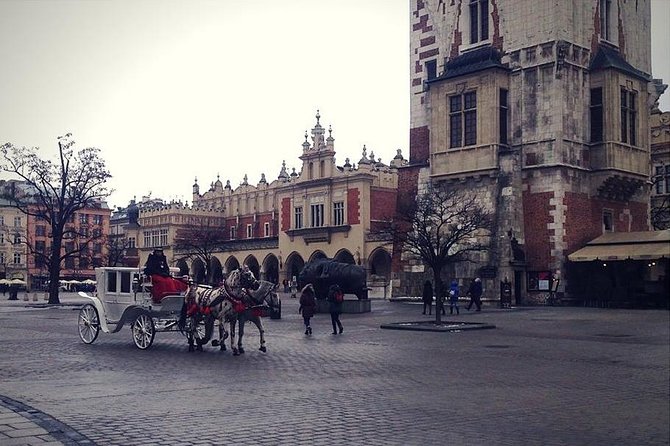
The tour then reaches Rynek Glowny, Krakow’s Central Square. Allow about 30 minutes here, the longest stop on the route. That is sensible. The square is large, layered with buildings, churches, market history, and legends, and it deserves more than a quick photograph.
Your guide explains how the square developed and points out the stories that make it more than a broad open space. This is likely the busiest part of the route, so stay close enough to hear clearly, especially if the group reaches its maximum of 35 people.
I find this stop especially useful for first-time visitors because the Main Square becomes your reference point for the rest of the stay. Once you understand where the square sits in relation to St. Florian’s Gate, Collegium Maius, Planty Park, and Wawel, Krakow becomes easier to navigate on foot.
The tradeoff is that the tour focuses on outdoor explanation rather than extended interior visits. If you want to see every church, museum, or historic hall around the square, you will need to return independently.
Collegium Maius and the university story
Next comes the courtyard of Collegium Maius, the oldest building of the Jagiellonian University. The tour allows around 20 minutes here, with free access to the courtyard. This is one of the more distinctive stops because it shifts the story from kings and fortifications to scholarship, science, and university life.
The guide explains the history of the Jagiellonian University and connects it to the intellectual world of old Krakow. The Copernicus reference makes more sense here, since you are seeing the academic setting linked to his time in the city.
Do not confuse a courtyard visit with a full museum tour. The itinerary includes the courtyard, but it does not include admission to the university museum interiors. If you want to examine the rooms and collections at length, plan a separate visit. For this walking tour, the courtyard offers enough atmosphere and context without breaking the route’s rhythm.
Guides with a history or art history background can add real value at this stop. Pawel, for example, has been praised for bringing cultural and artistic detail to the walk, while other guides have focused more on political history and social life. The exact style depends on who leads your departure.
More Castle and Palace Walks in the world:
- Edinburgh Castle: Guided Walking Tour with Entry Ticket
★ 4.7 · 11,699 reviews - Venice: Doge’s Palace and St Mark’s Basilica Walking Tour
★ 4.4 · 6,291 reviews - Prague: 3-Hour Walking Tour of Old Town & Prague Castle
★ 4.7 · 5,696 reviews - Edinburgh Castle: Guided Walking Tour with Entry Ticket
★ 5.0 · 5,540 reviews
The Bishop’s Palace and John Paul II
The walk continues to the Bishop’s Palace, where you pause for about 10 minutes. The key detail here is the papal window, associated with John Paul II. The stop connects Krakow’s religious life with its modern Polish story.
This is a brief outdoor visit rather than a long palace tour. You will hear about John Paul II’s connection to Krakow and see the place linked with his public appearances. The stop works best as part of the larger route, since it adds a twentieth-century layer after the medieval and university sections.
That range is one of the tour’s strengths. You are not hearing only about castles and kings. The walk moves from city defenses to royal ceremony, learning, Catholic identity, and modern Poland. If Polish history feels unfamiliar to you, the guide’s ability to connect these periods will matter more than a long list of dates.
Planty Park and the walk toward Wawel Hill
After the Bishop’s Palace, the route passes through Planty Park for about 10 minutes on the way to Wawel. The park follows the line of Krakow’s former city walls, so this part quietly ties the opening stop back to the rest of the walk.
This is also a useful breathing space. The tour involves steady walking and standing, and Planty gives the group a change of setting before the final castle section. One guide adapted the route to bring the group indoors briefly during heavy snow, but you should not count on that every time. The stated policy is that the activity operates in all weather, and the guide may shorten or end it if conditions threaten health or safety.
Wear shoes suited to city pavement and dress for the forecast. The route is not described as strenuous, but you need a moderate level of fitness. You will be on your feet for roughly two and a half hours, with short breaks along the way. One guide has been praised for including a quick drink and restroom break, but this should not be treated as a guaranteed scheduled stop.
Wawel Castle and Cathedral: a strong finish
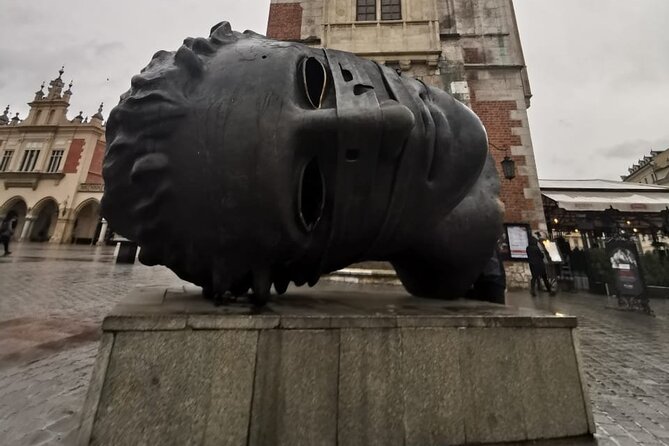
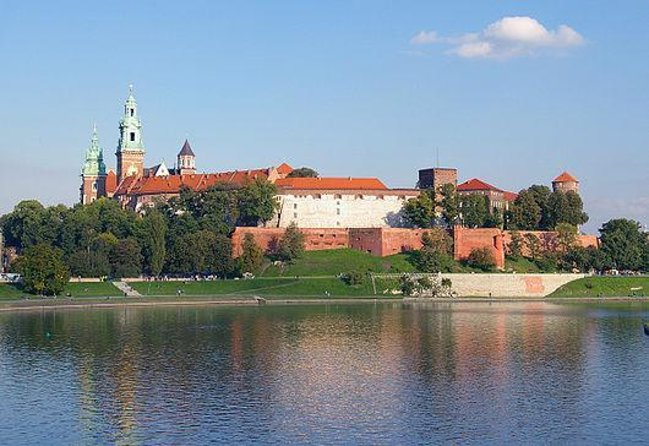
The final section reaches Wawel Royal Castle. You spend about 20 minutes in the castle courtyard and see Wawel Cathedral. This is the natural climax of the route. Wawel Hill gathers Poland’s royal, religious, and national stories in one place, so finishing here gives the walk a clear sense of arrival.
The courtyard visit is free, but the tour does not include admission to the castle’s paid interiors or other ticketed areas. You should think of this as an introduction to Wawel, not a replacement for a full castle visit. Afterward, you can decide which interior exhibitions deserve your time.
Wawel Cathedral adds an important second layer. The castle represents royal power, while the cathedral connects the hill to Poland’s religious and ceremonial life. Seeing both helps you understand why Wawel carries such weight in Krakow’s identity.
The official end point is Wawel Royal Castle, Wawel 5. That is convenient if you want to continue exploring the hill, but there is no hotel drop-off. You finish where the route finishes and make your own way onward.
What the guides do best
The strongest part of this experience is the guide-led storytelling. The best guide for you will not simply point to buildings. The walk works when the guide explains why a place matters, links one period to another, and keeps the group moving without rushing.
Ania has been praised for making the route informative and enjoyable. Chris has been singled out for humor, clear explanations, and helping people get their bearings. Max has been described as both entertaining and well informed, while Maciek has been praised for keeping the history fun. Joanna has been noted for answering questions in a friendly way, and Pawel for adding art history and cultural detail.
You may get a guide with a strong academic background, such as history or art history, or someone who brings more personal stories about Krakow and Polish life. That variation can make each departure feel a little different. The common thread is an English-language presentation aimed at making Polish history understandable rather than dry.
A small weakness is that a guide’s quality can depend on the individual. One less satisfying experience involved a guide who focused too much on selling another tour and did not handle a practical New Year’s Eve question well. That appears to be an exception within an otherwise very strong record, but it is a fair reminder that group tours are not perfectly uniform.
Price, pace, and group size
At $26.59 per person, the tour is priced well for a 2.5-hour guided introduction to Krakow’s core sights. You are paying for an English-speaking professional guide, a planned route, and historical interpretation. You are not paying for meals, drinks, hotel pickup, or the main paid interiors.
The booking information describes this as a general pay-as-you-wish tour arrangement, while also stating that the amount paid covers the reservation and guide payment. In practical terms, you should not assume that a second payment is required. If you want a smaller private walk, the provider can arrange one separately.
The maximum of 35 people is the main value consideration. A group this size can still work well in open spaces such as the Main Square and Wawel courtyard, but you may need to position yourself near the guide. If you prefer a quiet pace, personal attention, and easy questions at every stop, a private option will suit you better.
The tour is booked an average of 27 days ahead, so popular dates can fill early. Free cancellation is available up to 24 hours before the start time. Changes or cancellations inside that window are not accepted for a refund, and the tour requires a minimum number of participants to operate.
Who should book this Krakow walk?
I would book this tour early in a Krakow visit. It gives you a usable map of the old center, explains the major historical periods, and leaves you at Wawel, where you can continue on your own.
It suits first-time visitors, history fans, couples, families with older children, and anyone who wants a guided overview before choosing which museums to enter. Children must be accompanied by an adult, and the walk requires enough stamina for regular walking and standing.
It is less suitable if you want a full castle tour, a museum-heavy day, or a private guide. It also may not be ideal in severe weather if you dislike outdoor touring, since the walk operates in rain, cold, or snow unless conditions become unsafe.
Should you book it?
Yes, if you want a well-paced introduction to Krakow’s Old Town and Wawel area at a sensible price. The strongest reasons are the one-way route, the broad sweep of Polish history, and the repeated praise for guides who make the material clear, funny, and easy to remember.
Book it for your first morning if possible, then use the rest of your stay to revisit the Main Square, Collegium Maius, or Wawel interiors at your own pace. Just dress for the weather, expect outdoor walking, and remember that a group of up to 35 people will not feel fully private.
FAQ
How long does the Old Town and Wawel Castle walking tour last?
The tour lasts approximately 2 hours and 30 minutes.
Where does the tour start and finish?
It starts at the Krakow Barbican on Basztowa Street and finishes at Wawel Royal Castle, Wawel 5.
Is the tour offered in English?
Yes. The experience is offered in English with a local professional guide.
Are castle and museum admission tickets included?
The tour includes free access to the Barbican area, the Collegium Maius courtyard, the Bishop’s Palace stop, Planty Park, and the Wawel courtyard. Paid admission to interiors is not included, and admission to St. Florian’s Gate is also not included.
What is the maximum group size?
The maximum is 35 people per tour.
Can I cancel for a full refund?
Yes, if you cancel at least 24 hours before the experience begins. Cancellations or changes made less than 24 hours before the start time are not refunded.
More Old Town Walking Tours in the world
- Underground Vaults Walking Tour in Edinburgh Old Town
★ 4.5 · 8,506 reviews - Dubrovnik: Old Town Walking Tour
★ 4.8 · 5,174 reviews - Split: Old Town and Diocletian Palace Walking Tour
★ 4.9 · 4,727 reviews - Dubrovnik Discovery Old Town Walking Tour
★ 5.0 · 4,458 reviews
Just added around the world
- Fira: Guided Foodie Walking Tour with Tastings★ 4.9 · 474 reviews
- Fez: Guided Walking Tour of the Historic Medina★ 5.0 · 359 reviews
- Fez: Walking Tour in the Ancient City of Fez★ 4.8 · 73 reviews
- Faro: Old Town Guided Walking Food Tour★ 4.9 · 94 reviews
- Feel like a local – Walking Tour in Mykonos Town 2hours★ 4.4 · 77 reviews
- Fes: A Guided Walking Tour Through the Historic Medina★ 4.4 · 97 reviews
- Fez: Half-Day City Private Walking Tour with a Guide★ 4.6 · 114 reviews
- Fanal / Assobiadores – Levada Walk★ 4.6 · 93 reviews
Castle and Palace Walking Tours, compared.

Edinburgh Castle: Guided Walking Tour with Entry Ticket
Read our review →
Doge’s Palace and St Mark’s Basilica Walking Tour
Read our review →
3-Hour Walking Tour of Old Town & Prague Castle
Read our review →Edinburgh Castle: Guided Walking Tour with Entry Ticket
Read our review →
Edinburgh Castle Guided Walking Tour in English
Read our review →

Walking Tour of Split and Diocletian’s Palace
Read our review →Browse the lists this tour appears in