
REVIEW · ITALY
Syracuse: Ortigia and Neapolis Guided Walking Tour
Syracuse makes its past hard to miss. In one compact outing, you can see a Greek theater, Roman amphitheater, ancient quarries, a pagan temple folded into a Christian cathedral, and the narrow streets of Ortigia. The Temple of Athena and Syracuse Cathedral are especially striking because one building carries two very different religious chapters.
I like the private-group format, which gives you room to ask questions and adjust the pace. I also like the guides’ story-driven approach. Anna, Giuseppe, Marcelo, and others are praised for turning wars, legends, architecture, and archaeology into something that works for adults and children alike.
The main catch is cost. At $317.20 for up to five people, it can be good value for a full private group, but monument admission is extra, and the three-hour plan covers a lot of ground. You will want comfortable shoes, water, and a hat.
Key points
- See a cathedral built around a Greek temple: Syracuse Cathedral incorporates the ancient Temple of Athena, with layers of Greek, Roman, Arab, Spanish, and Christian influence.
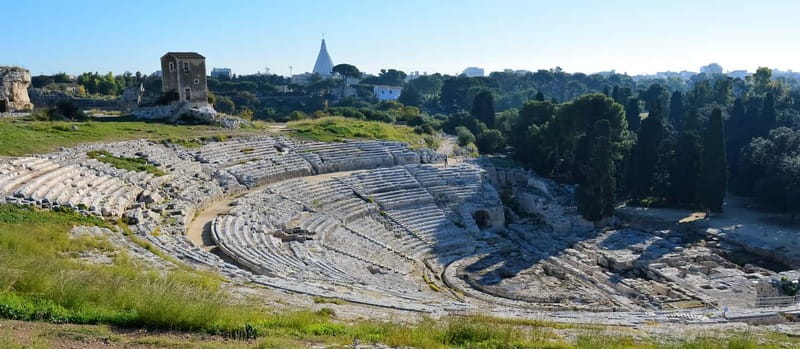
- Walk through Neapolis Archaeological Park: Explore the Greek Theater, Roman Amphitheater, Paradise Latomia, and Ear of Dionysus with a guide beside you.
- Ask questions freely in a private group: The format works well for families and small groups who want a flexible conversation rather than a large crowd.
- Hear Syracuse’s long story in one tour: Guides connect Greek power, Roman rule, Arab and Spanish periods, architecture, religion, and local legends.
- Plan for extra costs: Monument entrance fees are not included. The archaeological park admission has been listed at about 13 euros per person.
- Choose from several languages: Tours are available in English, French, Italian, Russian, Spanish, and German.
A strong introduction to Syracuse’s two historic centers
This tour links two places that can feel separate when explored on your own: the Neapolis Archaeological Park on the mainland side of Syracuse and the island of Ortigia. That pairing is its greatest strength.
Neapolis gives you the large ancient monuments. Ortigia gives you the city’s human scale, with streets, churches, squares, and buildings shaped by many centuries of use. Together, they show why Syracuse was once one of the most important Greek cities in the Mediterranean.
I like this arrangement because it avoids treating Syracuse as only a collection of ruins. You see the theater and quarries, then move into a living historic center where ancient material has been reused in later buildings. Your guide helps connect those pieces.
The experience lasts three hours and is designed for a private group of up to five people. That is a useful size. You can hear the guide through a headset, stop for questions, and ask for more explanation when a building or story catches your attention.
The schedule covers a lot, though. If you like lingering at every monument or taking many photographs, the pace may feel full. A private guide can help, but this is still a broad introduction rather than a slow, specialist tour of every corner.
More Guided Tours in Italy:
- Milan: Guided Walking Tour & Last Supper Visit with Ticket
★ 4.7 · 5,409 reviews - Naples: Street Food Walking Tour with Local Guide
★ 4.9 · 4,976 reviews - Florence: Highlights Walking Tour with Expert Guide
★ 4.6 · 4,662 reviews
Starting at Neapolis Archaeological Park
You meet at the Biglietteria Parco Archeologico Neapolis on Via Luigi Bernabò Brea. Your guide meets you at the ticket office with a sign bearing the local partner’s name, so arrive with the meeting details ready and allow enough time to find the entrance.
The park is the natural place to begin. It gathers major remains from Syracuse’s Greek and Roman periods, with open-air paths between monuments. This setting gives you scale: ancient Syracuse was not just a town with a few old stones, but a major center with theaters, public buildings, quarries, and spaces built for large crowds.
The guide’s role matters here. Archaeological parks can be hard to read without context. A theater may look impressive but silent, while a quarry can seem like a simple cut in the rock. With explanation, these places become part of a story about public life, religion, labor, entertainment, and power.
Admission is not included in the tour price. The listed entrance cost has been about 13 euros per person, but check the current amount when booking. This is an important part of the budget, especially if you are comparing the total cost with a self-guided visit.
The Greek Theater and views toward the Ionian Sea
The Greek Theater is one of the major stops in the park. Its size helps you understand how public performance worked in the ancient city, while its position gives you fine views toward the Ionian Sea.
I find this kind of stop most useful when the guide explains how architecture shaped the experience. The seating, stage area, and broad view were not random choices. They reveal how entertainment, civic life, and the surrounding countryside could be brought together in one place.
Your guide also provides the historical frame needed to make sense of Syracuse’s Greek identity. Syracuse was a powerful city, and the monuments reflect both wealth and ambition. Guides such as Giuseppe have been particularly praised for lively storytelling, historical detail, legends, and the energy to keep going even when the weather turns poor.
The open-air setting also means you should prepare for sun and heat. Comfortable shoes, a hat, and a bottle of water are specifically recommended. The park is not a quick indoor museum visit, and the walking surface can make footwear a real concern.
Paradise Latomia and the Ear of Dionysus
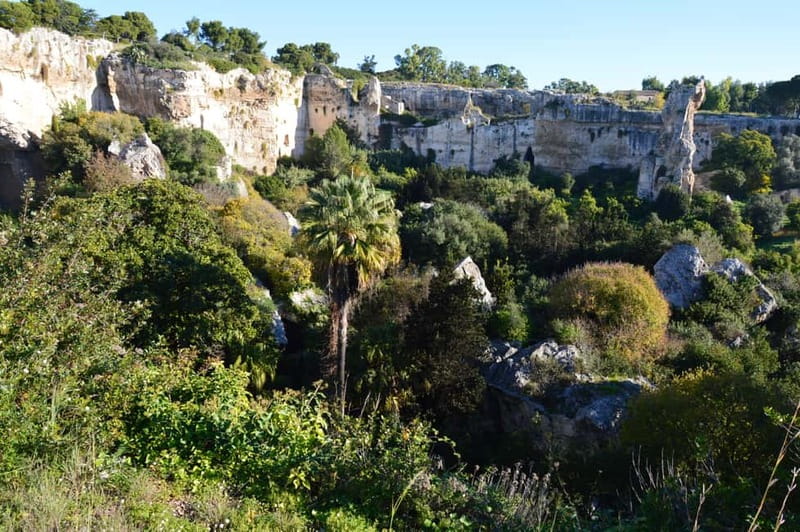
The tour continues through the Paradise Latomia, an ancient stone quarry, and the Ear of Dionysus. These sites show a less polished side of ancient Syracuse. Instead of grand columns and formal spaces, you encounter dramatic excavated rock and places tied to labor, punishment, and local stories.
The Ear of Dionysus is memorable because its shape invites explanation. A guide can help you separate the physical features of the quarry from the stories attached to it, while still showing why the place has captured people’s imagination for so long.
This is where a private tour has an advantage over a guidebook. You can ask about the name, the quarry’s use, the legends, and how much of the popular story is supported by history. Several guides, including Giuseppe and Marcelo, are praised for encouraging questions and adding local tales without losing the larger historical thread.
The quarry sections may not suit anyone who wants only monumental architecture. They are rougher, darker, and more atmospheric than the theater. For me, that change is valuable because it shows the work behind the city’s glory. Syracuse was built not only by rulers and artists, but also by the people who cut the stone.
A few more walking tours around Italy worth a look
- Venice: Doge’s Palace and St Mark’s Basilica Walking Tour
★ 4.4 · 6,291 reviews - Venice: San Marco to Rialto Walk & Spritz Like a Local
★ 4.2 · 3,651 reviews - Uffizi & Accademia Timed Entry: Small Group Duomo Walking Tour
★ 4.5 · 3,630 reviews - Venice Walking Tour and Gondola Ride
★ 3.5 · 3,630 reviews
The Temple of Athena inside Syracuse Cathedral

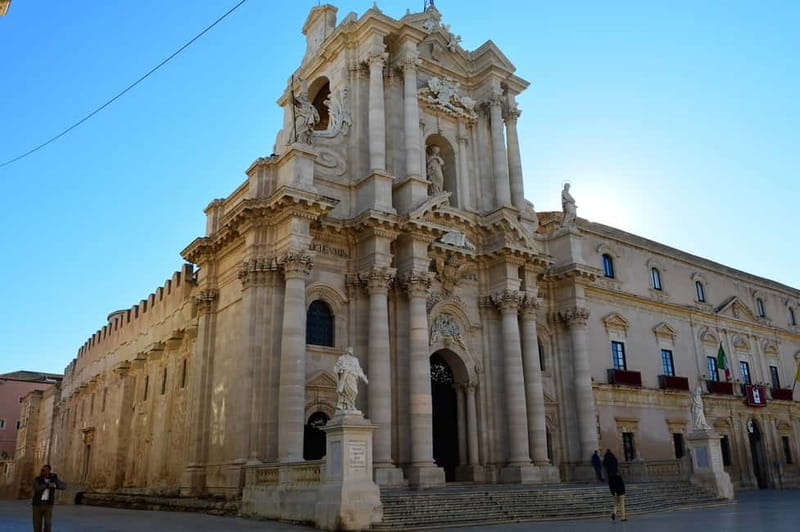
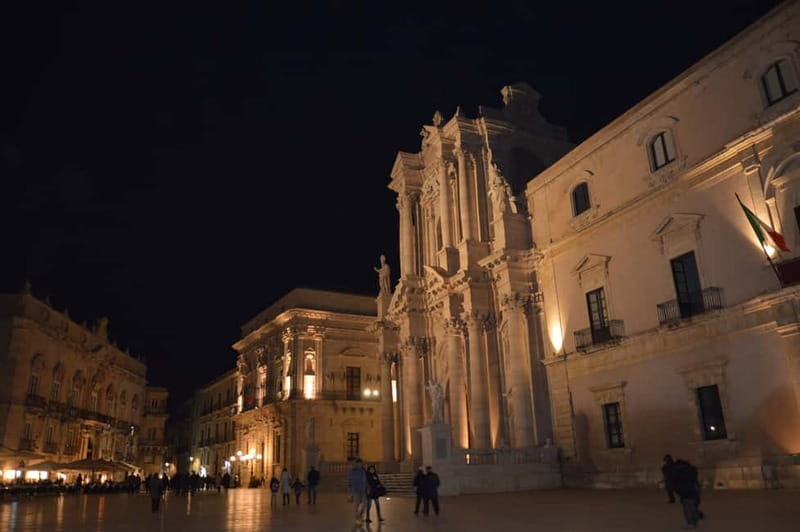
The Ortigia section centers on the Temple of Athena and Syracuse Cathedral. This is the tour’s most rewarding architectural lesson because the ancient temple has not simply disappeared. Its columns and structure were incorporated into the later cathedral.
The result is a building with several identities at once. Greek religious architecture, Christian worship, and later changes all occupy the same space. Your guide explains the different architectural styles and shows how the cathedral reflects Syracuse’s changing rulers and beliefs.
This stop is especially useful if you want more than a list of dates. The building lets you see history as a process of reuse. A sacred Greek site became part of a Christian church, while later periods added their own marks. The city’s Greek, Roman, Arab, Spanish, and Christian chapters are not sealed off from one another. They overlap in the buildings you see today.
Allow time for questions here. The cathedral can reward a slower look, especially if you are interested in architecture or religious history. The tour has only three hours, so your guide will balance explanation with the rest of the route.
Walking Ortigia’s narrow streets
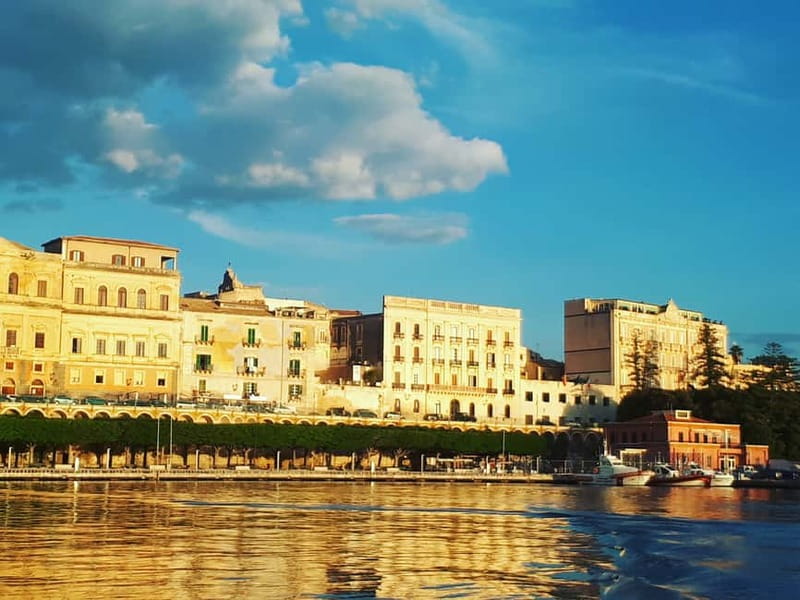
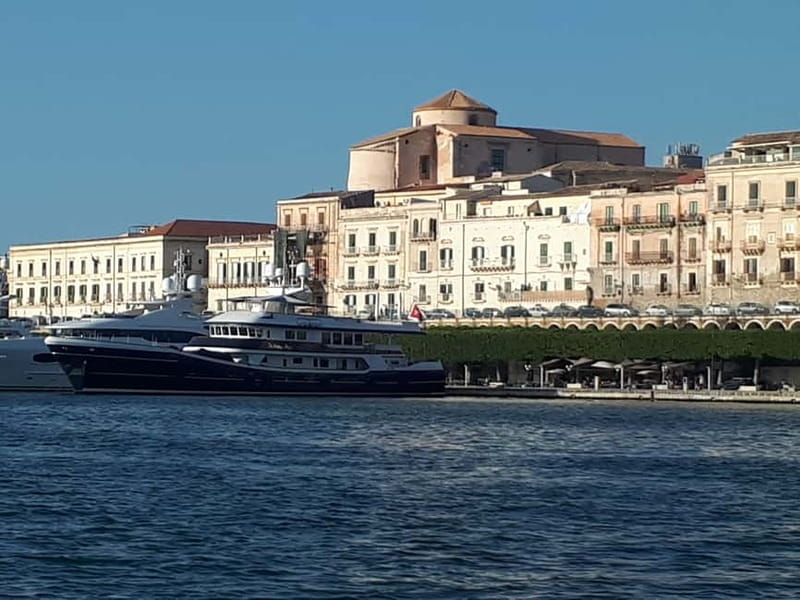
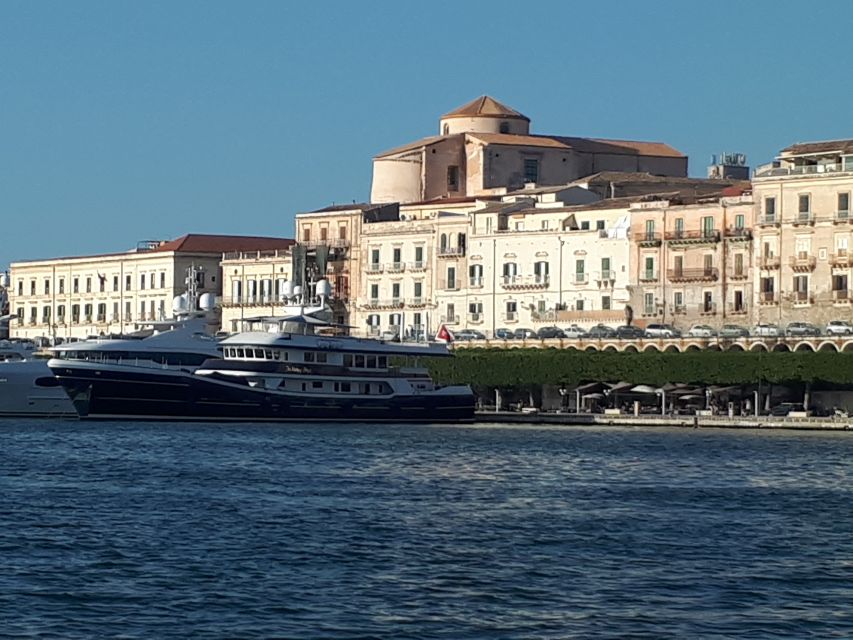
Ortigia is the more intimate half of the experience. The island’s streets form a compact maze, with pale stone buildings, lanes, churches, and small urban spaces. A guided walk helps you get oriented quickly and shows you how the old center fits together.
I like the contrast with Neapolis. The archaeological park presents Syracuse through large ruins and open views. Ortigia feels lived in and layered, with ancient material appearing within a later city. The walk is not only about finding the next monument. It is about seeing how the historic center functions as a place rather than a display.
The route includes the key sites on Ortigia, though the exact order can vary. Some groups have used a short taxi ride between the archaeological park and Ortigia. Transportation and pickup are not included, so confirm the plan with your guide if you need help moving between the two areas.
A private group also helps here. Streets can feel confusing, and you can pause to ask where you are or why a building matters. Families may appreciate the ability to keep children involved through stories and questions. The guide is expected to include both parents and children, and the experience can accommodate children of all ages.
Guides who make the history easier to follow
The strongest part of this experience is the guide. Names that appear repeatedly in the supplied information include Anna, Giuseppe, Marcelo, Laura, and Rosanna. Guide assignment is not guaranteed, but these examples give you a sense of the style to expect.
Anna is described as professional, patient, passionate, and strong on local history, architecture, and art history. She has also been praised for keeping a smooth pace, confirming meeting details, and handling poor weather with care.
Giuseppe is known for enthusiasm, interactive storytelling, legends, and a wide grasp of Syracuse’s history. He has worked well with teenagers, older walkers, and groups that ask many questions. One useful detail for older visitors: a group of four slower walkers found that he adjusted to their pace and still showed them a great deal.
Marcelo has a particular interest in archaeology and has covered the city’s Greek origins as well as Roman, Arab, and Spanish periods. One private tour ran longer than planned, lasting more than four hours, but you should not assume every tour will do the same. The stated duration is three hours.
The guides’ range of languages is another practical plus. You can book in English, French, Italian, Russian, Spanish, or German. If language fit is important to you, confirm your preferred language when checking availability.
Is $317.20 a fair price?
The price is $317.20 per group of up to five people. That works out to about $63.44 each if five people share the cost, before entrance fees. For two people, the per-person price is much higher, so the value depends heavily on your group size and your interest in guided history.
The fee includes a licensed guide and a headset. It does not include admission to the monuments, food, drinks, or pickup and drop-off. The private format is what you are mainly paying for: direct attention, questions, family-friendly pacing, and an itinerary that combines the park with Ortigia.
I would consider it good value for four or five people who want historical context and do not want to organize the two areas alone. It is less compelling for a solo visitor on a tight budget, especially if you are comfortable reading signs and exploring independently.
The price can also make sense if your time in Syracuse is short. Three hours gives you a structured look at the city’s biggest ancient and historic highlights. Just budget for the park entrance fee and any local transport needed between the two sections.
Practical details before you book
Wear shoes made for walking, not just stylish footwear. The route includes an archaeological park, ancient quarries, and historic streets, so comfort will affect how much you enjoy the final hour.
Bring water and a hat. Much of the experience takes place outdoors, and the information specifically recommends both. Weather can change, too. Giuseppe and Anna have handled rain well, but a wet day may alter how comfortable the walking feels.
The tour is wheelchair accessible, though the exact ease of every ancient surface and street section is not described. If you use a wheelchair, contact the provider before booking so the route can be confirmed for your needs.
The experience is private and can include children of all ages. The guide will involve both adults and children, which makes it a better fit for families than a rigid lecture-style visit.
Free cancellation is available up to 24 hours before the tour for a full refund. You can also reserve now and pay later, which helps if your Sicily plans are still shifting. Starting times depend on availability.
Who should book this Syracuse tour?
I would choose this tour if you want Syracuse explained rather than simply photographed. It is a good match for first-time visitors, families, small groups, and anyone who wants to connect the Greek Theater with the cathedral and Ortigia’s streets.
It is also a smart choice for people who enjoy asking questions. The private format gives you a better chance to explore subjects such as ancient religion, reused temple columns, local legends, and the city’s later Roman, Arab, and Spanish periods.
I would skip it if you want a slow, unstructured morning or if your main goal is to keep costs as low as possible. You will pay extra for entrance fees, and three hours is a busy schedule for two substantial areas.
For most small groups with a real interest in history, I think the tour earns its price. Book it with realistic expectations: this is a brisk overview led by a strong storyteller, not an all-day archaeological study. Bring water, wear good shoes, and confirm the meeting details and language before you go.
FAQ
How long does the Syracuse Ortigia and Neapolis tour last?
The stated duration is three hours. Starting times vary, so you need to check availability for your chosen date.
Where does the tour start?
The meeting point is the Biglietteria Parco Archeologico Neapolis on Via Luigi Bernabò Brea, 96100 Siracusa. Your guide meets you at the ticket office with a sign showing the local partner’s name.
Is admission to the archaeological park included?
No. Entrance fees to the monuments are not included in the tour price. The archaeological park admission has been listed at about 13 euros per person, but you should check the current fee.
Is the tour private?
Yes. This is a private group experience for up to five people.
Which languages are available?
The live guide is available in English, French, Italian, Russian, Spanish, and German.
Can children or wheelchair users join?
Children of all ages can join, and the guide will involve both parents and children. The activity is listed as wheelchair accessible.
Just added around Italy
- Genoa Walking Tour: Explore Top Sights & Hidden Gems★ 4.0 · 138 reviews
- Genoa Food, Wine Tasting & History Walking Tour★ 5.0 · 212 reviews
- Taste Genoa: A Full Meal Walking Food Tour by Do Eat Better★ 5.0 · 509 reviews
- Genoa Walking Tour: Discover Hidden Treasures and Street Food★ 5.0 · 80 reviews
- Tasty Florence Street Food with Guided Walking of the City★ 5.0 · 174 reviews
- Medici Legends & Renaissance Wonders: Florence Small Group Tour★ 5.0 · 205 reviews
- Florence Food Tour of 10+ Authentic Tastings with Cheeses & Wines★ 5.0 · 155 reviews
- Florence Private Walking tour with Skip-the-line to Accademia★ 4.5 · 236 reviews
Walking Tours, compared.

Magical London: Harry Potter Guided Walking Tour
Read our review →
Reykjavik Food Walk – Local Foodie Adventure in Iceland
Read our review →
History and Hauntings of Salem Guided Walking Tour
Read our review →
New Orleans Premier Ghost, Voodoo and Vampire Walking Tour
Read our review →
Amsterdam Anne Frank: Small-Group Walking Tour & Local Guide
Read our review →

Edinburgh Castle: Guided Walking Tour with Entry Ticket
Read our review →
Anne Frank’s Story – Guided Walking Tour through Amsterdam
Read our review →Browse the lists this tour appears in