
REVIEW · ITALY
Syracuse: Highlights of Ortigia Guided Walking Tour
The most memorable part of this Ortigia walking tour is the way ancient Greek myth, Roman-era remains, Baroque stonework, and daily Sicilian life sit within a short stroll. You begin at the Temple of Apollo and finish beside a freshwater spring near the sea, with the love story of Arethusa and Alpheus tying the route together.
I like the sensible route and the guide’s local perspective. You get the key sights without spending a full day on your feet, and guides such as Michael, Letizia, Vincenzo, and Giuseppe have brought personal knowledge of Syracuse to the walk. I also like the evening option, when the light can make Ortigia’s pale stone look especially fine.
The main caution is pacing. Some tours combine English and Italian, so explanations may be repeated, and one scheduled two-hour visit reportedly lasted closer to an hour and a half. The listed stop times also add up to more than two hours, so treat the timetable as an estimate rather than a promise.
Key points to know before booking
- Ancient Syracuse in one compact route: Start at the Temple of Apollo and finish at the Arethusa spring.
- Piazza Duomo is the visual high point: Expect elaborate marble work and a chance to visit Syracuse Cathedral.
- Myth gives the walk its thread: The Fountain of Diana and Arethusa spring connect the sights to the tale of a nymph transformed into a fountain.
- The guide makes the difference: Past guides including Michael, Letizia, Vincenzo, Eva, and Giuseppe have been praised for clear explanations and local stories.
- Bring a headset if you have one: You may use your own headset, or buy a disposable one onsite for €1.
- Plan for heat and church rules: Arrive 10 minutes early, carry water, and wear clothing suitable for entering places of worship.
Starting under the pomegranate tree at the Temple of Apollo
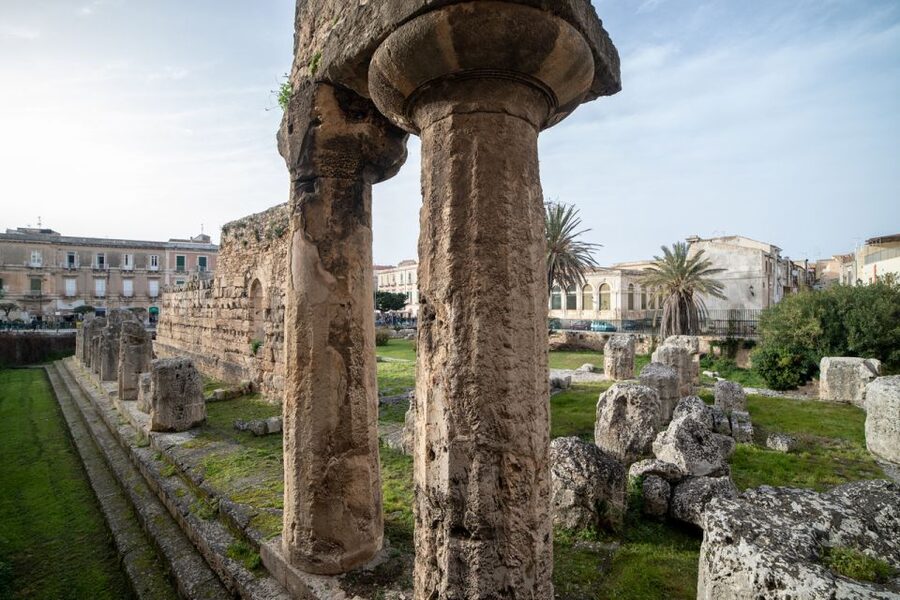
The meeting point is easy to identify once you know what to look for: Largo XXV Luglio, 7, under the pomegranate tree in front of the Temple of Apollo. The guide wears a badge and waits at the roundabout where Corso Matteotti begins.
Arrive 10 minutes early. This matters more than it sounds, since the tour moves through a busy part of Ortigia and late arrivals can hold up the group. One practical complaint about the experience was waiting for people who arrived late, so do your part and be ready before the scheduled start.
The Temple of Apollo is an excellent opening stop. It is described as the oldest Greek temple in the Western world, and its weathered remains immediately show you how far back Syracuse reaches. You are not simply beginning beside an old ruin. You are beginning at the point where the city’s Greek identity becomes visible.
The first guided section lasts about 30 minutes. That gives the guide enough time to explain the temple and place it in the wider story of Syracuse, without turning the opening into a long lecture. Still, the amount of detail can depend on the guide. Some guides have focused on dates and years, while others have explained how Ortigia developed over time and answered questions in a more conversational way.
If your guide is especially good at connecting the ruins to modern Syracuse, this first stop will give you a useful frame for the rest of the walk. If the explanation leans heavily on dates, stay engaged by asking how the temple relates to the streets and buildings around you.
More Guided Tours in Italy:
- Milan: Guided Walking Tour & Last Supper Visit with Ticket
★ 4.7 · 5,409 reviews - Naples: Street Food Walking Tour with Local Guide
★ 4.9 · 4,976 reviews - Florence: Highlights Walking Tour with Expert Guide
★ 4.6 · 4,662 reviews
Piazza Archimede and the Fountain of Diana
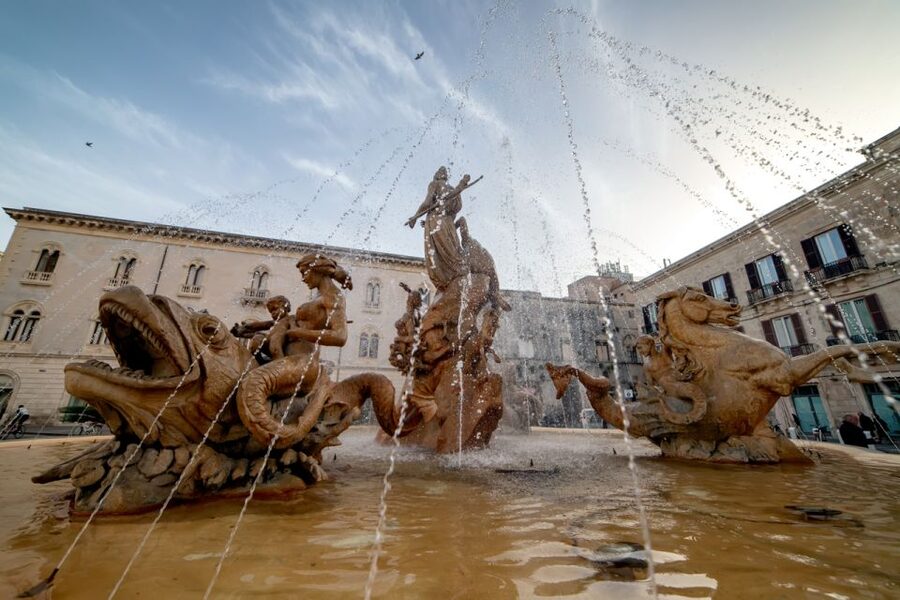
From the temple, you continue toward Piazza Archimede. This section is scheduled for about 20 minutes and brings you to the Fountain of Diana, a major meeting point in Ortigia.
The fountain shows Diana, the Roman name for the Greek goddess Artemis, with the nymph Arethusa. The scene refers to the moment when Arethusa is transformed into a spring. That myth is not a side note here. It becomes the story that links the fountain in the square with the freshwater spring at the end of your route.
I like this stop because it gives the tour a little more character than a simple march between monuments. You are looking at public art, but the guide can also explain the local mythology that gives the image its meaning. A good explanation helps you notice the figures and action rather than seeing the fountain as just another ornament in a pretty square.
Piazza Archimede also gives you a feel for the shape of Ortigia. The old center is compact, and the tour’s value comes partly from walking between major sights while hearing how they fit together. You should not expect a long stop for photographs or shopping. This is a guided overview, not free time in each square.
The route can feel slower if the tour is conducted in English and Italian at the same time. One participant found that the repeated explanations made the walk drag. If you have booked an English tour, it is worth confirming the language arrangement before you go, especially if you prefer a quick pace.
Piazza Duomo and Syracuse Cathedral
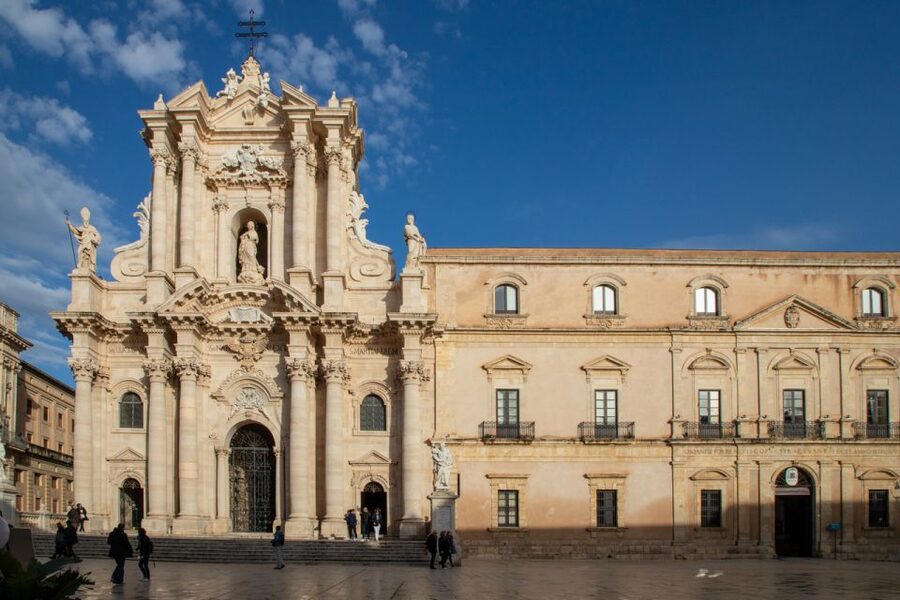
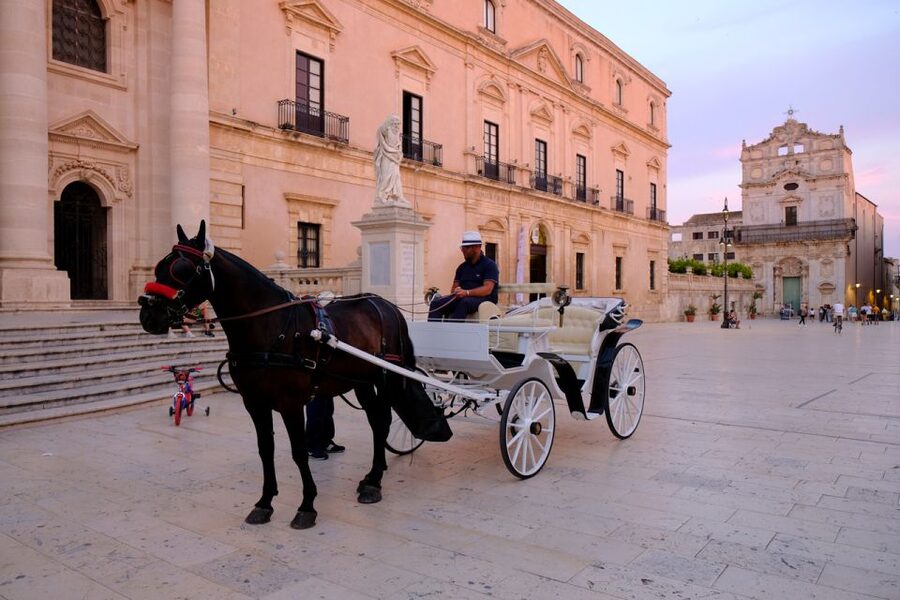
The next major stop is Piazza Duomo, described as one of Italy’s most beautiful squares. It is also tied to the earliest Corinthian settlers in the city, making it an important place for both the look of Ortigia and its origins.
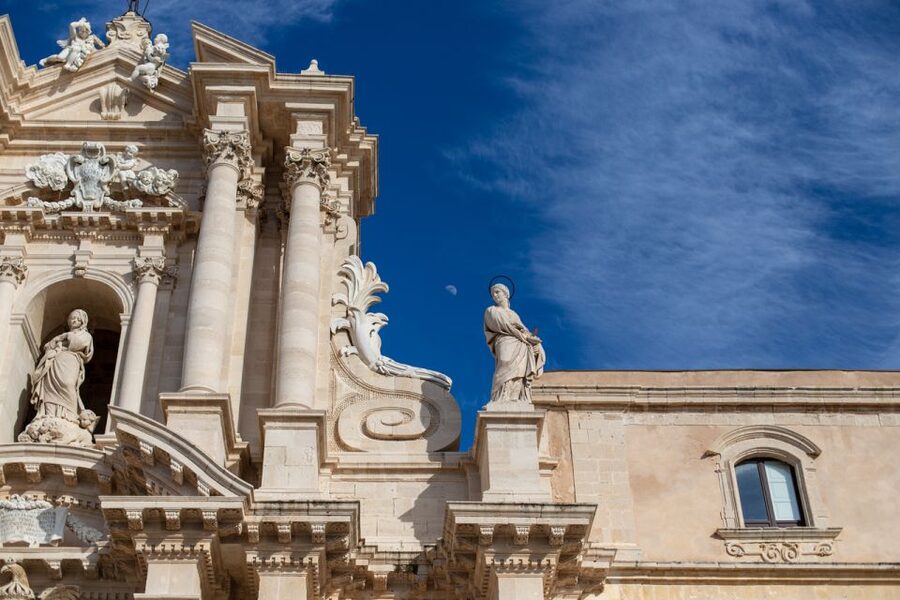
This is likely the visual centerpiece of the walk. The square’s pale marble surfaces and surrounding architecture create a very different mood from the rough stone of the Temple of Apollo. The change helps you see Ortigia as a layered city, not a place defined by one period.
The tour allows about 45 minutes in this part of the route. The Syracuse Cathedral is the main attraction, with its impressive marble work and long architectural story. The building itself requires careful attention because it reflects the many changes that shaped the city. Your guide can help you read the building rather than simply admire the facade.
Entry to the cathedral is not included in the $29 tour price. Tickets must be paid onsite, so keep some money available. The stated information does not give the admission cost, and access can change with opening hours or holidays. The cathedral may also require suitable clothing, so cover your shoulders and knees if needed. This is one reason to avoid arriving in beachwear, even during a hot Sicilian afternoon.
The cathedral visit can be a strong part of the experience if you enjoy architecture and religious buildings. It can also feel brief if the schedule is tight. One account described around 15 minutes inside, so you should not book this tour expecting a slow, detailed examination of every chapel and decorative feature.
Piazza Duomo is also a good place to look around after the explanation ends. The tour is structured, but the square deserves a moment of your own. Notice how the marble changes in different light, especially on an evening departure. A late-day walk was particularly appealing because the softer light made the city look more graceful.
The Arethusa spring and the story of Alpheus
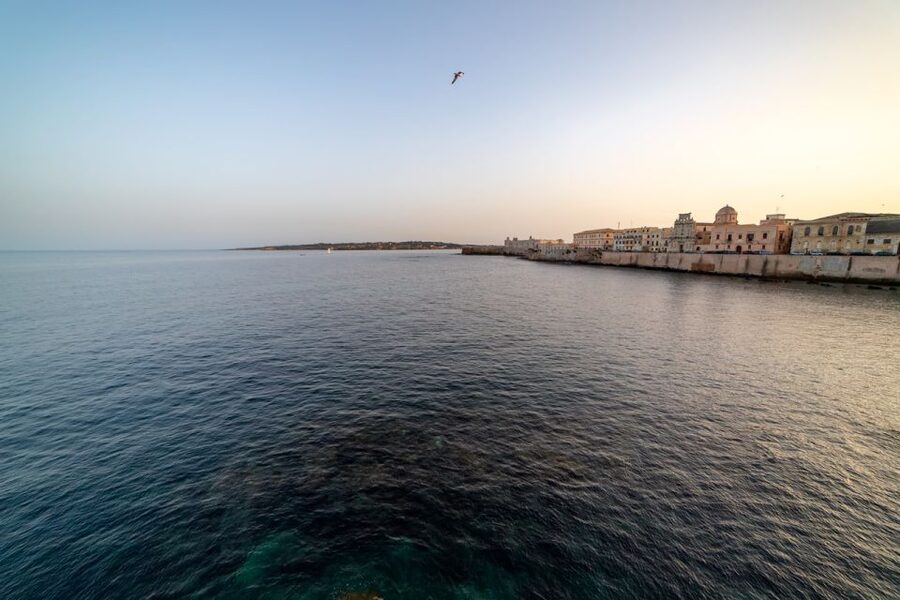
The final stop is the Arethusa spring, about 40 minutes according to the schedule. The spring sits only a few meters from the sea, which is what makes it such an unusual sight. Fresh water emerging beside salt water sounds simple, but in Ortigia it carries both physical interest and a strong mythological meaning.
The story concerns Arethusa and Alpheus. In the myth, Arethusa is pursued and transformed into a spring, while Alpheus is linked to her through the water. The exact details may vary in the telling, but the main idea is clear: this small pool is not just a natural feature. It is one of the places where Syracuse’s Greek past remains part of the city’s present identity.
This stop gives the route a satisfying finish. You have moved from a Greek temple to a mythological fountain, then through the grand square and cathedral, before arriving at the spring named in the story. The route feels connected rather than random.
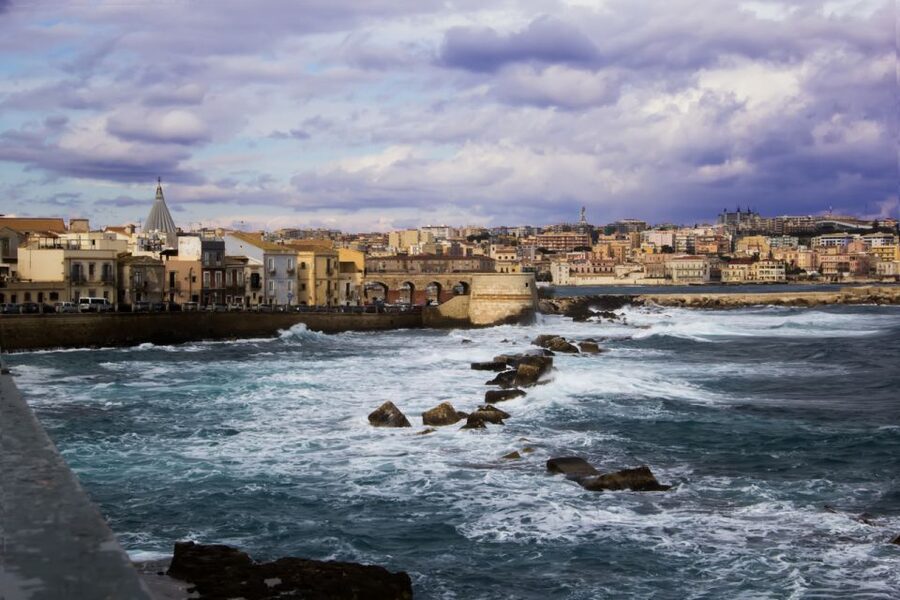
The spring is also a useful reminder that Ortigia is an island with its own character. You are close to the sea, yet looking at freshwater and plant life. The setting is calmer than the city streets around the earlier stops, though the amount of time you receive will depend on the guide and the day’s schedule.
If you enjoy local lore, ask questions here. One particularly enjoyable style of guiding includes small stories about local residents and modern life near the Duomo, rather than only dates and dynasties. That kind of detail can make the tour feel more personal. It is worth asking your guide for that human side of Ortigia.
A few more walking tours around Italy worth a look
- Venice: Doge’s Palace and St Mark’s Basilica Walking Tour
★ 4.4 · 6,291 reviews - Venice: San Marco to Rialto Walk & Spritz Like a Local
★ 4.2 · 3,651 reviews - Uffizi & Accademia Timed Entry: Small Group Duomo Walking Tour
★ 4.5 · 3,630 reviews - Venice Walking Tour and Gondola Ride
★ 3.5 · 3,630 reviews
What the $29 price really gives you
At $29 per person, this is a reasonable way to get oriented in Syracuse’s old center. You are paying for a two-hour guided walk, not a full museum program or private tour. The value rests on the quality of the explanation and the route between the sights.
The price makes the most sense for a first visit. You can see several major landmarks in one outing, learn the basic story of Ortigia, and then return later to the places that deserve more time. If you already know the center well, or prefer exploring alone, the tour may offer less for the money.
Remember that food, drinks, and cathedral admission are extra. The walk itself does not include a meal or a tasting, so eat beforehand if you need more than a quick stop between sights. You should also budget for the optional disposable headset, priced at €1, if you do not bring your own.
The guide is the key value. Past guides have included Giuseppe, Michael, Letizia, Vincenzo, Eva, and others. Michael was praised for combining local knowledge with practical care during a 96-degree heatwave, including keeping the group in the shade when possible. Vincenzo was noted for explaining how Ortigia changed over time and answering questions instead of rushing through a script.
That is the best version of this tour: a friendly local guide who explains what you are seeing, then adds a story that you would not get from a sign. The weaker version is a fast list of dates, a shared English and Italian presentation, or a shortened route.
Timing, heat, and the small practical details
The advertised duration is two hours, but the individual stop estimates add up to more than that. Temple of Apollo is listed at 30 minutes, Piazza Archimede at 20, another 45 minutes appears to cover the cathedral area, and Arethusa spring is listed at 40. Since these figures total about two hours and 15 minutes before walking time, the schedule is clearly approximate.
You may also find the tour finishes in about an hour and a half. That is not necessarily a problem if you want a quick orientation, but it matters if you are planning a tight connection or another timed visit afterward.
Syracuse can be very hot. Choose light clothing that still meets church dress rules, wear comfortable shoes, and bring water. One guide adapted well to extreme heat by using shaded areas, but you should not assume every route or departure will offer the same relief.
The tour may run at the same time in English and Italian. That arrangement can make the experience slower because each point is explained twice. It may also mean you hear less detail in your preferred language than you expected. If you want a brisk English-only walk, check the available departure carefully before paying.
Monuments can change access based on holidays and opening hours. The cathedral visit is not guaranteed in exactly the same form every time, so keep your plans flexible. The walking route still gives you the main outdoor sights even if an interior visit changes.
Cancellation is free up to 24 hours before the tour for a full refund, and you can reserve now and pay later. Those terms are useful if your Syracuse plans may shift, but they do not remove the need to check the start time and language before booking.
Who will get the most from this Ortigia walk
I would choose this tour for a first visit to Syracuse, especially if you want the main sights explained in a short time. It suits you if you enjoy architecture, Greek mythology, and stories about how an old city developed.
It is also a good fit if you are arriving in Syracuse and want to get your bearings fast. The route gives you a useful map in your head: temple first, central square next, cathedral after that, and the sea-side spring at the end.
Families and mixed-age groups may like the short format, though the heat and walking surface can make the day tiring. You should be comfortable walking outdoors for the duration and standing while the guide speaks.
I would be more cautious if you want an intimate private experience, a detailed cathedral visit, or a tour conducted only in English. The combined-language format can slow things down. I would also skip this option if you dislike fixed routes and prefer to linger wherever you choose.
Should you book the Syracuse Ortigia tour?
Book it if you want a well-priced introduction to Ortigia with the city’s main sights tied together by myth and local history. The Temple of Apollo, Piazza Archimede, Piazza Duomo, Syracuse Cathedral, and Arethusa spring form a sensible first-day route, and a strong guide can add much more than you would get from walking alone.
Before booking, check the language arrangement, allow extra time beyond the advertised two hours, and remember that cathedral admission costs extra. Arrive early under the pomegranate tree, bring water and a headset if you have one, and dress for church entry.
I would not choose it for a slow architectural study or a fully private tour. For most first-time visitors, though, $29 is a fair price for a compact introduction, especially when your guide is like Michael, Letizia, Vincenzo, or Giuseppe: clear, warm, and willing to explain the stories behind the stones.
FAQ
How long is the Ortigia walking tour?
The advertised duration is two hours. The listed stop times are approximate and add up to slightly more than two hours, while the actual finish can vary.
Where does the tour begin?
Meet at Largo XXV Luglio, 7, under the pomegranate tree in front of the Temple of Apollo. The guide will have a badge and waits at the roundabout where Corso Matteotti begins.
Which languages are available?
The live tour guide speaks English or Italian. The tour may sometimes be conducted in both languages at the same time.
Is entry to Syracuse Cathedral included?
No. Cathedral admission is not included in the tour price, and tickets must be paid for onsite.
What should I wear for the tour?
Wear comfortable walking clothes and follow the dress code required for places of worship. Arrive 10 minutes early so the group can leave on time.
Can I cancel or pay later?
You can cancel up to 24 hours in advance for a full refund. Reserve now and pay later is also available.
Just added around Italy
- Genoa Food, Wine Tasting & History Walking Tour★ 5.0 · 212 reviews
- Genoa Walking Tour: Explore Top Sights & Hidden Gems★ 4.0 · 138 reviews
- Taste Genoa: A Full Meal Walking Food Tour by Do Eat Better★ 5.0 · 509 reviews
- Genoa Walking Tour: Discover Hidden Treasures and Street Food★ 5.0 · 80 reviews
- Tasty Florence Street Food with Guided Walking of the City★ 5.0 · 174 reviews
- Medici Legends & Renaissance Wonders: Florence Small Group Tour★ 5.0 · 205 reviews
- Florence Food Tour of 10+ Authentic Tastings with Cheeses & Wines★ 5.0 · 155 reviews
- Florence Private Walking tour with Skip-the-line to Accademia★ 4.5 · 236 reviews
Walking Tours, compared.

Magical London: Harry Potter Guided Walking Tour
Read our review →
Reykjavik Food Walk – Local Foodie Adventure in Iceland
Read our review →
History and Hauntings of Salem Guided Walking Tour
Read our review →
New Orleans Premier Ghost, Voodoo and Vampire Walking Tour
Read our review →
Amsterdam Anne Frank: Small-Group Walking Tour & Local Guide
Read our review →

Edinburgh Castle: Guided Walking Tour with Entry Ticket
Read our review →
Anne Frank’s Story – Guided Walking Tour through Amsterdam
Read our review →Browse the lists this tour appears in