
REVIEW · STRASBOURG
Strasbourg : European District Walking Tour
Strasbourg’s European District tells a powerful story in a compact space: a city once caught between France and Germany now hosts major European institutions. You’ll walk from the Agora and Council of Europe toward the Court of Human Rights and European Parliament, with the Ill River, bike paths, and new Wacken buildings shaping the route.
I like the small groups of up to six, which give you room to ask questions instead of simply trailing behind a flag. I also like the mix of politics and neighborhood life: Art Nouveau houses near the Orangerie, modern offices, unusual homes, river views, and local advice from guides such as Nicolas and Rémy. The main drawback is clear: you do not enter the Parliament, and the walk is not suitable for people with mobility impairments.
Key points to know before you book
- A walk through Strasbourg’s European District: See the Agora, Council of Europe, European Court of Human Rights, and European Parliament from outside.
- A useful France-Germany-EU story: Your guide explains how Strasbourg changed from a point of conflict into a center for European cooperation.
- Small groups up to six people: This makes it easier to ask about EU institutions, local history, or your wider stay in the region.
- Art Nouveau houses near Orangerie: The route is not only about government buildings and includes some of Strasbourg’s more unusual residential architecture.
- Wacken’s modern side: Expect new buildings, bike paths, and the Ill River near the Parliament.
- A good pairing with a Parliament visit: The tour ends close to the Parliament entrance, where you can visit on your own if it is open and available.
Why this part of Strasbourg matters
Many visitors spend their time around Strasbourg Cathedral, Petite France, and the old center. That is sensible, but the European District shows another side of the city. Here, Strasbourg is less about medieval lanes and more about the political project that followed centuries of conflict between France and Germany.
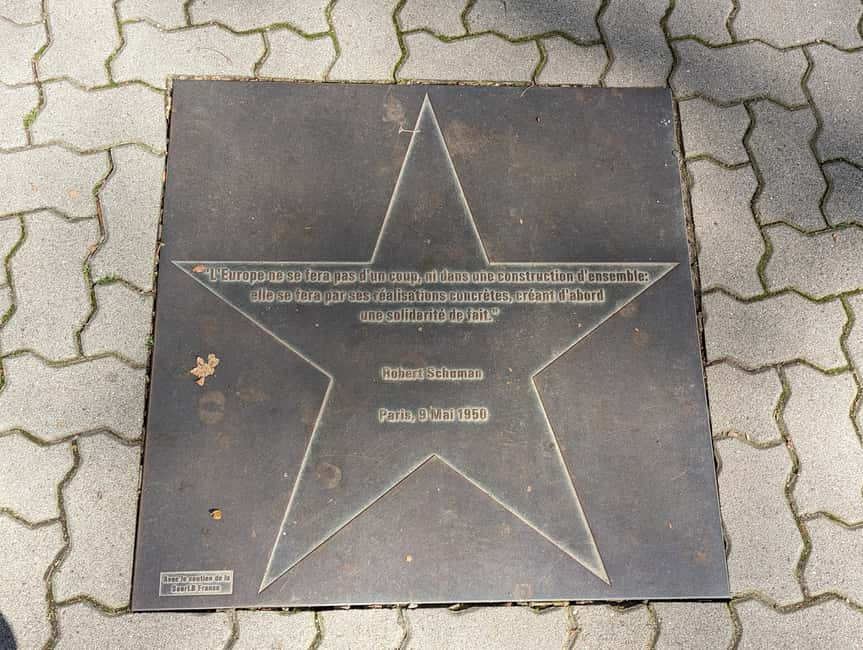
The guide sets the scene at the start. Strasbourg’s position between the two countries made it a symbol of rivalry for a long time. After the Second World War, European cooperation became a way to make another major conflict less likely. The institutions you see on this walk are part of that effort.
That context matters because the buildings can otherwise look like a collection of large offices. With an explanation, the Council of Europe, Court of Human Rights, and Parliament each have a different purpose. You are not simply taking photographs of official buildings. You are learning why they are here, what they do, and how they fit into Europe’s political system.
I find this subject especially useful if you are visiting Strasbourg with teenagers or anyone who wants more than pretty streets. The explanations can turn a formal district into a place with real political weight. Nicolas, one of the guides available for this experience, is praised for adding humor and anecdotes to the major events, while Rémy is noted for taking time with questions and keeping the storytelling friendly.
A few more walking tours around France worth a look
- Paris Top Sights Half Day Walking Tour with a Fun Guide
★ 5.0 · 2,893 reviews - Montmartre Hidden Gems and Scenic Highlights Walking Tour
★ 5.0 · 2,684 reviews - Montmartre Hill French Gourmet Food and Wine Tasting Walking Tour
★ 5.0 · 2,588 reviews
Starting at the Agora and Council of Europe
The meeting point is the Agora, the building associated with the Council of Europe. Look for a guide wearing a black T-shirt with the orange Bretzel&Fun logo. Bring your passport or identity card, since identification is listed as required for the experience.
The Council of Europe is an important early stop because it helps separate two institutions that many people confuse. Your guide explains its role and the way it differs from the European Union. That distinction is one of the practical reasons to take a guided walk here. A quick visit on your own can leave you with a blur of names: Council of Europe, European Council, European Commission, Parliament, and Court of Human Rights.
The tour gives you a framework for sorting them out. You should expect an explanation rather than an interior visit. The buildings are viewed from outside, so the value comes from the guide’s account of their work, the surrounding setting, and the political story connected to Strasbourg.
The group limit of six is useful at this point. If you want to ask how the institutions relate to one another, you should have a better chance of getting a direct answer than on a large coach tour. English and French are offered.
The European Court of Human Rights
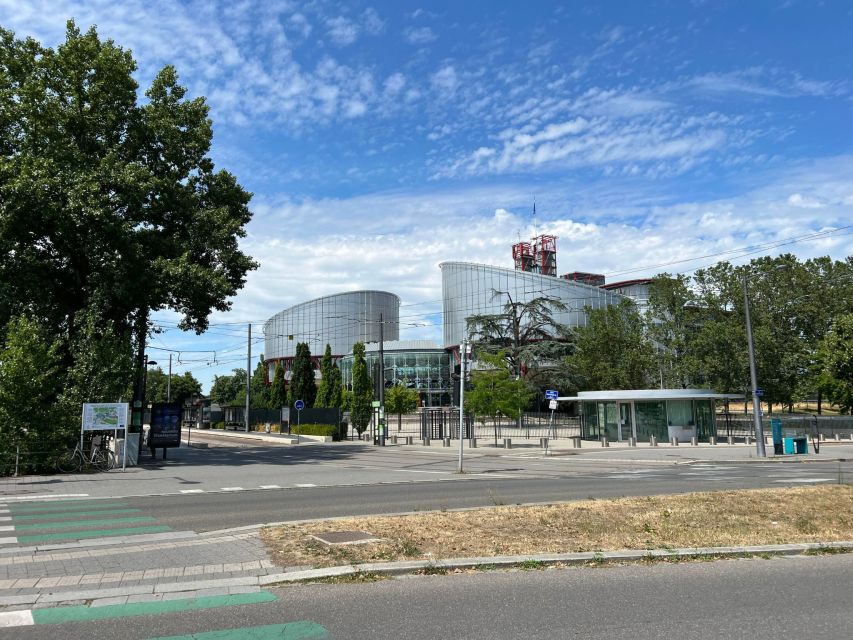
The walk continues toward the European Court of Human Rights. This is one of the most meaningful stops on the route, since it brings human rights into the same story of postwar European cooperation.
Your guide explains the court’s specific role, rather than treating it as another general EU office. That can help you understand why Strasbourg has such an important place in Europe’s political structure. The court also gives the route a human scale. The story is not only about trade rules, laws, and government meetings. It is also about protections and legal rights.
The tour remains outside, so set your expectations properly. You will not be shown through the court or given an inside institutional tour. If you want detailed legal procedure, this 90-minute walk will only provide an introduction. If you want a clear explanation of why the court is in Strasbourg and what it represents, the stop fits the tour well.
This is also a good moment for photographs. The tour includes photo opportunities, and the open setting around the institutions offers more room than the narrow streets of the old center. Still, the focus is explanation first, photography second.
Orangerie’s unusual Art Nouveau houses
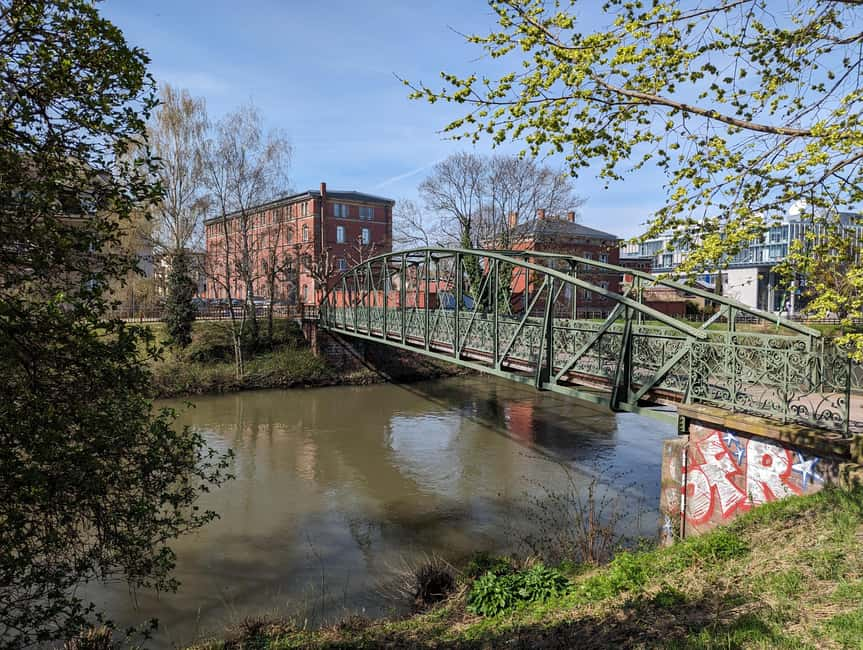
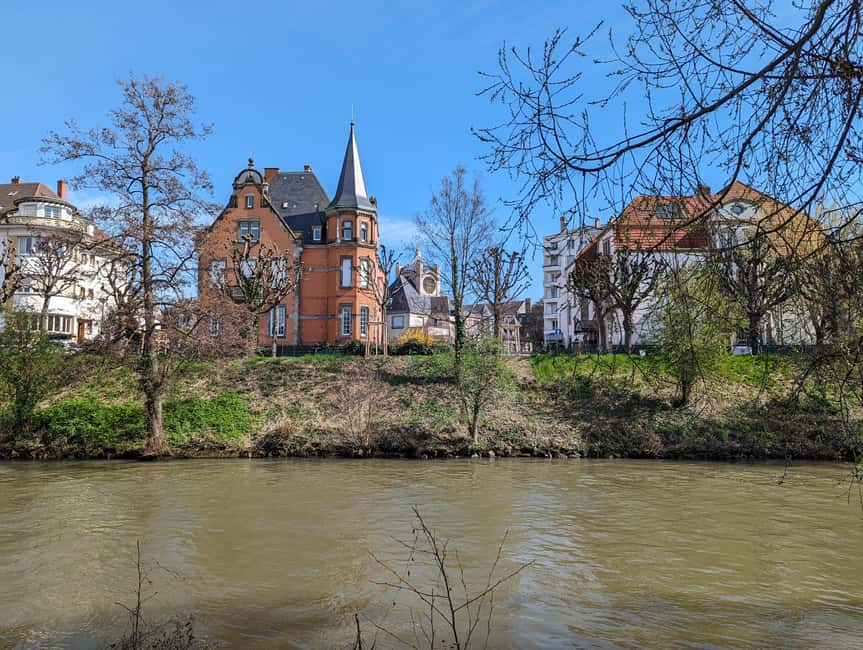
One of the nicest changes of pace comes near the Orangerie District. After the formal European buildings, you see well-known Art Nouveau houses and unusual residential details.
This part keeps the tour from becoming a lesson in institutions alone. Art Nouveau architecture gives you a more personal view of Strasbourg, with homes that reflect the city’s taste, wealth, and changing identity. The supplied information does not promise entry into any house, so plan to admire them from the street.
I like this section because it gives your eyes a break from large government buildings. It also makes the route feel connected to everyday Strasbourg. You are still near Europe’s political center, yet the setting includes homes and neighborhood architecture rather than only official facades.
The Orangerie portion may appeal most to visitors who enjoy architecture but do not want a dedicated technical architecture tour. You get selected examples within a broader walk. That means the treatment is likely to be concise, but it adds variety and helps explain why this district is worth exploring beyond the institutions.
Same streets, a different route:
- Authentic Parisian Gourmet Food Tour with 10 Local Dishes & Wines
★ 5.0 · 4,754 reviews - Paris: Montmartre Highlights Walking Tour with a Local Guide
★ 4.9 · 2,318 reviews - Paris Île de la Cité and Notre-Dame Walking Tour With Crypt
★ 5.0 · 2,272 reviews - Paris: Montmartre Cheese, Wine & Pastry Guided Walking Tour
★ 4.8 · 2,255 reviews
Walking beside the Ill River into Wacken
The route then follows the Ill River toward Wacken. The river, bike paths, and new construction give this section a different mood from the older parts of Strasbourg.
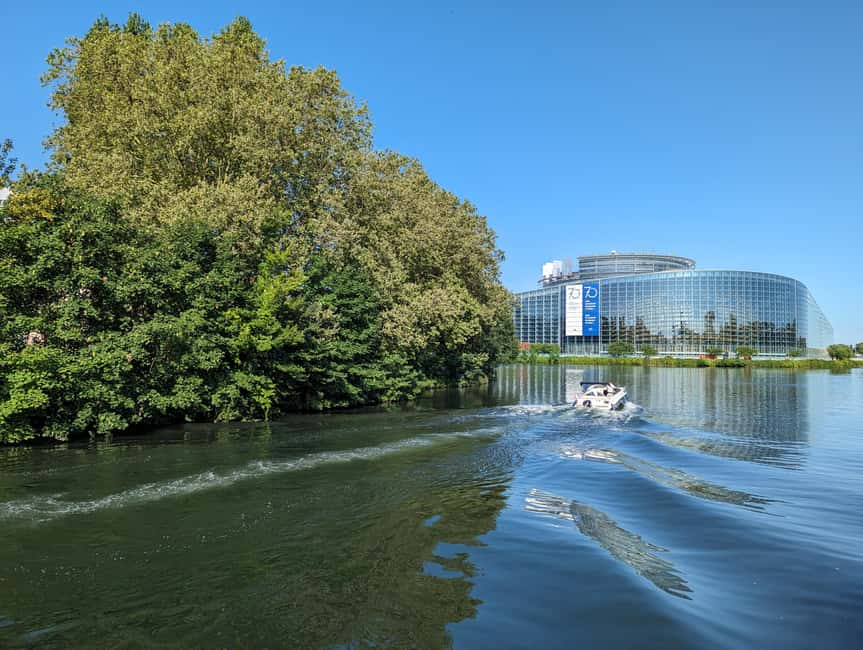
Wacken is described as a fast-growing district, and the walk lets you see that change directly. New buildings sit alongside transport and cycling infrastructure, creating a modern part of the city that is still developing. The European Parliament is part of this setting, rather than an isolated landmark.
This section also makes the tour a pleasant walk, not just a sequence of stops. You get open views, water, paths, and changing architecture. On a dry day, it should be an easy way to connect the Council of Europe area with the Parliament. The tour takes place rain or shine, so bring clothing suited to the forecast and be ready for outdoor walking in less comfortable weather.
Mobility is an important concern. The experience is not suitable for people with mobility impairments. The route includes a 90-minute walk through several areas, so you should be comfortable staying on your feet and moving between stops.
Understanding the European Parliament from outside
The final part brings you close to the European Parliament. Your guide explains the Parliament’s role and how deputies from each country vote on European laws.
This is useful preparation if you plan to visit the Parliament independently afterward. One particularly sensible plan is to take the walking tour first, then continue to the Parliament on your own. The tour ends close to the entrance, and entry is free according to the supplied information, but this experience itself is not a Parliament ticket and does not include access inside.
That distinction deserves emphasis. If your main goal is to sit inside the Parliament or see its interior, this is not the right product by itself. It gives you an outdoor explanation and drops you near the entrance. You will need to handle the separate visit yourself.
If you are happy with that arrangement, the sequence works well. The guide gives you the basic political background, then you can decide how much more time to spend at the Parliament. One visitor specifically paired the walk with an interior Parliament visit afterward, which is a practical way to get both orientation and access.
What the small group changes
The price is $35 per person for 90 minutes. I see that as a reasonable price if you want a live explanation of the institutions and prefer a personal walk to a large group. It is less compelling if you only want photographs of the buildings, since the route does not include interior admission.
A group of up to six is the key value here. You are paying not just for movement between sights, but for the chance to ask questions and receive local suggestions for the rest of your stay. The guide also offers advice about the wider Grand Est region, which can be useful if you have not planned every day in Strasbourg.
The small size can also make the tour work for families. A teenage son was reported to have enjoyed the experience, which says something about the balance between serious history and lighter anecdotes. Nicolas is repeatedly described as friendly, entertaining, and strong in English, while Rémy is noted for his patience and warm manner.
Guide assignments can vary, so do not book on the assumption that a particular guide is guaranteed unless your confirmation says so. The available guide names connected with this experience include Nicolas and Rémy.
Who will get the most from this walk
I would choose this tour if you want to understand why Strasbourg matters to Europe, not just see the old town. It is a good fit for:
- First-time visitors who find European institutions confusing.
- Families with older children or teenagers.
- Couples interested in modern politics, architecture, and local history.
- Visitors planning a separate Parliament visit.
- Anyone who prefers a small group and direct access to a guide.
It is less suitable if you want a full-day political tour, inside access to several institutions, or a route designed for limited mobility. It is also not the best choice if your only priority is medieval Strasbourg. The old center is not the focus here.
The tour can also work as a counterpoint to a standard city walk. After seeing the cathedral and historic center, you can use this route to understand the city’s postwar role and present-day identity.
Practical details for a smooth visit
Allow 90 minutes and expect the whole experience to take place outdoors. The meeting point is the Agora, at the Council of Europe building. The guide wears the black Bretzel&Fun shirt with the orange logo, which should make the meeting easier.
Bring your passport or identity card. Explosives, weapons, and sharp objects are not allowed. Since the walk runs rain or shine, a rain layer and comfortable shoes are sensible choices, though the supplied information does not specify particular equipment requirements.
The guide speaks English or French. If you have a strong preference, select the language carefully when booking or confirm it in advance. The small group format means the experience may feel more like a conversation than a formal lecture.
The tour offers free cancellation up to 24 hours before the start time and a reserve-now, pay-later option. Those policies are useful if your Strasbourg plans depend on weather or changing train schedules. Check the available starting times before booking, since the duration is fixed at 90 minutes but the start time can vary.
Is $35 a fair price?
For $35, you receive a guided route, institutional explanations, photo opportunities, and local suggestions in a group capped at six. That is good value if you would otherwise struggle to make sense of the European District on your own.
The price does not include admission to the Parliament, but the Parliament visit is not part of the tour. Think of the fee as payment for orientation and access to a local guide, not as an entry ticket. If you plan to visit the Parliament afterward, the tour can make that separate visit more meaningful.
The value is strongest for people who enjoy asking questions. If you stand quietly and only want to walk past the buildings, you may not get the full benefit. Go ready to ask about the Council of Europe, the Court of Human Rights, the Parliament, and the Franco-German story.
Should you book the European District Walking Tour?
Book it if you want a compact, friendly introduction to Strasbourg’s role in Europe. The route combines political history, modern Wacken, Art Nouveau houses, and the Ill River, so it avoids the narrow focus of a purely institutional tour.
I would especially recommend it as a first activity in this part of the city, followed by an independent Parliament visit if that interests you. Choose it with realistic expectations: it is a 90-minute outdoor walk, not an interior tour, and it is not designed for people with mobility impairments.
For a small group, a clear route, and guides such as Nicolas or Rémy who can explain serious subjects with humor and patience, $35 is a sensible spend. Skip it only if Parliament entry is your main goal or if you are looking for Strasbourg’s medieval center instead.
FAQ
How long does the European District Walking Tour last?
The tour lasts 90 minutes.
What languages are available?
The live guide offers the tour in English or French.
How large is the group?
The group is limited to six participants.
Where does the tour meet?
The meeting point is the Agora, at the Council of Europe building.
How will I recognize the guide?
The guide wears a black T-shirt with an orange Bretzel&Fun logo.
Does the tour include entry to the European Parliament?
No. The tour only visits the Parliament from outside and ends close to its entrance. You can visit it independently, and entry is free according to the supplied information.
What should I bring?
Bring your passport or identity card.
Does the tour run in bad weather?
Yes. The tour takes place rain or shine.
Just added around France
- Giverny Monet House and Gardens Skip the line Walking tour★ 4.0 · 217 reviews
- [Walking Tour] Discover the Best of Brest in 2 hours★ 5.0 · 102 reviews
- Bordeaux Historic and Gourmet Food Walking Tour★ 4.5 · 82 reviews
- 2-Hour Walking Tour of the City’s Iconic Sights and History★ 4.0 · 207 reviews
- Bordeaux Walking Tour with a Local Private Guide★ 5.0 · 97 reviews
- Traditional Gourmet Food & Wine Tour in Bordeaux★ 5.0 · 81 reviews
- Free Walking Bordeaux Tour ENG + 1 glass of wine (Tip based)★ 5.0 · 90 reviews
- Bordeaux City – Private Guided Walking Tour with Local Sophia★ 5.0 · 164 reviews
Walking Tours, compared.

Magical London: Harry Potter Guided Walking Tour
Read our review →
Reykjavik Food Walk – Local Foodie Adventure in Iceland
Read our review →
History and Hauntings of Salem Guided Walking Tour
Read our review →
New Orleans Premier Ghost, Voodoo and Vampire Walking Tour
Read our review →
Amsterdam Anne Frank: Small-Group Walking Tour & Local Guide
Read our review →

Edinburgh Castle: Guided Walking Tour with Entry Ticket
Read our review →
Anne Frank’s Story – Guided Walking Tour through Amsterdam
Read our review →Browse the lists this tour appears in