
REVIEW · FRANCE
Saint-Émilion: Vineyard Walking Tour and Tasting
The most memorable detail here may be the six-meter wine bottle, which has a practical job as a frost heater. It gives you a quick sense that Château Haute-Nauve is not just preserving old customs. This fourth-generation family estate also uses modern equipment, solar power, diversification, and new ideas to keep the business going.
I like two things right away: the owner-led format and the full grape-to-bottle story. Florent or Marie-Anne can explain the vineyard, cellar, fermentation, pumping, pressing, and barrel ageing without turning the visit into a lecture. The four-wine tasting, including two Grand Cru wines, gives the two-hour visit a satisfying finish.
The main consideration is transport. The château is about 3 kilometers from Saint-Émilion, and the meeting point is easiest to reach by car. Food and transport are not included, so plan this as a focused wine visit rather than a full meal-and-winery outing.
Key points to know before you book
- The six-meter bottle has a purpose: It is connected with the estate’s approach to dealing with crop frost, not simply a photo prop.
- You see the whole process: The visit moves from vines to vinification equipment and then to the barrel cellar.
- A fourth-generation family guides you: Florent and Marie-Anne offer a personal look at running a working estate.
- Four wines finish the visit: The tasting includes two wines with Grand Cru appellations.
- The group is limited to 10 people: That keeps questions and conversation manageable.
- The price is modest for the access: At $29 per person, you get a two-hour vineyard, cellar, and tasting experience without paying for transport or food.
Why Château Haute-Nauve feels different
Saint-Émilion offers plenty of grand names and polished tasting rooms. Château Haute-Nauve gives you something more direct: a family-run estate where the people explaining the wine are tied to the land and its day-to-day work.
That family connection matters. You are not only hearing a general explanation of Bordeaux wine. You are hearing how one estate handles its own plots, machinery, weather problems, ageing choices, and sales. Florent, in particular, is often the guide, and his style is warm, funny, and easy to follow. Marie-Anne may also lead the visit.
The setting is close enough to Saint-Émilion to fit neatly into a day there, but the property is outside the village itself. You get open vineyard space rather than a tasting room in the historic center. That makes the visit feel more connected to production, though it also means you need to sort out your own way there.
The atmosphere is informal. Groups are limited to 10, and some bookings may become private or nearly private depending on the date. You should not count on having the estate to yourself, but the small size gives you a much better chance to ask questions than a large coach tour would.
A few more walking tours around France worth a look
- Paris Top Sights Half Day Walking Tour with a Fun Guide
★ 5.0 · 2,893 reviews - Montmartre Hidden Gems and Scenic Highlights Walking Tour
★ 5.0 · 2,684 reviews - Montmartre Hill French Gourmet Food and Wine Tasting Walking Tour
★ 5.0 · 2,588 reviews
Walking the Saint-Émilion vines
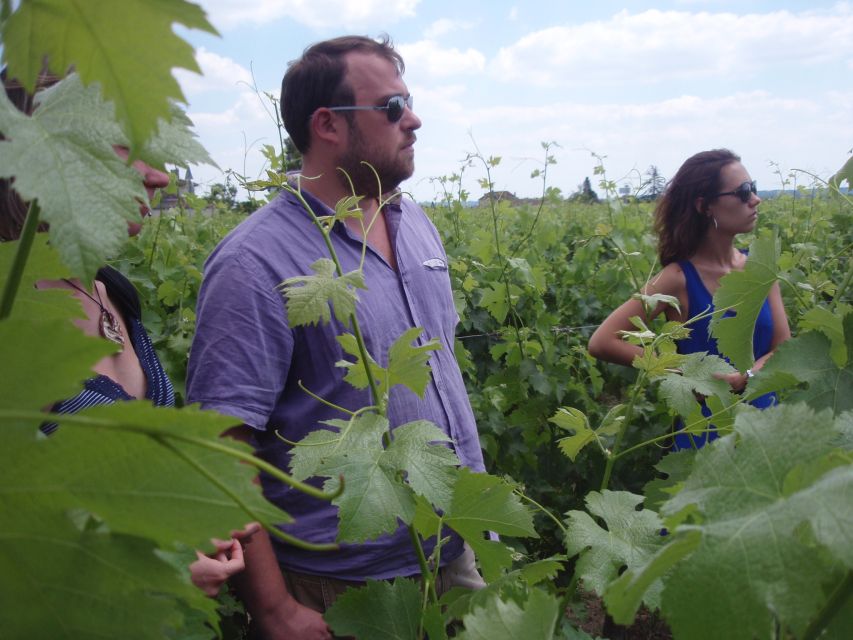
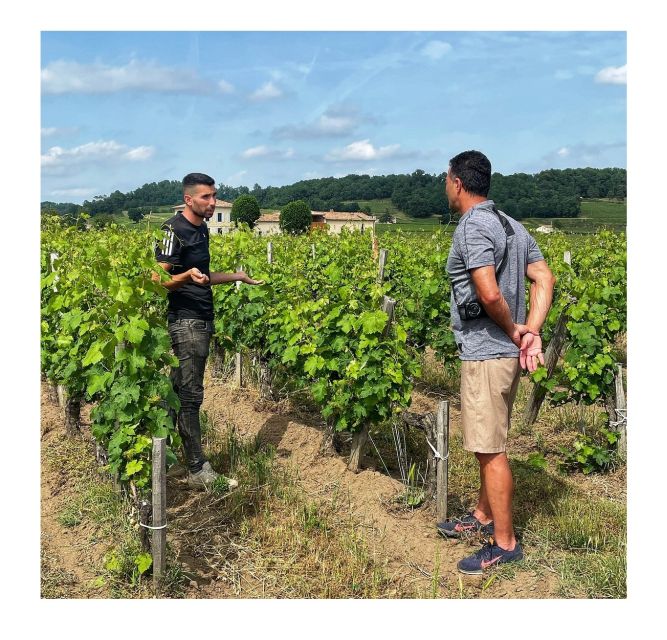
The tour begins outside, with a walk through the vineyard. This is the part to value if you want to understand that wine starts long before the cellar.
You hear about the family’s fourth-generation connection with Château Haute-Nauve and the main grape varieties and features of the Saint-Émilion appellation. The guide also explains how vineyard work changes during the year. That seasonal view helps put the rest of the tour in place. Pruning, caring for the vines, watching the weather, and preparing for harvest are not background tasks. They shape what eventually reaches the bottle.
The walk also brings up the less romantic side of winemaking. Frost can damage a crop, and a small family estate has to think carefully about how to protect its vines and stay financially sound. The giant bottle, wind turbine, and other practical features become useful clues to the château’s approach.
The estate places importance on sustainability and diversification. It is also working on new wine varieties. You may not get a technical lecture on every project, but you do get a sense that Bordeaux winemaking is not frozen in the past. Tradition matters, yet the family still has to respond to weather, technology, changing tastes, and business costs.
Wear comfortable shoes. The vineyard walk is not described as strenuous, but you will be outdoors and on working estate grounds. Weather-appropriate clothing is a sensible choice, especially since nearly an hour may be spent outside depending on the group and the guide’s pace.
The giant bottle and the practical side of frost
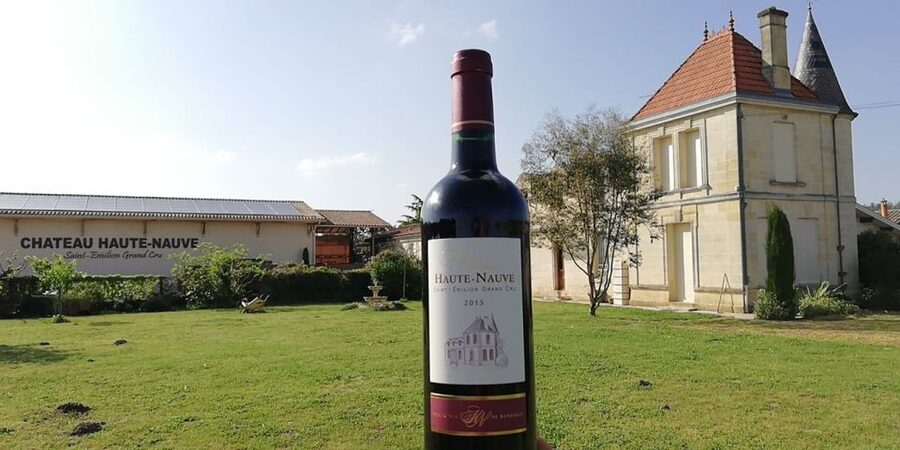
The six-meter bottle is one of the tour’s most unusual sights. It catches the eye, but its real value is the explanation behind it. The bottle is linked to the estate’s way of tackling frost, giving you a memorable example of how a wine producer can turn a familiar symbol into working equipment.
Frost is easy to overlook when wine is presented only in a glass. On the property, it becomes a real farming problem. A cold night at the wrong point in the growing cycle can threaten the crop, so the family has to use practical methods and keep adapting.
The wind turbine is another useful talking point. Along with the estate’s solar-panelled building, it helps show how Château Haute-Nauve is thinking about energy and sustainability. The tour does not present the vineyard as a perfect, untouched postcard. Instead, you see a working operation trying to balance heritage with modern needs.
That is one reason I would choose this visit over a tasting-only appointment if you want context. The unusual objects are not random decorations. They lead into a discussion of weather, energy, production costs, and the choices facing a family winery.
Inside the vinification cellar
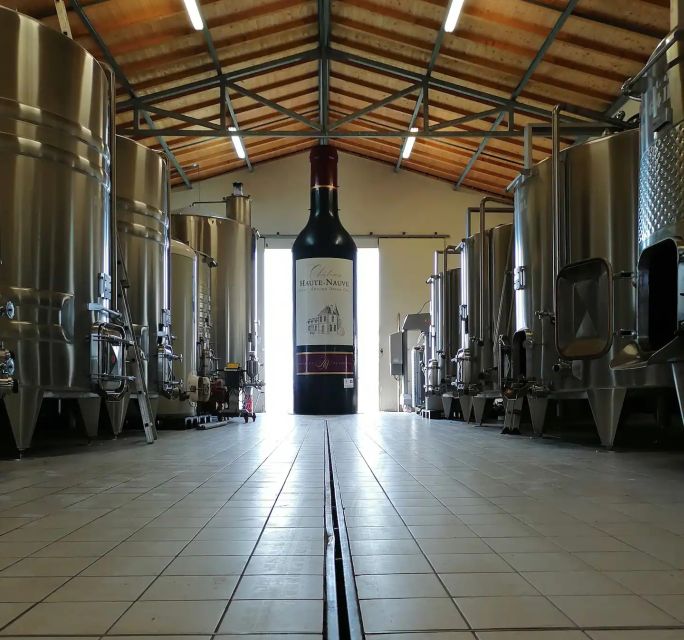
After the vineyard, the tour moves into the vinification cellar. Here, the focus shifts from growing grapes to turning them into wine.
You see the equipment used for fermentation, pumping, and pressing. The guide explains the production sequence and the technology involved, so you can connect the machinery with the taste you will later find in the glass. If you have taken wine tours that skip straight from a few vines to a tasting table, this more complete approach will feel useful.
The explanations cover both modern and historical methods. That comparison gives you a better idea of what technology changes and what remains tied to the character of the estate. You are not simply shown stainless-steel tanks as if the equipment speaks for itself. The guide explains its role in the process.
This portion is especially good for people who want plain answers to basic questions. What happens after harvest? How does fermentation fit into the process? Why is pumping needed? What does pressing do? You can ask those questions directly, and the small group format makes it easier to keep the discussion conversational.
The tour is not designed as an advanced wine course. You will not leave knowing every technical term used by a professional winemaker. But you should come away with a clear sequence from grapes to finished wine, which is exactly what many first-time wine visitors need.
Same streets, a different route:
- Authentic Parisian Gourmet Food Tour with 10 Local Dishes & Wines
★ 5.0 · 4,754 reviews - Paris: Montmartre Highlights Walking Tour with a Local Guide
★ 4.9 · 2,318 reviews - Paris Île de la Cité and Notre-Dame Walking Tour With Crypt
★ 5.0 · 2,272 reviews - Paris: Montmartre Cheese, Wine & Pastry Guided Walking Tour
★ 4.8 · 2,255 reviews
Barrels, ageing, and the road to the bottle
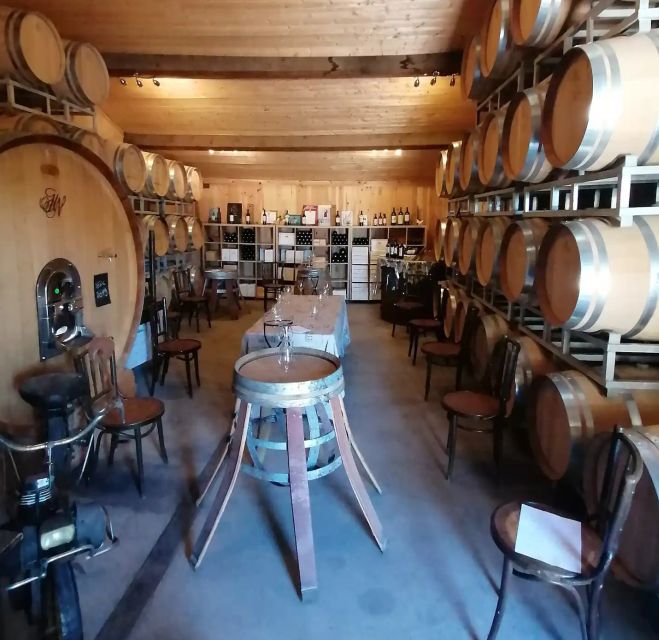
The final production stop is the barrel cellar. This is where you see how wine is aged before bottling and learn how the château handles that stage.
Ageing is often the least visible part of wine production. A bottle on a shop shelf hides the time, storage, and decisions behind it. In the barrel cellar, the process becomes easier to picture. The guide can explain how the wine changes while it rests and how the family moves from cellar work toward a finished product.
You also hear about bottling and the estate’s newer bottle designs. That detail adds a business angle to the visit. A family winery has to care about what is inside the bottle, but also about how the wine reaches customers and how the estate presents itself.
I like this section because it prevents the tour from becoming a simple walk and tasting. You see the quiet middle stage, when the wine is no longer grape juice but not yet ready for the table. For a short visit, the route covers a lot without feeling crammed.
Four wines, including two Grand Cru pours
The tasting takes place at the end, after you have seen the vines and production areas. Four Château Haute-Nauve wines are served, including two with Grand Cru appellations.
That lineup gives you a useful comparison. Instead of tasting one wine and trying to judge the whole estate from it, you can look for differences in grape character, terroir, vintage, and style. The guide explains what you are drinking and helps connect the wines to the work you have just seen.
The tasting is guided rather than simply set down in front of you. You can ask about the wines, compare the different styles, and take your time with the final part of the visit. The atmosphere is relaxed, and the tasting also gives you room to chat with the guide and other people in the group.
The wine quality is a major reason to consider this tour. The four pours are not an afterthought. They are the payoff for the vineyard and cellar sections, and the Grand Cru wines give the tasting extra interest at a $29 price point.
You can buy additional bottles at the estate if you find a wine you like. Purchases are not included, and there is no food provided, so do not expect bread, cheese, or a full snack pairing. That is not a serious flaw, but it is worth knowing if you are planning a meal around the visit.
There is also no pressure to buy. You can taste, ask questions, and leave with only what suits your plans. If you are driving, remember that French wine purchases need to be packed and transported responsibly.
Is $29 a good value?
For two hours, $29 is a strong price for the amount of access included. You receive a guided vineyard walk, a look inside the production and barrel cellars, an explanation from a family member, and four estate wines.
The value is even clearer if you compare it with a basic tasting appointment. Here, you are not paying only for four glasses. You are paying for the explanation of how the estate works and for the chance to see equipment that normally remains out of sight.
The price does not cover transport or food. That keeps the booking simple and affordable, but your total cost will be higher if you need a taxi or rideshare from Saint-Émilion. The château recommends arriving by car and provides parking near the large building with solar panels, beneath the Château Haute-Nauve purple sign.
You can cancel up to 24 hours in advance for a full refund, and you can reserve now and pay later. Those policies are useful if your Bordeaux plans are still shifting. Starting times vary, so check availability before arranging the rest of your day.
Who will enjoy this visit most?
I would recommend Château Haute-Nauve to first-time wine visitors who want a clear introduction without spending half a day in a formal estate setting. The guide explains the process in accessible terms, and the small group gives you space to ask questions.
It also suits experienced wine drinkers who want to hear directly from a fourth-generation family producer. The two Grand Cru wines add interest, while the discussion of frost, sustainability, energy, and new varieties gives the visit more substance than a standard tasting.
Families can also consider it. Several bookings have included children and teenagers, and the format gives them something to see beyond glasses of wine. The vineyard, large bottle, machinery, and cellar make the experience easier to follow, though the tasting itself is for adults.
The tour is wheelchair accessible, which is important to confirm when planning a group with different mobility needs. You should still wear sensible shoes and bring suitable clothing because the visit includes outdoor walking.
I would be less likely to choose this activity if you want a long meal, extensive food pairing, or a full-day wine route with several estates. This is a compact two-hour visit at one family winery. Its strength is focus, not variety.
Planning the visit near Saint-Émilion
Château Haute-Nauve is about 3 kilometers from the village of Saint-Émilion. You meet inside the château, using the car park near the large building with solar panels and the purple sign.
Driving is the simplest option. Some people have used a rideshare service, and walking from Saint-Émilion is possible according to the practical details shared about the location, but the estate recommends arriving by car. Since the tour includes wine tasting, plan your transport before you start drinking.
Allow the full two hours. The usual flow is a vineyard walk, production cellar, barrel cellar, and tasting. The order and exact time spent outside may vary, but you should not book another fixed activity immediately afterward.
The tour is offered in French and English. If you have a question, ask it during the walk rather than saving everything for the tasting. The owner-led style works best when the group takes part in the conversation.
Should you book Château Haute-Nauve?
Book this tour if you want family contact, practical winemaking detail, and four good chances to taste the estate’s work. Florent’s personal style and the fourth-generation story give the visit a human scale, while the cellar equipment and frost discussion keep it grounded in real production.
Skip it if your main goal is a long lunch, a grand formal château, or transport included from Bordeaux. For everyone else already visiting Saint-Émilion, the $29 price, two-hour format, small group, and two Grand Cru pours make this an easy addition to the day.
FAQ
Where is Château Haute-Nauve?
Château Haute-Nauve is in the Saint-Émilion area of Nouvelle-Aquitaine, about 3 kilometers from the village of Saint-Émilion.
How long does the tour last?
The tour lasts two hours, including the vineyard walk, cellar visits, and guided tasting.
Who leads the experience?
The tour is led by a member of the family, usually Florent or Marie-Anne. They are part of the fourth generation connected with Château Haute-Nauve.
How many wines will I taste?
You will taste four wines from the estate, including two with Grand Cru appellations.
Is transport included?
No. Transport is not included. The château recommends arriving by car, and parking is available near the large building with solar panels and the Château Haute-Nauve purple sign.
Is the tour offered in English?
Yes. The live tour guide can lead the experience in English or French.
Can I cancel or change my booking?
You can cancel up to 24 hours in advance for a full refund. You can also reserve now and pay later, subject to the booking conditions.
Just added around France
- Giverny Monet House and Gardens Skip the line Walking tour★ 4.0 · 217 reviews
- [Walking Tour] Discover the Best of Brest in 2 hours★ 5.0 · 102 reviews
- Bordeaux Historic and Gourmet Food Walking Tour★ 4.5 · 82 reviews
- 2-Hour Walking Tour of the City’s Iconic Sights and History★ 4.0 · 207 reviews
- Bordeaux Walking Tour with a Local Private Guide★ 5.0 · 97 reviews
- Traditional Gourmet Food & Wine Tour in Bordeaux★ 5.0 · 81 reviews
- Free Walking Bordeaux Tour ENG + 1 glass of wine (Tip based)★ 5.0 · 90 reviews
- Bordeaux City – Private Guided Walking Tour with Local Sophia★ 5.0 · 164 reviews
Walking Tours, compared.

Magical London: Harry Potter Guided Walking Tour
Read our review →
Reykjavik Food Walk – Local Foodie Adventure in Iceland
Read our review →
History and Hauntings of Salem Guided Walking Tour
Read our review →
New Orleans Premier Ghost, Voodoo and Vampire Walking Tour
Read our review →
Amsterdam Anne Frank: Small-Group Walking Tour & Local Guide
Read our review →

Edinburgh Castle: Guided Walking Tour with Entry Ticket
Read our review →
Anne Frank’s Story – Guided Walking Tour through Amsterdam
Read our review →Browse the lists this tour appears in