
REVIEW · BERLIN
Berlin Third Reich Sites: Half-Day Walking Tour
Berlin’s Nazi past is scattered across the city, often marked by a plaque, a memorial, or a rebuilt building rather than a grand museum entrance. This four-hour walking tour ties those fragments together, moving from Jewish Berlin and deportation sites to the former SS headquarters, Holocaust memorials, and the Reichstag.
I like the efficient route, which lets you cover more ground than you probably would alone. I also like the guide-led discussion, especially at places such as the Topography of Terror and the Memorial to the Murdered Jews of Europe. The main drawback is simple: this is a serious amount of walking, and the subject matter is grim from beginning to end.
Key points to know before you book
- Ten important stops: The route includes Anhalter Bahnhof, the Topography of Terror, the Holocaust Memorial, the Soviet Memorial, and the Reichstag.
- A guide makes the difference: Guides including Peter, Hannah, Tom, Jonathan, James, and Gregor are praised for clear explanations, strong storytelling, and thoughtful answers.
- Four hours on foot: Comfortable shoes are essential, and the tour operates in all weather.
- A serious but approachable lesson: The tour covers Nazi power, Jewish persecution, Sinti and Roma victims, gay victims, resistance, war, and postwar memory.
- Good value at $21.77: You receive four hours with a professional English-speaking guide, while the only required extra listed is an AB Zone transport ticket of about €3.80.
- Small enough to stay engaged: Groups can reach 25 people, so the experience may feel personal, though it is not a private tour.
Why this route helps you understand Berlin
Berlin’s Third Reich sites do not form one neat museum district. You will walk between surviving buildings, empty spaces, memorials, and places where the original structures disappeared. Without context, the city can feel confusing. One gray office building may have been a key Nazi ministry, while a patch of open ground may mark a place of enormous importance.
The route gives you a timeline as well as a map. It begins with Adolf Hitler and the Nazi Party’s rise, then moves through dictatorship, persecution, deportation, war, resistance, defeat, and the way Germany remembers those crimes today.
That structure is one of the strongest reasons to book. You are not simply ticking off famous locations. You are encouraged to connect political decisions with the people affected by them.
The guides also appear to bring different strengths. Peter is described as lively and sensitive. Hannah is praised for keeping the four hours moving quickly while maintaining a serious tone. Tom is noted for handling questions from different generations, while Jonathan brings historical detail and personal stories. Gregor focuses on how ordinary people were drawn into Nazi schemes and how the war still affects Germany.
The guide you receive will vary, but the experience depends heavily on that person. A strong guide can turn a blank wall or an urban square into a place you understand.
More Half-Day Tours in Berlin:
- Discover Berlin Half-Day Walking Tour
★ 5.0 · 9,624 reviews - Rio De Janeiro: Half-Day Rocinha Favela Walking Tour
★ 4.7 · 2,272 reviews - Istanbul: Fener Balat Half-day Guided Walking Tour
★ 4.9 · 1,711 reviews
Hackescher Markt and the Jewish story in Berlin
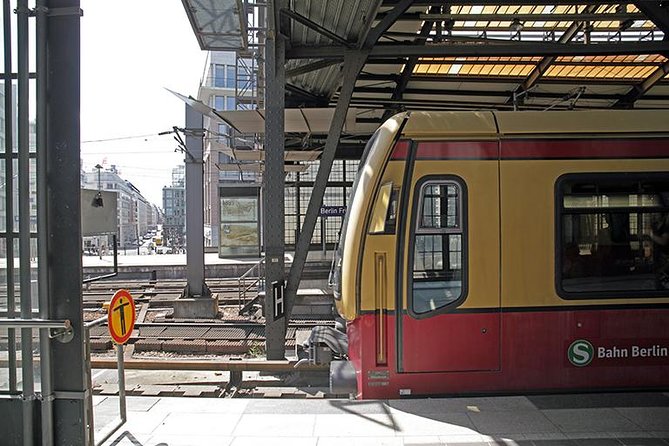
The meeting point is at Neue Promenade 3, by Hackescher Markt S-Bahn station. The tour begins with an introduction to Hitler, the Nazi Party, and the dictatorship that ruled Germany from 1933 to 1945.
The early stops focus on Jewish life and persecution. At the Museum Blindenwerkstatt Otto Weidt, your guide explains the history of Otto Weidt’s workshop and its place in the story of Jewish Berlin. The stop is brief, listed at about five minutes, so do not expect a full museum visit. Instead, it works as a starting point for understanding individual acts of protection during a time of organized persecution.
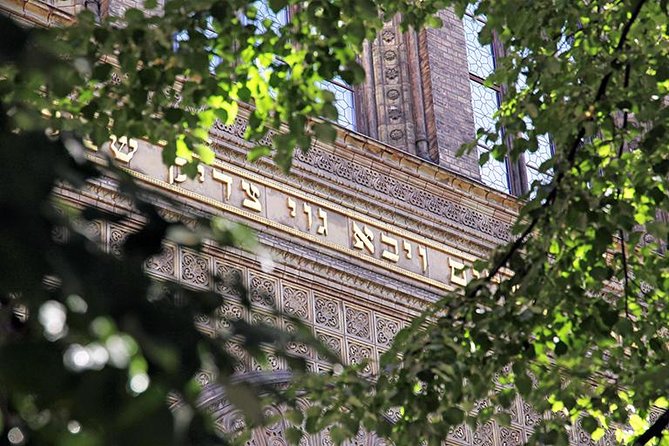
You then pass the New Synagogue and the Centrum Judaicum. The building is an important reminder that Jewish life in Berlin existed long before the Nazi period and was part of the city’s social and cultural fabric. That matters because the story is not only about persecution. It is also about the community the Nazis tried to destroy.
The short stops here are useful for orientation, but they may feel too quick if you want detailed architectural or religious history. This tour’s focus is the Nazi period, so the guide uses these places to support the wider story rather than treating them as stand-alone sightseeing visits.
Anhalter Bahnhof and the machinery of deportation
The ruins of Anhalter Bahnhof provide one of the tour’s most sobering moments. Once a major railway station, it became connected with the deportation of Jewish residents from Berlin to concentration camps.
Only part of the station survives. That partial ruin is important. You are looking at a physical remnant of old Berlin, but the tour also asks you to consider what happened to people who left from here and did not return.
The guide explains how deportation fit into the Nazi system. This helps you see the difference between isolated acts of violence and a process supported by offices, transport, records, police, and government orders.
The stop is listed at about five minutes, so the explanation will be focused rather than exhaustive. If you want a long visit at the site, you may wish to return independently. The advantage here is that you reach it as part of a larger chain of events.
Topography of Terror: where the regime operated
The former SS and Gestapo headquarters on what was once Prinz-Albrecht-Strasse are now associated with the Topography of Terror museum. This is one of the most important stops on the route because it shifts attention from victims and memorials to the institutions that carried out Nazi rule.
Your guide explains the roles of the SS and Gestapo and how these organizations helped control Germany. The point is not simply that terrible things happened. You learn how power was organized and how intimidation, surveillance, arrest, and persecution became part of government.
The tour allows about 15 minutes here. That is more time than at several other stops, but it is still not a full museum visit. The museum itself contains extensive documentation, so you may want to return later if you have room in your schedule.
I especially like having this stop in the middle of the walk. By this point, you have discussed Jewish life, deportation, and the Nazi rise to power. The Topography of Terror then gives you a clearer picture of the machinery behind those events.
A few more walking tours around Berlin worth a look
- Berlin City walk Government District and Places of Democracy
★ 4.7 · 8,467 reviews - Berlin: Third Reich & Cold War Guided Walking Tour
★ 4.9 · 8,378 reviews - Berlin: Discover Berlin Walking Tour
★ 4.9 · 5,998 reviews - Berlin’s Best: 2 Hour Walking Tour Third Reich and the Cold War
★ 5.0 · 5,486 reviews
The former Aviation Ministry and victims beyond the Jewish community
The former Ministry of Aviation was once the headquarters of the German Luftwaffe. The building is used here to explain the Nazi state, the conduct of the war, and the consequences of Nazi rule for Jewish people and for Sinti and Roma communities.
This is a useful correction to a narrow view of the period. The Holocaust is central to the story, but Nazi persecution also targeted other groups, including Sinti and Roma, homosexual people, political opponents, and others the regime labeled undesirable.
The building itself also raises a practical question about Berlin sightseeing. Much of the city’s Nazi-era architecture is still part of everyday government and urban life. You may walk past a large, ordinary-looking structure without realizing its former role. The guide provides the connection between the building you see and the system it once served.
Resistance, memorials, and the cost of remembrance
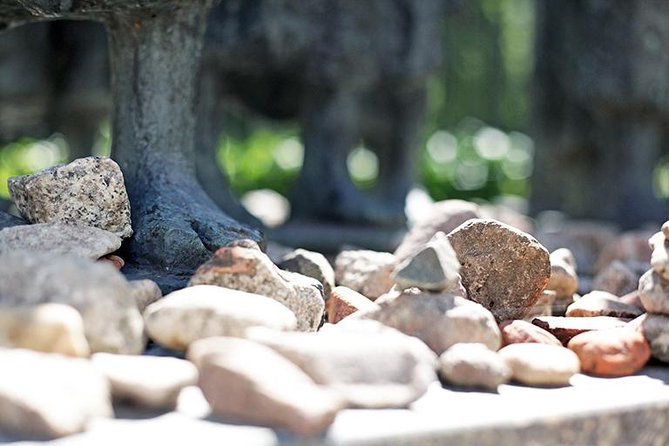
The Johann Georg Elser sculpture marks an attempt to kill Hitler. Elser acted alone in a 1939 bombing plot, and the guide uses the sculpture to discuss resistance to Hitler’s rule.
This short stop adds needed complexity. Nazi Germany was not made up of one uniform public response. People supported the regime, adapted to it, feared it, resisted it, or tried to survive within it. The tour does not treat resistance as a simple heroic side story. It places it inside the wider question of how people respond to dictatorship.
Next comes the Memorial to the Murdered Jews of Europe, usually called the Holocaust Memorial. The field of concrete slabs is one of Berlin’s most recognized memorial spaces. Your guide explains its purpose and how it fits into the city’s effort to remember the murder of Europe’s Jews.
You should expect time to walk through the memorial rather than just photograph it. The stop is listed at about ten minutes, so the group discussion will be limited. You can return on your own if you want a quieter visit or more time with the underground information center, though no museum admission is included in the tour.
The nearby Monument to Homosexuals Persecuted Under the National Socialist Regime broadens the discussion again. It is a smaller memorial, but it makes an important point about people targeted because of their sexuality. The guide explains the site in about ten minutes.
These memorial stops are valuable because they show how remembrance is built into modern Berlin. They also require a respectful attitude. This is not a light sightseeing walk, and the tour is better suited to people willing to listen and think rather than rush from photo stop to photo stop.
Soviet Memorial and the final approach to the Reichstag
The Soviet Memorial in the Tiergarten brings the war’s final phase into view. Your guide explains its meaning and place in postwar Berlin. The memorial is part of the city’s complicated memory of liberation, occupation, victory, and dictatorship.
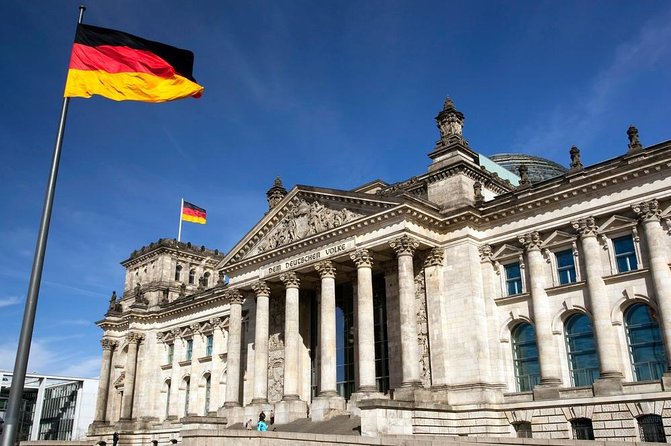
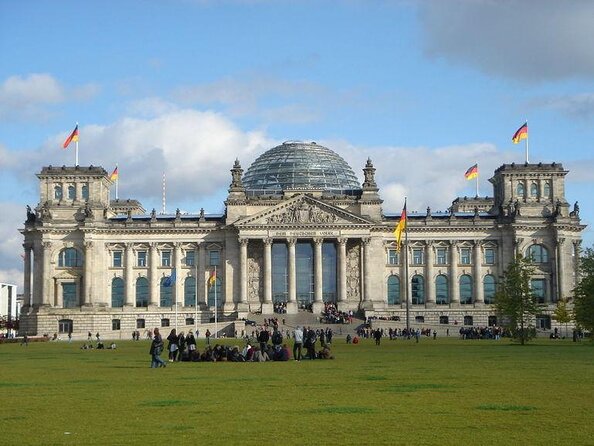
The route then ends outside the Reichstag, Germany’s parliament building. The Reichstag connects the beginning and end of the story. The Nazis came to power in 1933, and Berlin’s final days of World War II unfolded around the government district in 1945.
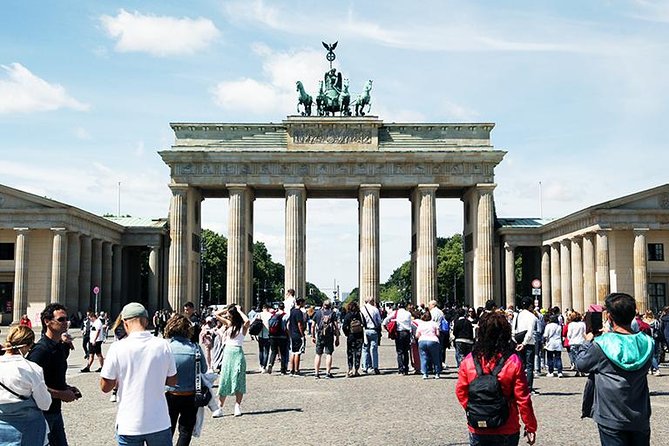
The tour ends at Platz der Republik, not back at Hackescher Markt. That is useful because you finish near the Brandenburg Gate, the government quarter, and other central sights. You can continue exploring independently, stop for lunch, or use the remaining day for a museum visit.
The Reichstag is an exterior stop on this experience. The tour does not include entry inside the building, the dome, or a parliamentary visit. If you want to see the interior, plan that separately.
How much walking and how hard is the day?
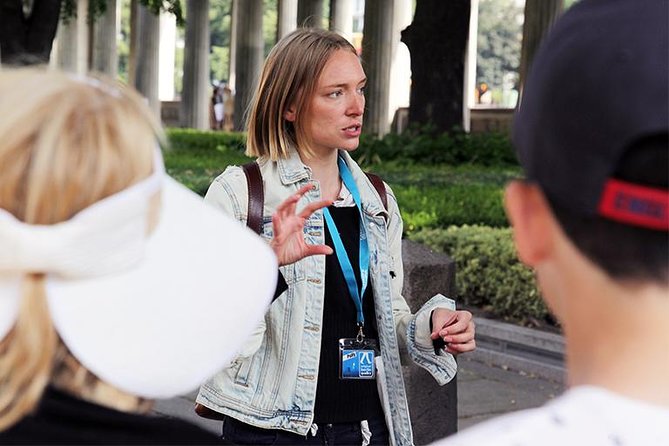
The tour lasts about four hours and is conducted on foot. Several stops are short, but the route covers a large section of central Berlin. One direct tip is essential: wear comfortable shoes.
The walk was described as manageable even for someone recovering from leg surgery and for another person with foot trouble, but that should not be treated as a guarantee. Your comfort will depend on your pace, footwear, weather, and health.
You should also prepare for rain, cold, or heat. The tour runs in all weather, and there is no suggestion that poor conditions automatically stop it. Dress in layers and bring weather protection.
The group can include up to 25 people. That is not a private experience, but it is small enough for questions to be possible. The guides are repeatedly praised for being easy to hear and clear in their explanations, which matters when you are standing outdoors beside a busy street.
Price, timing, and practical value
At $21.77 per person, this is a low-cost way to spend half a day in Berlin. The price includes a professional English-speaking guide and the four-hour walk. Entry tickets are not part of the program, but the listed sites are discussed from outside or at memorial spaces that do not require admission.
You need an AB Zone public transport ticket to reach or use the meeting point, costing about €3.80 per person. The meeting point is near public transportation, and the start time is 10:00 a.m.
The value comes from the route and interpretation. You could locate many of these places yourself, but you would need to research the history, work out the order, and understand how the sites connect. The guide saves you that effort and gives you the chance to ask questions as the day unfolds.
The tour is also a good fit if you have only a short time in Berlin. Four hours leaves the rest of the day open. You might pair it with a museum, a visit inside the Reichstag if separately arranged, or a return to one of the memorials.
The main limitation is depth at individual sites. With ten stops in four hours, you will not receive a long museum visit at each location. Think of this as a strong citywide introduction, not a substitute for spending half a day inside the Topography of Terror or the Jewish Museum.
Who should book this walk?
I would recommend it to first-time visitors who want a clear introduction to Berlin’s Nazi-era history. It also suits anyone who prefers seeing places in context instead of reading isolated plaques.
Families with older teenagers may find the format useful, especially with a guide who can explain difficult subjects in plain language. One guide was specifically praised for keeping teenagers interested, while another used well-timed humor without making light of the subject.
This tour is also a good choice for history-minded visitors who want more than the standard Brandenburg Gate and Berlin Wall circuit. It includes less obvious sites, such as Otto Weidt’s workshop and the Johann Georg Elser sculpture, alongside the major memorials.
You should think twice if you dislike long walks, outdoor touring, or emotionally heavy subject matter. You should also choose another format if you want extensive time inside museums. The tour gives you a broad, connected view, but it moves at a steady pace.
The experience has a 4.8 rating from 835 reviews, with 97 percent of participants recommending it. That matches the practical picture: the guide quality is a major strength, while the only clear complaint concerns a reported pickup and booking problem that the operator disputed. Check your meeting details carefully and use the emergency contact on your ticket if something goes wrong.
Should you book the Berlin Third Reich Sites walk?
Yes, if you want a serious, well-paced introduction to Berlin between 1933 and 1945. The price is modest, the route covers a lot, and the best guides turn difficult history into a clear story you can follow.
Book it early if your dates are fixed, since it is commonly reserved about 23 days ahead. Leave room afterward for a quiet meal or independent visit to a museum. This tour gives you the framework. Your own follow-up time lets you sit with the places that affect you most.
Cancel at least 24 hours before the 10:00 a.m. start for a full refund. Changes or cancellations inside that window are not accepted.
FAQ
Where does the tour start?
It starts at Neue Promenade 3, 10178 Berlin, near Hackescher Markt S-Bahn station.
Where does the tour end?
The walk ends outside the Reichstag at Platz der Republik 1, 11011 Berlin.
How long does the tour last?
The walking tour lasts approximately four hours and begins at 10:00 a.m.
Is transportation included?
No. You need an AB Zone transport ticket, which costs about €3.80 per person and is available at the station near the meeting point.
Is the tour offered in English?
Yes. The tour includes a professional English-speaking guide.
What happens if I need to cancel?
You can receive a full refund if you cancel at least 24 hours before the experience start time. Cancellations or changes made less than 24 hours before the start are not accepted.
Just added around Berlin
- East Berlin and the Wall: Walking Tour★ 4.9 · 407 reviews
- Cold War, Berlin Wall, Spies and the East Side Gallery★ 4.8 · 254 reviews
- Berlin: walking tour about Charité★ 4.4 · 537 reviews
- Berlin: Walking Tour of the Top 10 Sightseeing Attractions★ 4.7 · 150 reviews
- Berlin: Sightseeing Walking Tour of the Top 20 Attractions★ 4.5 · 196 reviews
- Berlin: The Time of National Socialism Walking Tour★ 5.0 · 220 reviews
- Berlin: Kreuzberg Guided Walking Evening Tour★ 4.7 · 555 reviews
- Berlin : Must-see attractions Walking Tour★ 4.8 · 83 reviews
Walking Tours, compared.

Magical London: Harry Potter Guided Walking Tour
Read our review →
Reykjavik Food Walk – Local Foodie Adventure in Iceland
Read our review →
History and Hauntings of Salem Guided Walking Tour
Read our review →
New Orleans Premier Ghost, Voodoo and Vampire Walking Tour
Read our review →
Amsterdam Anne Frank: Small-Group Walking Tour & Local Guide
Read our review →
Edinburgh Castle: Guided Walking Tour with Entry Ticket
Read our review →
Anne Frank’s Story – Guided Walking Tour through Amsterdam
Read our review →Browse the lists this tour appears in