
REVIEW · ITALY
Pompeii: Guided Walking Tour with Entrance Ticket
Pompeii is not just a collection of broken walls. Its streets, shops, baths, homes, and public spaces still show how a Roman town worked before Mount Vesuvius buried it in 79 A.D. This two-hour walk gives you a useful route through the huge excavation site without leaving you to decode every ruin alone.
I like the included entrance ticket, which saves you from buying the €20 site ticket separately, and I like the live guide with headsets, since Pompeii is spread out and easy to appreciate more fully when you can hear the explanation while walking. Guides such as Elisa, Salvatore, Francesca, and Maria have been praised for clear stories, humor, and patience.
The main drawback is the meeting-point organization. The garden of Hotel Vittoria, outside the Cellini coral shop on Via Mare, is specific, but the entrance area can be confusing, and some groups have started late or struggled to find the guide. Give yourself extra time and keep your phone available.
Key points to know before you book
- Two hours covers the essential core: Expect the Forum, Thermal Baths, Lupanare, streets, shops, and selected buildings, not every corner of Pompeii.
- The €50 price includes the €20 entrance ticket: You are paying for admission, guiding, and headsets in one booking.
- Guides make the ruins readable: Elisa, Salvatore, Francesca, Maria, and other guides have been praised for humor, clear English, and strong storytelling.
- The 10:50 meeting point needs care: Meet in the Hotel Vittoria garden beside the Cellini coral shop, with the guide holding a sign.
- Expect heat, uneven ground, and lots of walking: Comfortable shoes and weather-ready clothing matter, and the tour is not suitable for wheelchair users or people with mobility impairments.
- The language may depend on the group: English, French, Spanish, and Italian are offered, but a requested language is not guaranteed if only one person books it.
Why a guide helps at Pompeii
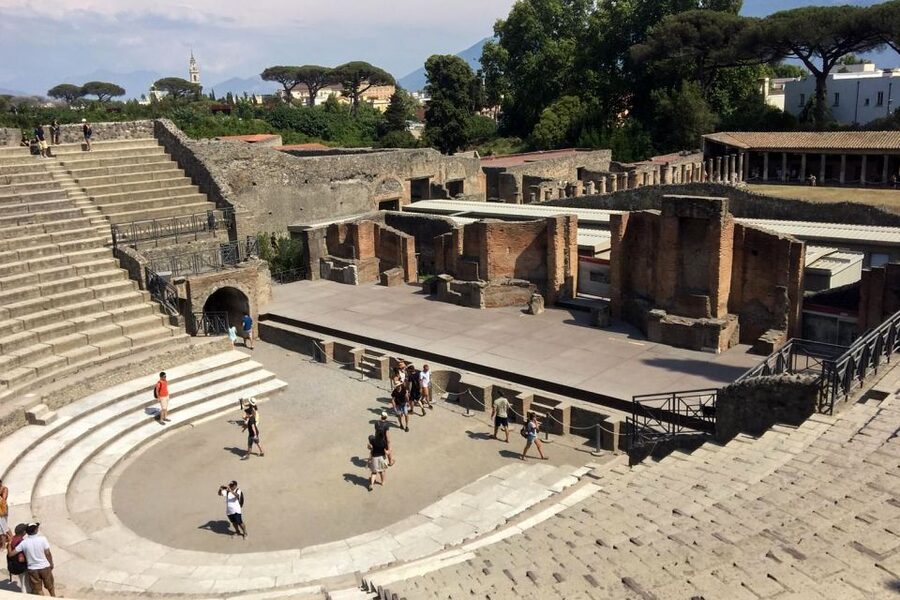
Pompeii can look simple at first: stone streets, roofless buildings, columns, and walls worn by time. The trouble is that the site is enormous, and without context, you may walk past an important house or public building without knowing why it matters.
A good guide turns the ruins into a town. You learn where public life took place, how people moved through the streets, and how shops served daily needs. One particularly useful detail is the old shop signage and the counters where goods were sold, including wine. These small clues help you picture Pompeii as a working community rather than a frozen museum.
I also value the human scale of the explanations. The tour is not limited to emperors, politics, and eruption dates. It looks at domestic life, public gatherings, bathing, commerce, and the different communities that lived in the town. That mix gives you a clearer idea of ordinary Roman life.
The guides often add humor, which helps during a long walk over hard ground. Elisa has been praised for being funny and welcoming, while Salvatore, Francesca, Maria, Miguel, and others have been described as engaging and easy to follow. The exact guide varies, so treat those names as examples rather than a promise.
More Entry Tickets in Italy:
- Milan: Guided Walking Tour & Last Supper Visit with Ticket
★ 4.7 · 5,409 reviews - Florence: Duomo Complex with Tickets & City Walk Guided Tour
★ 4.7 · 2,057 reviews - David & Accademia Guided Tour with Time Entry Ticket
★ 4.5 · 1,705 reviews
Finding Hotel Vittoria at 10:50
The meeting point is in Pompeii, not at a hotel pickup location in Naples or elsewhere in Campania. You should arrive at the garden of Hotel Vittoria, just outside the Cellini coral shop, at Via Mare, 80045 Pompei. The guide is meant to hold a sign with the customers’ name.
This is the one part of the experience that deserves extra planning. The entrance area can be crowded, and the location may not feel obvious once you arrive. Some people have needed help finding the group, while the company has also called, used WhatsApp, or sent a representative to search for late arrivals.
I would arrive early rather than aim for 10:50 exactly. Keep your confirmation details and phone switched on. If you are coming by train, allow time to identify the correct Pompeii stop and walk to the meeting point. A delayed start has happened, sometimes by 30 to 45 minutes, although the guide or local staff have also waited for people delayed by trains, traffic, or strikes.
That flexibility is useful, but do not rely on it. A late start can affect your return train, especially if you have a tight connection to Naples or another town. The tour lasts about two hours once underway, but you should leave room around it.
Entering the archaeological area
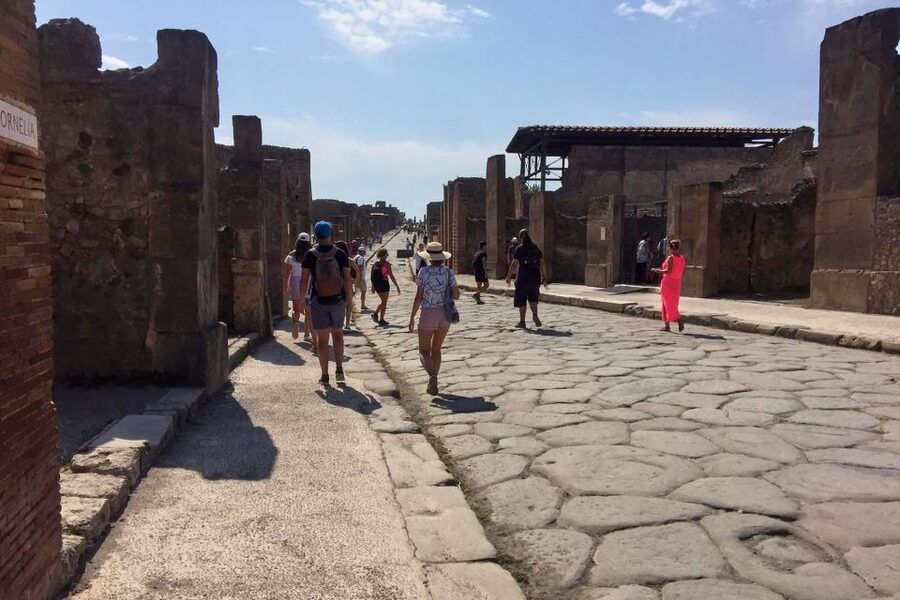
The tour includes entry to the Pompeii Archaeological Site, listed at €20, and skip-the-ticket-line access. This is valuable because you do not need to stop and buy the main admission ticket before joining the walk.
Skip-the-line access does not mean you can ignore all entrance procedures. The group still needs to gather, pass through the controlled entry area, and follow site rules. Bring a passport or identity card for children booked at the child fare. Without valid proof, the child fare may not be accepted.
Once inside, the guide provides the broad story of Pompeii and Vesuvius. The town was buried by ash and volcanic material in 79 A.D., preserving an unusual amount of its streets and buildings. Much of what you see has been uncovered gradually over the last few centuries, and the excavated area is still not the whole ancient town.
That ongoing work matters. Pompeii is not a finished stage set. Some areas may be closed, protected, or under preservation, and the route can change. The guide helps you focus on what is open and significant on the day.
The Forum and the town’s public life

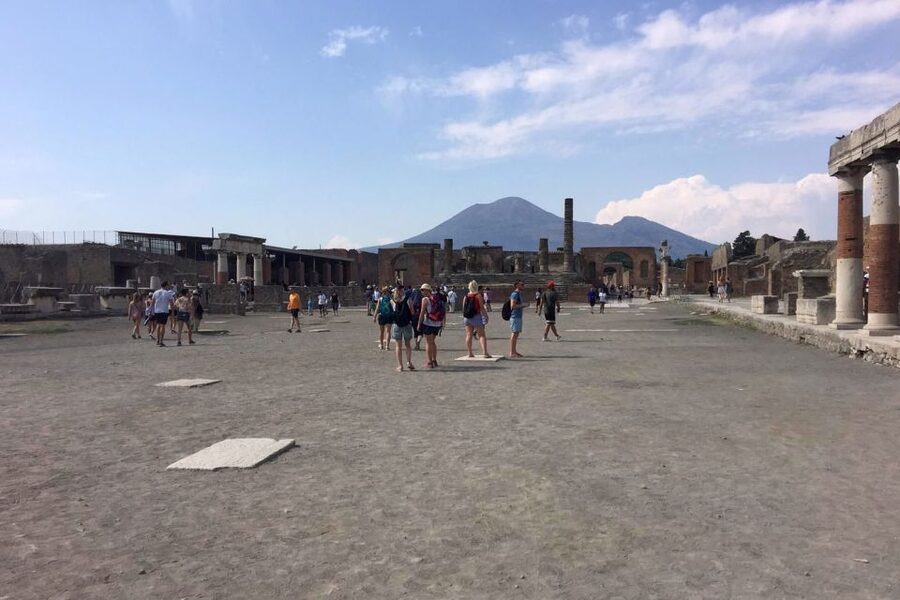
The Forum is one of the most important stops because it shows Pompeii as a civic center. Here, the guide can explain how public, religious, and commercial activity came together in the Roman town.
You will see open spaces, monumental remains, and the surrounding buildings that made this the heart of public life. The value of the stop is not only the surviving stone. It is the chance to understand how the town was organized and where people gathered.
The Forum can also give you a sense of scale. Pompeii was not a small rural settlement. It had public buildings, shops, baths, residences, and busy streets. The tour uses this central area to set up the rest of the walk, linking public life to the more personal places that follow.
Take photographs, but listen before rushing from one view to the next. The details are easy to miss, and the guide may point out features that look ordinary until their purpose is explained.
More Guided Tours in Italy:
- Naples: Street Food Walking Tour with Local Guide
★ 4.9 · 4,976 reviews - Florence: Highlights Walking Tour with Expert Guide
★ 4.6 · 4,662 reviews - Rome: Guided Food Walking Tour with Wine in Trastevere
★ 4.9 · 3,105 reviews - Venice: City Center Historical Guided Walking Tour
★ 4.2 · 1,873 reviews
Thermal Baths and Roman routine

The Thermal Baths offer a different look at Roman life. Bathing was not simply a private chore. It was part of social routine, public life, and the rhythm of the town.
Your guide explains how the bath complex worked and what its rooms tell us about Roman customs. Even if you have visited Roman ruins elsewhere, Pompeii’s baths make the system easier to picture because the surrounding streets and buildings remain nearby.
The stop also helps balance the larger political story. You are looking at a place used by ordinary residents, not only at monuments built to impress. Guides often connect the architecture to practical daily habits, which is one reason a live explanation adds real value here.
The stone surfaces can be uneven, and the site offers little comfort from the sun in exposed areas. Wear shoes with a firm sole, carry water, and dress for the forecast. The tour operates in all weather, so rain gear may matter just as much as sun protection.
The Lupanare and Pompeii’s frank side
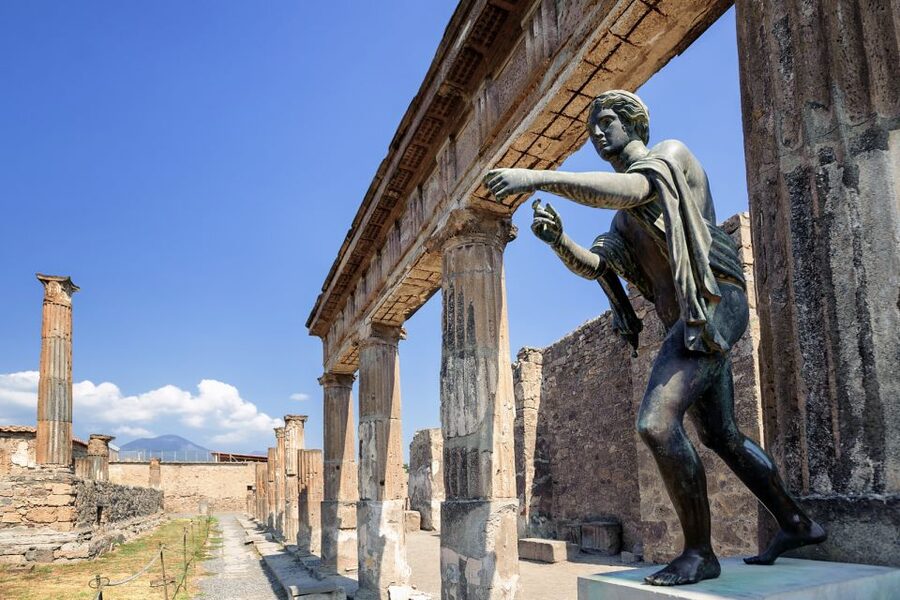
The Lupanare, commonly identified as Pompeii’s brothel, is among the most talked-about stops. Its presence offers a direct look at a side of Roman commercial and social life that polite histories often soften.
A guide can explain the purpose of the rooms and the meaning of the surviving imagery without turning the visit into cheap entertainment. The subject is handled as part of the town’s social history, and the tour is suitable for people who want the facts explained without excessive embarrassment or avoidance.
This stop may not suit every child or every family, so consider your group before booking. The wider tour includes adults, children, and mixed-age groups, and several guides have been praised for explaining difficult subjects in an approachable way. Still, the Lupanare is an adult topic within an archaeological setting.
Streets, shops, and the feel of daily life
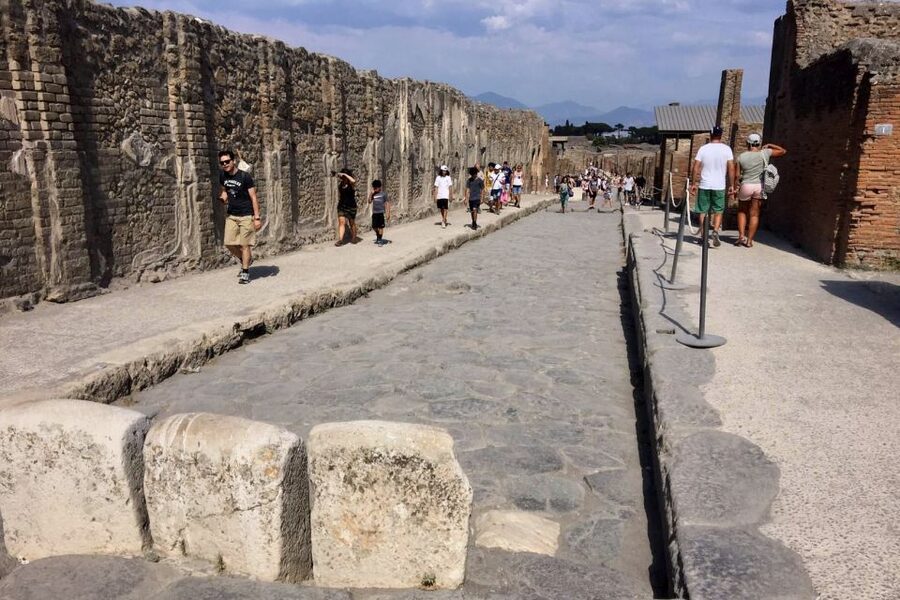
The streets are where Pompeii becomes especially legible. You can see the layout of the town and imagine people moving between homes, shops, baths, and public spaces.
The tour points out shops with signs and goods, including wine. These details give you something concrete to look for. Rather than hearing only that Pompeii had a busy economy, you can connect the idea to the counters, entrances, and street-facing businesses still visible in the ruins.
Domestic spaces are important too. The tour includes places connected with home life and private routines, though the exact buildings visited can vary with access and the guide’s route. Painted decoration and surviving artwork may appear along the way, sometimes protected behind glass or other barriers.
Do not expect every artifact to remain in its original building. Many important objects from Pompeii are displayed in museums, including the museum in Naples. The ruins still preserve the town’s plan, architecture, wall decoration, and atmosphere, but a museum visit can add another layer if you have time.
What two hours really gives you
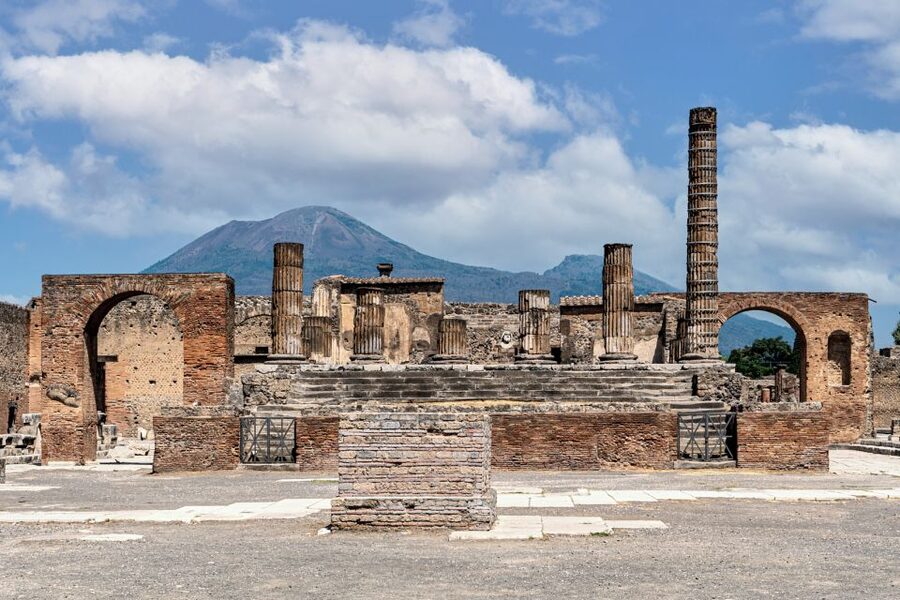
Two hours is enough for an introduction and a strong selection of highlights. It is not enough to see all of Pompeii in detail. The site is so large that even a well-paced route covers only a small part of what is open.
That limit is not necessarily a flaw. A shorter guided walk can work well if you are visiting Pompeii between trains, staying in the area for a day, or traveling with children who may not manage a full-day archaeological visit. The guide keeps the route moving and helps you spend your time on meaningful places.
You should expect steady walking, frequent stops, and a fair amount of standing while the guide speaks. Headsets are included so you can hear the commentary more clearly, even when the group spreads out. This is especially helpful in busy areas or when you want to look at a building while still following the explanation.
After the guided portion, you may be able to remain inside and explore areas not covered by the route, depending on site rules and timing. Do not assume you can fit in a large extra circuit if you have a train to catch.
Price, group size, and overall value
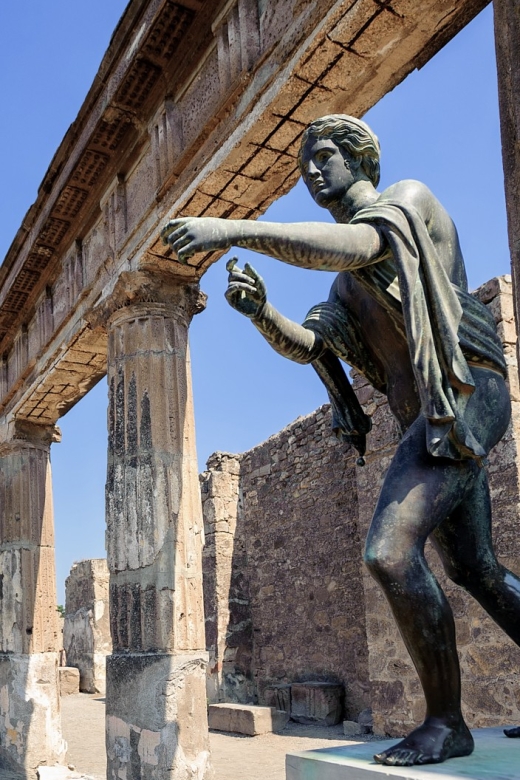
At $50 per person, the tour costs more than simply buying entry and walking in alone. The included admission is listed at €20, so the remaining cost pays for the guide, organization, and audio equipment.
I think that is reasonable for a first visit if you want the site explained rather than simply photographed. Pompeii has enough scale and detail to make a guide useful, particularly if you do not already know Roman architecture or daily life. The value is strongest when your time is limited.
Group size can affect the experience. Some tours have felt large, and one delayed start was linked to confusion around the group. A bigger group may mean more waiting at stops and less room for questions, although headsets reduce the problem of hearing the guide.
The tour is less useful for you if you prefer to move at your own pace, read every plaque, or spend a long time inside one house. In that case, admission alone may suit you better, followed by a museum visit in Naples for artifacts removed from the site.
Heat, clothing, and access
Pompeii can feel hot even when the air temperature seems moderate. One visitor found the streets very warm on a mild day, and another had difficulty with the sun during otherwise enjoyable walking. There is limited shade across parts of the archaeological area.
Wear comfortable shoes, bring weather-appropriate clothing, and prepare for rain or strong sun. The tour runs in all weather, so a forecast check the night before is worthwhile.
This experience is not suitable for wheelchair users or people with mobility impairments. The ancient streets and ruins require walking over uneven surfaces, and the tour format does not promise an accessible route. If anyone in your group has mobility concerns, confirm suitability before paying.
Who will enjoy this Pompeii walk
I would choose this tour for a first visit, especially if you want a clear introduction in English, French, Spanish, or Italian. It suits couples, families with older children, and anyone who wants the Forum, baths, Lupanare, and street life placed into one story.
It also works well for people arriving by train who want a fixed two-hour plan. The company has helped people affected by missed trains, strikes, traffic, and rental-car problems, though you should not count on a delayed start as part of the service.
You may want another option if you need wheelchair access, dislike group tours, or have only a narrow window before a departure. The meeting-point confusion and occasional late starts are the main practical risks.
Should you book it?
Book this Pompeii tour if you want the major sights explained by a lively guide and prefer paying one price for admission, guiding, and headsets. The strongest part is the human story: Roman streets, shops, baths, homes, and public life become easier to picture.
Skip it if you want a quiet, highly detailed archaeological study or need complete control over your timing. For most first-time visitors, though, $50 is fair value for a focused two-hour introduction, provided you arrive early at Hotel Vittoria and plan for heat, uneven ground, and a route that shows highlights rather than the entire city.
FAQ
What does the Pompeii tour include?
It includes skip-the-ticket-line entry, the €20 Pompeii Archaeological Site admission ticket, a professional guide, and headsets to hear the guide clearly.
How long does the guided walk last?
The guided tour lasts two hours. You may be able to remain and explore additional areas afterward, depending on site rules and your schedule.
Where is the meeting point?
Meet at 10:50 in the garden of Hotel Vittoria, outside the Cellini coral shop on Via Mare, 80045 Pompei. The guide should hold a sign with the customers’ name.
Which languages are available?
Live guiding is offered in English, French, Spanish, and Italian. A requested language is not guaranteed if only one participant speaks that language.
Is the tour suitable for wheelchair users?
No. The activity is not suitable for wheelchair users or people with mobility impairments.
What happens if I need to cancel?
You can cancel up to 24 hours in advance for a full refund. You can also reserve now and pay later, which keeps your plans flexible.
Just added around Italy
- Ferrara: City Highlights Walking Tour with Local Guide★ 4.6 · 219 reviews
- Verona: Romeo and Juliet Guided Walking Tour★ 4.6 · 82 reviews
- Discover Pompeii: French Walking Tour of the Buried City★ 4.8 · 253 reviews
- Naples: Maradona Stadium Guided Exterior Walking Tour★ 4.3 · 113 reviews
- Dark Heart of Rome – Facts, Legend & Mystery Walking Tour★ 4.5 · 329 reviews
- Catania: Street Food Guided Walking Tour★ 4.9 · 326 reviews
- Cefalù: History and Legends Guided Walking Tour★ 4.8 · 132 reviews
- Catania: Guided Street Food Walking Tour★ 4.7 · 300 reviews
Walking Tours, compared.

Magical London: Harry Potter Guided Walking Tour
Read our review →
Reykjavik Food Walk – Local Foodie Adventure in Iceland
Read our review →
History and Hauntings of Salem Guided Walking Tour
Read our review →
New Orleans Premier Ghost, Voodoo and Vampire Walking Tour
Read our review →
Amsterdam Anne Frank: Small-Group Walking Tour & Local Guide
Read our review →

Edinburgh Castle: Guided Walking Tour with Entry Ticket
Read our review →
Anne Frank’s Story – Guided Walking Tour through Amsterdam
Read our review →Browse the lists this tour appears in