
REVIEW · PARIS
Paris: Montmartre Culture and Local Pastries Walking Tour
Montmartre is best understood on foot, one crooked lane at a time. This 150-minute walk traces the district’s artists, cabarets, basilica, cafés, and modern art scene, with guides such as Frédéric and Climont bringing plenty of local detail to the route. The artist stories give the neighborhood a human scale, while the pastry and café advice points you toward good stops after the walk.
I like two things here. First, the tour reaches beyond the postcard sights, including side streets and former studios linked to Picasso, Modigliani, Utrillo, Van Dongen, Juan Gris, and Matisse. Second, it ends at the Moulin Rouge after taking you through Sacré-Coeur and Place du Tertre, so you get a clear sense of Montmartre’s past and present. The main catch is important: this is not a tasting tour. Food and drinks are not included, despite the pastry focus.
Key points at a glance
- Artist-led Montmartre: Follow stories connected to Picasso, Modigliani, Utrillo, Van Gogh, Renoir, and other artists who lived or worked here.
- A useful route through the district: Start near Lamarck-Caulaincourt and finish at the Moulin Rouge, with Sacré-Coeur and Place du Tertre along the way.
- Pastry guidance, not pastry samples: Your guide can point out notable pastry and drink spots, including Café des Deux Moulins, but you pay for anything you order.
- Small details beyond the monuments: The winding lanes and lesser-known corners are a central part of the experience.
- Multilingual guiding: Tours are offered in English, German, French, Italian, and Spanish.
- Good value at $37: The price is fair for a 2.5-hour guided walk, especially if you want context rather than just a photo stop.
Why this Montmartre walk works
Montmartre can feel confusing at first. The district rises sharply above Paris, streets change character quickly, and the most famous sights are mixed with ordinary residential lanes. A guide helps you connect those pieces instead of treating the area as a string of unrelated photo spots.
The tour focuses on culture rather than only architecture. You will hear about the painters, writers, cafés, cabarets, and working artists that shaped Montmartre. That gives Sacré-Coeur and Place du Tertre more meaning than they have when seen in isolation.
The route also has a practical advantage. It begins near the Lamarck-Caulaincourt metro station and ends by the Moulin Rouge, so you cross a good portion of the neighborhood without having to plan your own path through the hills. You should still expect walking on sloped streets and uneven surfaces.
More Dessert Tastings in Paris:
- Private Montmartre Food Tour with Wine, Cheese & Pastries
★ 5.0 · 1,027 reviews - Saint-Germain: Gourmet Chocolate & Pastry Walking Food Tour
★ 4.8 · 495 reviews - Le Marais Walking Food Tour with Cheese, Wine & Pastries
★ 4.7 · 339 reviews
Starting near Lamarck-Caulaincourt
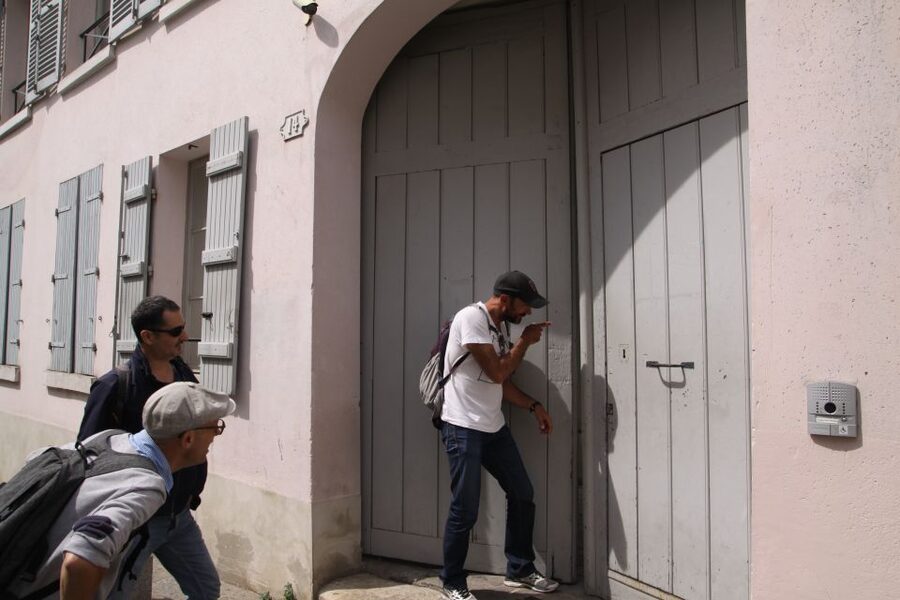
The meeting point is between the metro stairs at Lamarck-Caulaincourt and the restaurant Chez Ginette. This is a useful detail to note before you leave your hotel. Look for the guide around the metro exit and restaurant rather than expecting a large tour office or a fixed indoor check-in desk.
Beginning in this part of Montmartre places you away from the busiest area around Sacré-Coeur. You start among the neighborhood’s side streets and squares, which helps the walk build toward the major sights instead of opening with the district’s most crowded viewpoint.
You should arrive in comfortable clothes and shoes. Montmartre’s appeal comes partly from its lanes, but those lanes can be steep and tiring. The tour is not suitable for wheelchair users or people with mobility impairments, so anyone with difficulty walking should choose a different way to see the area.
Following the artists through their old neighborhood
The strongest part of the tour is the way it uses artists as a guide to Montmartre. Picasso, Modigliani, Utrillo, Van Dongen, Juan Gris, and Matisse all lived or worked in the district at different points. Their presence helps explain why Montmartre became associated with experimentation, bohemian life, and new forms of modern art.
You may see the famous studio linked with several of these artists. The value is not simply the building itself. Your guide can explain how a plain room or modest lane fits into the lives of people who later became central figures in European art.
The route also points out a famous mill painted by Renoir and Van Gogh. This is one of the more memorable details because it connects the present-day street with images you may already recognize from museums and art books. It also shows how much of Montmartre’s appeal lies in ordinary places with an unusual past.
I like this approach because it avoids turning the neighborhood into a list of famous names. The best guiding will show you how artists used the cafés, studios, streets, and entertainment venues around them. Frédéric received especially strong praise for explaining the area with energy and warmth, while Climont was noted for covering the district’s history, culture, restaurants, and shops.
Sacré-Coeur and the climb through Montmartre
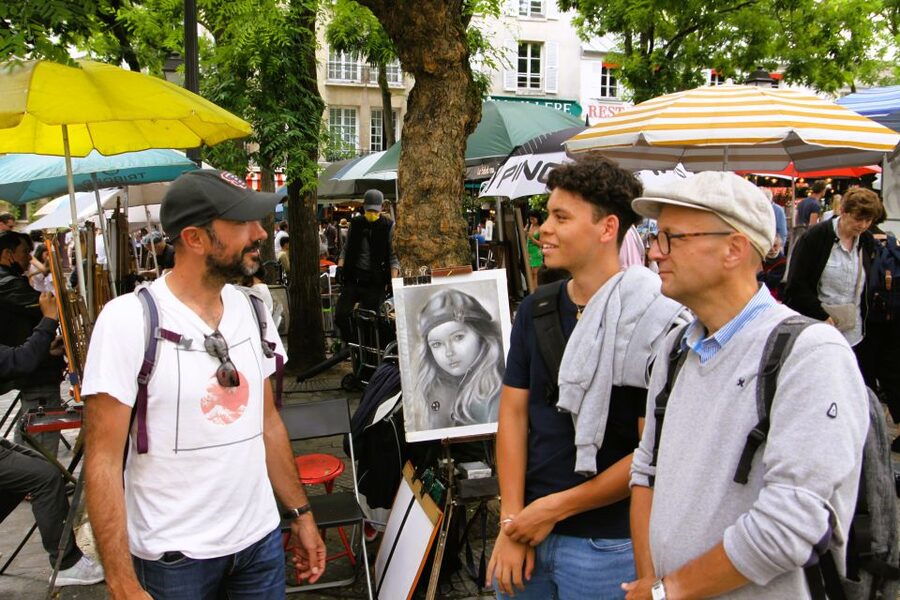
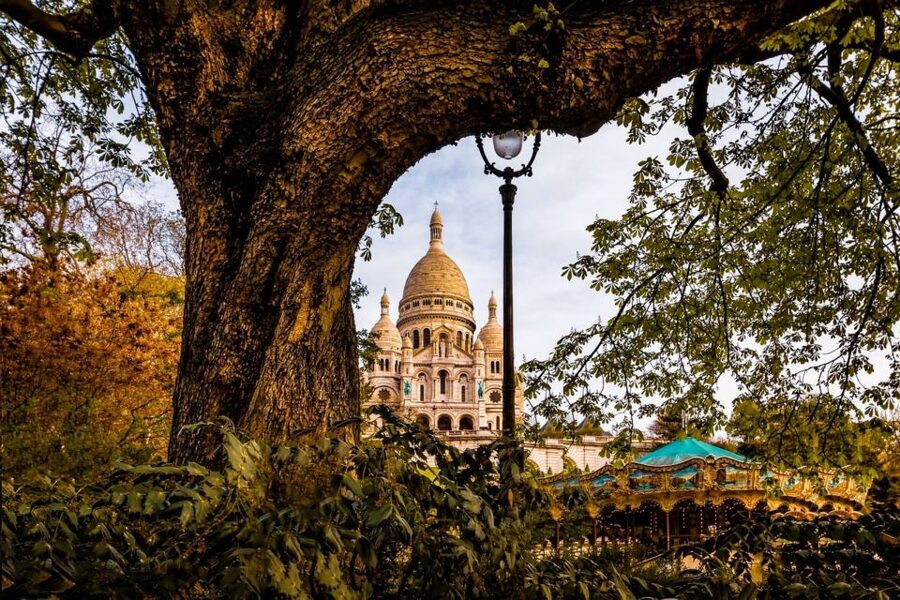
Sacré-Coeur is the tour’s grandest landmark. Its white domes sit high above Paris, and the basilica gives the walk a clear visual anchor. The building is an important stop, but the route matters just as much because you reach it through Montmartre’s streets rather than simply arriving by taxi or metro.
The exact order of stops can vary with the guide and the pace of the group. You should expect a walking route that includes uphill sections, narrow lanes, and changes in elevation. The views and architecture reward the effort, but this is not a gentle flat stroll.
Sacré-Coeur can be busy, especially around the steps and open spaces near the basilica. A guide cannot remove the crowds, but can give you a reason to look beyond the usual photograph. The surrounding streets and the stories tied to the district help make this stop feel like part of Montmartre rather than an isolated church visit.
Bring a camera if you enjoy street scenes and wide city views. Just remember that the tour’s focus is cultural explanation, not a long photography session. If you stop often for pictures, you may need to keep moving to stay with the group.
A few more walking tours around Paris worth a look
- Paris Top Sights Half Day Walking Tour with a Fun Guide
★ 5.0 · 2,893 reviews - Montmartre Hidden Gems and Scenic Highlights Walking Tour
★ 5.0 · 2,684 reviews - Montmartre Hill French Gourmet Food and Wine Tasting Walking Tour
★ 5.0 · 2,588 reviews - Paris: Montmartre Highlights Walking Tour with a Local Guide
★ 4.9 · 2,318 reviews
Place du Tertre and Montmartre today
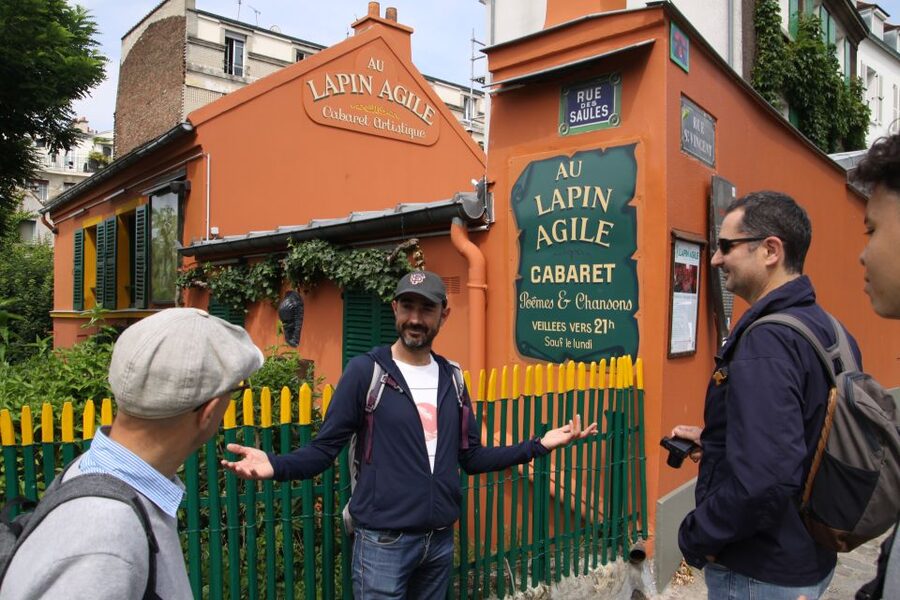
Place du Tertre is one of Montmartre’s best-known art centers. Its painters and portrait artists represent the district’s continuing artistic identity, even as the neighborhood has changed over time. The square is attractive and atmospheric, but it is also one of the most tourist-oriented points on the route.
That contrast is useful. You can see the modern version of Montmartre while learning how it differs from the district associated with Picasso and the early twentieth-century art scene. A good guide can help you separate the living culture from the easy romantic story that Paris often sells.
Place du Tertre may be crowded, and its commercial side is impossible to miss. I would not book this walk expecting an untouched artists’ village. Book it if you want context for what you are seeing, including the tension between local identity, art, cafés, and tourism.
The tour’s side streets are especially valuable here. Once you leave the square, the neighborhood becomes less concentrated around souvenirs and portrait stands. The guide’s knowledge of these lanes can save you from wandering without direction and can reveal corners you might otherwise pass by.
Pastries, cafés, and the important fine print

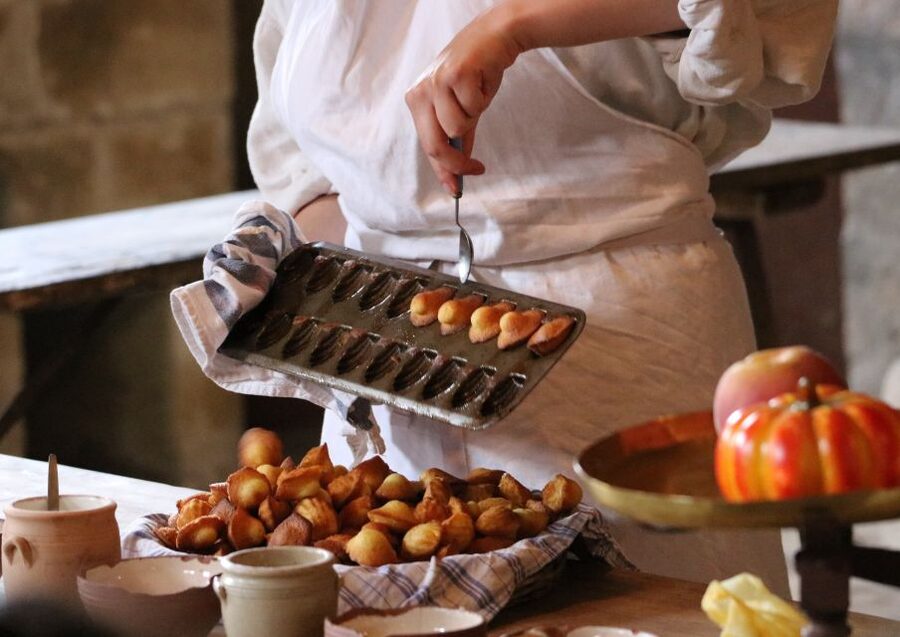
The food angle needs careful explanation. Your guide will introduce iconic Parisian pastries and direct you toward good places for pastries and drinks. Café des Deux Moulins is one named stop, known to many people from its connection with the film Amélie.
But you do not receive pastry samples or drinks as part of the $37 price. If you want a croissant, pastry, coffee, or other drink, you pay separately. One person expected an actual tasting, so keep that distinction clear when deciding if this is the right tour.
This setup can still be useful. You get local direction without being locked into a fixed menu or rushed tasting stop. You can return to a café later, order what you want, or use the guide’s suggestions for a separate snack break.
If eating is your top reason for booking, this is not the best match. If you want a neighborhood walk with practical food advice added in, the format makes more sense. The tour presents the pastry culture, but it does not function as a food tour.
Ending at the Moulin Rouge
The tour finishes at the Moulin Rouge, the famous cabaret in the Pigalle area. This gives the walk a strong final chapter because Montmartre is not only about painters and basilicas. Cabarets, nightlife, music, and popular entertainment are also part of the district’s identity.
Seeing the Moulin Rouge at the end creates a natural route from the hilltop streets down toward the livelier entertainment quarter. It also lets your guide place the cabaret within the wider story of Montmartre rather than treating it as a separate evening attraction.
The tour does not include admission to a show. The stated experience ends at the landmark, so plan separately if you want to attend a performance. That makes the final stop easy to use as a starting point for your own evening plans.
The guides and the tone of the walk

The guide can make or break a walking tour, and the information here points to a personable style. Frédéric is singled out for giving an entertaining walk that lasted more than three hours on one occasion, even though the advertised duration is 150 minutes. Climont is also praised for explaining both the district’s past and its current restaurants and shops.
That longer timing should not be treated as a promise. The official duration is 150 minutes, or two and a half hours. Still, it suggests that the pace can be generous when the group and guide allow it.
The strongest quality to look for is storytelling. You want someone who can explain why a street matters, not just point at a building and name it. The guide languages are English, German, French, Italian, and Spanish, which gives you a useful choice if you prefer not to follow a tour in English.
The overall rating is 4.8 from 210 ratings, with particularly strong praise for the guides’ warmth, local detail, and ability to show less obvious corners. The one clear point of confusion concerns the missing tastings, not the historical content.
Is $37 a fair price?
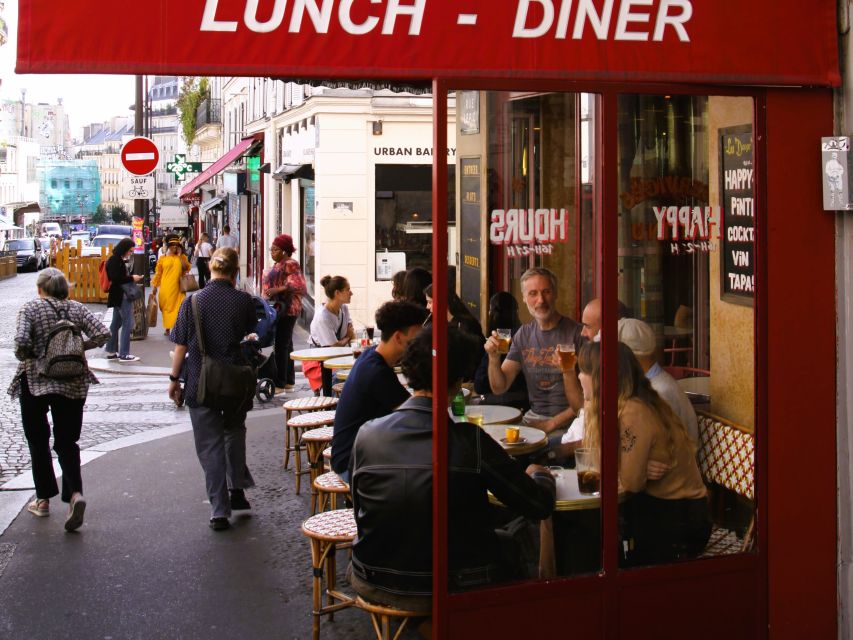
At $37 per person, this is a reasonable price for a 150-minute guided walk in one of Paris’s most complicated districts. You are paying for a route, local interpretation, and the time needed to connect artists, landmarks, cafés, and cabarets.
The value is best if this is your first serious visit to Montmartre. You can see the main sights on your own, but you may miss the old studios, the painted mill, and the connections between the hilltop neighborhood and Pigalle. A guide also saves planning time.
The price looks less attractive if you mainly want a pastry tasting or a quick visit to Sacré-Coeur. You will need to buy your own food and drinks, and the walk takes much longer than a simple basilica stop.
Free cancellation up to 24 hours before the start gives you some flexibility. You can also reserve and pay later, which is useful when your Paris schedule is still shifting. These policies do not change the content of the walk, but they reduce the risk of booking too early.
Who should book this walk?
I would choose this tour for first-time Paris visitors who want Montmartre explained rather than merely photographed. It also suits repeat visitors who have seen Sacré-Coeur but have not explored the artists’ connections, side streets, or café culture in a focused way.
It is a good match for people who enjoy walking, local stories, and a loose cultural route. The mix of major sights and less obvious corners gives you enough structure without making the district feel like a checklist.
You should think twice if you have limited mobility, dislike hills, or want a seated food experience. You should also avoid booking it under the assumption that pastries are included. Bring comfortable shoes, a camera, and enough money for anything you decide to eat or drink along the way.
Should you book the Montmartre Culture and Local Pastries Walking Tour?
Book it if you want a well-paced introduction to Montmartre’s artists, landmarks, streets, and café culture, and if you understand that the food element is guidance rather than tasting. The route from Lamarck-Caulaincourt to the Moulin Rouge covers a useful slice of the district, while guides such as Frédéric and Climont add the personal detail that makes the neighborhood easier to read.
Skip it if your main goal is included food, a wheelchair-friendly route, or a short stop at Sacré-Coeur. For everyone else, $37 is a solid price for two and a half hours of cultural context, especially if this is your first time exploring Montmartre.
FAQ
How long is the Montmartre walking tour?
The advertised duration is 150 minutes, or two and a half hours.
How much does the tour cost?
The price is $37 per person.
Are pastries and drinks included?
No. The tour introduces Parisian pastries and recommends places for pastries and drinks, but food and drinks are not included in the price.
Where does the tour meet?
Meet your guide between the metro stairs at Lamarck-Caulaincourt and the restaurant Chez Ginette.
Where does the tour finish?
The walk ends at the Moulin Rouge.
Which landmarks are included?
The route includes Sacré-Coeur, Place du Tertre, and the Moulin Rouge, along with artist-related sites, side streets, and squares in Montmartre.
Which languages are available?
The tour is offered in English, German, French, Italian, and Spanish.
Is the tour suitable for wheelchair users?
No. The activity is not suitable for wheelchair users or people with mobility impairments.
Can I cancel for a full refund?
Yes. You can cancel up to 24 hours in advance for a full refund. You can also reserve now and pay later.
Just added around Paris
- The Official Emily in Paris Locations Walking Tour★ 4.9 · 383 reviews
- Paris: Montmartre Food Tasting Walking Tour with Secret Dish★ 4.8 · 107 reviews
- Paris: Emily Inspired Walking Tour★ 4.9 · 312 reviews
- Saint-Germain: Gourmet Chocolate & Pastry Walking Food Tour★ 4.8 · 495 reviews
- Paris: Walking Tour of Montmartre★ 4.7 · 470 reviews
- Paris Uncovered: Unique Guided Walking Tours with a Twist★ 4.8 · 582 reviews
- Paris Top Sights Half Day Walking Tour with a Fun Guide★ 4.9 · 92 reviews
- Paris: Walking Tour with Notre Dame or Ste-Chapelle Access★ 4.4 · 198 reviews
Walking Tours, compared.

Magical London: Harry Potter Guided Walking Tour
Read our review →
Reykjavik Food Walk – Local Foodie Adventure in Iceland
Read our review →
History and Hauntings of Salem Guided Walking Tour
Read our review →
New Orleans Premier Ghost, Voodoo and Vampire Walking Tour
Read our review →
Amsterdam Anne Frank: Small-Group Walking Tour & Local Guide
Read our review →

Edinburgh Castle: Guided Walking Tour with Entry Ticket
Read our review →
Anne Frank’s Story – Guided Walking Tour through Amsterdam
Read our review →Browse the lists this tour appears in