
REVIEW · PARIS
Paris: French Revolution Walking Tour
Paris still carries the marks of the French Revolution, but you have to know where to look. This two-hour walk through central Paris connects old stones, churches, public squares, and lesser-known details with the conspiracy, fear, and bloodshed that reshaped France.
I like the strong storytelling, especially the day-by-day build-up to the storming of the Bastille. I also like the way guides such as François and Louis explain a complicated subject in clear English, answer questions, and bring in newer interpretations instead of repeating a simple schoolbook version. The main limitation is time: two hours can only cover so much, so some major locations and dramatic episodes receive little or no attention.
Key points
- Meet at Place du Châtelet: Find the guide in front of the Fontaine au Sphinx, right in the heart of Paris.
- Follow the Revolution through real streets: The walk links locations in central Paris with the political and social crisis of 1789.
- Expect vivid storytelling: Guides use scenes, personalities, and day-by-day events to make the period easier to follow.
- Look for small details: Churches, old buildings, and overlooked features help show how the Revolution changed daily life.
- English-language guiding: François, Louis, Fran, and other guides have been praised for clear delivery and strong command of the subject.
- Allow for a brisk overview: The route is not fully chronological, and two hours is too short for every major battle, speech, and execution.
Starting at Place du Châtelet
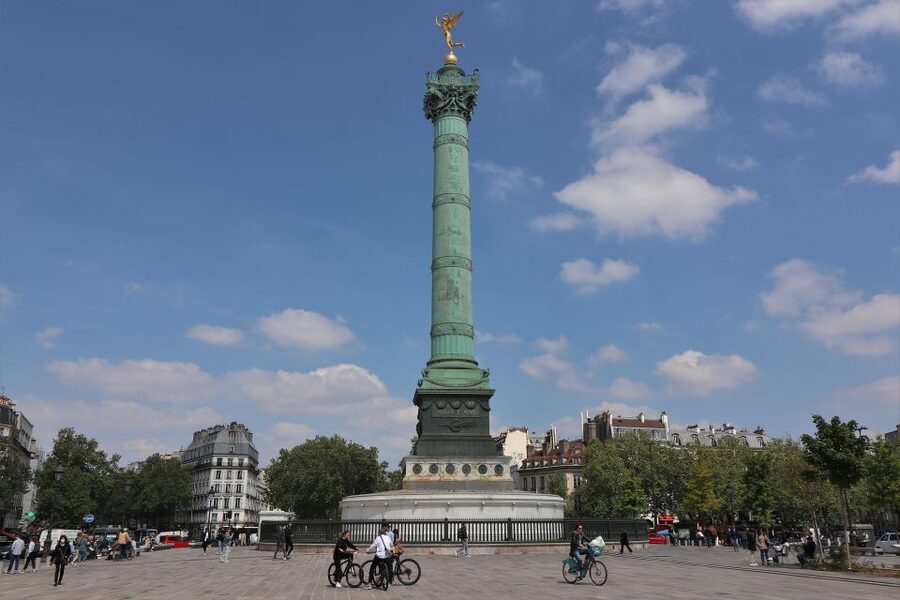
The tour begins in front of the Fontaine au Sphinx on Place du Châtelet. This is a useful central meeting point, but give yourself a few extra minutes to locate the guide. One person had trouble finding the group because there was no obvious tour logo or clear sign, so do not arrive at the last second.
Place du Châtelet puts you in the old heart of Paris, close to the Seine and surrounded by streets where several periods of French history overlap. You are not starting with a classroom lecture. You begin in the city itself, with traffic, pedestrians, and centuries of Paris around you.
That setting matters. The Revolution was not an event sealed inside a museum. It unfolded in streets, churches, meeting places, and public squares. A walking tour helps you picture how quickly news, anger, and political rumor could spread through a compact city.
The guide may also spend a little time setting out the basic problem: an expensive monarchy, social inequality, political frustration, and a population increasingly willing to challenge royal authority. The exact balance depends on the guide, but the aim is to give you the causes before rushing to the guillotine.
A few more walking tours around Paris worth a look
- Paris Top Sights Half Day Walking Tour with a Fun Guide
★ 5.0 · 2,893 reviews - Montmartre Hidden Gems and Scenic Highlights Walking Tour
★ 5.0 · 2,684 reviews - Montmartre Hill French Gourmet Food and Wine Tasting Walking Tour
★ 5.0 · 2,588 reviews
Turning a complicated Revolution into a clear story
The French Revolution is hard to explain in a straight line. It moves from financial crisis to political reform, then to street violence, war, executions, factional struggle, and mass terror. A good guide has to simplify without turning the whole thing into a cartoon.
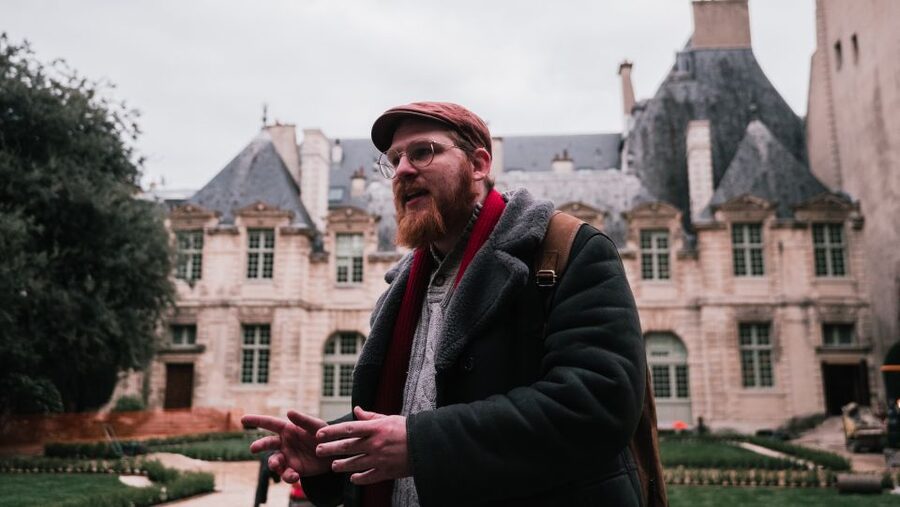
That is where this experience earns its price. The strongest guides, especially François and Louis, have been praised for making the subject easy to follow while keeping its complications intact. François in particular is known for presenting a passionate but balanced account, including newer theories alongside older interpretations.
I like that approach. You will hear about freedom and political rights, but you will also hear about fear, revenge, conspiracy, and the way revolutionary ideals could turn on their own supporters. The story includes the public drama of Louis XVI and Marie Antoinette meeting the guillotine, but it also reaches into the less familiar motives and beliefs behind those events.
The guides also seem comfortable with questions. Sam, for example, was described as relaxed and willing to discuss subjects beyond the main theme. That matters if you already know the broad outline and want to ask about a particular person, church, political faction, or stage of the Revolution.
You should expect a lively interpretation rather than a date-heavy lecture. The tour uses mystery, murder, prophecy, and political intrigue to hold your attention. That tone will suit you if you like history told through people and places. If you prefer a strict academic lecture with every date and constitutional change laid out in order, you may find the presentation more theatrical than systematic.
The early crisis and the road to 1789
The most effective part of the walk is likely the build-up to the Revolution. Instead of treating the storming of the Bastille as a sudden burst of violence, the guide traces the pressure that made it possible.
You will hear how political tension and public anger grew before the famous event. The best version of this story unfolds almost day by day, showing how uncertainty became panic and how panic pushed people toward action. One guide was praised for making the lead-up feel immediate, as though the group were following events as they happened.
This is useful because many short accounts begin and end with the Bastille. You get more from the walk when you understand the chain of decisions, rumors, and confrontations that came first. The guide can show how the Revolution developed in stages rather than arriving fully formed.
The tour also explores conspiracy and intrigue. Those subjects are not added merely for drama. They help explain why people in revolutionary Paris often acted on incomplete information and suspicion. A rumor about royal intentions or betrayal could carry real force in a city already strained by hunger, political conflict, and distrust.
Expect the walk to move between large themes and small clues. You may look at an old feature of the city, then connect it to religious life, political power, or the changing mood of the population. These details give the period a physical setting. You are not simply memorizing what happened. You are trying to see how a Parisian might have experienced it.
Churches, streets, and the changing face of Paris
The walk includes attention to churches and the effect of the Revolution on religious life. This is one of the more useful angles because it shows that the Revolution was not only a fight between a king and angry citizens.
Churches represented faith, wealth, authority, and community. Their place in revolutionary Paris changed as the movement challenged old institutions. Looking at religious buildings helps you understand how political upheaval reached into ordinary routines and public identity.
You will also pass through parts of the Marais and other central areas, according to the route taken by the guide. The walk is not presented in strict chronological order. That may sound like a weakness, but it can work well in a city tour. Paris does not lay out its history in a neat timeline, and a geographically sensible route may be easier to follow on foot.
Still, I recommend keeping a mental timeline. The guide may move from one location to another because of geography, then jump backward or forward to explain a person or event. François was praised for keeping the larger story on track despite this approach. If you want to remember the sequence clearly, pay attention to the transitions between the main stages.
The walk gives you a fresh way to see central Paris. Streets that look ordinary today can carry associations with royal power, religious authority, public protest, or revolutionary violence. You will not see every important site in Paris, but you will learn to read the city with more historical awareness.
Same streets, a different route:
- Authentic Parisian Gourmet Food Tour with 10 Local Dishes & Wines
★ 5.0 · 4,754 reviews - Paris: Montmartre Highlights Walking Tour with a Local Guide
★ 4.9 · 2,318 reviews - Paris Île de la Cité and Notre-Dame Walking Tour With Crypt
★ 5.0 · 2,272 reviews - Paris: Montmartre Cheese, Wine & Pastry Guided Walking Tour
★ 4.8 · 2,255 reviews
Bastille, executions, and the darker turns
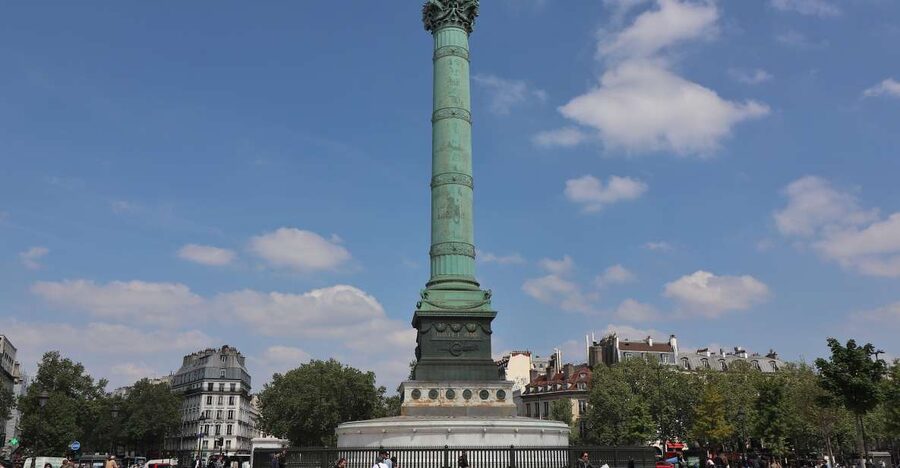
The Bastille is central to the tour’s story, especially the events leading to its storming. The guide may build toward this moment as a kind of climax, using the route and the surrounding city to explain why the fortress became such a powerful symbol.
You should not expect a preserved revolutionary scene. The point is not that the original drama remains untouched. The value comes from standing in the modern city while reconstructing what the place meant at the time.
The darker part of the tour covers murder, massacre, executions, and the guillotine. Louis XVI and Marie Antoinette receive attention, but their deaths are not treated as the whole story. The guide also examines how revolutionary leaders could rise, fall, and become victims of the same forces they had helped unleash.
One unusual thread is the dark prophecy connected with the downfall of a key revolutionary figure. Details like this give the walk its treasure-hunt quality. You are encouraged to notice objects and clues that you could easily pass without a guide.
The tone is dramatic, but the best guides keep it from becoming cheap shock value. Several guides have been praised for accuracy and nuance, including the ability to separate established facts from later theories. That balance is important. The Revolution has plenty of blood and spectacle already. You do not need a guide to exaggerate it.
Some people may want more attention to major locations such as Place de la Concorde and the Champ de Mars. Those areas are important to the Revolution, but a two-hour route cannot cover every central site. If those places are a priority, check the exact route before booking or plan to visit them separately.
What the guides do best
The guide is the main reason to book this experience. The subject is complex, and the streets alone will not explain it.
François receives especially strong praise for clear English, careful explanations, and a willingness to discuss different interpretations. His style appears to suit people who want more than a dramatic story. He can condense a large subject into two hours while still leaving room for questions.
Louis is another name that appears often in connection with an engaging presentation. He has been praised for pointing out small features along the route and for making the group feel close to the events. Other guides, including Fran, Guillaume, Ilan, Amber, and Sam, have also been described as friendly, energetic, or passionate.
Guide quality can vary on any walking tour, so I would not book this expecting one specific person unless the booking system lets you choose. The common thread is a guide-led experience in English, not an audio tour or self-guided route.
Clear speaking matters on a Paris street. Cars, conversations, and city noise can make a soft voice hard to follow. The strongest comments describe guides who speak excellent English and project clearly. One person specifically noted that the guide remained easy to understand despite noisy streets.
The pace also sounds well judged. A guide kept the group moving while noticing when people needed a rest, and another included a comfort break in the middle. You are still walking for two hours, so wear practical shoes and be ready to stand outdoors while the story unfolds.
Is $46 fair for two hours?
At $46 per person, this is not the cheapest way to spend two hours in Paris. You are paying for a live English-speaking guide, not for entry to a museum or a major monument.
I think the price can be fair if the French Revolution is a real interest and you value explanation. A good guide saves you from trying to connect scattered plaques, buildings, and textbook facts on your own. The benefit is strongest for first-time visitors who want a historical frame for the central city.
The value is less clear if you only want a general sightseeing walk. This is not a broad introduction to Paris. The subject stays focused on revolutionary politics, violence, religious change, royal power, and the people caught in the upheaval.
At two hours, the tour also fits neatly into a busy day. You can pair it with other central Paris sights, but do not assume it will cover Place de la Concorde, the Champ de Mars, and every major revolutionary address. Its strength is a concentrated narrative, not a complete map of every site.
The flexible booking terms help reduce the risk. You can cancel up to 24 hours before the start for a full refund, and you can reserve now while paying later. The walk is also listed as wheelchair accessible, though the practical comfort of any historic street route may depend on the exact path and street conditions.
Who will enjoy this walk most?
I would choose this tour if you fit one of these profiles:
- You want the French Revolution explained in clear English rather than through a dense book.
- You enjoy walking tours that connect famous events with small street-level details.
- You already know the basic story and want a more nuanced account of motives, factions, and consequences.
- You are visiting Paris with older children or teenagers who need a strong narrative to stay interested.
- You want to see the city from a political and social angle, not only through museums and grand monuments.
Families can make it work, especially with teenagers. The murder, massacre, and execution material is serious, so younger children may find the subject too grim.
I would be cautious if you have limited mobility, even though the activity is listed as wheelchair accessible. It is still a walking tour lasting two hours, with time spent outdoors and likely periods of standing.
I would also think twice if you dislike dramatic storytelling. The tour uses suspense, prophecy, mystery, and personal scenes to bring history to life. That can make the period memorable, but it is not the same as a formal university lecture.
Practical details before you book
Meet at the Fontaine au Sphinx on Place du Châtelet. Look carefully for the guide, since the meeting point may not have an obvious company sign.
The activity lasts two hours and is conducted in English. Hotel pickup and drop-off are not included, so you need to reach Place du Châtelet on your own.
Wear comfortable shoes and leave room in your schedule for a short pause. The walk is designed to keep moving, but the guide may stop for questions and brief rests.
Try to arrive with one simple question in mind. You might ask about the Bastille, Marie Antoinette, the role of churches, or how the Revolution changed over time. A focused question can help you get more from the guide, especially when the route moves between locations rather than following a perfect timeline.
Should you book the French Revolution Walking Tour?
I would book it if you want a lively, focused history walk and the Revolution is more than a passing interest. The strongest guides turn a difficult subject into a clear story, and the combination of real streets, political intrigue, religious change, and personal tragedy gives central Paris a new edge.
I would skip it if you want a complete tour of every revolutionary site or a strictly chronological lesson. Two hours is a firm limit, and some major locations may receive only a mention.
For most history-minded visitors, $46 is a reasonable spend when you get a guide who can explain both the ideals and the violence. Go for the story, not for a checklist of monuments. You will leave with a better sense of how Paris became the stage for one of Europe’s most dramatic political ruptures.
FAQ
How long is the French Revolution Walking Tour?
The tour lasts two hours.
How much does the tour cost?
The listed price is $46 per person.
Where does the tour meet?
Meet your guide in front of the Fontaine au Sphinx on Place du Châtelet.
Is the tour conducted in English?
Yes. The live tour guide speaks English.
Is hotel pickup included?
No. Hotel pickup and drop-off are not included.
Is the tour wheelchair accessible?
Yes. The activity is listed as wheelchair accessible.
What historical events does the tour cover?
The tour covers the causes and development of the 1789 Revolution, the storming of the Bastille, royal executions, political intrigue, massacres, and the effects of the Revolution on Paris.
Does the tour discuss Louis XVI and Marie Antoinette?
Yes. The tour includes the circumstances surrounding their executions by guillotine.
Can I cancel the booking?
Yes. You can cancel up to 24 hours in advance for a full refund.
Can I reserve now and pay later?
Yes. The booking option allows you to reserve your place and pay later.
Just added around Paris
- The Official Emily in Paris Locations Walking Tour★ 4.9 · 383 reviews
- Paris: Montmartre Food Tasting Walking Tour with Secret Dish★ 4.8 · 107 reviews
- Paris: Emily Inspired Walking Tour★ 4.9 · 312 reviews
- Saint-Germain: Gourmet Chocolate & Pastry Walking Food Tour★ 4.8 · 495 reviews
- Paris: Walking Tour of Montmartre★ 4.7 · 470 reviews
- Paris Uncovered: Unique Guided Walking Tours with a Twist★ 4.8 · 582 reviews
- Paris Top Sights Half Day Walking Tour with a Fun Guide★ 4.9 · 92 reviews
- Paris: Walking Tour with Notre Dame or Ste-Chapelle Access★ 4.4 · 198 reviews
Walking Tours, compared.

Magical London: Harry Potter Guided Walking Tour
Read our review →
Reykjavik Food Walk – Local Foodie Adventure in Iceland
Read our review →
History and Hauntings of Salem Guided Walking Tour
Read our review →
New Orleans Premier Ghost, Voodoo and Vampire Walking Tour
Read our review →
Amsterdam Anne Frank: Small-Group Walking Tour & Local Guide
Read our review →

Edinburgh Castle: Guided Walking Tour with Entry Ticket
Read our review →
Anne Frank’s Story – Guided Walking Tour through Amsterdam
Read our review →Browse the lists this tour appears in