
REVIEW · INDIA
Panaji: Heritage Walk through Goa’s Latin Quarter
Fontainhas is the part of Panaji where the city’s Portuguese past feels close enough to touch. You walk past bright homes, small chapels, old road names, galleries, and narrow lanes, then finish with live Goan music. I like the mix of architecture and everyday life, and I like that the tour adds art, bakery treats, and a local musician rather than stopping at photo opportunities. The main drawback is practical: the quarter has uneven walking routes and the experience is not suitable for people with mobility impairments.
I also like the price. At $12 for 2.5 hours, this is an inexpensive way to understand Panaji before exploring it alone. Choose a cooler morning or the 4:30 p.m. departure if available, and remember that this is a group walk of up to 20 people, not a private tour.
Key points to know before you book
- Fontainhas is the main attraction: See colorful Portuguese-influenced homes, winding lanes, chapels, and old civic buildings in Panaji’s Latin quarter.
- The tour has more than sightseeing: Art galleries, a heritage-home visit, bakery stops, local crafts, and music give the walk a cultural range.
- Guides bring different strengths: Guides such as Yashasvi, Divya, Calvin, Trancy, Alita, and Rachana have been praised for storytelling, local knowledge, and friendly explanations.
- The final music meeting matters: You meet a Goan musician and hear how Portuguese influence shaped local music.
- Plan for heat and walking: Wear comfortable shoes and clothes, carry water, and avoid the hottest part of the day if possible.
- Food is not guaranteed or included: The route visits the 31st January Bakery, but budget separately for food, drinks, souvenirs, and personal purchases.
Why Fontainhas makes a better walk than a quick photo stop
You can walk through Fontainhas in a short time and take plenty of pictures. Without context, though, it is easy to see only painted façades and miss how the quarter fits into Panaji’s story.
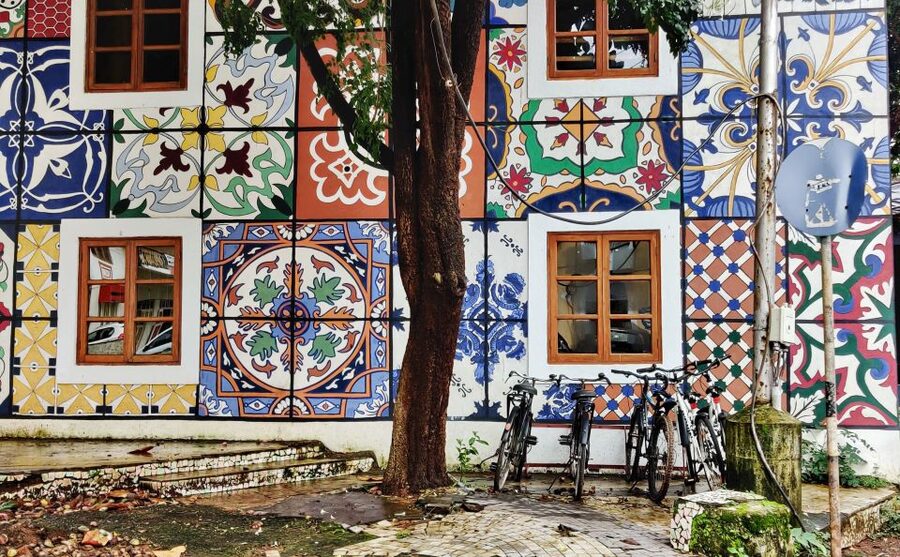
This walk explains how Portuguese influence reached beyond churches and official buildings. Your guide connects it to house design, street names, food, music, and art. That wider view is the real value. You are not just looking at colorful walls. You are learning why balconies, window shapes, narrow lanes, and small chapels look different from other parts of Goa.
Fontainhas developed in the late eighteenth century. Its Portuguese name means little fountain, referring to springs at the foot of the Altinho hills. The old district remains strongly shaped by Portuguese planning and taste, yet it is also a living neighborhood. People still use the streets and homes, so the walk feels more like a visit to part of Panaji than a tour through a preserved museum.
That distinction matters. Some heritage areas are polished until they feel staged. Here, the pleasure comes from seeing old buildings beside ordinary local life. Your guide can point out details you might otherwise pass without noticing.
A few more walking tours around India worth a look
- Fontainhas Heritage Walk by Make It Happen
★ 5.0 · 2,834 reviews - The Great Indian Food Tour: Old Delhi Food and Heritage Walk
★ 5.0 · 1,698 reviews - Group Guided Walking Tour in Fort and Colaba
★ 5.0 · 1,073 reviews
Starting at Panjim Head Post Office and Tobacco Square
The meeting point is the entrance to the Panjim Head Post Office. San Thome Chapel is a closer landmark, so it is worth checking your directions before setting out. Hotel pickup is not included, and you return to the post office area at the end.
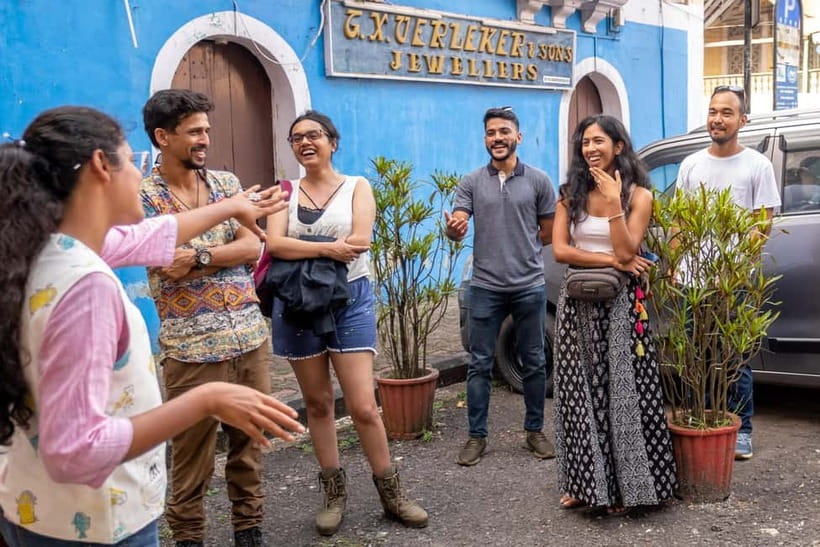
The opening part of the walk uses Tobacco Square to introduce the arrival and influence of the Portuguese in Goa. This gives the tour a useful starting point instead of dropping you straight into a collection of attractive streets. Your guide may shape the explanation around your interests, so ask if you want more detail on architecture, local customs, food, or music.
That flexibility is one of the stronger features of the experience. The guides are not all the same, but the names repeatedly praised for clear storytelling include Yashasvi, Divya, Calvin Gomes, Trancy, Alita, Rachana, and Shreeya. Some guides have offered local stories and folklore, while others have focused more on buildings, city history, or daily life.
The group can reach 20 people. That is not huge, but it is large enough to affect the walk. In a group of around 10, it should be easy to hear and ask questions. With a full group, stay near the guide when the lane narrows or when the group gathers outside a building.
Fontainhas lanes, San Thome Chapel, and colorful homes
The main Fontainhas section lasts about 45 minutes, followed by shorter guided stops and another 30-minute walk. The pace is designed for looking and listening, not marching from one major monument to another.
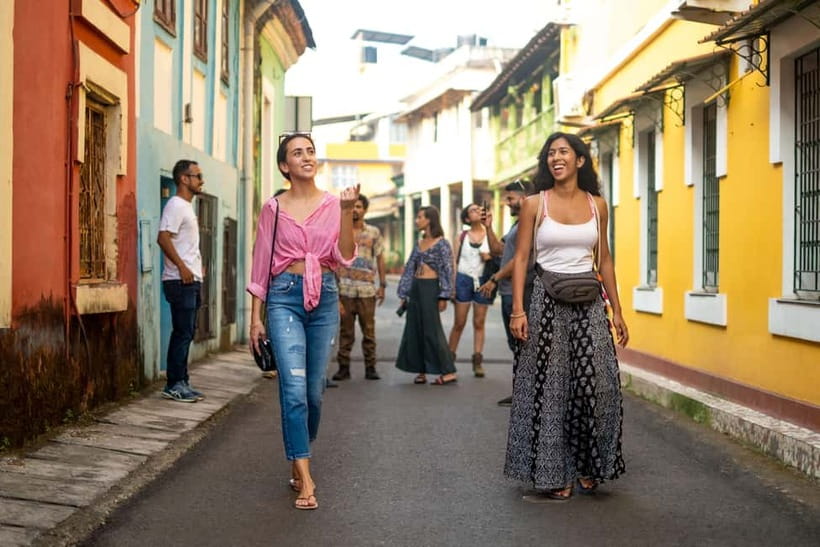
You pass colorful homes with Portuguese-influenced details, winding lanes, and small religious buildings. The San Thome Chapel is one of the early points of interest. Later, the Chapel of San Sebastian gives you another chance to see how religious buildings fit into the neighborhood’s scale and layout.
Bring a camera, but do not let it take over. The best details can be small: a painted trim, a balcony, an old sign, or the way a street turns between houses. Your guide’s explanation helps you distinguish a meaningful architectural feature from a modern decoration.
The district is compact, which keeps the walk manageable. Still, compact does not mean effortless. You are on foot for 2.5 hours, and Goa’s heat can make that feel longer. One traveler found a morning departure at 10:30 a.m. comfortable because the lanes were quiet and free of crowds. Another preferred the 4:30 p.m. time, when the temperature was better and the walk ended in time for dinner.
Those are useful clues for planning. Morning is a good choice if you want softer conditions and fewer people in the lanes. Late afternoon is appealing if you want to avoid the strongest heat and continue into an evening meal afterward. Availability varies, so check the departure time when booking.
Panjim Inn, Fundacao Orient, and Galerie Gitanjali
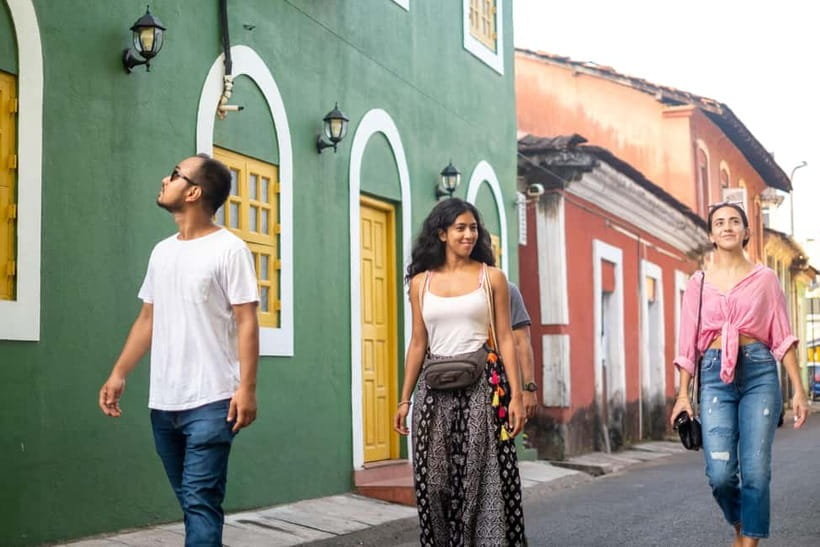
The walk also brings you around Panjim Inn, Fundacao Orient, and Galerie Gitanjali. These stops add some depth to the architecture portion of the tour.
Panjim Inn helps you see how a historic building can function as part of the city’s visitor culture without losing its visual connection to the old quarter. Fundacao Orient and Galerie Gitanjali add an art angle, with works by Goan and international artists. This is a useful change of pace. If you only look at houses, the quarter can begin to feel like one long row of façades. Art gives you another way to think about Goa’s identity and outside influences.
The gallery visit should suit you if you enjoy paintings and local cultural work. It may be less important if you want a strictly architectural tour. The experience works best because it does not pretend Fontainhas has only one story. Buildings, art, food, music, and religion all appear in the same walk.
You also visit heritage homes. Entry is included, but the exact home or access can depend on the day and operating conditions. This is one of the more useful parts of the walk because an interior can show how people used a building, not just how it looked from the street.
Same streets, a different route:
- Spiritual City Walking Tour-THE Pushkar Route
★ 5.0 · 907 reviews - Private Guided Walking Tour in Fort & Colaba
★ 5.0 · 895 reviews - Old Goa Heritage Walk by Make It Happen
★ 5.0 · 797 reviews - Old Delhi Food, Heritage&Cultural Walk with Rickshaw ride to Masterji Kee Haveli
★ 5.0 · 742 reviews
The 31st January Bakery and local Goan tastes
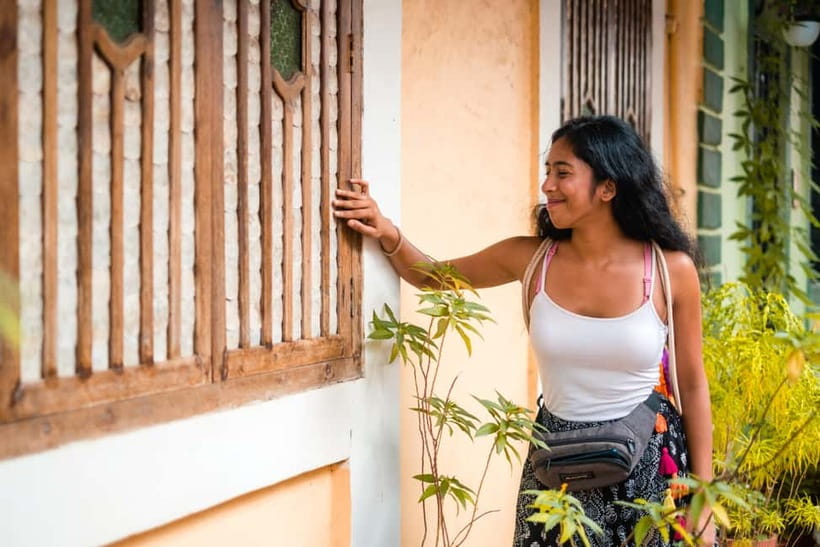
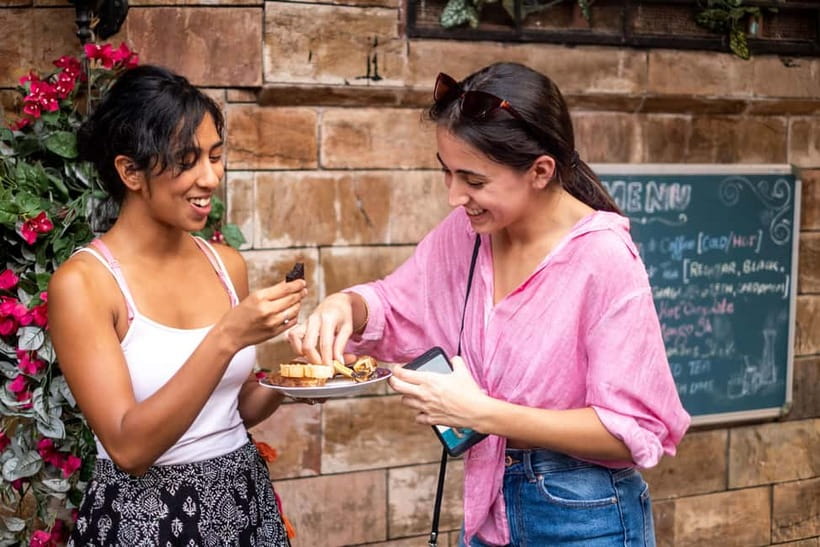
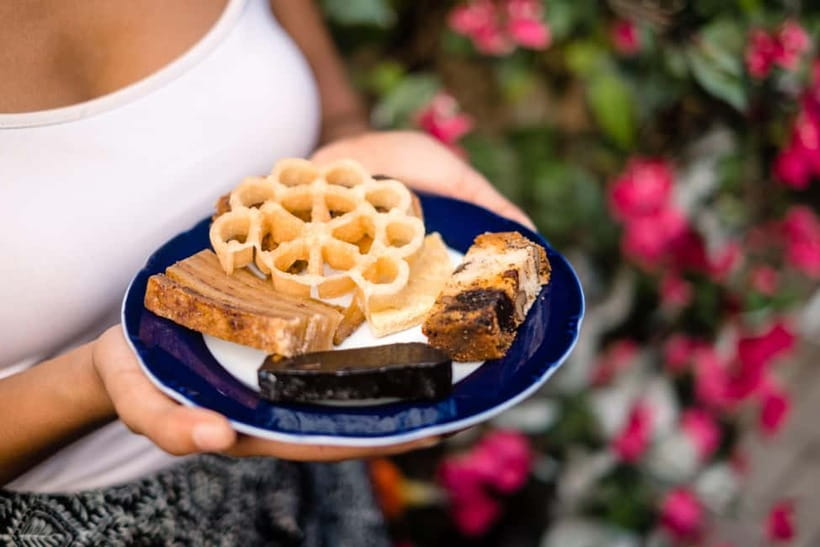
The 31st January Bakery is a small but memorable stop. It is known for Goan-Portuguese baked goods and gives you a direct link between colonial influence and local food.
The stop is described as a quick bite, so do not expect a long café break. Some tour departures have included local pastries, sweet treats, savory items, or a drink such as kokum. Other guests have simply had the chance to stop at the bakery and buy something. Since additional food and drinks are not included in the price, carry cash and do not assume every tasting is guaranteed.
This is a good place to ask questions. A pastry can tell you more about cultural exchange than a long lecture, especially when your guide explains how Portuguese food traditions became part of Goan life. The stop also breaks up the walking and gives you a brief chance to sit or slow down.
If you have dietary restrictions, ask the guide before buying anything. The supplied details do not promise specific vegetarian, vegan, gluten-free, or allergy-friendly options.
Meeting a Goan musician and hearing the story in sound
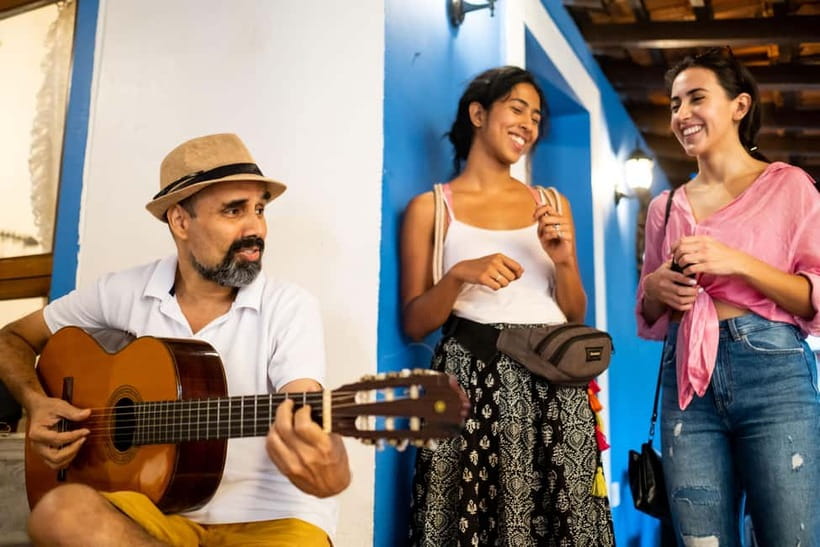
The final cultural section is a meeting with a well-known Goan musician. You hear live music and learn how Portuguese influence shaped Goan musical traditions.
This is one of the strongest reasons to choose the walk instead of exploring Fontainhas on your own. Architecture can show outside influence, but music reveals how that influence was adapted and kept alive. The performance gives the historical discussion a human voice.
The musician’s identity can vary. Names such as Francis and Glossy appear in the tour experience, and the performance may take place in a café or another local setting. You may hear traditional songs and receive an explanation of the connection between Goan music and Portuguese culture.
The performance is not a full concert. Think of it as a personal cultural meeting at the end of a walking tour. That makes it feel more intimate, but it also means the length and format may differ between departures.
Some tours then stop at a studio making handmade ceramic souvenirs. This is a nice final look at local craft, though purchases are not included. You do not need to buy anything to benefit from the stop.
What $12 buys you in practical terms
At $12 per person, the tour offers strong value if you want context rather than a simple neighborhood stroll. The price includes an English-speaking local guide, access to heritage homes, and the meeting with a Goan musician. It does not include hotel transfers, insurance, food, drinks, souvenirs, or personal expenses.
The price also covers a useful amount of time. A 2.5-hour walk gives the guide room to explain the district without rushing every stop. You can see several types of places: streets, homes, chapels, galleries, a bakery, and a music venue.
A self-guided walk costs less, of course, but you would need to research the area and arrange your own access to heritage spaces. You might also miss the musician, local stories, and links between food, architecture, and music. If you already know Panaji well, the tour may feel introductory. For a first visit, it is a sensible investment.
Free cancellation up to 24 hours before the start and reserve-now, pay-later booking add flexibility. Keep in mind that these terms do not change the walking conditions, the group size, or the separate cost of food and purchases.
The guides make the difference
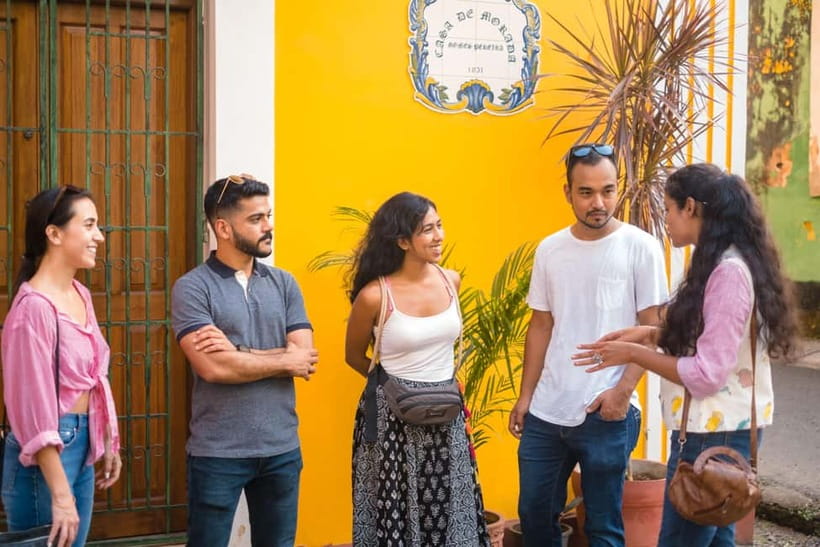
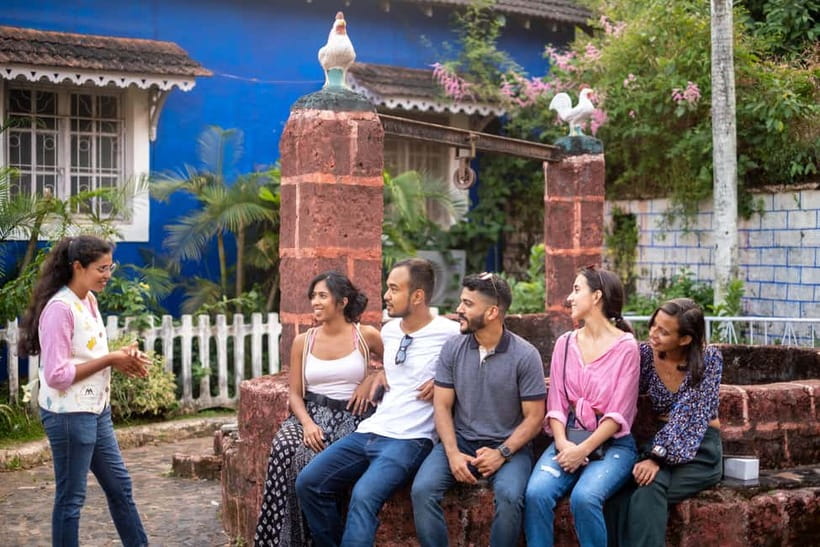
The tour is built around storytelling, so the guide matters more here than on a simple sightseeing route. Strong guides have been described as friendly, patient, funny, interactive, and able to answer questions in clear English.
Yashasvi has been praised for local stories, folklore, and enthusiasm. Divya is known for an energetic, spontaneous style and for weaving stories through the walk. Calvin Gomes has been singled out for turning the route into a lively account of Panjim. Trancy, Alita, Rachana, and Shreeya have also received praise for explaining history and culture with warmth.
You cannot count on receiving a particular guide unless the operator confirms it. Still, these names give you an idea of the range of people leading the walks. The best approach is to ask questions and tell the guide what interests you. The experience allows room for that kind of conversation.
A practical note: the tour is in English only. The group may include up to 20 people, and the quality of the discussion will depend partly on group size and how actively people take part.
Who should book this Panaji heritage walk?
I would choose this tour if you want:
- A first introduction to Panaji and Fontainhas
- Portuguese-influenced architecture explained in context
- A gentle cultural route with art, food, crafts, and music
- A low-cost activity lasting most of an afternoon or morning
- Local stories rather than only monument facts
- A guided walk before exploring Panaji independently
It is especially useful early in your Goa trip. Once you understand Fontainhas, you will notice more when you return on your own for photographs, cafés, or gallery visits.
I would think twice if you have difficulty walking for 2.5 hours or managing uneven streets. It is not suitable for people with mobility impairments. You may also find it too slow if you want a fast list of landmarks, or too introductory if you have already spent several days studying Goan history.
Wear comfortable shoes, light clothing, and carry a reusable water bottle. Bring cash for bakery items, drinks, ceramics, and other purchases. A hat or sun protection is also sensible, although it is not specifically listed among the required items.
Should you book the Fontainhas walk?
Yes, if you want more than attractive street scenes. The tour’s best qualities are its low price, compact route, clear cultural focus, and final music meeting. It gives you enough history to understand the neighborhood without turning the outing into a classroom.
Book a morning slot for cooler conditions and quieter lanes, or choose late afternoon if you prefer softer heat and a finish before dinner. If you dislike group tours, the maximum of 20 people is worth noting. Even so, the route’s mix of homes, art, bakery culture, and live music makes this one of the better-value ways to meet Panaji’s Latin quarter.
FAQ
Where does the Panaji heritage walk begin?
The guide meets you at the entrance of the Panjim Head Post Office. San Thome Chapel is a closer landmark for finding the meeting point.
How long does the walking tour last?
The experience lasts 2.5 hours and returns to the Panjim Head Post Office area.
What language is the tour conducted in?
The live tour is conducted in English by a local English-speaking guide.
Is food included in the tour price?
Additional food and drinks are not included. The route stops at the 31st January Bakery, and some departures may offer local treats or drinks, but you should carry cash for purchases.
Is the tour suitable for people with mobility impairments?
No. The tour is not suitable for people with mobility impairments because it involves walking through the Fontainhas area for about 2.5 hours.
What should I bring?
Bring comfortable shoes, comfortable clothes, cash, and a reusable water bottle. Souvenirs and personal purchases are not included.
Just added around India
- Wine Tasting Experience At 150 Years Old Indo-Portuguese House★ 5.0 · 269 reviews
- Fontainhas Heritage Walk At Latin Quarters of Goa★ 5.0 · 531 reviews
- The Goan Hinterland Experience in South Goa★ 5.0 · 112 reviews
- Food And Drink Walking Tour In Panjim★ 5.0 · 286 reviews
- Private Aguada Jail Heritage Walk Tour★ 5.0 · 102 reviews
- Georgetown heritage walking tour in Chennai about the founding of Chennai★ 5.0 · 144 reviews
- Gods of Mylapore walking tour- tourism ministry approved company★ 5.0 · 267 reviews
- Mahabalipuram walking tour by tourism ministry approved company★ 5.0 · 102 reviews
Walking Tours, compared.

Magical London: Harry Potter Guided Walking Tour
Read our review →
Reykjavik Food Walk – Local Foodie Adventure in Iceland
Read our review →
History and Hauntings of Salem Guided Walking Tour
Read our review →
New Orleans Premier Ghost, Voodoo and Vampire Walking Tour
Read our review →
Amsterdam Anne Frank: Small-Group Walking Tour & Local Guide
Read our review →

Edinburgh Castle: Guided Walking Tour with Entry Ticket
Read our review →
Anne Frank’s Story – Guided Walking Tour through Amsterdam
Read our review →Browse the lists this tour appears in