
REVIEW · PORTUGAL
Óbidos: Medieval Tales & Secrets Spots Guided Walking Tour
The best part of this Óbidos walk is the way it connects small details to the town’s long story. You move from a former royal chapel turned bookshop to a Muslim castle, then from local paintings to the town’s tradition as a place of Portuguese queens. I like the secret lanes away from the busiest streets and the stop for ginjinha in a chocolate cup. The main thing to consider is the uneven stone paving and uphill walking, which makes this a poor choice after recent surgery or for anyone with limited mobility.
I also like the range packed into two hours. You see churches, chapels, art, old neighborhoods, castle walls, and two bookshops rather than spending the whole tour on one monument. Guides such as Ivo, João Pedro, JP, Bruno, Jorge, and Maria have been praised for clear explanations, patient answers, and a friendly style.
The pace can be full, especially if you want time for photographs at every stop. Wear shoes with a firm grip, and remember that food beyond the included liqueur tasting is not part of the price.
Key points to know before booking
- Ginjinha in a chocolate cup: Taste Óbidos’s famous sour-cherry liqueur, then eat the little cup.
- A castle with Muslim roots: Explore Óbidos Castle and learn how its walls changed under different rulers.
- Five paintings by Josefa de Óbidos: See works by the celebrated seventeenth-century local artist, one of Portugal’s most important women painters.
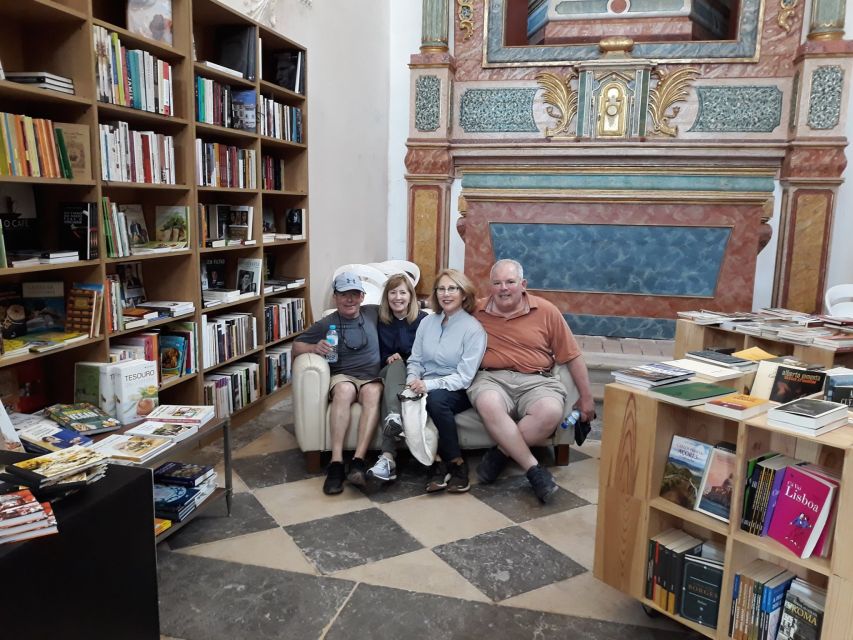
- Two bookshops in unusual buildings: Visit Ler Devagar in a former royal chapel and São Tiago Bookstore in a former church.
- The Town of the Queens: Hear how queens including Catherine of Austria, Isabel of Aragon, and Leonor de Avis shaped Óbidos.
- A real walking tour: Expect cobbles, narrow lanes, steps, and an out-of-the-walls walk, not a gentle flat stroll.
Starting outside Óbidos’s walls
The meeting point is in front of the Óbidos Tourist Office, near the main parking area and outside the town walls. This is useful to know because you do not begin at the castle gate or somewhere inside the narrow medieval streets.
From here, the guide can give you a quick sense of the town’s layout before leading you through the entrance. The route finishes back at the same tourist office, making it easy to continue with lunch, shopping, or your own walk afterward.
Two hours is a sensible length for a first look at Óbidos. You get enough background to understand what you are seeing, but you still have time later to revisit a church, browse a shop, or walk farther along the walls at your own speed.
More Guided Tours in Portugal:
- Best of Lisbon Small-Group Guided Walking Tour
★ 5.0 · 4,869 reviews - Experience Porto’s Charm: 3-Hour Guided Walking Tour
★ 5.0 · 2,432 reviews - Madeira: Enjoy a Guided Levada Walk in the Rabaçal Valley
★ 4.7 · 2,197 reviews
The Castle of Óbidos and the town’s older story
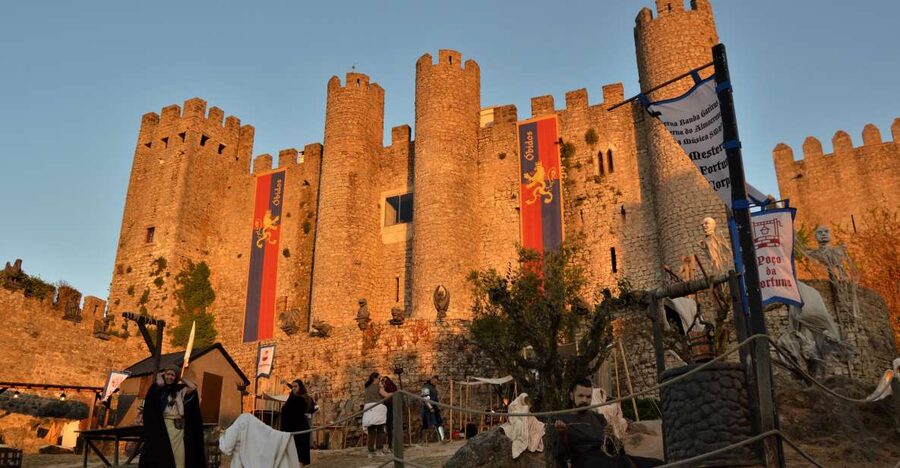
Óbidos Castle is the central stop, and the tour gives it proper attention rather than treating it as a quick photo backdrop. The castle is described as roughly 1,300 years old and Muslim in origin. Its story reaches across several periods, which helps explain why Óbidos feels like more than a pretty medieval set piece.
You will hear about the Moorish presence, the Christian reconquest, and the town’s later role within the Portuguese crown. The castle visit also gives you a better sense of why Óbidos was so valuable: its walls protected a settlement in a strategic part of Portugal, while the compact town inside could be watched and controlled from above.
The exact movement through the castle depends on the guide and conditions, but expect stone surfaces and uneven footing. Bring shoes that grip well. Wet paving can be slippery, and one guide has been especially careful about helping people across slick sections, but you should still walk cautiously.
The castle is photogenic from almost every angle. Still, the best benefit of a guide is not simply seeing the walls. It is learning to separate the genuinely old features from the layers of restoration, later buildings, and modern uses that give the town its present appearance.
Josefa de Óbidos and the churches of the old town
Art is one of the strongest reasons to choose this tour over a simple castle visit. The route includes five original paintings by Josefa de Óbidos, a seventeenth-century painter born in Seville but closely tied to Óbidos and Portugal.
She was the first Portuguese female artist to have works exhibited at the Louvre in Paris. That fact gives the art stops real weight, but the guide also places her within the town’s religious and cultural setting. Her paintings are not isolated decorations. They belong to churches and devotional spaces that help you understand how art worked in Portuguese life.
The Museum of the Saint John the Baptist Church is included, as are Saint Peter Church, Saint Martin Chapel, the Almshouse Church, and Saint Mary Church. Each stop adds a different piece to the picture. Some are important for their art, others for their religious role, and some simply show how tightly packed the old town is.
The Pietà by Renaissance master Nicolau de Chanterene is another important highlight. It gives the tour a chance to move beyond the usual castle-and-cobbles version of Óbidos and introduce you to serious Portuguese art.
The churches may be quiet, simple, or richly decorated depending on the building. Do not expect a large museum experience. These are compact historical places, and the guide’s explanation is a major part of what makes them worthwhile.
Bookshops inside former sacred spaces
The two bookshops are an unusual touch. Ler Devagar is located in a former royal chapel, while São Tiago Bookstore occupies a former church and royal chapel. In both cases, the building is part of the appeal.
A bookshop inside a former religious space changes how you read the town. The buildings are no longer used exactly as they once were, but their earlier purpose remains visible in the scale, shape, and mood of the rooms. You get a glimpse of modern Óbidos too, a town that uses old spaces for culture rather than treating them only as monuments.
The route also includes the Market Bookstore, or Livraria do Mercado, which combines books with organic products. That makes it different from the other two stops and gives you another look at local life inside the walled town.
If you enjoy browsing, these stops may be among your favorites. If you prefer a tour focused only on architecture, they may feel like a detour. I think they work well because they show how Óbidos is lived in and used today, not just preserved for photographs.
A few more walking tours around Portugal worth a look
- Lisbon: History, Stories and Lifestyle Walking Tour
★ 4.8 · 10,902 reviews - Lisbon: Food and Wine Small Group Walking Tour
★ 4.9 · 4,082 reviews - Porto Walking Tour, Lello Bookshop, River Cruise and Cable Car
★ 5.0 · 3,354 reviews - Funchal: Old Town Walking Tour
★ 4.7 · 3,233 reviews
The Town of the Queens
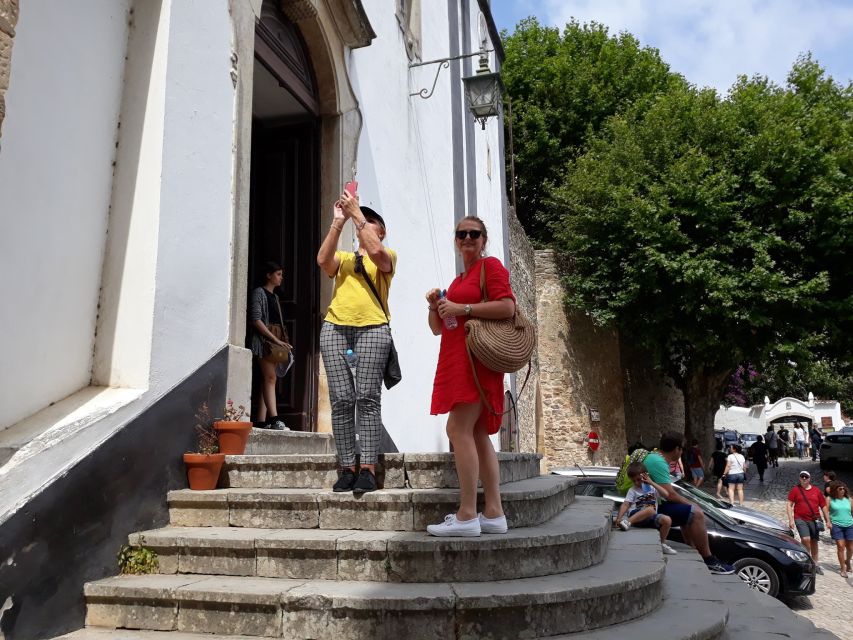
The title Town of the Queens refers to Óbidos’s long connection with Portugal’s royal women. The tour introduces queens such as Catherine of Austria, Isabel of Aragon, also known as Queen Saint Isabel, and Leonor de Avis.
This is more than a list of royal names. The queens left a visible mark on the town through buildings, religious foundations, and charitable work. Leonor, wife of King John II, created one of the early branches of the Holy House of Mercy in Óbidos.
The Holy House of Mercy became an important hospital and relief network, later spreading overseas during the Portuguese Empire. Leonor is remembered as the Most Perfect Queen, and her connection to Óbidos gives the town’s churches and charitable buildings a wider Portuguese context.
I like this part because it adds social history to the usual royal story. You are not only hearing where a queen stayed or which king owned a castle. You are learning how royal patronage affected hospitals, churches, and the people who lived in the town.
Moorish and Jewish quarters, lanes, and towers
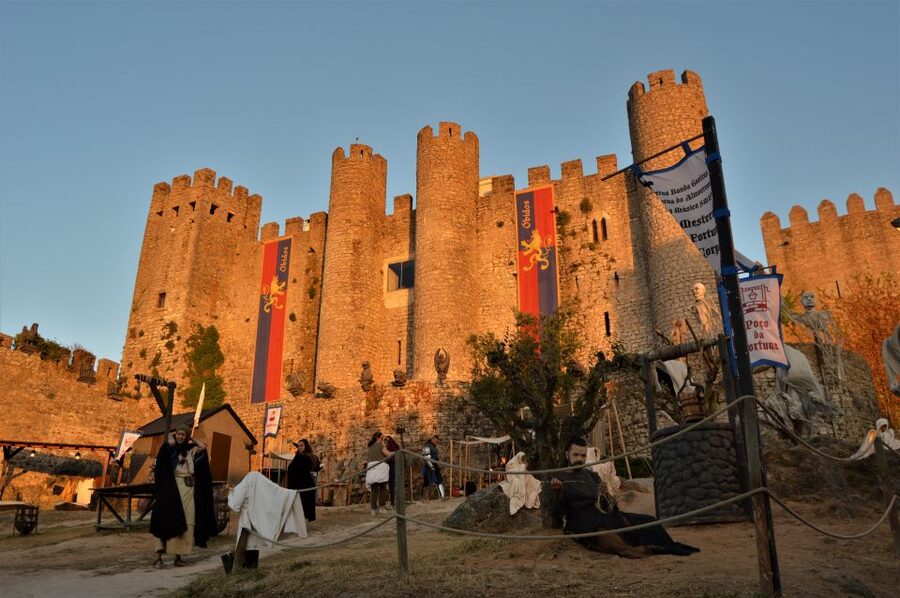
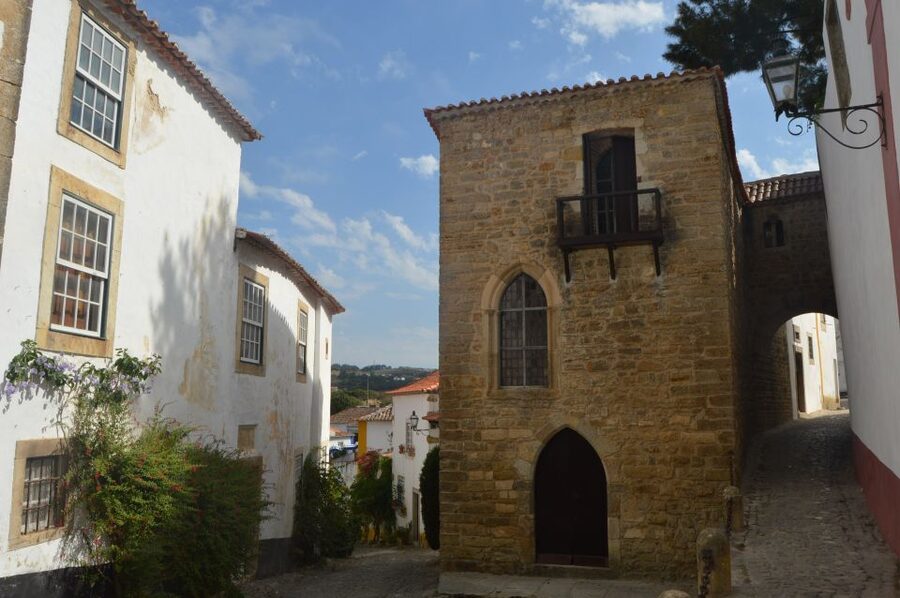
The route passes through the old Moorish and Jewish neighborhoods. These areas are easy to miss if you follow only the main street between the entrance and the castle.
Narrow lanes and small squares reveal how the town worked at street level. A guide can point out changes in building use, the shape of the old quarters, and places that do not have a large sign or famous viewpoint. This is where the tour earns its secrets spots title.
Maney’s Tower and the Camões Mark are also included, along with Casa da Música. These stops help fill in the town’s cultural and civic story. You may not spend long at each one, but together they prevent the walk from becoming a simple march toward the castle.
The out-of-the-walls walk is useful for seeing Óbidos from a different angle. Inside the walls, the narrow streets can feel crowded and visually busy. Outside, you can better understand the shape of the fortifications and take photographs without standing in the middle of the main visitor route.
Several people who booked the tour specifically appreciated getting away from the crowds and finding quieter corners. That does not mean the whole walk is empty or private. Óbidos is a popular town, and conditions vary. It does mean the guide knows how to add less obvious places to a standard route.
Ginjinha, the small finish with a big local connection
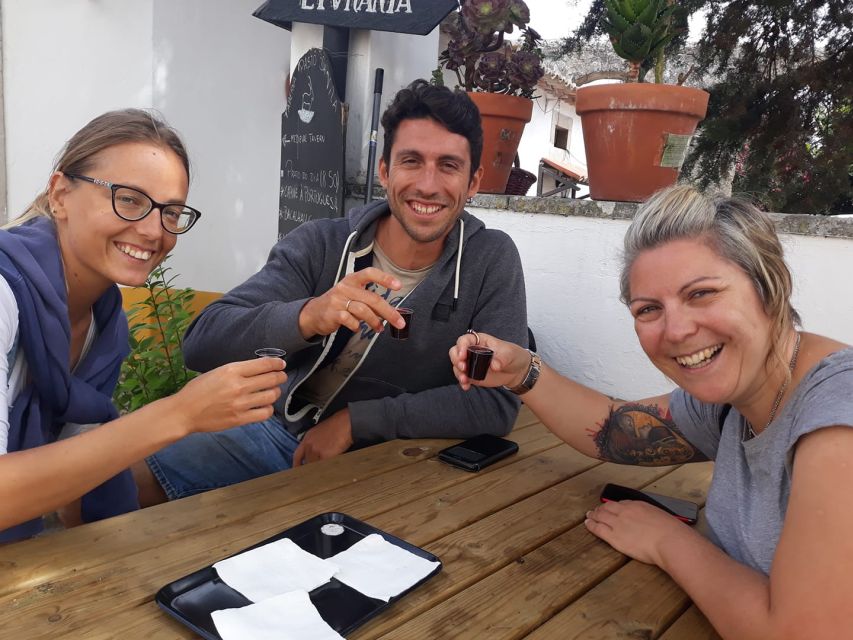
The final tasting is a shot of Ginjinha de Óbidos, the local sour-cherry liqueur, served in a small chocolate cup. The chocolate cup is edible, so the tasting ends with a sweet bite after the tart liqueur.
This is a modest inclusion, but it matters. Food and drink can make a place easier to remember, and ginjinha is strongly linked with Óbidos. You are not being offered a full meal, and no other food is included, but the tasting gives the walk a clear local finish.
If you do not drink alcohol, keep in mind that the included tasting is liquor. The activity details do not specify a nonalcoholic replacement, so you may want to ask before booking if that matters to you.
How the guides shape the experience
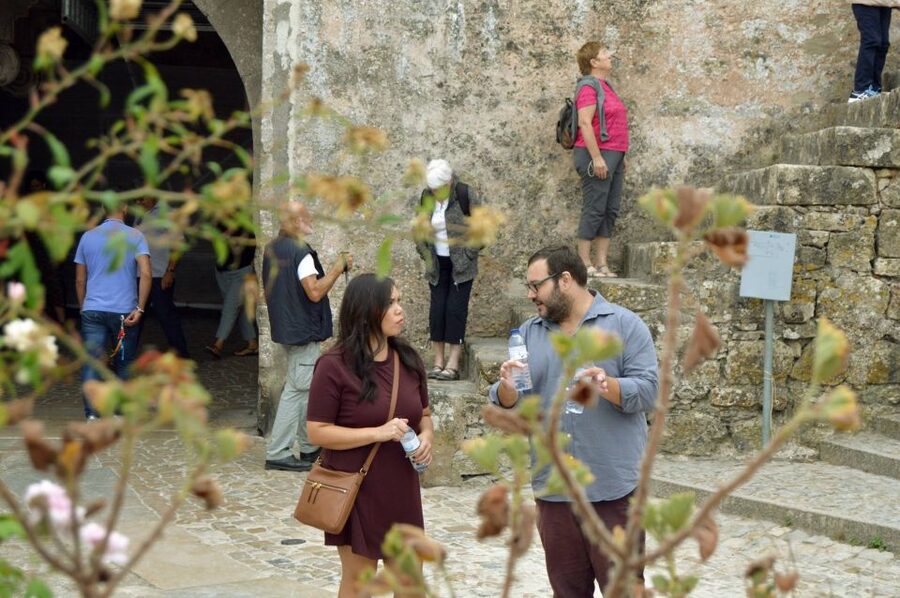
The guide is central to this tour. The strongest pattern is a conversational approach rather than a nonstop list of dates. Ivo is often described as warm, patient, and able to turn historical facts into stories. João Pedro, also called JP in some bookings, is praised for clear explanations and a personal approach.
Bruno is noted for his command of history, art, and culture. Jorge, Maria, and other guides have also led the walk, and the experience is offered in English or Portuguese.
The guide may adjust the pace for photographs or answer questions from different ages and language backgrounds. One family particularly valued the way the history was made clear for a mixed-age, multilingual group. That flexibility is useful because Óbidos has plenty of details to stop for, from church art to unusual doorways and small lanes.
A guide can also suggest a restaurant afterward. That is not a formal part of the tour, and you should not book it as a food experience, but practical local suggestions can be handy when the walk ends near the tourist office.
Price, pace, and who will enjoy it
At $41 per person, this is not the cheapest way to walk around Óbidos. You can enter the town and see many streets without paying for a guide. The value comes from the interpretation, the organized route through the churches and art sites, the less obvious lanes, the castle visit, and the included ginjinha tasting.
I think the price is fair for a first visit if you want context rather than photographs alone. It is especially useful if Óbidos is part of a larger Portugal trip and you have only a short window. The guide helps you use two hours well instead of wandering past important buildings without knowing why they matter.
The tour suits:
- First-time visitors who want a clear introduction to Óbidos
- People interested in Portuguese history, royal connections, and religious art
- Families with older children who can manage uneven streets
- Visitors who enjoy local stories and smaller cultural stops
- Anyone who wants quiet lanes and photo points beyond the main street
It is less suitable if you want a relaxed, flat stroll, a food tour, or a long independent visit inside the castle. The route is intensive, and the paving can be hard on knees, ankles, and recent surgical recovery. Wheelchair users and people with mobility impairments should not book this activity based on the stated restrictions.
The tour can also be canceled because of bad weather. Since the walk includes exposed streets and uneven stone, weather matters more here than it would for an indoor museum visit.
Should you book the Óbidos walking tour?
Book it if you want Óbidos explained, not just photographed. The combination of the Moorish-origin castle, Josefa de Óbidos’s paintings, the queens’ legacy, former chapels turned bookshops, old neighborhoods, and chocolate-cup ginjinha gives you a fuller sense of the town than a short self-guided circuit.
Skip it if you strongly prefer exploring alone or if two hours of cobbles and stops sounds tiring. For most first-time visitors who can walk comfortably, $41 buys a well-shaped introduction and a useful sense of what to return to later. Arrive ready for hills, bring steady shoes, and leave room afterward for your own slower look at the streets.
FAQ
Where does the tour start and finish?
It starts in front of the Óbidos Tourist Office, near the main parking area outside the town walls. It returns to the same tourist office.
How long does the walking tour last?
The tour lasts two hours.
Which languages are available?
The live guide is available in English and Portuguese.
What is included in the price?
The price includes the guide and a tasting of Óbidos ginjinha, served in a chocolate cup.
Is food included?
No. Food is not included beyond the liqueur tasting.
Is the tour suitable for wheelchair users?
No. The activity is not suitable for wheelchair users, people with mobility impairments, or people with recent surgeries. Comfortable shoes are recommended, and wet stone paths can be slippery.
Just added around Portugal
- Achadas Teixeira- Pico Ruivo -& Pico pedras/Queimadas forest walk★ 5.0 · 100 reviews
- Madeira East Island Tour with Levada Walk and Lunch★ 4.5 · 174 reviews
- Old Funchal Walking Tour★ 4.5 · 511 reviews
- Skywalk 4×4 Experience and Rabacal 25 Fountains Levada Walk★ 5.0 · 318 reviews
- Small Group Walks Rabaçal 25 Fontes★ 4.8 · 548 reviews
- Small Group Walking Tour of Belém★ 4.9 · 80 reviews
- Porto: Sunset Walking Tour with Port Wine and Views★ 4.6 · 95 reviews
- Porto: Private Tuk-Tuk Tour with Short Walks and Wine★ 4.6 · 98 reviews
Walking Tours, compared.

Magical London: Harry Potter Guided Walking Tour
Read our review →
Reykjavik Food Walk – Local Foodie Adventure in Iceland
Read our review →
History and Hauntings of Salem Guided Walking Tour
Read our review →
New Orleans Premier Ghost, Voodoo and Vampire Walking Tour
Read our review →
Amsterdam Anne Frank: Small-Group Walking Tour & Local Guide
Read our review →

Edinburgh Castle: Guided Walking Tour with Entry Ticket
Read our review →
Anne Frank’s Story – Guided Walking Tour through Amsterdam
Read our review →Browse the lists this tour appears in