
REVIEW · MELBOURNE
Melbourne: Street Art Walking Tour with a Street Artist
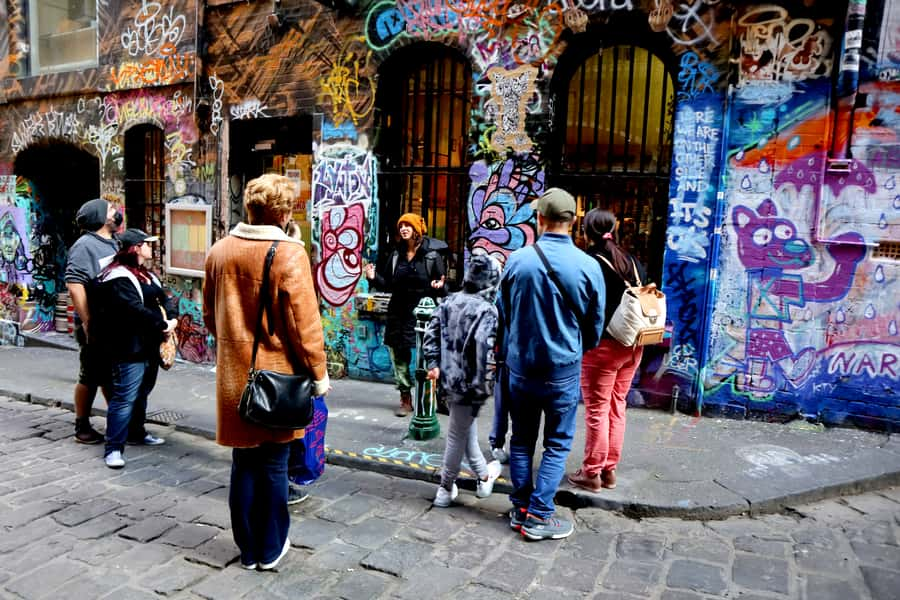
Melbourne’s street art makes more sense when you hear from someone who actually works in the scene. This three-hour tour begins at ACMI, winds through famous laneways and lesser-known corners, then ends at Blender Studios, where you meet working artists in a huge warehouse studio.
I like the artist-led point of view, which turns painted walls into stories about technique, rules, politics, and personalities. I also like the finish: studio time with food and drinks, not just a quick photo stop. The catch is simple: you walk a lot, use a tram, and spend much of the day outdoors, so this is not a good fit for wheelchair users or anyone with limited mobility.
Key points at a glance
- Starts at ACMI: Meet your guide at the street-level entrance on Flinders Street, near the heart of Melbourne’s central area.
- Learn the vocabulary: The tour explains the difference between street art, graffiti, tags, murals, and other forms of public art.
- The route keeps changing: Since artworks appear, disappear, and get painted over, the exact walk is updated regularly.
- Guides work in the scene: Ben Barek, David, Matt, Tom, Suki, Kasper, and James are among the artists who have led this experience.
- Finishes at Blender Studios: A tram ride takes you to 400 Spencer Street for a studio visit and a chance to see artists at work.
- Three hours and plenty of walking: Bring water, comfortable shoes, a camera, and rain gear.
Why an artist makes a better street art guide
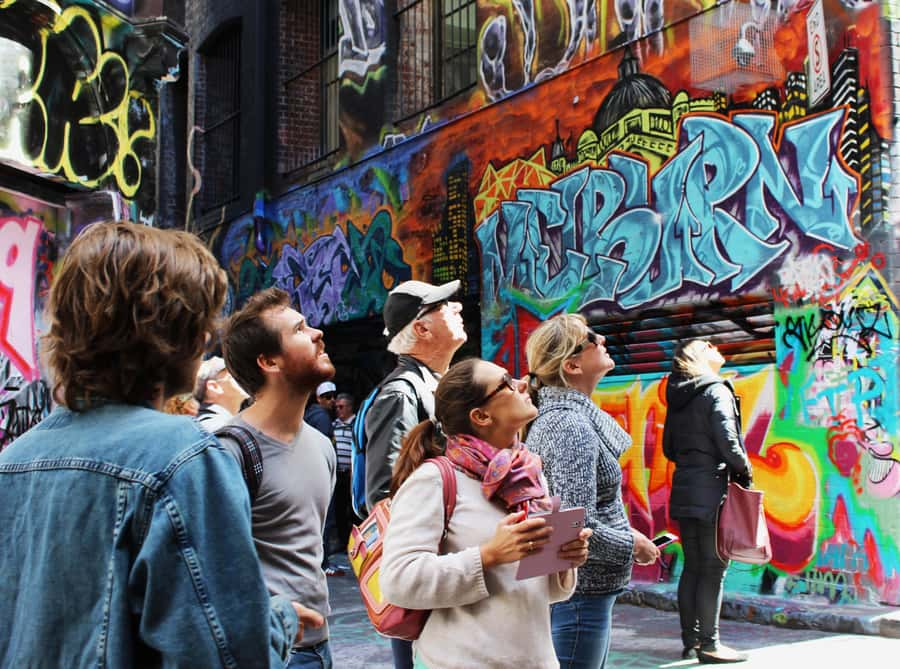
You can wander Melbourne’s laneways alone and find plenty of impressive walls. The problem is knowing what you are looking at. A large painted mural, a quick tag, a stencil, and an illegal piece may all sit within the same few metres, yet each comes from a different purpose and tradition.
That is where this tour earns its price. Your guide does not simply point at a wall and name the artist. Guides such as Ben and David explain how the work fits into Melbourne’s street art culture, what techniques you are seeing, and how artists operate within an often-changing set of rules.
The guides also bring different personalities to the walk. Ben Barek is described as an artist with a strong grasp of styles, local artists, and the culture around the work. David is known for explaining the scene clearly and answering questions. Matt, Tom, Suki, Kasper, and James have also led tours at different times, so your exact experience will depend on the guide assigned that day.
I would not book this expecting a fixed museum lecture. The route and conversation shift with the city. Fresh work may replace older pieces, and a guide may spend more time on a particular wall if it opens up a useful story.
More Street Art Walks in Australia:
- London: Street Art and Graffiti Guided Walking Tour
★ 4.9 · 1,354 reviews - Berlin: City Street Art Guided Walking Tour
★ 4.8 · 1,051 reviews - Naples Spanish Quarters Walking Tour Street Art, Folklore & Sweet
★ 5.0 · 797 reviews
Meeting at ACMI and finding your way into the lanes
The meeting point is the entrance to ACMI, the Australian Centre for the Moving Image, at street level on Flinders Street. This is a practical central starting point, but give yourself enough time to locate the entrance and meet the guide without rushing.
From there, the tour heads into Melbourne’s central laneways. Some are well known, while others are easier to miss if you simply follow the main shopping streets. You may have already passed nearby walls on your own and failed to notice smaller installations, tucked-away pieces, or narrow lanes that do not look important from the street.
The first part of the walk is about learning how to look. A good guide might ask you to notice the size of a letter, the use of a stencil, the way layers overlap, or the difference between a planned mural and a quick tag. That basic vocabulary changes the rest of your visit to Melbourne.
The city itself becomes part of the lesson. Street art is not displayed in tidy rows, and the setting matters. A piece may respond to a building, a lane, a political issue, or another artist’s work nearby. The tour helps you read those relationships instead of treating each wall as a separate photograph.
Famous laneways, lesser-known corners, and changing walls
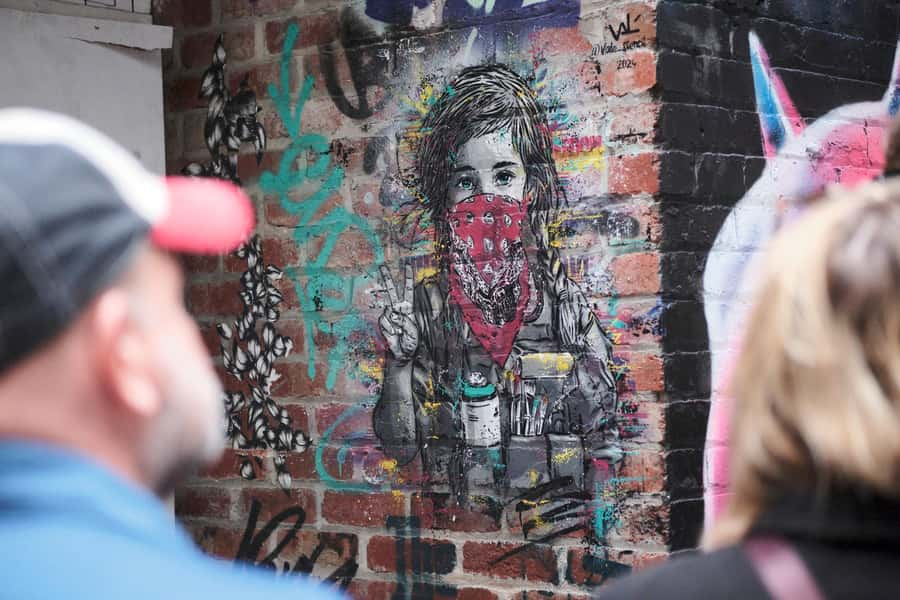
The walk lasts about two hours and ten minutes before the tram transfer. It covers a good stretch of Melbourne, with regular stops to discuss artworks and the people behind them.
The famous lanes are worth seeing, but the less obvious places are often the best reason to join a guided walk. You may find yourself turning into an alley you would have ignored, then discovering a sequence of works that does not appear on a standard sightseeing route.
This is also where the tour’s changing route matters. Street art is temporary. Paint fades, buildings change owners, new work covers old work, and some pieces disappear altogether. The route is modified over time to reflect those changes, so do not treat the walk as a checklist of permanent sights.
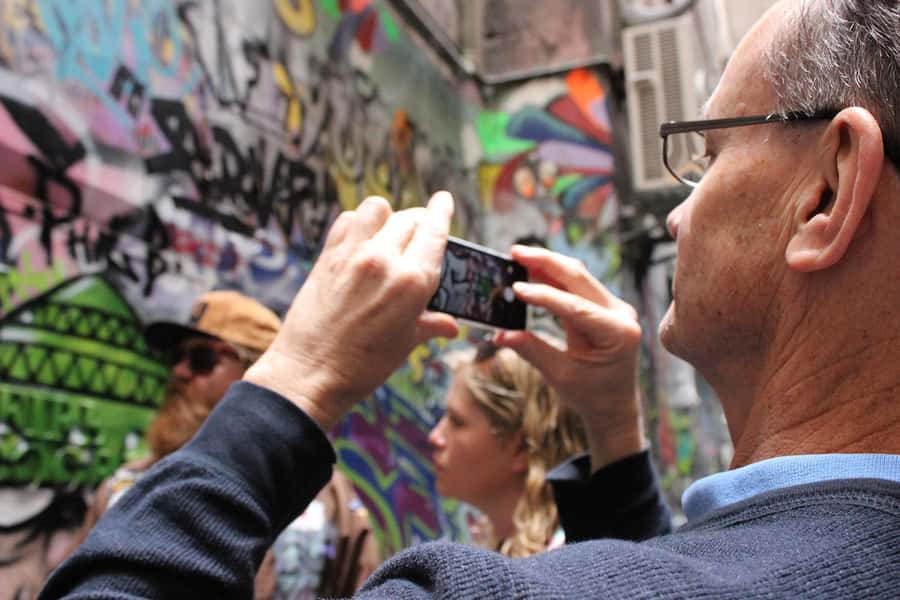
A camera is useful, but I would keep it away during the explanations. Small details can be easy to miss, especially when a work is layered with other marks. Once the guide has finished, you will have time to take photographs and return to the piece with a better idea of what you are seeing.
One practical warning: city noise can make listening difficult. A past participant found a guide hard to hear beside traffic and air-conditioning units and suggested a portable speaker. That is worth bearing in mind, particularly if you have hearing difficulties or prefer a very quiet tour setting.
The difference between a tag and a mural
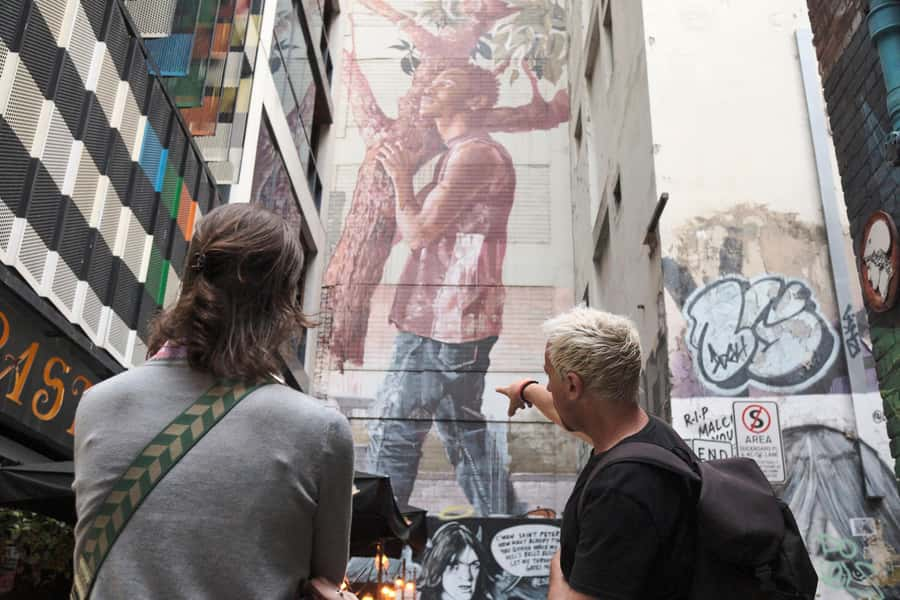
The most useful part of the tour is not simply seeing attractive art. It is understanding the range of activity that gets grouped under the broad label of street art.
A tag is usually a quick, stylised name or mark. Graffiti can refer to lettering, painting, and a broader set of practices, while street art often includes images, stencils, installations, and planned public work. The boundaries are not always neat, and your guide can explain why artists and audiences may use these terms differently.
You also hear about the artists themselves. Their style, working methods, and place in Melbourne’s scene help explain why two pieces on the same lane can feel entirely different. The guide’s direct experience adds useful context that a map or phone camera cannot provide.
The social and political side matters too. One guide has discussed current issues that affect street art, while others have explained the informal rules artists follow. You do not need an art background to enjoy this. The tour is structured for curious beginners, and people who know little about art can still follow the discussion.
I like this approach because it makes you more independent afterward. The next time you walk through Melbourne, you can identify more than a colour or a famous name. You can start asking who made the work, why it is there, and how it relates to the wall around it.
A few more walking tours around Australia worth a look
- Sydney Opera House Official Guided Walking Tour
★ 4.5 · 3,770 reviews - From Sydney: Blue Mountains Tour with Waterfall Walk & Lunch
★ 4.8 · 2,400 reviews - Sydney The Rocks Guided Walking Tour
★ 5.0 · 1,546 reviews - Ultimate Melbourne Walking Tour: History, Laneways & Culture
★ 5.0 · 1,451 reviews
The 15-minute tram ride to Blender Studios
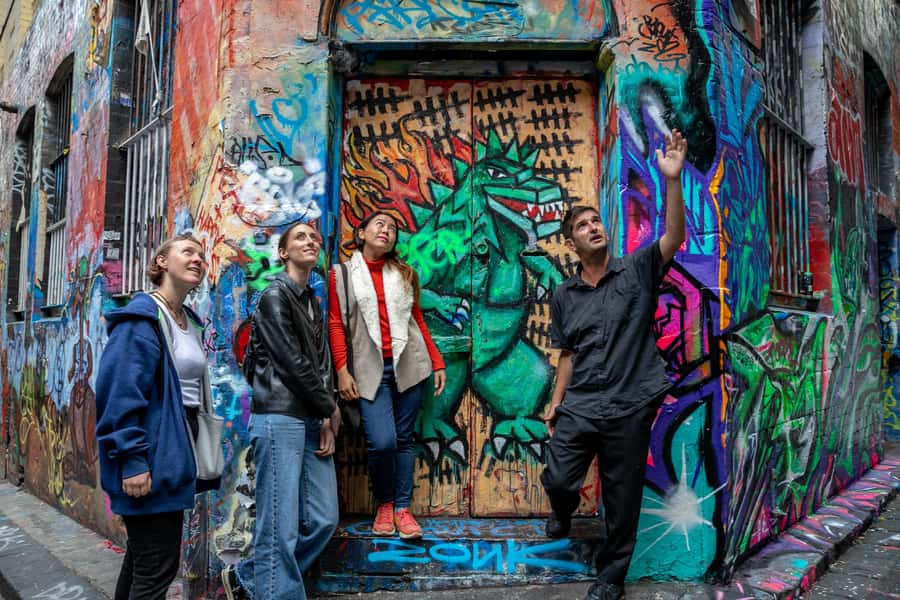
After the walking section, the group takes a tram for about 15 minutes toward the studio. The tram is not just a way to fill a gap in the route. It gives your feet a break and shifts the experience from public laneways to a working art space.
The final stop is Blender Studios at 400 Spencer Street in West Melbourne. The tour finishes there, rather than returning to ACMI, so plan the rest of your day from this address.
The move to a studio is an important part of the experience. In the lanes, you see finished work in public. At Blender Studios, you get a look at the people and processes behind that work. You may see artists at work and meet several artists in the shared warehouse space.
Do not expect a formal gallery with spotless white walls. The appeal is the working atmosphere. The studio visit offers a glimpse of street-inspired art in progress and shows that Melbourne’s scene includes more than what appears on outdoor walls.
Blender Studios and the food-and-drink finish
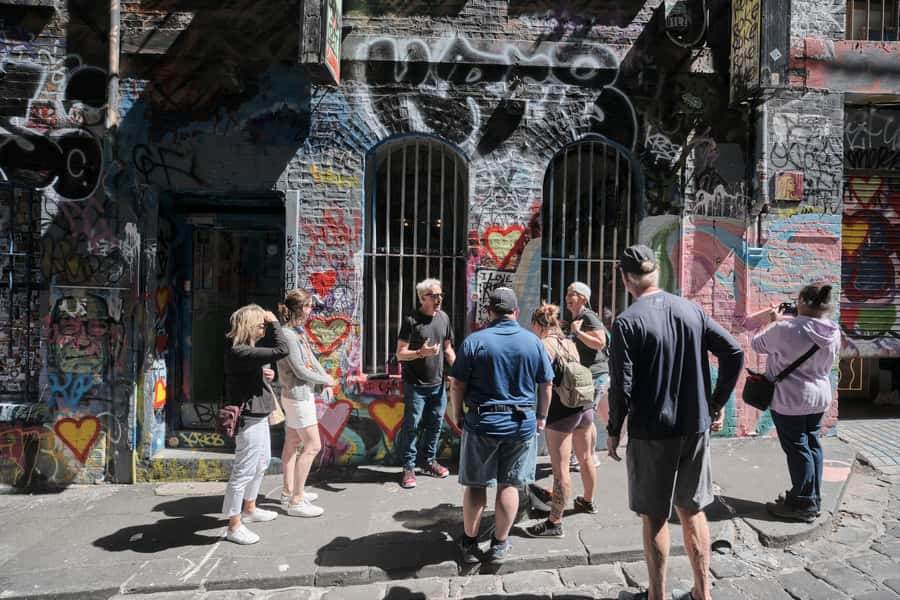
The studio visit lasts about an hour and a half, making it a substantial final section rather than a quick add-on. You have time to look around, talk with artists, and take in the scale of the warehouse.
The refreshments are another thoughtful touch. A selection of market-fresh produce, beer, wine, and soft drinks is provided. The food is light rather than a full meal, so eat beforehand if you expect to be hungry after three hours of walking.
This ending also gives the tour a more personal feel. You are not only being shown public art as a finished product. You are entering a place where artists work, exhibit, and talk about what they do. Some groups have even encountered special studio events or exhibitions, though you should not book expecting one to be scheduled during your visit.
Alcohol is offered, but you can choose soft drinks. Since the tour involves a long walk and a tram ride, water remains important. Bring your own bottle, especially on a warm day.
Is $55 a fair price?
At $55 per person, this is reasonably priced if you want more than a quick self-guided walk through the laneways. You are paying for three hours, a live artist guide, the tram transfer, the Blender Studios visit, and refreshments at the end.
The strongest value comes from the access and interpretation. Melbourne’s street art can be seen for free, but understanding what you see takes time and local context. The studio visit adds something you cannot get by strolling through Hosier Lane with a camera.
The price is less compelling if you only want a short photo walk or already know the city’s street art scene well. You could spend an hour exploring central lanes independently at no cost. But even independent-minded people may find the tour worthwhile because it reaches less obvious places and supports the artists whose work you are enjoying.
Families can also make good use of it. A family with two adults and two teenagers enjoyed the mix of walking, stories, and studio time, and the subject works well for older children who like drawing, design, music, or city culture. The length and amount of walking may be tiring for younger children.
What to bring and how to prepare
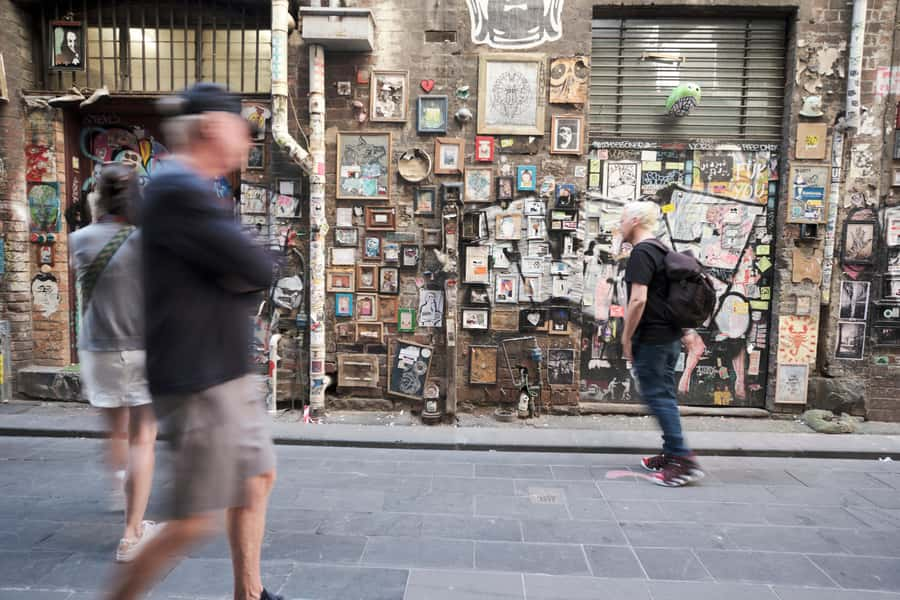
Wear comfortable shoes. This is the most important advice, not a minor suggestion. The walking section is substantial, and Melbourne’s streets can be hard on your feet after several hours.
Bring:
- A bottle of water
- A camera or phone
- Rain gear
- Comfortable walking shoes
The tour runs in English. Street noise may affect how easily you hear the guide, so stay close during explanations and ask questions if you miss a point.
Dress for changeable weather. Much of the experience takes place outside, and rain gear is specifically advised. The walk is not suitable for wheelchair users or people with mobility impairments because of the amount of walking and the route through city lanes.
You can cancel up to 24 hours before the start for a full refund, and the reserve-now, pay-later option keeps your plans flexible. Check the available starting time when booking, since the tour lasts three hours and ends at a different location from where it begins.
Who will enjoy this tour most?
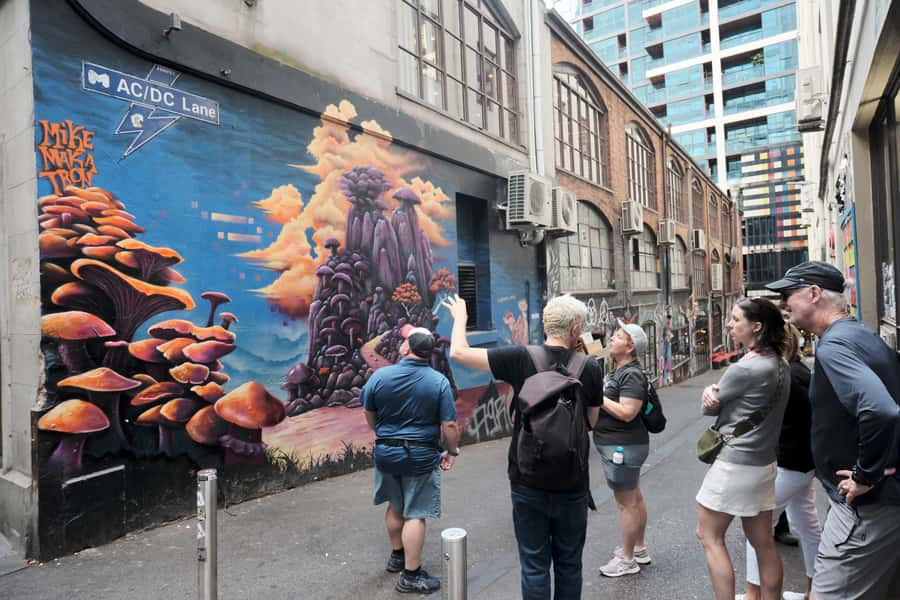
I would choose this tour if you want to understand Melbourne rather than simply photograph it. It suits first-time visitors, art fans, curious locals, and anyone who has looked at street art before but felt unsure how to interpret it.
It is especially useful if you have already wandered through the central lanes. Familiarity with the city does not make the tour redundant. One local participant discovered lanes and installations they had never seen, while another person who had visited several alleyways alone gained a clearer sense of the artists and culture behind them.
You do not need formal art knowledge. The guides explain basic ideas in plain language, and the repeated theme is learning to look differently. That makes the tour friendly for beginners without making it too shallow for people who already follow graffiti and street art.
I would think twice if you dislike group walks, struggle with outdoor noise, or want a tour that finishes near ACMI. I would also avoid scheduling it immediately before another fixed appointment. The exact route can change, and the three-hour duration includes a fair amount of walking and a tram transfer.
Should you book the Melbourne street art tour?
Book it if you want the artist’s side of Melbourne’s street art story, not just a list of famous lanes. The combination of public walls, changing urban work, direct explanations, and Blender Studios gives you a fuller picture than a short sightseeing loop.
The best reason to go is the studio finish. You begin by learning how to read art in public spaces and end by meeting artists in a place where creative work is actually being made. At $55, the food and drinks are welcome, but the real value is the access and perspective.
Skip it if you need an accessible route, prefer to explore alone, or are looking only for a quick and easy photo stop. For everyone else, bring good shoes, stay near the guide when the streets get noisy, and allow the art to be temporary. That is part of what makes this city’s walls worth seeing now.
FAQ
Where does the Melbourne street art tour start?
The tour starts at the street-level entrance of ACMI, the Australian Centre for the Moving Image, on Flinders Street in Melbourne.
Where does the tour finish?
It finishes at Blender Studios, 400 Spencer Street, West Melbourne VIC 3003, Australia.
How long does the experience last?
The full experience lasts three hours. The guided walk takes about two hours and ten minutes, the tram ride takes about 15 minutes, and the Blender Studios visit lasts about an hour and a half. These stated activity sections may overlap slightly in the published timing.
Is the tour led by a real street artist?
Yes. The experience is led by a street artist involved in Melbourne’s art scene. Guides who have led it include Ben Barek, David, Matt, Tom, Suki, Kasper, and James, although your assigned guide may vary.
What does the tour teach you?
You learn about Melbourne’s street art, graffiti, tags, murals, different techniques, local artists, the stories behind artworks, and some of the rules and cultural issues connected with the scene.
Are food and drinks included?
Light refreshments are included at Blender Studios. These can include market-fresh produce, beer, wine, and soft drinks. Other food and drinks are not included.
Is the tour suitable for wheelchair users?
No. The experience is not suitable for wheelchair users or people with mobility impairments because it involves considerable walking and a city route through laneways.
What should you bring?
Bring comfortable shoes, water, a camera, and rain gear. The tour includes substantial outdoor walking and many photo opportunities.
Just added around Australia
- Old Hobart Pub Walking Tour★ 4.5 · 91 reviews
- Southwest Tasmania Wilderness Experience: Fly Cruise and Walk Including Lunch★ 5.0 · 233 reviews
- Hobart History, People & Places – 2 hour city walk★ 5.0 · 224 reviews
- Walk with Wildlife: Guided Tour in Great Ocean Road★ 5.0 · 148 reviews
- Darwin Heritage Walk★ 4.5 · 101 reviews
- Freycinet Walking Tour★ 5.0 · 100 reviews
- Daintree Rainforest Night Walk in Cape Tribulation★ 4.5 · 141 reviews
- Night Walk in Cairns Botanic Gardens – Let’s Go Buggin★ 5.0 · 153 reviews
Street Art Walking Tours, compared.

Naples Spanish Quarters Walking Tour Street Art, Folklore & Sweet
Read our review →
NYC: Brooklyn Graffiti & Street Art Walking Tour in Bushwick
Read our review →
Browse the lists this tour appears in