
REVIEW · USA
Martin Luther King Jr. History Walking Tour
Atlanta’s Civil Rights story comes alive on foot in Sweet Auburn, the neighborhood where Martin Luther King Jr. was born, preached, worked, and was laid to rest. This tour connects the famous places with the people and family stories behind them, so you get more than a quick look at church facades and museum buildings.
I like the small group size, capped at 14, and the way guides such as Zoe, Joy, Jessica, Jay, and Nic bring different energy to the walk. I also like the Jackson Street Bridge view and the use of King’s speeches at key points. The main drawback is simple: you walk about 1.5 miles for two and a half hours, often standing outdoors, and several important buildings are exterior stops only.
Key points to know before you book

- Sweet Auburn is the whole stage: The tour stays in the neighborhood most closely tied to King’s Atlanta life.
- The story goes beyond Dr. King: You’ll hear about Coretta Scott King, John Lewis, King’s mentors, other Civil Rights leaders, and the wider movement.
- Expect about 1.5 miles of walking: Small hills and long periods on your feet make comfortable shoes essential.
- Several major sites are viewed from outside: Ebenezer Baptist Church and the Prince Hall Grand Lodge are not interior tours.
- Jackson Street Bridge adds a memorable pause: You’ll get Atlanta’s famous skyline view and a break from the more solemn sites.
- The group stays small: A maximum of 14 people gives you a better chance to hear the guide and ask questions.
Why Sweet Auburn makes the story personal
You can read about the Civil Rights movement in a book or see a film about Martin Luther King Jr. Yet walking through Sweet Auburn gives the story a physical setting. The streets, churches, offices, homes, and memorial spaces are close together, and that closeness helps explain how family, faith, business, and political action connected in King’s Atlanta.
This is not a tour of every Civil Rights site in the city. It focuses on the Martin Luther King Jr. National Historical Park and the surrounding Sweet Auburn neighborhood. That narrow focus is a strength. You are not spending half the afternoon in a vehicle crossing Atlanta. Instead, you follow one connected story on foot.
The guide is central to the experience. Zoe has been praised for her pace, energy, and ability to hold attention over the full two and a half hours. Joy brings a conversational style and has used audio excerpts from King’s speeches at meaningful points. Jessica is known for vivid storytelling and careful answers to questions, while Jay and Nic bring humor and strong command of the subject.
Your guide may be someone else, so do not book based on one specific person. The consistent pattern is a story-led walk with room for questions, not a lecture delivered from a script. That matters here because the subject includes familiar names and famous speeches. A good guide helps you connect the public figure with his family, mentors, colleagues, and daily surroundings.
More History Walking Tours in the USA
- New Orleans Garden District History Walking Tour
★ 5.0 · 2,879 reviews - Philadelphia Old City Historic Walking Tour with 10+ Top Sites
★ 5.0 · 2,020 reviews - Southern Flavors Food, Pub Crawl, and History Walking Tour
★ 4.5 · 1,623 reviews
Starting at the Martin Luther King Jr. National Historical Park
The tour begins and ends at 450a Auburn Avenue NE, at the National Historical Site. This is a useful arrangement because you do not need to find a second pickup point at the end, and you can continue exploring the area afterward if you have the time.
The opening section provides an overview of the site before moving through its different areas. It is the tour’s main anchor, and admission is included. You should allow about 25 minutes here, although the exact flow can depend on National Park staffing and which buildings are open that day.
A practical warning matters here: National Park buildings can close at any time because of staffing shortages. The tour still operates rain or shine, but an indoor building visit cannot be guaranteed. If entering a particular building is the main reason you want to come, check current conditions before booking and keep your expectations flexible.
The site gives you a grounding in King’s life before the tour moves into the wider neighborhood. You begin to see that his story was formed not only by national events, but also by a local church, a close family, education, faith, and the Black-owned businesses and institutions around Auburn Avenue.
Ebenezer Baptist Church and the power of an exterior stop
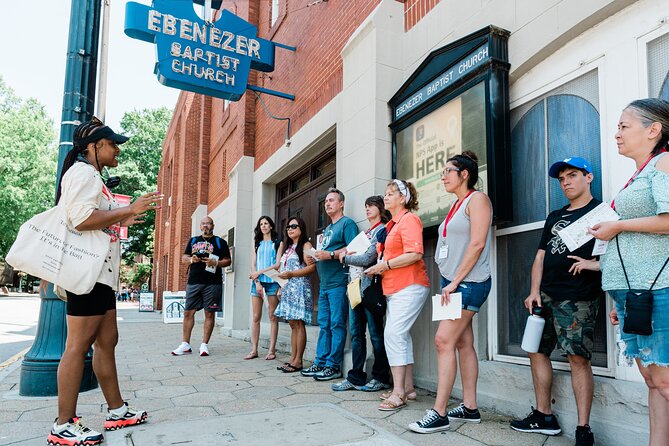
Historic Ebenezer Baptist Church is one of the most important places connected with King. He and his father preached there, and the church helped shape his public life and religious identity.
The tour views the church from the outside only. That limitation is worth noting, especially if you expect to sit inside the sanctuary or see an interior exhibit. The exterior still carries considerable meaning, but the guide’s explanation does much of the work.
This is one of the spots where audio or spoken passages from King’s speeches can add weight. You are standing outside the place where his voice reached a congregation, then later reached a nation. The setting makes the transition from local pastor to national leader easier to understand.
The church is also a reminder that King’s work did not happen in isolation. His father, family, fellow ministers, and congregation were part of the setting that made his public role possible. Guides also discuss Coretta Scott King and the King family, which keeps the story from becoming a single-hero portrait.
Prince Hall Grand Lodge and the less obvious parts of the movement
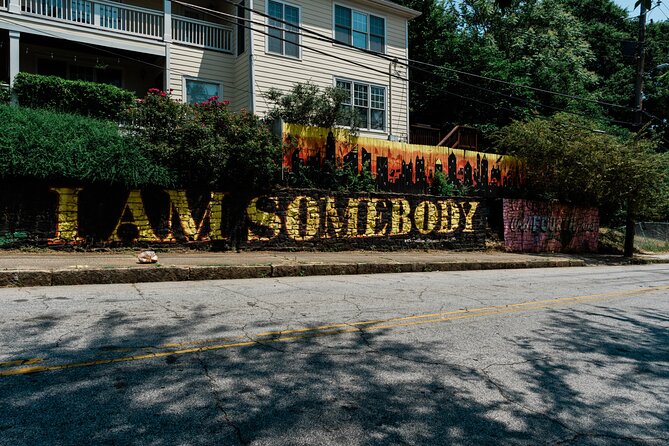
The exterior of the historic Prince Hall Grand Lodge is another stop. It was connected with offices used by Dr. King and Congressman John Lewis, and the site also includes a historic Madam CJ Walker Beauty Salon.
This stop is valuable because it shifts your attention away from the most familiar memorials. The Civil Rights movement required offices, meetings, businesses, fundraising, communication, and local organizing. A place such as the Prince Hall Grand Lodge helps show the practical side of that work.
You will not go inside, so the quality of the explanation is especially important. Ask questions if you want more detail about the offices or the people associated with the building. The tour’s small group size helps here. With no more than 14 participants, it is easier to hear the guide on a city street and easier to ask a follow-up question without holding up a large crowd.
Same streets, a different route:
- History and Hauntings of Salem Guided Walking Tour
★ 5.0 · 14,564 reviews - New Orleans Premier Ghost, Voodoo and Vampire Walking Tour
★ 4.5 · 12,856 reviews - Little Havana Food and Walking Tour in Miami
★ 5.0 · 8,882 reviews - Chicago: Gangsters and Ghosts Walking Tour
★ 5.0 · 7,155 reviews
Walking through Sweet Auburn for two hours
The Sweet Auburn portion takes up most of the experience, roughly two hours in total. This is where the tour becomes a neighborhood walk rather than a sequence of isolated photo stops.
You will pass points tied to King’s family, ministry, work, and final resting place. The route also places him among other Civil Rights figures, allowing the guide to explain the movement as a broad effort rather than a story belonging to one person.
The walk covers about 1.5 miles and includes some small hills. That distance is manageable for most people, but the duration can feel longer in summer heat, rain, or bright sun because you are also stopping and standing. Wear supportive shoes, bring water, and charge your phone if you want to take photos or keep notes.
The pace appears to be one of the tour’s strengths. Guides take breaks, use shaded spots when possible, and keep the group moving without rushing the story. One guide has also provided cold water during a heat break. That kind of simple care can make a real difference in Atlanta weather.
This is not the right outing for someone who cannot walk or stand for extended periods. Service animals are allowed, and the route is near public transportation, but no transportation to or from the meeting point is provided. Plan your arrival carefully and do not assume you will be collected from your hotel.
The King Center and the personal side of King’s life
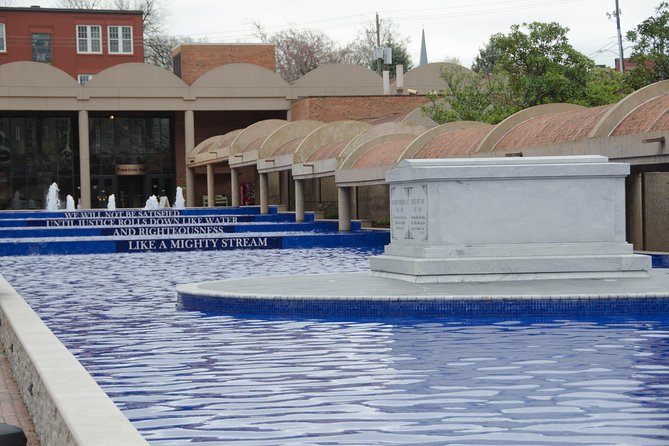
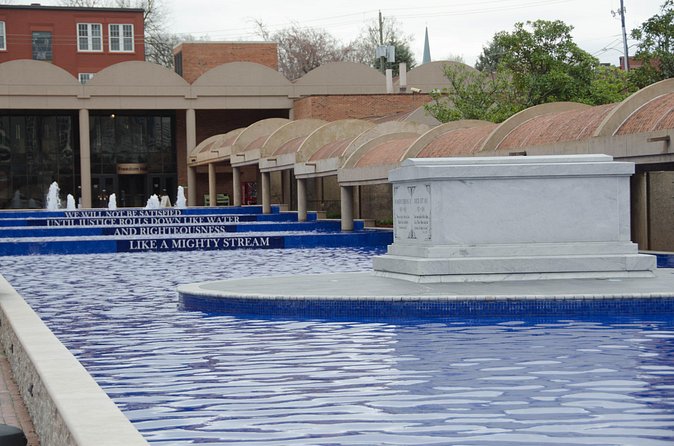
The King Center is included as part of the route, with listed operating hours of 10 a.m. to 5 p.m. daily. The tour allows about 10 minutes here, so think of this as a guided orientation rather than an extended museum visit.
The stop helps connect King’s public work with his family and legacy. The story includes Coretta Scott King’s influence, the family’s role, and the continuing effort to preserve King’s words and example.
Some of the most affecting details discussed along the route are personal. You may learn about King’s Nobel Peace Prize, his clothing and suitcase from his final day, his childhood home and birthplace, and his final resting place with Coretta Scott King. Not every interior or building visit is included, but these details give the walk emotional range.
The birth home tour is not included. The experience also does not include entry into the interior of Ebenezer Baptist Church’s Heritage Sanctuary. If those interiors are essential to your plans, treat this walking tour as a companion experience rather than a complete substitute.
Jackson Street Bridge and a change of mood
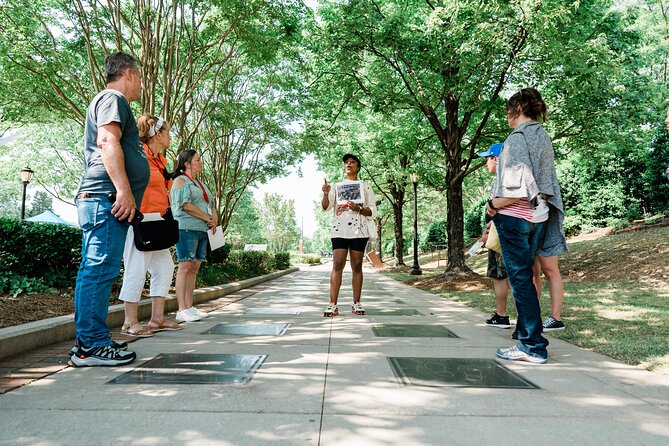
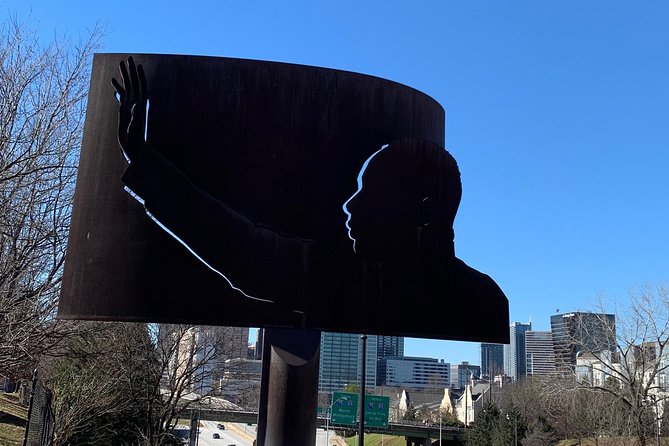
The 10-minute stop at Jackson Street Bridge gives the group Atlanta’s famous city view. After several solemn locations, this is a useful change of pace.
The bridge is also a good reminder that the Civil Rights story belongs to a living city. You are not walking through a sealed museum district. You are looking across Atlanta while hearing about the people and decisions that changed the city and the country.
Bring your phone or camera, but do not let the photo stop take over. The view is memorable, yet the real value comes from the guide explaining what you have already seen and placing it within Atlanta’s wider story.
The International Civil Rights Walk of Fame

The International Civil Rights Walk of Fame closes the route with shoe prints associated with prominent Civil Rights leaders. This gives the guide a chance to connect the names and figures introduced earlier.
The stop takes about 10 minutes, but it can feel like a useful closing chapter. Instead of ending only with King, the walk points toward the larger group of leaders, organizers, and public figures who shaped the movement.
The tour then returns to the original meeting point. That makes the end easy to manage. You can remain in the area, revisit a site, find food, or use public transportation without arranging a separate transfer.
What $40 buys you
At $40 per person, this is not the cheapest way to see Sweet Auburn. You can walk around parts of the neighborhood on your own for free. The value comes from the guide’s interpretation, the carefully connected route, and the amount of context you receive over two and a half hours.
I would be especially willing to pay the fee if this is your first visit to the National Historical Park. The places are meaningful, but their importance is not always obvious from a sidewalk. A guide explains why an office building matters, how the King family fits into the story, and how local institutions supported a national movement.
The small group limit also improves the value. Fourteen people is still a group, but it is far easier to keep together and hear clearly than a large coach tour. You are paying for time, access to a guide, and a story shaped around the neighborhood rather than a general Atlanta sightseeing loop.
The price is less compelling if you want extensive interior access. Several key stops are exterior only, and the King Center visit is brief. For a deeper museum experience, you may want to add independent time before or after the walk.
Who will enjoy this walk most
I recommend it to first-time Atlanta visitors, history-minded families, solo visitors, couples, local residents, and anyone who wants a better grasp of the Civil Rights movement’s Atlanta setting. It also suits educators and students because guides welcome questions and connect major public events with people and places.
The tour can work well for families, although the two and a half hour length requires attention and stamina. The guides use humor, storytelling, and changing locations to keep the pace alive. Still, it is not a light sightseeing stroll. The subject includes violence, sacrifice, death, and injustice, and the final resting place of King and Coretta Scott King can be deeply moving.
I would think twice if you have limited mobility, dislike outdoor walking, or need guaranteed access to historic interiors. The tour operates in all weather, and the cancellation terms are strict: the experience is normally non-refundable and cannot be changed for personal reasons. If poor weather cancels the tour, or if the minimum number is not met, you are offered another date, another experience, or a full refund.
Should you book the Martin Luther King Jr. History Walking Tour?
Book it if you want Atlanta’s Civil Rights story explained by a person who can connect the famous names with real places, family relationships, and local institutions. The best parts are the Sweet Auburn route, the small group, the personal stories, the bridge view, and the chance to hear King’s words while standing near places tied to his life.
Skip it if you want a purely self-guided visit, guaranteed indoor access, or a short activity with little walking. For most visitors who can handle 1.5 miles and two and a half hours outdoors, I think the $40 fee is fair. You leave with more than photographs. You leave with a clearer sense of why Atlanta mattered to King, and why the movement depended on many people working together.
FAQ
How long does the Martin Luther King Jr. History Walking Tour last?
The tour lasts approximately two hours and 30 minutes.
Where does the tour begin and end?
It begins at 450a Auburn Avenue NE, Atlanta, Georgia 30312, and ends back at the same meeting point.
How much walking is involved?
The route requires about 1.5 miles of walking and includes some small hills. You will also spend time standing at the various stops.
Is the tour suitable for someone with limited mobility?
It is not recommended for people who cannot walk and stand for long periods.
Are the interiors of Ebenezer Baptist Church and the Prince Hall Grand Lodge included?
No. The tour views both historic locations from the exterior only.
Is the Martin Luther King Jr. birth home included?
No. The birth home tour is not included in this experience.
What happens if a National Park building is closed?
National Park buildings can close because of staffing shortages. The tour still provides an overview and walks through the areas included in the route, but a particular building cannot be guaranteed to open.
Does the tour operate in bad weather?
The tour operates rain or shine. If poor weather causes the operator to cancel, you are offered a different date or a full refund.
Just added around the USA
- Fan Tribute: Taylor Swift in New York Walking Tour★ 4.9 · 147 reviews
- Explore Must-See Spots: Las Vegas Strip Walking Tour★ 4.8 · 77 reviews
- East Nashville Walking Food Tour with 5+ Tastings★ 4.7 · 178 reviews
- Las Vegas: Fremont Street Walking Tour★ 4.9 · 153 reviews
- NYC: Guided Bus and Walking Tour with Staten Island Ferry★ 4.6 · 209 reviews
- DC: Smithsonian Highlights Walking Tour with Air and Space★ 4.8 · 97 reviews
- DC: Lincoln Assassination Tour with Ford’s Theatre Entry★ 4.6 · 72 reviews
- Deep Dive into Denver: Small-Group Walking Tour★ 4.8 · 119 reviews
History Walking Tours, compared.



Berlin’s Best: 2 Hour Walking Tour Third Reich and the Cold War
Read our review →
Third Reich Berlin: Hitler and WWII Walking Tour
Read our review →
New Orleans Garden District History Walking Tour
Read our review →
Cartagena: Historic Center and Getsemaní Shared Walking Tour
Read our review →

Imperial Palace and Shogun Historical Walking Tour
Read our review →Browse the lists this tour appears in