
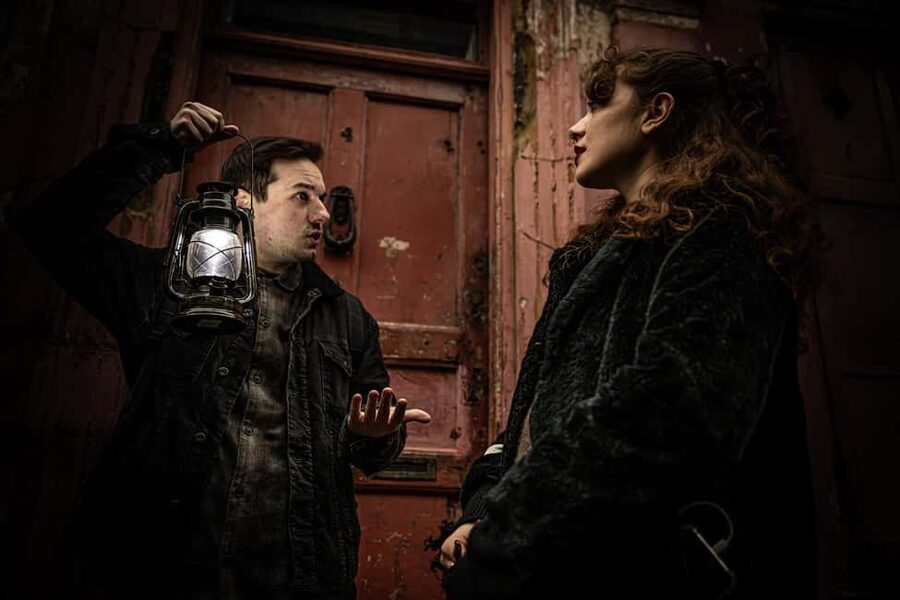
REVIEW · LONDON
London: Jack the Ripper Night Walking Tour in Whitechapel
Jack the Ripper’s name draws the crowds, but this victim-focused Whitechapel walk puts the five women back at the center of the story. You follow the route through the East End, visit real crime scenes, and see how poverty, poor housing, and Victorian social inequality shaped the setting in 1888.
I like two things right away. First, the tour treats Mary Ann Nichols, Annie Chapman, Elizabeth Stride, Catherine Eddowes, and Mary Jane Kelly as people, not just names in a murder case. Second, the detective pack gives you something to do as you walk, turning a grim subject into an active puzzle rather than a lecture.
The main drawback is simple: this is an evening walk about violent deaths, so some details are upsetting. You will also spend up to two and a half hours outside, often in cold or damp weather. Bring warm layers, and expect the guide’s style to vary. Tyson is frequently praised for humor and crowd work, while other guides such as Kory, Hadi, Elsie, Sadie, Monica, and Jude bring their own tone.
Key points before you book
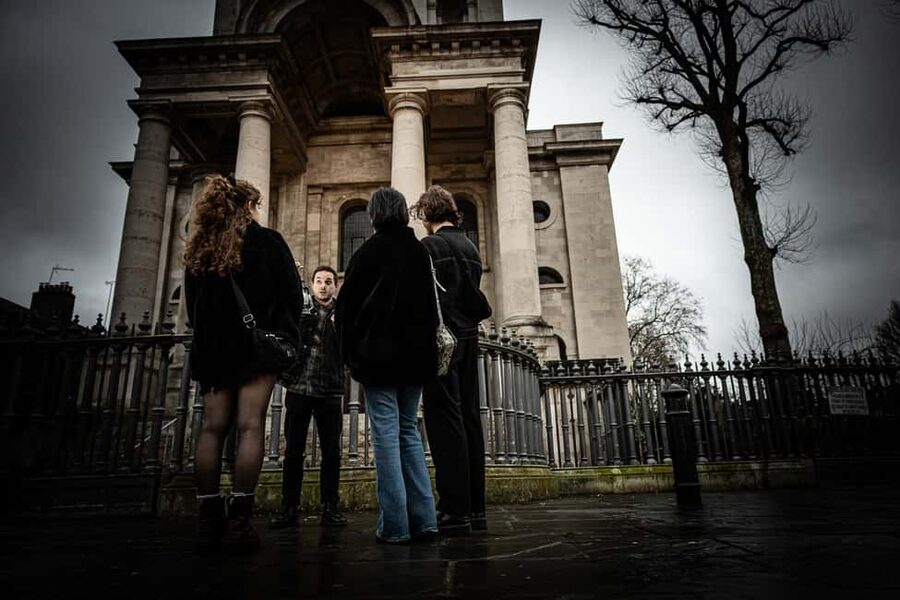
- Real Whitechapel locations: Visit streets and sites connected with the murders, including Mitre Square, Goulston Street, and the Ten Bells area.
- The victims come first: Learn about the women’s lives, families, work, and deaths instead of hearing only a mystery built around the killer.
- A chronological route: The walk follows the murders in order, which makes the case easier to follow.
- An interactive detective pack: Use clues and evidence as you consider suspects and theories.
- Strong guide-led storytelling: The best part depends on your Ripperologist, with Tyson, Kory, Hadi, Elsie, Sadie, and others noted for clear, lively presentations.
- Good value at $22: For two to two and a half hours of guiding, local history, and several historic stops, the price is fair, especially for first-time visitors to East London.
Starting at St Mary’s Whitechapel Church Memorial
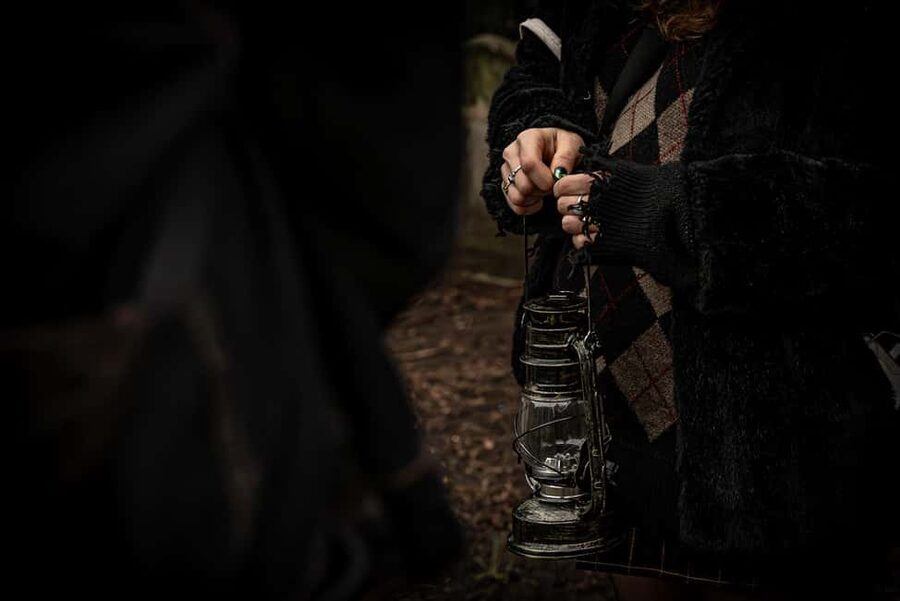
Your meeting point is the St. Mary’s Whitechapel Church Memorial inside Altab Ali Park. Look for the yellow Carpe Diem Tours flag or sign, and arrive about 10 minutes early.
This is a useful starting point because it places you in the Whitechapel area before the storytelling begins. The tour does not begin with a generic London introduction. It starts close to the streets and buildings tied to the case, then moves through the East End on foot.
The guide speaks English, and the walk is led by a local Ripperologist. That title matters here. You are not simply following a guide with a few spooky anecdotes. The experience is built around the case, its evidence, the conditions of Victorian Whitechapel, and the arguments surrounding the killer’s identity.
You should expect a moving group, not a fixed presentation. The guide needs to keep people together on city streets, and the route includes several stops of roughly 17 minutes each. Comfortable shoes are more useful than anything fashionable.
More Ghost Walking Tours in London
- London: The Original Jack the Ripper Walking Tour
★ 4.7 · 7,833 reviews - London Jack The Ripper Guided Walking Tour
★ 5.0 · 3,131 reviews - London: Jack the Ripper Walking Tour – Ripper Vision Tours
★ 4.5 · 1,752 reviews
Brick Lane and the first picture of Victorian Whitechapel
Brick Lane is one of today’s best-known East End streets, but on this walk it helps set the scene for the district in 1888. The guide explains the social conditions that made Whitechapel such a hard place to live, particularly for people with little money and few safe choices.
This context is one of the tour’s strongest features. The murders did not happen in a vacuum. The walk looks at the area’s housing, poverty, work, and sharp divide between those with money and those without it. Several guides also point out architectural details and explain how the neighborhood has changed.
Do not expect every building to look exactly as it did in the Victorian period. London has changed, and some sites are marked more by their location than by surviving crime-scene structures. The value comes from standing in the same part of the city and hearing how the streets functioned at the time.
Brick Lane is also a busy modern area, so the guide may need to pause and regroup. That can interrupt the mood, but it is part of taking a walking tour through a living neighborhood rather than a museum set.
Princelet Street and the people behind the case
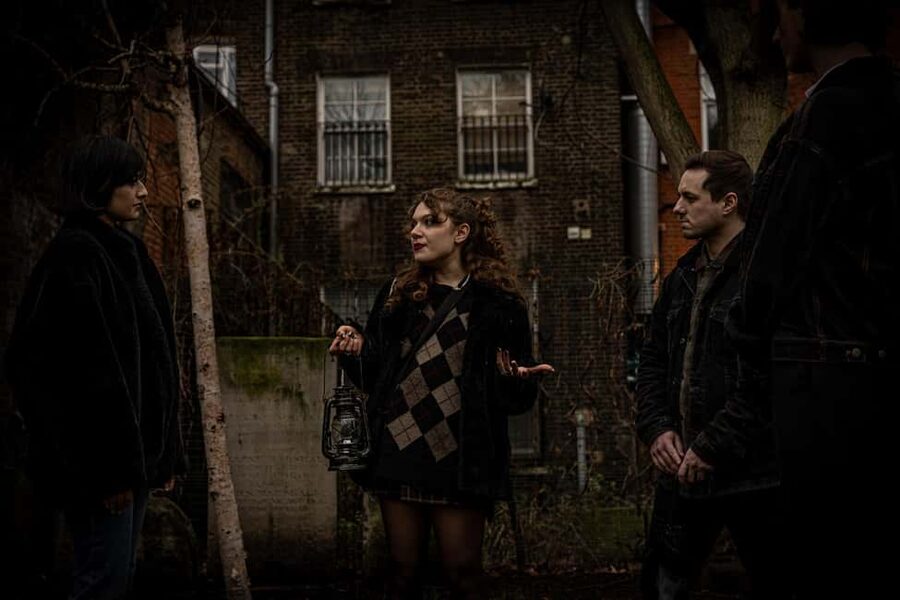
At Princelet Street, the focus continues to move away from the legend and toward the people who lived in Whitechapel. You hear more about the women and the conditions around them, with the guide explaining how their work and personal circumstances were recorded.
I appreciate this approach because Jack the Ripper stories have often reduced the victims to a short list of names. Here, the guide works to restore some sense of their lives as wives, mothers, sisters, friends, and residents of the East End.
The subject remains difficult. The tour includes descriptions of violent deaths, and the guide does not remove the grim details entirely. Still, the presentation aims to give the women dignity rather than treating suffering as entertainment.
This is a good point to use the detective pack. You can begin weighing what was known at the time, what was reported later, and which details are firm evidence rather than colorful rumor. You do not need to be a crime-history expert to take part.
Puma Court and the physical route of the murders
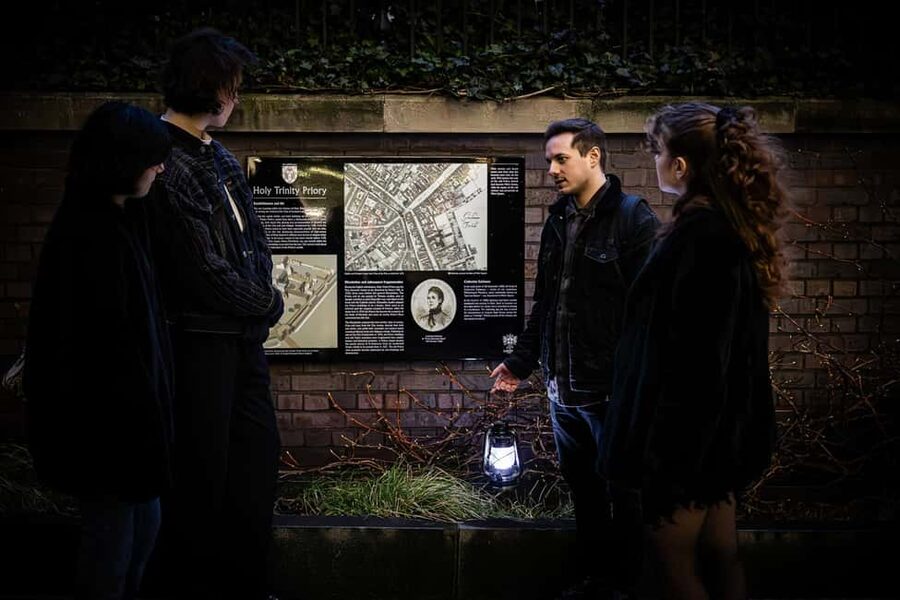
Puma Court helps you understand the tight scale of the area. Walking between locations gives the case a physical shape that a book or television program cannot provide. You get a better sense of the short distances, narrow passages, and urban setting in which the police searched for clues.
The guide uses the route to explain how the killer might have moved through Whitechapel and how investigators tried to make sense of events spread across different streets. The walking itself is part of the evidence exercise. You are not just hearing a list of dates and names. You are moving through the places that connect them.
The route can feel crowded, especially in central parts of the East End. Keep close to the guide and pay attention when the group crosses streets. One useful detail from the experience is that guides work to keep everyone together, but a little self-awareness helps. If you stop for a photograph, do it quickly and make sure you can still hear the next section.
More Ghost Walking Tours in the UK
- London: Jack the Ripper Evening Walking Tour
★ 4.9 · 1,449 reviews - London: Ghost Walk and River Thames Boat Ride
★ 4.5 · 1,251 reviews - London Jack The Ripper Small-Group Walking Tour
★ 5.0 · 1,013 reviews - Ghastly Ghost Walking Tour in London
★ 5.0 · 878 reviews
The Ten Bells and the shadow of the pub story
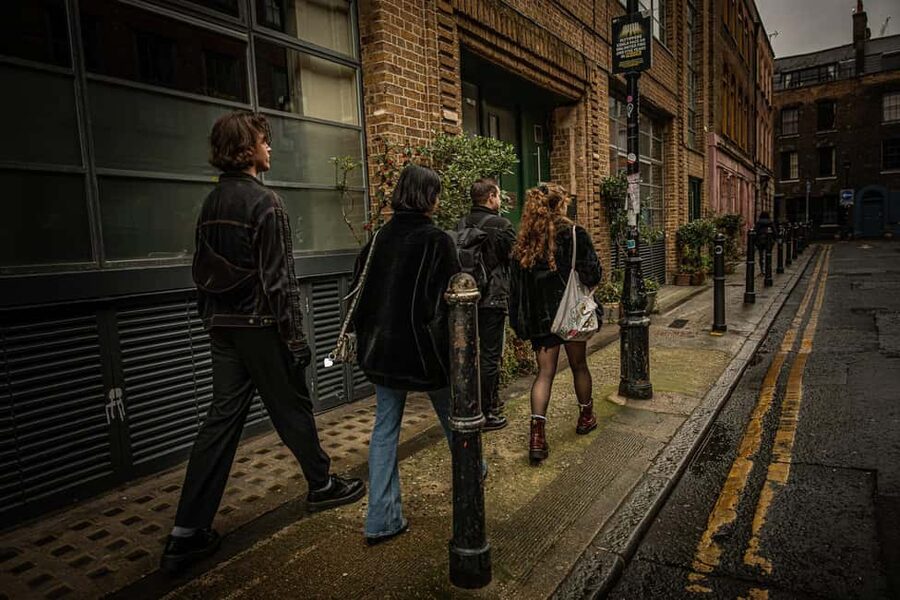
The Ten Bells in Spitalfields is one of the most recognizable names connected with the Ripper story. Its presence gives the walk a strong sense of place, but this is also where you should listen carefully and separate documented evidence from later legend.
The guide discusses the relationship between the pub, the neighborhood, and the women associated with the case. The stop can feel atmospheric, particularly at night, but it is not simply a spooky photo opportunity. It works best as a lesson in how stories grow around real events.
You may hear theories about who the killer was, how the police handled the investigation, and why certain suspects became famous. The tour does not claim to solve a mystery that has remained unsettled for more than a century. Instead, it gives you clues and competing ideas, then lets you think through the evidence.
That balance is important. The strongest guides, including Tyson and Kory, are described as funny and lively, but the humor is used to keep the group engaged rather than to make light of the victims.
Gunthorpe Street and the limits of certainty
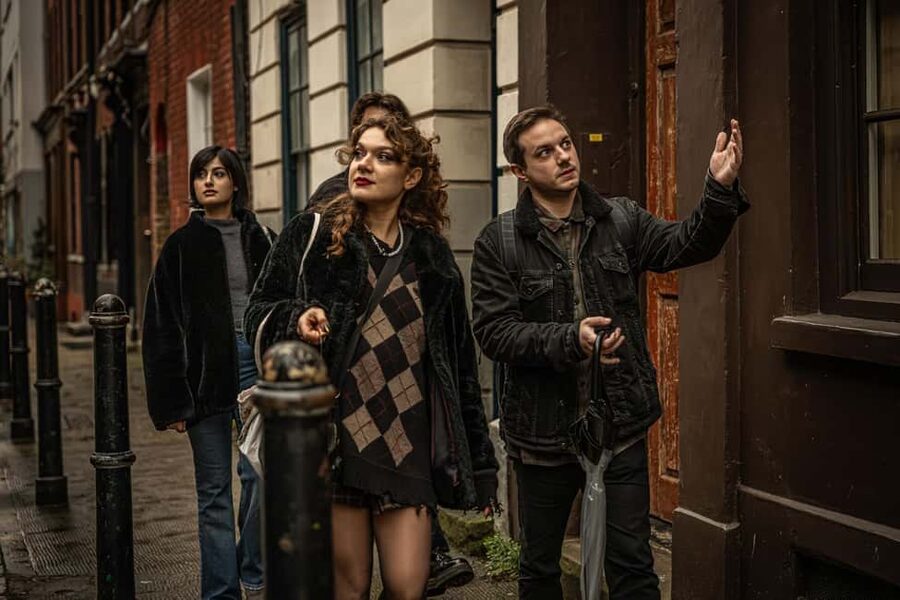
At Gunthorpe Street, the case becomes less about famous names and more about what can actually be known. Ripper stories are packed with claims, suspects, police failures, letters, and theories. A good guide has to explain which points are widely accepted and which remain disputed.
This is where the detective pack earns its place. You can examine clues and consider how an investigator might have approached the case with incomplete information. The activity gives children and adults an entry point, though the violent subject matter may not suit young children.
Guides vary in how much time they give to individual suspects. One visitor wanted more detail about the famous theories, while also recognizing that two hours leaves limited room. That is a fair criticism. If you already know the case well, the victim stories and East London setting may interest you more than another list of suspects.
If you are new to the subject, the chronological structure helps. You can follow the sequence of murders without constantly jumping backward and forward between dates.
Goulston Street and the evidence puzzle
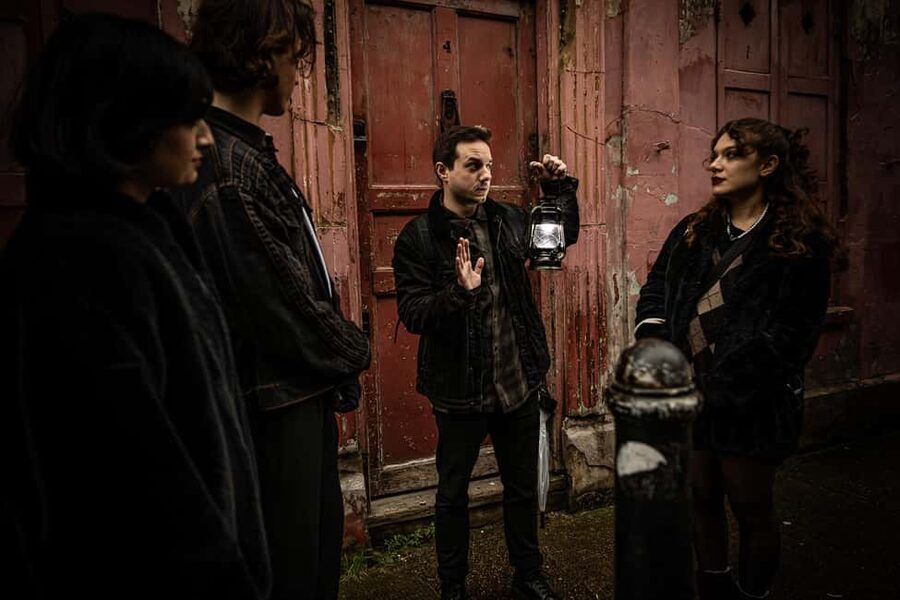
Goulston Street is linked to one of the case’s most discussed pieces of evidence. Here, the guide brings together the physical route, police decisions, and the clues that have fueled debate for generations.
This is one of the best places to ask questions. The guides are encouraged to make the walk interactive, and several, especially Tyson, are praised for taking questions seriously and answering them clearly. You can ask about the suspects, the investigation, the victims, or the changing appearance of the neighborhood.
Do not expect a courtroom verdict. The tour explores theories about the killer’s identity, but the evidence does not produce a neat ending. That open question is part of the appeal, yet it can frustrate anyone hoping for a final answer.
The more useful result is a clearer idea of how difficult the investigation was. The police had limited forensic tools, conflicting accounts, and intense public pressure. The guide also places the murders within a wider story of inequality in Victorian London, which gives the case more weight than a simple whodunit.
St Botolph without Aldgate and the wider East End
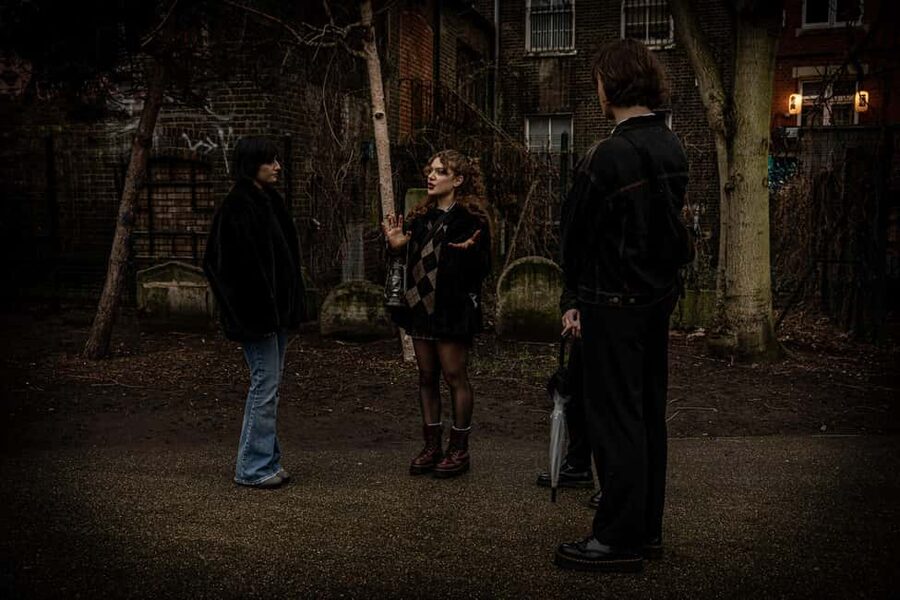
St Botolph without Aldgate adds another layer of local history before the walk reaches its final crime-scene area. The guide connects the church and surrounding streets with the movement between Whitechapel and the City of London.
This portion helps you see that the Ripper sites were not isolated from the rest of London. The East End sat close to wealthier districts, yet the lives of poor residents could be sharply different from those of people only a short distance away.
The walk also gives you a sense of modern East London. Guides such as Hadi and Kory have been praised for pointing out buildings, architecture, and present-day features alongside the 1888 story. That extra material is useful because it stops the tour from becoming a single-topic march between murder sites.
The drawback is that the area’s current life can dilute the atmosphere. Traffic, shops, pedestrians, and bright lights are part of the setting now. If you want a completely theatrical ghost walk, this may feel too grounded in real city streets. I prefer that realism, but it is worth knowing what you are booking.
Mitre Square and the final crime-scene stop
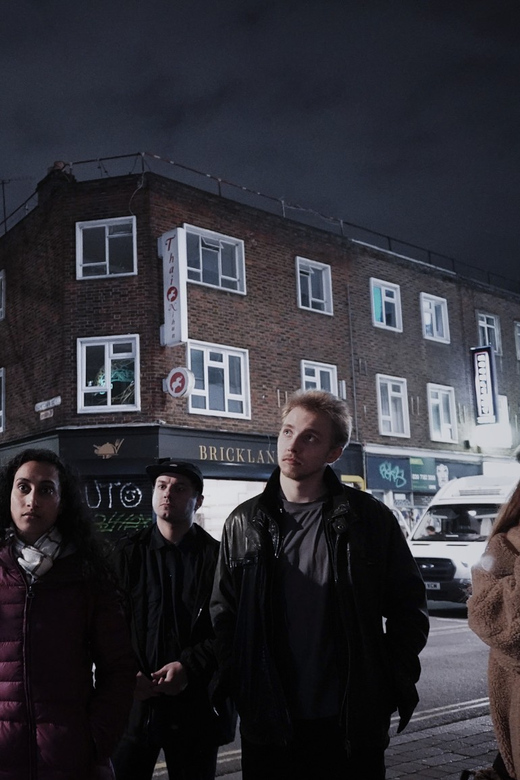
Mitre Square is one of the key locations on the route and functions as a powerful closing point. The walk ends near Mitre Square in London EC3A 5DE, with drop-off locations listed for the conclusion.
By this stage, you have followed the murders in chronological order and heard about the women as individuals. Returning to the physical places at the end gives the story a sober finish. The guide can bring the evidence, theories, and unanswered questions together without forcing a solution.
The exact atmosphere will depend on the time of night and the size of the group. The area is part of modern London, so do not expect an untouched Victorian square. What you gain is the chance to stand at a real location and consider how much of the case rests on physical evidence, witness accounts, and later interpretation.
I find this a better ending than a final jump scare. The walk leaves you thinking about the people involved and about the social conditions that made the murders possible.
What the guide makes or breaks
This is a guide-led experience, and the guide is the main reason to book it. The strongest reported personalities include Tyson, Kory, Hadi, Elsie, Sadie, Monica, Jude, and Saadiya. Tyson is often described as funny, patient, and able to handle a crowd. Kory is praised for adding architecture and East London history. Hadi is noted for strong storytelling and an easy connection with the group.
The tone can range from documentary-style detail to stand-up comedy energy. That variety is part of the appeal for many people, but it means the experience will not feel identical on every evening. If you want a solemn academic seminar, the humor may seem too light. If you want a dry fact recital, the lively delivery is a plus.
The best guides manage both sides: they keep the walk engaging while treating the victims with care. The focus on women’s lives is not a small detail. It changes the moral center of the tour.
Is $22 fair for two and a half hours?
At $22 per person, this is a sensible London price for a two to two and a half hour guided walk. You are paying for an English-speaking specialist, a structured route through Whitechapel, an interactive detective pack, and local history rather than a simple stroll with a few memorized stories.
The value is strongest if you are curious about the Ripper case but also want to understand East London. You get several locations in one evening, and you do not need to arrange transport between them. The guide supplies the structure, which saves you from trying to match old crime scenes to modern streets on your own.
Food, drinks, and hotel pickup are not included. Plan to eat before or after the walk, and remember that the tour takes place outdoors. In December, warm clothing is especially important.
Free cancellation is available up to 24 hours before the start for a full refund, and you can reserve now and pay later. Private groups are also available if you want a more personal format.
Who will enjoy this Whitechapel walk?
I would recommend it to first-time visitors who want an unusual London evening, people already interested in Victorian crime, and anyone who likes history presented through real places. It also works well for solo participants, since the interactive format gives you a natural way to join the group without needing to arrive with friends.
Families should judge the subject carefully. The tour is educational, but the murders and descriptions are graphic enough that it will not suit every child.
You will get the most from it if you enjoy asking questions and thinking about competing explanations. You will get less from it if you dislike walking at night, need a fully indoors activity, or want a definite answer about Jack the Ripper.
Should you book it?
Book this tour if you want the Ripper case placed in its real East London setting and presented with respect for the victims. The chronological route, detective pack, and local history make it more useful than a simple horror walk.
Skip it if violent crime is not your idea of an enjoyable evening, or if you already know the case in great detail and want a specialist lecture on obscure suspects. At $22, though, it offers solid value, and the guide-led storytelling gives you a memorable way to see Whitechapel after dark.
FAQ
Where does the Jack the Ripper walking tour start?
The tour starts at the St. Mary’s Whitechapel Church Memorial inside Altab Ali Park. Look for the yellow Carpe Diem Tours flag or sign.
How long does the tour last?
The walking tour lasts about two to two and a half hours. Starting times vary, so check availability when booking.
What language is the tour in?
The live tour is conducted in English.
Which locations does the tour visit?
The route includes Brick Lane, Princelet Street, Puma Court, the Ten Bells area in Spitalfields, Gunthorpe Street, Goulston Street, St Botolph without Aldgate, and the area around Mitre Square.
Is hotel pickup included?
No. Hotel pickup and drop-off are not included, and food and drinks are also separate.
Can I cancel or pay later?
You can cancel up to 24 hours in advance for a full refund. Reserve now and pay later is available, so you do not need to pay at the time of booking.
More Night Walking Tours in London
- Private Street Food Evening Walking Tour in Ho Chi Minh City
★ 5.0 · 3,175 reviews - Granada: Albaicín and Sacromonte Guided Sunset Walking Tour
★ 4.9 · 2,962 reviews - Savannah’s Ghost City “Dead of Night” Walking Night Tour
★ 4.5 · 2,482 reviews - Kyoto: Gion Magical Night Walking Tour with Geisha Trivia
★ 4.9 · 2,393 reviews
More Ghost and Haunted Walks in London
- London: Ghastly Ghosts 2-Hour Walking Tour
★ 4.9 · 794 reviews - London: Jack the Ripper Walking Tour
★ 4.2 · 410 reviews - London: Interactive Jack the Ripper Night Walking Tour
★ 4.7 · 229 reviews - London: Witches and History Bankside Walking Tour
★ 4.8 · 223 reviews
Just added around London
- German London : The Ultimate Walking tour★ 4.8 · 400 reviews
- London: Medieval History Walking Tour from The Tower★ 4.9 · 318 reviews
- The Beatles London Walking Tour★ 4.2 · 147 reviews
- Secret Old London Walking Tour★ 4.8 · 154 reviews
- Secrets of London Walking Tour★ 4.7 · 562 reviews
- London: Notting Hill Walking Tour★ 4.5 · 254 reviews
- London: Old City Walking Tour★ 4.8 · 135 reviews
- London: Witches and History Bankside Walking Tour★ 4.8 · 223 reviews
Ghost and Haunted Walking Tours, compared.

New Orleans Premier Ghost, Voodoo and Vampire Walking Tour
Read our review →


Ghost Walking Tour Where Legends Come To Life
Read our review →
St. Louis Cemetery No. 1 Official Walking Tour
Read our review →

Savannah History and Haunts Candlelit Ghost Walking Tour
Read our review →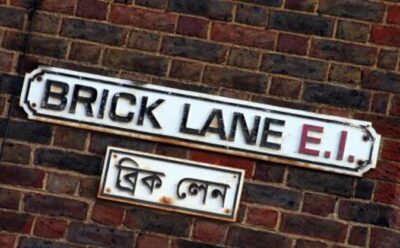
Browse the lists this tour appears in