
REVIEW · KRAKOW
Jewish Krakow Walking Tour in English
Kraków’s Jewish story is written across two neighborhoods: Kazimierz, once a major center of Jewish life, and Podgórze, where the wartime ghetto was forced into existence. This 150-minute walk connects the two, moving from synagogues and surviving streets to places marked by persecution and loss.
I like the thoughtful storytelling and the chance to see details you could easily miss alone. I also like the human pace: guides such as Max, Maciek, Pawel, and Mateusz are praised for explaining difficult subjects clearly, often with warmth and occasional humor. The main drawback is the length and cobblestones, and the tour finishes across the river rather than back at the Old Synagogue.
Key points to know before you book
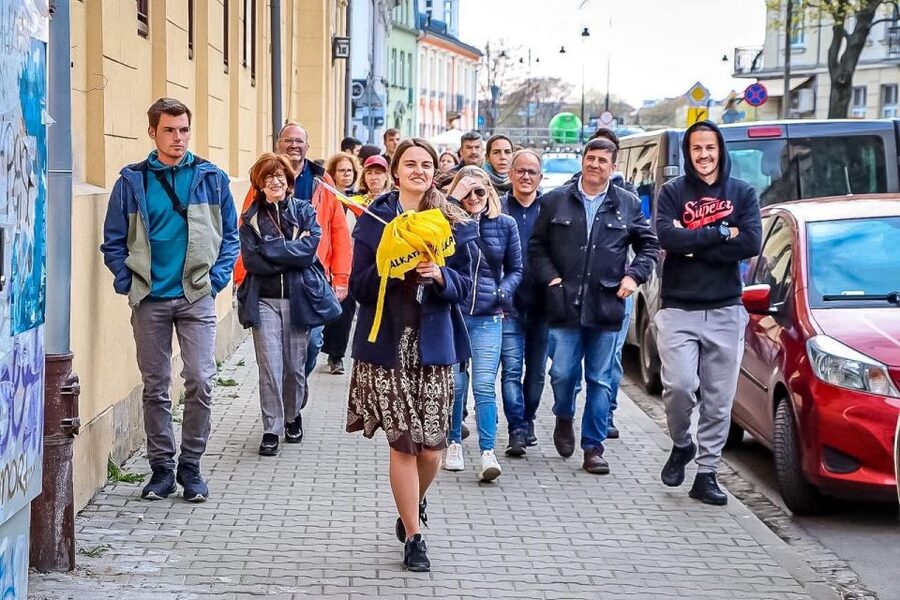
- Two districts, one difficult story: The walk covers historic Kazimierz and Podgórze, the area of Kraków’s former World War II Jewish ghetto.
- Seven surviving synagogues: You learn how these buildings reflect Jewish life before the war and why their survival matters.
- Strong English-language guiding: Max, Maciek, Lucy, Tom, Pawel, and other guides are praised for clear explanations, storytelling, and an easy manner.
- A serious but human experience: The tour addresses the Holocaust and destruction while also showing Jewish culture’s renewal in modern Kraków.
- A short break may be included: The pace can include time for coffee or a drink, useful if you need to gather yourself or rest.
- Comfortable shoes matter: Much of the route is over cobblestones, and the walk lasts two and a half hours.
Starting at the Old Synagogue in Kazimierz
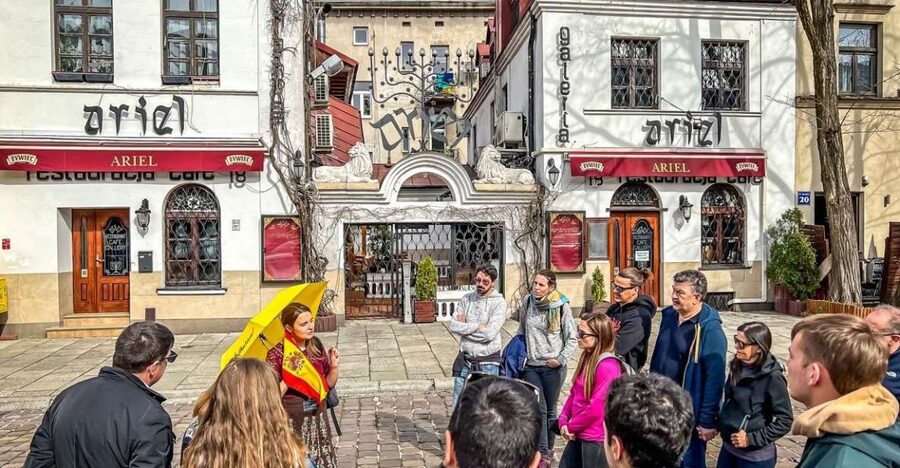
You meet on the stairs in front of the Old Synagogue, on the main street of Kraków’s historic Jewish quarter. Arrive 10 minutes early. The meeting point is easy to describe, but it can be harder to spot in poor weather or among a crowd, so give yourself a little extra time.
The Old Synagogue is a fitting starting point. Kazimierz was once home to one of Europe’s largest Jewish communities, and this district still contains a remarkable group of historic religious buildings. Seven ancient synagogues survived the destruction of World War II and the Holocaust, though survival does not mean that the community itself escaped tragedy.
At the beginning, your guide sets out the story before the war. That context matters. If you start only with the ghetto and the Holocaust, Kazimierz can feel like a memorial district with no life before 1939. The better approach is to understand the neighborhood as a place where people worshipped, worked, raised families, argued, studied, and built a culture over generations.
That is one of the tour’s strongest features. Guides are not simply pointing out old façades. They explain why the district mattered, how the local Jewish community developed, and what was lost. Maciek, Max, Pawel, Michael, Lucy, and Mateusz are among the guides praised for making the material clear and holding a group’s attention.
More Jewish Heritage Walks in Krakow:
- Krakow: Kazimierz Jewish Quarter Walking Tour
★ 4.8 · 571 reviews - Krakow: Jewish Ghetto Walking Tour
★ 4.6 · 349 reviews - Krakow: Jewish Quarter Guided Walking Tour
★ 4.8 · 119 reviews
Kazimierz, where architecture carries the memory
The Kazimierz section focuses on Jewish culture, architecture, and the history of the local community. You see the district’s synagogues and learn about their place in Kraków’s religious and social life.
The buildings are important, but the guide’s explanation is what turns a street walk into something useful. On your own, you might admire a façade, notice Hebrew lettering, or photograph a courtyard without understanding its purpose. Here, the buildings become evidence of a community that shaped Kraków for centuries.
The tour does not present Jewish Kraków as a frozen museum piece. Present-day Kazimierz is also a cultural center of the modern city, with a small Jewish community and an active public life. That contrast gives the walk more balance. You are not asked to think only about disappearance. You also see how memory, culture, and Jewish identity continue in the city today.
One point to keep clear: this is an outdoor walking tour, not a synagogue admission tour. A participant specifically wished for a visit to a functioning synagogue, even for a few minutes. If entering a practicing synagogue is a priority for you, treat that as a separate plan rather than assuming it is included.
The guide’s style can shape this part of the experience. Max is praised for his historic knowledge and passion, while Maciek is singled out for combining strong storytelling with real interest in the subject. Other guides, including Krzysztof, Johanna, Natalia, and Victoria, are described as friendly, lively, and able to answer questions. You may have a different guide, but the recurring strength is the explanation rather than the number of stops.
The break that helps with a serious subject
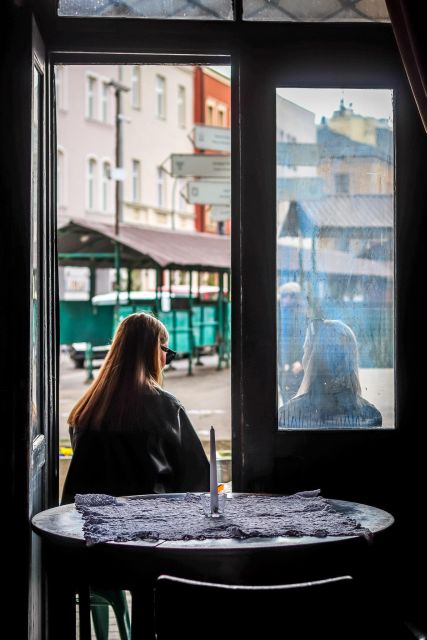
A short pause may come partway through the route. One group stopped for coffee, and another enjoyed mulled wine in a candlelit bar on a gray afternoon. The exact venue and drink are not guaranteed, and snacks are not included, but the pause is useful.
This is not a tour that should be rushed. The subject includes the destruction of Jewish life and the Holocaust in Kraków. A brief chance to sit, warm up, or collect your thoughts makes the second half easier, especially for families or anyone traveling in winter.
The break also helps with stamina. A two-and-a-half-hour walk is manageable for many people, but children may tire. One family with a four-year-old stopped after the café break and left before the end. That is a fair warning if you are traveling with young children. The stories may hold a child’s attention for a while, but the route and subject are better suited to older children and adults.
Crossing to Podgórze and the former ghetto
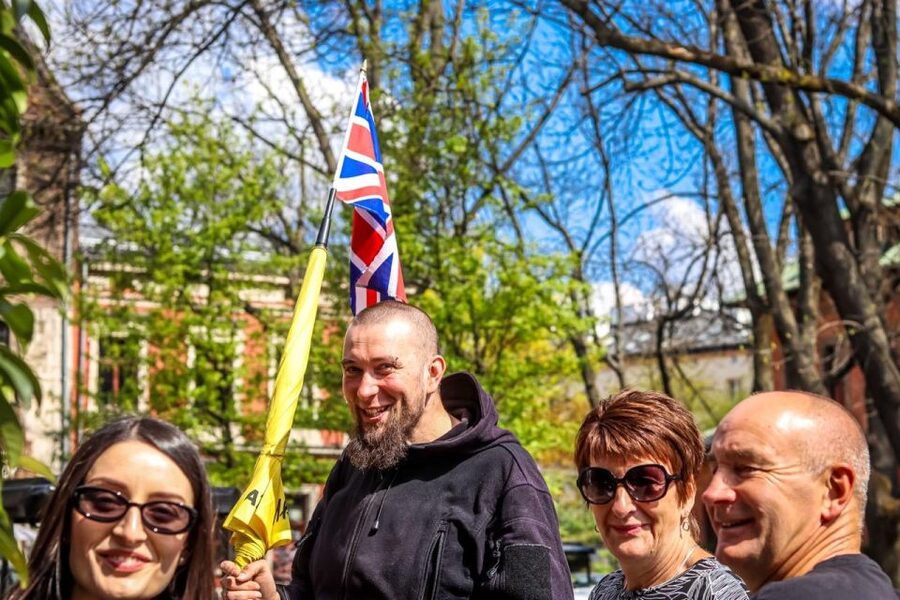
The second major part of the walk takes you across the river to Podgórze, the area of Kraków’s former World War II Jewish ghetto. This shift in location is also a shift in tone.
Kazimierz helps you understand Jewish life before the war and its partial renewal today. Podgórze confronts the machinery of removal, confinement, death, and destruction. The former ghetto’s streets and surviving buildings carry a different kind of weight because they witnessed events between 1941 and 1943.
Your guide explains where the ghetto existed and how the area connects to the Holocaust in Kraków. The value here is not simply seeing a historic district. It is learning how ordinary streets were turned into places of forced separation and suffering.
Some people found the former ghetto particularly powerful because the original buildings make the story less abstract. You are not looking only at a museum display. You are standing in an urban area where the tragedy took place. That can be moving, but it can also be emotionally demanding. I would not schedule this walk immediately before a busy evening if you need time afterward to process it.
One practical issue deserves attention. The tour begins at the Old Synagogue but finishes across the river, away from the starting point. One participant found the return confusing. Before you set out, ask your guide where the walk ends and how to get back to your hotel or the center. The route is not designed as a loop.
A few more walking tours around Krakow worth a look
- Old Town Krakow & Wawel Castle Walking Tour
★ 5.0 · 1,508 reviews - Creepy Krakow: 2-Hour City Walking Tour
★ 4.7 · 1,131 reviews - Krakow: The Old Town Walking Tour
★ 4.8 · 794 reviews - Kraków: Old Town & Wawel Castle Walking Tour in English
★ 4.8 · 532 reviews
How the guides handle difficult history
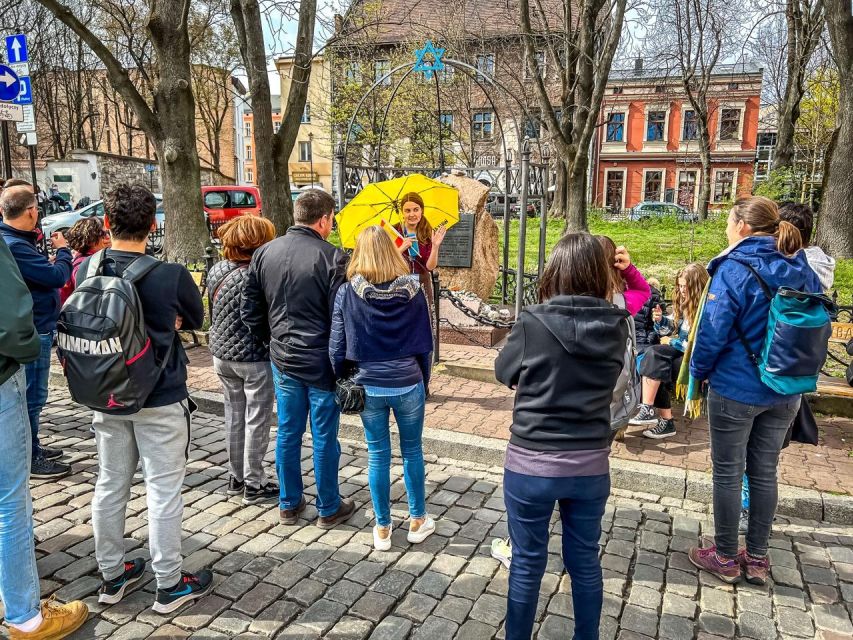
The guide is the main reason to book this rather than simply walk through Kazimierz with a map. You receive a constructed narrative, not a loose collection of dates and buildings.
The best guides make the chronology easy to follow. They explain Jewish life before the war, the destruction during World War II and the Holocaust, and the cultural revival visible in present-day Kraków. That sequence prevents the past from becoming a blur of tragic facts.
The strongest praise goes to guides who combine clarity with personality. Max is repeatedly described as engaging and well informed. Maciek is praised as an entertaining storyteller who clearly cares about the subject. Pawel is noted for his grasp of the whole area and his personal commitment to the topic. Tom, Michael, Damian, Victoria, and Mateusz also receive praise for a comfortable pace and friendly delivery.
Humor may appear, but it does not replace respect. Several guides are described as amusing or bubbly while still treating the history seriously. That balance matters on a walk where a flat, lecture-like presentation could lose you, but excessive cheerfulness would feel wrong.
The tour is offered in English with a live guide. You can ask questions as you go, which is especially helpful when the history raises personal or family-related concerns. The quality will naturally depend on the guide assigned that day, but the range of praised names suggests an established guiding team rather than a self-guided audio route.
Pace, walking conditions, and accessibility
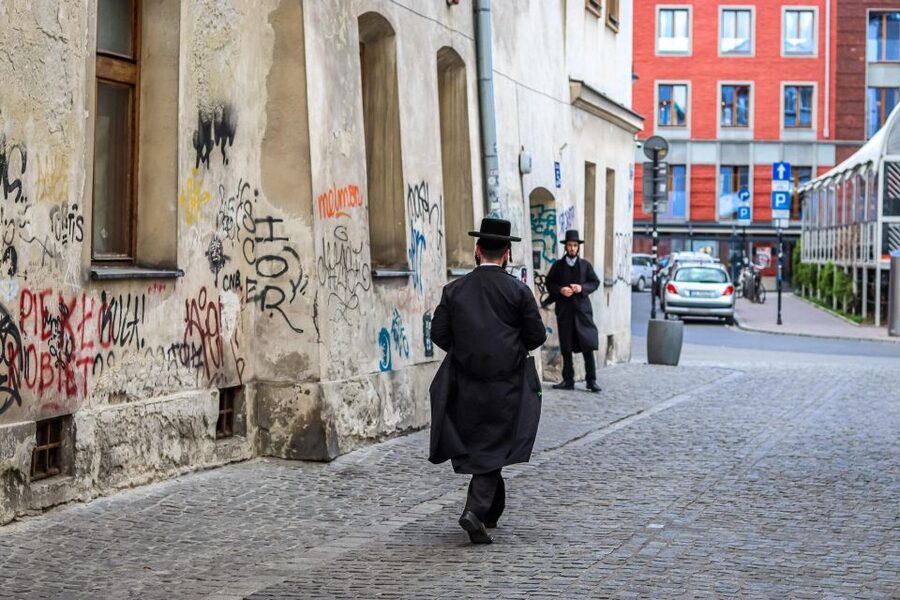
The stated duration is 150 minutes. The pace is generally described as comfortable rather than strenuous, but this remains a city walk over cobblestones. Wear shoes with good support. On wet days, the meeting point may be harder to identify, and old streets can become slippery.
A 150-minute walk gives the guide time to explain connections instead of rushing from one address to another. That is useful here. A shorter route could show you Kazimierz’s main sights, but it would leave little room to explain the community that created them or the relationship between Kazimierz and Podgórze.
The tour is listed as wheelchair accessible. Still, because the route includes historic streets and cobblestones, you should confirm any route concerns when booking if you use a wheelchair or have limited mobility. The available information supports accessibility, but it does not provide detailed surface or restroom information.
If you have limited time in Kraków, consider placing this tour early in your visit. It gives you a framework for Kazimierz and Podgórze, and you can return later to explore a synagogue, museum, café, or memorial at your own pace.
Is $26 a fair price?
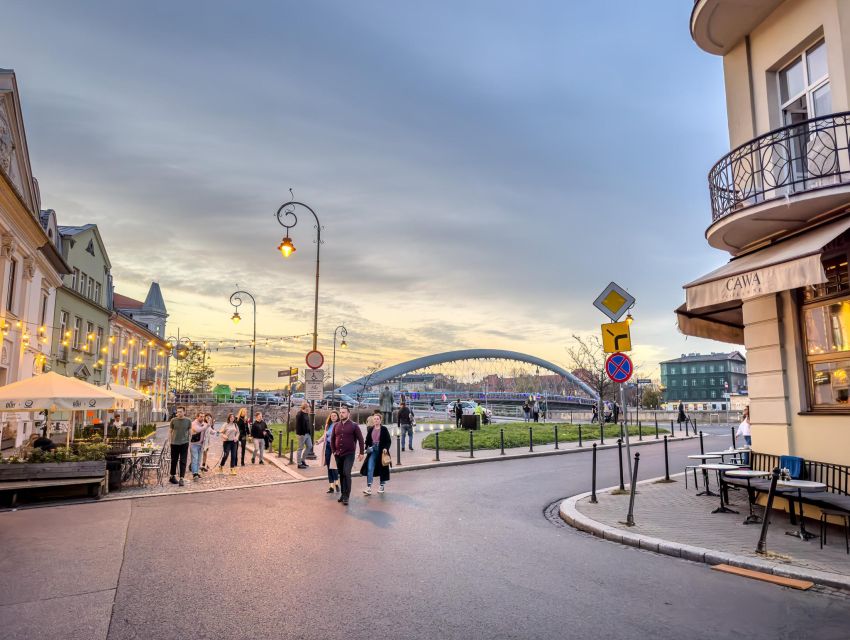
At $26 per person, the value is good if you want context rather than a quick photo stop. The price covers the reservation fee and the guide’s payment under the pay-as-you-wish format described for this activity. You are not paying for hotel transport, food, or entry tickets.
The wording around payment can be confusing. This is a general pay-as-you-wish tour, but the amount shown at booking covers the reservation and the guide’s payment. One person felt surprised by the arrangement after paying through the booking platform, so read the payment terms carefully before you reserve.
The real value comes from the route and the guide. You see two districts that are closely linked but feel very different, and you receive the historical bridge between them. A sightseeing vehicle may cover more ground, but it will not give you the same close look at the streets or the same chance to ask questions. One participant considered a golf cart tour poor value compared with this walk, though that is a personal comparison rather than a promise about every alternative.
No snacks are included. If you want coffee or a drink during the pause, bring money. The tour is also not a substitute for a full museum visit or a dedicated synagogue tour. Think of it as a strong introduction that helps you decide what deserves more of your time.
Who should book this Kraków Jewish heritage walk?
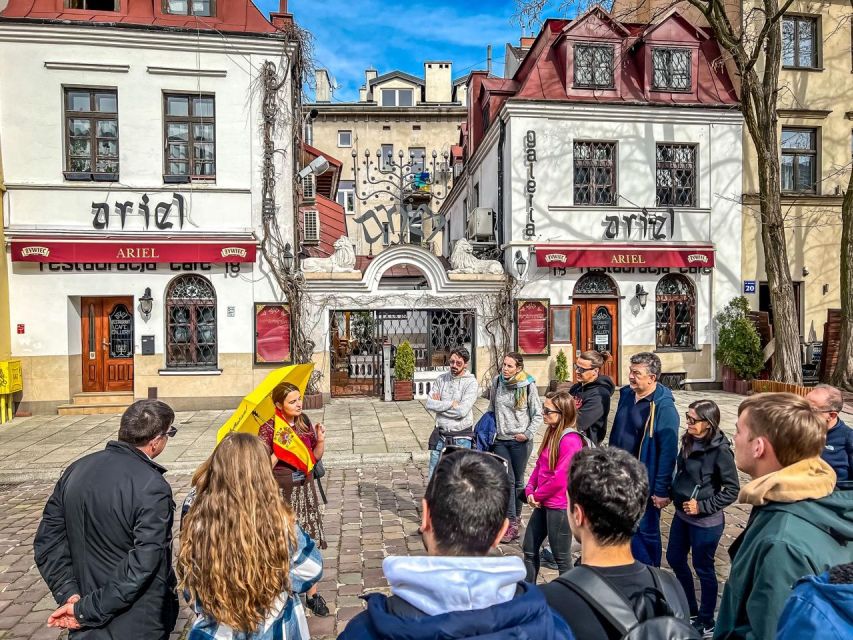
I would recommend it to first-time visitors who want a clear introduction to Jewish Kraków. It suits adults, older children, students, history-minded visitors, and anyone planning a visit to Auschwitz who wants some Kraków context first.
It is especially useful before Auschwitz because it explains the local community that existed before the Holocaust, rather than presenting the subject only through the lens of the camp. One participant felt the walk provided an important preparation for a visit the next day.
You should be comfortable walking for two and a half hours, standing while listening, and crossing cobbled streets. If you dislike group walks, want extended time inside religious buildings, or need a completely private experience, this may not be the right fit.
I also recommend it if you want to understand modern Kraków, not just its wartime past. Kazimierz’s present-day cultural life and small Jewish community give the tour a necessary final note. The story is painful, but it does not end in 1945.
Booking details worth knowing
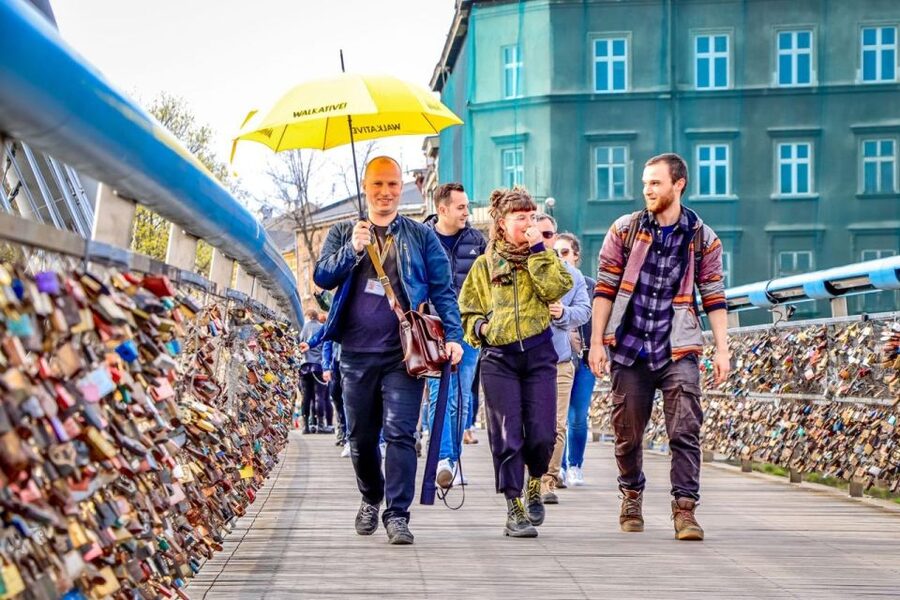
You can cancel up to 24 hours before the activity for a full refund. A reserve-now-and-pay-later option is available, which helps if your Kraków plans are still changing.
The tour is in English only, with a live guide. Meet at the stairs in front of the Old Synagogue and arrive 10 minutes early. Since the route ends in Podgórze rather than at the starting point, plan your onward journey before you leave.
Should you book it?
Book this tour if you want the Jewish quarter explained through people, places, and time, rather than reduced to a list of synagogues. The combination of Kazimierz and the former ghetto gives you a fuller understanding of Kraków’s Jewish past and present.
I would be cautious only if you need frequent sitting breaks, are traveling with very young children, or expect to enter a working synagogue. For most visitors who can manage the walk, $26 is a sensible price for a serious, well-paced introduction led by an English-speaking guide.
FAQ
How long does the Jewish Kraków walking tour last?
The tour lasts 150 minutes, or two and a half hours. You should arrive at the meeting point 10 minutes before the scheduled start.
Where does the tour meet?
The meeting point is on the stairs in front of the Old Synagogue on the main street in Kraków’s Jewish quarter, Kazimierz.
Where does the tour finish?
The route continues from Kazimierz to Podgórze, the area of the former World War II Jewish ghetto. It finishes across the river rather than at the Old Synagogue.
Is the tour offered in English?
Yes. The activity includes a live English-speaking guide.
Does the tour enter a functioning synagogue?
A visit to a practicing synagogue is not listed as part of the tour. The walk focuses on the historic Jewish district, its synagogues, the former ghetto, and the related history.
Is the tour wheelchair accessible?
The activity is listed as wheelchair accessible. Because the route includes historic streets and cobblestones, contact the provider if you need details about specific surfaces or access conditions.
Just added around Krakow
- Krakow: Jewish Quarter Guided Walking Tour★ 4.8 · 119 reviews
- Krakow: Old Town Guided Walking Tour★ 4.6 · 94 reviews
- Krakow: Old Town Highlights Walking Tour★ 4.5 · 173 reviews
- Krakow: 2h Kazimierz (Jewish Quarter) Walking Tour★ 4.5 · 75 reviews
- Krakow: Street Food Walking Tour★ 4.8 · 285 reviews
- Krakow: Jewish Ghetto Walking Tour★ 4.6 · 349 reviews
- Kraków: Old Town & Wawel Castle Walking Tour in English★ 4.8 · 532 reviews
- Krakow: Legends and Tales of Old Town Walking Tour★ 4.8 · 227 reviews
Jewish Heritage Walking Tours, compared.

Amsterdam Anne Frank: Small-Group Walking Tour & Local Guide
Read our review →
Anne Frank’s Story – Guided Walking Tour through Amsterdam
Read our review →
Jewish Quarter Walking Tour with Admission Tickets
Read our review →
Anne Frank Guided Walking Tour in DE/EN/IT/ES
Read our review →
Old Town and Jewish Quarter Guided Walking Tour
Read our review →
Anne Frank Walking Tour Amsterdam Including Jewish Cultural Quarter
Read our review →
Anne Frank’s Last Walk & See Anne Frank House in Virtual Reality
Read our review →Browse the lists this tour appears in