
REVIEW · BELGIUM
Historical Walking Tour: Legends of Gent
Ghent’s best introduction is on foot, and this tour quickly puts the city’s medieval towers, canals, castles, and stubborn civic spirit into context. You start at St. Michael’s Bridge, follow the old port, pass Gravensteen Castle, and finish near the Belfry after 13 central stops.
I like the story-first approach, which turns places such as the Butchers’ Hall, Friday Market, and the Castle of the Counts into parts of a larger tale. I also like the pay-what-you-want model, which keeps the upfront cost very low. The main caution is pace: you are on your feet for about two hours, often on old paving, and some groups can reach 35 people.
Key points at a glance
- The tour covers 13 major stops, from St. Michael’s Bridge to St. Nicholas’ Church.
- Local guides vary by departure, with highly praised guides including Tatiana, Kasia, Kenny, Sophia, Robin, and Florian.
- The focus is on stories and context, not entry into every landmark.
- You pay what you feel the tour was worth at the end, although the booking page also shows a small per-person price.
- The route is central and easy to follow, but cobblestones, weather, and group size can affect comfort.
- The best timing is early in your Ghent stay, so you can use the food, beer, and sightseeing tips afterward.
Why this Ghent walk works so well
Ghent can feel like several cities at once. You have a medieval port, a powerful trading center, a university city, a modern street-art scene, and a proud local identity packed into a compact center. A map will show you where things are, but it will not explain why the Town Hall looks mismatched or why St. Veerleplein earned such grim and cheerful nicknames.
That is where this walking tour earns its keep. The guide links buildings to the people and conflicts behind them. The route is not just a parade of façades. You hear about trade on the Leie River, the city’s independence, religious institutions, public punishment, local resistance, and the legends attached to old churches.
The strongest part is the storytelling. Guides such as Tatiana, Kasia, Kenny, Sophia, Robin, and Florian have been praised for clear English, humor, warmth, and an ability to keep a group focused. Guide assignments change, so you cannot book a specific personality, but the range of positive feedback suggests that the quality is not tied to only one person.
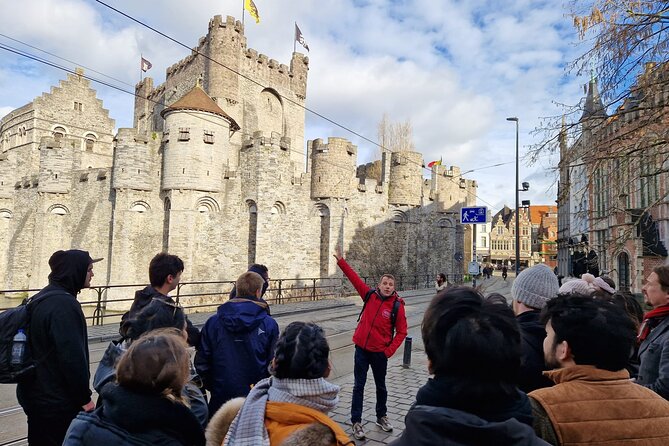
You should also expect a social walking tour rather than a private lesson. The maximum group size is 35, and one account described a group of about 18 to 20 with a microphone. A larger group can make narrow streets and busy squares less intimate, but a microphone helps you hear the history without crowding around the guide.
More History Walking Tours in Belgium
- Historical Walking Tour: Legends of Bruges
★ 5.0 · 2,541 reviews - Historical Walking Tour: Legends of Antwerp
★ 5.0 · 1,837 reviews - Brussels: Historical Walking Tour with Chocolate & Waffle Tasting
★ 5.0 · 1,165 reviews
St. Michael’s Bridge and the three towers
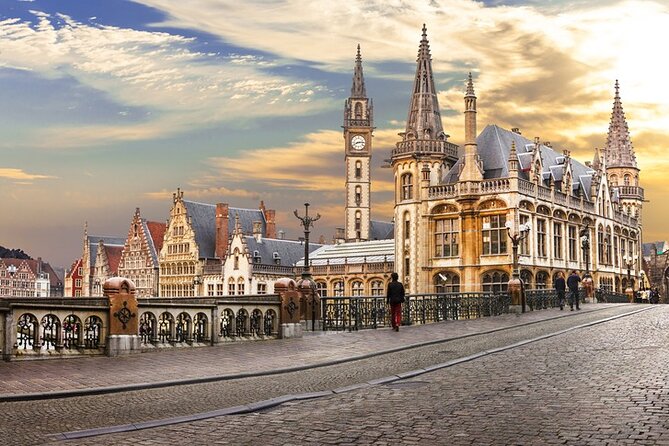
The tour begins outside Hostel Uppelink at Sint-Michielsplein 21. St. Michael’s Bridge gives you one of Ghent’s best opening views, with the historic center arranged in front of you and the city’s famous three towers visible along the skyline.
This first stop does useful work. You learn how Ghent grew as a medieval trading hub and why the waterways mattered. The bridge also helps you get your bearings before entering the denser old center.
You will not spend long here, about 15 minutes, so bring your questions early. This is an orientation stop rather than a full lesson in medieval commerce. I like that choice. You get the basic map in your head, then spend the rest of the walk adding detail.
Graslei, Korenlei, and Ghent’s old port
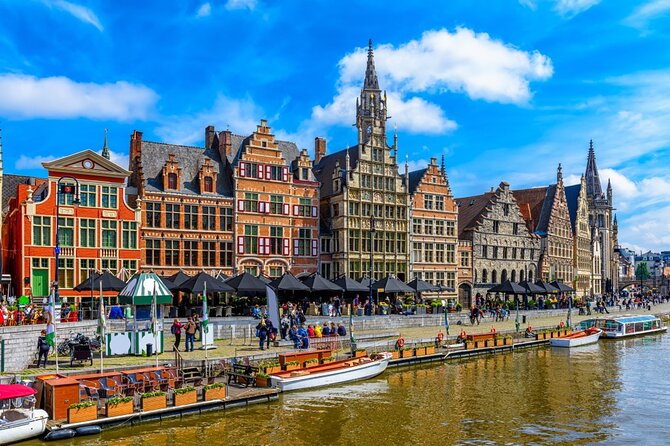
At Graslei and Korenlei, the route reaches the old port area. The handsome buildings along the water were not simply decorative homes. They were tied to trade, storage, guild activity, and the movement of goods.
The guide explains which structures played a role in the port’s commercial life. This makes the waterfront easier to read. Instead of seeing a pretty canal lined with old buildings, you begin to notice how the city’s wealth was made.
You have about 10 minutes here. That is enough for an introduction and some photographs, but not enough for every building or architectural detail. If this is your favorite part of Ghent, return later at a quieter hour and explore the quays on your own.
Design Museum Gent and the local stubborn streak
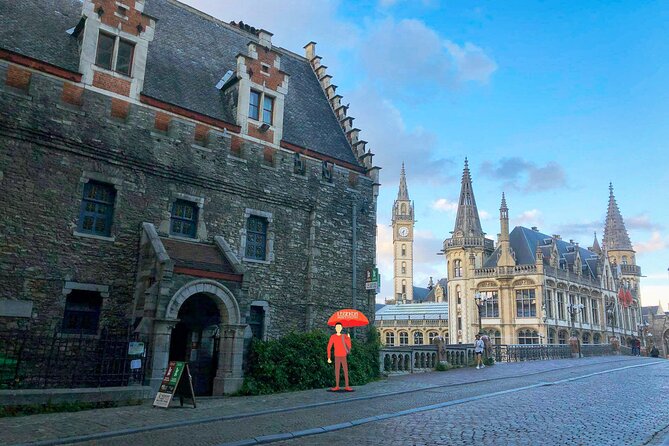
The Design Museum stop adds a welcome change of subject. Here, the guide uses one feature of the museum to explain the stubborn and rebellious character associated with the people of Ghent.
You do not enter as part of the tour, and admission is not included. The value is the local interpretation. Ghent’s identity is not presented as a collection of old stones. It is tied to civic pride and a willingness to resist outside control.
This is a good example of the tour’s method. It uses a building as a doorway into local character. You may not remember every architectural fact, but you are more likely to remember the idea that Ghent’s history is shaped by people who did not always accept authority quietly.
Same streets, a different route:
- Bruges: Small Group Boat Cruise and Guided Walking Tour
★ 4.8 · 4,102 reviews - Brussels: Guided Walking Tour
★ 4.6 · 3,560 reviews - Bruges: Walking Tour, Canal Boat Trip w/Beer Tasting Option
★ 4.4 · 2,759 reviews - Brussels Walking and Tasting Tour (Beers,Chocolates&Fries/Waffle)
★ 5.0 · 929 reviews
The Great Butchers’ Hall and the darker side of trade
At Het Groot Vleeshuis, you look across the water toward the medieval covered market. The building has an impressive setting, but the guide also shares darker facts about its past.
That contrast is useful. Medieval cities were not picture-book places. Food systems, public health, commerce, and power could be harsh and practical. The stop gives you a glimpse of the less polished side of the city’s old economy.
The tour does not include admission here. You see the structure from outside and use it as a story stop. If you want a full look inside, you will need to return separately.
Gravensteen, the Castle of the Counts
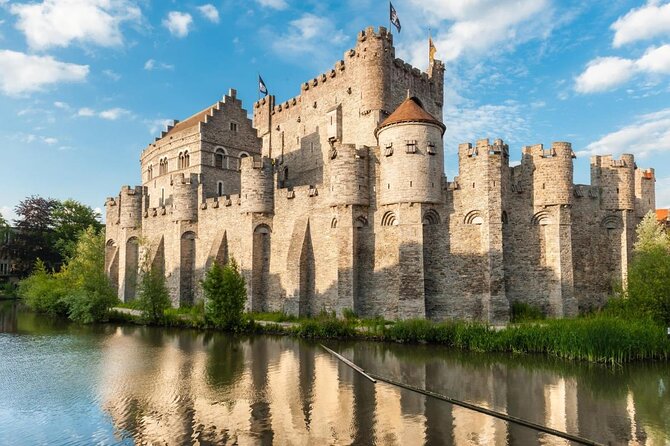
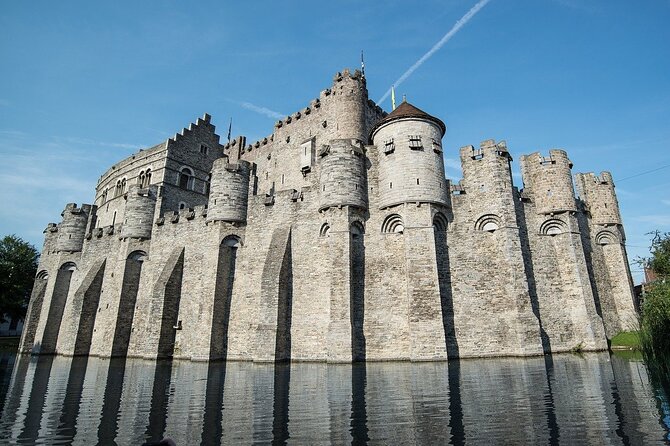
Gravensteen is one of the route’s major visual rewards. Unlike many castles located outside a city, this medieval stronghold sits right in the center of Ghent and remains remarkably complete.
The guide explains its past from outside, giving you a framework for understanding the castle before you decide if you want to pay for entry later. That is an important distinction. This is not a castle visit, and admission is not included.
I like seeing Gravensteen in the middle of the walk rather than at the very start. By then, you have learned about Ghent’s trade and civic power. The castle becomes part of that story, not an isolated attraction.
Ten minutes is enough for a strong introduction, but not enough to explore the interior, exhibits, or rooms. Plan a separate visit if medieval fortifications are high on your list.
St. Veerleplein, the square of death and life
The square in front of Gravensteen carries two contrasting labels: the square of death and the square of life. The guide explains the reason behind both.
This is exactly the sort of short local story that makes a walking tour worthwhile. A name on a map becomes a clue to how the square was used and remembered. You also get a pause after the castle, with time to take in the relationship between the fortress and the surrounding streets.
The stop lasts about 10 minutes. It is a compact history lesson, not a place where you linger for a long break, so wear comfortable shoes and keep water handy.
Huis van Alijn and the city’s old charitable institutions
The House of Alijn is described as Ghent’s only remaining god house, a charitable institution with roots as a hospital. The guide tells the unfortunate story of how it became one.
This stop broadens the tour beyond rulers and merchants. You get a look at care, illness, and religious charity in the city. It also shows how old buildings can carry several lives, changing purpose as Ghent changed around them.
The tour does not enter the museum. You see the building and hear its story from outside. If you enjoy social history, note the name so you can decide later if the interior deserves a closer visit.
Vrijdagmarkt and Ghent’s political memory
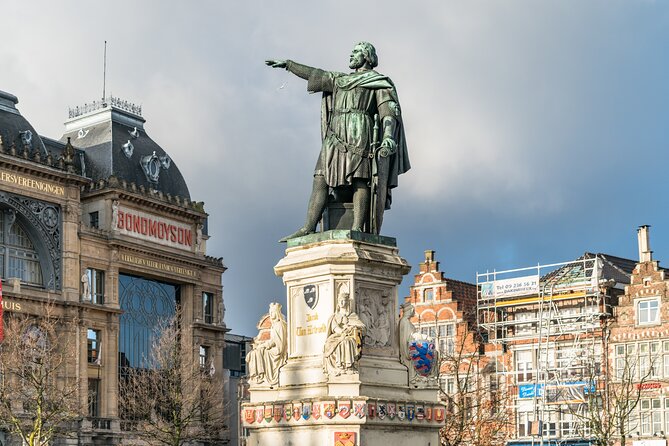
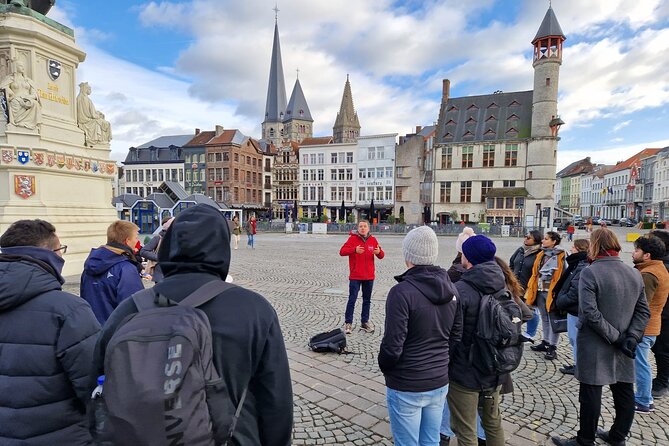
Vrijdagmarkt has played a major role in Ghent’s public life. The statue in the center gives the guide a way to explain both the square and the figure it honors.
This is one of the places where the city’s political character comes through most clearly. The tour connects public space with power, memory, and local pride. You are not merely told what the statue represents. You hear why this person and this square matter.
The pace remains brisk, about 10 minutes per stop. That keeps the tour moving, but it also means you should write down names if you want to research them later.
Werregarenstraat and Ghent’s sanctioned graffiti lane
Werregarenstraat offers a sharp shift from medieval monuments to modern street art. The city designated this lane so artists could paint freely while helping protect historic buildings from unwanted graffiti.
It is a practical urban solution and a fun visual break. The lane also reminds you that Ghent is not frozen in its past. You see a city trying to manage art, public space, and historic preservation at the same time.
The appearance of the lane can change, since street art is not fixed. That is part of the point. Do not expect a formal gallery or a carefully arranged display. Walk slowly, look up and down, and accept that some sections may be more impressive than others.
Ghent Town Hall and the city’s great conflict
At Stadhuis, the guide explains why the Town Hall looks confused. Its mixed architectural appearance reflects a major conflict in Ghent’s past.
This stop is especially useful because the building itself becomes evidence. Different styles are not just a design accident. They point to changes in power, taste, and political control.
Admission is not included, and the tour treats the Town Hall as an exterior stop. You get the story and the façade, then decide if you want to investigate the interior separately.
St. Bavo’s Cathedral and the Van Eyck masterpiece
St. Bavo’s Cathedral is one of the tour’s essential stops. The guide covers the building’s long past and its art treasures, especially the world-famous Ghent Altarpiece by the Van Eyck brothers.
You should not expect a full art-history lecture in 10 minutes. Instead, you get enough context to understand why the cathedral matters and why the altarpiece is central to Ghent’s cultural identity.
The cathedral itself is free to visit according to the tour information, while the tour does not promise entry or a detailed viewing session. If the altarpiece is a priority, set aside separate time and check the cathedral’s current visiting arrangements.
The Belfry, the people’s tower
The Belfry is the final major landmark before the tour ends. It is presented as the people’s tower, a sign of Ghent’s power, independence, and stubborn spirit.
The former prison façade also carries a strange legend, which gives the stop a lighter, more memorable finish. This blend of civic history and odd local tale is typical of the walk. You get facts, but you also get stories that are easier to carry with you.
Admission to the Belfry is not included. The tour ends at Belfort van Gent on Sint-Baafsplein, so you are well placed to visit the tower later if you want the interior and city views.
St. Nicholas’ Church closes the story
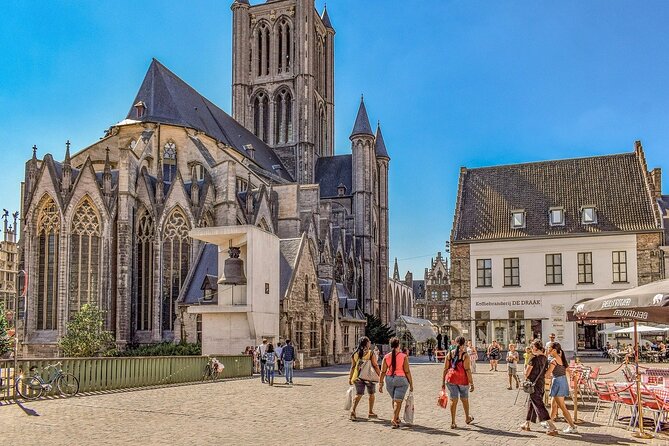
The last stop is St. Nicholas’ Church, an early 12th-century church overlooking Korenmarkt. St. Nicholas is the patron saint of merchants and sailors, making the church a fitting end to a route that began with Ghent’s trading past.
The façade itself illustrates a legend connected with the saint. It is a neat closing touch, bringing the tour back to the city’s commercial roots and its habit of attaching stories to stone.
The church is free to visit according to the tour details, but the guided experience focuses on the exterior and the surrounding square. You finish with a better sense of how Ghent’s churches, markets, canals, and civic buildings fit together.
Price, payment, and what you actually receive
The listed price is $3.62 per person, while the tour is described as pay what you want at the end. That makes it unusually inexpensive upfront, but you should understand the arrangement before you go. The guide’s income depends on the amount you choose to give after the walk.
For the money, the value is strong if you want orientation and local context rather than paid entry to attractions. You see the outside of major sights, learn the basic story of Ghent, and receive suggestions for food, beer, chocolate, and things to do afterward.
One negative account described confusion over being asked to pay again outside the booking platform, with a large amount requested for a family group. That is not consistent with the normal pay-at-the-end description, but it is a practical warning. Keep your mobile ticket and payment record, and confirm the payment arrangement at the start if anything seems unclear.
Pace, group size, and practical comfort
The walk lasts about two hours and covers central Ghent at a steady pace. You will be on your feet for the full route, and the old center includes cobbled surfaces that may be tiring for some people.
The maximum group size is 35. That is manageable for a city walk, though the experience will feel more personal with a smaller group. A microphone may be used, especially when the group is larger, but you should still stay close enough to see and hear the guide.
The tour is offered in English and uses a mobile ticket. It is near public transportation, service animals are allowed, and most people can take part. It requires good weather and a minimum number of participants. If poor weather or low enrollment cancels the walk, you are offered another date or a refund.
Free cancellation is available up to 24 hours before the start time. Within 24 hours, the amount paid is not refunded, and changes are not accepted.
Who should book this Ghent walking tour
I would choose this tour for a first visit, especially if you have only a day or two in Ghent. It gives you a usable map of the center and helps you decide which places deserve a return visit.
It also suits you if you enjoy history delivered through legends, odd details, and local character. The guides have been praised for humor, clear English, warmth, and practical recommendations. Some, including Kasia and Kenny, were singled out for making the route both informative and easy to follow.
You may want another option if you prefer a private group, a slow architectural study, or long interior visits. This walk moves from stop to stop, and several landmarks are explained from outside. One account also found the commercial recommendations, especially chocolate shops, too frequent. If you prefer history without shopping suggestions, that is worth keeping in mind.
Should you book Legends of Gent?
Yes, if you want a low-cost first look at Ghent that mixes major landmarks with local stories. The strongest reasons are the central route, the thoughtful sequence of stops, and the guides’ repeated success with humor and clear storytelling.
Book it early in your stay, then use the final food, beer, and sightseeing tips to shape the rest of your time. Bring comfortable shoes, arrive ready to walk, and treat the tour as an orientation rather than a substitute for entering Gravensteen, the Belfry, or St. Bavo’s Cathedral. With that expectation, it offers a lot of Ghent for very little upfront cost.
FAQ
How long does the Legends of Gent tour last?
The tour lasts approximately two hours.
Where does the tour begin?
It begins at Hostel Uppelink, Sint-Michielsplein 21, 9000 Gent, Belgium.
Where does the tour end?
The walk ends at the Belfry of Ghent, also called Belfort van Gent, on Sint-Baafsplein.
What language is the tour offered in?
The tour is offered in English.
Is the tour pay what you want?
Yes. You pay what you feel the tour was worth at the end. The booking information also shows a small per-person price, so keep your mobile ticket and confirm the payment arrangement when you arrive.
Are attraction admission fees included?
The tour includes all listed fees and taxes, but admission is not included for stops such as the Design Museum Gent, Gravensteen, Ghent Town Hall, and the Belfry. The route mainly explains these sights from outside.
How many people can join the tour?
The maximum group size is 35 people.
Can I cancel the tour for a refund?
You can cancel at least 24 hours before the start time for a full refund. Cancellations or changes made within 24 hours are not refunded or accepted. If poor weather or an insufficient number of participants causes cancellation, you are offered another date or a full refund.
Just added around Belgium
- Brussels: Guided Walking Tour with Optional Beer Tasting★ 4.2 · 89 reviews
- Brussels: Private Walking Tour with a Local★ 4.4 · 102 reviews
- Brussels Highlights: Walking & Bus Tour with Waffle Tasting★ 4.2 · 233 reviews
- Brussels: Chocolate Appreciation and Tasting Walking Tour★ 4.8 · 178 reviews
- Brussels: Chocolate Workshop and Guided Walking Tour★ 4.6 · 263 reviews
- Brussels: Walking Food Tour with Chocolate, Beer, & Waffles★ 4.7 · 318 reviews
- Brussels: City Highlights Walking and Tasting Tour★ 4.9 · 505 reviews
- Bruges: Private Historical Highlights Walking Tour★ 4.7 · 191 reviews
History Walking Tours, compared.



Berlin’s Best: 2 Hour Walking Tour Third Reich and the Cold War
Read our review →
Third Reich Berlin: Hitler and WWII Walking Tour
Read our review →
New Orleans Garden District History Walking Tour
Read our review →
Cartagena: Historic Center and Getsemaní Shared Walking Tour
Read our review →

Imperial Palace and Shogun Historical Walking Tour
Read our review →Browse the lists this tour appears in