

REVIEW · CHARLESTON
Historic Charleston Walking Tour: Rainbow Row, Churches, and More
Charleston’s best introduction may be on foot, where a pastel row of old houses, iron gates, graveyards, cannons, and grand homes unfold at an easy pace. This two-hour Historic District walk covers the city’s most recognizable sights while adding the stories that turn old buildings into places you can understand.
I like the mix of architecture and history, especially the Charleston single houses and the waterfront views toward Fort Sumter. I also like the choice of morning or afternoon departures, plus admission to the Powder Magazine, a useful extra at a price of $40.50. The main caution is that the route is outdoors in all weather, and one itinerary can vary from another, with one guest reporting that the Battery and Fort Sumter were not covered as expected.
Key points to know before booking

- Rainbow Row gives you an instant Charleston photo stop: See thirteen colorful historic homes in one of the city’s most familiar scenes.
- The Battery adds open views and military history: Expect cannons, cannon balls, palmettos, southern mansions, and a distant view of Fort Sumter.
- The guide makes the difference: Gordon, Diane, Eric, Graham, David, Lisa, and others have been praised for clear explanations, humor, and thoughtful answers.
- Powder Magazine admission is included: You get more than an outdoor walk, with entry to one of the city’s oldest historic sites.
- The pace is leisurely, but you will stand and walk for two hours: Comfortable shoes, water, and weather-ready clothing matter.
- The group is capped at 20 people: That is small enough for questions without turning the outing into a private tour.
A useful first look at Charleston’s Historic District
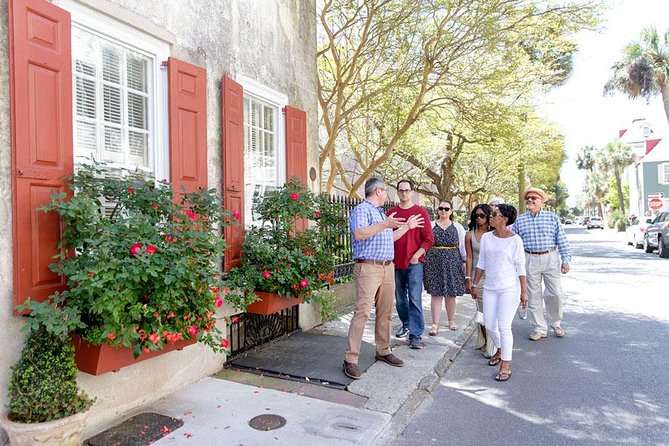
This walk is designed to help you get your bearings before spending more time around Charleston. You meet at 115 Meeting Street and return to the same place, so there is no need to arrange a ride between stops. The tour runs for about two hours and does not include transportation, which is fine for an activity centered on the compact historic core.
The setting does much of the work. You move through cobblestone streets and past custom iron gates, gardens, courtyards, churches, graveyards, and homes from the 18th and 19th centuries. The guide adds the context, explaining how Charleston developed and how its buildings reflect both wealth and practical city life.
The tour also addresses the Revolutionary and Civil War periods. That broad time span gives the walk more weight than a simple architecture stroll. You are not only looking at handsome façades. You are also hearing how the city’s past shaped its streets, homes, public spaces, and modern identity.
The group limit of 20 is a good compromise. You should not expect the intimacy of a private walk, but the size allows the guide to speak to the full group while leaving room for questions. Several guides have been singled out for answering questions patiently, pausing for photographs, and keeping everyone together.
A few more walking tours around Charleston worth a look
- Historic Charleston Guided Sightseeing Walking Tour
★ 5.0 · 6,216 reviews - Ghosts of Charleston Night-Time Walking Tour with Unitarian Church Graveyard
★ 4.5 · 2,835 reviews - Hidden Alleyways and Historic Sites Small-Group Walking Tour
★ 5.0 · 2,335 reviews
Rainbow Row and the Charleston single house
Rainbow Row is the obvious early highlight. The thirteen colorful houses date from the 18th century, and the row is described as the longest pre-Revolutionary structure in America. You have about 10 minutes here, enough for photographs and a short explanation of why the buildings are so closely associated with Charleston.
The colors make this stop easy to enjoy, but the better reason to pay attention is the way the homes show Charleston’s layered past. The row is not simply a bright backdrop. It is part of the city’s older fabric, and the guide helps connect the façades to the surrounding streets and waterfront.
As you continue, look for Charleston single houses. These homes are usually one room deep, with the narrow end facing the street and the entrance placed along the long side, often reached from an alley or side passage. This unusual layout makes much more sense once you see several examples together.
I like this part of the walk because it teaches you how to read the city. Instead of seeing a collection of attractive old houses, you begin to notice their orientation, gates, porches, courtyards, and relationship to the street. That is useful later when you explore Charleston on your own.
The tradeoff is that Rainbow Row can be crowded and visually familiar from photographs. The value comes less from a long stop and more from the guide’s explanation, followed by the wider architectural tour.
Waterfront Battery views toward Fort Sumter
The waterfront portion brings a change of pace. At the Historic Waterfront Battery, you can see southern mansions, cannons, cannon balls, palmettos, and broad views across the water toward Fort Sumter. It is one of the tour’s best spots for photographs.
This is a visual tour of Fort Sumter, not a boat trip or a visit to the fort. That distinction matters. If you want to walk inside Fort Sumter, you will need a separate excursion. Here, the fort works as part of the larger view and as a prompt for the guide’s discussion of Charleston’s military past.
The Battery also helps you understand Charleston’s position on the water. Earlier streets and buildings can feel enclosed by walls, gardens, and narrow passages. At the waterfront, the city opens out. Cannons and military references sit beside elegant homes and palms, creating the kind of contrast that makes Charleston more interesting than a row of preserved façades.
One practical point deserves attention: the route description places strong emphasis on the Battery and Fort Sumter, but one guest said those parts were not mentioned during a particular walk. I would ask the guide at the start if these stops are essential to your plans. Tour routes can shift, and the experience depends partly on the guide and the day.
Churches, graveyards, gardens, and old streets
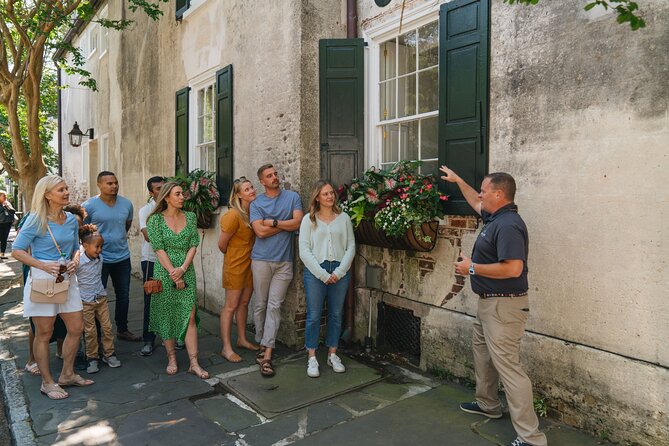
The walk is not limited to major postcard sights. You also pass historic churches and graveyards, along with hidden gardens and courtyards. These quieter spaces help break up the grand homes and give you a closer look at the city’s older neighborhoods.
Churches and graveyards bring a different sort of history to the route. They show how public life, worship, burial customs, and urban planning were tied together. The guide may also use these places to explain the city’s difficult past, an important part of Charleston that should not be softened into a story of pretty houses alone.
Several guides have been praised for handling that past with care while keeping the tour engaging. That balance matters. A good walk through Charleston should be interesting without treating serious subjects as mere decoration. The best guides appear to combine dates and facts with stories that help you understand the people and choices behind the buildings.
The gardens and courtyards are another welcome change from the main streets. You may not enter every private space, but the tour includes views of outdoor areas that are easy to miss when walking without local guidance. Shade stops are built into the pace when possible, which is especially helpful during hot weather.
This is still a walking tour, not a seated lecture. You will be on your feet for about two hours. Even guests who describe the pace as easy recommend comfortable shoes, and that advice is worth taking seriously on cobblestones and warm pavement.
Same streets, a different route:
- Highlights of Charleston Guided Walking Tour
★ 5.0 · 2,206 reviews - Charleston French Quarter or Brunch Food Tour with 7+ Tastings
★ 5.0 · 1,853 reviews - Charleston Haunted Booze and Boos Ghost Walking Tour
★ 5.0 · 1,569 reviews - Charleston’s Pleasing Terrors Night-Time Walking Ghost Tour
★ 5.0 · 1,345 reviews
Powder Magazine adds an indoor history stop

Admission to the Powder Magazine Museum is included in the tour price. That is a useful addition because it gives the experience an indoor historic site rather than keeping every minute on the street.
The Powder Magazine is tied to Charleston’s military story, so it fits naturally with the Revolutionary and Civil War material covered during the walk. The stop also gives you a change of setting and a chance to see history presented inside an actual historic structure.
The supplied details do not specify how long the group spends inside or exactly where it falls in the route. I would treat it as an included bonus rather than plan your entire day around a lengthy museum visit. The main product remains the guided walk through the Historic District.
What the guides bring to the walk

The most praised feature is the guide quality. Gordon is repeatedly described as clear, entertaining, and especially strong on Charleston’s wars. Diane is noted for amusing stories and a large store of local information. Eric is described as personable and willing to answer every question, while Graham is praised for explaining South Carolina’s three major wars in a way that was easy to follow.
Other guides named in the feedback include David, Lisa, Nelson, Victoria, Boyd, Andrew, Faith, Lacie, Jon Battem, Linda, Fran, and Keith. The consistent strengths are explanation, humor, patience, and the ability to keep the group interested for two hours.
That does not mean every guide will present the same route or emphasize the same details. A walking tour is partly a performance, and individual style matters. One guide may focus more on architecture, another on wars, another on social history or local stories. The strong overall rating of 4.9 from 691 ratings, with 97 percent recommending the experience, suggests a dependable standard, but you should still allow for some variation.
I especially value the reports of guides stopping in shaded places, making room for photographs, and answering questions. Those small choices affect comfort more than a long list of sights. A guide who can keep a group together without rushing is worth paying for.
Families can also make good use of this format. One account describes children aged 11 and 14 staying engaged for the full tour. Another notes that a stroller was accommodated without making the family feel like a problem. The tour is not built as a children’s program, but a lively guide can make the material work for older children and teenagers.
Is $40.50 a fair price?

At $40.50 per person, this is not the cheapest way to see Charleston’s old center, but the price is reasonable if you want structure and interpretation. You are paying for a local guide, a planned route, the Battery and major architectural sights, and admission to the Powder Magazine.
The value is strongest on a first visit. You can walk these streets for free, but it is easy to pass the most important details without knowing what to look for. The explanation of Charleston single houses, the context around Rainbow Row, and the connection between the waterfront and military history give the walk practical value beyond transportation from one sight to another.
The tour also saves planning time. You do not need to build your own route through the Historic District or decide which streets, churches, graveyards, and viewpoints deserve attention. At the end, you should have a clearer map in your head and a better sense of which areas you want to revisit.
The value is weaker if you prefer to explore entirely alone, dislike group walks, or want a long visit inside Fort Sumter. It is also less appealing during punishing heat if you are not comfortable standing outdoors. The morning departure may be the better choice in warm weather, while the afternoon option gives you scheduling flexibility.
Timing, weather, and practical comfort

Arrive 15 minutes before the start. The tour leaves on time, and one guest specifically warned that late arrivals may be left behind. Since the experience ends back at the meeting point, you can plan lunch or another activity afterward, but leave a little breathing room rather than booking something immediately.
The tour operates in all weather conditions, and the cancellation terms allow a full refund if you cancel at least 24 hours before the start. Changes or cancellations within 24 hours are not refundable. If poor weather cancels the tour, you are offered another date or a full refund. The same choice applies if the minimum number of participants is not reached.
Wear comfortable shoes. Bring water, use sun protection, and dress for the forecast. Shade stops may be available, but you should not count on sitting throughout the route. Service animals are allowed, the meeting point is near public transportation, and most people can participate.
Who should book this Charleston walk?
I would recommend it to a first-time visitor who wants an organized introduction without spending half a day on a bus. It also suits history fans, architecture lovers, couples, families with older children, and anyone who wants a guide to explain the city’s difficult past as well as its handsome streets.
It is a good first-day activity because it gives you a working map of the Historic District. Afterward, you can return to the homes, waterfront, churches, or streets that caught your attention. The two-hour length leaves room for a museum, meal, or further wandering.
I would think twice if your main goal is entering Fort Sumter, avoiding outdoor walking, or spending a long time at each individual site. This is an overview with depth, not a full museum day or a private architectural consultation.
Should you book it?
Book this tour if you want a friendly, well-paced introduction to Charleston’s old center, with strong attention to architecture, military history, and local stories. The Powder Magazine admission improves the value, and the guide quality appears to be the experience’s greatest strength.
Before setting out, confirm that the Battery and the Fort Sumter viewpoint are included in that day’s route if they are priorities for you. With that small check, comfortable shoes, and a weather-ready outfit, this is a sensible way to see a large section of Charleston in two hours without rushing.
FAQ
How long does the Charleston walking tour last?
The tour lasts approximately two hours. You should expect to stand and walk for the full outing at a leisurely pace.
Where does the tour begin and end?
It begins at 115 Meeting Street, Charleston, South Carolina 29401, and ends back at the same meeting point.
Is admission to the Powder Magazine included?
Yes. Admission to the Powder Magazine Museum is included in the tour purchase.
Does the tour visit Fort Sumter?
The experience includes a visual view of Fort Sumter from the waterfront. It does not include transportation to or admission inside the fort.
Are morning and afternoon departures available?
Yes. You can choose a morning or afternoon tour.
What happens if the tour is canceled because of poor weather?
You will be offered a different date or a full refund. You can also cancel at least 24 hours before the start time for a full refund.
Just added around Charleston
- Charleston walking tour with a Citadel history professor★ 5.0 · 105 reviews
- Charleston: 90-Minute Ghost & Graveyard Walking Tour★ 4.5 · 75 reviews
- Charleston: 90-Minute Ghost and Dungeon Walking Tour★ 4.2 · 266 reviews
- Charleston: History and Architecture Guided Walking Tour★ 4.8 · 349 reviews
- Charleston: Old Walled City Historical Walking Tour★ 4.7 · 705 reviews
- Savor the Flavors of Charleston Walking Food Tour★ 4.5 · 881 reviews
- Charleston Ghost & Graveyard Night-Time Guided Walking Tour★ 4.5 · 1,100 reviews
- Charleston historical walking tour with a Professor of History at The Citadel★ 5.0 · 1,284 reviews
Walking Tours, compared.

Magical London: Harry Potter Guided Walking Tour
Read our review →
Reykjavik Food Walk – Local Foodie Adventure in Iceland
Read our review →
History and Hauntings of Salem Guided Walking Tour
Read our review →
New Orleans Premier Ghost, Voodoo and Vampire Walking Tour
Read our review →
Amsterdam Anne Frank: Small-Group Walking Tour & Local Guide
Read our review →

Edinburgh Castle: Guided Walking Tour with Entry Ticket
Read our review →
Anne Frank’s Story – Guided Walking Tour through Amsterdam
Read our review →Browse the lists this tour appears in