
REVIEW · GRANADA
Granada: Historic Center and Lower Albaicin Walking Tour
Granada’s story comes into focus as you walk from the Catholic Monarchs monument through grand squares, old market lanes, and the lower Albaicin. I like that this tour links the city’s Islamic past with the Reconquista of 1492, instead of treating each monument as a separate photo stop. I also like the finish: a clear view toward the Alhambra from the Albaicin.
The main catch is the uphill walking. The lower Albaicin has narrow streets and slopes, and the tour is not suitable for people with mobility impairments. English is offered, but two guests found a guide’s accent difficult to follow at times, so ask questions when needed.
Key points at a glance
- A useful first-day orientation: Cover a large part of central Granada in 2.5 hours and pick up ideas for the rest of your visit.
- A strong history thread: Follow Granada from its Islamic heritage through the 1492 Reconquista and later Christian buildings.
- A well-chosen route: See the Corral del Carbón, Alcaiceria, Bib Rambla, Madraza, Cathedral, and lower Albaicin.
- An Alhambra photo stop: Get a memorable view of Granada’s most famous landmark without booking an Alhambra entrance.
- Guides make the difference: Pablo, Jaime, Irene, Anna, Rocio, Emilio, and others are praised for clear storytelling and patience.
- Good value at $16: It is an inexpensive way to get context, orientation, and local suggestions before exploring on your own.
Why this walk helps you understand Granada
Granada can feel like several cities layered on top of one another. The Christian center is formal and monumental, the old Islamic market area is tucked into tight streets, and the Albaicin rises above it all in a maze of whitewashed lanes.
This tour gives those layers a sensible order. You begin near the monument to Isabel la Católica and Cristóbal Colón, right in the center, then move through the main historic district before climbing into the lower Albaicin. The route is less about entering monuments and more about understanding how the city fits together.
That distinction matters. You will see important buildings from outside, but the guide supplies the connections that a quick walk with a guidebook may miss. You learn why Granada became such a key city, how its Islamic heritage shaped the streets and buildings, and why 1492 is so central to the city’s identity.
I would take this walk early in a Granada stay. It gives you a mental map, points out places you may want to revisit, and helps you recognize details when you later explore alone.
More History Walking Tours in Granada:
- Berlin: Third Reich & Cold War Guided Walking Tour
★ 4.9 · 8,378 reviews - Munich: Third Reich & WWII Walking Tour
★ 4.6 · 6,181 reviews - Berlin’s Best: 2 Hour Walking Tour Third Reich and the Cold War
★ 5.0 · 5,486 reviews
Starting at the Catholic Monarchs monument
The meeting point is in front of the monument to Isabel la Católica and Cristóbal Colón. This is a practical location in the heart of Granada, close to many of the places covered during the walk.
Your guide begins with the city’s major historical turning point. The Reconquista concluded in Granada in 1492, when the Catholic Monarchs took the city. That event changed the city’s government, religion, architecture, and public spaces, while much of the earlier Islamic street plan and built heritage remained part of daily life.
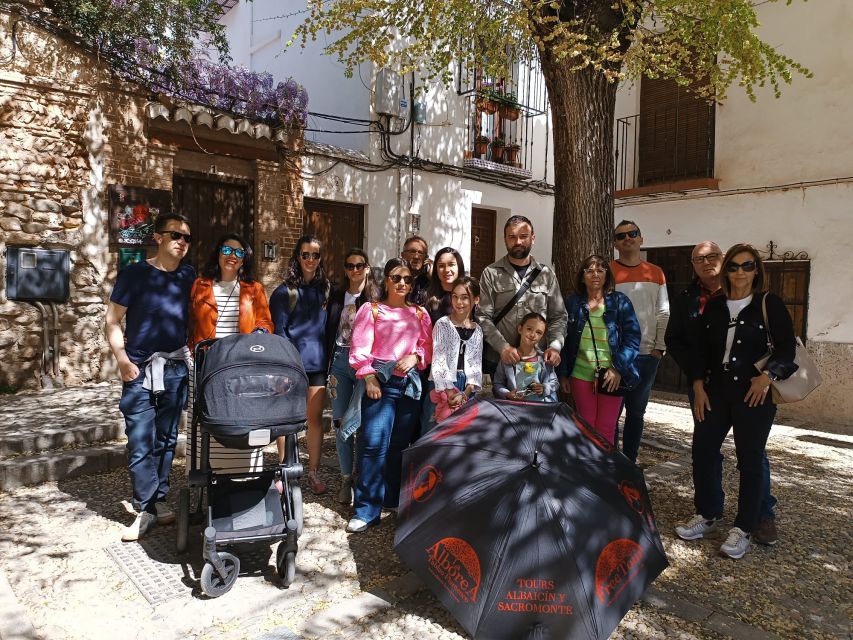
A good guide can make this opening more than a list of dates. Pablo, Jaime, Irene, Anna, and other guides received especially strong praise for making the past clear and entertaining. Several guests also appreciated being able to ask questions about architecture, old paving stones, and the way Granada developed.
The guide’s style may vary. Some groups had a near-private experience with only a few people, while group size can change from one departure to another. Smaller groups allow more questions and easier pacing, but you should not book this expecting a private tour every time.
Corral del Carbón and Granada’s commercial past
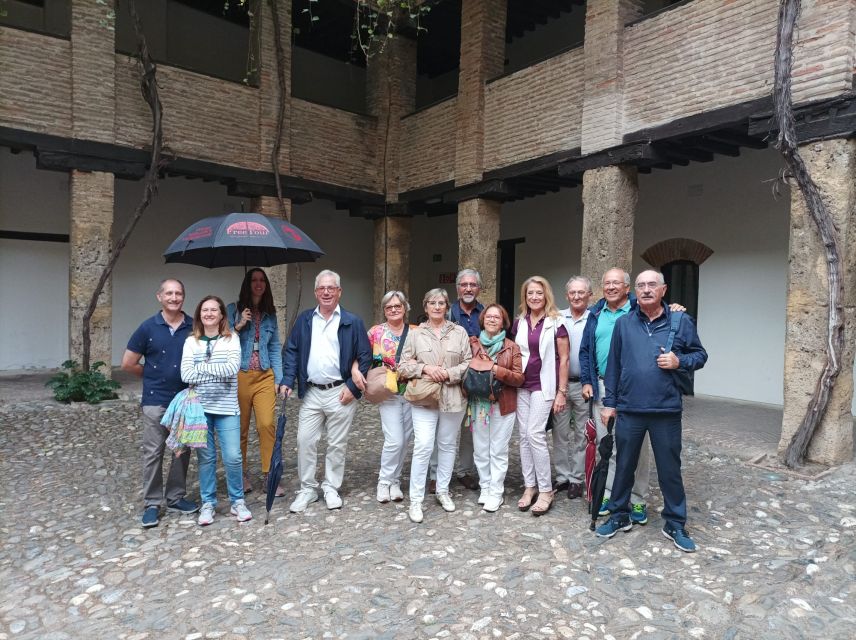
One early highlight is the Corral del Carbón, a historic building tied to Granada’s trading life. Its name is often translated as Coal Corral, but its former role was more important than the name suggests: it served as a lodging and storage place for merchants and goods.
The stop helps you picture Granada as a major crossroads rather than simply a city built around the Alhambra. Look at the entrance and the enclosed layout while your guide explains how commerce worked in the old city.
This is also a good example of the tour’s value. You may pass a building like this on your own and admire the doorway, but a short explanation gives it a place in the city’s wider story.
The Alcaiceria and the city’s Islamic imprint
The Alcaiceria is one of the most atmospheric parts of the central route. Its narrow shopping lanes recall the old bazaar that once occupied this part of Granada.
The area has changed over time, and you should not expect an untouched medieval market. Still, the tight streets and traditional setting offer a strong sense of the city’s commercial and Islamic past. The guide explains how this district fits into the older center and how later changes affected it.
I like this section because it shows history at street level. Instead of only looking at grand churches and official buildings, you get a feel for how people moved, traded, and met in the city.
Keep your attention on the route here. The lanes can be busy, and it is easy to get distracted by shops or lose sight of the group. Comfortable shoes are essential, not just because of the distance but because central Granada includes uneven paving and frequent changes in level.
A few more walking tours around Granada worth a look
- Granada: Albaicín and Sacromonte Guided Sunset Walking Tour
★ 4.9 · 2,962 reviews - Guided Walking Tour of the Alhambra in Granada
★ 4.0 · 863 reviews - Granada: Albaicín and Sacromonte 2.5-Hour Walking Tour
★ 4.7 · 777 reviews - Granada: Albaicín and Sacromonte Walking Tour
★ 4.5 · 665 reviews
Plaza Bib Rambla and Granada’s public heart
Plaza Bib Rambla gives the walk a wider, more open pause. The square is one of the city’s best-known public spaces, with the Giants Fountain as a key feature.
This is the sort of stop where a guide’s explanation adds real value. A square can look attractive without telling you how it functioned. Here, you get context about the public center of Granada and the buildings and streets that feed into it.
The tour also takes you past the Royal High Court, the Royal Chancillería, and the former Royal Jail. These buildings bring the political and legal side of Granada into the route. You see how the city’s center changed after the Christian conquest and how authority was expressed through courts, government buildings, and religious institutions.
You should not expect long interior visits at every monument. The strength here is the sequence of exterior views and the story connecting them.
The Madraza and the Cathedral
The Madraza is one of the clearest reminders that Granada was an important center of Islamic learning before 1492. Its presence gives the guide a chance to explain more than warfare and royal politics. You hear about education, culture, and the intellectual life associated with the city’s Muslim period.
The Cathedral then presents a very different architectural and religious statement. Seeing these places in the same walk makes Granada’s changing identity easier to understand. The contrast is not abstract: it is right there in the buildings, street plan, and public spaces.
The route also includes the Church of Saint Ana. Together with the Cathedral and other Christian buildings, it shows the scale of the transformation that followed the Reconquista.
I would pay close attention during this part, even if architecture is not your main interest. The guide can point out how Granada’s Islamic and Christian eras overlap, rather than presenting them as completely separate chapters.
Entering the lower Albaicin
After the central streets, the route moves into the lower Albaicin. This is where the walk becomes more physical and more intimate.
The Albaicin is famous for its narrow, winding streets and Moorish character. The lower section offers a gentler introduction than heading straight into the highest parts of the neighborhood, but it still includes uphill walking. One family found that people with knee and heart problems needed breaks, and their guide adjusted the pace because the group was small.
That is useful advice. If you have health concerns, be realistic about the terrain and tell the guide at the start. The tour is listed as unsuitable for people with mobility impairments, and this should be taken seriously.
The reward is the change in atmosphere. The central district is organized around major streets and monuments. The Albaicin feels more enclosed, irregular, and residential. Its lanes preserve the memory of the old Muslim quarter in a way that a formal monument cannot.
This is also the part where comfortable shoes matter most. Wear shoes with good support, and avoid treating the walk as an opportunity for stylish but painful footwear.
The Alhambra viewpoint
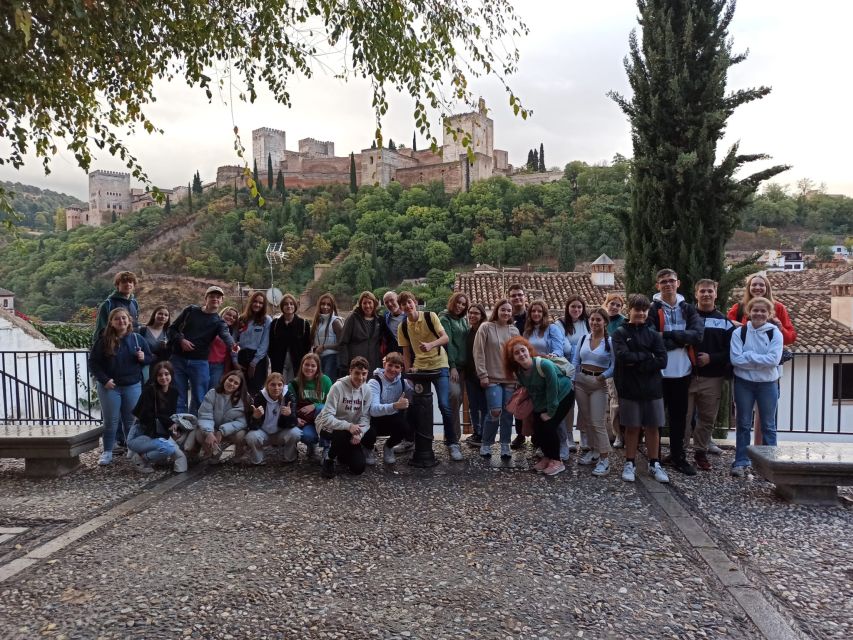
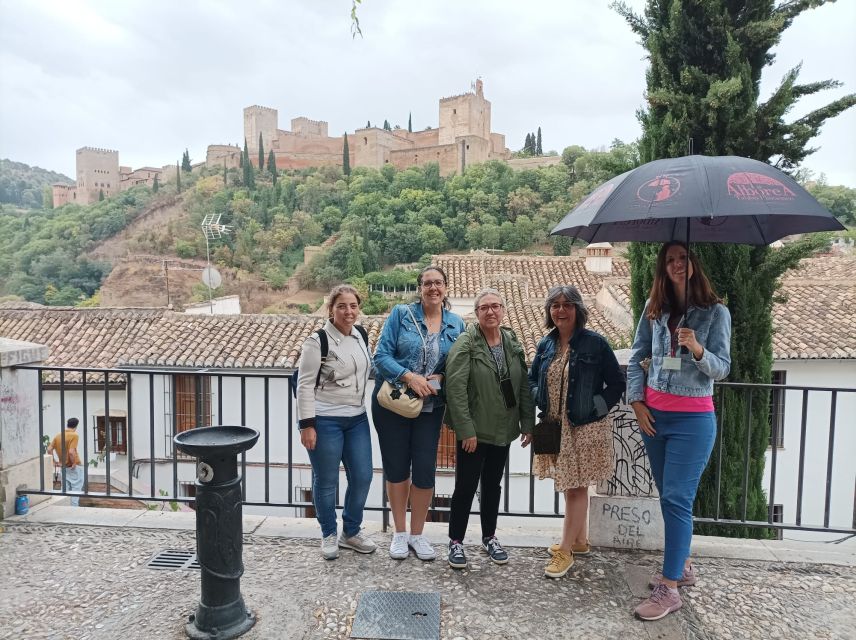
The final viewpoint is one of the tour’s strongest reasons to book. From the lower Albaicin, you stop for a view toward the Alhambra, Granada’s most famous landmark.
The viewpoint gives you a chance to take photographs, but the value is more than the picture. You see the Alhambra from across the city rather than from inside its walls. The setting helps you understand its position above Granada and its relationship to the older neighborhoods below.
This does not replace an Alhambra visit. The walking tour does not include entry to the palace and fortress complex. Instead, it gives you a useful first look and a better sense of how the monument fits into Granada’s geography.
Bring your camera, but do not rush the stop. Ask the guide about what you are seeing, and use the moment to connect the Islamic heritage discussed earlier with the landmark in front of you.
The guides and the style of the walk
The strongest part of this experience is the guide. Pablo is praised for combining useful detail with an easy manner. Jaime is described as patient and deeply engaged with Granada’s past. Irene is repeatedly singled out for answering questions and involving the group. Anna, Rocio, Emilio, Elene, and others also receive praise for clear explanations, friendliness, and practical help.
That consistency matters because a historical walking tour depends heavily on delivery. The buildings are already there, but a good guide helps you notice what matters and keeps the story from becoming a string of dates.
Some guides also add useful follow-up advice, including places to eat and sights to visit later. One guide included a short, peaceful explanation of flamenco, which added a cultural note beyond the main route.
The only clear concern is language clarity for some English speakers. Two guests found an accent hard to understand at times, although they still followed most of the tour and valued the content. If you miss a point, ask the guide to repeat it. The guides are used to questions, and the tour appears to work best when the group interacts rather than simply walks behind the leader.
Is $16 good value?
At $16 per person, this is a strong value if you want orientation and historical context. You are paying for 2.5 hours with a live guide and a route that covers several central monuments plus the lower Albaicin and an Alhambra viewpoint.
The price is especially attractive for a first visit. A self-guided walk costs less, of course, but you would need to research the buildings and build the route yourself. This tour saves that preparation and gives you a chance to ask questions in real time.
The value is not in entering every monument. If you want detailed interior visits, timed admission, or a specialist architecture tour, this is not the right product. Think of it as a city introduction with a strong historical thread.
The reserve-now, pay-later option can also help if your schedule is still changing. You can cancel up to 24 hours in advance for a full refund, according to the booking terms.
Who should book this Granada walk?
I would choose this tour if you are visiting Granada for the first time, enjoy history, or want a practical overview before choosing what to explore in depth.
It suits couples, families with older children, and independent visitors who like having a guide for the first few hours and then wandering alone. It can also work well for a small group because the guides have shown patience with questions and different walking speeds.
You should think twice if steep streets are difficult for you. The Albaicin section includes uphill walking, and the activity is not suitable for people with mobility impairments. Also consider your language comfort if you need very slow, simple English.
For the best experience, wear comfortable shoes, arrive at the monument meeting point with time to spare, and keep the rest of your day flexible. The tour gives you several ideas for later, so you may want to revisit a square, return to the market lanes, or follow a guide’s suggestion for food or flamenco.
My verdict: book it for context and a view
Book this walk if you want to understand Granada before tackling the Alhambra on your own. The route covers the city’s central landmarks, explains the shift from Islamic Granada to the Christian city of 1492, and ends with a memorable view from the lower Albaicin.
I would not choose it for extensive interior access or a completely flat route. For most first-time visitors who can manage the hills, though, $16 buys a useful introduction, a friendly local guide, and a much clearer sense of how Granada’s old quarters connect.
FAQ
How long does the Granada walking tour last?
The tour lasts 2.5 hours.
What language is the tour offered in?
The live tour guide is available in English or Spanish.
Where is the meeting point?
Meet your guide in front of the monument of Isabel la Católica and Cristóbal Colón in central Granada.
Does the tour include entry to the Alhambra?
No. The tour includes an Alhambra viewpoint from the lower Albaicin, but entry to the Alhambra is not listed as part of the activity.
Is the tour suitable for people with mobility impairments?
No. The activity is listed as unsuitable for people with mobility impairments, and the route includes uphill walking in the lower Albaicin.
Can I cancel the booking?
Yes. You can cancel up to 24 hours in advance for a full refund.
Just added around Granada
- Walking tour in Alhambra, Nasrid Palaces and Generalife★ 3.0 · 135 reviews
- Sunset Walking Tour in Albaicín & Sacromonte★ 5.0 · 95 reviews
- Granada’s Hidden Treasures: Albayzin and Sacromonte Walking Tour★ 4.5 · 575 reviews
- Albayzin and Sacromonte Guided Walking Tour in Granada★ 4.5 · 98 reviews
- Albaicín & Sacromonte Walking Tour★ 4.5 · 87 reviews
- Granada: Albaicín, Sacromonte & Museum of Caves Walking Tour★ 4.9 · 244 reviews
- Granada: Albayzin and Sacromonte Walking Tour★ 4.6 · 231 reviews
- Granada: Walking Food Tour★ 4.8 · 460 reviews
History Walking Tours, compared.


Berlin’s Best: 2 Hour Walking Tour Third Reich and the Cold War
Read our review →
Third Reich Berlin: Hitler and WWII Walking Tour
Read our review →
New Orleans Garden District History Walking Tour
Read our review →
Cartagena: Historic Center and Getsemaní Shared Walking Tour
Read our review →
Imperial Palace and Shogun Historical Walking Tour
Read our review →Browse the lists this tour appears in