
REVIEW · BERLIN
East Berlin and the Wall: Walking Tour
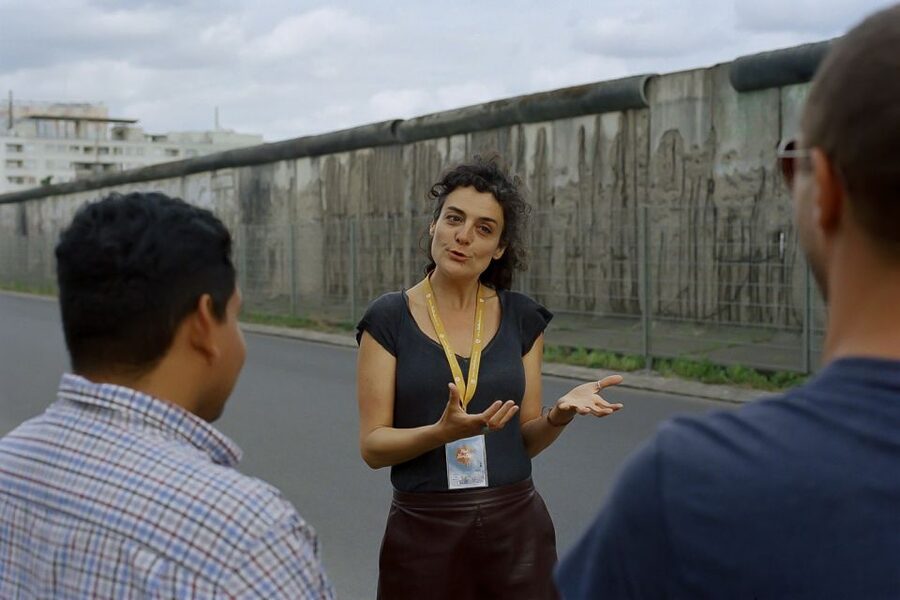
Berlin’s Wall story becomes far clearer when you follow it across the city, from a former ghost station to the preserved death strip at Bernauer Strasse and the murals of the East Side Gallery. This is not just a walk past painted concrete. It connects the Wall to daily life, escape attempts, STASI pressure, peaceful protests, and the fall of the GDR.
I like two things here: the route uses public transport to link sites that are too spread out for a simple stroll, and the small-group format leaves room for a guide to explain the human side of the history. Guides named in recent bookings include Paul, Paolo, Elisa, Claudia, and Catherine, with Catherine also adding personal testimony to her tour. The main drawback is that you must buy your own AB transport ticket, and three to three and a half hours on foot and public transit calls for comfortable shoes.
Key points to know before booking
- Bernauer Strasse gives the Wall its human scale: Original sections of the death strip and stories of escape attempts make the division easier to understand.
- The former Nordbahnhof ghost station adds a rare Cold War detail: It was closed for nearly three decades after the Wall went up.
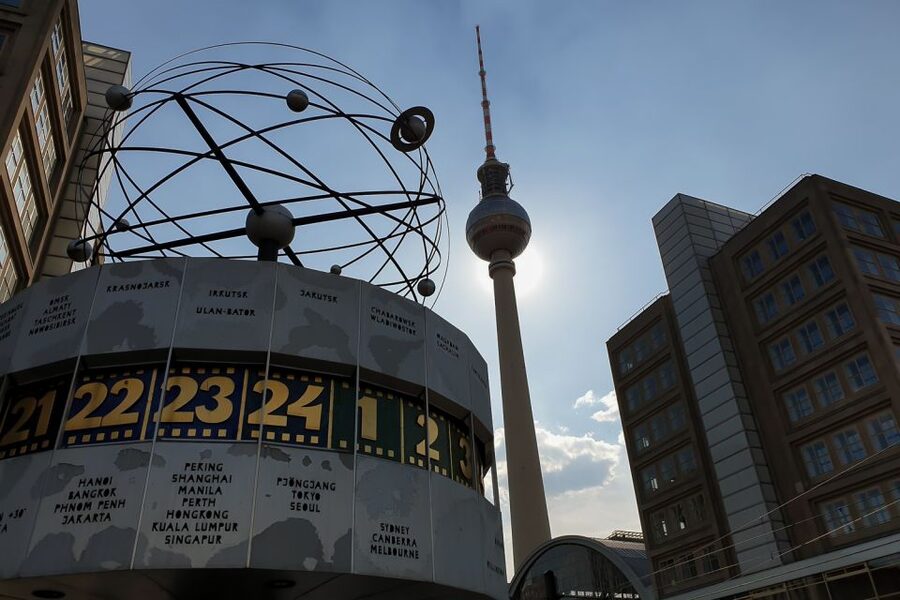
- Alexanderplatz connects history to protest: The square helps explain how peaceful demonstrations challenged STASI repression.
- The route ends at 104 murals: The East Side Gallery provides a striking artistic finish, including the famous Brezhnev-Honecker kiss.
- A private group costs $351 for up to six people: That can be fair value for a family or group that wants a dedicated guide.
- You need an AB transport ticket: The guide covers the tour, but not the train, subway, or metro fare.
Why this route makes sense for Berlin’s divided past
The Wall did not only divide two political systems. It split streets, families, workplaces, transport links, and ordinary routines. This tour works because it shows several pieces of that story in sequence rather than leaving you with one isolated checkpoint or a single section of wall.
You begin at Potsdamer Platz, a useful place to introduce postwar Berlin and the city’s division. From there, the route moves north by S-Bahn to Nordbahnhof, then continues to Bernauer Strasse. After that, you travel toward Alexanderplatz and the TV Tower before using public transport again to reach the East Side Gallery.
That movement matters. You see how Berlin’s history is spread through the modern city, not locked inside one museum. I also like that the route deals with both political events and home life under communism. You hear about the GDR’s social system, its customs, and the pressure created by STASI surveillance, while also seeing the physical remains of the border.
The tour lasts three to three and a half hours. That is long enough to give the subject shape, but short enough to fit into a busy Berlin day. It is not a gentle sightseeing walk with a few historical comments. Expect regular walking, several guided stops, and three public transport journeys.
A few more walking tours around Berlin worth a look
- Discover Berlin Half-Day Walking Tour
★ 5.0 · 9,624 reviews - Berlin City walk Government District and Places of Democracy
★ 4.7 · 8,467 reviews - Berlin: Third Reich & Cold War Guided Walking Tour
★ 4.9 · 8,378 reviews
Potsdamer Platz begins the story in the open city
Potsdamer Platz is the starting point, though the exact meeting location depends on the option you book. This is a practical place to begin because it helps set up the dramatic contrast between Berlin before, during, and after division.
Your guide introduces the post-World War II situation and explains why Berlin became a Cold War symbol. The Wall went up in 1961, separating two systems with sharply different economic and social rules. From here, the tour shifts away from broad political facts and toward the places where those decisions affected real people.
Do not expect a long guided stop at every major building around Potsdamer Platz. The supplied timing gives the opening transfer and introduction a relatively short role. The strength of this stop is its framing: you begin by understanding why Berlin was divided before examining what that division looked like on the ground.
Nordbahnhof recalls Berlin’s ghost stations
The S-Bahn ride to Nordbahnhof takes about eight minutes. You need a valid AB ticket for this journey, and the ticket remains important for the later subway and metro sections as well.
Nordbahnhof was one of Berlin’s former ghost stations. After the Wall was built, some stations on the western network that passed through East Berlin were closed and heavily controlled. Trains could pass through without stopping, leaving dark, sealed platforms below the divided city.
That detail is easy to miss on a standard city walk. It shows how the border worked beyond the visible concrete barrier. Berlin’s division reached underground, into public transport and daily commuting. A short guided explanation here gives you a sense of how normal movement became a political matter.
The route allows about 15 minutes for this guided portion. That is enough for context, but not for a long museum visit or an extended station tour. Think of Nordbahnhof as a sharp historical scene setter before the main Wall stop.
Bernauer Strasse shows the cost of the Wall
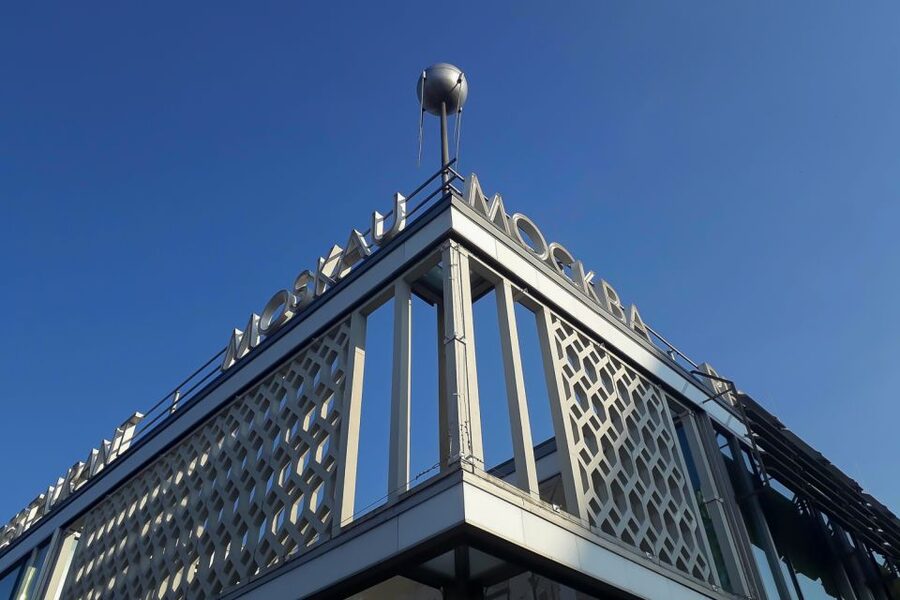
The Berlin Wall Memorial at Bernauer Strasse is the emotional center of the tour. You spend about 50 minutes here, the longest single guided stop, and that extra time is well used.
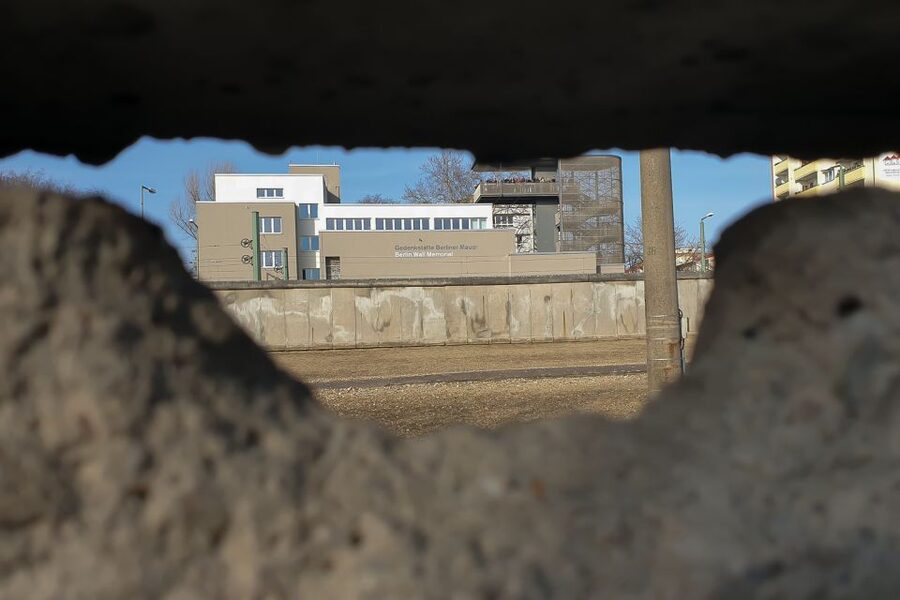
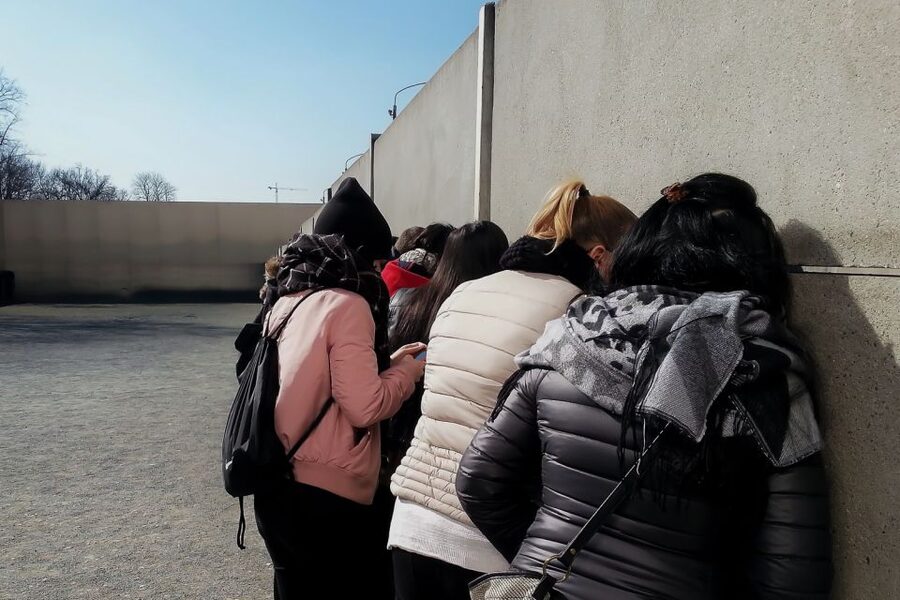
This is where the Wall’s physical design becomes easier to understand. You see original portions of the death strip and learn how the border was arranged to prevent escapes. The memorial also tells the stories of people who tried to get across and those who died because of the Wall.
I find this kind of site more useful than a quick photo stop because it explains the border as a system. The Wall was not simply one slab of concrete. It involved open zones, controls, and serious risks for anyone trying to cross. At Bernauer Strasse, the guide can connect the remaining structures to the personal trauma of families separated by the border.
The subject is heavy, so the guide’s approach matters. Recent bookings name several guides who are praised for clear explanations, strong preparation, and personal engagement. Catherine is specifically noted for adding her own testimony, which may give her tour a more personal tone. Guide assignments can change, so do not book on the assumption that one particular person will lead you unless the provider confirms it.
You should also allow for outdoor conditions here. The tour requires comfortable shoes, and the route does not suggest a long indoor break. In cold, wet, or hot weather, dress for walking and standing outside.
Same streets, a different route:
- Berlin: Discover Berlin Walking Tour
★ 4.9 · 5,998 reviews - Berlin’s Best: 2 Hour Walking Tour Third Reich and the Cold War
★ 5.0 · 5,486 reviews - Berlin: Hidden Backyards Guided Walking Tour
★ 4.8 · 5,360 reviews - Explore Berlin: See All The Iconic Sights & Some Hidden Gems
★ 5.0 · 4,429 reviews
Alexanderplatz links socialist design with public protest
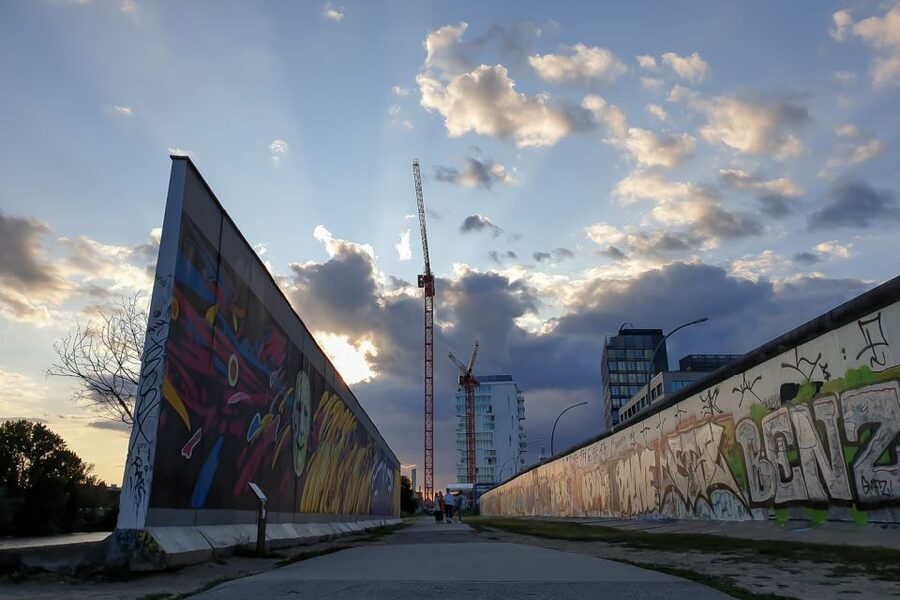
After Bernauer Strasse, the group takes the subway or metro for about ten minutes to Alexanderplatz. The guided stop here lasts about ten minutes, so the focus is selective rather than exhaustive.
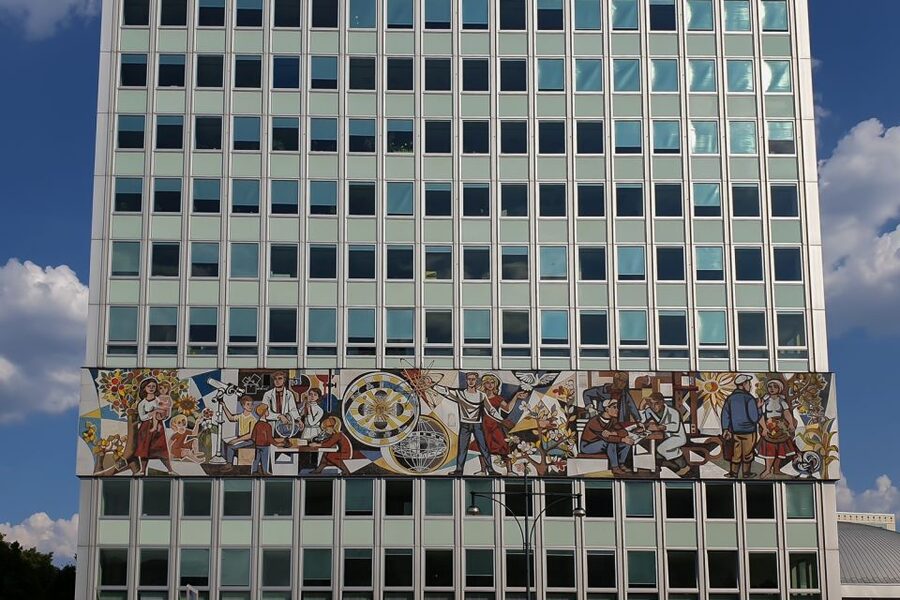
Alexanderplatz is important for its socialist-era architecture and for the peaceful demonstrations that challenged the GDR and STASI political repression. This is where the tour shifts from the Wall’s physical controls to the pressure building inside East Berlin.
The stop helps explain that the Wall did not fall simply because one structure became old. Public opposition, political change, and pressure across the Soviet bloc all played a part. You learn how peaceful demonstrations helped push the government toward the crisis that ended with the Wall’s collapse and the later dissolution of the Soviet bloc.
Ten minutes is brief. If you want a long architectural study of Alexanderplatz, this tour will not provide it. Its value is the political connection. You are shown how a familiar public square became part of a movement that changed East Germany.
The TV Tower offers a useful visual reference
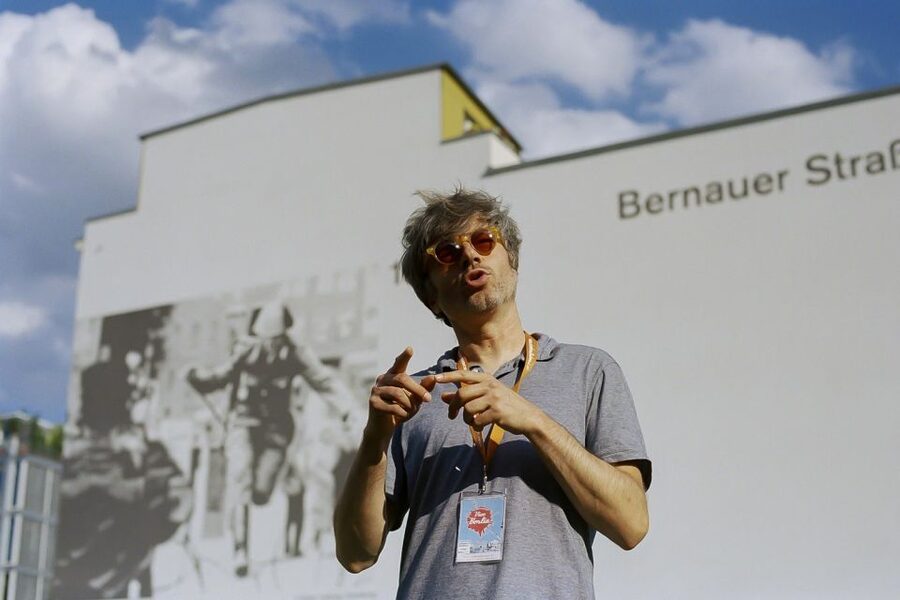
The itinerary includes a guided stop near Berlin’s TV Tower, also known as the Fernsehturm, for about ten minutes. The tour does not state that an observation-deck visit or tower admission is included, so treat this as an exterior and historical stop rather than a tower entry.
The TV Tower belongs to the visual language of socialist East Berlin. In the wider story, it helps you read the city’s former political center and understand how public architecture expressed the GDR’s presence.
This is another short stop, so your guide will likely use it to add context rather than provide a full architectural lecture. I like the inclusion because it prevents the tour from becoming only a Wall memorial route. East Berlin was also a functioning capital with public spaces, symbols, offices, transport, and daily routines.
The East Side Gallery gives the tour a different ending
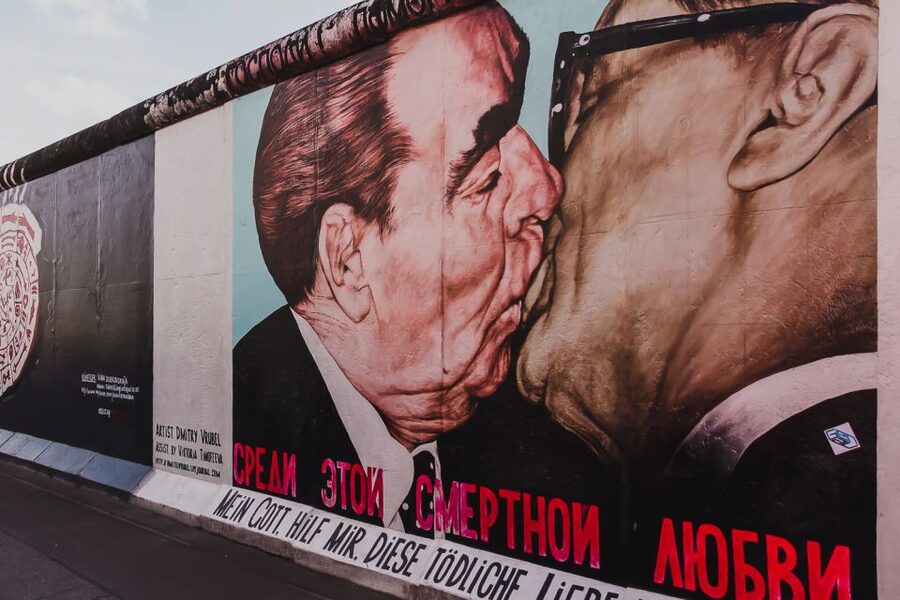
A second ten-minute subway or metro ride brings you to the East Side Gallery. The final guided stop lasts about 15 minutes and ends the tour on a more open, artistic note.
The gallery is known for 104 murals painted on a surviving section of the Wall. The most famous image is the kiss between Soviet leader Leonid Brezhnev and East German leader Erich Honecker. It is an unusual image for a barrier once built to control movement, and it shows how the Wall’s meaning changed after reunification.
The East Side Gallery is visually striking, but it can also feel less solemn than Bernauer Strasse. That contrast is part of the point. You move from the Wall as a tool of separation to the Wall as a public canvas and symbol of change.
The guided stop is only 15 minutes, so you may want extra time afterward if you hope to study more of the murals. The tour’s focus is the historical explanation, not a long, unhurried art walk. If you are interested in photography or want to read every mural, plan to return on your own.
How the guide can change the experience
This tour covers difficult material in a relatively short period. A good guide has to explain political history, transport controls, personal stories, and East German daily life without turning the morning into a lecture.
The strongest pattern in the guide feedback is clear communication and enthusiasm. Paolo is described as engaging, while Elisa is praised for a well-structured route and an ability to keep the subject interesting. Claudia is noted for being welcoming and prepared, and Paul is thanked for adding anecdotes that brought the city’s history to life. These comments point to an important benefit of booking a live guide: you can ask for clarification when the timeline or political terms become confusing.
Language choice is another practical advantage. Tours are offered in English, German, French, Italian, and Spanish. The data also identifies the activity as available with French, Italian, or Spanish-speaking guides, so check the exact language when booking. Do not assume every departure offers every language.
A private group is available. For a group of up to six, the price is $351 total, not per person. That works out to $58.50 per person if six people join, before transport costs. For two people, the same price becomes much harder to justify. A private booking makes the most sense if you value a flexible departure time, a dedicated guide, and a language match for your group.
Is $351 good value for a private group?
The price needs to be judged by group size. At the maximum of six people, $351 buys three to three and a half hours with a private guide, with the route connecting several parts of Berlin that you would otherwise need to organize yourself. The per-person cost is reasonable for a private experience, especially when shared among family or friends.
For one or two people, the value is less obvious. You are also paying for your own AB transport ticket, and food and drink are not included. The tour does not include admission to the TV Tower, and no indoor museum entry is listed.
The small group format is useful even when the booking is not private. You get a more personal setting than a large coach tour, and the guide can spend more time answering questions. Still, the main value is the route and the explanation, not a long list of included admissions.
I would book it for a group that wants history explained in a clear sequence. I would look for a different option if I wanted only a cheap outdoor walk, a museum-heavy experience, or a tour devoted mainly to street art.
Practical details that affect your morning
The exact meeting point depends on the option selected. Hotel pickup is optional for the private version, and you should wait in the hotel lobby ten minutes before the scheduled pickup. Include your hotel name and address when booking, then contact the provider before the tour to confirm the pickup details.
Private arrangements need at least 72 hours to organize. That matters if you are booking close to your Berlin visit or need a particular language and departure time. The activity allows you to choose a departure time for the private tour, subject to guide availability.
Bring comfortable shoes. The route includes several guided walks and public transport changes, and the total duration can reach three and a half hours. Bring water if you need it, since food and drink are not provided.
You must have a valid ticket for the AB zones during the tour. The route uses an eight-minute S-Bahn ride and two subway or metro journeys of about ten minutes each. Check the ticket rules before you start, since the transport fare is your responsibility.
The activity offers free cancellation up to 24 hours before the tour and allows you to reserve now and pay later. Those options are useful if your schedule is still shifting, but the 72-hour planning requirement for a private tour still matters.
Who should book this East Berlin walk?
I recommend this tour if you want the Cold War explained through places rather than dates alone. It suits first-time visitors who want a clear introduction, as well as anyone who has seen the Wall before but wants to understand the former death strip, ghost stations, and East Berlin’s political life.
It is particularly helpful for families or groups of friends who can share the private price. The range of languages also makes it a good choice when someone in your group is more comfortable in French, Italian, Spanish, German, or English.
You should think twice if you dislike public transport, outdoor walking, or emotionally difficult subjects. The route is not a relaxed city stroll. It asks you to move across Berlin and pay attention to painful stories about separation and deaths at the Wall.
Should you book it?
Book this tour if you want a guided history lesson tied to real streets, train lines, memorial remains, and public squares. Bernauer Strasse is the key reason to go, while the former ghost station and Alexanderplatz give the Wall story useful depth. The East Side Gallery then provides a memorable visual finish.
For a private group of six, $351 is a fair price for a focused half-day introduction. For a couple, compare the cost with a shared small-group option. Either way, confirm the language, meeting point, pickup details, and AB transport ticket before you pay.
FAQ
How long does the East Berlin and Wall walking tour last?
The tour lasts about three to three and a half hours.
What places does the tour visit?
The route includes Potsdamer Platz, Nordbahnhof, the Berlin Wall Memorial at Bernauer Strasse, Alexanderplatz, the TV Tower area, and the East Side Gallery.
Is public transportation used during the tour?
Yes. The route includes an S-Bahn journey of about eight minutes and two subway or metro journeys of about ten minutes each.
Is public transportation included in the price?
No. You need to buy a valid AB transport ticket for the day. Food and drink are also not included.
What languages are available?
Live guides may be available in English, German, French, Italian, and Spanish. Check the language offered for your selected departure.
Is a private group available?
Yes. A private group option is available, and the listed price is $351 for up to six people.
Is hotel pickup available?
Pickup is optional for the private tour. You should wait in the hotel lobby ten minutes before pickup and contact the provider beforehand to confirm the details.
What should I bring?
Bring comfortable shoes. The tour includes walking, outdoor stops, and several public transport connections.
Can I cancel the booking?
You can cancel up to 24 hours in advance for a full refund. The activity also offers a reserve-now, pay-later option.
Just added around Berlin
- Cold War, Berlin Wall, Spies and the East Side Gallery★ 4.8 · 254 reviews
- Berlin: walking tour about Charité★ 4.4 · 537 reviews
- Berlin: Walking Tour of the Top 10 Sightseeing Attractions★ 4.7 · 150 reviews
- Berlin: The Time of National Socialism Walking Tour★ 5.0 · 220 reviews
- Berlin: Sightseeing Walking Tour of the Top 20 Attractions★ 4.5 · 196 reviews
- Berlin: Kreuzberg Guided Walking Evening Tour★ 4.7 · 555 reviews
- Berlin : Must-see attractions Walking Tour★ 4.8 · 83 reviews
- Berlin: Hitler’s Berlin The Rise & Fall Guided Walking Tour★ 4.9 · 239 reviews
Walking Tours, compared.

Magical London: Harry Potter Guided Walking Tour
Read our review →
Reykjavik Food Walk – Local Foodie Adventure in Iceland
Read our review →
History and Hauntings of Salem Guided Walking Tour
Read our review →
New Orleans Premier Ghost, Voodoo and Vampire Walking Tour
Read our review →
Amsterdam Anne Frank: Small-Group Walking Tour & Local Guide
Read our review →
Edinburgh Castle: Guided Walking Tour with Entry Ticket
Read our review →
Anne Frank’s Story – Guided Walking Tour through Amsterdam
Read our review →Browse the lists this tour appears in