
REVIEW · CZECHIA
Brno: Historic Downtown Walking Tour
Brno’s best stories are often tucked above your head or below your feet. This two-hour walk links the city’s grand cathedral and market squares with odd little details, including the Old Town Hall dragon legend, the Capuchin crypt, and a cheeky sculpture at St. James Church. Lukas, Luca, Robert, and Eliska have all led memorable tours, though your guide will depend on the date.
I like the compact route and the small group limit of 10, which gives you a better chance to ask questions. I also like the mix of major sights and local tales, from Mozart at the Reduta Theatre to underground food cellars beneath the Vegetable Market. The main consideration is pace: the walk covers plenty in two hours, and one guide was slow enough to suit some people but frustrate others.
Key points at a glance
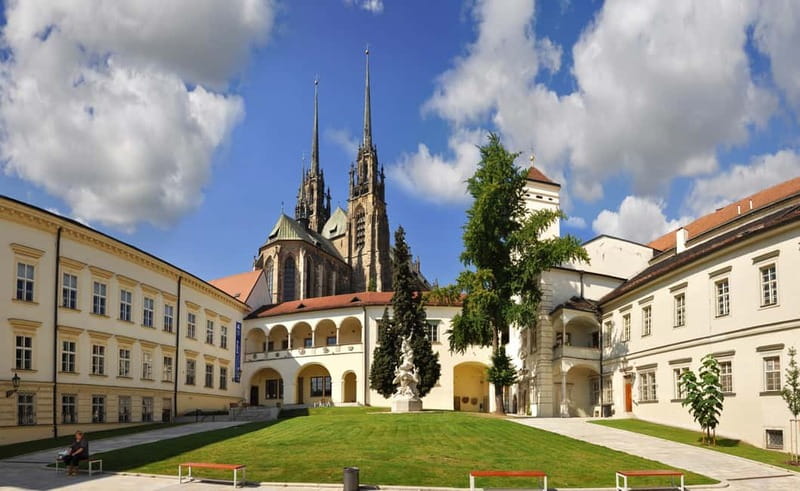
- The route packs in Brno’s essentials: Cathedral of Saints Peter and Paul, Liberty Square, Vegetable Market, Old Town Hall, St. James Church, and more.
- The Capuchin crypt adds an unusual stop: You learn about the mummified remains of city noblemen beneath the monastery.
- Stories are central to the experience: Expect legends about a dragon and a wheel, plus comic details hidden in the city’s architecture.
- Small groups keep the walk personal: The tour is limited to 10 participants and runs in English or German.
- Christmas and Easter bring extra color: Seasonal markets and Czech customs become part of the route during festive periods.
- Bring proper shoes: This is a real walking tour through historic streets and squares, not a sightseeing ride.
Why this Brno walking tour works
Brno can feel confusing at first. Its old center is compact, but important sights sit around several different squares, churches, and side streets. This tour gives you a useful outline of the city before you explore it alone.
The route also puts Brno in its Moravian setting. You are not simply ticking off buildings. A good guide connects the city’s architecture with Czech and Moravian customs, local rivalries, old trade, religion, and the legends that have survived around the streets.
That storytelling seems to be the strongest part of the experience. Guides such as Lukas have been praised for clear English, humor, and their ability to answer questions. Other guides, including Eliska, have added personal memories and cultural details from life in Brno. The style can vary, but the best version of this tour feels like a walk with a sharp local friend who knows why the odd statue, crooked detail, or strange tale matters.
At $35 per person, the price is reasonable if you want orientation and context rather than a simple stroll. You are paying for two hours with a live guide, not admission to a museum or transport between sights. Since many central attractions can be seen from outside without an entry ticket, the real value lies in the explanation.
More City Highlights Walks in Czechia:
- Prague: City Highlights By Bus, Boat, and on Foot
★ 4.5 · 1,596 reviews - Prague: City Highlights Private Walking Tour
★ 4.8 · 635 reviews - Cesky Krumlov: Private 2-Hour City Walking Tour
★ 4.8 · 96 reviews
Starting at Grandhotel Brno
The meeting point is the reception of Grandhotel Brno at Benešova 18-20. This is a practical starting location near the central part of town, but you should allow time to find the reception area and arrive ready to walk.
The tour does not include hotel pickup or drop-off. That keeps the price lower, but you need to make your own way to the hotel and return from the final stop. Since the walk ends back in the central area near Joseph Street, you should be well placed to continue exploring on foot, though the exact end point can depend on the guide and route.
Tours are offered during the day or in the evening, with starting times based on availability. An evening departure may give the old center a different mood, especially around the lit churches and squares. A daytime tour is better if you want to inspect architectural details or take clear photographs.
Liberty Square and Brno’s medieval market life
One early stop is Liberty Square, or náměstí Svobody. This was Brno’s main market square in the Middle Ages, and it remains one of the city center’s key meeting places.
A guide can help you read the square as more than an open urban space. Its role in trade and public life explains why important routes and buildings gather around it. You also begin to see how Brno changed over time, with older structures sharing space with later architectural styles.
This is one of the tour’s useful orientation points. From here, the route branches toward churches, markets, and civic buildings, so you get a sense of how the old center fits together. If you visit during Christmas or Easter, traditional markets may fill parts of the square, adding seasonal food, decorations, and Czech customs to the walk.
The drawback is that a market square can be visually busy. On a holiday visit, stalls and crowds may partly hide architectural details. Still, the seasonal atmosphere gives the guide more cultural material to explain.
Capuchin Square and the monastery crypt
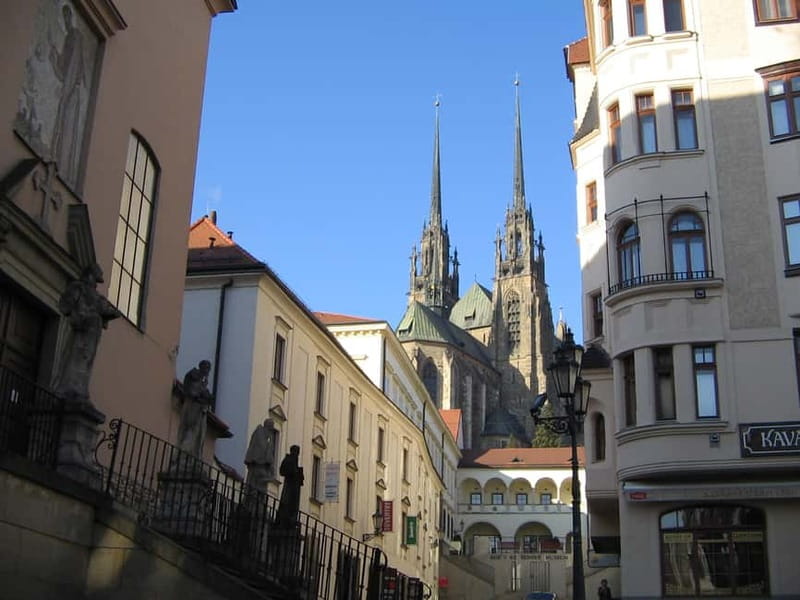
Capuchin Square, or Kapucínské náměstí, brings one of the tour’s more unusual subjects: the crypt beneath the Capuchin Monastery.
The crypt holds the mummified remains of city noblemen. That detail gives the tour a darker edge, and it offers a glimpse into older religious and burial customs. You should not expect a lighthearted stop, but it is memorable precisely because it is not another standard church facade or civic monument.
The information provided for this experience does not state that entry into the crypt is included. Treat this part as an exterior stop and a guide-led explanation unless your booking specifically confirms access. That distinction matters if you are hoping to see the underground chamber itself.
Even without entering, the monastery adds depth to the route. The guide can place the crypt within Brno’s religious and social past, helping you understand how powerful families and religious orders shaped the old center.
A few more walking tours around Czechia worth a look
- Prague: 3-Hour Walking Tour of Old Town & Prague Castle
★ 4.7 · 5,696 reviews - Prague: Ghost Walking Tour Where Legends Come To Life
★ 4.4 · 5,253 reviews - Prague: Jewish Quarter Walking Tour with Admission Tickets
★ 4.7 · 3,729 reviews - Prague Guided Walking Tour and Cruise with Authentic Czech Lunch
★ 5.0 · 3,627 reviews
Vegetable Market above Brno’s underground rooms
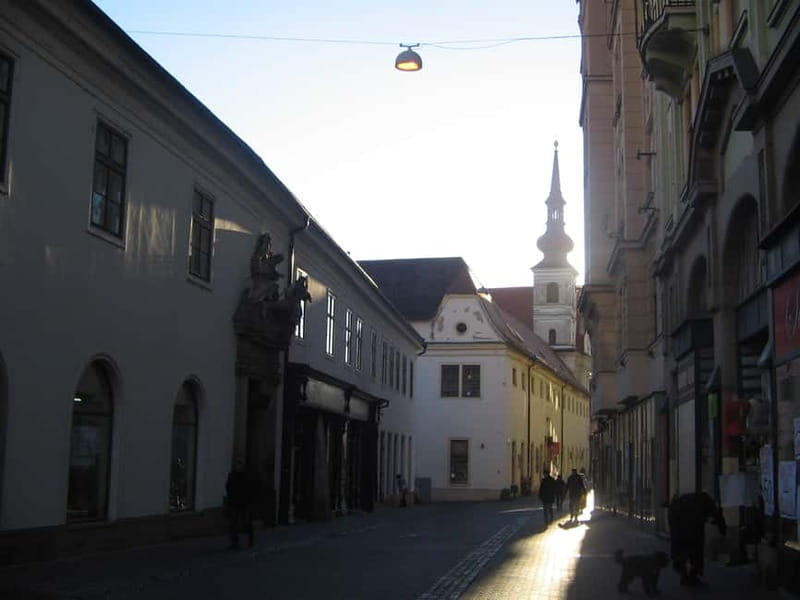
The Vegetable Market, known as Zelný trh, is one of the most appealing stops for visitors who enjoy places that still connect to everyday city life. The square sits above a network of underground corridors once used to store food, brew beer, and mature wine.
That underground layer is a fine example of how older cities hide practical engineering beneath public spaces. You stand in a market square, yet the story continues underneath it. The guide’s explanation makes the place easier to remember than a simple view of stalls and buildings.
The market also helps balance the grander parts of the tour. Cathedrals and town halls show public power, while this square points to food, storage, trade, and daily routines. You get a better sense of how the city worked, not just how it looked.
Again, the tour information does not promise entry into the underground corridors. You should expect to hear about them during the walk, not assume that a cellar visit is part of the $35 booking.
Parnassus Fountain and the Reduta Theatre
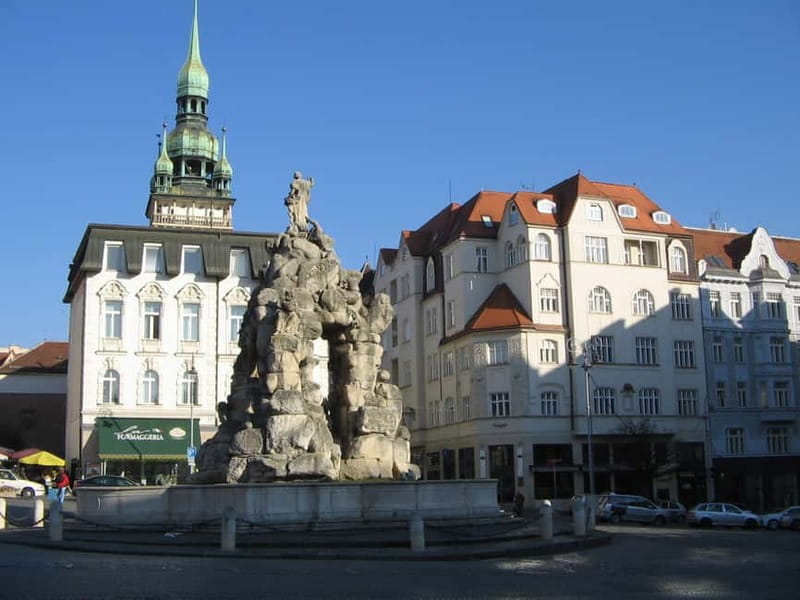
At the Vegetable Market, look for the Parnassus Fountain. Its allegorical carvings give the guide a chance to explain how sculpture and public decoration once carried symbolic messages.
The fountain is not merely a water feature. Its figures and composition reward a closer look, especially when someone points out what you might otherwise walk past. This is where a small group helps, since you can ask about details without trying to keep up with a large crowd.
Nearby, the Renaissance facade of the Reduta Theatre adds another layer. Mozart once played here, giving the building a strong connection to musical history. The stop is brief, but it links Brno to the wider cultural life of Central Europe.
I like this section because it moves quickly between art, architecture, and performance. You do not spend the whole tour hearing dates and names. You see a fountain, a theatre, and a market, then hear the human stories that make each place easier to recall.
Brno’s dragon at the Old Town Hall
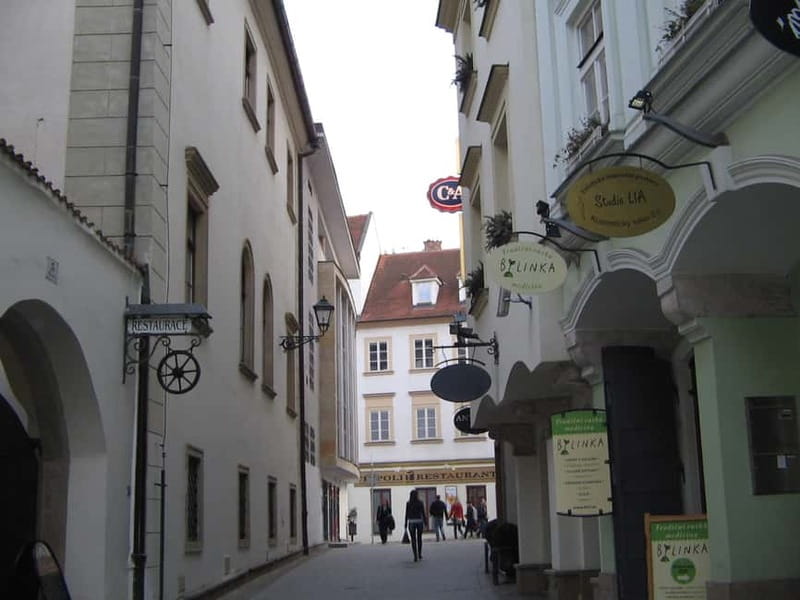
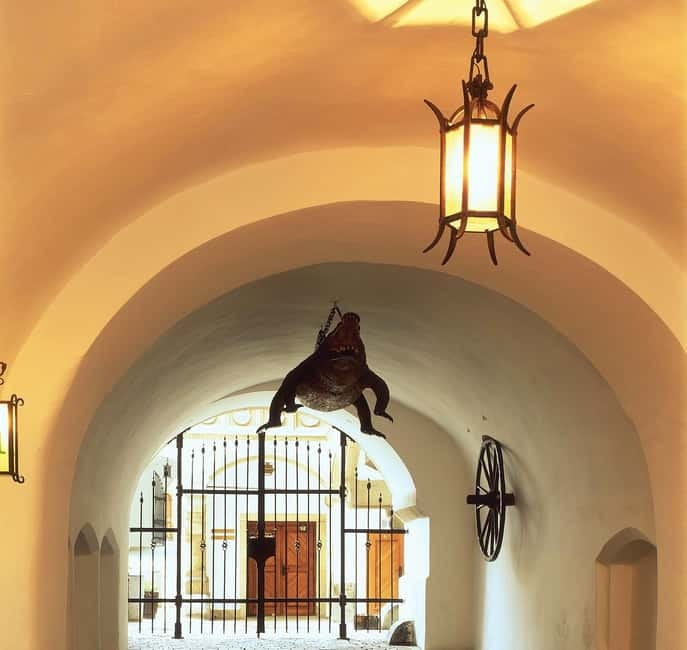
The Old Town Hall is one of the tour’s best story stops. Here you hear the legend of the Brno dragon and the wheel, two tales that add a bit of strange local character to the city center.
The dragon story is exactly the sort of tale that helps a walking tour succeed. You can see a building anywhere, but a local legend gives you something to retell later. The wheel adds another memorable detail and shows how Brno’s civic identity has been shaped by stories as much as by official history.
The Old Town Hall also lets you consider Brno as a place of government and public decisions. It is not simply an old facade on the route. The guide uses it to connect local folklore with the city’s civic past.
This is a good example of why the guide matters. Without context, you might photograph the entrance and move on. With the story, the stop becomes one of the moments you will probably remember most clearly.
Cathedral of Saints Peter and Paul
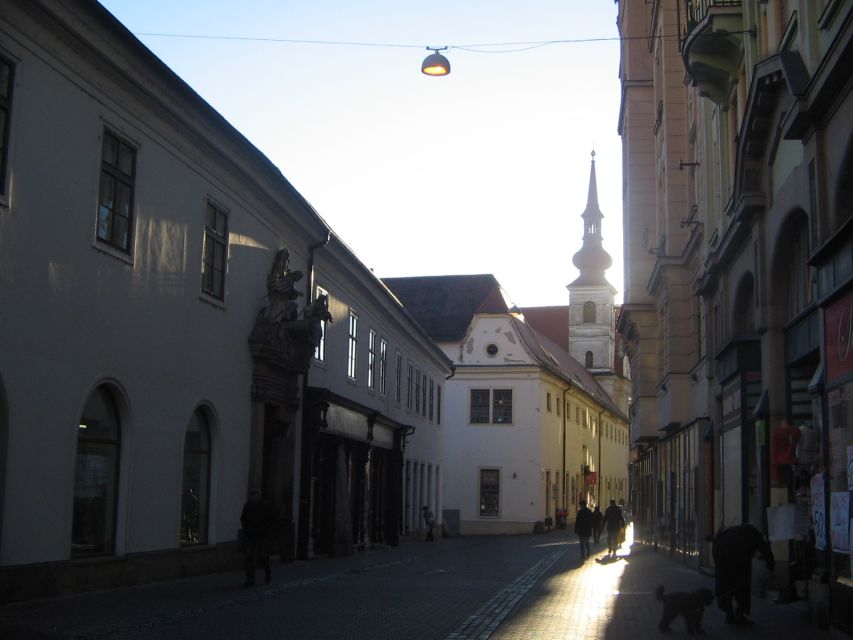
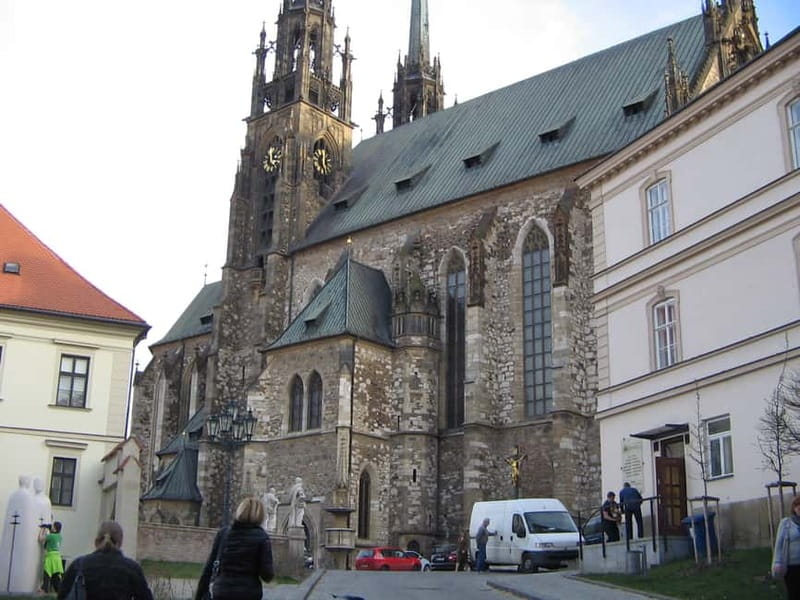
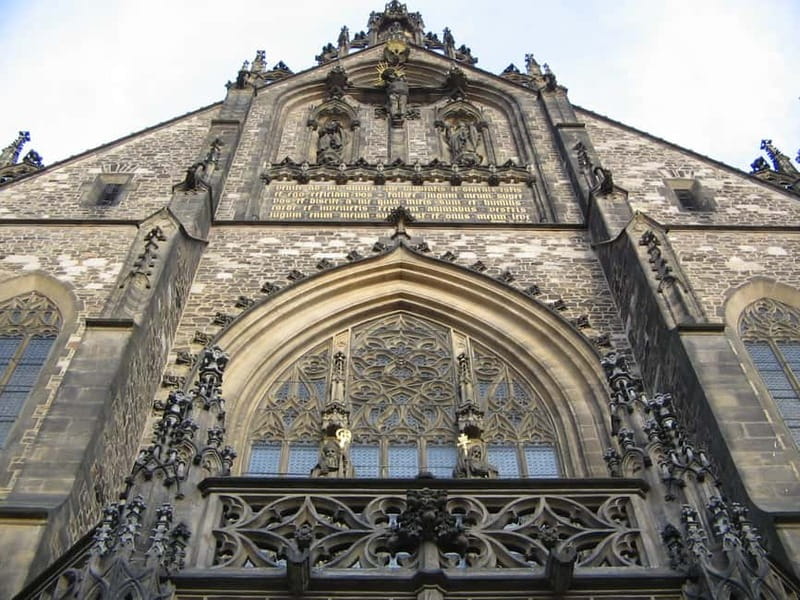
The Cathedral of Saints Peter and Paul, often called Petrov, is one of Brno’s defining sights. Its position and towers make it an important reference point as you move through the center.
The tour includes a visit to the cathedral area, but the supplied details do not promise an interior admission or a formal church visit. You should expect exterior viewing and explanation unless your guide confirms that you will go inside.
The cathedral gives the route a more formal and impressive pause after the markets and legends. Its religious role also connects with the Capuchin Monastery and the older customs discussed earlier in the tour.
One useful tip comes from the way guides encourage people to look up. Brno’s most interesting details are not always at eye level, and the cathedral is a clear example. Keep your head tilted back now and then, but watch your footing on the old streets.
St. James Church and the detail above the door
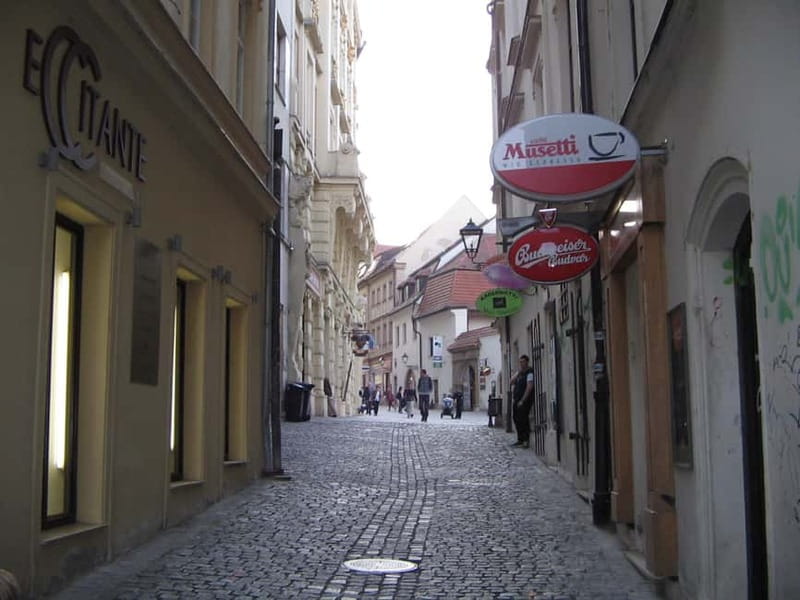
The Church of St. James, or Jakuba, is another place where the tour rewards careful looking. High on the wall to the right of the main entrance is a sculpture of a naked child showing its backside toward the direction of the Cathedral of Saints Peter and Paul.
That unusual detail is easy to miss if you are rushing between major monuments. It also gives the guide a chance to explain the rivalry or story behind the gesture. The point is not only the joke. It shows how local humor can be built into stone and left in public view for generations.
This is one of the strongest reasons to take the walk early in your stay. Once you know where the unusual details are, you can return later and inspect them at your own speed.
The church also provides a useful counterpoint to the cathedral. Both are important religious buildings, but the smaller detail at St. James keeps the tour from becoming solemn or overly formal.
New Town Hall, House of the Noblemen of Leipa, and Joseph Street
The route also includes the New Town Hall and the House of the Noblemen of Leipa. These stops broaden the architectural picture, showing how civic and aristocratic buildings fit into the old center.
You may not remember every building name after two hours, and that is normal. The value is in learning how to notice the differences between religious, civic, and private structures. A good guide can point out what to look for in facades, scale, decoration, and position.
The walk heads back along Joseph Street, or Josefska. This return section helps connect the major squares rather than leaving you at an isolated landmark. It also gives the guide a final chance to answer questions and offer suggestions for places to visit, eat, or drink. Eliska, in particular, was praised for giving practical recommendations at the end of her tours.
Guide quality and walking pace
The guide is the heart of this experience. Lukas has been singled out for fluent English, humor, careful explanations, and extra help with the main sights. Luca has also been praised for turning many stops into funny, memorable stories. Robert and Eliska have received similar praise for warmth and local insight.
That does not mean every departure will feel identical. One four-star experience noted that the guide’s English was sometimes difficult to understand. Another found the guide very good but slow because of age and physical ability. Slow walking can be a benefit if you want time for photographs or have mobility limits, but it may feel less efficient if you prefer a brisk route.
The group limit of 10 is a real advantage. You can normally hear the guide more easily than in a large walking group, and questions do not have to compete with dozens of other voices. Some departures may be much smaller, even private, especially during quieter periods.
Timing, cost, and what to bring
The tour lasts two hours and costs $35 per person. That works out to $17.50 per hour before considering the value of local orientation, stories, and a live guide. For a first visit to Brno, that is a fair price if you want to understand the center rather than simply photograph it.
The route is best for people who can walk comfortably for two hours. Wear comfortable shoes, as requested, and remember that old town streets and squares may not offer the smoothest footing. The walk includes several stops, but the exact amount of standing, walking, and time at each sight can change with the guide.
You can cancel up to 24 hours before the tour for a full refund, and the reserve-now, pay-later option keeps your plans flexible. These policies are useful if your Czech Republic schedule is still changing.
Who should book this Brno tour?
I would choose this walk at the start of a Brno stay. It gives you a map in your head, introduces the city’s main squares, and leaves you with a list of places to revisit.
It suits you best if you enjoy:
- Local legends alongside architecture
- A guide who explains context instead of naming buildings
- Small groups and the chance to ask questions
- Czech and Moravian history and customs
- A relaxed route through the central old town
- Seasonal markets during Christmas or Easter
It may be less suitable if you want long interior visits, a fast-paced sightseeing workout, or transport between distant attractions. The itinerary is centered on the old town, and the supplied details do not include museum admissions or underground access.
Should you book the Historic Downtown Walking Tour?
Book it if you want a friendly, story-led introduction to Brno for $35. The route covers the city’s essential central sights, while the dragon, wheel, Capuchin crypt, underground cellars, and St. James sculpture keep it from feeling like a standard building tour.
Go in with realistic expectations. The guide quality and pace can vary, and the tour does not include hotel transport or clearly promise entry to the crypt or underground corridors. For most visitors, though, the small group, strong English or German guiding, and mix of serious history with local humor make this a useful first look at Brno.
FAQ
How long is the Brno Historic Downtown Walking Tour?
The tour lasts two hours.
How much does the tour cost?
The price is $35 per person.
Where does the tour meet?
Meet at the reception of Grandhotel Brno, Benešova 18-20, Brno 602 00.
Is hotel pickup included?
No. Hotel pickup and drop-off are not included.
Which languages are available?
The tour is available in English and German.
How large is the group?
The group is limited to 10 participants.
What sights are included?
The route includes Liberty Square, Capuchin Square and the monastery area, Vegetable Market, Parnassus Fountain, Reduta Theatre, Old Town Hall, Cathedral of Saints Peter and Paul, New Town Hall, House of the Noblemen of Leipa, Church of St. James, and Joseph Street.
Is entry to the Capuchin crypt included?
The available tour details mention the crypt and its mummified remains but do not confirm that entry is included. Check the booking details if visiting inside is important to you.
Is entry to the underground corridors beneath Vegetable Market included?
The tour explains the underground corridors, which were used to store food, brew beer, and mature wine. The available details do not confirm underground entry.
What should I bring?
Bring comfortable shoes for the two-hour walking route.
Just added around Czechia
- Prague: Food and Beer Guided Walking Tour with Tastings★ 4.9 · 341 reviews
- Český Krumlov: 2 Hour Private Walking Tour with Guide★ 4.8 · 182 reviews
- Cesky Krumlov: Private 2-Hour City Walking Tour★ 4.8 · 96 reviews
- Prague: Guided Bus & Walking Tour with River Cruise & Lunch★ 4.2 · 610 reviews
- Prague: City Highlights Private Walking Tour★ 4.8 · 635 reviews
- Alternative Prague Walking Tour★ 5.0 · 642 reviews
- Walking Night Tour Ghost Stories and Legends of Prague’s Old Town★ 4.5 · 701 reviews
- Alternative Prague Walking Tour★ 4.8 · 1,111 reviews
City Highlights Walking Tours, compared.
Berlin City walk Government District and Places of Democracy
Read our review →
Historic Charleston Guided Sightseeing Walking Tour
Read our review →
Oxford: University and City Walking Tour with Alumni Guide
Read our review →
City Highlights Temple and Market Walking Tour
Read our review →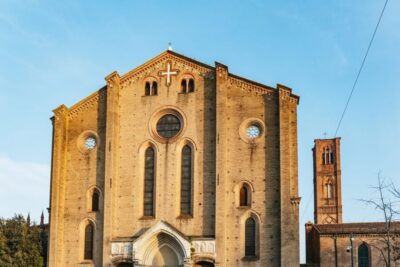
A History of Terror – Belfast City Centre Walking Tour
Read our review →Browse the lists this tour appears in