
REVIEW · BOSTON
Boston: Freedom Trail Guided Walking Tour in French
Boston’s Freedom Trail is easiest to understand when someone connects the brick path, graveyards, meetinghouses, and harbor stories into one clear tale. This French-language walking tour does that in 150 minutes, beginning at Boston Common and ending near the Old North Church in the North End.
I like the small-group limit of 15, which should make it easier to hear Maria and ask questions. I also like the range of subjects: this is not only a Revolution tour, but also a look at architecture, abolition, immigration, education, and modern Boston. The main consideration is pace. You cover a lot of ground, and museum interiors are not included.
Key points
- French guidance from Maria: A warm, adaptable guide who uses an earpiece so you can follow the commentary clearly.
- Sixteen Freedom Trail sites: See major landmarks from Boston Common and the State House to Paul Revere’s neighborhood and Copp’s Hill.
- North End finish: End beside the Old North Church, Italian restaurants, and Copp’s Hill Terrace.
- Small group size: A maximum of 15 people keeps the walk more personal than a large street tour.
- Broad historical coverage: Hear about the American Revolution, the Mayflower, abolition, education, immigration, architecture, and present-day Boston.
- Exterior-focused visit: The tour includes photo stops and guided street commentary, but museum admissions are not part of the $45 price.
Why this French Freedom Trail walk works for first-time visitors
If Boston is new to you, the Freedom Trail gives you a useful first map of the city. You start in Boston Common, move through the oldest central streets, cross the busy civic and market areas, and finish in the North End. In one sitting, you get a sense of how Boston’s past and present sit side by side.
The guide’s role matters here. Boston’s historic sites are often close together, but their meaning is not always obvious from a plaque. Maria links the buildings and people with stories about the city’s founding, the first colonists arriving from the Mayflower, the fight for American independence, and the social changes that followed.
The tour is conducted in French, making it especially useful if you prefer to absorb history in your first language. Maria also provides an earpiece, according to the tour details, so you can hear her while walking through busy parts of downtown. The small group limit gives you a better chance of staying connected to the explanation.
At $45 per person, this is not the cheapest way to walk the Freedom Trail, since the trail itself is public and free. You are paying for structure, French commentary, a local guide, and the time saved by knowing what to look for. For a first visit, that can be good value. If you already know Boston well or want to enter several historic buildings, you may prefer to explore independently and spend the money on admissions.
More Guided Tours in Boston:
- Harvard University Campus Guided Walking Tour
★ 4.5 · 3,632 reviews - Boston Freedom Trail Walking Tour with Costumed Guide
★ 4.5 · 2,531 reviews - Self Guided Classic Freedom Trail Location Aware (GPS) Walking Audio Tour
★ 4.5 · 258 reviews
Starting at Boston Common and the Massachusetts State House
Meet inside Boston Common, in the alley to the left of the entrance to the Visitor Center. Your guide holds a sign marked Gilded Age Tour. This is a useful meeting point because Boston Common is easy to recognize, but allow enough time to find the exact alley rather than waiting out on the main street.
The walk begins with about 10 minutes in Boston Common. This broad public park gives you an immediate introduction to Boston’s civic center. It is also a good place to get oriented before the route turns into narrower streets and older neighborhoods.
Next comes the Massachusetts State House, with around five minutes for a photo stop. The building is one of the city’s most recognizable landmarks, and the stop helps place Boston’s political life within the wider story of Massachusetts.
Do not expect a long interior visit here. The tour is designed around outdoor explanation and photographs, not building admissions. That keeps the group moving, but it also means you should treat the State House as a visual and historical stop rather than a full tour.
Churches, graveyards, and the city’s early story
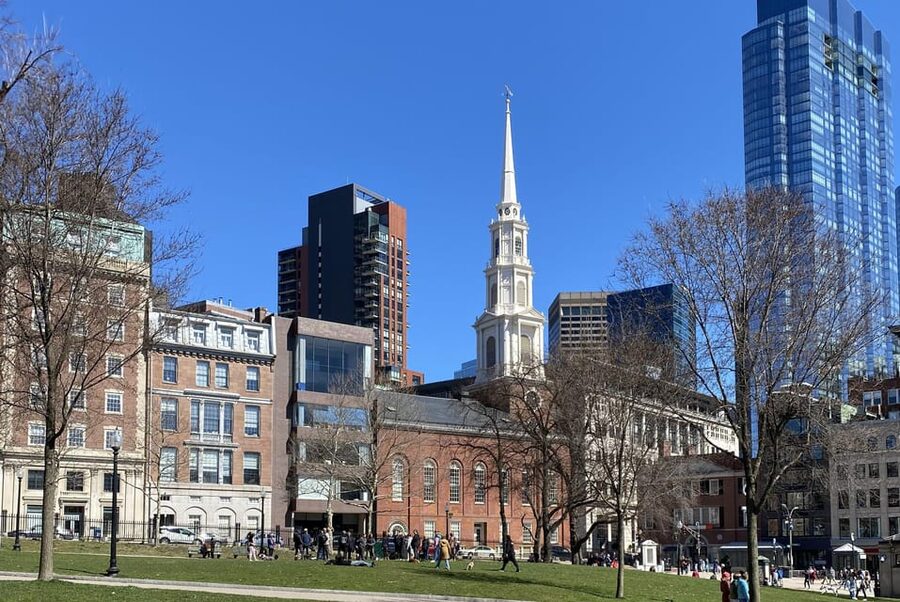
The route continues toward Park Street Church and Granary Burying Ground. These sites show how closely religion, public life, and burial customs were tied together in early Boston. A cemetery stop can feel brief, but it gives the streets around it a different character. You are not simply walking past old stones; you are seeing the names and memorials connected with the city’s formative years.
King’s Chapel follows, with the nearby Benjamin Franklin statue and the site of Boston Latin School. These stops widen the story beyond battles and famous speeches. Education, civic identity, and influential individuals all become part of the picture.
I appreciate this kind of range. Many city walks reduce Boston to Paul Revere and the Boston Massacre. This route also points toward education, public institutions, and the way the city was built. If you enjoy architecture and city development, listen for the details about construction and how Boston changed over time.
The short stops mean you will not spend long at each landmark. That is helpful for a first overview, but less satisfying if you want a slow study of gravestones, facades, or church interiors.
Old South Meeting House, Old State House, and the Boston Massacre site
The Old South Meeting House is scheduled as a 10-minute photo stop. Its importance comes from its role as a gathering place before the American Revolution. Here, the guide can explain how public meetings helped turn political anger into organized action.
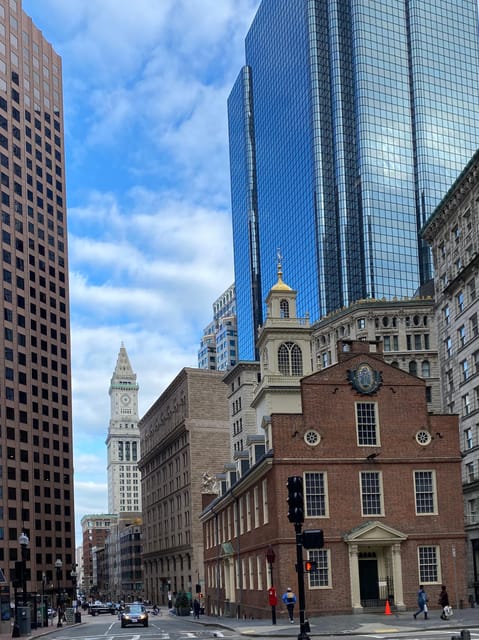
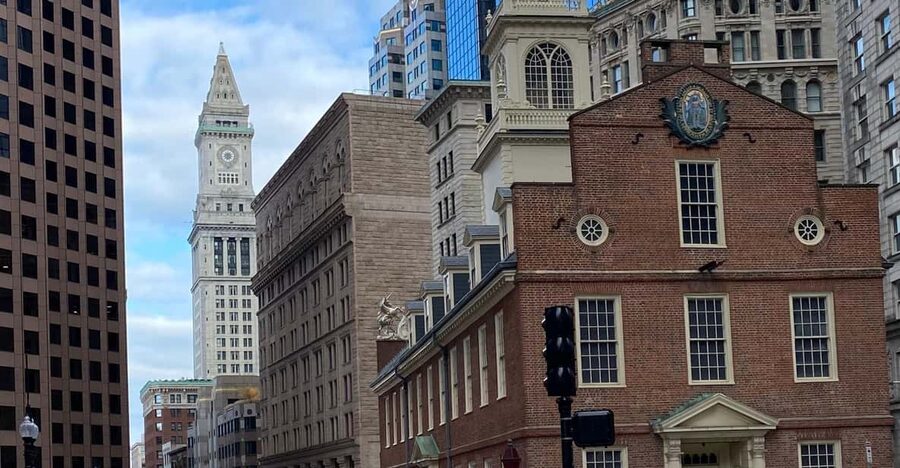
The Old State House receives about five minutes. Its position among modern streets makes the contrast especially striking. Boston is good at putting colonial-era buildings beside offices, shops, and traffic, and the guide’s commentary helps you notice that contrast instead of treating the building as an isolated monument.
Nearby is the site of the Boston Massacre. This is one of the places where a short explanation can add real value. The event became a powerful political symbol, and its place in the road network helps you understand how crowded and tense the center of colonial Boston could be.
These are exterior-focused visits, so you should plan for photographs and storytelling rather than a long museum session. Museum visits are not included in the tour price.
A few more walking tours around Boston worth a look
- Boston: Freedom Trail History Small Group Walking Tour
★ 5.0 · 6,450 reviews - The Full Revolutionary Story Epic Small Group Boston Walking Tour
★ 5.0 · 2,356 reviews - Boston’s Freedom Trail: A Revolutionary Walking Tour
★ 4.9 · 1,748 reviews - Boston: Freedom Trail History Small Group Walking Tour
★ 4.9 · 1,590 reviews
Faneuil Hall, Quincy Market area, and public debate
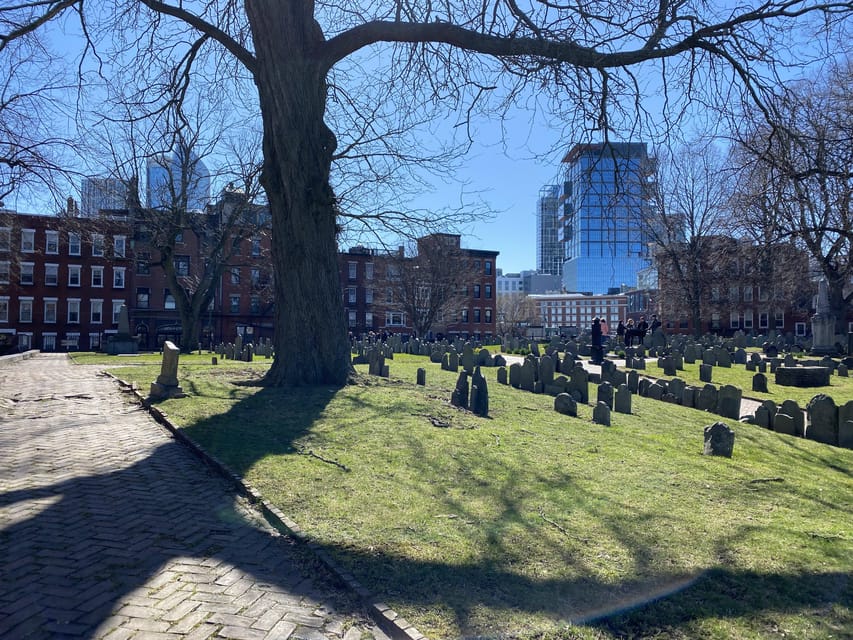
Faneuil Hall is another major stop, with about 10 minutes for photographs and explanation. It is often called the Cradle of Liberty, but the useful part of seeing it with a guide is learning how public meeting spaces shaped Boston’s political culture.
The route also passes the famous Oyster House restaurant and the Haymarket area. These places help shift the story from the Revolution to food, commerce, immigration, and daily city life. Boston’s history is not locked in the eighteenth century. The market district shows how people continued to arrive, work, trade, and build new communities.
The route can be lively here, and the streets may feel more crowded than the quieter early stops. That is one reason the earpiece is practical. Keep close to the group and pay attention to the meeting point instructions, especially if you stop for photographs.
The tour also includes modern public art, such as The Embrace, dedicated to Martin Luther King, and A Donkey, acquired from Italy. These additions prevent the walk from becoming a museum piece about dead figures only. They show how Boston continues to mark public memory and connect local places with wider events.
North End: Paul Revere, Old North Church, and Italian Boston
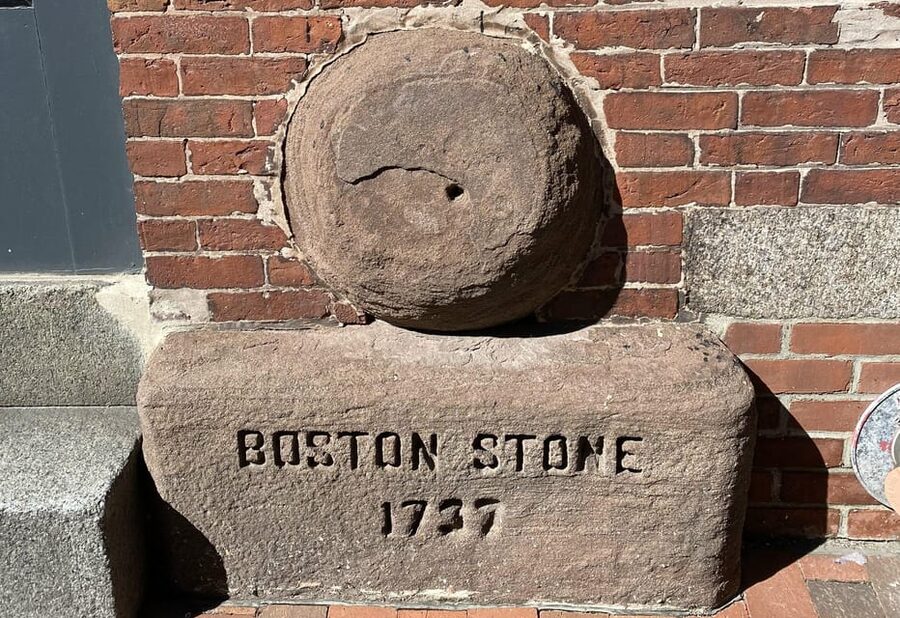
The North End receives about 30 minutes of guided attention, making it one of the most substantial sections of the walk. This is Boston’s Italian district, and it is a natural place to discuss immigration, food, neighborhood life, and the way older communities shaped the city.
Paul Revere’s house and equestrian statue are among the key stops. The house connects directly with the Revolution, while the statue and surrounding streets show how his public image has been remembered. The guide can help separate the real person from the simplified version often found in schoolbook stories.
Old North Church is planned as a 10-minute photo stop. Its role in the Revolution makes it one of the Freedom Trail’s most recognizable sites. The church also gives you a strong visual anchor in the North End, where narrow streets and historic buildings create a different feel from Boston Common.
You will also hear about Copp’s Hill Cemetery and the nearby USS Constitution and Bunker Hill Monument as part of the wider Freedom Trail story. The scheduled finish is at Copp’s Hill Terrace, just steps from Old North Church. The supplied route does not describe an interior visit to the USS Constitution or a walk to the Bunker Hill Monument, so treat those as landmarks covered in the broader explanation rather than guaranteed museum stops.
The North End is a particularly good place to continue on your own after the tour. The finish is close to Italian restaurants, so you can turn the historical walk into a meal without crossing the city again.
What Maria adds to the experience
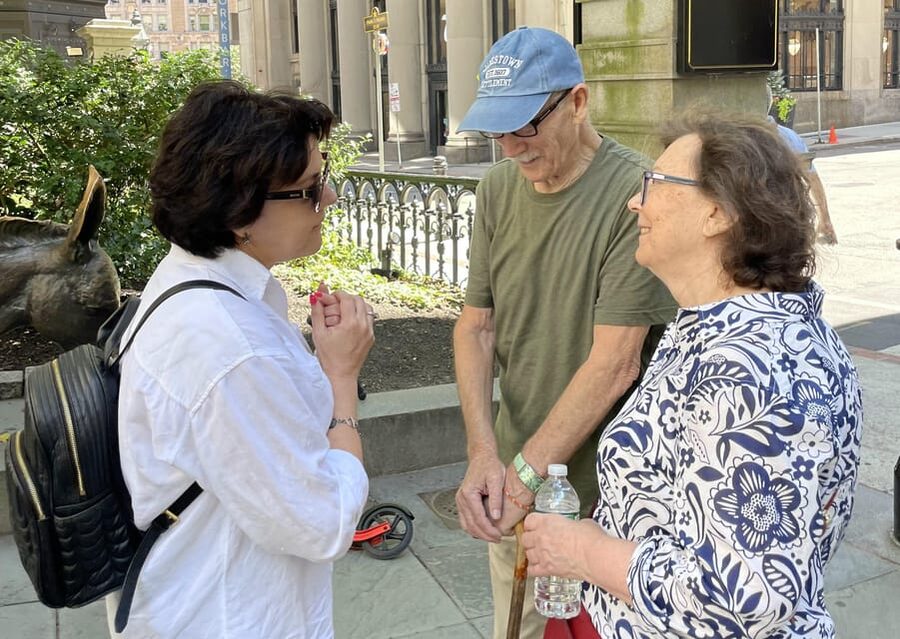
Maria is identified as the French-speaking guide, and the comments supplied about the tour repeatedly point to her clear explanations, welcoming manner, and many anecdotes. One useful detail is her flexibility with a family traveling with children ages two and four. That does not mean every child will enjoy two and a half hours on foot, but it does suggest that she can adjust her approach when young children need patience.
Several details make the guiding style practical. Maria uses an earpiece, helps visitors find the meeting point at Boston Common, and explains both major events and smaller facts about the city. The focus is not only on dates. You hear about the founding of Boston, American education, abolition, immigration, architecture, and contemporary daily life.
That wider lens is the strongest reason to choose this tour instead of following the red line alone. A painted route can show you where to go. A guide can explain why these locations mattered and how they connect.
Timing, group size, and physical expectations
The total duration is 150 minutes. That is long enough to cover a large part of downtown Boston without taking up an entire day. It is also short enough to fit on a first morning or afternoon, leaving time for museums, food, or a harbor activity later.
You will be walking between sites rather than riding in a vehicle. The tour is listed as wheelchair accessible, and that is important information for many visitors. Because the activity takes place on city streets and includes historic areas, you should still confirm current route details if you have specific mobility needs.
The maximum group size is 15. That is small enough for a more direct exchange with the guide, but it is not a private tour. You may still need to wait briefly at crossings or gather around a landmark before the explanation begins.
Comfortable walking shoes are sensible, though the tour information does not specify a required dress or equipment list. Bring a camera if you want photographs, but do not let the camera distract you from the stories. Some of the most useful context comes during the short transitions between stops.
The tour offers free cancellation up to 24 hours before departure and a reserve now, pay later option. Those policies are useful if your Boston plans are still changing. Check the available start times when booking, since the duration is fixed but departure times can vary.
Who should book it, and who should skip it
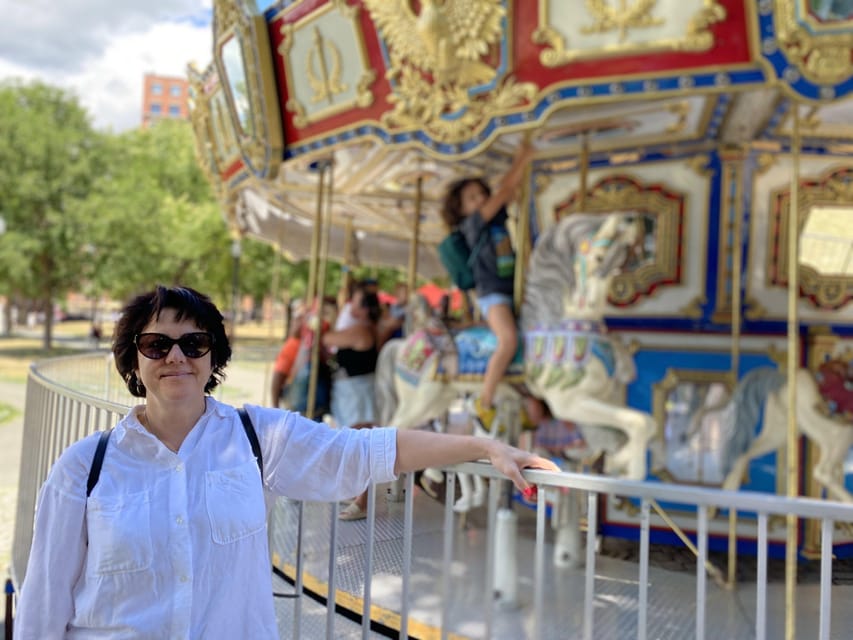
I would choose this tour if you are visiting Boston for the first time, prefer French, and want a clear introduction before tackling museums on your own. It also suits couples, families, and small groups who value a personal guide but do not need a private booking.
It is a good match if you like stories that go beyond military history. The route includes the Revolution, but also education, abolition, immigration, architecture, public art, markets, and everyday city life.
I would hesitate if your main goal is entering historic buildings. The $45 fee covers the guide and walking tour, not museum visits. You should also think twice if you dislike a brisk city walk or want to spend twenty minutes examining each site in detail.
Should you book this French Freedom Trail tour?
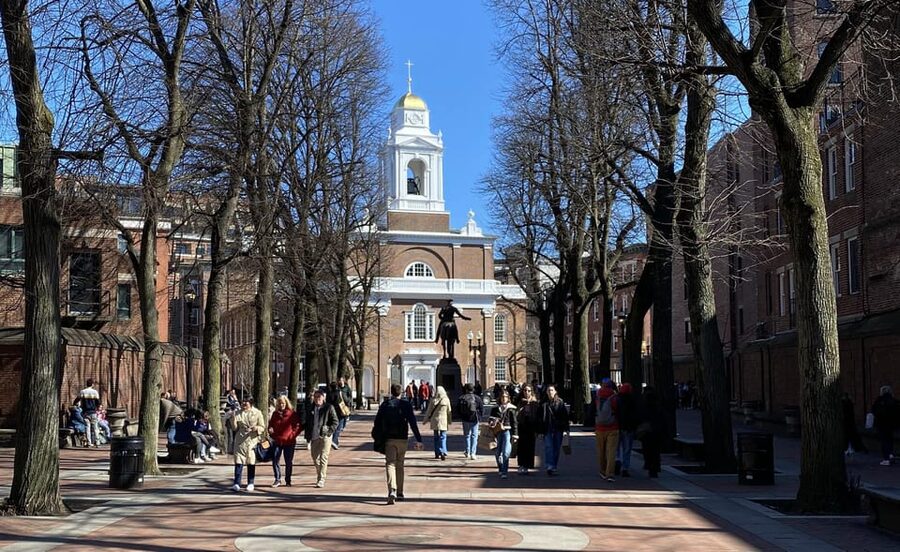
Book it if you want Boston explained in French, especially for your first day in the city. Maria’s use of an earpiece, her many anecdotes, and the small group make the experience easier to follow than a self-guided walk.
The best value comes from the full route and the broad storytelling, not from admission to a single landmark. At the end, you should have a working map of downtown Boston, a better sense of the Revolution’s setting, and a convenient starting point for dinner in the North End.
FAQ
How long does the Freedom Trail tour last?
The tour lasts 150 minutes, or two and a half hours.
Where does the tour begin?
It begins at the Boston Common Visitors Center, inside Boston Common. Meet in the alley to the left of the Visitor Center entrance, where the guide holds a Gilded Age Tour sign.
Where does the tour finish?
The tour finishes at Copp’s Hill Terrace in the North End, close to Old North Church and Italian restaurants.
Is the tour conducted in French?
Yes. The live guide speaks French.
Who guides the tour?
The French-speaking guide is Maria, a French-speaking Francophile who shares historical information and original anecdotes about Boston.
How many people can join the group?
The group is limited to a maximum of 15 people.
Are museum admissions included?
No. The price includes the French-speaking guide and the walking tour, but museum visits are not included.
Can I cancel for a refund?
You can cancel up to 24 hours in advance for a full refund. A reserve now, pay later option is also available.
Just added around Boston
- Boston: North End Pizza Walking Tour with 3 Slices & Cannoli★ 4.8 · 162 reviews
- Boston: Salem by Boat – Witch Trials & Walking Tour★ 4.3 · 263 reviews
- Boston: Full Revolution Story Epic Small Group Walking Tour★ 4.9 · 132 reviews
- Boston: 2-Hour Historic Walking Tour★ 4.7 · 88 reviews
- Self Guided Classic Freedom Trail Location Aware (GPS) Walking Audio Tour★ 4.5 · 258 reviews
- Boston History Tour: Scenic Walk Through Time & Landmarks★ 5.0 · 627 reviews
- Entire Freedom Trail Walking Tour: Includes Bunker Hill and USS Constitution★ 5.0 · 732 reviews
- Boston Pizza Lovers Food and History Walking Food Tour★ 4.5 · 1,082 reviews
Walking Tours, compared.

Magical London: Harry Potter Guided Walking Tour
Read our review →
Reykjavik Food Walk – Local Foodie Adventure in Iceland
Read our review →
History and Hauntings of Salem Guided Walking Tour
Read our review →
New Orleans Premier Ghost, Voodoo and Vampire Walking Tour
Read our review →
Amsterdam Anne Frank: Small-Group Walking Tour & Local Guide
Read our review →

Edinburgh Castle: Guided Walking Tour with Entry Ticket
Read our review →
Anne Frank’s Story – Guided Walking Tour through Amsterdam
Read our review →Browse the lists this tour appears in